Home Blog Page 120

Iran denies agreeing to hand over enriched Uranium stockpile

Iran denies agreeing to hand over enriched Uranium stockpile

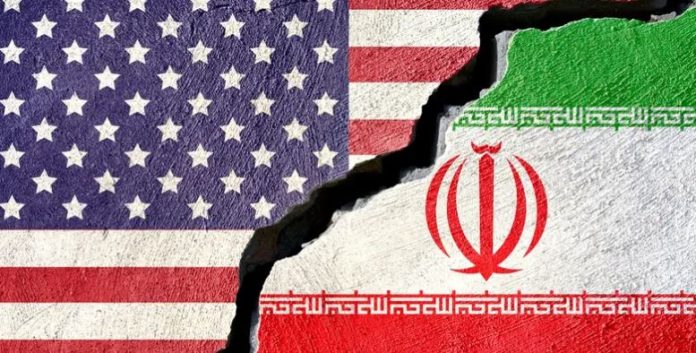
TEHRAN, 24 MAY (DNA) — Iran has not agreed to hand over its stockpile of highly enriched uranium despite reports suggesting progress in negotiations with the United States, a senior Iranian source told Reuters on Sunday.  According to the source, Tehran’s nuclear programme was not included in the preliminary understanding currently being discussed between Iran and the United States.

The official said issues related to uranium enrichment and stockpiles would be addressed in future negotiations aimed at reaching a final agreement.  “The nuclear issue will be addressed in negotiations for a final agreement and is therefore not part of the current deal,” the source said, adding that “there has been no agreement over Iran’s highly enriched uranium stockpile to be shipped out of the country.”

  However, Iranian officials reportedly acknowledged that talks with Washington had made significant progress and that a broader deal was “almost done,” amid ongoing diplomatic efforts to ease tensions in the region.

US President Donald Trump had earlier stated that an agreement with Iran was “largely negotiated,” with further announcements expected soon. Reports indicate the proposed framework could include reopening the Strait of Hormuz, extending a ceasefire and beginning wider negotiations on Iran’s nuclear programme. — DNA

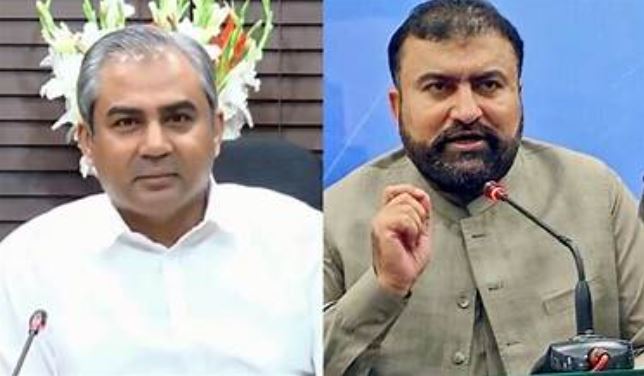
Mohsin Naqvi, Sarfraz Bugti vow to bring Quetta blast terrorists to justice

Mohsin Naqvi, Sarfraz Bugti vow to bring Quetta blast terrorists to justice

‎‎QUETTA, MAY 24 /DNA/ – A special meeting was held in Quetta under the chairmanship of Federal Interior Minister Mohsin Naqvi and Balochistan Chief Minister Mir Sarfraz Bugti. During the meeting, the IG Balochistan Police presented the preliminary report regarding the explosion near Quetta’s Chaman Phatak.

‎The participants strongly condemned the cowardly attack on innocent civilians and expressed deep sympathy and condolences to the families of the martyrs. Interior Minister Mohsin Naqvi stated that the federal government stands shoulder to shoulder with the Balochistan government in this hour of grief. He said that the attackers had displayed extreme barbarity by targeting innocent people and added that the sacrifices of the martyrs would always be remembered.

‎Chief Minister Mir Sarfraz Bugti thanked Interior Minister Mohsin Naqvi, saying that he has always stood with Balochistan in every difficult time. He said that they are indebted to the blood of the martyrs and that the terrorists of “Fitna al-Hindustan” would be brought to justice. He further stated that the families of the martyrs would not be left alone and that he is personally supervising the medical treatment of the injured.

‎The IG Balochistan Police and officers of law enforcement agencies also attended the meeting.

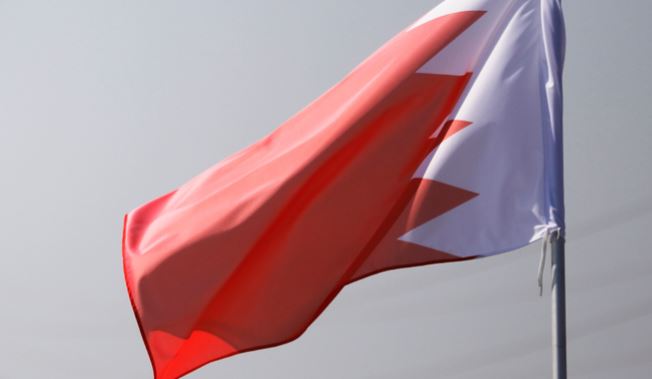
Bahrain court jails nine for life for collaborating with Iran’s IRGC

Bahrain court jails nine for life for collaborating with Iran’s IRGC

MANAMA, MAY 24: A Bahraini court sentenced nine defendants to life in prison and two others to three years in jail for collaborating with Iran’s Revolutionary Guard Corps (IRGC) to carry out what it described as “hostile and terrorist acts” against Bahrain, the state news agency reported on Sunday.

The defendants were involved in gathering information on sensitive sites and facilitating related financial transfers, the statement said.

Bahrain’s interior ministry said on May 9 that it had arrested 41 people it said were linked to the IRGC. The ministry said security authorities had uncovered a group tied to the IRGC.

Iran launched attacks on targets in Bahrain and other Gulf Arab states hosting US military bases after the United States and Israel launched a war against Iran on February 28.

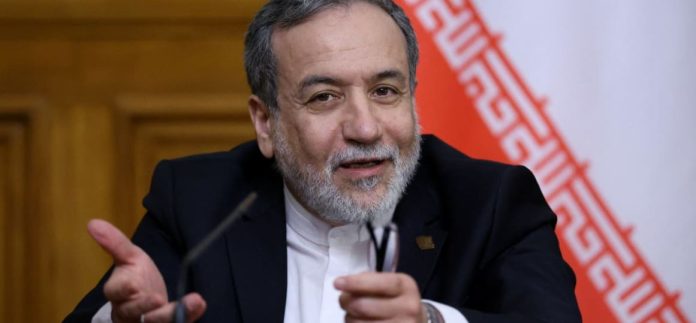
Islamic regime ‘will not abandon’ Hezbollah, Araghchi promises in message to Qassem

Islamic regime ‘will not abandon’ Hezbollah, Araghchi promises in message to Qassem

TEHRAN: The Islamic Republic will continue funding and supporting its network of proxies, Iranian Foreign Minister Abbas Araghchi promised in a message sent to Hezbollah chief Naim Qassem, the regime official confirmed on Telegram.

Naming Hezbollah explicitly, Araghchi promised the regime “will not abandon support for movements seeking rights and freedom until the very last moment.”

He added that a ceasefire in Lebanon was a key term in any potential ceasefire deal with Washington, though the war against Hezbollah is being fought by Israel and not the US.

Maj. (res.) Alexander Grinberg, an expert on Iran from the Jerusalem Institute for Strategy and Security, explained to The Jerusalem Post that for Tehran, abandoning proxies at this junction would be “political suicide,” and that ending its support would signal to both its allies and enemies that it is significantly weakened.

While he said Iran would always “try” to support its proxies, the depth of its support has changed and will change based on its own abilities. He said the regime was no longer able to smuggle weapons to Hezbollah through Syria and must now rely on crypto-payments as a means of financial support. This support, he said, would continue for as long as possible despite Tehran’s economic struggles.


Lebanon becomes sticking point in US-Iran deal talks
Araghchi’s promise to Hezbollah comes in tandem with US President Donald Trump’s announcement on Saturday that a deal had been “largely negotiated,” though US officials speaking to Axios suggested that issues surrounding nuclear disarmament were still being discussed.

Hezbollah violated an existing ceasefire between Israel and the terror group in response to the assassination of Ayatollah Ali Khamenei. The decision to drag Lebanon into another war, as it did on October 8, 2023, has led to a new array of domestic legislation aimed at demilitarizing the terrorist organization, motivated in part by the large-scale displacement brought on by the conflict.

While Iran may push to see Lebanon included in a potential agreement, Israeli officials have commented that Washington cannot make such a deal on behalf of Jerusalem, noting that civilians living in northern Israel will be left paying the price for such an arrangement.

MK Benny Gantz, addressing the reports of Lebanon being an Iranian condition in a ceasefire deal, commented that “Israel has an obligation to protect its residents regardless of any external factor” and such an agreement would be “a strategic mistake that we will pay for for years to come.”

He urged, “Israel needs to say to the US: ‘No.’”

KAN also reported that Prime Minister Benjamin Netanyahu is concerned about the inclusion of Lebanon in an agreement with Tehran. A political source told the public broadcaster that Netanyahu communicated to Trump that “Israel will maintain freedom of action against threats in all arenas, including Lebanon.”

While Netanyahu may have communicated Israel’s intentions to continue securing its northern border by ensuring Hezbollah cannot rebuild past the Litani River, a US official indicated to Axios that Trump may still be willing to include Lebanon in the agreement.

“Bibi has his domestic considerations, but Trump has the interests of the US and the global economy to think about,” the US official commented.

Eid atmosphere shines with joy

Eid atmosphere shines with joy

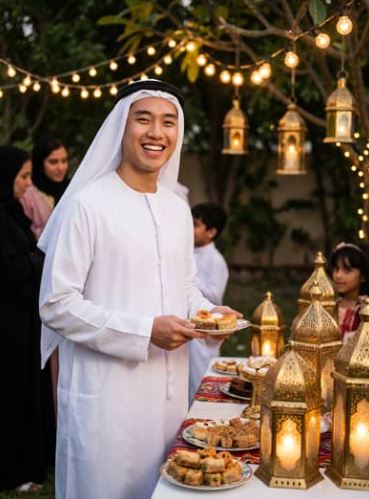
ISLAMABAD, 24 MAY (DNA) —    As Eid-ul-Adha approaches, a vibrant wave of festive spirit spreads across the country, with streets, markets and neighborhoods buzzing with activity, while children are seen joyfully caring for sacrificial animals, adding warmth, color and celebration to the atmosphere everywhere.

Social media videos and electronic media reports show children holding sacrificial animals, roaming around even in the heat and eagerly taking part in decorating and feeding them. Across cities, this creates a lively and energetic atmosphere, where their excitement, care and involvement bring a strong sense of joy and festive spirit to the surroundings.

Fathers often express satisfaction and pride, saying that involving children helps them learn responsibility, compassion and the values behind the tradition. Street elders and community members are also seen appreciating the scene, noting that children’s enthusiasm brings life to neighborhoods and strengthens community bonds during the festive days.

Many of them remark that such moments remind people of earlier times when celebrations were more communal and closely shared among families and neighbors. The children themselves speak excitedly, saying they will not sleep in the afternoon and will continue roaming with the animals, feeding and caring for them throughout the day.

Their cheerful voices and energetic involvement reflect pure excitement, as they enjoy every moment of the preparation and bonding with the animals. Ornament sellers also add that children frequently visit their stalls, eagerly buying colorful decorations and accessories to dress up their animals, which further adds to the festive buzz in markets.

Youngsters and older teens are also seen sitting along streets and enjoying the lively scenes, watching children with amusement and delight.  They describe how the playful energy of kids brings a refreshing atmosphere to the surroundings, making the streets more vibrant and full of life during the festive days.Overall, the situation presents a lively and colorful picture across cities, where activity, enthusiasm and cultural traditions blend together.

The presence of children with animals, busy marketplaces and engaged communities creates a dynamic environment full of movement and interaction. Parents are also seen busy capturing videos and photos, recording these memorable moments and instantly sharing them on social media. Together, these moments reflect a strong sense of celebration, unity and shared experience that defines the festive atmosphere.— DNA

Zafar Bakhtawri fetes Uzbek scholars

Zafar Bakhtawri fetes Uzbek scholars

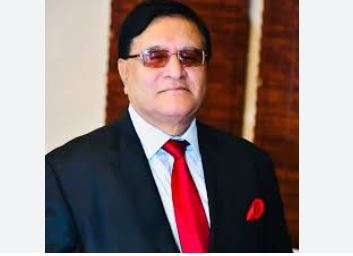
ISLAMABAD, 24 MAY (DNA) —     Under the auspices of the Pakistan Cultural Forum, renowned literary, cultural, social, and business personality Zafar Bakhtawari hosted a dinner at his residence in honor of distinguished Uzbek scholars and writers Professor Tash Mirza and Professor Mukhaya Abdul Rahman.

A large number of eminent personalities from literary, academic, diplomatic, cultural, and social circles attended the gathering, including Professor Fateh Muhammad Malik, Professor Dr. Saleem Mazhar, Professor Dr. Najeeba Arif, Professor Qaisra Alvi, Adil Mirza, Farman Ali, Tahir Farooq, Naeem Khan, Shahbaz Chohan, and other distinguished guests. Addressing the occasion, Zafar Bakhtawari said that he respects and admires every person who, while living in any part of the world, plays a role in promoting Pakistan, Pakistani identity, the Urdu language, and Pakistani culture and civilization.

He described Professor Tash Mirza and Professor Mukhaya Abdul Rahman as his “heroes” and said that the compilation of an Urdu–Uzbek dictionary consisting of four thousand common words by Tash Mirza is a remarkable scholarly achievement and an excellent means of bringing two civilizations, two societies, and two countries closer together. He also appreciated the services of Professor Mukhaya Abdul Rahman for the promotion of Urdu at Tashkent University and her Urdu translations of Uzbek short stories.

He further said that his first meeting with Professor Mukhaya Abdul Rahman took place in 1995 at an event organized by the Pakistan Academy of Letters. Zafar Bakhtawari also expressed his resolve to organize future events highlighting Mughal Emperor Zahir-ud-Din Babur and the great Uzbek national poet Alisher Navoi.

In his remarks, Professor Fateh Muhammad Malik said that he now attends very few functions, but he was extremely pleased to participate in this gathering hosted by Zafar Bakhtawari in honor of his distinguished scholar and friend Tash Mirza. He paid tribute to Zafar Bakhtawari for carrying the banner of literature and culture for a long time.

Professor Dr. Saleem Mazhar, Director General of the National Language Promotion Department, said that the special sitting arranged by the Pakistan Cultural Forum and Zafar Bakhtawari in honor of Tash Mirza and Mukhaya Abdul Rahman is a clear reflection of his love for Pakistan and culture. He remarked that the work which institutions should be doing is being carried out by Zafar Bakhtawari through his personal efforts. He further said that personalities associated with literature and fine arts play a vital role in bringing nations and cultures closer together.

Professor Dr. Najeeba Arif, Chairperson of the Pakistan Academy of Letters, said that her first meeting with Professor Tash Mirza was also in 1995, and today, thanks to Zafar Bakhtawari, they were able to meet again. She said that Zafar Bakhtawari’s love for Urdu and Pakistan is highly commendable, and that such gatherings would further strengthen closeness, brotherhood, and cultural harmony between the two countries in the future.

On behalf of the Uzbek guests, Professor Mukhaya Abdul Rahman expressed her gratitude and said that she has always taken pride in the fact that her life and scholarly journey have remained closely linked with the Urdu language. She shared that her mother enrolled her in an Urdu school instead of an English school, for which she remains grateful to her late mother. She said that everyone in her home knows and speaks Urdu, and that guests coming from abroad are always welcomed with one sentence: “We love you.”

She paid rich tribute to Professor Tash Mirza for his services to the Urdu language and said that she herself is among the fortunate students who learned Urdu from him. She also described Zafar Bakhtawari as a personality who has devoted his life to the promotion of Pakistani identity and cultural harmony. At the conclusion of the event, the participants expressed their commitment to further strengthening the literary and cultural relations between Pakistan and Uzbekistan.— DNA

Trump says Iran deal ‘largely negotiated,’ would reopen Strait of Hormuz

Trump says Iran deal ‘largely negotiated,’ would reopen Strait of Hormuz

WASHINGTON, MAY 24: Washington and Iran have “largely negotiated” a memorandum of understanding on a peace deal that would reopen the Strait of Hormuz, US President Donald Trump said, as expectations rose that a turning point might be imminent in the three-month-old war.

Trump posted on social media that the emerging agreement would reopen the strait, the vital shipping passage whose closure has sparked a global energy crisis since the US and Israel launched the war on Iran in February. He did not say what else would be included in an agreement.

“Final aspects and details of the Deal are currently being discussed, and will be announced shortly,” Trump wrote on Truth Social on Saturday.

Various media in the US and Iran said the memorandum that could yield an agreement lays out a phased framework for ending months of fighting, reopening the waterway soon and lifting a US blockade on Iran. Plans for Iran’s stockpile of enriched uranium, which Washington has insisted it give up, would be negotiated within 30 to 60 days, the reports said.

US Secretary of State Marco Rubio, on a visit to India, said more news could come on Sunday and there was a possibility of good news on the strait within hours. A senior Iranian source told Reuters that if Iran’s Supreme National Security Council approved the memorandum, it would be sent to Supreme Leader Mojtaba Khamenei for final approval.

But Iran’s Tasnim news agency said differences remained over one or two clauses. Tasnim cited a source as saying there would be no final understanding if the US continued to create obstacles.

Iran’s nuclear program in focus

A deal cementing a fragile ceasefire would bring relief to markets but would not immediately quell a global energy crisis, which has driven up costs of fuel, fertilizer and food.

Even if the war ends now, full oil flows through the strait will not return before the first or second quarter of 2027, the head of the United Arab Emirates’ state oil firm ADNOC said last week.

Axios reported late on Saturday that the US and Iran were close to a deal, which it said would include no tolls on ships transiting the strait, while Iran would be able to freely sell oil.

In exchange, the US would lift its blockade on Iranian ports and waive some sanctions on Iranian oil, the US news outlet said, citing a US official.

The draft agreement also includes commitments from Iran never to pursue nuclear weapons, Axios said.

Trump, while offering various war aims during the conflict, has repeatedly said the US struck Iran to prevent it from obtaining nuclear weapons.

Iran has long denied it is pursuing such weapons and says it has a right to enrich uranium for civilian purposes, although the purity it has achieved far exceeds that needed for power generation.

Iran’s Fars news agency said the draft also stipulates that the US and its allies will not attack Iran or its allies, and in return Iran pledges not to launch preemptive attacks on them.

Prominent Israeli politician Benny Gantz said it would be a strategic mistake for Israel to accept a ceasefire in Lebanon, where it is fighting the Iranian-backed Hezbollah militia, as part of a deal with Iran.

He posted on X that Israel had an obligation to protect residents near the border and should reject any such proposal by the US

Sources have told Reuters the proposed framework would unfold in three stages: formally ending the war, resolving the crisis in the Strait of Hormuz and launching a 30-day window for negotiations on a broader agreement, which can be extended.

One of the Pakistani sources said that if the US accepts the memorandum, further talks could take place after the Muslim Eid holiday ends on Friday.

Trump, whose approval ratings have been hit by the war’s impact on US energy prices, said on Friday he would not attend his son’s wedding this weekend, citing Iran among the reasons for staying in Washington.

Tasnim said any changes in navigation through the Strait of Hormuz were conditional on implementation of other commitments by the US It also said some Iranian funds that have been frozen globally as part of sanctions must be released in the first phase of the deal.

‘Issues still need to be discussed,’ Iran says

Trump spoke on Saturday with leaders from Saudi Arabia, Qatar, the United Arab Emirates, Jordan, Egypt, Turkey and Pakistan, who encouraged Trump to agree to the emerging framework, Axios reported.

A call with Israeli Prime Minister Benjamin Netanyahu went “very well,” Trump wrote on Truth Social.

Iranian Foreign Ministry spokesperson Esmail Baghaei said on Saturday that “the trend this week has been towards a reduction in disputes, but there are still issues that need to be discussed through mediators.”

Baghaei said the issue of the US blockade on Iran’s shipping was important, but that its priority was ending the threat of new US attacks and the conflict in Lebanon.

Iran’s top negotiator Mohammad Bagher Ghalibaf said Iran’s armed forces had rebuilt their capabilities during the ceasefire and that, if the US restarted the war, the consequences would be “more forceful and bitter” than at the start of the conflict.

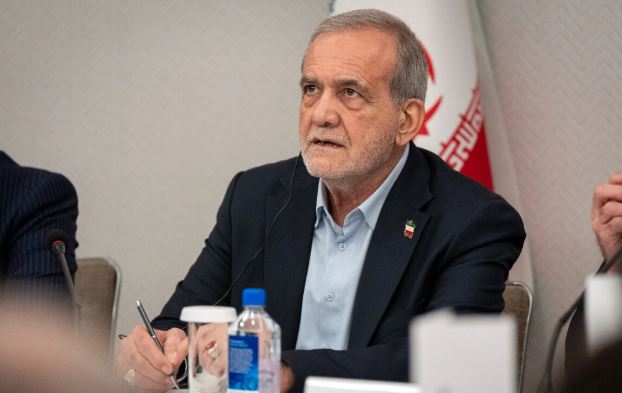
The Chariot of Peace: Pakistan’s Noble Mediation Between Washington and Tehran

The Chariot of Peace: Pakistan’s Noble Mediation Between Washington and Tehran

by Muhammad Mohsin Iqbal

I still recall with vivid clarity the day I first watched the epic film Ben Hur on the silver screen in the 1970s. It was a monumental production that swept away eleven Oscars, yet none of its splendours left a deeper imprint upon my mind than the legendary chariot race. There, Charlton Heston, portraying the resolute hero, guided his team of four or five powerful horses harnessed together in a single chariot. They thundered across the arena in a whirlwind of dust and speed, muscles straining in perfect unison, while the cinematography captured every heart-stopping turn and surge with breathtaking beauty and intensity. It was a stirring vision of coordinated strength, where individual power merged into something far greater, capable of overcoming the most formidable obstacles.

That timeless image returned to me with fresh resonance while contemplating the intricate and high-stakes mediation between the United States and Iran. Much like the ancient charioteer who depended upon the harmonious effort of his steeds, diplomacy in our own era has shown the enduring necessity of teamwork. One may recall how the humble bullock cart of bygone days, once drawn by a single animal, gradually gave way to a pair of bullocks. When one grew weary under the burden of the journey, the other would step forward to share the load, lending fresh power and ensuring the cart moved steadily onward without faltering. In precisely this spirit, Pakistan has played a pivotal role in drawing the contending parties toward common ground, demonstrating that collective resolve can achieve what solitary effort cannot.

From the very beginning of this tense dispute, Pakistan maintained a steadfast commitment to a negotiated and honourable settlement. Under the wise and resolute leadership of Prime Minister Shahbaz Sharif, a comprehensive diplomatic initiative was set in motion. Field Marshal Syed Asim Munir brought the weight of strategic insight and institutional strength, while Foreign Minister Ishaq Dar employed his considerable experience in international affairs to weave delicate threads of dialogue. Defence Minister Khawaja Asif and Interior Minister Mohsin Naqvi, each in his sphere, worked with quiet determination to support the broader effort, ensuring that both security concerns and domestic stability were carefully balanced. These senior figures laboured tirelessly, often behind the scenes, meeting with envoys, offering assurances, and patiently addressing grievances that had long poisoned relations.

Their endeavours were warmly reinforced by friendly countries across the region, whose own interests in peace and stability aligned with Pakistan’s vision. Through quiet counsel and measured encouragement, a framework of trust slowly emerged. The path was seldom easy. Deep-seated suspicions, historical grievances, and conflicting regional ambitions tested the process at every turn. Yet Pakistan’s consistent message—that reason and compromise must prevail over confrontation—gradually created space for meaningful engagement. In an age when military posturing can so easily escalate into catastrophe, this persistent advocacy for dialogue stood as a beacon of prudence.

God willing, these sincere and sustained efforts will soon bear their full fruit. There is growing hope that a landmark meeting will soon convene in Islamabad, the capital long renowned for its spirit of hospitality and commitment to peace. In that historic setting, representatives of the concerned nations may gather to formalise an agreement, putting an end to uncertainty and opening pathways to renewed cooperation. Such an occasion would not only mark the successful conclusion of delicate negotiations but also serve as a testament to the power of patient statesmanship.

Through this mediation, Pakistan has rendered a service of immense value to the wider region and, indeed, to the entire world. By helping to avert what could have become a devastating military conflict—with all its potential for widespread suffering, refugee crises, and long-term instability—the country has acted as a responsible guardian of peace. At the same time, it has helped safeguard the global economy from a perilous blow. Energy supplies, international trade routes, and financial markets, already vulnerable to shocks, have been spared what might have proved a ruinous disruption. The world’s economic vessel, buffeted by many tempests, has been steadied at a critical hour.

In the grand constellation of nations, Pakistan has thus emerged as a bright and steady star. It has shown that a country facing its own challenges can still extend a hand of constructive leadership, grounded in humanity and foresight. This episode reaffirms an ancient truth: genuine strength often resides not in displays of force, but in the quiet perseverance of those willing to build bridges across divides. As the final chapters of this story unfold, one senses a measured yet genuine optimism. The chariot of peace, drawn by many willing hands, has travelled a difficult road. With continued wisdom and goodwill, it promises to reach a destination that will benefit countless millions who yearn for a more stable and harmonious world. History, it is certain, will remember Pakistan’s contribution with respect and gratitude.

At least 14 martyred in blast near railway track in Quetta: Balochistan govt

At least 14 martyred in blast near railway track in Quetta: Balochistan govt

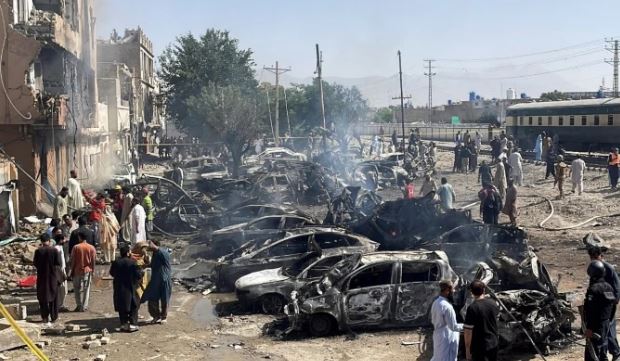
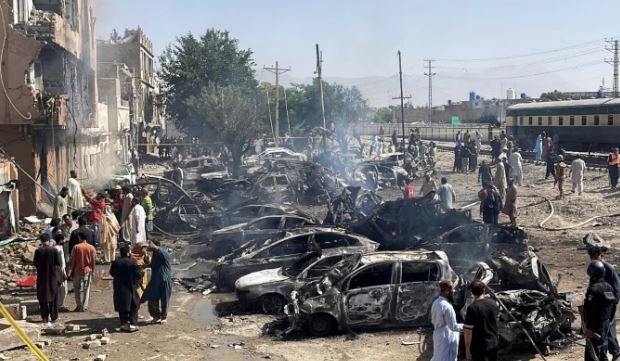
QUETTA, MAY 24: At least 14 people, including three Frontier Corps (FC) personnel, were martyred and several others injured in a blast which occurred near the railway track close to Chaman Phatak in Quetta on Sunday, the Balochistan government spokesperson said.

Several women and children also sustained injuries in the explosion and were shifted to hospitals for medical treatment, Balochistan government spokesperson Shahid Rind said in a statement.


Rind said terrorists targeted unarmed civilians in the attack, terming the assaults on public places a sign of desperation by militant elements.

Security forces have cordoned off the area, while authorities continue collecting evidence and investigating the incident, he said.

The government spokesperson said that evidence collection and investigations are underway. He added that targeting public places reflects the desperation of terrorist elements.

Following the incident, an emergency was declared in government hospitals across Quetta, with doctors and medical staff summoned to handle the situation.

Railway authorities said the Peshawar-bound Jaffar Express was stopped at Quetta Railway Station after the blast as a precautionary measure.

Babar Yousafzai, the spokesperson to the home minister, said that all relevant institutions have been placed on high alert following an explosion in the city.

He urged the public not to gather near the blast site to ensure safety and allow emergency teams to carry out rescue operations without obstruction.

Meanwhile, President Asif Ali Zardari and Prime Minister Shehbaz Sharif strongly condemned the “heinous” blast and said that said such acts of terrorism are aimed at harming the people of Pakistan and diverting attention from the country’s efforts for global peace.

In his condemnation message, the president said that elements hostile to Pakistan are attempting to undermine the initiatives that serve broader humanitarian objectives, global peace and progress.

He said there should be no doubt that Pakistan will defeat terrorists, their facilitators, financiers and those providing them safe havens.

“Such cowardly acts of terrorism cannot weaken the resolve of the people of Pakistan. We remain steadfast in our determination to eliminate terrorism in all its forms and manifestations,” PM Shehbaz said.

He also expressed heartfelt condolences to the families of the victims and prayed for the swift recovery of the injured, saying the entire nation stands in solidarity with the people of Balochistan in this hour of grief.

Railways Minister Hanif Abbasi also condemned the blast and said that elements based in India and Afghanistan are involved in sponsoring terrorism, vowing that terrorist networks would never succeed in their evil designs.

The minister added that the explosion resulted in the derailment of the engine and three coaches. Abbasi also directed the railway administration to submit an immediate report on the incident.

Security forces wipe out eleven Khwarij in Intelligence Op: ISPR

Security forces kill four terrorists in D.I.Khan

RAWALPINDI, MAY 24 /DNA/ – In continuation of series of intelligence based operations, in last forty eight hours Security Forces engaged multiple Khwarijs’ locations in general area Datta Khel, North Waziristan District.

Following intense and fierce exchanges of fire, eleven khwarij belonging to Indian-sponsored Fitna-al-Khwarij were effectively neutralized.

Weapons and ammunition have also been recovered from killed Indian sponsored Khwarij, who remained actively involved in numerous terrorist activities in the area.

Sanitization operations continue to eliminate holed up khwarij from these areas, as relentless Counter Terrorism campaign under vision “Azm e Istehkam” (as approved by Federal Apex Committee on National Action Plan) by Security Forces and Law Enforcement Agencies of Pakistan will continue at full pace to wipe out the menace of foreign sponsored and supported terrorism from the country.

Stay Connected

64FansLike
60FollowersFollow

Latest Reviews

Exchange Rates

USD - United States Dollar
EUR
1.14
GBP
1.34
AUD
0.70
CAD
0.71