Home Blog Page 1196

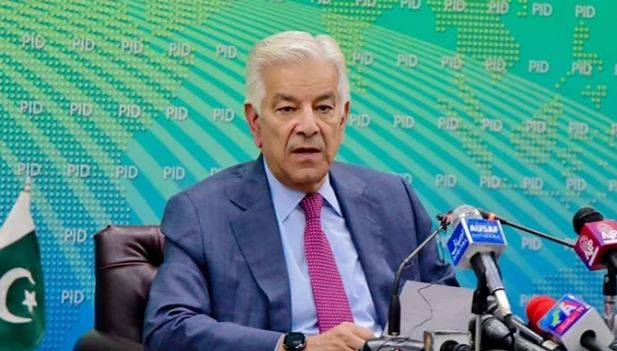
Afghan soil still being used by TTP for attacks on Pakistan: defence minister

ISLAMABAD, APR 11: Defence Minister Khawaja Asif has said that the proscribed Tehreek-e-Taliban Pakistan (TTP) is still using Afghan soil for launching attacks on Pakistan — especially in Khyber Pakhtunkhwa (KP).

“Islamabad has good relations with the ruling Taliban government in Kabul. However, the Afghan authorities have not succeeded in stopping the use of their territory in attacks on Pakistan,” he said in an interview with the US broadcaster, Voice of America.

The matter, the federal minister said, had been brought up and discussed last month when a meeting between a high-ranking delegation — including Asif and the ISI DG Lt Gen Nadeem Anjum — and Afghan officials.

“During the meeting”, the defence minister said, “The Taliban expressed their determination to deal with this problem.”

The Afghan authorities said that they would not allow their land to be used for terrorism against any country, Asif added.

He further said that he believed the Afghan Taliban were “distancing” themselves from the proscribed outfit, however, due to the fact that they fought against Nato together in the past, certain “camaraderie” exists between the two sides.

During his interview, Khawaja Asif also alleged that the resettlement of TTP leaders in Pakistan was done through a “programme”.

“[Pakistan Tehreek-e-Insaf (PTI) and former prime minister] Imran Khan has been signalling throughout his political career that he is ideologically supportive of the Taliban. At various points the international media has even referred to him as “Taliban Khan”, he said.

He added that the TTP was in possession of the advanced equipment left behind by the US after its withdrawal, further alleging that India too is still helping them.

Stating that the people of tribal areas and KP were not ready to ‘co-exist’ with the Taliban, the defence minister said: “It is noteworthy that people are protesting unarmed against the return of the Taliban.”

He also shared that the Taliban were “undermining their gains through restrictions on women”.

Speaking on the matter of the political scenario in Pakistan, Khawaja Asif said that Imran Khan’s “stance keeps changing”.

“Imran Khan is blaming the army. I don’t know where Imran Khan stands regarding the US and the army at this time. Starting from America, he has now reached the Punjab IG for conspiring against him.

“I don’t understand from his recent statements, whether he stands with the establishment or not, and whether he wants negotiations with the government or not.

“There is no clear stand for them. Asad Qaiser and others talk about dialogue. It should be a national dialogue in which the establishment, the media, and members of civil society are present. Only then can national dialogue be successful.”

Justice Qazi Essa was caught in the net

By Qamar Bashir

Former Press Secretary to the President

Former Press Minister to the Embassy of Pakistan to France

Everyone is perplexed, taken aback, surprised, and shocked to see a supreme court judge sitting in the joint session of the parliament today (10th April, 2023) session where the bill for limiting the power of the chief justice of the supreme court was discussed, blatant attacks on the character, conduct, and decisions of the supreme court were made, and pledges were made to dishonor and disobey the supreme court’s decision to hold Punjab Assembly elections on 14th May 2023 and to provide fund for it by 10th April, 2023. 

The disclaimer by Justice QaziEssa was too little, too late, and didn’t help at all; rather, it reflected poorly on the quality of his judgment, the integrity of his conduct, and the soundness of his decision-making for not only agreeing to but physically attending a politically charged session in which the judiciary, its powers, and its decisions were all under attack. Did the Judge take the bait and become entangled in the net that had been carefully and intelligently laid out for him?

It is surprising why and what pressing circumstances compelled Justice Essa to attend this event that was not intended for him and none of his brother judges attended. Why did he lower his guards when the deep state is hell bent on removing him as a judge? He is viewed as a rebellious judge by most of his brother judges, and PTI, Pakistan’s largest political party, has designated him as an unfavourable judge. His unwarranted conduct rather than misconduct provided much needed fodder to the deep state to strike back with vengeance, and to the chief justice  one in a lifetime chance to get rid of him as the formidable foe and unmanageable subordinate judge who appears to be undermining the decisions made by his brother judges in other important cases, and has provided plenty of fodder to the media to bash him every day for the coming weeks and months.

My younger brother was an accountability judge once he was asked to have a cup of tea with a governor of Balochistan who was his student. Despite his express directions, only a picture was released in the media, prompting the high court to call his explanation for attending a meeting which he was not supposed to, and which could later influence in any way his decision making in the court. But seeing QaziEssa sitting next to Ishaq Dar and Asif Ali Zardari was a sour taste in the mouth, and his affectionate shaking hand with Zardari tainted his image of an independent, impartial, and steadfast judge. 

Seeing him proudly sitting in the front row with none of his likes but among those whose cases he has been and will be hearing and deciding made everyone concerned and confused, and gave everyone goosebumps. Nobody expected him to make such an unwarranted decision to attend such an event, which by any stretch of the imagination did not suit his status as a puisne judge, and the one who should have a high moral ground, an image of untainted impartiality, and unquestionable strength of character, but unfortunately, even before assuming the office, he made it clear where he stands in terms of impartiality. Every case he will hear, every decision he will make will now be subject to allegations of partiality, lack of neutrality, nepotism, and favoritism, which is bad for his honour and dignity, for the unfortunate people of Pakistan, and for the country as a whole.

In its wisdom, the Constitution has assigned judges a specific role in interpreting and enforcing the law, whereas members of parliament have a different role in creating and changing laws. As a result, a Supreme Court judge attending a parliamentary session in the same capacity as a member of parliament was highly inappropriate. I’m curious how he could have forgotten that it is a rule, not a practice, that a Supreme Court judge should not attend any public event other than those organised by the judiciary and strictly related to it, is a violation of the constitution, which requires separation of powers as a fundamental principle and defines meddling by one pillar of the state into the affairs of another as a violation of the constitution.

This is flagrant misconduct by a sitting judge, and his unwarranted action can be used to initiate disciplinary proceedings against him, as was done in the case of Justice Shaukat Aziz Siddiqui of the Islamabad High Court, who was removed from his position in 2018 following allegations of misconduct for making public statements and controversial remarks seen as an attempt to influence the outcome of Pakistan’s general election. The Pakistan Supreme Judicial Council initiated proceedings against Justice Siddiqui and eventually recommended his removal from office for misconduct.

Judicial misconduct is taken seriously around the world, and judges who violate professional standards or engage in illegal or unethical behaviour face disciplinary action, including impeachment, removal from office, or other forms of punishment.  In the United States, Judge Harry Claiborne was impeached and removed from office in 1986 for tax evasion and falsifying loan application information. Justice Soumitra Sen of India was impeached and removed from office in 2011 for financial irregularities and misappropriation of funds. In South Africa, Judge John Hlophe was accused of misconduct in 2008 after attempting to sway the outcome of a case before the Constitutional Court. Judge Sérgio Moro was charged with judicial misconduct in Brazil in 2019 after allegedly coordinating with prosecutors in the “Operation Car Wash” corruption investigation. The allegations sparked widespread protests and calls for his removal, but he eventually resigned as a federal judge.

Who better to know than Justice QaziEssa, who has faced the law and constitutional provisions that provide for a detailed process of impeachment and disciplinary proceedings against judges accused of misconduct in order to ensure that judges are held accountable for their actions. He is well aware that it is a rule, not an exception, that judges should avoid controversies, remain impartial, and avoid any involvement in political activities. Their participation in political events may be interpreted as a breach of their professional responsibilities and public trust in the judiciary. In such cases, they can face disciplinary proceedings under the constitution and law, which the QaziEssa has already gone through and was barely able to save his and his family’s neck from.

He had already faced impeachment and disciplinary proceedings, as outlined in the Constitution and the Judges Inquiry Act of 1959. Article 209 of the Pakistani Constitution provides for the removal of Supreme Court and High Court judges for misconduct. The process of removing a judge is initiated by the President of Pakistan, who is empowered to refer a case to the Supreme Judicial Council (SJC), a body composed of senior judges and the Chief Justice of Pakistan. If the SJC finds a judge guilty of misconduct, it has the authority to recommend a variety of disciplinary actions, such as removal from office, mandatory retirement, or censure.

QaziEssa is neck deep in the quagmire that will haunt him for the rest of his life due to his own actions and lowering the guard. Now even the  earlier proceedings against him have somewhat been vindicated, the Chief Justice, who may have been waiting for an opportunity to clip his wing, has a once-in-a-lifetime opportunity to commence the disciplinary proceedings afresh against him, this time with proof and undeniable evidence.  QaziEssa has fallen into an intelligently laid trap and appears to have no way out. Even if no disciplinary action is taken against him, which is highly unlikely, he will face allegations of bias, misconduct, and behavior unbecoming of a judge for the rest of his life. Now, unfortunately, irreversible damage has occurred. In any other country, a sitting judge’s error of judgment would have prompted him to resign, but in Pakistan, high moral ground is unheard of, whether in parliament, the judiciary, or the executive.

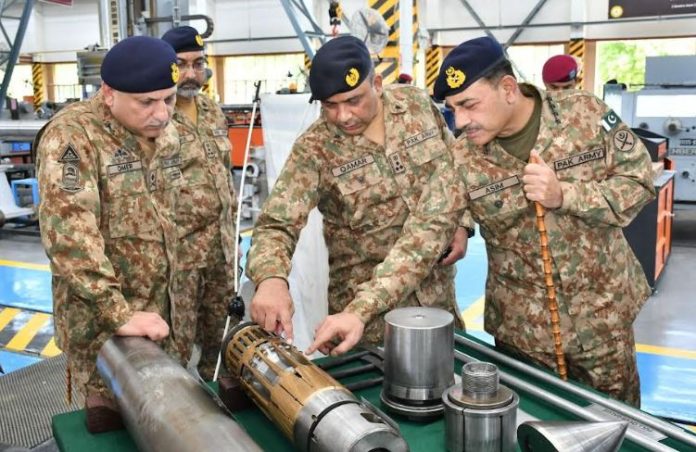
COAS visits Heavy Industries Taxila (HIT)

Rawalpindi, APR 11 /DNA/ – General Syed Asim Munir, COAS, visited Heavy Industries Taxila (HIT) on 11 April 2023. He was briefed about technical capabilities of HIT, progress of on-going projects, indigenization efforts and recently undertaken modernisation measures. COAS visited various factories of HIT and witnessed manufacturing, rebuild and upgradation of tanks, APCs, enhanced protection solutions, remote weapon systems and indigenous 155 mm Artillery gun barrels for Pak Army. 

COAS remarked that HIT is a hub of knowledge economy and R&D which is key to achieve self-reliance in defence production and contributes towards national exports and economy. COAS expressed his full confidence in capabilities of its personnel and appreciated the commitment of officers and workforce to transform HIT into a modern defence production establishment for meeting requirements of Armed Forces and Law Enforcement Agencies (LEAs) at par with international standards.

Earlier on arrival, COAS was received by Chairman HIT.

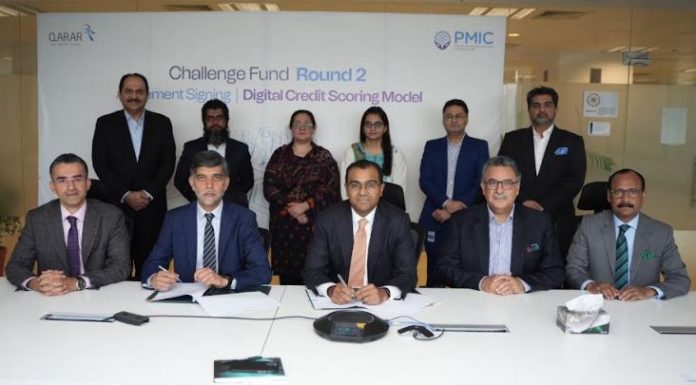
PMIC and Qarar Consultancy Partner to Develop Credit Scoring Model

Islamabad, APR 11 /DNA/ – To ensure financial inclusion and strengthen the microfinance sector, Pakistan Microfinance Investment Company (PMIC) and Qarar Consultancy (Qarar) will roll out a credit scoring model for the microfinance sector under PMIC’s Challenge Fund-Round II. Qarar is partnering with an MFI and a Credit bureau to access client level data for the development of the first-of-its-kind model in Pakistan’s microfinance sector. Once the application is developed and fine-tuned after testing and pilot phases, PMIC and Qarar will establish its availability for the microfinance sector to adopt.

Speaking on the occasion, Mr. Yasir Ashfaq, CEO of PMIC iterated PMIC’s commitment to financial inclusion and social impact in the country. Challenge Fund is part of the strategy to build new institutions and models that would accelerate access to finance for the underserved segments of the country. The credit scores will reduce human biases in evaluating client’s credit worthiness and will incorporate micro and macro level economic indicators in the model. The partnership aims to leverage the strengths of both companies to deliver innovative and integrated solutions that enable microfinance providers to make faster and more accurate credit decisions that will reduce the cost for clients and reduce risk of the portfolios of the MFI’s.

Mr. Riaz Jassat, Chief Commercial Officer, Qarar, said “Our partnership with PMIC is a significant milestone for Qarar as we continue to provide cutting-edge software, products, and services for decisioning. Our innovative solutions are designed to empower microfinance providers in Pakistan, enabling them to make informed decisions and push for positive impact.  We are honored to work with PMIC and, together, we are poised to take a big step forward in our ability to support financial institutions in making smarter decisions and driving sustainable growth in the region”.

“We are excited about our partnership with PMIC, as it reinforces our commitment to serving the needs of microfinance providers in Pakistan.  I am proud to be a part of this collaboration and we are confident that this initiative will enhance our ability to reach and support more micro-entrepreneurs and small business that contribute to our country’s economic development”, added Junaid Khatri, Regional Sales Director, Qarar Consultancy.

PMIC

Pakistan Microfinance Investment Company Limited (PMIC) is a triple bottom-line institution, established to provide wholesale financial services to the microfinance sector in the country. PMIC also focuses on improving employment and livelihood opportunities for marginalized segments in the country, especially women and youth. As of March 2023, PMIC has a loan portfolio of PKR 27.6 billion, deployed through 26 microfinance providers in 90 districts of the country, serving 767,650 clients of which; 85% are women and 62% are deployed in the rural areas.

Qarar Consultancy

Qarar is fully owned by SIMAH, the largest consumer and commercial credit bureau in the Middle East. Qarar is the region’s leading decision analytics company. Headquartered in Dubai and serving customers across the Middle East and North Africa. Qarar helps companies in the banking and finance sector to solve business challenges with a mix of predictive analytics, advisory, and decision technologies.

𝐃𝐞𝐥𝐚𝐲 𝐢𝐧 𝐒𝐚𝐥𝐚𝐫𝐢𝐞𝐬 𝐨𝐟 𝐈𝐔𝐁 𝐄𝐦𝐩𝐥𝐨𝐲𝐞𝐞𝐬 𝐧𝐨𝐭 𝐋𝐢𝐧𝐤𝐞𝐝 𝐭𝐨 𝐇𝐄𝐂 𝐅𝐮𝐧𝐝𝐬

HEC

Islamabad, APR 11: The Higher Education Commission (HEC) has clarified that non-payment of salaries to the employees of Islamia University, Bahawalpur (IUB) has nothing to do with the release of HEC funds and the unfortunate situation has arisen due to grave mismanagement of university’s financial resources.

A news item published on Monday completely misrepresented the facts that “IUB is struggling to pay salaries after non-payment of Rs.800 million by HEC” whereas the grant which include salaries has also been released up to 3rd quarter. The amount of 733 million rupees, wrongly mentioned as 800 million, strictly pertains to BISP scholarships for undergraduate students and not the budget heads for payment of salaries.

This BISP funding has been put on hold by HEC because the University has not spent the previous tranches of this scholarship fund for disbursement among needy students rather the funds were diverted for other expenses, which is clearly against the financial rules as well as agreement signed between HEC and IUB.

The matter of non-payment of salaries to the university employees is entirely an administrative matter of the University and has no relevance to the BISP scholarship budget which is solely committed for financially disadvantaged students. Linking unpaid salaries with the release of scholarship funds is an eyewash to deep rooted financial mismanagement which culminated in the crisis IUB currently faces.

The attempt to malign the government by the University for non-release of funds is to cover up its own mismanagement, poor planning and financial control.

Security Forces conduct IBO in Nurar, Bannu District: ISPR

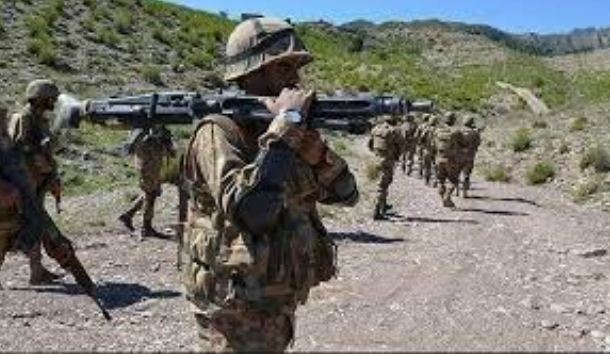
Rawalpindi, APR 11: /DNA/ – On the night 10/11 April, Security Forces conducted an IBO in general area Nurar, Bannu District on reported presence of terrorists. 

During the conduct of the operation, a fierce fire exchange took place between own troops and terrorists. Resultantly, all three terrorists were sent to hell. 

Weapons and ammunition were also recovered from the killed terrorists.

The killed terrorists remained actively involved in terrorist activities against security forces and killing of innocent citizens. 

Locals of the area appreciated the operation and expressed their full support to eliminate menace of terrorism from the area.

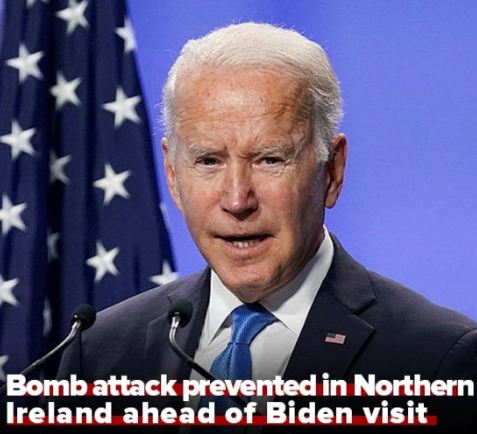
Bomb attack prevented in Northern Ireland ahead of Biden visit

Before the visit of US President Joe Biden to Northern Ireland, tensions rose in the country. In celebration of the 25th anniversary of the Belfast Agreement (Good Friday Agreement), a protest was held in the city of Londonderry by nationalists who were against the agreement.

During the protests, a masked group attacked the police vehicle with Molotov cocktails.

Police announced that evidence was collected at the scene and that an investigation into the attack would be conducted under the 2000 Terrorism Act.

It was reported that there were no casualties or injuries in the attack.

Bomb attack on Biden thwarted
Northern Ireland police also announced that the IRA’s bombing plan, which wanted to provoke the visit of US President Biden, was blocked.

Members of the republican paramilitary group New IRA (New Irish Republican Army) were searching for bomb parts, The Belfast Telegraph reported. “They were looking for parts to make a bomb,” an unnamed source told the newspaper.

A Republican source also told the newspaper that New IRA leader Thomas Mellon wanted to dwarf Biden’s visit in a “flashy” way.

British Minister for Northern Ireland Chris Heaton-Harris had announced that the terrorist threat level in Northern Ireland had been raised from “significant” to “serious”, where the probability of an attack is high, and stated that the decision was taken by MI5, the British domestic intelligence agency.

Biden will arrive in the capital Belfast and visit Ireland on Wednesday.

Pak vs NZ: Kiwis squad reaches Pakistan for ODI, T20 series

LAHORE: New Zealand squad led by Tom Latham reached Pakistan on Tuesday to play ODI and T20 series. The Kiwis will play five 50-over matches and a same number of T20Is during the tour.

The Blackcaps squad landed at Lahore airport today and was taken to the hotel under tight security. The players will rest for two days before starting their practice on April 13.

The five-match Twenty20 series against New Zealand will be played in Lahore (April 14, 15, 17) and Rawalpindi (April 20, 24). The ODIs will be played in Rawalpindi (April 27, 29) and Karachi (May 3, 5, 7).

‘Challenging tour’
After reaching Pakistan, NZ all-rounder Daryl Mitchell said that they are very excited about the T20 and ODI series in Pakistan.

“There are young players in the team who have not played in these conditions before.”

Terming the Pakistan tour a “challenging” one, the player said that Pakistan has a world-class team.

“Conditions are quite different here from New Zealand and young players will gain experience,” he said.

“The series is quite long. We will try to play good cricket.”

Pakistan squads
T20: Babar Azam (captain), Shadab Khan (vice-captain), Faheem Ashraf, Fakhar Zaman, Haris Rauf, Iftikhar Ahmed, Ihsanullah, Imad Wasim, Mohammad Haris, Mohammad Nawaz, Mohammad Rizwan, Naseem Shah, Saim Ayub, Shaheen Shah Afridi, Shan Masood and Zaman Khan

ODI: Babar Azam (captain), Shadab Khan (vice-captain), Abdullah Shafique, Fakhar Zaman, Haris Rauf, Haris Sohail, Ihsanullah, Imam-ul-Haq, Mohammad Nawaz, Mohammad Rizwan, Mohammad Wasim, Naseem Shah, Salman Ali Agha, Shaheen Shah Afridi, Shan Masood and Usama Mir

SC receives ECP’s report on non-provision of funds for Punjab polls

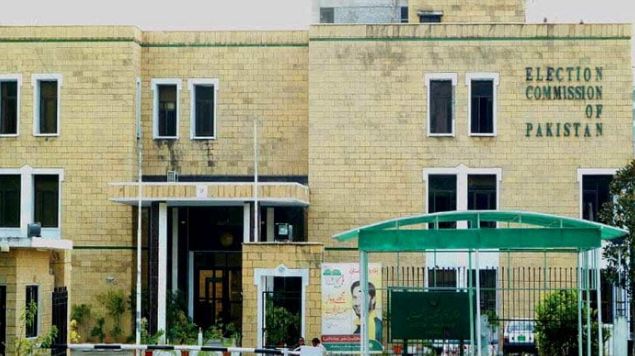
ISLAMABAD, APR 11: The Election Commission of Pakistan (ECP) submitted on Tuesday a report to the Supreme Court on the non-provision of election funds as the federal government failed to release the finances to hold polls in Punjab.

A three-member bench, headed by Chief Justice of Pakistan (CJP) Umar Ata Bandial had directed the electoral body to hold elections in Punjab on May 14, and the federal government to provide funds worth Rs21 billion to ECP by April 10.

The report was submitted to the SC’s Registrar’s Office in a sealed envelope, which will be sent to the chambers of CJP Bandial, Justice Ijaz ul Ahsan and Justice Munib Akhtar.

It may be noted that the top court had warned of action in case of non-compliance with the orders.

Despite the orders, the government failed to meet the deadline set by the apex court as the ECP has not yet been financed. Instead of providing the funds in time, the government on Monday tabled a bill seeking approval of funds for the elections in both Punjab and Khyber Pakhtunkhwa.

As per the decision of the federal cabinet, Finance Minister Ishaq Dar introduced the money bill, saying that the government was laying the bill before the house in the light of the Supreme Court orders to release Rs21 billion to the ECP to hold a general election in the two provinces.

The finance minister said the federal cabinet, in its recent meeting, pondered over the SC orders and, in view of the house’s resolution, sought the will of Parliament to take a final decision regarding the allocation of funds for the Punjab and KP general election.

The move came after the SC had declared the ECP’s decision on the Punjab and KP elections null and void, while ordering it to hold snap polls — a persistent demand forced by Pakistan Tehreek-e-Insaf (PTI) Chairman Imran Khan after he dissolved the assemblies in both the provinces.

The apex court had given the date of May 14 for the polls in Punjab. However, the verdict which was supposed to be a way out of the ongoing political and constitutional crisis further deepened it as the government rejected the SC ruling.

Besides, the money bill, the government also stresses holding the elections in the entire country simultaneously.

On Monday, the parliament’s joint sitting also adopted a resolution stressing the holding of general elections of the national and the provincial assemblies simultaneously to “strengthen the federation”.

Rana Tanveer inaugurates PhD Country Directory Online System at HEC

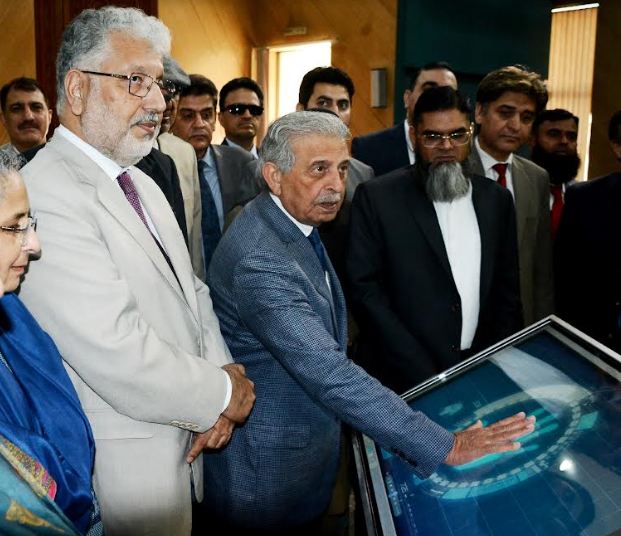
Islamabad, APR 11: /DNA/ – Minister for Federal Education and Professional Training Mr. Rana Tanveer Hussain inaugurated on Tuesday the PhD Country Directory Online System at the Higher Education Commission (HEC), Pakistan. Through the launch of the online system that can be accessed through https://eservices.hec.gov.pk/#/pcd, the HEC’s conventional PhD Country Directory (PCD) setup has been automated to improve efficiency in the PCD registration process of PhD scholars in Pakistan.

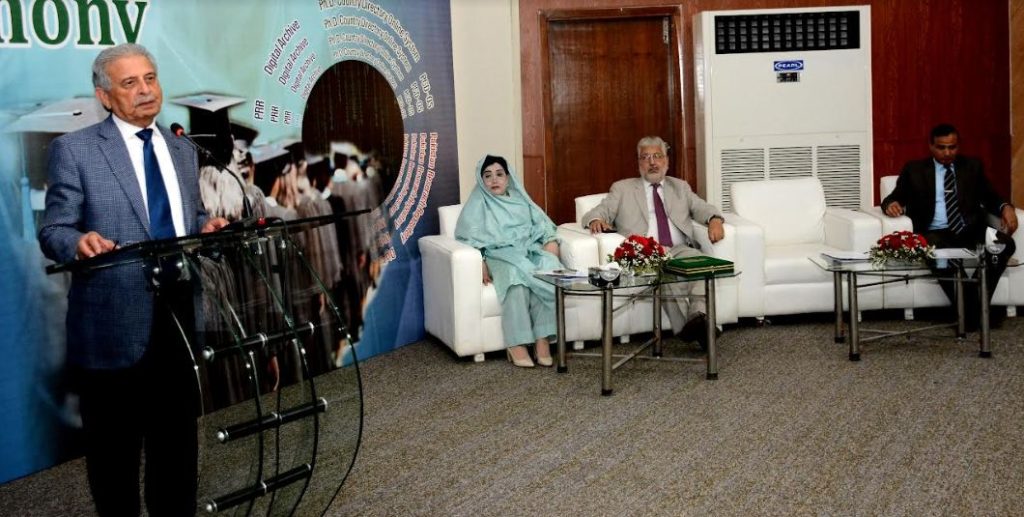
A ceremony, held in this connection, at HEC Secretariat was attended by Chairman HEC Dr. Mukhtar Ahmed, Executive Director HEC Dr. Shaista Sohail, Vice Chancellors of different universities, and a large number of PhD scholars.            

The PCD Online System, developed by HEC Higher Education Data Repository with the help Information Technology (IT) and other Divisions, will enable inclusion of Pakistani PhDs in the HEC data, through university focal persons, within a few days without submission of documents or applications in the hard form. Earlier, the PCD processes involving five stages took a PhD scholar several months to be part of the registered PhD community of Pakistan.

Addressing the ceremony, Rana Tanveer Hussain termed the launch of PCD Online System commendable and hoped that the development will benefit the PhD scholars in a hassle-free manner. He highlighted the importance of employing technology in institutional operations to make processes easier for the public. He emphasised the need for investment in human capital and underlined the role of HEC in developing human resources for the country.

The Minister stated that the development of higher education and marketable, need-based research is the key to progress and prosperity of a nation. He advised the universities to establish special on-campus setups for promotion of skill-based education. He urged the universities to enhance financial discipline, engage with industry, encourage entrepreneurship, and turn Offices of Research, Innovation and Commercialisation (ORICs) into earning entities.

Chairman HEC Dr. Mukhtar Ahmed said that HEC will soon automate all of its functions and processes to facilitate students, faculty and general public, adding that the HEC degree verification system will be synched with NADRA database to make attestation easier. The objective of this concept is to improve efficiency, improve quality, and better facilitate people, he underscored. He urged the Vice Chancellors to help HEC expedite delivery of services to the academic community and students. He said that HEC is committed to ensuring delivery of services to the nation in the best possible way.

In her opening remarks, Dr. Shaista Sohail asserted that the inauguration of PCD Online System, within a short period of only three months, will accelerate the registration of PhDs as currently 29300 PhDs are part of the PCD data.  

Earlier, Director General HEDR Mr. Ghulam Nabi shared a detailed presentation on a comparison between the conventional PCD launched in 2009 and the flagship PCD Online System. He informed the audience that HEC trained over 300 focal persons of universities on the new PCD System and received feedback from universities for incorporation. He said HEC HEDR, while heading towards paperless environment, will announce the launch of Online Data Collection System; Online Ranking System; Datawarehousing and Analytics; and Statistical Booklet in the next few months.    

Stay Connected

64FansLike
60FollowersFollow

Latest Reviews

Exchange Rates

USD - United States Dollar
EUR
1.16
GBP
1.34
AUD
0.67
CAD
0.72