Home Blog Page 1178

Shaheen meets Italian Ambassador to Afghanistan

Shaheen meets Italian Ambassador to Afghanistan

DOHA: IEA’s Permanent Representative to UN, and head of Political Office in Doha Suhail Shaheen met with the Ambassador of Italy to Afghanistan and her accompanying delegation Natalia Quintavalle, he said on his Twitter page the other day.

The meeting discussed the current situation of the country including, IEA’s achievements in the field of narcotics, treatment of drug addicts, education, development projects, investment, poverty reduction, etc, he said in his Twitter. “The Islamic Emirate has always been committed to expanding and speeding up its efforts towards eradication of narcotics in Afghanistan,” Shaheen said.

Emphasizing on rooting out of narcotics cultivation and production in the country, Shaheen asked the international community to support the Islamic Emirate in countering narcotics. All sides emphasized the continuation of such meetings and discussions on a regular basis.

Hashoo Group: Leading the way in sustainable tourism: CEO

Hashoo Group: Leading the way in sustainable tourism: CEO

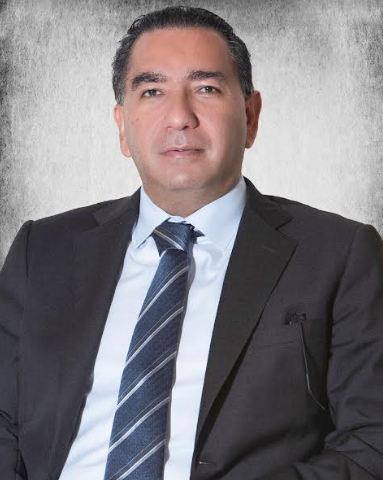
Deputy Chairman & CEO, Hashoo Group, Murtaza Hashwani, on World Tourism Day.

A COMMITMENT TO A GREENER FUTURE, SUSTAINABLE HOSPITALITY & TOURISM IN PAKISTAN.

ISLAMABAD – SEPT 26: /DNA/ – Pakistan’s hospitality & tourism industry is poised for a remarkable transformation. From the enchanting northern valleys to the historical treasures in the south, our nation offers a diverse tapestry of experiences for travellers. As we celebrate World Tourism Day 2023 under the theme “Tourism and Green Investment,” it is an opportune moment to reaffirm our collective dedication to sustainable and eco-conscious tourism, a sector with boundless potential for our country and the world.

This global observance underscores the critical importance of channeling investments into initiatives that benefit People, through education and skill development, Planet, via sustainable infrastructure and accelerated green transformation, and Prosperity, by fostering innovation, technology, and entrepreneurship.

At Hashoo Group, we ardently believe in investing in people and society. The Hashoo Foundation has been providing training and capacity building to over 10,000 individuals in the tourism sector, covering areas such as hotel management, professional culinary arts, food &beverages services, and reception operation services. These training programs have played a pivotal role in assisting local communities in developing the skills and knowledge necessary for the sustainable management of tourism.In addition to this, through the recent establishment of the Hashoo School of Hospitality Management (HSHM) in various cities, we are actively contributing to the creation of a skilled workforce and generating numerous opportunities for the youth of Pakistan.

Moreover, we are staunch advocates for investing in our planet. The Hashoo Foundation has been actively promoting the green economy through a multifaceted approach that includes the advancement of Sustainable Methods and Resilient Technology (SMaRT) villages and the encouragement of environmentally friendly green tourism. The village projects in Gurunjor and Minapin have significantly improved the lives of more than 10,000 villagers. These projects have granted villagers access to clean water and sanitation facilities, assisted farmers in adopting more sustainable agricultural practices, and successfully installed renewable energy systems within the villages.

Our comprehensive Net-Zero initiatives spanning all our properties and our ongoing tree plantation campaigns at our resort hotels, as well as the recent tree plantation collaboration with the Capital Development Authority in Islamabad, exemplify our unwavering commitment to green investment.

The natural beauty of Pakistan and the warmth of its people should not only be cherished by the present generation but also safeguarded for posterity. Our commitment to sustainability holds the power to redefine the sector, elevating it from a mere source of revenue to a potent catalyst for positive change.

Together, let us embark on this voyage toward sustainable tourism and green investment. In doing so, we ensure that Pakistan’s pristine landscapes, culturally rich heritage, and unmatched hospitality endure as everlasting gifts to the world. Let us collectively envision a future where tourism and green investment are not disparate endeavours but harmonious forces, working in tandem to preserve the beauty and vitality of our precious planet. Together, we can turn this vision into a reality. Happy World Tourism Day!

Federal Cabinet okays plan to repatriate 1.1m illegal Afghan nationals

Federal Cabinet

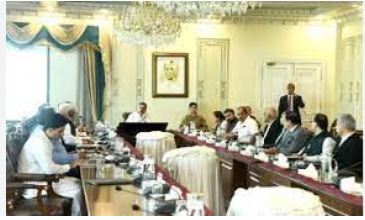
ISLAMABAD, SEP 26 (DNA) — The caretaker federal cabinet has okayed sending over 1.1 million Afghan nationals back to Afghanistan who are residing illegally in Pakistan. A decision to this effect was taken by a meeting of the caretaker cabinet held in Islamabad on Tuesday. 

The decision comes in the wake of mounting concerns over the involvement of some of these individuals in various illicit activities, including terrorism, currency smuggling, and the illegal trade of essential commodities such as sugar and fertilizer.

The illegally staying Afghan citizens have also been accused of providing funding and support to terrorist organizations, posing a grave threat to the security of Pakistani citizens. The cabinet decision follows the influx of approximately 400,000 Afghans into Pakistan after the United States completed its withdrawal from Afghanistan in 2021.

At least 0.7 million Afghans have not renewed their proof of residence in Pakistan, aggravating the issue of illegal residency. The eviction plan will be executed in three phases. In the first phase, individuals residing in Pakistan without proper documentation and those who have failed to renew their visas will be deported.

Subsequently, the second phase will focus on addressing the status of Afghan citizens, while the third phase will target proof of residence card holders. The Ministry of Interior collaborated with all relevant stakeholders, including the Afghan government has formulated this comprehensive plan.

It is noted that law enforcement agencies launched a renewed crackdown on Afghan refugees, with the aim of exerting pressure on the Kabul administration  to curb the activities of the militant network TTP. 

PTI Chairman Imran Khan transferred to Adiala Jail

Imran

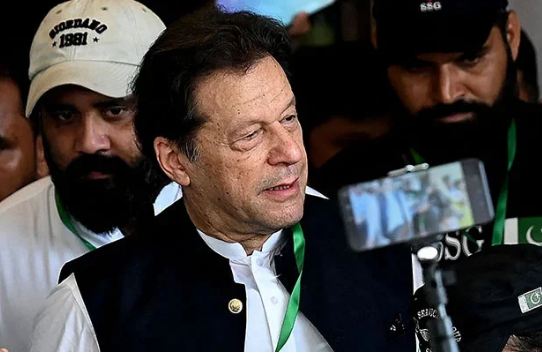
ISLAMABAD, Sep 26 (DNA): Islamabad Police took PTI Chairman Imran Khan from Attock Jail to Adiala Jail on Tuesday, following the orders of the Islamabad High Court.

The police convoy consisted of 15 vehicles, including two armoured

vehicles and one ambulance with doctors and paramedical staff.

The transfer was carried out under strict security measures to ensure

the safety of the PTI chairman, who is facing charges of terrorism on

May 9 and corruption.

Imran Khan is shifted to Adiala Jail from Attock Jail on the orders of

Islamabad High Court Chief Justice Aamer Farooq passed yesterday

(Monday).

During the case proceedings yesterday, Chief Justice Farooq remarked

that the under-trial prisoners of Islamabad were kept in Adiala Jail.

IHC Chief Justice said the PTI chairman was transferred to Attock Jail

before his sentence (in the Toshakhana case) was suspended. But now

Imran’s sentence in the case has been suspended and he is an undertrial

prisoner now, the judge observed.

“According to law, the undertrial prisoners of Islamabad are kept in

Adiala Jail. Transfer him to Adiala Prison,” the chief justice ordered,

inquiring further which class was given to the former premier. He said

that the court was told that the A and B classes had been abolished in

the jail facility.

The chief justice remarked that the PTI chairman deserved a better class

as he was the former prime minister of the country. He said that Imran

Khan was an educated person.

Interestingly, in a surprising turn of events, before transferring from

Attock Jail to Adiala Jail, PTI Chairman Imran Khan submitted an appeal

to the court not to move him from Attock Jail to Adiala Jail and

withdrawn his previous application to shift to Adiala Jail.

The sources said PTI Chairman Imran Khan told the court that he wants to

continue his stay in Attock Jail instead of moving to Adiala Jail, as he

had previously requested.

PTI Chairman Imran Khan who is registered as a Prisoner Number 804 in

Attock Jail also told the court that he is more comfortable in Attock

Jail and does not want to change his location.

On the instructions of Imran Khan, his lawyers submitted a new

application regarding not to transfer the PTI chairman from Attock Jail

to Adiala Jail. But, before any decision on this appeal, he has been

shifted to Adiala Jail.

Good news for Hajj pilgrims

Hajj

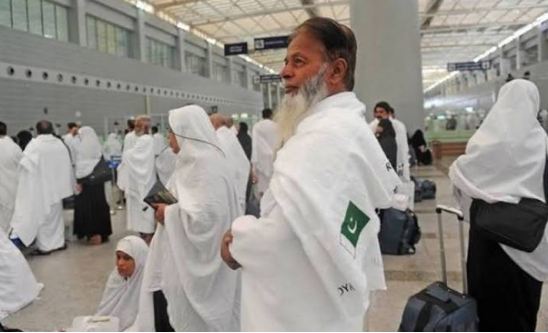
ISLAMABAD, SEP 26 (DNA) — The caretaker government has prepared the Hajj policy 2024 which have some good news for Pakistan Hajj pilgrims.

The Caretaker Minister for Religious Affairs Aneeq Ahmed said in a statement that the federal cabinet will approve the Hajj policy within 10 days as the delay in approval of the Hajj policy resulted in several problems.

He said that the policy also includes 40 days and short-duration Hajj. Pakistan Hajj pilgrims will not get lost now as the ministry will provide them with two suitcases with specific colour and designs, he added.

The Minister further said that the documents of Hajj pilgrim including passport, residence and other details will be available in the QR code on the suitcase. Additionally, the pilgrims will be able to talk on call to Pakistan with unlimited call time.

Earlier, Caretaker Minister for Religious Affairs and Interfaith Harmony, Aneeq Ahmed said that the Saudi Arabia government would provide additional facilities and improved services to Pakistani pilgrims during the Hajj 2024.

He said accommodation, meals, and transportation for pilgrims would be improved with a more comfortable and convenient experience.

Saudi Minister for Hajj and Umrah, Dr. Tawfiq bin Fawzan Al-Rabiah, assured of Saudi Arabia’s commitment to further cooperation with Pakistan. He highlighted that the Saudi government was continuously working to improve services for Pakistani pilgrims, and several new initiatives had been taken to ensure their comfort and convenience. — DNA

Pakistan firmly rejects recognition of Israel: Tahir Mahmood Ashrafi

Pakistan firmly rejects recognition of Israel: Tahir Mahmood Ashrafi

Pakistan and Saudi Arabia Stand Firm on Palestine and Kashmir Issues

Interfaith Harmony Conference in Lahore on October 1, 2023

No Pressure from Saudi Arabia on Israel Recognition: Pakistan Ulema Council

LAHORE, /DNA/ – Pakistan is not recognizing Israel. Pakistan and Saudi Arabia will only accept  solutions to the Palestine and Kashmir, which will be accepted by  Palestinians and Kashmiris, said Hafiz Muhammad Tahir Mahmood Ashrafi, Chairman Pakistan Ulema Council, President International Interfaith Harmony Council.

While addressing a press conference here on Tuesday in Lahore, Hafiz Muhammad Tahir Mahmood Ashrafi said that the establishment of an independent Palestinian state is near.

 Hafiz Muhammad Tahir Mahmood Ashrafi also announced that leaders of all the religions and religious sects have been invited to the Sirat Rahmatul-ul-Alameen Conference, which has been scheduled to be held in Lahore on 1st October 2023.

Hafiz Muhammad Tahir Mahmood Ashrafi underscored that inter-religious and Interfaith tolerance and harmony is the need of the hour. 

 Chairman Pakistan Ulema Council and President of International Interfaith Harmony Council Hafiz Muhammad Tahir Mahmood Ashrafi while addressing a press conference in Lahore was also flanked by

 Maulana Muhammad Aslam Qadri, Maulana Mubashir Rahimi, Maulana Abdul Ghaffar Farooqui, Maulana Ibrahim Hanafi, Mufti Syed Naseem Islam, Mufti Falak Sher, Mufti Rahmat Din, Qari Kifayatullah, Maulana Nasir Haqqani, Qari Faisal Amin and others religious scholars.

Hafiz Muhammad Tahir Mahmood Ashrafi said that Pakistan’s position on the issue of Palestine and Kashmir is very clear and explicit and baseless rumors should be avoided in this regard.

 The Organization of Islamic Cooperation has also and especially the Kingdom of Saudi Arabia have clarified their position on the Kashmir issue during the recent meeting of United Nations  General Assembly.

Pakistan and Saudi Arabia are natural allies and it is not possible that solution to Kashmir and Palestine issues should be accepted without the consent of the Palestinians and Kashmiris.

 Kashmiris should be given rights according to UN resolutions and Palestinians should be given an independent state.

Hafiz Muhammad Tahir Mahmood Ashrafi also pointed out that peace efforts on part of Saudi Crown Prince Muhammad bin Salman also aims for peaceful solutions of Kashmir and Palestine issues.

 Saudi Arabia is not putting any pressure on Pakistan on the issue of Israel, spreading false news and rumors in this regard should stop, said Hafiz Muhammad Tahir Mahmood Ashrafi.

 He said that forces hostile to Islam and Pakistan have made an evil plan to sabotage the atmosphere of inter-faith harmony on Pakistani soil, which has has been foiled.

The conspiracy to sabotage religious harmony in Sargodha and it’s adjoining areas has been foiled with coordinated efforts of Ulemas-Mashaykh and country’s security institutions.

 Islam is a religion of peace and tolerance, which protects the rights of the minorities, said Hafiz Muhammad Tahir Mahmood Ashrafi.

 Chief of Army Staff, General Syed Hafiz Asim Munir, in a meeting with the leaders of the Christian community, has clearly explained to them the teachings of Islam.

Hafiz Muhammad Tahir Mahmood Ashrafi said that the Pakistan Ulema Council is organizing a Sirat-e Rahmatul-ul-Alameen ﷺ Conference in Lahore on October 1st, 2023 in connection with the month of Rabi-ul-Awwal, in which the leaders of different  religious schools of thought and religions across the country have been invited to participate.

 In this conference, an important action plan will be announced regarding inter-faith and inter-religious harmony in the country, said Hafiz Muhammad Tahir Mahmood Ashrafi.

ICC World Cup 2023: Babar Azam says Pakistan going to India with ‘high morale’

ICC World Cup 2023

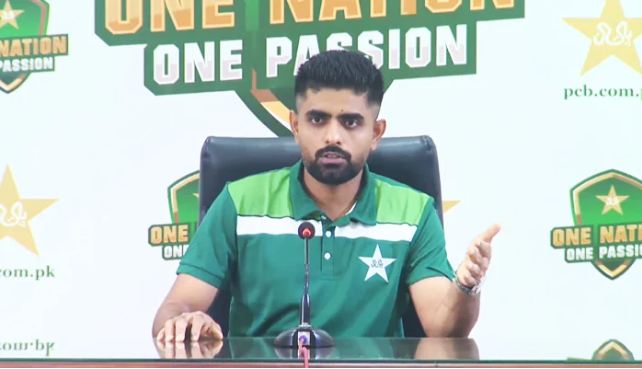
Pakistan skipper Babar Azam said Tuesday the Green Shirts were filled with confidence ahead of their departure to India for the ICC Men’s World Cup, with an eye on the coveted trophy.

“As a team, our morale is very high, we have confidence. We will try to play our best. I request all of you to pray for the team,” the skipper said during a pre-departure press conference in Lahore.

The team heads to the 50-over tournament after their setback in the recently concluded Asia Cup, where they came fourth and their ICC ODI ranking fell to second, but the skipper believes the debacle helped the team learn.

“We could not deliver up to the mark, but we learned from it. We just don’t point out our errors, but we also talk about how to improve those sides,” the captain noted.

https://youtube.com/watch?v=pGBdJ4SWhDY%3Fsi%3DFoGkGguUvGZLvTV0

Babar said the team’s planning for the Asia Cup was different, and another plan for the upcoming event would be different.

“The conditions are different from Asia Cup. We will monitor the conditions, and whatever is best for Pakistan, we will go into the match with that planning,” the stylish batter noted.

‘I trust my players more than I trust myself’

The team has been under criticism due to its lacklustre performance in the Asia Cup, with several pundits agreeing that the Green Shirts were lacking in middle-over bowling.

“I spoke to Shadab Khan and we gave confidence to each other. I and Shadab know that we aren’t bowling well in the middle overs, but I trust my players more than I trust myself,” he said.

The captain noted that this was the same squad that made Pakistan the number 1 ODI team and that he was well aware of the players who fought for the team.

Due to Naseem Shah’s injury, the team has included Hasan Ali in the squad despite him not representing Pakistan in the 50-over format for more than a year.

The captain, in response to a question, said Ali was picked due to his experience. Babar said that he and seven to nine other players were playing together since 2019, noting that he prefers keeping those in the squad he trusts.

“I make very few changes; when we are together, we produce good results. A player should be supported when he is not doing well,” he said, noting that the team would miss Shah.

Playing for first time in India

The captain, who will be playing in India for the first time in his years-long career, said he was excited and not worried about the conditions in the neighbouring nation.

Only two players from Pakistan’s current squad have travelled to India for cricket before — Mohammad Nawaz, who was part of Pakistan’s 2016 T20 World Cup squad and Agha Salman, who was in the Lahore Lions’ squad for the Champions League T20.

“I’m very excited to play in Ahmedabad. It is the biggest stadium in the world and will be jam-packed for the India-Pakistan clash,” he said.

“I have spoken to former cricketers about the condition and they are not that different,” he said.

“I will try to perform to the best of my ability. I can’t exactly tell you how I will do since I’m not an astrologer.”

“I’m not worried about my performance. I always try to perform in a manner that suits the team,” he added. 

‘Rift’ with Shaheen?

The Pakistan skipper also rejected reports of a “war of words” with pacer Shaheen Afridi, saying the players “love each other like a family”.

“Since when you became captain, the team has given you respect and everyone honours you a lot, even Iftikhar Ahmed considers you elder brother,” a journalist asked Babar.

He was then asked about rumours of differences within the team.

“There were reports regarding Shaheen Afridi after the Asia Cup debacle so the fans want to know how good your bonding is with Shaheen Afridi and how much he respects you?”

In response, Babar said: “Everyone gives me respect…. and see when you lose close matches then certain [diagreements] do take place in team meetings but this was taken out of context that there was a duel between us.”

“There’s nothing like this. We have the same respect for each other and will remain the same. We love each other like a family.”

Editorial: What is the SFIC up to?

Ansar M Bhatti

The Special Investment Facilitation Council (SIFC), unveiled in June this year, seems to be a concerted effort by the military leadership to bolster the struggling economy of our nation. Although the precise mechanisms by which this novel initiative will rejuvenate Pakistan’s ailing economy remain unclear, it has ignited a significant debate: Was there a genuine necessity for such an entity when pre-existing institutions like the Board of Investment (BOI) have, thus far, failed to yield tangible results? Is it wise to establish additional institutions, potentially funded by the public treasury, when previous institutions of a similar nature have failed to deliver desired outcomes? What sets apart the SFIC from the BOI, addressing the gaps that were evident in the latter?

Assuming that SFIC aims to distinguish itself from other institutions, the key question for attracting foreign investments is the quality of our business environment. Unfortunately, our current conditions fall short. Conversations with diplomats in Islamabad reveal that foreign investors are primarily concerned about law and order, legal procedures, and a conducive business environment for their operations.

There is no doubt that the blue economy plays a pivotal role in shaping a country’s overall economic landscape in today’s world. Countries such as Indonesia and our neighboring nation, India, have made significant efforts to prioritize and harness the potential of the blue economy. It is quite striking that the concept of the blue economy seems conspicuously absent from our national priorities. Notably, even the newly-formed SFIC lacks representation from the maritime ministry, indicating a lack of recognition for Pakistan’s untapped potential in the blue economy. This represents a missed opportunity for the SFIC, which should ideally be an inclusive organization, capable of leveraging resources from all available sectors.

Undoubtedly, Pakistan is in dire need of immediate measures to bolster its economic well-being. However, it is imperative that any new initiatives are meticulously planned and executed, preceded by thorough research and analysis. Rushing into initiatives without a comprehensive approach can risk yielding suboptimal outcomes.

Economic stability is undeniably intertwined with political stability, and the most viable path to attaining this political stability hinges on conducting free, fair, and punctual elections. This is a fundamental step in ensuring that the nation’s governance is representative and accountable to its people.

Speculations on petroleum products prices be avoided, says Solangi

Speculations on petroleum products prices be avoided, says Solangi

ISLAMABAD, Sep 26 (DNA): Minister for Information and Broadcasting Murtaza Solangi on Tuesday said that speculations regarding prices of petroleum products be avoided.

Using his X account, formerly Twitter, while tagging a news item of Khaleeq Kiani he said he appreciated the Oil and Gas Regulatory Authority ( OGRA)  for asking everyone to avoid speculations.

Thanking Khaleeq Kiani the minister said, “I was not in the business of speculations. During a presser, i was asked if the prices of POL were about to go up north. I clearly said the prices of petroleum products are mainly determined keeping in the prices in the international market and the dollar-rupee exchange rate.”

The minister clarified that he did mention a published report the same day predicting a price cut, without saying if that possibility was around the corner or not.

Murtaza Solangi said it remained the domain of OGRA and it was the only body to make any announcement about the petroleum products prices.

The minister said he did not hint at what was reported in a national English daily.He said it would help both the newspaper and Khaleeq Kiani to listen to the question asked to him and his complete answer before making any conclusion about it.

The minister also shared a paragraph  from the news report : ” Interestingly, the hints at price reductions were made by caretaker commerce Minister Gohar Ijaz and Caretaker Information Minster Murtaza Solangi, both of whom have no role in determining the prices”.

Elections Without PTI…

A Row costing $9 billion to India & Canada 

By Qamar Bashir | Former Press Secretary to the President | Former Press Minister to the Embassy of Pakistan to France | Former MD, SRBC

The Election Commission, under the weight of severe public outcry and the collective demand of all political parties (with the exception of PML(N), has declared that the general elections will take place at the end of January 2024. This announcement, while arriving nearly 90 days later than constitutionally required, has been met with a relatively muted reaction from political parties. It appears that, rather than dwelling on the inordinate delay, political parties are content with the assurance that elections will indeed occur, dispelling earlier predictions of indefinite postponement by political pundits and analysts.

With the elections now just four months away, ideally, political parties will have ample time to refine and reconsider their manifestos, redefine their messaging and focal points, and offer the people of Pakistan a vision of a promising and inspiring future. This newfound clarity on the election date brings an opportunity for political renewal and the chance to inspire hope and dreams of a brighter tomorrow for the citizens of Pakistan.

But far from ideal, the political landscape remains complex and marred with uncertainties. The recent overturning of the amendment to the NAB (National Accountability Bureau) ordinance has dealt a significant blow to the core objectives of the government formed by the constituent parties of the Pakistan Democratic Movement (PDM). The leadership of both the PPP (Pakistan Peoples Party) and PML(N) now finds itself once more under the influence of the establishment, with the same formidable threat that PDM parties had previously managed to blunt now looming ominously over their heads.

Furthermore, the recent nullification of the Supreme Court Procedure and Practices Act by the outgoing Chief Justice has shattered the hopes of both Nawaz Sharif and Jehangir Tareen to participate in the 2024 elections. This legal development has created additional complications and uncertainties in an already intricate political landscape.

The PML(N) party appears to be in a weakened state when it comes to public popularity. After being in government for over 16 months, they have faced criticism for their handling of the economy, which has brought the country to the brink of financial collapse. Despite this, they continue to emphasize their efforts to save the country from default, without acknowledging the heavy burden this has placed on the people.

The consequences of their economic policies are evident in the form of hyperinflation, rising prices, a sharp increase in the exchange rate of the dollar, and one of the highest interest rates in the world, all of which have made essential goods and services unaffordable for the poor, middle-class, and even the upper-middle class. Millions of people have fallen below the poverty line, and unemployment rates have surged. As a result, many people are struggling to make ends meet, leading to widespread frustration and discontent among the public.

In this context, PML(N) and its allied parties have lost their narrative against price hikes, as many people view them as a major contributor to the inflation and economic hardships faced by the population.

Indeed, the perceived alignment of PML(N) with the establishment,  their willingness to follow orders without question, their embrace of the Army chief’s economic and financial revival doctrine aimed at attracting billions of dollars in investment and their support for laws granting unprecedented powers to the caretaker government in terms of entering into strategic agreements with foreign countries, traditionally the prerogative of the elected government, have all contributed to their image as being closely aligned with the military establishment.

Their perceived failure to protect media freedom and prevent media censorship, as well as their apparent inability to safeguard the rule of law and the principles of the constitution, their perceived failure to insulate the courts from external pressures and influence, as well as allegations of using aggressive means to influence judicial decisions, have further eroded public trust in their commitment to democratic principles. Their perceived alignment with the establishment and the actions taken in support of these policies have, in turn, diminished their ability to maintain a popular anti-establishment narrative.

Ultimately, these factors have contributed to a sense of frustration and disillusionment among the public, leading to skepticism about the ability of political parties to govern effectively and address the needs and aspirations of the people.

It is evident that the PTI party and its leadership are contending with substantial challenges, marked by persecution and harassment. A significant number of their leaders find themselves either in hiding or incarcerated. Notably, the Chairman’s unwavering resolve and refusal to be deterred by these circumstances stand out. His ability to withstand immense pressure, maintain his determination, and remain resolute in the face of adversity serves as a testament to his unwavering courage and commitment. The Chairman’s steadfastness has the potential to inspire loyalty among PTI members and supporters, while also becoming a symbol of resilience in the face of perceived political persecution.

In a decade-old interview, Mr. Imran Khan declared that he fears only Allah, cannot be influenced or silenced, and follows his own ideology. His philosophy revolves around obeying Allah’s commands and giving back to society what he has received. His vision in government is to establish a welfare state where everyone is treated equally, irrespective of wealth or power, creating conditions for people to lead fulfilling lives in line with Islamic teachings.

He has backed these words with actions, even in the face of adversity, death threats, and assassination attempts. He hasn’t sought clemency, freedom, or compromised his principles for a comfortable life abroad. His unwavering character, courage, and determination set him apart from politicians aligned with the establishment.

While in France, I observed several aspects of a welfare state. Citizens with incomes below €900 per month receive state stipends of €900. The state supports families with multiple children, cares for orphans, aids businesses affected by disasters without applications, and offers free quality education and healthcare to those in need.

Notwithstanding the popular support for PTI, in a recent interview with a foreign channel, the caretaker prime minister asserted that free and fair elections could proceed without the PTI leadership participating. He firmly stated that actions and consequences would persist for all individuals, regardless of age, gender, or profession, who were in any way linked to the events of May 9th. The Army leadership, in their recent corps commander meeting, reiterated their commitment to pursuing those involved in the May 9th incident, promising further consequences and repercussions.

The exclusion of PTI from the electoral process has the potential to unleash a cascade of repercussions, including severe political instability, economic turmoil, and widespread social unrest. PTI supporters have an array of avenues to channel their deep-seated discontent, and the situation demands prudent management to avert a full-blown crisis.

PTI supporters, alongside human rights organizations and legal fraternity, may orchestrate peaceful nationwide protests and demonstrations. Their collective outcry would serve as a resounding condemnation of sidelining the nation’s largest and most popular party from the electoral landscape. This wave of public dissent could disrupt normal life, placing businesses, education, and essential services under strain, ushering in a period of social tumult and uncertainty.

The digital sphere, both within and outside Pakistan, stands as a potent realm for political activism. PTI supporters can harness platforms such as Twitter, Facebook, and Instagram to broadcast their grievances far and wide. Trending hashtags and viral campaigns can elevate awareness about their cause, fomenting a groundswell of support that transcends geographical boundaries.

PTI supporters facing exclusion from the electoral process may leverage international channels to garner support and seek intervention. They could engage in diplomatic efforts to rally foreign governments, international bodies, and human rights organizations to condemn this exclusion and demand a fair and transparent election. Additionally, they may explore legal remedies to challenge their exclusion, potentially by filing petitions in the judiciary. Such petitions could assert that their fundamental rights to participate in a democratic process are being infringed upon.

The exclusion of PTI from the electoral process would inflict severe damage on the credibility of the entire election system, threatening to plunge Pakistan into a maelstrom of political instability. Such a move risks stoking polarization and fomenting tensions among various political factions, adding fuel to an already volatile situation. The ensuing political instability, sparked by PTI’s exclusion, would cast a dark shadow over investor confidence, imperiling economic stability. Foreign and domestic investments, the lifeblood of economic growth, may wither, thrusting Pakistan into a daunting era of economic hardship.

Moreover, the repercussions may not be confined to Pakistan’s borders. Its international relationships, built on trust and cooperation, could be strained as global observers and partners express grave concerns over the perceived injustice and lack of fairness in the electoral process. The ripple effect of such a crisis could resonate far beyond the nation’s borders, painting a bleak picture of instability and uncertainty.

Now is the time for all stakeholders, including the government, election commission, judiciary, political parties, and institutions, to set aside personal and institutional vendettas. We must consider every citizen a patriot without casting doubt on their loyalty. Coercion and brute force should be replaced with love and affection to win true loyalty, as intimidation only begets obedience, not love.

The government and institutions should emulate a caring mother, nurturing every citizen without subjecting them to humiliation. Releasing political prisoners is an act of magnanimity that honors the nation and empowers people to choose their true representatives.

The caretaker government, establishment, and election commission should prioritize fairness, transparency, and open dialogue with all political stakeholders. Upholding democratic principles and ensuring a level playing field for all parties is the path to maintaining stability and credibility in the electoral process. It’s time to unite and build a stronger, more harmonious nation.

Stay Connected

64FansLike
60FollowersFollow

Latest Reviews

Exchange Rates

USD - United States Dollar
EUR
1.17
GBP
1.35
AUD
0.72
CAD
0.73