Home Blog Page 1177

Indonesia shuts down social media sales: Small businesses rejoice

Indonesia

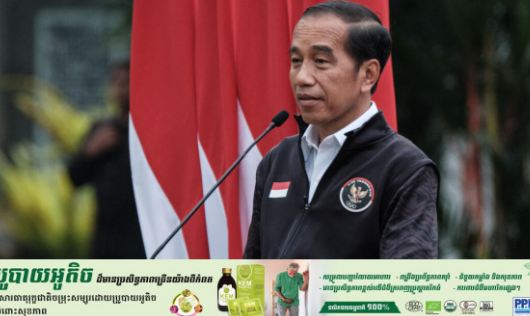
JAKARTA, Sept 27 (AFP/APP/DNA): Indonesia has banned goods transactions on social media platforms in a new regulation, its trade minister said Wednesday, as Jakarta aims to rein in direct sales on major platforms it says are harming millions of small businesses.

Calls had grown in recent months for a regulation governing social media and e-commerce, with offline sellers seeing their livelihoods threatened by the sale of cheaper products on TikTok Shop and other platforms.

  “This trade regulation has been in force (since yesterday),” Trade Minister Zulkifli Hasan told a news conference in the capital Jakarta.

He said social commerce platforms would have a week to comply with the new rule.

    “Any government would protect local small businesses,” he said, saying the regulation was passed to ensure “equality in business competition”.

  The regulation means social media firms will not be able to conduct direct transactions but only promote products on their platforms.

    “Social commerce can place ads like TV, but it mustn’t be transactional. (They) can’t open shop, can’t directly sell,” he said, without mentioning TikTok by name.

Laws in the archipelago nation did not cover direct transactions through social media platforms such as TikTok, Facebook or Instagram before the new regulation.

   The new regulation is yet another setback for TikTok, which has faced intense scrutiny in the United States and other nations in recent months over users’ data security and the company’s alleged ties to Beijing.

  “Other countries are banning, we don’t, (we’re) regulating,” Hasan said.

     Indonesia is one of the world’s biggest markets for TikTok Shop and was the first to pilot the app’s e-commerce arm.

   But Indonesia is now the first country in the region to act against the platform’s growing popularity in social media commerce.

  The ministerial-level regulation — an amendment to a trade regulation issued in 2020 — did not need approval by lawmakers.

     Chinese technology giant and TikTok owner ByteDance and TikTok Indonesia did not respond immediately to a request for comment Wednesday.

But a TikTok Indonesia spokesperson told AFP on Monday the ban would harm as many as six million local sellers who market their products on the platform.

  Meta — which owns Facebook and Instagram — did not respond to a request for comment.

How the ban will work exactly remains unclear but experts said it could mean social media firms would have to obtain a separate approval for their e-commerce arms.

 “It could be that their license will be rearranged,” said Tauhid Ahmad, executive director of the Jakarta-based Institute for Development of Economics and Finance.

 Offline sellers at Tanah Abang market in Jakarta applauded the government’s decision.

   “The government should… dare to innovate given the current situation, where markets are quiet like this,” said Stevanie Ahua, a 60-year-old wholesale denim jeans seller.

  She said her revenue had dropped by 60 percent in recent months as buyers turned to online shops.

   Others like 29-year-old cookie baker Panji Made Agung in Bali said he was disappointed by the ban.

      “For sellers like me, TikTok can be used for soft selling. We can become influencers and sellers at the same time,” he said.

    Indonesia’s e-commerce market is dominated by platforms such as Tokopedia, Shopee and Lazada but TikTok Shop gained a significant market share since launching in 2021.

   Indonesia, with 125 million users, is TikTok’s second-largest global market after the United States, according to company figures.

    TikTok’s chief executive Shou Zi Chew visited Jakarta in June, pledging to pour billions of dollars into Southeast Asia in the coming years.
PML-N Trio’s Bold Strategy: Can they challenge Imran Khan’s dominance?

PML-N Trio's Bold Strategy: Can they challenge Imran Khan's dominance?

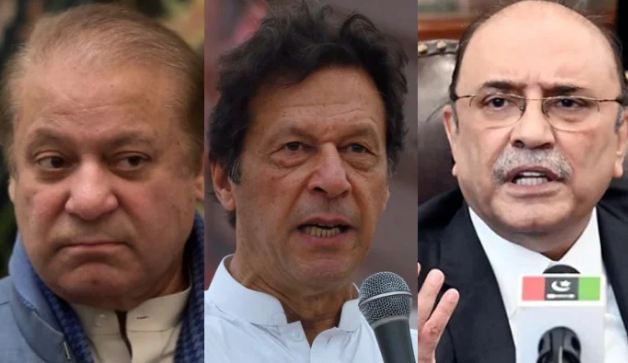
ISLAMABAD: Pakistan Muslim League-Nawaz (PML-N) leader Miftah Ismail has said that Pakistan Tehreek-e-Insaf (PTI) chief Imran Khan had surpassed all political leaders in popularity in a recent opinion poll, reported on Wednesday.

Miftah along with Shahid Khaqan Abbasi, and Mustafa Khokhar, who had earlier come up with the idea of seminars on “Reimagining Pakistan”, is also presently testing waters for the launch of a political party.

Miftah told no decision has been taken as yet, but presently they are seriously thinking on the issue.

He disclosed that they had also done a public opinion survey in July this year, which showed Imran way ahead of all in popularity.

What Abbasi said about his political future in Pakistan Muslim League-Nawaz (PML-N) and about the need for a new political party is part of the trio’s strategy to test the waters before reaching a final decision.

Abbasi, Miftah, and Mustafa are presently discussing the launch of a political party with different people besides encouraging discussion on the issue in the media and social media to assess whether it is a doable option. 

Among the three, Khokar is more keen to launch the party than the other two who are not fully clear as yet whether they should do it or not.

All three, according to Miftah, agree there is space for launching a new political party in the present political situation. The question, he said, remains whether they have the capacity to attract people to join a new political party.

Through a leading entity, conducting public opinion polls, Miftah said they have also got a survey done to assess the popularity of different political parties and leaders. Their reading of the survey report made them reach the conclusion of a need for a new political party.

The three believe a significant number of voters, who are presently inclined towards Imran Khan and PTI for their rejection of PML-N, can be attracted by a new political party because neither the staunch supporters of Imran Khan nor of Nawaz would vote for any other political party.

In view of the post-May 9 difficult situations faced by Imran Khan and his party, the PTI, it is believed the new political party may attract significant voters (not the staunch supporters) of the PTI, who would never vote for PMLN or other political party in Punjab.

Among the three, Khokhar, left the PPP after the party’s leadership objected to his certain statements criticising powerful quarters. Miftah got the cold shoulder from the PML-N top leadership for publicly defending his economic solutions, which are different from that of Ishaq Dar’s.

Miftah also criticised Dar’s policies as finance minister and argued that he too was criticised as finance minister by Dar. However, his criticism of Dar’s policies has made him an alien to Sharifs.

Abbasi has started distancing himself from the PML-N top leadership for the last several months. The PML-N top leadership was keen not to let Abbasi drift from them, but the latter sounded dissatisfied with the politics of all the three leading political parties including PML-N.

Abbasi also did not show his keenness in the PML-N ticket for the next elections, while he had already declined to continue as senior vice-president of the party after Maryam Nawaz was announced as senior vice-president and chief organiser of PML-N.

On the direction of Nawaz Sharif, Maryam had visited Abbasi at the latter’s residence in Islamabad to convince him not to leave the office of senior vice-president of PMLN. Shahid had politely declined. Now, he appears to be quitting the PML-N anytime.

Pakistan Athletics team reaches China for Asian Games 

Pakistan Athletics team reaches China for Asian Games 

By our correspondent 

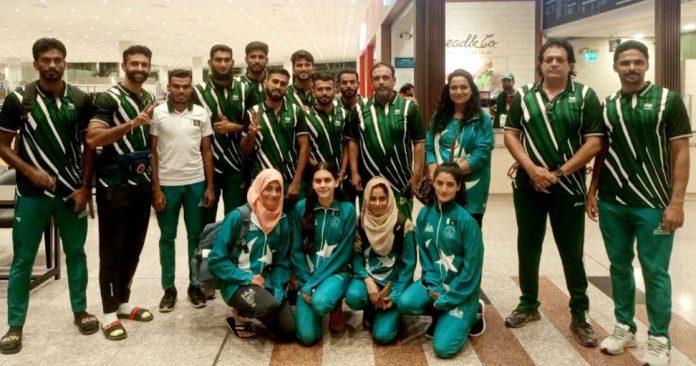
ISLAMABAD: Pakistan athletics team has arrived in China  on Wednesday to participate in the athletics competitions of ongoing 19th Asian Games at Hangzhou.

13 mens and 4 women will be seen in action in athletic competitions of the asian games, while the team officials include Olympian Sadaf Siddiqui, Fayyaz Hussain, Sajjad Mahmood and Muhammad Sajid.

´´We are thankful to the Pakistan Olympic Association (POA) and Pakistan Sports Board (PSB) for the participation of a large number of Pakistani athletes in the Asian Game´´ said Olympian Sadaf Siddiqui who is the team official of athletic team, adding that we are hopeful that the national athletes will make the country pride in the athletic competitions. 

She said that China, the host country for the Asian Games, has made the best arrangements for hosting the asian biggest event.

While Asian games athletics events will be held from September 29 to October 5 and country’s premier javelin thrower Arshad Nadeem along with Mohammad Yasir will be in action in the javelin throw event. The other athletes include Gohar Shahbaz, Shajar Abbas (100 and 200 meters race), Muhammad Asad ur Rehman (400m), Waqas Akbar (800m), Muhammad Akhtar (5000m), Farhan Ilyas, Abid Razzaq (110m and 400m hurdles), Sohail Amir (10000m race), Jafar Ashraf (pole vault), Muhammad Afzal. (Long Jump), Shehroz Khan (High Jump), Tameen Khan (100M), Ghazala Ramzan (100 Meters Hurdles), Rabila Faraq (1500M), Farhat Bano (10,000 Meters Race) will be seen in action for medal race.

On the other hand, the Athletics Federation of Pakistan (AFP) surprisingly stopped two female athletes Sahib E Asra and Arooj Kiran  from going to China a few hours before the departure, on which the athletes have expressed deep disappointment.

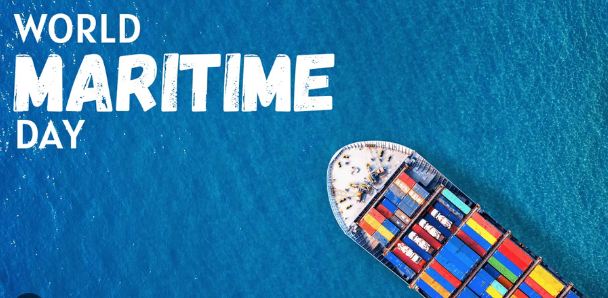
WORLD MARITIME DAY- 2023: MARPOL AT 50- OUR COMMITMENT GOES ON Every drop in the ocean counts”

WORLD MARITIME DAY- 2023

Yoko Ono

The world’s oceans, covering more than 70% of the Earth’s surface, have long been a source of fascination, trade, and exploration. These vast expanses of water have been essential to human civilization, enabling global trade, travel, and connectivity. World maritime day is celebrated each year on 28 September, to emphasize the critical significance of shipping safety, maritime security, and the preservation of the marine environment. This significant day commemorates the adoption of the International Maritime Organization (IMO) Convention on March 6, 1958, which established the IMO, a specialized agency of the United Nations responsible for regulating shipping. Each year, World Maritime Day revolves around a specific theme, focusing on various aspects of the maritime industry. The theme for this year’s World Maritime Day, “MARPOL at 50 – our commitment goes on,” underscores the International Maritime Organization’s (IMO) extensive track record in safeguarding the environment from the adverse effects of shipping through a robust regulatory framework. It also highlights the IMO’s enduring dedication to this crucial mission. The theme specifically draws attention to the International Convention for the Prevention of Pollution from Ships (MARPOL), which addresses the prevention of marine environmental pollution by ships from operational or accidental causes.

Additionally, the International Convention for the Prevention of Pollution from Ships, or MARPOL, holds a central position in maritime law and environmental protection. It was adopted in 1973 and entered into force in 1978. Over the past five decades, MARPOL has undergone several amendments and annexes, making it one of the most important international treaties addressing the prevention of pollution from ships. MARPOL encompasses six main annexes, each dealing with specific aspects of ship-source pollution: Annex I – Prevention of Pollution by Oil: This annex sets strict regulations for the discharge of oil and oily mixtures from ships. Annex II- Control of Pollution by Toxic Liquid Substances in Bulk: it governs the discharge of harmful chemicals and substances carried in bulk. Annex III- Prevention of Pollution by Harmful Substances Carried by Sea in Packaged Form: it addresses the packaging and labeling of harmful substances transported by sea. Annex IV- Prevention of Pollution by Sewage from Ships: this annex regulates the discharge of sewage from ships. Annex V- Prevention of Pollution by Garbage from Ships: it covers the disposal of garbage, plastics, and other solid waste at sea. Annex VI- Prevention of Air Pollution from Ships: it addresses air emissions from ships, including sulfur and nitrogen oxide emissions.

Furthermore, this theme serves as a catalyst for vital discussion concerning the future trajectory of the International Maritime Organization’s (IMO) endeavors to fortify planet’s safeguarding and the preservation of its oceans. This theme is intricately intertwined with the United Nations’ 2030 Agenda for Sustainable Development and its 17 Sustainable Development Goals (SDGs). These encompass a spectrum of critical objectives, such as ensuring affordable and clean energy (SDG 7), fostering industry, innovation, and infrastructure (SDG 9), addressing climate change and sustainably managing oceans, seas, and marine resources (SDGs 13 and 14), as well as recognizing the paramount importance of partnerships and effective implementation to realize these aspirations (SDG 17). In essence, the theme underscores the imperative of aligning maritime practices with these global sustainability goals, thereby affirming the maritime community’s unwavering commitment to a better, more sustainable future for our planet and its precious oceans.

Moreover, the concept of ‘marine safety’ addresses the safety of ships and maritime installations with the primary purpose of protecting maritime professionals and the marine environment. Marine safety in the first place implies the regulation of the construction of vessels and maritime installations, the regular control of their safety procedures as well as the education of maritime professionals in complying with regulations. Marine safety is closely linked to the work of the International Maritime Organization and its Maritime Safety Committee which acts as the core international body for developing rules and regulations.

In addition to it, safety concerns are core to maritime security given that it may involve environmental and cultural interests. Marine safety has also been increasingly linked to maritime security given that the maritime industry, shipping companies and their employees are simultaneously potential targets (e.g. of pirates, terrorists, or criminals) as well as potential perpetrators (by engaging in maritime crimes such as trafficking of persons, illicit goods or weapons or in collaborating with violent actors). Maritime security is however also linked to economic development. Throughout history the oceans were always of vital economic importance.

Besides, ships have significant impacts on marine pollution through various activities and sources of pollution including oil spills- accidental oil spills from ships can be catastrophic for marine environments. These spills often occur during refueling, oil transfer operations, or as a result of accidents, and they release oil into the ocean, harming marine life and coastal ecosystems. Air Pollution- ships emit air pollutants, including sulfur dioxide (SO2), nitrogen oxides (NOx), and particulate matter, which can contribute to acid rain, smog, and damage to marine ecosystems when these pollutants are deposited into the ocean. Ballast Water- ships use ballast water to stabilize their vessels during transit. However, this water can contain invasive species from one location and introduce them to new ecosystems when discharged at another port, disrupting local marine ecosystems. To address these issues, international regulations and conventions, such as the International Maritime Organization’s (IMO)- MARPOL and Ballast Water Management Convention, have been established to control and reduce the environmental impacts of shipping. These regulations aim to minimize pollution from ships through measures such as wastewater treatment systems, emission controls, and antifouling paint restrictions, among others. However, continued efforts are needed to ensure sustainable shipping practices and protect marine environments from pollution.

In a nutshell, World Maritime Day serves as a reminder of the maritime industry’s enduring importance and its commitment to sustainable practices. MARPOL, at 50, remains a cornerstone of maritime law, ensuring that shipping activities are carried out responsibly and in harmony with the environment. As we celebrate this day, we acknowledge the pivotal role of conventions like MARPOL in shaping a more sustainable and interconnected world, where the oceans remain a source of wonder, prosperity, and environmental preservation.

To mark World Maritime Day, Pakistan Navy is organizing seminars/ webinars to engage both the public and stakeholders in meaningful discussions about maritime conservation. These initiatives serve as platforms for experts, environmentalists, and maritime enthusiasts to come together and share knowledge, ideas, and best practices in pollution prevention. By fostering a culture of responsibility and awareness, the Pakistan Navy plays a vital role in ensuring that the significance of World Maritime Day resonates not just within its ranks but also throughout the nation, reinforcing the collective commitment to protect our oceans and promote sustainable maritime activities.

Anum Sultan, independent writer, M. Phil International Relations

A Global Tale of Oppression and Deprivation

A Global Tale of Oppression and Deprivation

Dr. Muhammad Akram Zaheer

Martin Luther King once articulated the enduring truth that “Injustice anywhere is a threat to justice everywhere.” This assertion underscores the grave implications of injustice, an insidious game of oppression, human rights deprivation, and the systematic maltreatment of vulnerable ethnic groups, thereby stripping them of life’s most fundamental necessities. A poignant example of such injustice can be discerned in the case of the Palestinians, an ancient ethnic group with a history spanning millennia, yet now mired in perpetual insecurity and aggression. The ignoble occupation of Palestine by the Jewish forces, facilitated by global powers in 1948, continues unabated, manifesting a wanton disregard for the right to life and a conspicuous absence of conscience. Regrettably, such reprehensible occurrences are not confined to one corner of the globe but are pervasive worldwide.

The aspiration of Palestinians to establish an independent nation was met with hostility from the authorities in what is purportedly a democratic Spain. Elected leaders, including Catalonia’s president, speaker, and cabinet members, were apprehended, and the special constitutional privileges of the Catalonians were arbitrarily revoked. This egregious violation of democratic norms raises a disconcerting question: Why should external forces interfere in the internal affairs of a civilization that has endured for a thousand years? The turn of the 21st century witnessed a grave transgression of international law when the United States, under the pretext of a purported nuclear threat, together with British Prime Minister Tony Blair, perpetrated a disastrous invasion of Iraq.

This audacious act of illegal occupation and catastrophic devastation inflicted upon a sovereign nation exposed the frailty of the global order. It subsequently emerged that the pretext for this operation was entirely unfounded, leading the British Prime Minister to publicly acknowledge his culpability and offer an apology. However, this apology offers little solace to Iraq, as the damage inflicted upon the once-prosperous nation over the span of 500 years is irreparable. The irrationality that permeates our world becomes ever more pronounced. Egypt, a nation steeped in an 8,000-year-old civilization, saw a brief flicker of democratic hope when Mohamed Morsi was democratically elected as president in 2012. However, his tenure was cut short within a year when he was ousted by General CC Dr. Karantrale.

Morsi met a tragic end, and despite the presence of international bodies like the United Nations, the Arab League, and the OIC, no meaningful objection was raised. Consequently, an illegal military junta continues to govern Egypt, stifling any opposition, and subverting the principles of democracy. The plight of Alexei Navalny, a prominent Russian opposition figure, serves as a poignant reminder of the fragility of democracy in certain regions. In a democracy, the Leader of the Opposition traditionally assumes the role of head of the shadow cabinet. However, in Russia, Navalny is systematically marginalized, declared “ineligible” when he seeks election, and subjected to harassment, imprisonment, poisoning, and physical abuse. These actions are incongruent with the treatment one would expect in a civilized society. Moreover, Russia’s occupation of Chechnya through the use of force remains an unresolved issue, prompting questions about the effectiveness of international organizations like the United Nations. A recent example of vindictiveness is exemplified by Belarusian President Alexander Lukashenko, who has clung to power for nearly three decades.

In the most recent election, marred by electoral fraud, Lukashenko declared him president, igniting protests across the nation. Thousands of civilians, including opposition leaders, were forcibly expelled to evade torture. Roman, a young journalist, fled into exile in Italy, only to be apprehended when a false bomb threat on his plane was invoked by the Belarusian authorities. His “crime” was the publication of critical reports on Lukashenko’s authoritarian regime, underscoring the depths to which retribution can stoop. The Uyghurs in China’s Xinjiang province represent another oppressed ethnic group that has garnered global attention due to their persecution. The efforts of activists like RabiaQaderi have shed light on the plight of the Uyghurs, with the United Nations estimating that one million Uighur Muslims are held in concentration camps in an attempt to suppress their religious activities.Finally, we come to the egregious violation of human rights in Kashmir, a region of unparalleled natural beauty and historical significance.

The tragic transformation of this once-idyllic land into a militarized zone, marked by violence and repression, stems from the unilateral decision of the Hindu Dogra king to align with India, despite the express desire of the predominantly Muslim population for independence. In 1947, the United Nations adopted a resolution stipulating a referendum to determine Kashmir’s fate, a commitment India initially accepted. However, the promise of a referendum remains unfulfilled, as time has passed and circumstances have changed, with Article 370 granting special status to Kashmir ultimately being abrogated by the Indian government. These instances serve as stark reminders of the pervasive violation of human rights and the erosion of democratic principles worldwide. In regions such as Myanmar, Thailand, Yemen, Libya, Syria, Lebanon, Ethiopia, and Sudan, chaos and human rights abuses continue unabated. It is incumbent upon us, as global citizens, to pause and reflect upon the lengths to which we are willing to go in our pursuit of justice and human rights. Do we truly possess dominion over the world that justifies such fervent tampering? History has demonstrated that even the mightiest empires, akin to Nimrod and the Pharaohs of yore, eventually met their downfall. Let us tread carefully, mindful of the consequences of our actions, and strive for a world where justice prevails over vengeance.

Saudi-Israeli deal would be a game changer but not for the reasons discussed

Saudi-Israeli deal

James Dorsey

A Saudi-Israeli agreement to establish diplomatic relations involving enhanced US commitments to Gulf security could be a game-changer for great power rivalry in the Middle East.

To be sure, US President Joe Biden and Israeli Prime Minister Binyamin Netanyahu face formidable obstacles in paying the price tag Saudi Arabia puts on the normalisation of relations with Israel.

In return for relations, Saudi Arabia has demanded legally binding security commitments from the United States, support for its nuclear programme, and unfettered access to sophisticated weaponry – conditions that would be challenged in Congress.

The kingdom has also linked diplomatic relations to ambiguously defined progress in the Israeli-Palestinian conflict – a demand Mr. Netanyahu will have difficulty meeting with his current coalition government, the most ultra-nationalist and ultra-conservative in his country’s history.

Speaking to Fox News, Saudi Crown Prince Mohammed bin Salman described the Palestinian issue as “very important” and one that “we need to solve.”

Mr. Bin Salman shied away from spelling out what a solution would entail beyond saying he hoped it “will ease the life of the Palestinians.”

Within days of the interview, Saudi Foreign Minister Faisal bin Farhan told the United Nations General Assembly and a webinar normalising relations with Israel would require a plan to establish an independent Palestinian state.

On the first visit to the West Bank by a senior Saudi official since the creation of the Palestine Authority in 1994, Ambassador Nayef al-Sudairi, the kingdom’s first envoy to the Palestinian entity, said Saudi Arabia was “working towards establishing a Palestinian state with East Jerusalem as its capital.”

Palestinian officials told their Saudi counterparts that as part of the kingdom’s agreement to recognise the Jewish state, Israel would have to stop building new settlements, expand Palestinian control over security and construction in the West Bank, accept full Palestinian membership of the United Nations, and consent to the opening of a Palestine Liberation Organisation office in Washington and a US consulate in East Jerusalem.

Nevertheless, senior Israeli officials asserted that Saudi Arabia was merely paying lip service to the Palestinian issue in talks about Israel.

A senior Palestinian official conceded “that what is being discussed includes elements that are less than statehood. We’re talking about a pathway to getting there.”

The obstacles haven’t prevented Messrs. Bin Salman and Netanyahu from raising heightened expectations recently by suggesting significant progress in agreeing on the terms of a US-Saudi-Israeli deal.

Speaking to Fox News, Mr. Bin Salman said his country and Israel were getting “closer” daily to establish formal relations. Mr. Netanyahu was equally ebullient at the UN General Assembly.

Largely overlooked in public discussions about a possible Saudi-Israeli normalisation of relations is the fact that the Saudi demands signal that the kingdom, like the United Arab Emirates, which is requesting an “ironclad” security arrangement with the United States, prefers the US rather than China to be its security partner for the foreseeable future.

“Isn’t it interesting? When you look at MbS’ asks from us, they start with he wants a defense treaty with us… What that tells you is that at the end of the day, they don’t think there is anybody else they can rely upon if they really stranded,” said Dennis Ross, a former US Middle East peace negotiator. Mr. Ross was referring to Mr. Bin Salman by his initials.

Former US National Security Council official Kirsten Fontenrose argued that Mr. Bin Salman had created a situation where he could forcefully argue for a binding security arrangement even if efforts to forge a deal with Israel failed.

“MbS looks at this and says, ‘Right now, it looks like the sticking point is Israeli politics. So, even if I don’t get this, I look like the good guy’,” Ms. Fontenrose said.

I expect there will be pressure from the Saudis moving forward, even if we don’t get normalisation, to follow through… (saying), ‘Well, we have arrived so closely on some of these ideas on a US security pact, we’ve done so much work on civilian nuclear cooperation, why don’t we just continue this?” Ms. Fontenrose added.

Even so, it is hard to believe that Saudi Arabia and the UAE think they can retain the freedom to hedge their bets and expand relations with China, as well as Russia, particularly regarding the Ukraine war and Western sanctions, in ways that the United States would see as threatening its national security and undermining its policies.

While the United States would likely not disrupt the Gulf states’ economic and trade ties with China, the Gulf’s largest trading partner, it would limit Saudi and UAE cooperation with China on geopolitical issues, nuclear development, technology collaboration, and arms acquisition.

“The administration is asking for some things from the Saudis. They want them to continue to peg oil to the dollar, there was some talk that they may allow the Chinese to buy oil with the Chinese currency… What is being asked here is not to stop their commercial relationship but to create boundaries in some of the high-tech areas… It’s a two-way street,” Mr. Ross, the former US negotiator, said.

The kingdom “cannot have it both ways. If it wants that kind of commitment from the United States, it has to line up with the United States… If our security relationship with Saudi Arabia is to be deepened because the Saudis want it, then there are certain obligations that come with that,” said former US diplomat and prominent analyst Martin Indyk.

Undoubtedly, Saudi Arabia and the UAE will test how far they can push the envelope if they come to a security understanding with the United States.

Ultimately, however, they are likely also to find that a security arrangement would, at least in the Middle East, shift the geopolitical US-China power balance in the United States’ favour.

Healthy Living through the Wisdom of Prophet Muhammad P.B.U.H

Healthy Living through the Wisdom of Prophet Muhammad P.B.U.H

Seerat Fatima

Prophet Muhammad (Peace Be Upon Him)’s life serves as a beacon for all of humanity. His life lessons are not intended for any particular group but for all of humanity. The path he advocated is indeed the path to success. Those who followed the path he prescribed prospered. In today’s age, many people, especially Muslims, are suffering due to their forgetfulness of his teachings.

He enlightened us on every aspect of life, teaching us how to navigate difficulties and confront problems. It’s not just Muslims who have benefited from his teachings; the entirety of humanity has gained from his knowledge. Success can be achieved by adhering to the Sunnah of the Prophet (peace be upon him). In today’s world, where the distinction between pure and impure is blurred, people have forgotten to prioritize their health. The human body requires nourishment, just as machinery requires fuel to function.

However, one must exercise caution in their dietary choices; otherwise, the human body may suffer from diseases. Regrettably, many individuals desire good health but lack knowledge about the secrets of maintaining it. In this regard, the Prophet’s Sunnah provides us with invaluable guidance. By following his Sunnah, we can lead healthier lives. Even modern science acknowledges that the diet advocated by the Prophet (peace be upon him), the one he preferred for himself, is optimal for human health. The Prophet Muhammad (peace be upon him) never indulged in full meals and recommended the same to others.

He disliked filling his stomach completely and even referred to the stomach as the worst vessel to fill. He consistently ate less than he was hungry and advised filling the stomach one-third with food, one-third with liquids, and leaving one-third empty. It is scientifically proven that excessive food intake leads to various disorders, with obesity being a primary concern. While there are multiple causes of obesity, overeating remains the main culprit. Excessive fat accumulation in adipose tissues leads to overweight conditions.

The Body Mass Index (BMI) is a method used to gauge body weight relative to height. An individual’s weight should align with their height, and exceeding this measurement indicates obesity or being overweight. Obesity is directly or indirectly linked to several other diseases, including coronary heart disease, diabetes, gallbladder issues, hypertension, respiratory ailments, and various forms of cancer. Obesity can also result in conditions like arthritis and lower back pain. Every country has its own culture and lifestyle. A healthy lifestyle promotes better health, while an unhealthy one endangers human lives. In developed or wealthy countries, the obesity rate tends to be higher than in developing nations, mainly due to the abundance of rich food resources. In the United States, for instance, approximately 36% of the adult population out of 339 million is obese.

Contrasting statistics exist; the World Health Organization (WHO) reports indicate that 58.1% of the almost 240 million populations in Pakistan is obese. The rate of obesity in Pakistan is higher among individuals above the age of 40 compared to young adults. Studies reveal that after the age of 25, individuals tend to gain weight more rapidly when physical activity is restricted. Urbanized lifestyles significantly contribute to the rising obesity rate, with major cities like Lahore and Karachi reporting higher obesity rates than rural areas. Pakistani cuisine, rich in fats, carbs, and sugars, plays a significant role in the obesity epidemic. Diabetes, a major consequence of obesity, is highly prevalent in Pakistan, ranking third globally in terms of diabetic patients.

Additionally, an unhealthy or poor lifestyle is a significant contributing factor. People have adopted a lifestyle with minimal physical exertion, and their daily routines lack proper scheduling. Many individuals are unaware of when and how much to eat. Prophet Muhammad (peace be upon him) beautifully taught healthy eating habits, which, if adopted, could lead to healthier lives.

Fasting holds prime importance in Islam, and Prophet Muhammad (peace be upon him) encouraged fasting as a holy practice. He taught Muslims the concept of taqwa (fear of Allah) through fasting. Prophet Muhammad (peace be upon him) fasted every Monday and Thursday, the 13th, 14th, and 15th days of the lunar calendar, the entire month of Ramadan, and the days of Ashura. Fasting is not only a religious practice but also crucial for maintaining human health.

During fasting, the body obtains energy from non-carbohydrate sources through gluconeogenesis, converting fats, proteins, and lactates into glucose for proper bodily function. Fasting aids in toxin removal and body cleansing, reduces blood pressure through an efficient basal metabolic rate (BMR), and plays a significant role in managing blood sugar levels and weight loss. It’s important to note that fasting places stress on body cells, so the duration of fasting should be reasonable and safe. Short-term fasting is recommended for safety. Moderation in eating is crucial, but many people lack knowledge of what and when to eat. Everyone should have basic knowledge about food and nutrition.

This is why Prophet Muhammad (peace be upon him) described overeating or consuming the wrong types of food as a major cause of disease. He lived a simple and noble life. Lady Ayesha (may Allah be pleased with her) reported, “The Prophet Muhammad (peace be upon him) never had two meals in one day unless one of them was dates.” He never combined two different curries at the same time.

The Prophet’s example is a powerful reminder for those who overindulge and waste food, actions contrary to the Sunnah of Prophet Muhammad (peace be upon him). It is crucial to be familiar with his teachings and avoid such behaviors. Although the Prophet Muhammad (peace be upon him) had a fondness for meat, he rarely had the opportunity to indulge in it. Even when he enjoyed his preferred foods, he consumed them in moderation. Despite having the favor of Allah upon him and access to the world’s blessings, he maintained a simple and healthy lifestyle.

There were times when he subsisted on only dates and water for two months due to a lack of other food. This simplicity and patience demonstrated by Prophet Muhammad (peace be upon him) should serve as a source of reflection for his followers. Pakistan faces serious challenges of hunger and poverty, with approximately 17 to 20 percent of its population undernourished. Many children under the age of five endure significant health issues due to insufficient food. While addressing these issues is primarily the responsibility of the state, as common citizens and, above all, as Muslims, it is our duty to assist those in need. Pakistan, with a 97% Muslim population, should not tolerate food wastage when many Muslim brothers and sisters go to bed hungry in their own country.

It is the Sunnah of Prophet Muhammad (peace be upon him) to be generous toward the less fortunate. By following his Sunnah, we can lead healthy, vibrant lives and extend our help to those who are deserving. There is no greater example of humility and generosity than the fact that Prophet Muhammad (peace be upon him) never ate alone. This beautiful example teaches us the importance of connecting with people and caring for their well-being.

Seerat Fatima

Student BS Health and Nutrition

University of Okara

Dual Perspectives: The Artistry of Raja Changez Sultan and Sara Sultan

ISLAMABAD, SEPT 27 /DNA/ – Step into a world where artistic legacies meet and intertwine as we proudly present “Dual Perspectives: The Artistry of Raja Changez Sultan and Sara Sultan.” This two-person art exhibition is a mesmerizing fusion of Raja Changez Sultan’s masterful works and the exquisite charcoals by his equally talented daughter, Sara Sultan.

This exhibition is a harmonious blend of two distinct artistic journeys that converge to create a mesmerizing visual experience. Awarded an honorary Doctor of Fine Arts by Trinity College, Hartford, Connecticut, USA, for his lifelong contribution to the arts, Raja Changez Sultan, a renowned artist, invites you to embark on a visual odyssey through the Himalayas with his evocative “HIMALAYAN ODYSSEY” series.

Through his brushstrokes, he transports us to the awe-inspiring landscapes of the Himalayan region, capturing the essence of its grandeur, mystique, and spiritual significance. Alongside, his equally captivating series, the “DIVIDED SELF” delves deep into the complexities of human psyche, offering a thought-provoking exploration of the duality that exists within all of us. Complementing her father’s profound narratives, Sara Sultan’s theme is IN SEARCH OF A SOUL. Her charcoal figures showcase a different facet of artistry.

With impeccable skill and sensitivity, she brings human forms to life through the monochromatic medium of charcoal. Her beautifully rendered figures exude emotion and depth, inviting viewers to contemplate the subtleties of human expression and form. As you wander through this exhibition, you’ll witness the creative synergy between generations, where Raja Changez Sultan’s seasoned mastery meets Sara Sultan’s fresh perspective, resulting in a dynamic dialogue between the prowess over an art form and the strength of the imagination thus making the works soar in realms entirely their own – and still unified by a common intensity.

We invite you to come and witness how two generation of artists in the same family view their place in the constant flow of art and its life redeeming features!  We hope you will enjoy this journey through the captivating worlds of Raja Changez Sultan and Sara Sutan.

Shaheen meets Italian Ambassador to Afghanistan

Shaheen meets Italian Ambassador to Afghanistan

DOHA: IEA’s Permanent Representative to UN, and head of Political Office in Doha Suhail Shaheen met with the Ambassador of Italy to Afghanistan and her accompanying delegation Natalia Quintavalle, he said on his Twitter page the other day.

The meeting discussed the current situation of the country including, IEA’s achievements in the field of narcotics, treatment of drug addicts, education, development projects, investment, poverty reduction, etc, he said in his Twitter. “The Islamic Emirate has always been committed to expanding and speeding up its efforts towards eradication of narcotics in Afghanistan,” Shaheen said.

Emphasizing on rooting out of narcotics cultivation and production in the country, Shaheen asked the international community to support the Islamic Emirate in countering narcotics. All sides emphasized the continuation of such meetings and discussions on a regular basis.

Hashoo Group: Leading the way in sustainable tourism: CEO

Hashoo Group: Leading the way in sustainable tourism: CEO

Deputy Chairman & CEO, Hashoo Group, Murtaza Hashwani, on World Tourism Day.

A COMMITMENT TO A GREENER FUTURE, SUSTAINABLE HOSPITALITY & TOURISM IN PAKISTAN.

ISLAMABAD – SEPT 26: /DNA/ – Pakistan’s hospitality & tourism industry is poised for a remarkable transformation. From the enchanting northern valleys to the historical treasures in the south, our nation offers a diverse tapestry of experiences for travellers. As we celebrate World Tourism Day 2023 under the theme “Tourism and Green Investment,” it is an opportune moment to reaffirm our collective dedication to sustainable and eco-conscious tourism, a sector with boundless potential for our country and the world.

This global observance underscores the critical importance of channeling investments into initiatives that benefit People, through education and skill development, Planet, via sustainable infrastructure and accelerated green transformation, and Prosperity, by fostering innovation, technology, and entrepreneurship.

At Hashoo Group, we ardently believe in investing in people and society. The Hashoo Foundation has been providing training and capacity building to over 10,000 individuals in the tourism sector, covering areas such as hotel management, professional culinary arts, food &beverages services, and reception operation services. These training programs have played a pivotal role in assisting local communities in developing the skills and knowledge necessary for the sustainable management of tourism.In addition to this, through the recent establishment of the Hashoo School of Hospitality Management (HSHM) in various cities, we are actively contributing to the creation of a skilled workforce and generating numerous opportunities for the youth of Pakistan.

Moreover, we are staunch advocates for investing in our planet. The Hashoo Foundation has been actively promoting the green economy through a multifaceted approach that includes the advancement of Sustainable Methods and Resilient Technology (SMaRT) villages and the encouragement of environmentally friendly green tourism. The village projects in Gurunjor and Minapin have significantly improved the lives of more than 10,000 villagers. These projects have granted villagers access to clean water and sanitation facilities, assisted farmers in adopting more sustainable agricultural practices, and successfully installed renewable energy systems within the villages.

Our comprehensive Net-Zero initiatives spanning all our properties and our ongoing tree plantation campaigns at our resort hotels, as well as the recent tree plantation collaboration with the Capital Development Authority in Islamabad, exemplify our unwavering commitment to green investment.

The natural beauty of Pakistan and the warmth of its people should not only be cherished by the present generation but also safeguarded for posterity. Our commitment to sustainability holds the power to redefine the sector, elevating it from a mere source of revenue to a potent catalyst for positive change.

Together, let us embark on this voyage toward sustainable tourism and green investment. In doing so, we ensure that Pakistan’s pristine landscapes, culturally rich heritage, and unmatched hospitality endure as everlasting gifts to the world. Let us collectively envision a future where tourism and green investment are not disparate endeavours but harmonious forces, working in tandem to preserve the beauty and vitality of our precious planet. Together, we can turn this vision into a reality. Happy World Tourism Day!

Stay Connected

64FansLike
60FollowersFollow

Latest Reviews

Exchange Rates

USD - United States Dollar
EUR
1.17
GBP
1.35
AUD
0.72
CAD
0.73