Home Blog Page 110

Ishaq Dar chairs session with Foreign Secretary Amna Baloch

Ishaq Dar chairs session with Foreign Secretary Amna Baloch

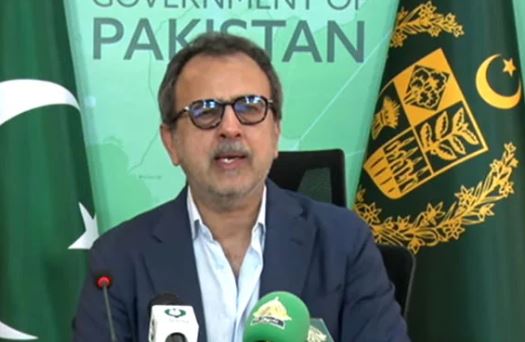
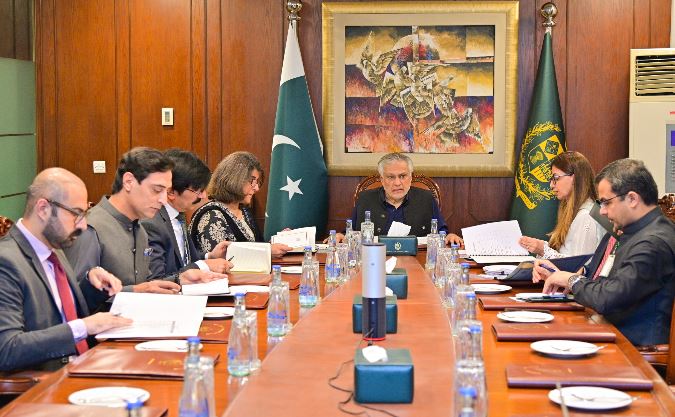
ISLAMABAD, MAY 31: /DNA/ – DPM/FM Senator Mohammad Ishaq Dar chaired a meeting with the Foreign Secretary Amb Amna Baloch and senior MoFA officials on forthcoming diplomatic engagements.

He directed the officials to ensure thorough preparation and coordinated follow-ups to advance Pakistan’s political and economic interests.

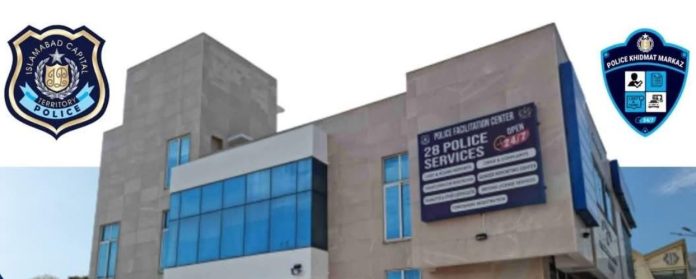
Khidmat Markaz F-6 offers round-the-clock police services to citizens

Khidmat Markaz F-6 offers round-the-clock police services to citizens

ISLAMABAD, May 31: Islamabad Capital Territory (ICT) Police Khidmat Markaz F-6 is providing round-the-clock police services to citizens, ensuring fast, transparent and citizen-friendly facilitation under one roof.

An official told APP on Sunday that the Khidmat Markaz remained open 24 hours a day, seven days a week, enabling residents to access a wide range of police services at their convenience.

The official said citizens could avail facilities including police character certificates, general police verification, tenant registration, domestic employee registration, lost document reports, vehicle verification and other public service-related documentation.

According to the official, the centre has been equipped with modern facilities and a streamlined service delivery system aimed at minimizing delays and enhancing public convenience.

The official said Islamabad Police was committed to improving service delivery through technology-driven and citizen-centric initiatives.

Citizens were encouraged to visit Khidmat Markaz F-6 for police-related services and assistance, while Islamabad Police continues efforts to ensure transparent, efficient and people-friendly policing across the federal capital.

Police arrest 3 men, 7 women during raid on prostitution racket

Pakistan: A Pivotal Bridge Aligning Economic Interests Between China and the Middle East

ISLAMABAD, May 31: Islamabad Capital Territory (ICT) Police detained three men and seven women during a raid on an alleged prostitution racket operating from a spa centre in a private housing society and initiated legal proceedings against the suspects.

An official told APP on Sunday that Lohi Bher Police conducted the raid after receiving credible information regarding alleged immoral and unlawful activities at the premises located within the limits of the police station.

The official said a police team led by ASI Zafar Iqbal, along with other police officials and a lady constable, reached the location and carried out a search operation.

During the raid, police detained three men and seven women from the premises and shifted them to the police station for further legal action, he added.

According to the First Information Report (FIR), police also nominated a suspect identified as Talha, who was allegedly supervising the operation and arranging customers through the facility.

The official said a case had been registered at Lohi Bher Police Station under Section 294 of the Pakistan Penal Code and relevant provisions of the Prevention of Human Trafficking Act, 2018, while further investigation was underway.

Police said all aspects of the case, including the alleged role of facilitators and organisers, were being investigated and further arrests could not be ruled out.

The official said Islamabad Police was continuing action against criminal activities and illegal operations in different parts of the federal capital to maintain law and order.

The allegations are subject to investigation and final determination by a court of law.

CM Maryam calls tobacco silent killer

CM Maryam calls tobacco silent killer

Abid Raza

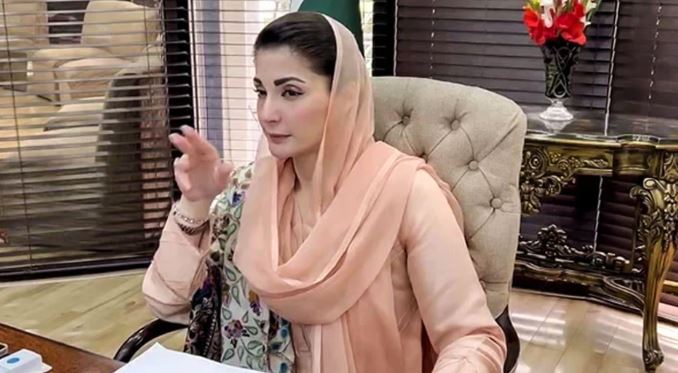
LAHORE, MAY 31: /DNA/ – Chief Minister Punjab Maryam Nawaz Sharif, in her message on World No Tobacco Day, said that smoking could prove more dangerous than many fatal diseases and described use of tobacco as a silent epidemic affecting public health, society and the economy. She added that every puff of tobacco is a step towards a new disease, adding that smoking is not merely a habit but a self-destructive act against one’s own health, finances and social well-being. She highlighted that Punjab government is taking measures to ensure a complete ban on smoking in schools, colleges and other educational institutions; and underscored that smoking in government offices, public transport and other public places is a punishable offence, and strict implementation of the law would be ensured.

Chief Minister Punjab said that protecting younger generation from tobacco use remains a priority and that all possible steps would be taken to discourage smoking and vaping among youth. She added that raising awareness about the harmful effects of tobacco is not only government’s responsibility but also a collective social obligation. She expressed concern over statistics showing that more than 250,000 deaths in the country are linked to tobacco use; and noted that smoking and vaping could be major contributors to heart attacks among young people. She urged citizens to provide their loved ones with a healthy, smoke-free environment and appealed to the public to quit smoking and adopt a healthier lifestyle from today onwards. She said,”Let us pledge to abandon tobacco use and work towards a healthier and safer future for ourselves and the coming generations.”

Commemoration of Africa Day – 25 May Algerian FM, Ahmed Attaf reaffirmed Algeria’s commitment to strengthening joint African action

Commemoration of Africa Day – 25 May Algerian FM, Ahmed Attaf reaffirmed Algeria’s commitment to strengthening joint African action

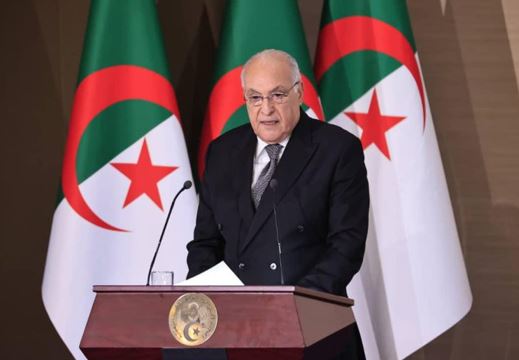
FM. Attaf reaffirmed Algeria’s commitment to Africa under the leadership of the President of the Republic Mr. Abdelmadjid Tebboune:

The Minister of State, Minister of Foreign Affairs, the National Community Abroad, and African Affairs, Ahmed Attaf, reaffirmed on Sunday 24th May 2026, Algeria’s commitment, under the leadership of the President of the Republic, Mr. Abdelmadjid Tebboune, to strengthening joint African action, based on the firm conviction that Africa is “the continent of a promising future.”

In a speech delivered at the Ministry headquarters on the occasion of the commemoration of Africa Day, 63 anniversary of the creation of African Unity Organization, on 25 May 1963, Mr. Attaf explained that this day constitutes “a milestone for recalling the political, strategic and civilizational project that has united and continues to unite African countries and peoples since the founding of the Organization of African Unity, based on liberation, building national states and strengthening the continent’s position as a partner, not a follower, as an initiator, not a recipient, and as a responsible actor on the international stage, with the same rights and obligations as others.”

– New approach to African policy, solidarity and cooperation:

He emphasized that Algeria’s renewed approach to African policy is embodied in the dynamism instilled by the President of the Republic in Algerian diplomacy, particularly concerning its African dimension, whether bilaterally, regionally, or at the multilateral continental level.

He further explained that the number of Algerian embassies accredited to African countries has increased from 29 to 38 following the opening of nine new embassies in recent years, while four African countries have opened embassies in Algeria, and four more are preparing to do the same.

He also noted the development of Air Algérie’s air network to the African continent, where the number of destinations has increased from “a handful of destinations to 12 currently, with expectations of reaching 20 destinations in the near future.”

Regarding human resource development, Mr. Attaf affirmed that Algeria has increased its annual contribution to the training of young people on the continent from 5,000 to 8,000 scholarships per year, covering higher education, vocational training, and technical training.

-Huge efforts to achieve continental economic integration:

On the economic front, the Minister emphasized Algeria’s “conviction and rigorous commitment” to efforts to achieve continental economic integration, particularly through major infrastructure projects such as the Trans-Saharan Highway, the Trans-Saharan Gas Pipeline project, and the feasibility study for extending the Algerian railway network to the Sahel countries.

He also mentioned Algeria’s contribution to increasing the volume of intra-African trade, noting that the fourth edition of the Intra-African Trade Fair, hosted by Algeria, resulted in contracts worth a total of US$23 billion.

– Defending the right of the peoples to self-determination in Western Sahara:

On the political and security front, Mr. Attaf reiterated Algeria’s commitment to the founding principles of joint African action, foremost among them the right of peoples to self-determination, respect for the sovereignty and territorial integrity of states, non-interference in their internal affairs, and the priority of political and diplomatic solutions.

Regarding the Western Sahara issue, he explained that recent developments in this matter “confirm the validity of what Algeria has demanded and strived for over the past five decades, namely, the organization of direct negotiations between the Kingdom of Morocco and the Polisario Front,” welcoming the negotiation process launched at the beginning of this year under the joint auspices of the United Nations and the United States. He also expressed Algeria’s hope that these negotiations will lead to a “just, lasting, and final” solution that guarantees the Sahrawi people’s right to self-determination in accordance with UN resolutions.

-Respecting the security, integrity , sovereignty of African countries:

Regarding Libya, the Minister reiterated Algeria’s support for the efforts of the United Nations to advance the political settlement process, stressing “the need for the various international initiatives at this stage to contribute to supporting UN efforts.”

Concerning the situation in the Sahel region, particularly in Mali, Mr. Attaf called on all parties to “prioritize dialogue and a comprehensive and inclusive political settlement that preserves the unity and territorial integrity of Mali.”

He also reiterated Algeria’s support for the unity and territorial integrity of Somalia, while condemning the opening of a purported embassy in occupied Jerusalem by the so-called “Somalia region” .Regarding the situation in Sudan, the Minister called for reason and a sense of responsibility to restore security and peace and preserve Sudan’s unity, stressing that ending foreign interference is “an unavoidable requirement.”

-Condemning the crimes in Palestine, supporting Pakistani mediation

 for the peace in the Gulf :

Addressing the Palestinian issue, Mr. Attaf condemned “the crimes committed by the occupying Israeli authority in Gaza and the West Bank,” considering them part of a project aimed at eliminating the prospect of a Palestinian state.

He also welcomed the steps taken to solidify the ceasefire in the Gulf region, praising the Pakistani mediation efforts and reiterating Algeria’s solidarity with the Arab countries affected by the repercussions of the crisis.

Govt rejects reports of ending electricity subsidy for protected consumers

Govt rejects reports of ending electricity subsidy for protected consumers

ISLAMABAD, MAY 31: Federal Minister for Power Awais Ahmed Khan Leghari on Sunday rejected reports that the government was planning to withdraw electricity subsidies for protected consumers, saying eligible users would continue to receive financial support through a new QR code-based system.

Addressing a press conference in Islamabad, Leghari said: “[The] government is not ending electricity subsidies for protected consumers,” adding that reports suggesting otherwise were “contrary to the facts”.

He said consumers using less than 200 units of electricity continued to receive subsidies and that the number of such consumers had now exceeded 20 million.

“Eligible consumers will continue to receive subsidies without interruption through the QR code system,” he said. The minister also ruled out any increase in taxes on electricity bills, stating that no such proposal was under consideration.

Leghari said the purpose of the reforms is to compile consumer data through the QR code system and ensure that subsidies reach deserving beneficiaries. He said consumers receiving subsidies were being asked to provide details through the registration process.

The power minister further said the number of electricity subsidy beneficiaries had increased from 9.5m to 21.5m over the past four years. Currently, around 29.57 million domestic consumers, or 86% of the total, are receiving subsidies.

Highlighting power sector reforms, the minister said renegotiation of agreements with independent power producers had resulted in savings of Rs3.5 trillion, while reductions in distribution company losses had saved Rs193bn. He added that circular debt fell by Rs780bn during fiscal year 2024-25.

The federal minister also defended the government’s claims regarding lower electricity prices and said reforms in the energy sector were producing positive results and providing direct relief to consumers.

On solar energy, Leghari said the government was not discouraging solar power adoption and was instead making the system more transparent. He said net metering had not been abolished and only billing procedures had been reformed.

“More than two million single-phase consumers have already completed registration,” he said, adding that 90% of domestic consumers would not be affected by the revised net billing policy.

He added that licensing requirements for solar projects of 25kW and below had been removed and regulatory approvals had been simplified for smaller projects.

Sri Lanka raise fuel prices after IMF loan instalment

Sri Lanka raise fuel prices after IMF loan instalment

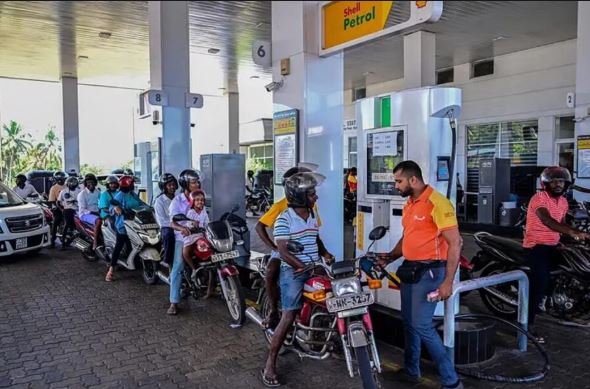
COLOMBO, 31 MAY (DNA) —    Sri Lanka raised fuel prices by up to six percent on Sunday, in line with IMF plans to recover energy costs and phase out subsidies to stabilise the economy. Petrol was raised to 434 rupees ($1.33), up from 410, while diesel increased to 407 rupees a litre from 392, the state-run Ceylon Petroleum Corporation said.

The price hike came days after the International Monetary Fund released a $695 million instalment of a $2.9 billion bailout loan, agreed in early 2023 to stabilise the cash-strapped South Asian nation. The IMF wants Sri Lanka to ensure cost recovery for both fuel and electricity tariffs, which have been subsidised by the government since the start of the conflict in the Middle East in February.

President Anura Kumara Dissanayake, in a letter to the IMF made public by the Washington-based international lender, said fuel subsidies will be phased out by September. Since the United States and Israel began attacking Iran on February 28, triggering a global energy crisis, Sri Lanka has raised petrol and diesel prices by about 48 percent. Electricity has increased by a third.

The Strait of Hormuz, a key waterway through which about 20 percent of global oil exports pass in peacetime, has been effectively closed by Iran. Sri Lanka imports all its oil and also buys coal for electricity generation.

Colombo has warned that the fighting in the Middle East, and any prolonged conflict, could seriously undermine its efforts to emerge from the economic meltdown of 2022. Sri Lanka defaulted on its $46 billion foreign debt in 2022 after running out of foreign exchange. Since then, Colombo has been drawing down the IMF bailout loan to stabilise the country. — DNA

FIFA, AFC push for urgent PFF constitutional reforms

FIFA, AFC push for urgent PFF constitutional reforms

By our correspondent

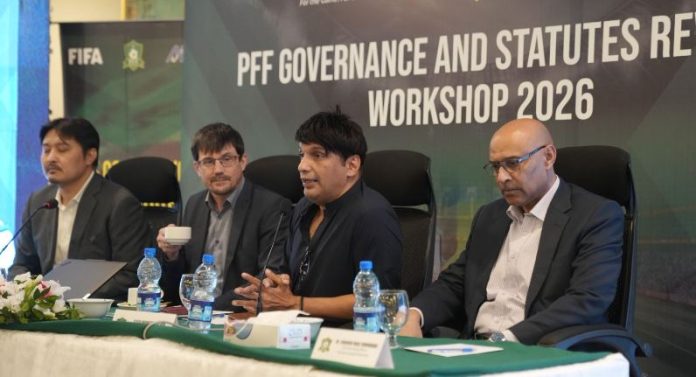
ISLAMABAD: FIFA and the Asian Football Confederation (AFC) have called for urgent revisions to the Pakistan Football Federation (PFF) Constitution, stressing that the federation must align its statutes with international governance standards while warning that any third-party interference in football affairs will not be tolerated.

This outcome emerged on the first day of the Governance and Statutes Revision Workshop organized by the Pakistan Football Federation, where FIFA’s Head of Member Associations Governance, Rolf Tanner, and AFC Senior Manager of the South Asia Unit, Sonam Jigmi, addressed members of the PFF Congress.

The FIFA and AFC officials underlined the importance of safeguarding the autonomy of the federation, making it clear that external interference in the affairs of the PFF is unacceptable under international football regulations.

The PFF Constitution was last comprehensively revised in 2014, although some clauses were amended ahead of last year’s Elective Congress, which was conducted under the FIFA-appointed Normalisation Committee.

During the workshop, members of the PFF Congress were briefed on key principles of good governance. Tanner and Jigmi emphasized the separation of powers between the legislative, executive and judicial bodies of the federation, describing it as a cornerstone of transparency and accountability.

The discussions also focused on conflict-of-interest regulations, gender equality, transparency, competence-based governance and institutional accountability. FIFA and AFC officials stressed that constitutional reform is essential to creating a modern and stable football administration structure in Pakistan.

“The distinction of powers ensures effective checks and balances and significantly reduces the risk of corruption,” Tanner said.

He added that revision of the 2014 PFF Constitution is an urgent requirement set by FIFA and the AFC to ensure long-term stability and sustainable development within Pakistan football.

“FIFA and AFC directed that the PFF Constitution be revised within one year of the elections, and this workshop is an important step towards ensuring that the process is completed as soon as possible,” he said.

Highlighting the direct link between governance and sporting success, Tanner added that stronger institutions ultimately lead to better performances on the field.

“You are not going to progress at a sporting level with an archaic federation. Our ultimate objective is to create an environment where football can develop, flourish and be played at the highest level,” he remarked.

AFC official Sonam Jigmi assured Congress members that the constitutional review process would be transparent, inclusive and consultation-based. He also warned that failure to comply with FIFA and AFC regulations could have serious consequences.

“A federation that does not comply with FIFA and AFC obligations risks losing its rights and privileges as a member association,” Jigmi said.

PFF President Syed Mohsen Gilani welcomed the reform process, describing governance reforms as essential for the future of football in Pakistan.

“The revision of the statutes has remained pending for more than a decade while other federations have moved far ahead. We must complete this process now and lay the foundations for a stronger and more progressive football federation,” Gilani said.

The workshop marks a significant milestone in Pakistan football’s reform agenda and is expected to pave the way for comprehensive constitutional amendments aimed at strengthening governance, ensuring institutional independence and promoting the long-term growth of the game in the country.

Trump claims Iran agreed to no nuclear weapons

Trump says US military studying 'very strong options' for Iran

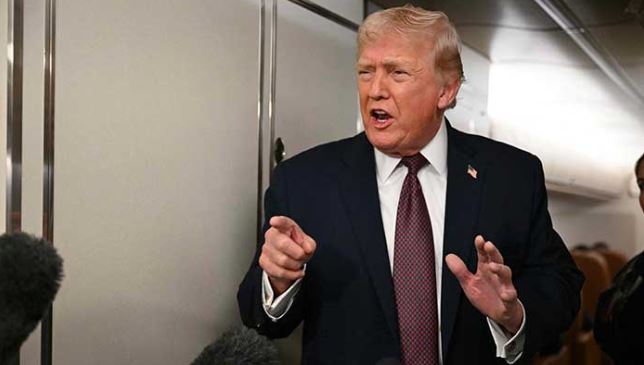
WASHINGTON, 31 MAY (DNA) — United States President Donald Trump said he had secured guarantees from Iran that it would not develop nuclear weapons, as reports emerged he had sent a tougher peace proposal back to Tehran.

Any tweaks to the proposal could prolong even further an agreement to formally end the Middle East war and open the Strait of Hormuz maritime route after weeks of efforts to secure a deal despite fractious rhetoric and the occasional flare-up of armed conflict.

The New York Times and Axios media outlets reported on Saturday that Trump had sent back a new framework to be considered by Iran with “tougher” terms, though it was not immediately clear what that entailed.

Trump has said his priorities for any deal include stopping Iran from any nuclear weapon development and re-opening the blockaded Strait of Hormuz.“The one guarantee that I have to have is that there will be no nuclear weapons.

 They’ve agreed to that, and it was very interesting,” he told his daughter-in-law Lara Trump in an interview broadcast on her Fox News programme on Saturday night. But Tehran has previously cast doubt on Trump’s assertions and the parties appeared far apart on their key priorities.

Iran has said it requires the release of $12 billion in frozen assets before it moved to substantive talks on issues such as its nuclear programme and called earlier Trump comments that its enriched uranium — a precursor for nuclear weapons — would be destroyed “baseless”, according to Iranian media.

Tehran has also insisted that Lebanon must be included in any end to the war despite ongoing fighting, with Beirut accusing Israel of a “scorched-earth policy” as its forces advanced and carried out further airstrikes.

After Trump and US officials earlier said they were on the brink of striking a deal, he struck a less urgent tone and hinted at renewed military action in the Fox interview. “I’m in no hurry,” he said. “Slowly but surely we’re getting, I think, what we want and if we don’t get what we want, we’re going to end in a different way.”

Flare upsThat echoed comments from Pentagon chief Pete Hegseth who said at the Shangri-La Dialogue in Singapore on Saturday that Washington was “more than capable” of restarting the war if necessary.

Though daily strikes throughout Iran and the Gulf have stopped since Tehran and Washington struck a temporary ceasefire in April followed by historic talks hosted by Pakistan, bursts of armed conflict have continued.

Iran’s Revolutionary Guards (IRGC) had shot down a US military drone “about to enter Iranian territorial waters to conduct hostile operations”, Iran’s state broadcaster IRIB reported, an incident that has not been confirmed by the US.

Earlier in the week, the worst fighting since the fragile ceasefire broke out when US forces carried out strikes on the Iranian port of Bandar Abbas, countered by retaliatory fire from Iran. Nevertheless, diplomacy has continued with Trump under pressure to reach an agreement that would lift US and Iranian competing blockades around the Strait of Hormuz that have choked international oil supplies and threatened the global economy with rising prices.

After Trump said on social media that Tehran would charge “no tolls” on ships passing through the strait once the blockades were lifted under any deal, Iranian news agency Fars cited sources saying “no such clause appears in the text of the agreement”.

Iran’s ISNA news agency on Saturday cited lawmaker Alireza Salimi as saying a plan “to implement Iran’s management and sovereignty over the Strait of Hormuz will soon be approved by parliament”. — DNA

Turkey eyes post-Iran Middle East as regional order shifts – analysis

Turkey eyes post-Iran Middle East as regional order shifts - analysis

A new article in The Telegraph in the UK argues that Turkey’s president, Recep Tayyip Erdogan, is the real winner of the Iran war. The argument is that Turkey’s leader has been cracking down on opposition while the world is focused on the war in Iran. This is an interesting argument. However, Turkey’s benefit from the conflict and how it may reshape Ankara’s policy are more complex than the issue of the domestic political opposition.

Turkey has sought to remain outside the Iran conflict. It’s not clear whether Ankara is posing as a neutral power or seeking to portray itself as similar to most European and NATO powers that also remained outside the war. Turkey has not come in for criticism from the White House. This contrasts with the critique of European countries and Oman. Ankara is also not stepping up to take on the mediation role that Pakistan and Qatar have sought.

As such, Turkey is in a unique position. This isn’t new for Ankara. It has often had its own policy. Even though it is a member of NATO, Turkey has remained outside of major world conflicts since the end of the First World War. It should be recalled that the Ottoman Empire did enter the First World War on the side of Germany and Austria-Hungary. Among the initiatives that convinced the Sublime Porte to enter the war was the dispatch of German warships Breslau and Goeben to Turkey, replacing ships that the Turks had ordered from Britain. Ankara joined the losing side in the war. It ultimately led to the collapse of the empire and the emergence of modern Turkey.

Perhaps because of this, modern Turkish nationalism has often sought to remain outside of major conflicts, avoiding the Second World War. In the Cold War, Turkey became a member of NATO and a friend of the US and the West. However, Turkey remained concerned about the direction of the Global War on Terror after 9/11, wary of the US invasion of Iraq in 2003.

Since that time, Turkey has been ruled by the AKP, whose roots are Islamic and conservative and linked to the Muslim Brotherhood. This contrasts with the secular nationalist CHP party, which led Turkey for much of the 80 years from 1923 to 2003. The AKP initially sought to make Turkey more economically successful and even entertained the concept of growing closer to the European Union. However, over time, the AKP became more authoritarian and also more interventionist abroad. This peaked in the years 2015-2020, during the Syrian civil war.

Syrian President Ahmed al-Sharaa and Turkish President Recep Tayyip Erdogan arrive for a joint press conference at the Presidential Palace in Ankara, Turkey, February 4, 2025.
Syrian President Ahmed al-Sharaa and Turkish President Recep Tayyip Erdogan arrive for a joint press conference at the Presidential Palace in Ankara, Turkey, February 4, 2025. (credit: REUTERS/CAGLA GURDOGAN)
In recent years, Turkey has become slightly less aggressive abroad. It still has its interests in Syria and Libya and the Eastern Mediterranean, as well as a global posture that seeks to link Ankara to the Islamic and Turkish worlds. However, it views the changing world order with a mix of apprehension and attempts to exploit the resulting power vacuum.

Turkey seeks ties to US as Trump administration zig-zags
Turkey’s leader has sought to cultivate close ties to the Trump administration. However, it can also see how the White House sometimes zig-zags on policy. The administration was seeking to end the Gaza war and get peace deals in 2025. However, in 2026, the administration became more interventionist, with the Iran war. It is also very critical of traditional US allies. It is also very close to Israel, and Ankara is likely wary of this. Some articles have appeared in pro-Israel circles suggesting that Turkey is the “next” Iran. This has raised eyebrows in Ankara. They appear to fear that Israel is seeking regional hegemony. As a NATO power with a large defense industrial base, Turkey can imagine a potential clash.

How might the clash develop? It could develop over tensions in the Eastern Mediterranean. It could be in Syria. Ankara is aware of the realpolitik that leads regional powers to clash. Ankara has sought to improve ties with Saudi Arabia and the Sunni. This development has led to more concerns in Jerusalem that this “Sunni” bloc of countries might replace the Iranian-backed proxies or “Shia crescent.”

This is where Turkey is treading more carefully. Rather than bashing Israel, as Ankara did during 2024, using the Gaza war as a reason, Turkey’s politicians are taking a more ‘wait and see’ approach. The crackdown on domestic opposition is not new. The AKP has long sought to remove what it claims is a “deep state” via mass arrests of the opposition. It has targeted Kurdish left-wing political groups, students, European-linked NGOs, and also now the CHP. The latest target is Ozgur Ozel, leader of the CHP.

“Turkey is emerging as a long-term winner from the US-Israeli war against Iran, which has provided Recep Tayyip Erdoğan, the Turkish president, room to accelerate an anti-democratic backslide with no global repercussions,” The Telegraph says. “Not only has he seized the moment to stage a crackdown on his opposition while the world’s gaze was averted, but he has also managed to boost Turkey’s standing on the global stage.”

US ambassador to Turkey may play role in US Iraq policy
There are many issues for Turkey now. Ankara is working on a potential deal with the PKK, which would see the PKK dissolved. It is working on a deal with Armenia. It is balancing its support for Ukraine with its work with Russia. It is also seeking to help Syria emerge as a strong state. The US ambassador to Turkey, Tom Barrack, was also the US Envoy to Syria until his term as envoy expired recently. It appears Barrack may play a role in US policy in Iraq. This would please Turkey as well. However, there are many critics of Barrack, including supporters of the Kurds in Syria and others.

“Erdoğan has led Turkey for nearly a quarter of a century, consolidating power at home, particularly in the periods immediately following political challenges – mass protests in 2013, and a military coup in 2016, both of which were halted by the authorities with deadly force,” The Telegraph notes. “More recently, major demonstrations erupted in March 2025 after Mr. Erdoğan’s main political challenger, Ekrem İmamoğlu, the mayor of Istanbul, was arrested. Under Mr. Erdoğan, Turkey – which boasts Nato’s second-largest military after the US – has become the world’s 11th largest arms exporter, particularly of drones, which have been shipped to numerous countries, from Ukraine to Libya.”

What comes next in the Iran conflict is unclear. Ankara is waiting to see what happens. US pressure on the Gulf countries and Turkey to join the Abraham Accords has certainly raised eyebrows in Ankara. Turkey has always said it could dial down rhetoric regarding Israel if the Gaza war ended and Israel moved to accept a two-state concept. This is also Saudi Arabia’s view. Israel’s current coalition government will never make this move. However, Turkey is willing to wait and see what the elections in Jerusalem may bring. Turkey will also have elections, and the opposition could perform well. Nothing lasts forever, and the current policies of Jerusalem and Ankara may both change. The Iran war, therefore, may play out differently than expected.

Stay Connected

64FansLike
60FollowersFollow

Latest Reviews

Exchange Rates

USD - United States Dollar
EUR
1.14
GBP
1.34
AUD
0.70
CAD
0.71