Home Blog Page 1029

HEC provides pre-service training to IPFP Programme fellows

HEC provides pre-service training to IPFP Programme fellows

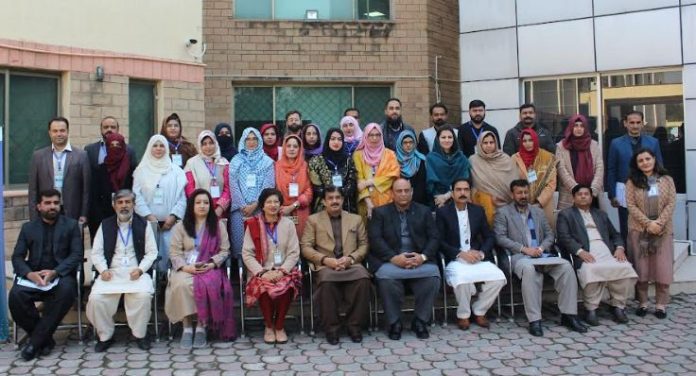
ISLAMABAD, FEB 7 (DNA) – The National Academy of Higher Education (NAHE), Higher Education Commission (HEC), has concluded Cohort X and XI of the National Faculty Development Programme for the Interim Placement of the Fresh PhDs (IPFP) programme.

The NFDP, a pioneering initiative by NAHE, has been designed to prepare recently graduated PhDs for their teaching roles in higher education institutions. This pre-service training imparts critical techniques and skillsets that will enhance their teaching practices in the future. The programme ensures a seamless transition from theoretical knowledge to practical implementation.            

In his remarks on the occasion, Executive Director HEC Dr. Zia Ul-Qayyum emphasised the pivotal role of educational institutions in solving the challenges faced by Pakistan. He emphasised the significance of the quality of faculty in imparting quality education. He also dilated on the challenges faced by faculty and underlined the importance of self-development and continuous learning in faculty. He emphasised the need for knowledge-based interactions.

Dr. Qayyum also addressed the impact of artificial intelligence (AI) on education, urging the fellows to transform themselves to meet the changing dynamics. He discussed the relevance of digital equivalence, metaverse concepts, and the potential of AI techniques for personalised tutoring and learning.

During her welcome note at the closing ceremony, Managing Director NAHE Ms. Noor Amna Malik extended heartfelt congratulations to the newly certified IPFP Fellows for their successful completion of the training and their enthusiastic participation throughout the programme. She reflected on the transformative experience within the programme and encouraged the IPFP Fellows to excel and carve a niche for themselves. She stressed the importance of incorporating societal values into teaching, encouraging research, and nurturing critical thinking.   

The completion of Cohort X & XI marks a significant achievement in NAHE’s efforts to elevate the quality of higher education in Pakistan, fostering excellence in teaching, research, and innovation for the benefit of future generations. 

Kyrgyzstan is interested in boosting business ties with Pakistan

Kyrgyzstan is interested in boosting business ties with Pakistan

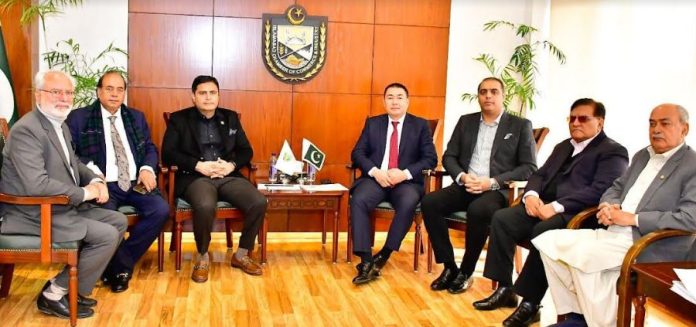
ISLAMABAD, FEB 7 (DNA) – Ulanbek Totuiaev, Ambassador of Kyrgyzstan said that his country is enjoying friendly relations with Pakistan and is interested in further boosting its business ties with Pakistan to achieve mutually beneficial outcomes. He stressed that both countries should develop sustainable business relations as they have good potential to cooperate in many sectors of the economy. He said that a business delegation from Pakistan should visit Kyrgyzstan to explore joint ventures and business partnerships. He said that Kyrgyzstan is importing pharmaceuticals, sports goods, and some other products from Pakistan while it is exporting dry fruits, and agricultural products to Pakistan. He said that both countries should do business in more products as they have good potential for it. He assured that his embassy would cooperate with ICCI in the initiatives for promoting business linkages between the private sectors of both countries.

Speaking at the occasion, Ahsan Zafar Bakhtawari, President, Islamabad Chamber of Commerce & Industry said that Pakistan and Kyrgyzstan can cooperate in many areas including agriculture, industry, energy, and tourism. He said that the geographical location of both countries offers them good potential to increase collaboration and play a role in promoting regional trade in their respective regions. He said that Pakistan can provide Kyrgyzstan with easy access to many promising markets including the Middle East and South Asia. Similarly, Kyrgyzstan can provide Pakistan with easy access to the Central Asian States. Therefore, strong trade and economic relations would be very beneficial for both countries and regions. He said that Pakistan and Kyrgyzstan should focus on diversification of trade to achieve better results. He said that ICCI would consider taking a business delegation to Kyrgyzstan to explore business partnerships.

Faad Waheed Senior Vice President ICCI said that Pakistan and Kyrgyzstan should share expertise to benefit each other. He said that both countries should explore all untapped areas of cooperation to strengthen business relations.

Zafar Bakhtawari, former President ICCI and Secretary General UBG Pakistan said that the Kyrgyz Republic should take advantage of Pakistani seaports to get access to other potential markets. He said that road, rail, and air links between Pakistan and Central Asian countries are important to develop strong business and people-to-people relations.

Sheikh Muhammad Ejaz, Maqsood Tabish, Khalid Chaudhry, and others were also present at the meeting. 

Pakistan reaffirms commitment to inclusive democracy ahead of general elections: FO

Pakistan reaffirms commitment to inclusive democracy ahead of general elections: FO

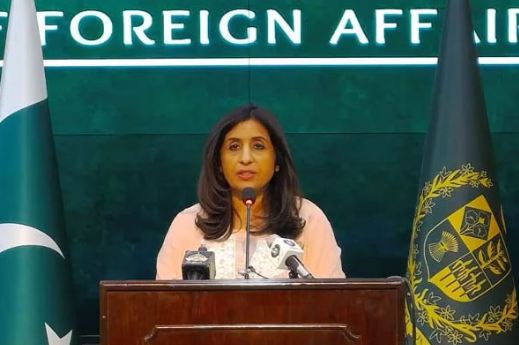
ISLAMABAD, FEB 7 (DNA) – In response to a media question on the remarks made by the Office of the UN High Commissioner for Human Rights regarding the upcoming general elections in Pakistan, the Spokesperson, Ministry of Foreign Affairs, Mumtaz Zahra Baloch, made the following statement:

“Pakistan is fully committed to foster an inclusive democratic process, uphold the rule of law and protect human rights and fundamental freedoms guaranteed in its laws and Constitution.

Security plans have been finalized to hold the elections on 08 February 2024 as per the electoral laws of Pakistan.

Our judicial system provides for fair trial and due process. Domestic legal remedies are available in case of any complaints in the electoral process.”

Electoral Epochs: Pakistan’s Path to Democratic Maturity

Electoral Epochs: Pakistan's Path to Democratic Maturity

Dr. Muhammad Anwar Farooq

Pakistan’s journey with general elections over the past two decades has been marked by significant milestones, challenges, and triumphs. These electoral processes have played a crucial role in shaping the political interface of the country, ushering in periods of transition, consolidation, and reform. As we examine the historical significance of general elections held in 2002, 2008, 2013, and 2018, it becomes evident that they have been instrumental in strengthening democracy in Pakistan.

The general elections of 2002 were pivotal in Pakistan’s transition from military rule to civilian governance under the leadership of General Pervez Musharraf. Despite criticisms of electoral manipulation and restrictions on political freedoms, these elections introduced several reforms aimed at increasing political participation and representation. The establishment of reserved seats for women and minorities, as well as the devolution of power to local government bodies, laid the groundwork for a more inclusive and decentralized political system.

The general elections of 2008 marked a significant turning point in Pakistan’s political landscape with the restoration of democracy following the end of General Musharraf’s regime. Despite security concerns and allegations of electoral irregularities, these elections saw a historic voter turnout, signaling a renewed sense of political engagement among the populace. The victory of the Pakistan Peoples Party (PPP) led by Asif Ali Zardari, brought hopes for democratic consolidation and institutional reforms.

The general elections of 2013 were characterized by a smooth transition of power from one civilian government to another, a rare feat in Pakistan’s history. With a turnout of over 55%, these elections witnessed a highly competitive political environment, marked by the emergence of new parties and coalitions. The Pakistan Muslim League-Nawaz (PML-N) secured a decisive victory, forming the government under the leadership of Nawaz Sharif. Despite some allegations of electoral irregularities, international observers generally deemed the elections as credible and reflective of the people’s will.

The general elections of 2018 were perhaps one of the most anticipated and consequential in Pakistan’s recent history. With a record-breaking voter turnout of over 55%, these elections saw widespread enthusiasm and participation, particularly among young voters. The victory of the Pakistan Tehreek-e-Insaf (PTI) led by Imran Khan marked a significant departure from traditional political dynasties and signaled a desire for change and reform. Despite concerns raised by opposition parties regarding alleged electoral manipulation, international observers largely praised the conduct of the elections as free and fair.

The general elections from 2002 to 2018 have yielded several positive outcomes that have contributed to the strengthening of democracy in Pakistan. With each successive election, there has been a gradual increase in voter turnout, indicating a growing sense of civic responsibility and political engagement among the populace. The emergence of new political parties and grassroots movements has diversified the political landscape, providing citizens with a wider range of choices and alternatives.

Despite occasional disputes and allegations of electoral fraud, Pakistan has witnessed a peaceful transfer of power between civilian governments, reinforcing the country’s commitment to democratic governance and institutional stability. Moreover, the peaceful transfer of power reflects the resilience of Pakistan’s democratic institutions, including its electoral commission, judiciary, and civil society. These institutions play a vital role in ensuring the integrity of the electoral process and adjudicating disputes in a fair and transparent manner. While challenges such as electoral fraud and disputes may arise, the fact that Pakistan has been able to navigate these challenges without resorting to violence or authoritarian measures is a positive sign for the country’s democratic future. It underscores the importance of continued efforts to strengthen democratic institutions, uphold the rule of law, and promote civic engagement and accountability.

General elections have provided opportunities for institutional reforms aimed at improving electoral transparency, fairness, and accountability. The introduction of biometric verification systems, electronic voting machines, and voter education initiatives has helped address some of the challenges associated with electoral integrity and credibility.

General elections have empowered marginalized groups, including women and minorities, by providing them with a platform to voice their concerns and participate in the political process. The establishment of reserved seats and affirmative action measures has helped bridge the gap in political representation, ensuring that the diverse needs and perspectives of all segments of society are taken into account.

The general election of 2024 in Pakistan arrives as yet another crucial milestone in the nation’s democratic journey, characterized by a rich tapestry of successes, challenges, and reforms over the past two decades. Reflecting on the historical significance of general elections held in 2002, 2008, 2013, and 2018 unveils the pivotal role they’ve played in shaping Pakistan’s political landscape and advancing its democratic ideals. As Pakistan prepares for the general election of 2024, it must build upon the successes and lessons learned from past elections. Strengthening democratic institutions, promoting inclusivity, and upholding the rule of law will be essential for ensuring a free, fair, and transparent electoral process. By continuing to uphold its commitment to democracy, Pakistan can chart a course towards a more prosperous and equitable future for all its citizens.

Dr. Muhammad Anwar Farooq

Director Institute of Humanities and Art Khwaja Fareed University of Engineering and Information Technology Rahim Yar Khan, Pakistan

Ignite inks agreement with Pakistan services limited – Hashoo group to manage national incubation center Islamabad

Hashoo group

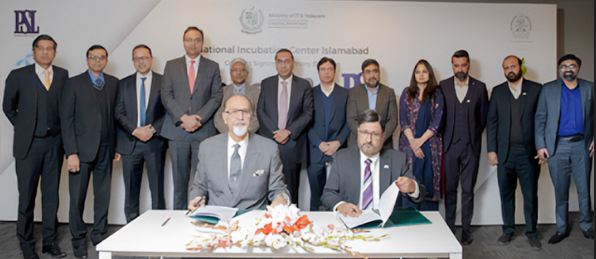
ISLAMABAD, FEB 6 (DNA) –  In a significant development for the thriving Pakistan’s technology and startup ecosystem, Ignite National Technology Fund, Company incorporated under Ministry of IT & Telecom signed an agreement with Pakistan Services Limited (PSL) – Hashoo Group, led consortium that includes Fauji Foundation, Telenor Pakistan, Change Mechanics, CyberVision International and Founder Institute to manage the National Incubation Center Islamabad for the next 5 years. This initiative underscores a collective commitment through public private partnership to further bolster the startup ecosystem in Pakistan, with a special focus on nurturing technology startups that promise to elevate the country’s economic GDP and generate employment opportunities for its youth.

In his welcome address, Adeel Aijaz Shaikh, CEO Ignite apprised the audience about the overall impact of Ignite’s nationwide network of National Incubation Centers that has incubated more than 1480 startups which have created more than 188,000 direct and indirect jobs while attracting committed investment of Rs. 23 Billion and generated revenue of Rs. 16 Billion so far. Dilating upon the particular success of NIC Islamabad Mr. Adeel said, since its inception it incubated 295 startups including 136 female founders that have created 23,597 direct and indirect jobs, generated revenue of 7.05 billion rupees with a committed investment of 7.88 billion rupees.

NIC Islamabad is poised to build upon the success of its predecessor by offering an enhanced array of services designed to empower startups. These services encompass state-of-the-art workspaces, access to venture capital, mentorship from industry leaders, UI/UX design labs, makers spaces, and a focus on pivotal technological sectors such as Artificial Intelligence, Internet of Things, Robotics, Health, and Augmented/Virtual Reality. Special emphasis is provided on creating investment opportunities for startups and the consortium and its supporting partners include leading incubators, accelerators and venture capitalists such as Founder Institute, Mass Challenge, International Accelerator, Loyal VC, Zayn Capital, Sarmayacar, 47 Ventures, FCD Capital and Pak Launch.

NIC Islamabad will also have extensive focus in building health-tech startups, Aga Khan University and Hospital along with Rehman Medical Institute Peshawar are core Health Track Partners along with 10+ other renowned health institutions as supporting partners. Red Buffer will be mentoring and providing support to Deep-tech startups as a specialized vertical.

The supporting partners also include leading Academic Institutions which ensures quality mentorship and access to University labs and specialist faculty to advise the startups on technical issues. These institutes include GIKI University, Institute of Space Technologies, Foundation University, NUST Business School, Bahria Innovation Center and others.

With the new management, NIC Islamabad represents a crucial advancement in enhancing Pakistan’s digital landscape. Through creating a supportive ecosystem for innovation and entrepreneurship, the joint efforts of PSL-Hashoo Group and Fauji Foundation, Ignite, MoITT, and additional key stakeholders are set to open up numerous possibilities for Pakistani startups and propel economic development and technological progress in the country.

Independence Day of Sri Lanka celebrated

Independence Day of Sri Lanka celebrated

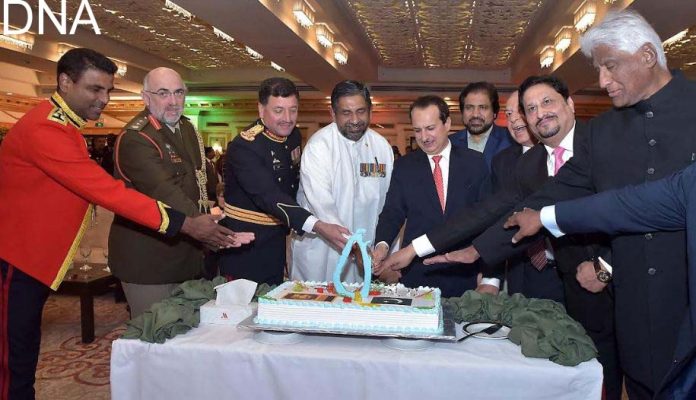
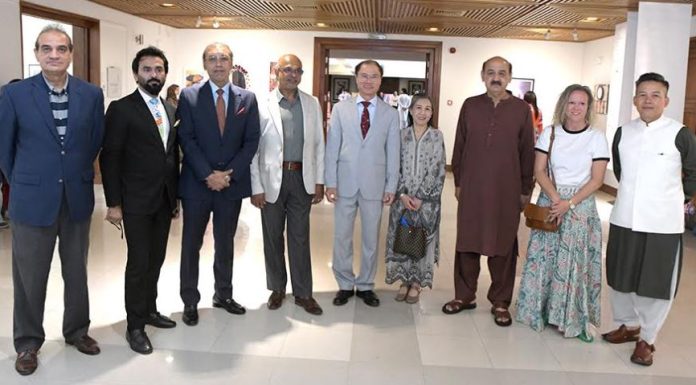
ISLAMABAD, FEB 6 (DNA) – Chief Guest Federal Health Minister Nadeem Jan, Admiral Ravindra Wijegunaratne, and others cut the cake to celebrate 76th Anniversary of the Independence of the Democratic Socialist Republic of Sri Lanka.=DNA

Focus on Exports: Baku seeks to send more produce to Pakistan, eyes investment

Baku seeks to send more produce to Pakistan

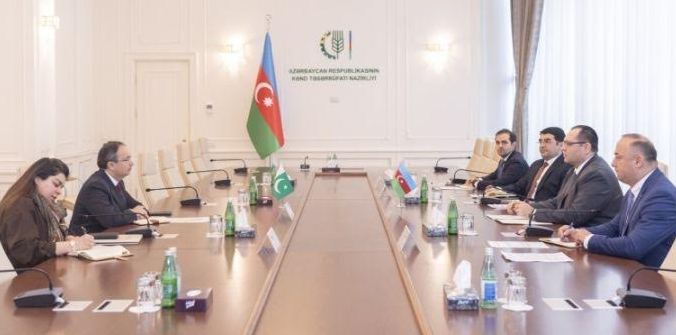
BAKU, FEB 6: Agriculture Minister Majnun Mammadov met with Bilal Haye, Ambassador Extraordinary and Plenipotentiary of Pakistan to Azerbaijan, Azernews reports.

Welcoming the guests, the minister gave detailed information to the meeting participants about the state support for the agricultural sector in Azerbaijan. It was stated that the cooperation between the two countries in all fields is developing dynamically. The parties emphasised that they are interested in expanding cooperation in the agricultural sector.

During the meeting, cooperation between Azerbaijan and Pakistan in the field of agriculture and strengthening of the legal-contract base, an increase in the trade turnover of agricultural products, the transfer of the most modern technologies in the field of agriculture, the strengthening of cooperation in the fields of cotton growing, rice farming, animal husbandry, and the implementation of experimental programs in the fields of scientific research and education in the agricultural sector were discussed.

During the meeting, the main topic of discussion was the export of agricultural products from Azerbaijan to Pakistan and various support mechanisms for this.

Minister Majnun Mammadov touched on the importance of the “Caspian Agro” exhibition organised annually in our country and called on Pakistani businessmen to actively participate in this exhibition, as well as to explore the possibilities of investing in the agricultural sector of Azerbaijan, taking into account the reliable and favourable business environment.

During the meeting, the activities of the Azerbaijan-Pakistan Working Group in the field of agriculture and food security were discussed, and a wide range of opinions were exchanged on issues of mutual interest.

Bulgarian diplomat says his country highly evaluates Black Sea Energy project

Bulgarian diplomat says his country highly evaluates Black Sea Energy project

DNA

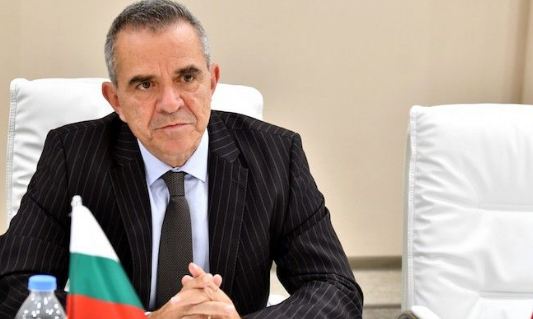
BAKU: “Bulgaria is interested in cooperating on the Black Sea Energy submarine electric cable project, which envisages the transmission of “green energy” from the Caspian Sea to Europe, Bulgarian Ambassador to Georgia Vesselin Valkanov ..

“We have expressed our interest in participating in the project and are satisfied with the positive response we have received from the four parties [Azerbaijan, Georgia, Romania, and Hungary]. Bulgaria can significantly add value to the project due to its power grid, high capacity connections with neighbouring countries, a well-developed electricity market, the opportunity to invest in renewable projects, and the growing demand for green energy,” he said.

The ambassador noted that an important factor contributing to these endeavours is the friendly relations that Bulgaria has with all the countries of the South Caucasus, especially Azerbaijan.

“Bulgaria is interested in further development of infrastructural links between Europe and Asia, between the eastern and western shores of the Black Sea. Especially through projects of common interest in the fields of energy, transportation, and communications,” Valkanov added.

According to the diplomat, the undersea cable is just one of many opportunities to influence efforts to achieve climate goals and make development truly sustainable.

“Everyone should be more involved in projects like this and be more cooperative. The potential is there, and I am sure that a proactive and positive approach will pay off in the not-so-distan future in terms of improving the environment, increasing energy security, and improving the lives of our citizens,” he emphasised.

Azerbaijanis all set to vote in Presidential election tomorrow

Azerbaijanis all set to vote in Presidential election tomorrow

A survey conducted by this newspaper on Tuesday unveiled a palpable enthusiasm among the youth, who are eagerly poised to cast their votes in the Wednesday election. Similar to Pakistan, Azerbaijan also boasts a burgeoning youth population ready to actively contribute to the country’s development

Ansar M Bhatti

In Azerbaijan

BAKU: Azerbaijan is all set to elect a new President in Wednesday’s presidential election as people are fully geared up to exercise their right through a free, fair and transparent ballot. The Election Commission of Azerbaijan has made elaborate arrangements to ensure an inclusive and transparent election.

The voting shall start at 8 am in the morning till 7 pm. Every citizen of Azerbaijan who has active election right and has reached 18 years on the day of the elections is eligible to participate in the elections and cast his or her vote.

The observer, including that of from Pakistan, have been allocated special badges who may conduct election observation in the whole territory of Azerbaijan. The Central Election Commission has made elaborate arrangement for the international observers in order to provide them with an ample opportunity of performing their duties without any hindrance.

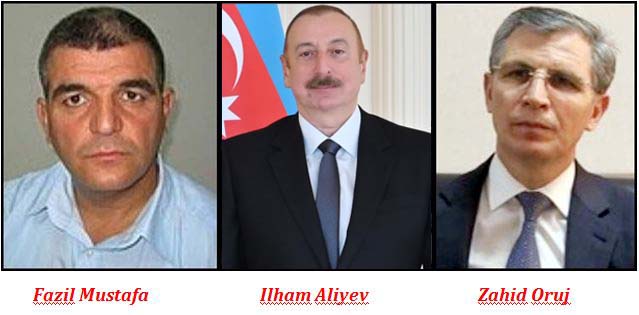
Supreme Commander-in-Chief, President Ilham Aliyev was celebrated as a national hero after Azerbaijani Army liberated the occupied territories ending one of the most bitter standoffs of the post-Soviet era.

President Ilham Aliyev’s tenure has been marked by monumental progress across all facets of Azerbaijani society, showcasing his adept leadership and profound impact on the country’s destiny.

In order to ensure transparency in the Presidential elections, the Commission  has installed webcams in 1000 polling stations on 119 election constituencies within the framework of technical and other conditions necessary to ensure effective and consistent broadcasting opportunities with the aim of continuous monitoring of the processes in polling stations from the beginning to the end on the voting day.

The head of the observer mission from the SCO held a meeting with the Central Election Commissioner and expressed his hope the elections would bring further prosperity to Azerbaijan.

‘Presidential elections are a very significant event. We believe that the results of the presidential election in Azerbaijan will be successful for the future development of this country,” Zhang Ming, head of the Shanghai Cooperation Organization (SCO) delegation and Secretary General of the organization, said at a meeting with Chairman of the Central Election Commission (CEC) of Azerbaijan Mazahir Panahov.

He further said that they had so far, monitored 69 election processes. ‘We believe that the elections will be held in a fair and transparent manner. According to the statute, the purpose of our mission is to promote general principles, non-interference in the internal affairs of the country, identification of shortcomings, and other issues’, he added.

A survey conducted by this newspaper on Tuesday unveiled a palpable enthusiasm among the youth, who are eagerly poised to cast their votes in the Wednesday election. Similar to Pakistan, Azerbaijan also boasts a burgeoning youth population ready to actively contribute to the country’s development.

Pakistan and Azerbaijan enjoy fraternal relations. These relations are established on our past historical traditions. It is no coincidence that Pakistan is one of the first states to recognize the independence of Azerbaijan after Azerbaijan declared its independence. Pakistan whole-heartedly supported Azerbaijan in its Patriotic War against Armenia, in which the valiant Azerbaijani forces inflicted sheer defeat upon the Armenia forces and liberated its territories occupied by Armenia.

In a demonstration of unwavering solidarity, Azerbaijan wholeheartedly stands by Pakistan in the Kashmir issue. Strengthening the bond between the two nations, Azerbaijan has initiated direct flights from Pakistan to Azerbaijan, marking yet another milestone in their flourishing bilateral relations. This move not only fosters greater connectivity but also underscores the mutual commitment to deepening diplomatic and people to people ties and fostering cooperation between the two countries.

Baku CoP29 Preparations: Pakistan, Azerbaijan join forces on climate action

Baku CoP29 Preparations: Pakistan, Azerbaijan join forces on climate action

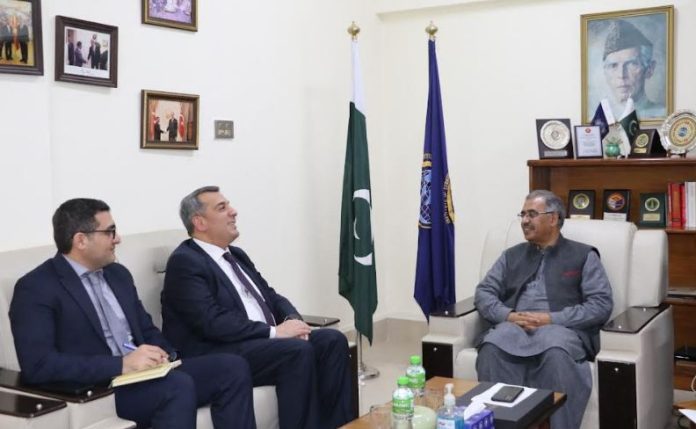
ISLAMABAD, FEB 6 (DNA) – Ambassador of Azerbaijan Khazar Farhadov visited ISSI & met DG Ambassador Sohail Mahmood. They Exchanged covered myriad aspects of Pakistan, Azerbaijan relations, support on each other’s national causes, and deepening of P2P & think-tank links.

They also agreed to work closely on climate issues in run-up to CoP29 in Baku.-DNA

Stay Connected

64FansLike
60FollowersFollow

Latest Reviews

Exchange Rates

USD - United States Dollar
EUR
1.17
GBP
1.35
AUD
0.72
CAD
0.73