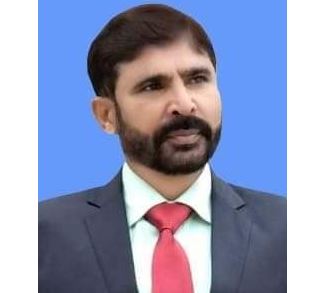
Dr. Muhammad Akram Zaheer
Public education systems thrive on trust. They depend not only on policies, budgets and infrastructure but also on the confidence that exists between governments, teachers and communities. Once that trust begins to erode, even the most ambitious reform agenda struggles to deliver meaningful results. The latest controversy surrounding Punjab’s Education Minister, Rana Sikandar Hayat, serves as a reminder that words spoken from positions of authority can either strengthen that trust or weaken it.
The controversy erupted after a video clip circulated on social media showing the minister addressing a convocation at Bahauddin Zakariya University, Multan. In the clip, he appeared to suggest that government school teachers remove ceiling fans from schools and take them away when they leave. Whether the remark was intended as humour, frustration or a broader observation has become secondary. The public response indicates that many teachers interpreted it as a sweeping accusation against an entire profession.
The reaction was swift. Teachers, education activists and ordinary citizens questioned the wisdom of making such a generalisation from a public platform. Many pointed out that in several parts of Punjab, school administrations temporarily remove electrical equipment such as fans, bulbs and water pumps during summer vacations or prolonged school closures to protect them from theft or vandalism. Such decisions are often taken administratively rather than individually by teachers. To equate these practices with personal misconduct, critics argued, unfairly damages the reputation of thousands of educators who serve honestly under difficult circumstances. The debate, however, extends far beyond one controversial statement. It has opened a wider discussion about accountability, administrative responsibility and professional respect within Punjab’s education system.
No public institution should be exempt from accountability. Government schools contain public assets purchased through taxpayers’ money and every piece of equipment must be protected. Where negligence, theft or corruption occurs, investigations should be conducted and responsibility determined through established administrative procedures. If any employee is found guilty of misconduct, disciplinary action should follow without hesitation. But accountability must remain evidence-based. It should identify individuals responsible for specific violations rather than cast suspicion over an entire profession. Broad accusations rarely improve governance; instead, they often create resentment among those who are performing their duties with integrity.
Teaching occupies a unique place in society. Teachers are entrusted with shaping future generations, often while working in overcrowded classrooms, limited facilities and financially constrained environments. In rural and underserved areas particularly, government school teachers frequently perform responsibilities that extend well beyond classroom instruction. They assist in election duties, census operations, vaccination campaigns, disaster relief efforts and numerous administrative assignments. Despite these additional burdens, they continue to shoulder the central responsibility of educating millions of children. It is therefore understandable why many educators viewed the minister’s remarks as diminishing their professional dignity. Respect for teachers is not merely a cultural value; it is a practical necessity for educational progress. A workforce that feels publicly humiliated is unlikely to become an enthusiastic partner in reform.
This is not the first occasion on which tensions have surfaced between Punjab’s education authorities and sections of the teaching community. Previous disagreements over teacher training assessments, administrative reforms and public communication have occasionally generated friction. Social media exchanges between officials and teachers have sometimes aggravated rather than eased these disagreements. The current controversy appears to reflect an existing trust deficit rather than an isolated misunderstanding. The challenge facing Punjab’s education sector is far greater than a debate over one sentence. The province continues to grapple with uneven learning outcomes, infrastructure deficiencies, teacher shortages in certain regions, student dropouts and the need to improve literacy and numeracy standards. These structural issues require sustained cooperation between policymakers, administrators and teachers. That cooperation becomes difficult when public discourse shifts from problem-solving to mutual recrimination.
Modern educational reform depends as much on communication as it does on policy. Effective leaders recognise that criticism must be accompanied by encouragement and that reform succeeds when stakeholders feel respected rather than targeted. Strong leadership is not measured by sharp rhetoric but by the ability to build consensus while maintaining accountability. Public officials naturally face the pressure of demonstrating resolve against inefficiency. Citizens rightly expect governments to protect public resources and eliminate corruption wherever it exists. Yet the language chosen to express that determination matters. Precision carries greater credibility than generalisation. Evidence inspires confidence more effectively than anecdote.
Equally, the teaching community should not interpret every criticism as hostility. Professional accountability is an essential element of public service. Teachers, like all public employees, must support transparency, welcome performance evaluation and cooperate with efforts aimed at improving educational standards. Public confidence grows when professional associations themselves advocate ethical conduct and institutional responsibility. Social media has further complicated these debates. Short video clips often detach remarks from their broader context, encouraging emotional reactions before facts are fully established. Public figures therefore carry an even greater responsibility to communicate carefully, knowing that a few seconds of video can shape public perception far more powerfully than lengthy explanations issued afterwards.
Punjab’s education system requires a different conversation. Instead of debating whether teachers remove fans from schools, policymakers should focus on establishing stronger inventory management systems, digital asset registers and clearer administrative protocols for safeguarding government property. Such institutional solutions reduce opportunities for both misconduct and misunderstanding. More importantly, the relationship between the government and teachers must move beyond confrontation. Educational reform cannot be imposed solely through directives issued from administrative offices. It succeeds when teachers become partners in designing and implementing change. Consultation, dialogue and mutual respect remain indispensable components of sustainable reform.
Punjab has introduced several initiatives aimed at improving school governance, teacher development and student outcomes in recent years. These reforms deserve careful implementation and constructive public debate. They should not be overshadowed by controversies that distract attention from the larger mission of improving educational quality. The latest episode should therefore serve as an opportunity rather than merely another political dispute. It offers policymakers an opportunity to refine their public communication, acknowledge legitimate concerns raised by teachers and reaffirm their commitment to respectful engagement. It also offers teachers an opportunity to demonstrate that accountability and professional dignity are complementary rather than competing values.
Education flourishes where trust exists. Governments provide policy, teachers provide learning and communities provide support. None of these pillars can succeed by diminishing the others. If Punjab genuinely seeks lasting educational improvement, reform must be built not only on administrative authority but also on respect, evidence and partnership. That lesson may prove far more valuable than the controversy that brought it into public view.
Dr. Muhammad Akram Zaheer
Assistant Professor Pakistan Studies
Imperial College of business Studies Lahore