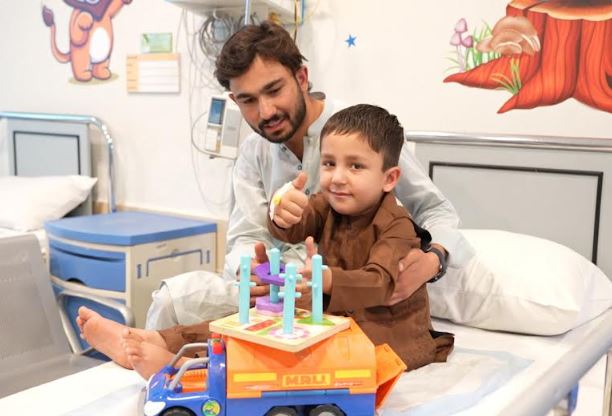
ISLAMABAD, MAY 11: /DNA/ – For hundreds of families bringing their children to Al-Shifa Trust Eye Hospital, the biggest fear is not only cancer, but whether delayed treatment has reduced the chances of saving their child’s eyesight and recovery.
Doctors at the hospital’s Cancer Unit said nearly 140 children treated over the past three years are now free of cancer, a milestone they described as significant in a country where childhood eye cancer is often diagnosed at advanced stages.
The hospital said it has registered 620 cancer patients and conducted 3,952 chemotherapy sessions since the unit became operational. Many patients came from low-income and rural families where awareness, transport costs and delayed referrals remain major barriers to treatment.
Pediatric oncologist Dr Tanzeela Farah said many parents fail to recognise early warning signs of eye cancer, including a white glow in a child’s eye in photographs or poor eye contact. “If detected early, many children can survive and even retain their vision,” she told reporters.
She advised parents to use a mobile phone torch to check newborns and infants for unusual white reflections in the pupil, medically known as leukocoria, which can indicate retinoblastoma, the most common eye cancer in children.
Doctors at the hospital also warned that cousin marriages can contribute to inherited eye diseases and some childhood cancers in Pakistan, where consanguineous marriages remain common.
Studies show many retinoblastoma patients reach hospitals in advanced stages because of delayed diagnosis, lack of awareness and financial hardship.
Global data shows survival rates for retinoblastoma exceed 99% in high-income countries with early screening and specialised care, but can fall to nearly 50% in poorer countries because children arrive late for treatment.
To reduce costs for poor families, Al-Shifa said it partnered with institutions including the Armed Forces Institute of Pathology and Combined Military Hospital for diagnostic tests and radiotherapy support. Several deserving patients also received radiotherapy free of cost.
For many families, doctors said, timely treatment meant saving both eyesight and life. “Eye cancer in children is treatable,” Dr Tanzeela said. “The real danger is delayed diagnosis.”
Al-Shifa Trust runs seven hospitals across Rawalpindi, Sukkur, Kohat, Muzaffarabad, Chakwal, Gilgit, and Haveli Lakha while Asia’s biggest eye hospital is being constructed at Lahore.