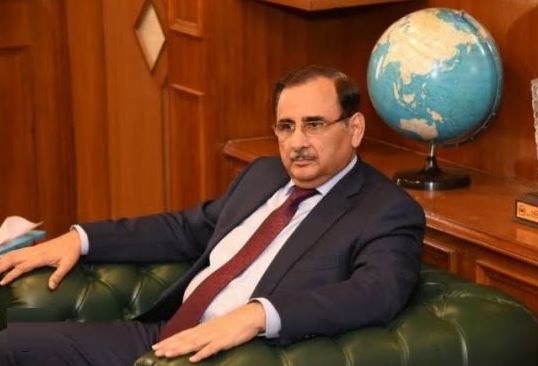
Anjum Nisar says economic structure vulnerable to fluctuations in global energy markets
ISLAMABAD, MAR 15 /DNA/ – The Federation of Pakistan Chambers of Commerce and Industry’s Businessmen Panel (BMP) has warned that rising global oil prices amid escalating regional tensions could pose serious risks for Pakistan’s fragile economic recovery and may significantly increase pressure on the country’s external sector.
BMP Chairman and former FPCCI president Mian Anjum Nisar said that if the regional conflict continues and international oil prices remain around $100 per barrel or move higher, Pakistan could face a major economic setback in the coming months. According to economic assessments being discussed internationally, the country’s gross domestic product could suffer a loss of around one to one and a half percent if the crisis persists for a prolonged period.
He noted that Pakistan’s economic structure remains highly vulnerable to fluctuations in global energy markets because the country depends heavily on imported petroleum products and liquefied natural gas to meet its energy needs. Any sustained rise in oil prices therefore directly affects Pakistan’s import bill, inflation rate and overall economic stability.
Mian Anjum Nisar explained that the most immediate threat lies in the external sector. Pakistan could face an additional burden of nearly $12 to $14 billion over the next year as a result of higher petroleum imports, increasing shipping charges and rapidly rising insurance premiums linked to geopolitical risks in the region. The import bill for petroleum products alone could increase by 25 to 30 percent if global prices continue to climb.
He pointed out that Pakistan’s annual oil import cost rises sharply with every increase in international crude prices. Economists estimate that for every $10 increase in the global price of oil, Pakistan’s yearly import bill increases by around $1.5 billion. If prices remain about $20 above the earlier baseline of $80 per barrel, the economy could immediately face an additional burden of about $3 billion.
According to the BMP chairman, such developments would widen Pakistan’s current account deficit, which had recently come down to around $2 billion due to strict economic management and reduced imports. However, if oil prices remain high and external pressures intensify, the deficit could again expand to nearly $6 to $7 billion in the next fiscal year, placing renewed pressure on foreign exchange reserves.
Mian Anjum Nisar also expressed concern about the possible impact on overseas remittances, which remain a vital source of foreign exchange for Pakistan. Nearly 55 percent of Pakistan’s remittances originate from Middle Eastern countries that are closely tied to the oil economy. If regional instability disrupts oil exports or slows economic activity in Gulf states, demand for foreign labour may decline.
He warned that in such situations expatriate workers from countries like Pakistan and Bangladesh are often among the first to be affected. A slowdown in employment opportunities in the Gulf could potentially reduce Pakistan’s remittance inflows by an estimated $2 to $4 billion annually, further complicating the country’s balance of payments situation.
The BMP leadership also cautioned that higher oil prices could quickly translate into rising inflation in Pakistan. The impact of expensive fuel spreads across the entire economy, beginning with higher petrol and diesel prices and then moving through transport costs to increase the prices of food, manufactured goods and essential services.
Pakistan had recently succeeded in bringing inflation down to around seven percent earlier this year after experiencing extremely high price levels in the past. However, the latest global developments have already started pushing inflation back into double digits. If oil prices move toward the $120 levels witnessed during the Russia-Ukraine conflict, Pakistan could once again face severe inflationary pressures.
Mian Anjum Nisar noted that rising fuel costs would also slow down economic activity across several major sectors of the economy. The transport sector, which represents roughly ten percent of the national economy, would likely experience reduced demand as higher fuel costs make travel and freight movement more expensive.
Industrial activity could also come under strain, particularly in energy-intensive sectors such as fertiliser, cement and textiles. Disruptions in LNG supplies and rising fuel costs could force factories to cut production or increase prices, weakening the competitiveness of Pakistani exports.
Agriculture may also be affected if fertiliser production declines or becomes more expensive due to energy shortages. A reduction in fertiliser availability or rising input costs could lower agricultural productivity during the next crop cycle, which would further add to food inflation and economic pressure on rural communities.
The BMP chairman emphasized that the current situation highlights the urgent need for Pakistan to reduce its dependence on imported fuels and accelerate the development of indigenous energy resources. Pakistan possesses several domestic energy sources including hydropower, nuclear energy, local coal, domestic gas as well as wind and solar potential.
However, he said that many of these projects cannot contribute fully to the national energy mix due to limitations in transmission infrastructure and delays in policy implementation. Expanding transmission networks and integrating these domestic resources into the national grid could help Pakistan gradually reduce its reliance on costly imported energy.
Mian Anjum Nisar said the present crisis, though challenging, could also serve as an opportunity for policymakers to rethink the country’s long-standing import-driven energy model. By prioritizing domestic energy development and improving efficiency in energy consumption, Pakistan could strengthen its economic resilience against future global shocks.