BY: Ali Basit
The Indo-Pakistan War of 1965 is predominantly remembered for the intense battles fought across the land fronts of Kashmir and Punjab. Yet, the Arabian Sea also became an important theatre of the conflict, where Pakistan Navy played a strategically significant role despite the limited number of direct naval engagements. As the war expanded into a full-scale conflict on 6 September 1965, Pakistan Navy assumed the responsibility of safeguarding Pakistan’s coastline, ports and vital Sea Lines of Communications while remaining prepared to counter any offensive action by the considerably larger Indian Navy.
At the centre of Pakistan’s naval strategy was the submarine PNS/M Ghazi, acquired from the US in 1964 and, at the time, Pakistan Navy’s only long-range submarine. Its deployment demonstrated Pakistan Navy’s emphasis on using limited resources in ways that could impose disproportionate operational constraints on the adversary. Ghazi was deployed off the western coast of India with the task of monitoring Indian naval activity and, in particular, posing a potential threat to major Indian naval assets.
The presence of Ghazi contributed to the Indian Navy’s cautious employment of its major surface units during the conflict. Among these was INS Vikrant, India’s aircraft carrier, whose operational employment was constrained amid concerns over the threat posed by PNS/M Ghazi. The submarine’s presence created a significant psychological and operational dilemma for the Indian Navy, as the possibility of an attack on the carrier constrained its freedom of movement. Ghazi thus demonstrated how a single submarine could generate disproportionate uncertainty for a numerically superior adversary. Rather than seeking a conventional fleet-to-fleet confrontation, Pakistan Navy employed Ghazi as an instrument of sea denial, compelling the Indian Navy to keep its high-value assets under caution and restricting their operational employment.
The most prominent surface operation of the war came on the night of 7–8 September 1965, when Pakistan Navy conducted the attack on military and radar-related targets at Dwarka, in an operation commonly known as Operation Dwarka. It represented the Pakistan Navy’s first major offensive surface action of the war.
The operation was undertaken with multiple objectives. Dwarka was located along India’s western coast and was believed to have strategic significance because of its radar installation and its proximity to Karachi. The attack was intended to disrupt the radar installation, which was assessed to have an important role in India’s coastal surveillance and air operations.
A flotilla of Pakistan Navy warships approached Dwarka during the night. The operation successfully struck the designated targets and demonstrated Pakistan Navy’s ability to coordinate and execute an offensive surface action while operating under the constraints of a larger war being fought primarily on land.
The combined employment of Ghazi and the surface fleet reflected a broader Pakistani approach to naval warfare in 1965. Rather than attempting to match the Indian Navy ship-for-ship, Pakistan Navy sought to exploit the advantages of surprise, mobility, concealment and concentration of force. Ghazi represented the covert dimension of this strategy, creating uncertainty around the movement of major Indian naval units, while the operation at Dwarka provided the visible demonstration of Pakistan Navy’s offensive reach. The two elements complemented each other by forcing India to consider threats both beneath the surface and along its coastline.
The conflict also highlighted the importance of surveillance and information in maritime warfare. The radar installation at Dwarka was significant because of its role in supporting Indian surveillance and air operations. Targeting such a facility reflected an understanding that modern warfare at sea extends beyond the destruction of ships. Radar, communications and surveillance systems provide the information required to detect, track and respond to an adversary.
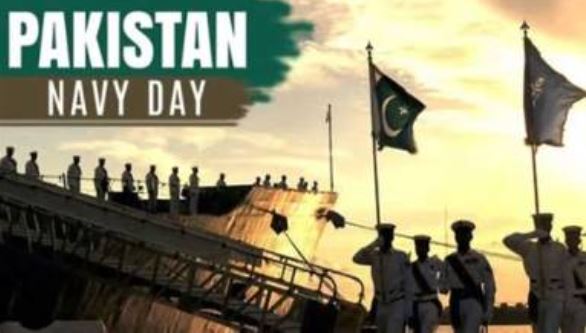
The naval valour of 1965 therefore established an enduring lesson for Pakistan Navy: maritime power is not determined by numbers alone, but by the ability to employ available platforms with precision, initiative and strategic purpose. The events of 1965 consequently remain an important chapter in Pakistan Navy’s history, reflecting its resolve to safeguard national interests at sea and its enduring commitment to maintaining a credible and effective maritime defence. The professional ethos, initiative and asymmetric employment demonstrated during the war continue to define Pakistan Navy’s approach to maritime defence and remain a source of inspiration for generations of its personnel.