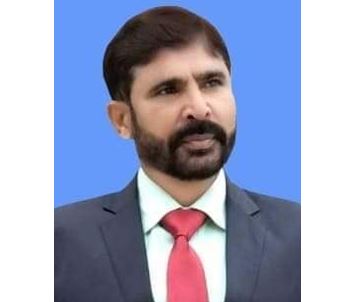
Dr. Muhammad Akram Zaheer
Wars rarely end when the guns fall silent. Their consequences remain in the calculations of states, in the fears of societies and, most importantly, in the doctrines that shape future policy. For Iran, the wars of the past four decades have produced a particularly enduring lesson: survival depends on resisting American and Israeli pressure while avoiding a confrontation in which Iran’s military disadvantages become decisive. That lesson took shape during the Iran-Iraq war of the 1980s. Tehran came to see Iraq’s war effort not simply as an Iraqi undertaking but as part of a wider struggle against the Islamic Republic. Ayatollah Ruhollah Khomeini famously described the conflict as “America’s hand coming through Saddam’s sleeve”. For the Iranian leadership, the war became proof that the United States was ultimately interested in changing the political order in Tehran.
Three conclusions followed. First, Washington could not be trusted as a neutral actor. Second, Iran could not depend entirely on outside powers for its security. Third, a direct war with the United States or Israel would carry enormous risks. Iran therefore developed a foreign policy that sought to compensate for conventional military disadvantages through missiles, asymmetric warfare, regional alliances and armed partners. For years, this approach served Tehran reasonably well. Hezbollah in Lebanon, Iraqi militias, Hamas and later the Houthis became important elements of what Iran described as an “axis of resistance”. The purpose was not simply to expand Iranian influence. It was also to keep potential adversaries uncertain about where, when and how Iran might respond to an attack.
The central question facing Tehran is no longer whether it can operate through regional partners. It is whether reliance on those partners alone can provide adequate protection when Israel and the United States are prepared to strike targets inside Iran directly. The experience since the Hamas attack on Israel in October 2023 has been especially important. Israel demonstrated that Iranian territory, senior officials and military assets could become direct targets. The old distinction between Iran and the forces operating in its name consequently became less useful. Tehran could no longer assume that strategic distance and the activities of allied militias would keep the conflict away from Iranian soil. Iran is likely to place greater emphasis on its own missiles and drones and on its ability to impose costs directly on its adversaries. The Strait of Hormuz will remain an important part of this calculation. Tehran does not necessarily need to close the waterway permanently to make its strategic value felt. The possibility of disruption alone can affect oil markets, shipping insurance and the calculations of Gulf states and Western governments.
This is not conventional warfare in the traditional sense. Iran cannot expect to defeat the United States in a prolonged contest of aircraft carriers, advanced aircraft and precision weapons. Its objective is more limited: to make the political and economic cost of continued war sufficiently high that its adversaries reconsider further escalation. There is, however, a danger in this strategy. A policy based on deterrence through escalation can also produce miscalculation. Once missiles are flying and military commanders are responding under pressure, the distinction between deterrence and uncontrolled escalation can disappear quickly.
The Islamic Republic is unlikely to retreat completely into isolation. Its economic difficulties make such a policy impractical. Years of sanctions, damaged infrastructure, inflation and declining purchasing power have placed considerable pressure on the Iranian economy. The leadership may continue to speak the language of resistance, but economic realities will demand engagement with neighbours and wider markets. Nor is a dramatic transformation on the model of Vietnam particularly likely in the short term. Iran is unlikely to abandon its long-standing security doctrine simply because war has imposed heavy costs. Political systems do not change their basic assumptions overnight, especially when their leaders believe those assumptions have been repeatedly confirmed by events.
Iran may seek better relations with the Gulf Arab states while maintaining military pressure on Israel and the United States. It may offer trade, border security and regional cooperation while continuing to develop missiles and drones. It may talk to Washington indirectly while insisting that it does not trust Washington. The Gulf states have their own reasons for reconsidering their strategic position. They watched Iranian missiles threaten the region, but they have also watched the United States struggle to provide an entirely predictable security environment. Their dilemma is not whether to abandon Washington. Rather, it is whether dependence on one external power remains sufficient in a region where another major power, Iran, cannot simply be wished away. This could create space for a new form of Gulf diplomacy. Saudi Arabia, the United Arab Emirates, Oman, Qatar and other states have already demonstrated that dialogue with Tehran is possible even amid profound disagreements. The wars could strengthen the argument for maintaining channels with Iran rather than closing them.
The easiest response would be to strengthen military containment: more weapons for Israel, stronger defences for Gulf allies and greater economic pressure on Tehran. Such measures may provide short-term reassurance, but they could also reinforce the Iranian belief that Washington’s ultimate objective is regime change. That belief matters because Iranian leaders are unlikely to interpret each American action separately. Sanctions, the withdrawal from the nuclear agreement, the killing of Qassem Suleimani and subsequent military confrontations are viewed in Tehran as parts of a single historical confrontation. Diplomacy, therefore, cannot begin with the expectation that decades of distrust will disappear around a negotiating table.
The more realistic objective would be narrower: reduce the incentives for escalation and establish rules that make miscalculation less likely. Agreements on maritime security, missile restraint, prisoner exchanges, nuclear monitoring and regional communication may appear modest, but modest arrangements can sometimes achieve more than grand declarations. The United States also needs to distinguish between deterring Iranian aggression and seeking to transform Iran’s political system. If Tehran believes every negotiation is merely another route towards regime change, compromise will remain extremely difficult.
Iran, for its part, faces an equally serious choice. It can emerge from the wars convinced that only greater military strength will guarantee survival. Or it can conclude that military power must be accompanied by regional accommodation and economic engagement. The first course could produce a more heavily armed but permanently insecure Iran. The second would not require Tehran to abandon its political system or all of its regional ambitions. It would simply recognise that security cannot be achieved through missiles alone.
The real legacy of the wars of 2025 and 2026, therefore, may not be found in the amount of infrastructure destroyed or the number of weapons fired. It will be found in the lessons that Tehran and Washington take from them. Iran believes it has spent decades fighting one long struggle for survival. The United States believes pressure can eventually change Iranian behaviour. Neither assumption has produced a durable settlement. The next phase will depend on whether both sides continue to interpret the past as a justification for confrontation or begin to use it as a reason for restraint. Iran may emerge from the latest wars more suspicious, more heavily armed and more willing to confront its enemies directly. But it may also be more conscious of the limits of military power and the necessity of economic and regional diplomacy.
The choice before Iran is not simply between resistance and surrender. There is a third possibility: resistance combined with diplomacy, military deterrence combined with regional accommodation. Whether that combination produces stability or merely postpones the next war will depend not only on Tehran’s choices but also on Washington’s response. The next war, if it comes, will be shaped by the lessons of the last one. The greater challenge is to ensure that those lessons do not become a permanent blueprint for another conflict.
Dr. Muhammad Akram Zaheer
Assistant Professor Pakistan Studies
Imperial College of Business Studies Lahore