ISLAMABAD, JUL 13 /DNA/ – Pakistan’s electricity distribution sector requires governance reforms, regulatory certainty, and a consumer-centric approach to ensure the success of ongoing privatization efforts. Privatization alone cannot address the sector’s structural challenges; rather, its success will depend on effective regulation, strong institutional capacity, and robust accountability mechanisms that safeguard consumer interests.
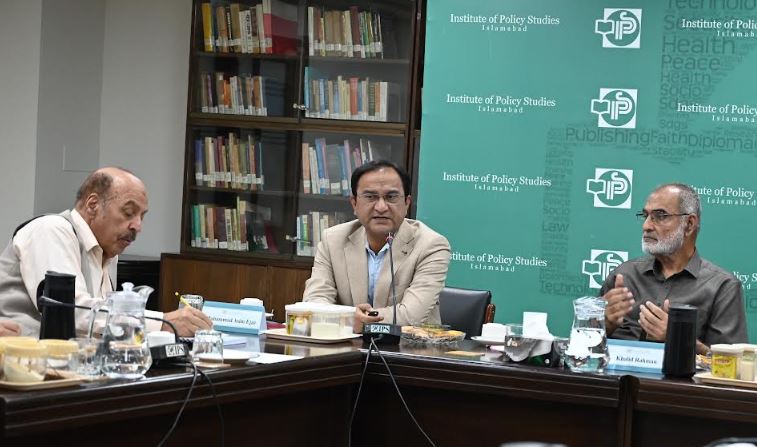
Experts expressed these views at a roundtable titled “Reimagining Pakistan’s Distribution Sector: Privatization, Solarization, and Circular Debt,” organized by the Institute of Policy Studies (IPS), Islamabad. The session brought together policymakers, regulators, utility professionals, economists, and academics to deliberate on the ongoing distribution companies (DISCOs) privatization process, the rapid expansion of rooftop solar, and the persistent challenge of circular debt.
Key speakers included Afia Malik, senior researcher; Muhammad Asim Ejaz, Chief Engineer (O&M), IESCO; Imtiaz Hussain Baloch, Director General (Licensing), NEPRA; and Chairman IPS Khalid Rahman. The discussion also featured leading experts, including Rehan Javed, convener, Energy Advisory Committee FPCCI; Dr. Naveed Arshad, director, LUMS Energy Institute; Dr. Syed Ali Abbas Kazmi, HoD, USPCAS-E NUST; Shahid Mehmood, senior economist; Muhammad Yasir Hussain, energy expert; and Ammar Yasir, IPS Associate.
Opening the discussion, Afia Malik argued that privatization is neither a necessary nor a sufficient condition for improving DISCOs’ performance. Drawing on international experience, she maintained that better governance, professional management, independent boards, regulatory certainty, and operational autonomy are more important than ownership alone. She noted that even publicly owned DISCOs can perform efficiently when these fundamentals are in place.
Providing the utility perspective, Asim Ejaz outlined the government’s privatization process for IESCO, GEPCO, and FESCO. He underlined that international consultants had conducted feasibility assessments and identified operational gaps prior to the issuance of expressions of interest by the Privatization Commission. Moreover, while acknowledging employees’ concerns regarding job security, he observed that privatization has produced mixed outcomes globally and should therefore be judged by its implementation rather than the concept itself.
Representing the regulatory perspective, Imtiaz Hussain described DISCOs’ privatization as a step in the right direction, citing K-Electric’s improvements in reducing losses, strengthening regulatory compliance, and enhancing service delivery. He noted that K-Electric consistently ranks among the best-performing utilities in NEPRA’s evaluations and argued that Pakistan has long delayed similar reforms for public distribution companies.
Khalid Rahman observed that Pakistan’s electricity distribution sector is at a critical juncture where reforms are essential, and no single governance model offers a universal solution. He emphasized that the ongoing privatization of IESCO, GEPCO, and FESCO should ultimately be assessed through the lens of consumer welfare, effective regulation, and improved service delivery.
During the discussion, participants broadly agreed that governance and management remain the sector’s primary challenges. Rehan Javed called for stronger legal measures against electricity theft. Dr. Ali Abbas Kazmi questioned the rationale for privatizing the country’s best-performing DISCOs, arguing that comparable efficiency gains could be achieved under public ownership through better management. He also cautioned that privatization could have implications for consumer tariffs and labor unions.
Highlighting emerging challenges, Dr. Naveed Arshad warned that rapid behind-the-meter solar adoption is accelerating grid defection, particularly among high-paying consumers. He underscored that it poses a serious financial challenge for DISCOs.
Reinforcing Afia Malik’s argument, Shahid Mehmood emphasized that governance, not privatization itself, should remain the focus of reforms. He further argued that the success of privatization depends on its design and ability to improve consumer welfare.
Similarly, Yasir Hussain stressed that Pakistan’s regulatory and institutional environment must be adequately prepared to attract capable investors and ensure measurable improvements in service delivery. Ammar Yasir emphasized that privatization should not become an end in itself but should instead be pursued only if it strengthens governance and improves services for consumers.