by Muhammad Mohsin Iqbal
In every age of conflict, nations have understood that the strength of an army does not rest merely in the number of its battalions or the size of its armoury, but in the excellence of its equipment, the discipline of its ranks, and above all, the determination that beats within the hearts of its soldiers. War requires tools that deter aggression and answer it with resolute force, yet history testifies that even the most formidable machinery is powerless without the spirit that guides it. Pakistan learned this lesson not in comfort but in fire, when in 1971 it faced a trial greater than its material capacities.
There is no denying that Pakistan entered the war of 1971 under conditions far less favourable than those of its adversary. Politically, the country was grappling with internal discord, strained governance, and the tragic anxieties emerging in East Pakistan. India, in contrast, enjoyed greater political coherence and international support. Economically as well, Pakistan was more limited in resources, while India, with a larger industrial base and greater financial resilience, possessed a comparative advantage. In matters of defence, India had the benefit of numerical superiority, larger stockpiles, and extensive backing from global partners. In external affairs too, New Delhi benefited from significant diplomatic alignments, particularly its strategic treaty with the Soviet Union, whereas Pakistan’s position was more fragile, dependent on distant alliances and insufficiently supported by its immediate region.
Yet, despite this disparity, the Pakistani nation did not lose heart. The limitations in political stability, economic strength or diplomatic support did not diminish its resolve. When India launched its offensive, the Pakistan Armed Forces met it with the courage of a people determined not to let their homeland be overrun by aggression. In those days when military hardware was unevenly balanced and the diplomatic climate seemed unfriendly, it was the indomitable courage of Pakistani soldiers that became the country’s true shield.
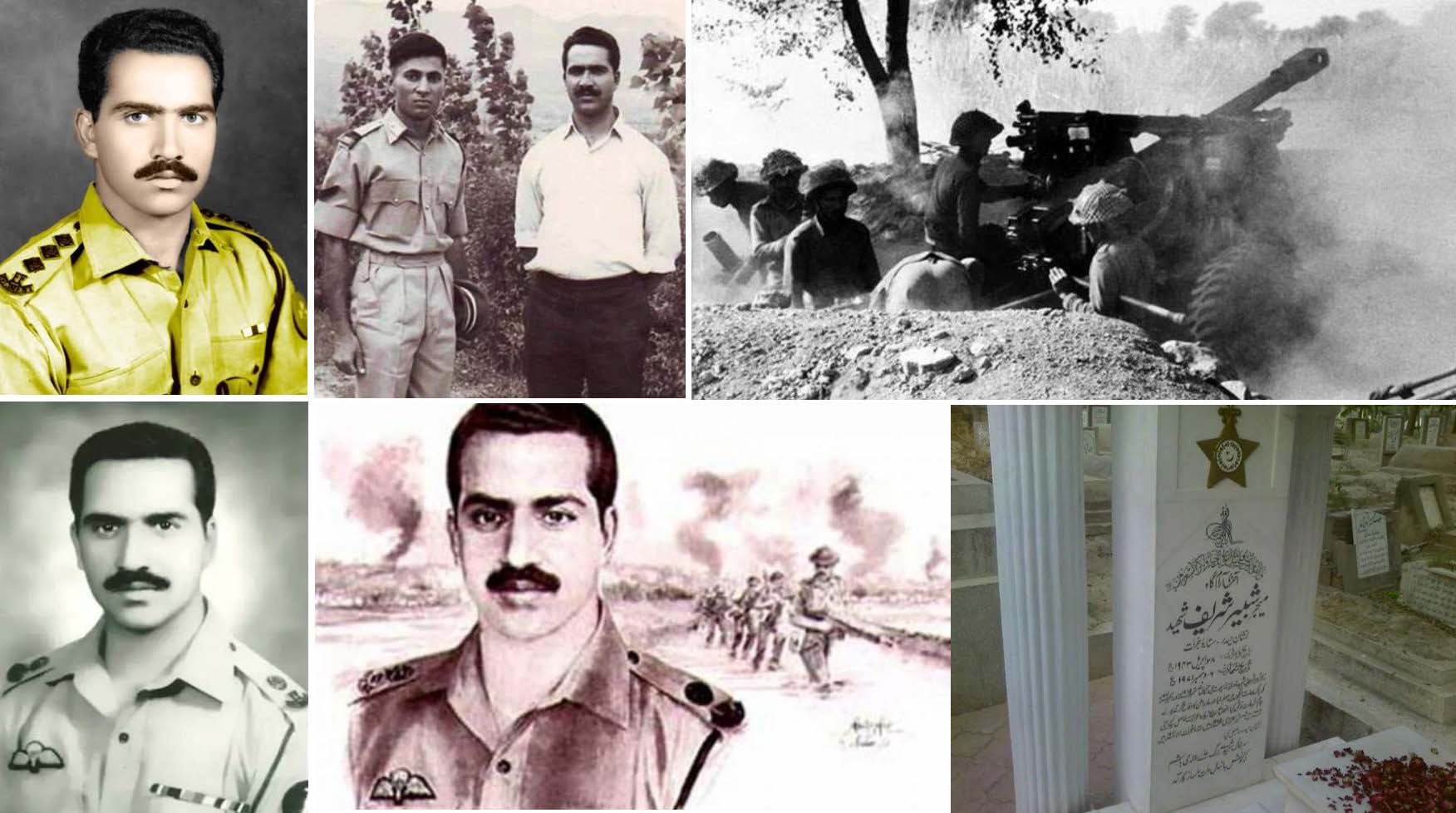
Among the shining names of that difficult period, the example of Major Shabbir Sharif stands in eternal brilliance. He was a young officer who understood that courage is not measured by the strength of the arms one carries, but by the strength of the conviction one defends. On December 6, 1971, during some of the fiercest clashes of the conflict, he led his men with an unmatched spirit. Under heavy enemy fire, he seized strategic ground, repelled repeated assaults and inflicted decisive losses on the opposing forces. In the final moments of his life, he embodied an unshakeable devotion to duty, offering his life for the defence of the motherland. For his supreme courage and sacrifice, he was awarded Nishan-e-Haider, the nation’s highest military honour. His legacy remains a symbol of what Pakistan had in its favour even when the odds appeared overwhelming: courage, faith, and an unbroken will.
From that era to the present day, a great transformation has taken place in the military sphere. The global landscape of warfare has changed, and Pakistan, despite facing geopolitical pressures and financial challenges, has strengthened itself in areas where it once lagged behind. Politically, the country today has a more structured system of governance, while India faces its own internal divisions and growing political polarisation. Economically, though Pakistan continues to address serious challenges, India’s own rise has created new strategic vulnerabilities, particularly in the context of regional disputes and military overstretch. Defence capabilities too have undergone a significant shift. Pakistan’s modern missile systems, air defence technology, and nuclear deterrence have created a strategic balance that did not exist in 1971. India may possess larger numbers, but Pakistan today commands a deterrent capability that ensures aggression cannot be contemplated without grave consequences. In external affairs as well, the global environment has evolved; alliances are no longer as predictable as they once were, and Pakistan maintains crucial partnerships that reinforce strategic stability in the region.
Thus, when one compares the Pakistan of 1971 with the Pakistan of today, it becomes clear that the nation has travelled a long distance. The disparity that once existed has narrowed. The lesson, however, remains unchanged: equipment may strengthen a nation’s hands, but it is the character of its people that strengthens its destiny. The story of Major Shabbir Sharif reminds us that when a soldier fights for honour and homeland, he stands taller than any adversary, regardless of the weapons arrayed against him.
In remembering his sacrifice, we remember the essence of Pakistan’s resilience. Though the material balance in 1971 favoured the enemy, the moral and spiritual strength of Pakistani soldiers transformed the battlefield. Today, as the region continues to witness strategic competition and military modernisation, the legacy of that era teaches us that while nations must prepare with the most advanced means of defence, they must also preserve the spirit that gave life to sacrifice. For in the final reckoning, it is not merely the might of the machine, but the courage of the heart, that decides the fate of nations.