Home Blog Page 999

Trade, submarines feature at ASEAN talks in Australia

submarines feature at ASEAN talks in Australia

Melbourne, Mar 5 (AFP/APP/DNA): Australia unveiled plans to ramp up investment in Southeast Asia on Tuesday, setting aside US$1.3 billion to bolster trade in a region of rising economic might.

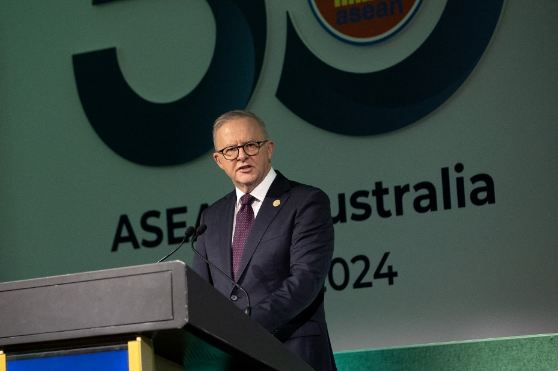
Prime Minister Anthony Albanese announced the funding as leaders from the 10-nation ASEAN forum met in Melbourne for a three-day summit.

“The government I lead has made it clear. More than any other region, Southeast Asia is where Australia’s future lies,” Albanese told a business forum on the summit’s sidelines.

Following a series of bruising disputes, Australia has increasingly looked to build economic ties outside of major trading partner China.

Fuelled by years of swift and sustained population growth, the ASEAN bloc is widely seen as an emerging economic powerhouse.

With vast deposits of critical minerals and a booming appetite for electricity, Southeast Asia is also poised to play a major role in the global push for clean energy.

Australia’s new funding package will provide export financing and loans geared largely toward infrastructure and renewable energy projects.

Albanese said it was “the most significant upgrade of Australia’s economic engagement with ASEAN for a generation”.

– Nuclear submarines –

While leaders were eager to focus on trade and business, more sensitive questions about China’s growing sway in Southeast Asia were never far from mind.

Singapore Prime Minister Lee Hsien Loong said the city-state would gladly host Australia’s fleet of nuclear-powered submarines once they were up and running — an offer likely to raise Beijing’s hackles.

The United States and the United Kingdom have pledged to help Australia acquire a fleet of nuclear-powered subs as part of joint plans to counter China’s influence in the region.

While some ASEAN members have expressed reluctance to back the so-called AUKUS defence pact, former British colony Singapore has been full throated in its support.

“I’ve said before, and I repeated to the prime minister on this visit, that when the new Australian submarines are ready, we welcome them to visit Changi naval base,” Lee told reporters on Tuesday.

Climate change also looms large on the summit’s agenda.

Southeast Asia’s hunger for energy is largely fed by fossil fuels, while Australia remains one of the world’s biggest exporters of gas and polluting thermal coal.

Both are increasingly eager to pivot toward renewable energy.
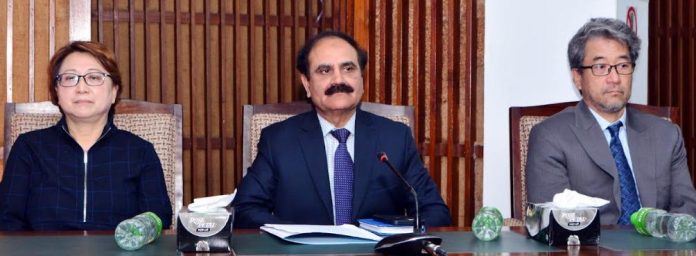
Int’l Collaboration is Vital for strengthening climate resilience of agriculture in Pakistan, Chairman PARC

Int’l Collaboration is Vital for strengthening climate resilience of agriculture in Pakistan, Chairman PARC

ISLAMABAD, MAR 4 /DNA/ – PARC and ADB collaborated to host a groundbreaking workshop focused on Promoting climate-smart agricultural research in Pakistan. The event, held at National Agricultural Research Centre (NARC) Islamabad, brought together esteemed participants from various national and international research organizations. Chairman PARC, Dr. Ghulam Muhammad Ali, expressed his gratitude to all attendees, including Ms. Noriko Sato senior Natural Resources Specialist ADB, Dr. Takashi Yamano, principal economist ADB and others for their valuable contributions to the cause. Chairman PARC reiterated that Climate smart agriculture research is crucial in addressing the challenges posed by rapidly changing climatic conditions to ensure sustainable food production and agricultural resilience. Dr. Ali also underscored the importance of engaging with international institutions and experts to leverage their knowledge and experiences for the benefit of agricultural research in the region.

During her remarks, Ms. Noriko Sato provided a comprehensive overview of ADB’s initiatives in Pakistan. Dr. Takashi Yamano presented insights on climate change impacts, including temperature variations, crop damage from floods, and greenhouse gas emissions in agriculture. The discussions also encompassed potential solutions to mitigate these emissions, such as promoting low-carbon rice cultivation and developing climate-resilient and drought-tolerant crop varieties. Dr. Ruben Lampayan, ADB consultant highlighted the inefficiencies in water usage in rice cultivation and emphasized the adoption of water conservation techniques, Alternate Wetting and Drying (AWD) practices, and other effective water management technologies to enhance rice production while minimizing water consumption. Senior specialist, Dr. Krishna Dev Joshi highlighted the importance of the delivery of climate smart crop varieties to transform Agri-food system of Pakistan and to address the challenges of climate change and ensure food security in the country.  Climate Change specialist, Dr. Hiz Jamali emphasized that low water productivity in rice poses a significant challenge to sustainable agriculture practices in Pakistan, exacerbated by key climate challenges such as water scarcity, unusual rainfall patterns, and rising temperatures impacting crop yields

Director Water Institute NARC, Dr. Bashir Ahmed, and Director NIGAB, Dr. Shaukat Ali shared insights on success stories by PARC on climate smart agriculture in Pakistan enhancing water productivity in rice, developing climate-resilient crop varieties, addressing climate change implications on water availability, and tackling key climate challenges in country’s agriculture sector. The meeting concluded with a commitment between PARC and ADB to collaborate for the advancement of sustainable agricultural practices and fostering global partnerships to address the evolving environmental conditions affecting food security and economic growth in the country.

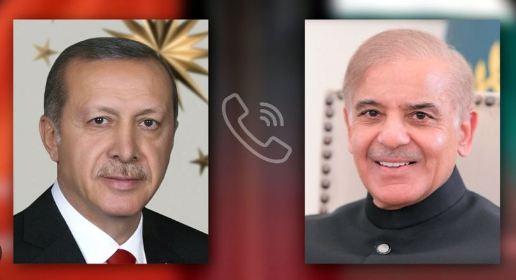
Turkish President Tayyip Erdoğan greets Shehbaz Sharif

Turkish President Tayyip Erdoğan greets Shehbaz Sharif

ISLAMABAD, MAR 4 /DNA/ – Today, the President of Republic of Turkiye, Recep Tayyip Erdoğan, called Prime Minister Shehbaz Sharif and congratulated him on his election as the Prime Minister of Pakistan.

The Prime Minister expressed his gratitude to President Erdoğan for this gracious gesture of brotherhood and fraternity. He underlined that enduring people-to-people bonds and strong religious and cultural linkages underpinned robust Pakistan-Turkiye relationship.

Prime Minister Sharif also conveyed that Pakistan looked forward to welcoming President Erdoğan for the upcoming session of Pak-Turkiye High-Level Strategic Cooperation Council (HLSCC) being scheduled to be held in Islamabad in near future. 

Recalling strong bonds of friendship that exist between the governments and peoples of the two countries, the two leaders expressed their desire and commitment to work closely with each other to take the bilateral relationship to unprecedented heights of cooperation and fraternity.

The two leaders also exchanged views on the worsening humanitarian situation in Gaza and reaffirmed their commitment for a just, comprehensive and lasting solution to the Palestinian question anchored in international law and in line with relevant United Nations and OIC resolutions.

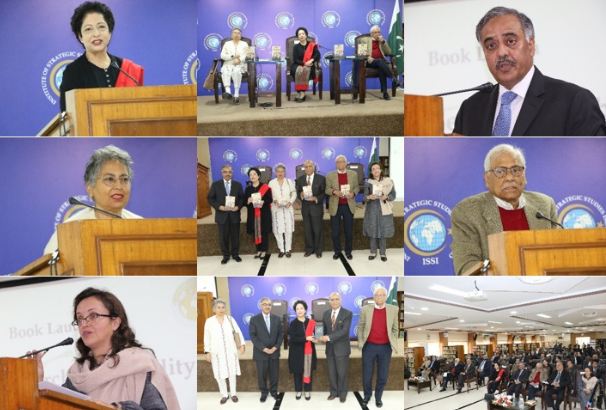
Launch of Dr. Maleeha Lodhi’s book “Pakistan: Search for Stability” at ISSI

ISLAMABAD, MAY 4 /DNA/ – The Centre for Strategic Perspectives (CSP) at the Institute of Strategic Studies Islamabad (ISSI), organized launch of the book tiltled “Pakistan: Search for Stability”, edited by Dr. Maleeha Lodhi. Two other contributors to the book — Mr. Zahid Hussain, a prominent journalist; and Dr. Dushka Saiyid, a former professor of History at QAU — were also present. The event was attended by eminent members of foreign and civil services, academia, civil society, media, and the diplomatic corps in Islamabad.

During her initial remarks, Dr. Neelum Nigar, Director of CSP, underscored the importance of Dr. Lodhi’s book, which delves into the complexities of Pakistan’s policy formulation in its pursuit of stability. Dr. Nigar stated that this book has the potential to greatly enhance people’s understanding of the crucial subject-matter that it addresses.

In his welcoming address, DG ISSI Ambassador Sohail Mahmood highlighted Dr. Maleeha Lodhi’s extensive experience and valuable contributions to Pakistan throughout her long public career, including as an accomplished political scientist, journalist, and diplomat. He also commended the other 18 eminent contributors to the book, analysing Pakistan’s history, politics, economy, society and foreign relations from their respective academic, professional and practitioners’ viewpoint and proposing a practical way forward.

Ambassador Sohail Mahmood noted that Dr. Lodhi’s latest book builds upon her previous work and explores Pakistan’s pursuit of stability amidst its current challenges, outlining the requisite solutions as well as strategies. In essence, he said, the book carries a message of hope and optimism, reassuring that it is indeed possible to overcome the challenges and to be on the path of recovery and renewal. Rather than overwhelming readers with daunting obstacles, it serves as a reinforcement of self-belief and contains a call to decisive, achievable, and transformative action. Ambassador Sohail Mahmood further stressed that the book is a serious and non-partisan contribution to the policy discourse in Pakistan, serving as a valuable resource for policy-makers as they navigate the beginning of a new political cycle. The timing of its release is particularly opportune for learning and insight.

In her address, Dr. Lodhi emphasized the importance of seeking opportunities amidst crises. She noted that in Pakistan, political dynamics have yet to catch up with the socio-economic changes occurring in the country. Dr. Lodhi lauded all the contributors to the book, acknowledging their comprehensive set of policy guidelines covering a wide array of topics. Furthermore, Dr. Lodhi highlighted Pakistan’s youthful and highly talented demographic, expressing optimism about their potential to drive positive political change. However, she lamented that the governance structure remains entrenched in outdated thinking, and the situation marked by a number of political, social and structural fault-lines. The polarisation and absence of consensus, mutual respect and tolerance within Pakistan’s political system, she argued, contributes to destabilization.

Moreover, Dr. Lodhi pointed out the economic challenges facing Pakistan, including its entrapment in a debt cycle leading to increased inequality perpetuated by a minority elite’s control. She remarked that the book aims to chart a course towards overcoming the existing fault-lines within Pakistan’s system and needs to be read with care and attention by the policy circles.

Dr. Dushka Saiyid emphasized the importance of educating the younger generation about historical figures, particularly highlighting the life and teachings of Pakistan’s founder, Quaid-e-Azam Mohammed Ali Jinnah. In her talk, she navigated through historical contexts to emphasize the enduring relevance of Jinnah’s principles in shaping a progressive and united Pakistan for generations to come. She underscored Jinnah’s democratic, secular and inclusive principles as well as his emphasis on constitutionalism, education and women emancipation as essential for contemporary Pakistan, which she has elaborated upon in her chapter in the book.

Mr. Zahid Hussain stressed the necessity for policymakers to glean insights from historical precedent, which has often resulted in Pakistan facing persistent crises, whether in politics or economics. He noted that the internal security situation was further exacerbated by challenges such as climate change and population growth. Highlighting concerns at three of Pakistan’s four borders, he particularly emphasized the serious situation along the Pakistan-Afghanistan border. Mr. Hussain highlighted the spillover effects of the situation in Afghanistan, contributing to heightened insecurity in Pakistan, and advocated for a reassessment of Pakistan’s Afghan policy, a subject he has addressed at length in his chapter in the book.

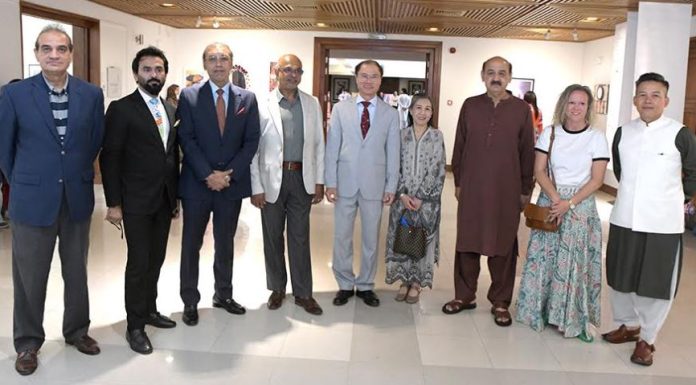
Following the presentations, participants engaged in an interactive discussion. In the end, Ambassador Khalid Mahmood, Chairman of the Board of Governors, ISSI presented the Institute’s Shields to the speakers followed by a group photo.

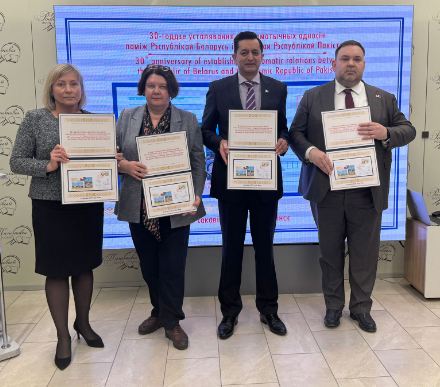
Launch of commemorative stamps as part of Pakistan-Belarus 30 years of diplomatic ties

Launch of commemorative stamps as part of Pakistan-Belarus 30 years of diplomatic ties

MINSK, MAY 4 /DNA/ – The launch ceremony held at Belarusian Post headquarters was attended by Pakistan Ambassador to Belarus Sajjad Haider Khan and Belarusian dignitaries including Mr. Eugeny Shestakov, Deputy Foreign Minister, and Ms. Ryabowa Anna, Deputy Minister of Informatization.

In his remarks, Ambassador Khan expressed gratitude for the fruitful partnership that has evolved over the past three decades. He emphasized the establishment of embassies in each other’s capitals in 2014 and 2015 as a significant milestone, underscoring the commitment to engagement and collaboration.

Deputy Foreign Minister Shestakov highlighted the history and ongoing cooperation between Pakistan and Belarus.

The event highlighted the enduring friendship and ongoing cooperation between the two nations.

The two countries are committed to further strengthening their bonds through upcoming events including high-level visits and cultural exchanges.

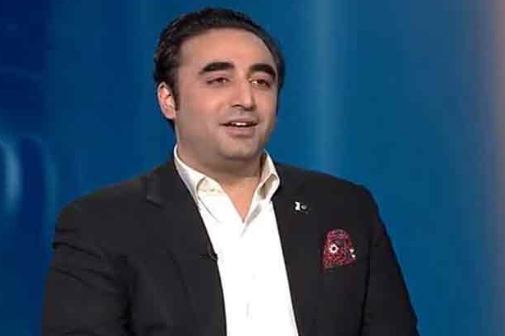
PPP fully endorses PM’s offer for Charter of National Reconciliation: Bilawal

Chairman Bilawal addresses press conference after CEC meeting

ISLAMABAD, MAR 4: Chairman of the Pakistan People’s Party (PPP), Bilawal Bhutto Zardari, stated on Monday that the PPP fully supported the offer made by newly elected Prime Minister Shehbaz Sharif for a ‘Charter of National Reconciliation.’

Speaking in the National Assembly, he recalled the Prime Minister’s offer during his maiden speech in the House to collaborate on a Charter of National Reconciliation.

“We not only endorse it but also urge the Opposition to participate in this process for the broader interests of the country,” he stated.

Bilawal Bhutto congratulated the newly elected Chief Ministers of all four provinces and emphasized the need for them to play their role in saving Pakistan’s “democracy and economy.”

He said that people did not vote for anyone to create a ruckus but to save them from this economic crisis.

Bilawal Bhutto stressed the need for discourse among all the lawmakers.
He said the Parliament was the mother of all institutions, and if this institution was strengthened, it would ultimately empower the masses.

“The people of Pakistan are tired of poverty, unemployment, and inflation,” he said, adding “they did not give their vote for you to come here and abuse each other and create a ruckus.”

Bilawal Bhutto asked older lawmakers to make decisions that benefit youth and future generations.

“Many of whom have been in this House six times,” he remarked.

“Past decisions that have been made have completely ruined the country,” he added.

The PPP chief said he was disappointed by the “abuse hurled around” at yesterday’s National Assembly session that saw PML-N’s Shehbaz Sharif elected prime minister for his second term.

“What is the nation seeing? We have reached a dangerous point,” he said.

Bilawal Bhutto said that the February 8 elections were being “made controversial for no reason” by incidents like a raid on a presidential candidate’s residence.

The PPP Chairman extended his party’s support on the matter of the PTI wanting to address any election irregularities.

He condemned the ruckus and consistent sloganeering during yesterday’s National Assembly session that saw Shehbaz Sharif elected as prime minister.

“I appeal to all of you, especially those who are members of this House for a third time, don’t create this kind of ruckus here,” he added.

The PPP chief welcomed the Prime Minister’s elect announcement to provide subsidy to the farmers on fertilizers.

Bilawal Bhutto called for electoral and judicial reforms and noted that the country had been unsuccessful in judicial and election reforms, requesting that conversations be had on both these topics.

“If we can address these, then no power in the world can weaken Pakistan’s democracy,” he said.

The PPP chief lamented the violence that claimed the lives of several electoral candidates and workers, noting grenade attacks in Balochistan and across the country prior to the general elections.

“In Pakistan, elections are such that candidates get killed while contesting elections. We need to ensure this does not happen,” he added.

“I hope we can do work that lets me tell families that their sacrifice was not in vain,” he said.
He urged Prime Minister Shehbaz Sharif to form judicial commission under the head of Chief Justice of Pakistan Justice Faez Isa to probe the incidents on May 9 so that the culprits should be booked and the innocents must be released.

Bilawal Bhutto has endorsed the PTI’s call for the formation of a judicial commission to probe the May 9 riots.

The newly elected Chief Minister Khyber Pakhtunkhwa Ali Amin Gandapur’s remarks regarding an inquiry into the saga, he added.

“PPP endorse this if the PTI assured us that it will accept the decision of the judicial commission it is not possible that someone attacks our institutions, the martyr’s memorials and we forget it,” he said.

Bilawal Bhutto said the masses people were looking towards their elected representatives to lead the country out of multidimensional challenges faced by the country including those on the economic front.

He said that PTI misused the cipher for political gains, adding that those involved in the cipher’s misuse had committed a violation of the constitution and should be penalized.

He claimed that the PTI founder politicized the cipher by printing a copy and publishing it in international publications.

Bilawal asserted that the PTI founder self-claimed that the cipher was lost by him, while the opposition leader claimed that the bureaucracy was responsible for the cipher loss.

The chairman of PPP affirmed that anti-state elements and national rivals could detract from the cipher, posing a threat to national security, state institutions, and the state itself.

He urged the Prime Minister Shehbaz Sharif for the abolishment of unwanted federal ministries.

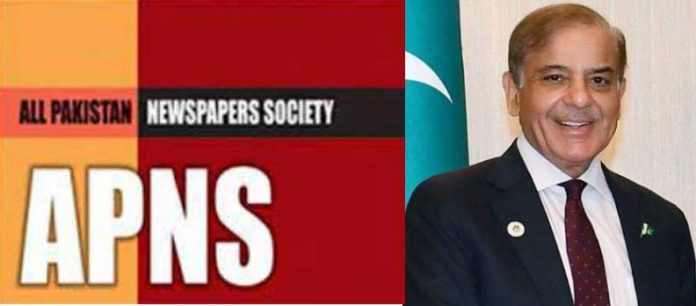
APNS greets PM Shehbaz; wants him to increase govt ads rates

APNS greets PM Shehbaz; wants him to increase govt ads rates

DNA

KARACHI: The All Pakistan Newspapers Society (APNS) has welcomed the election of Mian Shahbaz Sharif as Prime Minister of Pakistan for the second consecutive term and expressed its full support in his efforts to address the challenges faced by the nation.

Mrs. Nazafreen Salgol Lakhani, President and Sarmad Ali, Secretary General of the All Pakistan Newspapers Society have congratulated Mian Shahbaz Sharif on his election as Prime Minister of Pakistan and hoped that under his stewardship, the Government of Pakistan will continue to strive for the development and improvement in all fields including the media.

They believe that the new government would continue to strengthen the rules of law, rights of the citizens and of the media to unfettered freedom and right to access of information.

The APNS office bearers requested the Prime Minister elect to implement the decision taken at the end of his first tenure to increase in the government advertisement rates for the newspapers which unfortunately could not be implemented due to procedural reasons.

The APNS has requested the Prime Minister to meet the office bearers and members of the Executive Committee at his earliest convenience to discuss the matters of mutual Interests.

Countering violent extremism through peace education

Countering violent extremism through peace education

Dr. Muhammad Rizwan Bhatti

Peace Education is vital to foster equilibrium thinking in society. The establishment of peace in society is irrevocably indispensable to nurture the wholesome security landscape in Pakistan. The abhorrent scourge of extremism, radicalization and violence has permeated so deep in the society, that combating with multiple layers of intolerance has become need of the hour. Undoubtedly, the jinx of extremism has engulfed us in its redoubtable talons. The recent incident of harassment of woman donning the attire of Arabic calligraphy speaks volume of our atrophied mind and stultification of society. Notwithstanding, police valiantly defended the victim and ASP Shehar Bano Naqvi bravely rescued her in the midst of religiously infused violent mob. The prompt response of police averted the happening of untoward incident. The brutal lynching of Piranha Kumara, Mishal Khan, Mughees and Muneeb Butt is still haunting us. The growing menace of violent extremism has also rendered the minorities vulnerable to violence. However, Peace Education is a pro-active approach to deal with the exponential surge of extremism in society through engaging students, teachers and vulnerable segment of society for better and enhanced security environment.

 Peace education helps in identifying the core conflict issues, resolving the same and then establishing the peace on long standing basis. In addition, the ideological refutation helps in crafting the harmonious society. The religion based and sectarian driven violence vitiates the society and enhances culture of violence which is contrary to the teachings of Islam.  The politicized postulation of community in the face of transforming socio- economic and political relations secures religious overtones. Hate speeches often utilized to dehumanize other individual or groups to give credence to their creed and justification of their violent acts in Pakistan .Education is significant instrument to transform and craft the deviant minds. Academics programmes are not solely related to curriculum but also nurture connection and association between people, group and communities to protect healthy, cooperative and conducive environment of development and enlightenment. The following strategies need to be put in place in order to eradicate the violence form society; inclusive resilience-building approach, mentoring approach and facilitating relevant cultural peace inducing program through comprehensive coordination between curriculum coordinators and Policy makers. However, the inculcation of peace and mapping the cogent policy requires knowledge of relevant policy outlines and its strength for practical implementation to get the solid result of peace education. Furthermore, the whetting of critical thinking and adoption of alternative narratives in view of rightful perception need to be dig out for the effective prevention of violence through education. There are massive reasons of radicalization including Geo-Political, socio-economic factors, conflict-ridden society and perennial grievances. Nevertheless, education alone cannot desist the threat of violence. We need to craft wholesome inclusive approach, resisting anti-social behaviour and building the community cohesion through developing various community engagement initiatives. Moreover, respect for diversity and religio-cultural differences can avert bipartisan and obscurantist thinking. Youth can be surely changed positively through the inculcation of wholesome and Peace education. The knowledge, vocational expertise and overt behaviour are the corner stone to combat the scourge of violence. The attainment and provision of formal education bolster peace, fortitude, patience and resilience as the academic institutions plays a pivotal role in wide spreading of thoughts and perceptions of world around.

 Violence is all pervasive in the societies since aegis. Violence and their link to massive extremism procure myriad of problems that garnered academic pursuit in the post 9/11 era. Education plays a vital role to support the cohesion and collaboration of the community. Peace education helps in building inclusive society and allocating funds to reinforce security measures. Violence is paramount handicap in the course of progress because it is the matter that infuses fear within communities. Education is an important solution and catalyst for critical thinking. The students require chiseling their cognitive thinking process and develop productive criticism with cogent extrapolations. Furthermore, the studying anti-social human behaviours are more wholesome and beneficial than mere approaching as human rights proponents help building community cohesion that is the redoubtable bulwark against the spread of violent extremism. The propagation of multiculturalism, acceptance of diversity, socio-political diffusion and community involvement in the counselling endeavour at educational institutions through influential actors such as mentor, families, students, notables and local community and tribal elders are awfully essential to root out the menace of extremism. Moreover, educational reforms at national level conducive to promote cultural and political pluralism help in countering extremism in all its forms and manifestations.  The socio-political resilience, critical thinking, cultural diversity, prevalence of justice, individual freedom, reciprocity of love, cohesive narrative, educating people about democratic norms and last but not the least healthy inter-religious discourse contribute in preventing and countering the violent extremism as the erroneous attitude and ignorance about democratic,social,political  norms and  dubious religious beliefs give rise to  violent radicalism. Nevertheless, across the world, violent extremism has evolved into a terrible problem for societies. It undermines the safety, welfare, and reputation of numerous members of society and people living in both developed and developing nations, as well as their peaceful and environmentally friendly way of life. Additionally, it seriously impedes the exercise of human rights freely. The difficulties posed by violent extremism have generally been explored via military and security lenses up until now. Therefore, soft approaches such as peace education and deradicalization is essential to tackle the extremism and obscurantism in all its forms and manifestations. However, we need to address the fourth wave of terrorism that is based on religious misinterpretation and misplaced ideological indoctrination through cultivating narrative of peace and amity that is possible only through propagation and inoculation of peaceful religious injunctions of Islam.

The writer is Ph.D in Political Science from Govt College University, Faisalabad . E:Mail : [email protected]

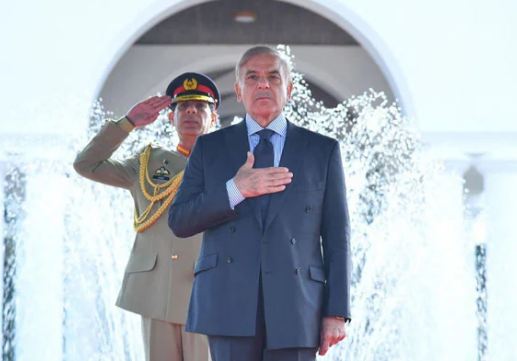
Shehbaz Sharif sworn in as Pakistan’s 24th premier

Shehbaz Sharif

ISLAMABAD, MAR 4: Shehbaz Sharif, the country’s prime minister-elect, has taken oath as the 24th chief executive at the President’s House in Islamabad on Monday (today).

President Dr Arif Alvi administered the oath to the newly-elected premier. The oath-taking ceremony began with a holy recitation.

The Pakistan Muslim League-Nawaz (PML-N) president was elected as the prime minister on Sunday, retaining the title after his 16-month-long stint in the top coveted position from April 2022 to August 2023.

This is the second time that Shehbaz will serve the nation as the premier after receiving 201 votes against his Pakistan Tehreek-e-Insaf (PTI)-backed Sunni Ittehad Council (SIC) opponent Omar Ayub Khan who got 92 votes in a ruckus-marred session of the Parliament’s lower house.

Shehbaz’s victory was expected as he enjoyed the support of seven other parties apart from the PML-N. The PM-elect is backed by the Pakistan Peoples Party (PPP), Muttahida Qaumi Movement-Pakistan (MQM-P), Pakistan Muslim League-Quaid (PML-Q), Balochistan Awami Party (BAP), Pakistan Muslim League-Zia (PML-Z), Istehkam-e-Pakistan Party (IPP) and National Party (NP).

Caretaker PM Anwaar-ul-Haq Kakar, according to official sources, would welcome the new premier on his arrival at the Prime Minister’s House. Shehbaz had also received Kakar on his arrival at the PM House on August 14 last year.

Kakar has vacated the PM House, but he will continue to perform his duties as premier till the issuance of notification of the new chief executive of the country. He has been allotted a house in the Minister’s Enclave.

Shehbaz Sharif to take oath of PM office today

Shehbaz Sharif

ISLAMABAD, MAR 4 – Shehbaz Sharif, the country’s prime minister-elect, will take oath office today at the President’s House in Islamabad.

The Pakistan Muslim League-Nawaz (PML-N) president was elected as the country’s 24th prime minister (PM) retaining the title after his 16-month-long stint in the top coveted position from April 2022 to August 2023.

This is the second time that Shehbaz will get to serve the nation as the premier after receiving 201 votes against his Pakistan Tehreek-e-Insaf (PTI)-backed Sunni Ittehad Council (SIC) opponent Omar Ayub Khan who got 92 votes in a ruckus-marred session of the Parliament’s lower house.

Shehbaz’s victory was expected as he enjoyed the support of seven other parties apart from the PML-N. The PM-elect is backed by the Pakistan Peoples Party (PPP), Muttahida Qaumi Movement-Pakistan (MQM-P), Pakistan Muslim League-Quaid (PML-Q), Balochistan Awami Party (BAP), Pakistan Muslim League-Zia (PML-Z), Istehkam-e-Pakistan Party (IPP) and National Party (NP).

Caretaker PM Anwaar-ul-Haq Kakar, according to official sources, would welcome the new premier on his arrival at the Prime Minister’s House. Shehbaz had also received Kakar on his arrival at the PM House on August 14 last year.

Kakar has vacated the PM House, but he will continue to perform his duties as premier till the issuance of notification of the new chief executive of the country. He has been allotted a house in the Minister’s Enclave.

The PM House is getting ready to welcome the new premier today. Officials said that arrangements for the presentation of a guard of honour and to welcome the new PM are being made given the predicted clear weather after a spell of rain.

Stay Connected

64FansLike
60FollowersFollow

Latest Reviews

Exchange Rates

USD - United States Dollar
EUR
1.17
GBP
1.35
AUD
0.72
CAD
0.73