Home Blog Page 997

Stress Management and Inner Peace: Embassy of Nepal hosts Vipassana programme in Islamabad

Stress Management and Inner Peace: Embassy of Nepal hosts Vipassana programme in Islamabad

DNA

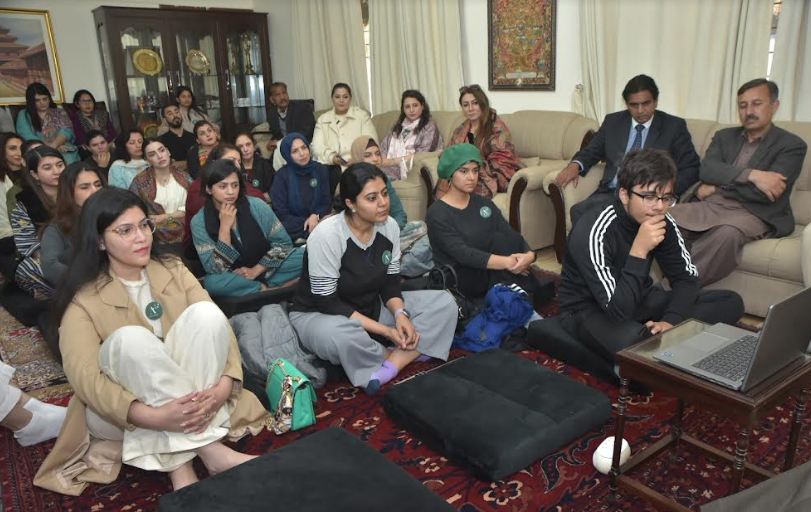
ISLAMABAD: On the occasion of the 114 International Women’s Day, the Embassy of Nepal in Islamabad organized a programme ‘Vipassana: Stress Management and Inner Peace for Better World’ highlighting the inner peace to manage stress through Vipassana. During the programme, I shared the imprint of Vipassana in Taxila and Takht-I Bahi and other places in Pakistan that have full evidences of meditation.

As an oldest country, Nepal has preserved and practised the oldest traditions, which could be beneficial to all of us. A large number of foreigners are visiting Nepal each year to learn, practice, and develop their skills in Yoga and Meditation. The yoga and meditation are non-religious and nonpolitical and beneficial for the well-being of humankind. Some of the centers in Nepal offer courses without any charge.

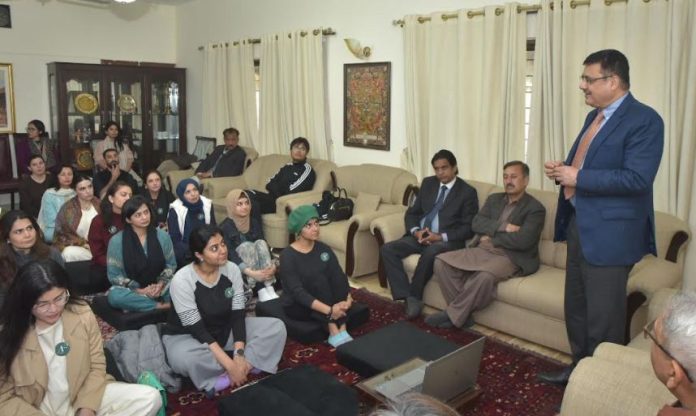
In the programme, Vipassana teacher Mr. Khageshwar Aryal shared the importance of Vipassana for the well-being of people and taught some breathing exercises and meditation. In the programme, Government officials, corporate chiefs, Human Resource Managers, Yoga teachers and practitioners were also present.

Bosnia, Pakistan ties from cordial to excellent, says Ambassador

Bosnia, Pakistan ties from cordial to excellent, says Ambassador

Film “Qou vadis, Aida?”, on the occasion the 32nd anniversary of Independence Day of Bosnia and Herzegovina

Saifullah Ansar

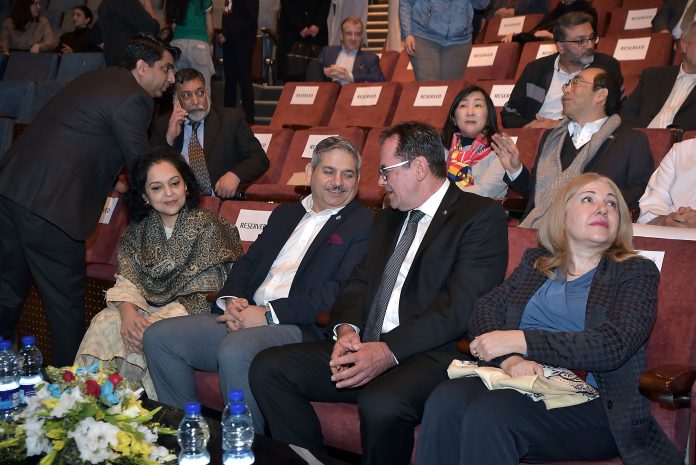
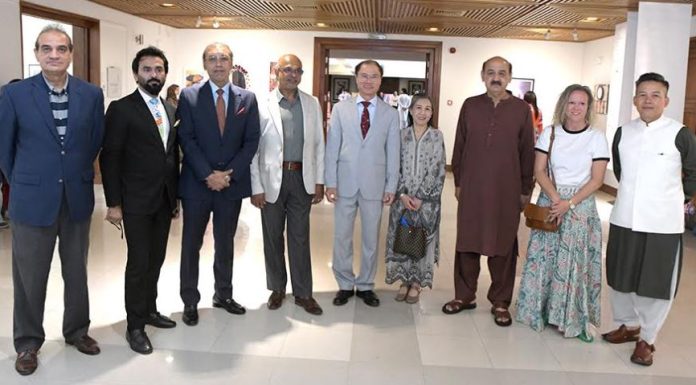
ISLAMABAD: Mr. Emin Cohodarevic Ambassador Embassy of Bosnia and Herzegovina has said  he was pleased to present the film “Qou vadis, Aida?”, on the occasion the 32nd anniversary of Independence Day of Bosnia and Herzegovina.

The film is not only a cinematic masterpiece, but a painful reminder of the Srebrenica genocide, the worst atrocity on European soil since World War II.

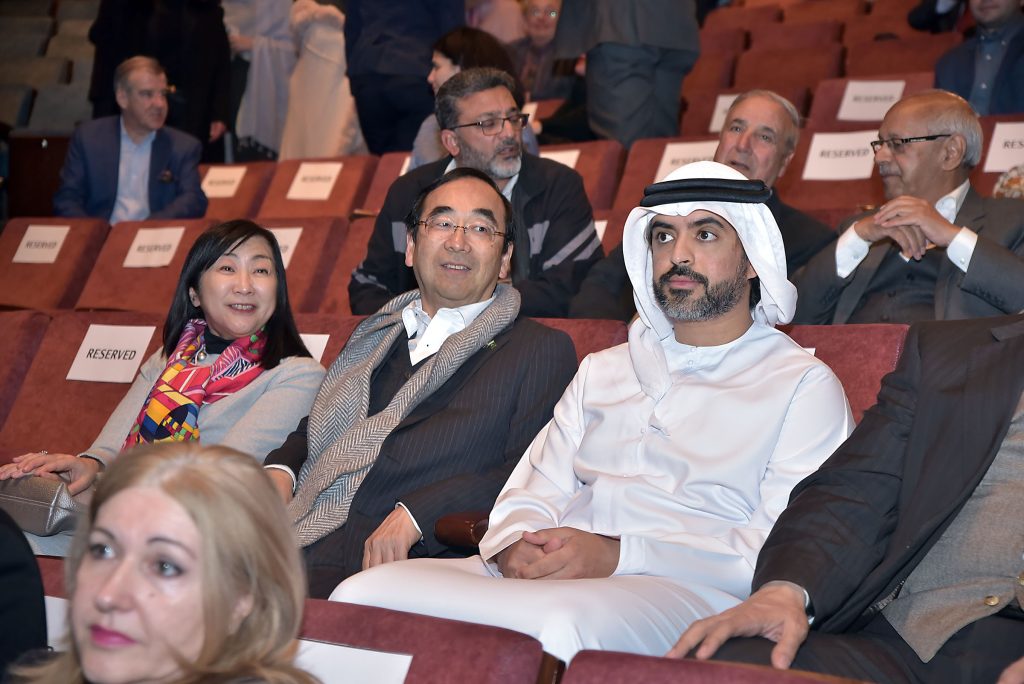
A large number of guests hailing from various walks of life attended the reception.

The ambassador said, it was an undeniable reality that the relations between Bosnia and Herzegovina and Islamic Republic of Pakistan are special: alongside the enduring link of the permanent support that Pakistan give to Bosnia and Herzegovina on its path to preserve freedom and democracy.

‘’Our relations have an out of ordinary dynamic, they permanently develop and diversify. There no single field, either political, defense, economical, cultural or social one, where we not able to give positive examples and good practices’.

He said he was confident that the friendship between the people of the two countries and bilateral relations between  two governments will continue to flourish and achieve new heights.   

While giving a highlight of the film, the ambassador said, it was not coincidence that we chose this moment to screen    “Quo vadis, Aida?”, as we mark our 32nd  year of independence, recognizing all of the stories, tragic and heroic, personal and collective, well-known and yet-to-be-told, that are part of my country′s history already.

‘Aida′s drama and her emotions are the heart of the story. I would like you to take away the feelings and questions the film raises. How many things would have been different if we had more empathy and solidarity? Did this tragedy have to have such a terrible outcome?

He said, he would like to express his gratitude to the Pakistan National Council of the Art for hosting us this evening, as well as Mr. Danish Iqbal, Honorary Consul of Bosnia and Herzegovina in Lahore, Mr. Asad Saleem, Honorary Consul of Bosnia and Herzegovina in Peshawar and Mr. Khawaja Abdul Ghani Majid, Honorary Consul of Bosnia and Herzegovina in Karachi who so generously contributed to the success of tonight′s event.

“Regional Reset” and “Strategic Clarity” needed in policies toward Afghanistan: Mushahid

ISLAMABAD, MAR 6 /DNA/ – Pakistan needs to develop strategic clarity on relations with its neighbors. We need a regional reset through dialogue among regional state actors. Opening borders and minds, and delinking trade from politics are crucial to promoting mutually beneficial peace and connectivity.

These remarks were made by Senator Mushahid Hussain Syed during the opening session of Pak-Afghan Stakeholders’ Dialogue, convened in Islamabad, attended by religious, tribal, and trade stakeholders from both sides, and organized by the Center for Research and Security Studies (CRSS), in collaboration with its Afghan partner, Organization for Economic Studies and Peace (OESP). The dialogue witnessed an insightful exchange of ideas and perspectives aimed at fostering stronger ties and addressing key challenges between Pakistan and Afghanistan. It highlighted the imperative for regional cooperation and economic connectivity to ensure stability and prosperity in the region.

The conference commenced with notable insights from Senator Mushahid Hussain, who emphasized the historical context of Pak-Afghan relations. Senator Hussain, reflecting on his extensive experience, underscored the importance of stability in Afghanistan and called for a reassessment of Pakistan’s Afghan policy. He urged a more inclusive approach towards Afghan migrants, advocating for their integration into Pakistani society. He argued passionately that those born in Pakistan should be granted Pakistani citizenship, drawing parallels with other migrant communities residing in Pakistan.

The discussion swiftly shifted towards the evolving regional dynamics, particularly the rise of Iran-Afghanistan trade surpassing that of Pakistan. Senator Hussain pointed out the international community’s acknowledgment of the Taliban as the de facto rulers of Afghanistan, highlighting Russia’s desire to engage with them despite facing obstacles.

“Pakistan’s internal security is inextricably intertwined with geopolitics”, said Senator Hussain while underscoring the interplay between Pakistan’s relations with its neighbors and its internal stability. He said that regional peace, security, and stability are also inextricably intertwined with the same in Afghanistan, as preconditions. He called for a reassessment of historical perceptions regarding Afghan groups and strategic clarity in Pakistan’s Afghan policy, advocating for a more cooperative and inclusive approach.

Senator Hussain saw the China-Pakistan Economic Corridor (CPEC) as a potential catalyst for regional cooperation and economic connectivity, proposing the inclusion of Afghanistan in this initiative, and stressed the need for open borders and strategic clarity in Pakistan’s regional policies.

The dialogue concluded with Hussain’s call for a “regional reset” in policies towards Afghanistan, emphasizing the need for collaboration and cooperation among neighboring countries. He stressed the importance of separating border trade from political tensions and terrorism concerns, while also advocating for greater engagement with the Taliban and highlighting the positive aspects of Pakistan’s relationship with China.

Fulfilling his pledge made during the gathering, he advocated for the key messages of the dialogue in the Senate session right after attending the dialogue, emphasizing the urgency of regional cooperation for peace and prosperity.

Addressing the gathering, various speakers echoed the sentiments of cooperation and collaboration. The dialogue will conclude on March 08 with jointly agreed policy recommendations on the mutually concerning areas of the relationship.

Suriya Bibi records optimism for CPEC’s contribution to economic prosperity in KP

Suriya Bibi records optimism for CPEC's contribution to economic prosperity in KP

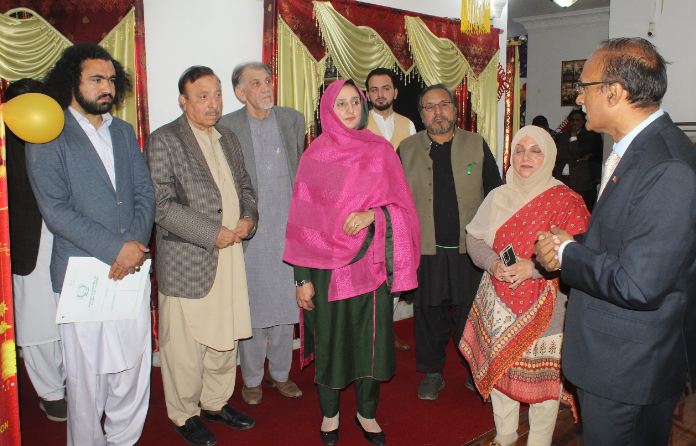
PESHAWAR, MAR 6 /DNA/ – The member of the provincial assembly elected on the general seat from Chitral and the first ever female deputy speaker in the history of the provincial assembly Suriya Bibi, has said that Pakistan-China friendship will become stronger and more stable with the passage of time, we believe that CPEC is a plan for the economic development of Pakistan, he expressed these views during a visit to China Window, a Chinese cultural center established in Peshawar and addressing the ceremony of awarding certificates to language learners. Suriya Bibi visited various galleries of the state of the art China Window, signed the friendship wall and recorded her comments in the guest book. 

She said that China has helped Pakistan in every difficult time and now the CPEC project will play its role in the economic development of Pakistan, however, he emphasized that the backward areas of Khyber Pakhtunkhwa should also be given a share in the CPEC, especially Chitral should also be considered in the CPEC. She hoped that CPEC would usher in a new era of prosperity in Khyber Pakhtunkhwa.

Deputy Speaker Provincial Assembly Suriya Bibi also described Chinese language as important for the future and said that it is the need of the hour to learn Chinese language so that learners can get job opportunities in the ongoing projects of Chinese investors in Pakistan. Deputy Speakers said that with the establishment of Rashkai Economic Zone, more than two hundred thousand jobs will also be created which can be benefited .Suriya Bibi further said that the China Window is a wonderful center of friendship not only for the people of Peshawar but also for the people of Khyber Pakhtunkhwa which is also playing a significant role to strenghern the friendship between the two countries. Later she distributed certificates among the students of the Chinese language learning course. Earlier in his speech at the ceremony, Peshawar Press Club President Arshad Aziz Malik said that after the general elections, the government’s focus should be on economic development so that production can increase and People get jobs. He said that Chief Minister Ali Amin Gandapur has also indicated in his first speech on the floor of the assembly to take all possible steps to improve the economy, after which he hopes that the industrial sector in Khyber Pakhtunkhwa. And agricultural development will start very soon.

Pakistan Embassy in Minsk hosts grand reception marking 84th Pakistan Resolution Day

Pakistan Embassy in Minsk hosts grand reception marking 84th Pakistan Resolution Day

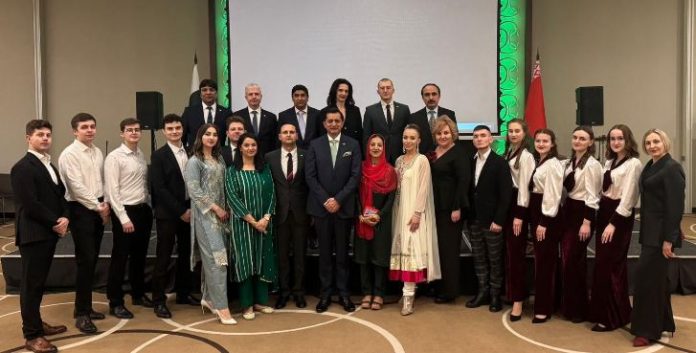
MINSK, MAR 6 /DNA/ – Pakistan Embassy in Minsk holds a Reception Celebrating the 84th Pakistan Resolution Day and 30th Anniversary of Pakistan-Belarus Diplomatic Relations.

The Embassy of Pakistan in Belarus organized a Reception in commemoration of 84th Pakistan Resolution Day and 30th Anniversary of the establishment of Pakistan-Belarus Diplomatic Relations. His Excellency Mr. Viktor Karankevich, Minister of Energy of the Republic of Belarus was the Chief Guest, whereas over 250 other guests, including Ambassadors, Belarusian dignitaries, media personnel and expatriate Pakistanis attended the event.

Reflecting on the historic significance of March 23rd, Ambassador of Pakistan to Belarus Sajjad Haider Khan, paid homage to the visionary founding fathers especially Quaid-i-Azam Mohammad Ali Jinnah, whose leadership led to the birth of Pakistan as an independent nation on August 14, 1947.

Ambassador Khan underscored Pakistan’s stature as the world’s second-largest Muslim nation, with a population of 240 million and a robust economy boasting a GDP of $1.283 trillion in terms of purchasing power parity. The contributions of Pakistan’s 10 million expatriates, who annually remit around $30 billion, were lauded for their role in the nation’s socio-economic development.

Ambassador Khan reaffirmed Pakistan’s commitment to the principles of equality, justice, and non-alignment in international affairs, as enshrined in the UN Charter. He underscored Pakistan’s active participation in multilateral and regional organizations, advocating for peace, cooperation, and regional development.

Turning to the bilateral relations between Pakistan and Belarus, Ambassador Khan highlighted the development of the partnership over the past three decades, characterized by mutual respect and cooperation. Significant agreements, including the visa abolition for diplomatic and official passport holders, and over 80 other MoUs and agreements, have laid the foundation for diverse cooperation across various sectors.

The Ambassador also spoke about the Cultural exchanges between Pakistan and Belarus which have flourished, enriched by film, art, music, sports, and educational initiatives. As part of the 30th-anniversary celebrations, a series of events, including book launches, cultural festivals, art exhibitions, and musical concerts, are planned to further strengthen cultural ties between the two nations.

During his speech, the Belarusian Minister of Energy Viktor Karankevich expressed warm congratulations to Pakistan on its National Day and highlighted the significant milestones achieved since the Lahore Declaration in 1940. He commended Pakistan’s journey to becoming a respected global player and emphasized the strengthening of bilateral relations over the past 30 years.

The Minister highlighted successful elections in both countries, cooperation within the Shanghai Cooperation Organization, and key achievements in trade and education. He thanked Ambassador Sajjad Haider Khan and the Embassy team for their contributions and expressed optimism for continued cooperation and partnership between Belarus and Pakistan.

A special feature about the event was the live performance by students of the State University of Culture & Arts on instrumental tunes of Pakistani national songs.

The Ambassador expressed gratitude to the Belarusian government for their steadfast support and concluded by expressing confidence in the continued strengthening of Pakistan-Belarus relations in the years to come.

Pakistan desires to expand trade, economic cooperation with friendly countries: President

President Arif Alvi

ISLAMABAD, MAR 6 (APP/DNA): President Arif Alvi on Wednesday said that Pakistan desired to expand its trade and economic relations with the friendly countries. The president expressed these views during separate meetings with Ambassador-designate of Pakistan to Portugal Dr Muhammad Khalid Ejaz and Ambassador-designate of Pakistan to Myanmar Imran Haider, who called on him at the Aiwan e Sadr.

Pakistan desires to expand trade, economic cooperation with friendly countries: President Talking to ambassador-designate to Portugal, the president urged him to work for further strengthening of bilateral trade ties with his host country, adding that Pakistan was ensuring conducive environment for the economic and trade activities. The foreign investors should avail of such business-friendly environment in Pakistan, President Secretariat Press Wing, in a press release, quoted the president as saying. President Alvi also underlined the need of enhancing political, cultural and people to people contacts between Pakistan and Portugal, besides strengthening of exchanges at the political level. Portuguese IT companies could benefit from the skilled human resources of Pakistan in the respective sector, he opined. The president, during his meeting with ambassador designate to Myanmar, stressed upon further cementing of bilateral relations between the two countries. He stressed that both countries were required to enhance their cooperation in business sector to promote trade. Ancient Buddhism heritage in Pakistan could further bring the two countries closer in tourism and cultural sectors. On the occasion, the president also separately expressed his good wishes for the success of both envoys.

Cutting-Edge HAIDER tank rolled out at heavy industries Taxila, showcasing Pakistan’s defence prowess

Cutting-Edge HAIDER tank rolled out at heavy industries Taxila

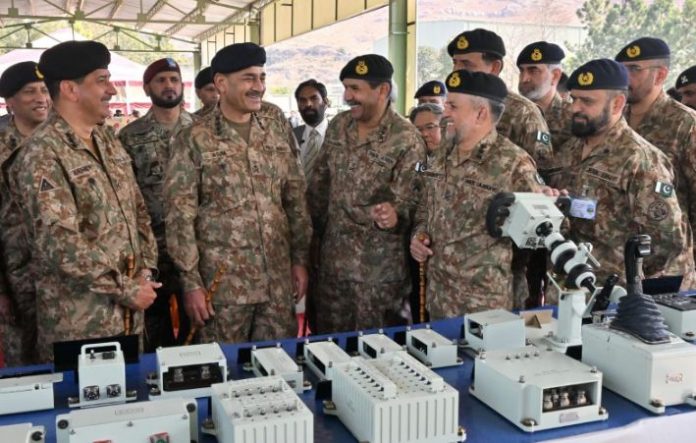
RAWALPINDI, MAR 6 /DNA/ – General Syed Asim Munir, NI (M), Chief of Army Staff (COAS), visited Heavy Industries Taxila (HIT) today as chief guest at the rollout ceremony of HAIDER tank (Pilot Project).

The ceremony was attended by Ambassador of the Peoples Republic of China, key officials of Chinese state company NORINCO, high officials of Government of Pakistan & Pakistan Army, and various military and civilian officials of HIT. During the ceremony, HIT unveiled its new Tank HAIDER, which has been indigenously manufactured through collaboration with NORINCO China and various industries of Pakistan.

HAIDER embodies cutting-edge technology and impressive capability in the domain of tank warfare having remarkable firepower, protection and manoeuvre characteristics. Crafted with state-of-the-art advanced technologies, HAIDER stands as a testament to Pakistani defence industry’s relentless pursuit of excellence in defence innovation.

COAS was briefed in detail about the technical capabilities of the HAIDER tank and the progress being made in achieving indigenization in arms and armament.

COAS also visited other manufacturing facilities within the Heavy Industrial Complex and appreciated the commitment of the officers and workforce in successful achievement of another technological milestone.

Earlier on arrival, COAS was received by Chairman HIT.

9 percent of Pakistanis being wasted to smoking

ISLAMABAD, MAR 6 /DNA/ - The uphill task for the new government is to synchronize efforts of health and finance ministries to counter the menace of smoking. With 24 million active tobacco users, Pakistan is among the world’s top tobacco-consuming countries, says a report prepared by Pakistan Institute of Development Economics (PIDE). Capital Calling, a think tank, has stated in a report that Pakistan has become a breeding ground for multinational cigarette companies. As a result, the markets are filled with cheap and illicit cigarettes. According to an estimate, cigarette prices are the cheapest in Pakistan as compared to other countries in the region. The think tank pressed on the need to tax cigarettes in accordance with the guidelines set by the WHO, that calls for holding cigarettes companies to account for the health and environment losses they make. It added, “The cigarette industry managed to influence decision making, which not only resulted in Rs567 billion loss in potential revenue but also put extra burden on the country’s fragile healthcare system.” The PIDE report, however, adds that tobacco use is associated with many adverse health effects, but the tax revenue it generates cause tobacco tax policy inertia in Pakistan and other countries. “Despite evidence that higher tobacco taxation discourages tobacco consumption, Pakistan’s tax policy is among the weakest action areas in the country’s fight against tobacco,” it says. “One explanation could be that the policymakers, who consider the tobacco industry a major contributor to government coffers, are reluctant to raise taxes fearing the revenue loss,” it says. However, when the government abolished the third tax tier in 2019 which effectively reduced the tobacco industry’s maneuvering space to sell cheaper cigarettes by avoiding taxes, the tax contribution of the industry actually increased to 120 billion Pakistani rupees (Rs) compared to Rs 92 billion in 2016. This raised the tobacco industry’s share of total tax collection to 3 percent from 2.15 percent in FY16.The government’s reluctance to change tobacco tax policy is partly due to its failure to fully appreciate the smoking-attributable fraction (SAF) of health and social costs. This makes its benefit-cost analysis of tax revenue faulty and compromised over e health outcomes. The PIDE resport further states, “Smoking prevalence in Pakistan is 8.8 percent…Nationally, cardiovascular diseases are the most prevalent in the year 2019. Cardiovascular diseases are also most prevalent, followed by cancer, in urban regions, across both genders, and in Punjab and Khyber Pakhtunkhwa (KP) provinces. The total smoking-attributable fraction of the direct cost of three diseases is Rs 100.3 billion ($0.63 billion) of which the medical cost is 96 percent (Rs 96.24 billion or US$ 0.60 billion) and non-medical cost is four percent (Rs. 4.06 billion US$0.03 billion. Smoking-attributable indirect morbidity cost is Rs 56.32 billion ($0.35 billion). The morbidity cost is 56 percent.” Prof. Muhammad Zaman, from Quaid-i-Azam University (QAU), said that hazards of smoking should not be calculated in segments. “The policymakers should look at it in totality. It is high time to discourage tactics of cigarette companies to influence governments the world over. We expect that the new government will not walk into the trap by these companies and will fix the loopholes in tax system to catch the big fish.”

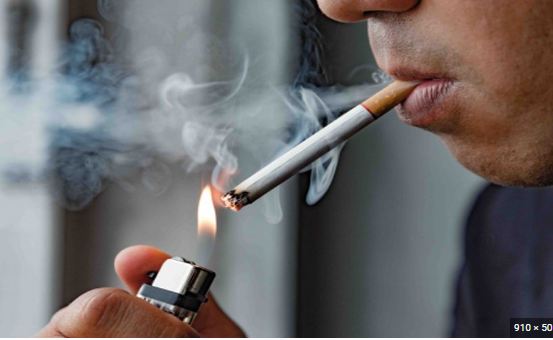
ISLAMABAD, MAR 6 /DNA/ – The uphill task for the new government is to synchronize efforts of health and finance ministries to counter the menace of smoking.

With 24 million active tobacco users, Pakistan is among the world’s top tobacco-consuming countries, says a report prepared by Pakistan Institute of Development Economics (PIDE).

Capital Calling, a think tank, has stated in a report that Pakistan has become a breeding ground for multinational cigarette companies.

As a result, the markets are filled with cheap and illicit cigarettes. According to an estimate, cigarette prices are the cheapest in Pakistan as compared to other countries in the region.

The think tank pressed on the need to tax cigarettes in accordance with the guidelines set by the WHO, that calls for holding cigarettes companies to account for the health and environment losses they make. It added, “The cigarette industry managed to influence decision making, which not only resulted in Rs567 billion loss in potential revenue but also put extra burden on the country’s fragile healthcare system.”

The PIDE report, however, adds that tobacco use is associated with many adverse health effects, but the tax revenue it generates cause tobacco tax policy inertia in Pakistan and other countries. “Despite evidence that higher tobacco taxation discourages tobacco consumption, Pakistan’s tax policy is among the weakest action areas in the country’s fight against tobacco,” it says. “One explanation could be that

the policymakers, who consider the tobacco industry a major contributor to government coffers, are reluctant to raise taxes fearing the revenue loss,” it says.

However, when the government abolished the third tax tier in 2019 which effectively reduced the tobacco industry’s maneuvering space to sell cheaper cigarettes by avoiding taxes, the tax contribution of the industry actually increased to 120 billion Pakistani rupees (Rs) compared to Rs 92 billion in 2016. This raised the tobacco industry’s share of total tax collection to 3 percent from 2.15 percent in FY16.The government’s reluctance to change tobacco tax policy is partly due to its failure to fully appreciate the smoking-attributable fraction (SAF) of health and social costs. This makes its benefit-cost analysis of tax revenue faulty and compromised over e health outcomes.

The PIDE resport further states, “Smoking prevalence in Pakistan is 8.8 percent…Nationally, cardiovascular diseases are the most prevalent in the year 2019. Cardiovascular diseases are also most prevalent, followed by cancer, in urban regions, across both genders, and in Punjab and Khyber Pakhtunkhwa (KP) provinces.

The total smoking-attributable fraction of the direct cost of three diseases is Rs 100.3 billion ($0.63 billion) of which the medical cost is 96 percent (Rs 96.24 billion or US$ 0.60 billion) and non-medical cost is four percent (Rs. 4.06 billion US$0.03 billion. Smoking-attributable indirect morbidity cost is Rs 56.32 billion ($0.35 billion). The morbidity cost is 56 percent.”

Prof. Muhammad Zaman, from Quaid-i-Azam University (QAU), said that hazards of smoking should not be calculated in segments. “The policymakers should look at it in totality. It is high time to discourage tactics of cigarette companies to influence governments the world over. We expect that the new government will not walk into the trap by these companies and will fix the loopholes in tax system to catch the big fish.”

PM, COAS discuss security, army’s professional matters

PM, COAS discuss security, army's professional matters

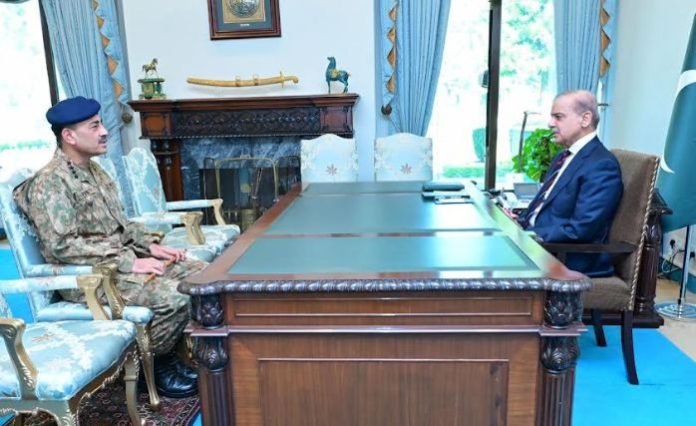
ISLAMABAD, MAR 6 /DNA/ – Chief of the Army Staff General Syed Asim Munir on Wednesday called on Prime Minister Shehbaz Sharif here at the Prime Minister’s House.

In the meeting, they discussed the Pakistan Army’s professional as well as the security-related matters, a PM Office press release said.

The army chief also congratulated Prime Minister Shehbaz on assuming the office and expressed good wishes for him.

Centreline/Daily Islamabad POST Editor presents special report on Gaza to Ambassador Ahmed Rabei

Centreline/Daily Islamabad POST Editor presents special report on Gaza to Ambassador Ahmed Rabei

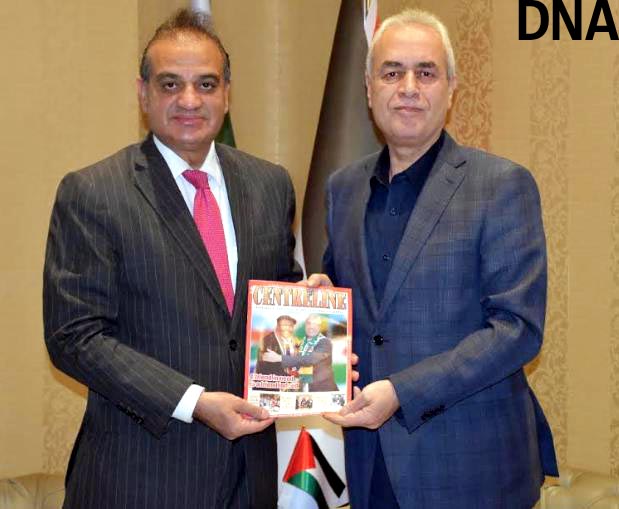
ISLAMABAD, MAR 6 /DNA/ – Chief Editor Centreline/Daily Islamabad POST Ansar Mahmood Bhatti presenting a copy of Centreline magazine, which carries a special report on Gaza, to Ambassador of Palestine Ahmed Rabei.

The Ambassador briefed the senior journalist about the latest Gaza situation. The Ambassador thanked the government and the people of Pakistan for extending whole-hearted support to Palestine at this particular juncture. =DNA

Stay Connected

64FansLike
60FollowersFollow

Latest Reviews

Exchange Rates

USD - United States Dollar
EUR
1.17
GBP
1.35
AUD
0.72
CAD
0.73