Home Blog Page 991

Pakistan demands global action: Halt Israeli war on Palestine during Ramadan

Pakistan demands global action: Halt Israeli war on Palestine during Ramadan

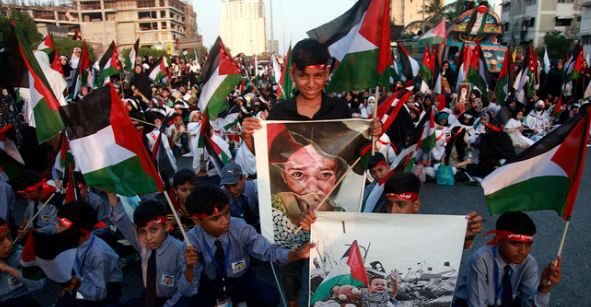
ISLAMABAD, MAR 15 /DNA/ – “Categorically condemns Israel’s war on Palestine where the latest attack cost 21 lives of Palestinians standing in line for aid during the holy month of Ramzan;

Denounces the continued Israeli aggression which has led to the loss of over 30,000 lives since October 7th 2023;

Calls upon the federal govt to play a more proactive role in pushing the international community to enforce a ceasefire”.

KP seeks ADB support for development in merged districts, social services

KP seeks ADB support for development in merged districts

Bureau Report

PESHAWAR, MAR 15 /DNA/ – A delegation of Asian Development Bank (ADB) called on Chief Minister Khyber Pakhtunkhwa Ali Amin Khan Gandapur at Pakhtunkhwa House, Islamabad on Friday and discussed with him matters related to mutual cooperation with special focus on development projects of public welfare being carried out in the province with the financial assistance of Asian Development Bank. Provincial Minister Arshad Ayub was also present on the occasion.

Talking on this occasion, the Chief Minister termed the Asian Development Bank as an important development partner of the provincial government and said that his government wanted to continue this partnership in a more integrated and an effective manner, adding that work on a number of development projects in the various sectors with the financial assistance of Asian Development Bank was in progress.

However, the chief minister said that incumbent provincial government also wanted to further enhance and extend this mutual cooperation and partnership to different sectors including water supply, solar energy, flood protection, solid waste management, urban transport, agriculture, livestock, food security and other sectors of social services. “We expect special cooperation from our development partner for the development of newly merged districts and other backward areas of the province”, he said and added that providing employment opportunities to the people and promoting self-employment among our talented youth are the priority areas of his government.

Apart from this, the government also plans to initiate a program for renovation of all major cities in the province. He further stated that Khyber Pakhtunkhwa Cities Improvement Project assisted by ADB was an important project of the provincial government; we need special cooperation for implementing Phase-II of this project as well. “The provincial government has a lot to do in different sectors specially in tourism, health, education, PHE and others”,  he remarked and said that the government would like to work in a partnership with ADB for providing basic facilities in the sectors of social services.

Talking on the occasion, the delegates termed the coordination between the provincial government and ADB as exemplary one and said that performance of provincial government team regarding implementation of developmental projects had been remarkable adding that the ADB intended to further promote mutual cooperation and development partnership with the provincial government in different sectors.

Allegations against Donald Lu are false’

Donald Lu

Donald Lu’s impending testimony on Pakistan elections not unusual, says US

Foreign Desk

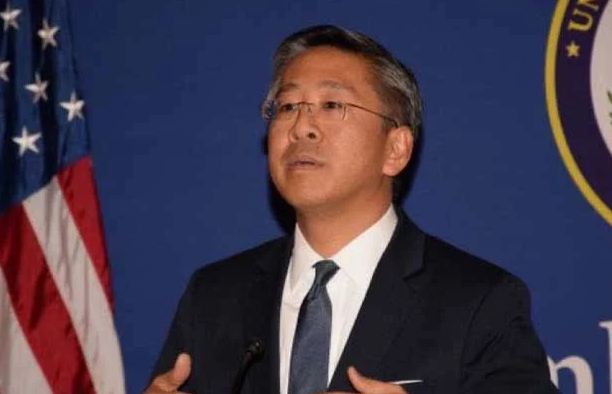
WASHINGTON: The US State Department has clarified that Assistant Secretary Donald Lu’s upcoming appearance before a Congress panel is a routine testimony that aligns with the regular practice of US officials providing updates to Congress.

The House Subcommittee on the Middle East, Africa, and Central Asia will hold a hearing titled “Pakistan After the Elections: Examining the Future of Democracy in Pakistan and the US-Pakistan Relationship” on March 20.

The hearing will also delve into the dynamics of US-Pakistan relations following the Feb 8 general elections.

The PTI and its leader, Imran, claim that Lu threatened to destabilise the PTI government during a March 2022 meeting with then-Pakistani ambassador in Washington, Asad Majeed Khan.

This matter is often raised during US State Department news briefings by journalists from both Pakistan and the US. The department consistently refutes these allegations as baseless.

Lu, the Assistant Secretary of State for South and Central Asian Affairs, is currently the only confirmed witness for the hearing, although additional witnesses may be included.

“Any number of State Department officials testify all the time before Congress. We see it as an important part of our jobs to help Congress do its job, both from a policymaking perspective and from an oversight perspective,” said State Department Spokesperson Matthew Miller when asked about the scheduled hearing at a news briefing on Thursday.

“So we always look forward both to the informal conversations we have with Congress, the formal conversations, and of course the actual testimony that our officials provide,” he added.

When asked if the department was concerned about Lu’s safety during the hearing due to previous threats, Miller stated, “Of course, we take any threats towards US officials seriously and condemn any effort to threaten the safety and security of our diplomats.”

The spokesperson reiterated the rejection of allegations against Lu regarding the toppling of former prime minister Imran Khan, stating, “The underlying allegations against Assistant Secretary Lu, they’re false. They’ve always been false. You’ve heard me say that more than once, more than twice, more than ten times probably.”

In a statement from Houston, Texas, the PTI’s US chapter had claimed that “persistent efforts” by Pakistani Americans led to the much-anticipated announcement of a Congressional hearing on this.

This bipartisan hearing is expected to draw significant attendance from both Democratic and Repub­lican legislators

EU denies any communication with PTI on GSP+ status

EU denies any communication with PTI on GSP+ status

DNA

ISLAMABAD: The European Union’s mission in Islamabad has denied any communication with Pakistan Tehreek-e-Insaf (PTI) about the revocation of Generalised Scheme of Preferences Plus (GSP+) status of the country.

The EU mission stated this after Information Minister Attaullah Tarar accused the PTI of approaching the EU for the withdrawal of Pakistan’s GSP plus status over claims of lack of facilities for the former premier in Adiala jail.

The GSP plus status is a special trade arrangement offered to developing economies in return for their commitment to implement 27 international conventions on human rights, environmental protection and governance.

EU Press and Information Officer in Islamabad, Samar Saeed Akhtar said the EU had not received any official communication from PTI regarding GSP+ ststus”.

Meanwhile, the former ruling party also denied writing any letter to the EU, rejecting the allegations levelled by the information minister on Pakistan’s GSP+ status.

The allegation by the government of the PTI approaching the EU comes days after the PTI approached the International Monetary Fund (IMF).

The PTI founder had sent a letter to the IMF to audit the general elections held on February 8, alleging that the polls were rigged by the now-ruling government.

The government criticised the letter, saying that it was an attack on Pakistan’s efforts to achieve economic stability.

The global lender has been holding talks with Pakistan over the second and last review of $3 billion stand-by arrangement (SBA) this week during which the inflation-hit country will ask for a new longer-term bailout.

The review began on Thursday and if successful, the IMF will release a final tranche of around $1.1 billion under a last-gasp rescue package last summer.

Annual Sports Fiesta at ASAS Intl School, students secured awards

Annual Sports Fiesta at ASAS Intl School

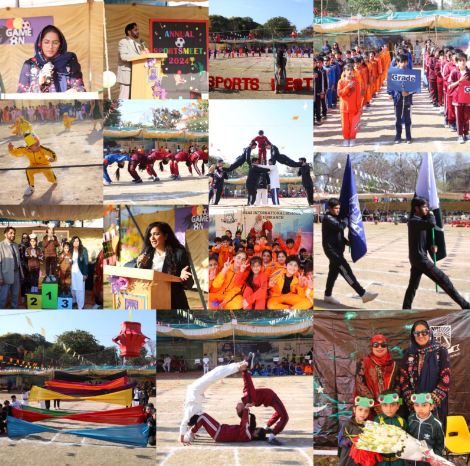
ISLAMABAD, MAR 15 /DNA/ – ASAS Intl School has organised a sports Fiesta 2024 here on Saturday. A number of students took part in different games and won prizes from their teachers. Parents were invited to witness the event. They also took part in the race.

Dr Arshad Zia, while addressing at the award distribution ceremony, appreciated teachers and students for their active participation in different sports. He said that sports are necessary for better education as well.

Principal at the school Safia Jawad said in her address that sports encourage students to accept challenges. She said that sports promote positive competition.

Chief Guest at the event was athlete Sadaf Siddique. Students also showed great discipline and skills in the Martial Arts.

ISSI hosts roundtable discussion on combatting Islamophobia

ISSI hosts roundtable discussion on combatting Islamophobia

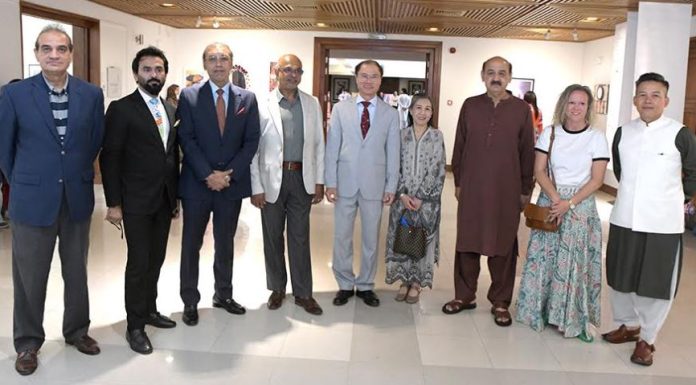
ISLAMABAD, MAR 15 /DNA/ – To commemorate the International Day to Combat Islamophobia, the Centre for Strategic Perspectives (CSP) at the Institute of Strategic Studies Islamabad (ISSI), hosted a Roundtable Discussion titled, “Importance of Global Solidarity to Combat Islamophobia”, bringing to the fore a global dialogue aimed at addressing the prejudices, intolerance, violence and injustices faced by Muslims worldwide. Dr. Qibla Ayaz, Chairman of the Council of the Islamic Ideology (CII), was chief guest; Ambassadors of Iran and Turkiye and noted academic and senior Foreign Office official joined as panellists.

In her introductory remarks, Dr. Neelum Nigar, Director CSP thanked the esteemed panellists and other participants and emphasized the importance of combating Islamophobia in contemporary times, which is marred by multiple global conflicts and issues.

DG ISSI Ambassador Sohail Mahmood, in his welcoming remarks, highlighted the journey since the March 2019 Christchurch terrorist attacks in New Zealand, highlighting the pivotal moments and global actions, including Pakistan’s leading role in the OIC and the UN General Assembly, culminating in the designation of March 15 as the ‘International Day to Combat Islamophobia.’ While tracing the evolution and myriad manifestations of Islamophobia in recent decades, he emphasized that Islamophobia was not just prevalent in some Western countries but in non-Western parts of the world as well, including in Pakistan’s neighbourhood where it was growing in the wake of the ‘Hindutva’ ideology. Noting that the world was experiencing extreme levels of tumult, he stressed that this was the time to build bridges, not to accentuate religious or cultural fault-lines or create further divisions. People of goodwill in all faiths should come forward and play their part in forging greater mutual respect, understanding, and inter-faith harmony, he concluded.

A special video message by the Honourable Secretary General of the Organisation of Islamic Cooperation (OIC) His Excellency Hissein Brahim Taha for the occasion was shared. The Secretary General emphasized the urgent need to combat and address the widespread prejudice and discrimination against Muslims globally and the importance of fostering a culture of tolerance, respect, and mutual understanding across different faiths and communities. Moreover, he called for international solidarity, legal measures against hate speech and discrimination, and educational initiatives to dispel myths and misconceptions about Islam and its followers.

Dr. Muhammad Israr Madani from the Islamic Research Council of Religious Affairs, provided a scholarly exposition on the multifaceted nature of Islamophobia, tracing its historical roots and present-day manifestations. His analytical insights into the contributing factors of Islamophobia, from media misrepresentation to the socio-political dynamics in Western countries, offered a comprehensive overview of the complexities involved. Dr. Madani’s emphasis on strategic engagement, media literacy, and educational reforms proposed a constructive framework for counteracting Islamophobic narratives.

Ambassador Rizwan Saeed Sheikh, Additional Secretary Ministry of Foreign Affairs (MOFA), delved into the political and legal dimensions of Islamophobia, advocating for a balanced approach between freedom of expression and respect for religious sentiments. His call for utilizing international human rights frameworks as a common ground for dialogue and action resonated with the audience, highlighting the significance of diplomacy and legal recourse in combating Islamophobia.

H.E. Dr. Reza Amiri Moghadam, Ambassador of the Islamic Republic of Iran, enriched the discussion by contextualizing Islamophobia within the broader historical and geopolitical narratives. His critique of Islamophobia as a tool for political manipulation and his call for unity among Muslim nations underscored the importance of solidarity and collective identity in overcoming adversities.

H.E. Dr. Mehmet Paçaci, Ambassador of Türkiye to Pakistan, pointed to the alarming rise of Islamophobia globally, especially in the Western and certain non-Western countries including India. His discourse on the political misuse of Islamophobia and the urgent need for international accountability and cooperation offered a compelling call to action for both Muslim and non-Muslim countries to address this pressing issue.

Chief Guest Dr. Qibla Ayaz delivered an illuminating address, providing deep historical insight into Islamophobia, identifying its roots and evolution over the centuries. Dr. Ayaz recommended fostering deeper understanding of Western cultures, promoting inter-faith dialogues, and the strategic use of media and academia to combat Islamophobia highlighting a path toward mutual respect and understanding.

Specifically, he stressed the importance of ‘working in the West’ on the one hand, and developing better understanding of the West within Muslim societies on the other hand.  Dr. Qibla Ayaz also underlined the need for “retrospection” – noting that extremist actions of individual Muslims or disrespect for the rights of minorities in Muslim countries would neither result in better image nor help forge mutual understanding. In essence, he said he saw a ‘ray of hope’ and that, despite prevalent negativity and formidable challenges, collective action could help bring about positive change. 

Remarks by the esteemed speakers were followed by an interactive discussion session in which all participants took part enthusiastically. The discussion emphasized the importance of youth engagement, global solidarity, informed dialogue, and proactive measures to address Islamophobia.

In the end, Ambassador Khalid Mahmood, Chairman BOG ISSI presented the honourable participants of the discussion with ISSI mementos, which was followed by a group photograph.

Maryam Nawaz directs to use her helicopter for emergency transfer of patients to hospitals

Maryam Nawaz directs to use her helicopter for emergency transfer of patients to hospitals

LAHORE, MAR 15 /DNA/ – “Our people lose their lives for not reaching hospitals in time, in case of an accident especially in the remote areas,” said Chief Minister Maryam Nawaz Sharif, while chairing a meeting on the launch of Air Ambulance Project in Punjab.

Madam Chief Minister recalled,”It was heartbreaking to see a heart attack patient helpless in Sargodha Hospital.” She added,”It is essential to get the accident victims to the hospitals in time.”

Madam Chief Minister said,”Air ambulance service will be , started in Punjab very soon.”, “Rescue 1122 service will also be started on the highways,” she added.

Senior Provincial Minister Marriyum Aurangzeb, Former Senator Pervaiz Rashid, Minister for Specialized Healthcare and Medical Education Khawaja Salman Rafiq, Minister for Primary and Secondary Health Khawaja Imran Nazir, Chief Secretary, Chairman P&D, Secretary Finance, Dr. Adnan, Secretary Emergency Department and other senior officers concerned attended the meeting.

U.S. Engagement with Ukraine

U.S. Engagement with Ukraine

Dr. Muhammad Akram Zaheer

As the conflict between Russia and Ukraine continues, people are getting tired of emotional appeals about Ukrainian bravery and Russian actions. Republicans have valid concerns: they want to cut government spending, make sure U.S. aid to Ukraine isn’t misused by corrupt officials, and figure out where helping Ukraine fits in U.S. priorities. One thing most Americans agree on is the importance of a strong U.S. military. However, President Biden is providing enough aid for Ukraine to keep fighting but not enough to win. There’s a strong argument from conservatives to increase U.S. assistance to Ukraine.

For a relatively small cost, Americans can support Ukraine in a war that NATO was worried about. It’s important to note that a significant portion of U.S. aid to Ukraine goes to American companies that produce weapons for Kyiv. Engaging with Ukraine is also revealing weaknesses in the U.S. defense system. To fund defense adequately, changes to entitlement programs like Social Security and Medicare are necessary. Both Democrats and Republicans need to reconsider their stance on entitlement reform, as these programs make up a large portion of federal spending. If not addressed, the cost of entitlements will limit spending on defense and other domestic programs.

There’s also a need for better border policies. Many Americans don’t understand why the U.S. military doesn’t protect the country’s borders. Immigration policy is closely tied to foreign policy and the U.S. economy. A majority of Americans think the U.S. is doing a poor job managing its borders, and there’s a surge in illegal border crossings. The military is restricted by the Posse Comitatus Act from acting as a domestic police force, but political leaders should invest in border security. This includes more funding for the U.S. Customs and Border Protection Agency, as well as technology to track migrant movements.

Cooperation with Mexico and addressing the root causes of migration are also crucial. Failure to regulate immigration properly hinders the U.S. from maximizing its geopolitical opportunities, especially in North American cooperation. Clearer immigration policies could lead to stronger collaboration with neighboring countries, benefiting the U.S. economy. However, until Americans are confident in border control, they may be hesitant to support these cooperation opportunities. According to experts at the Brennan Center, many Americans are confused about why the U.S. military doesn’t protect the country’s borders. Republicans could improve their policies on this issue.

Immigration is crucial for foreign policy and the U.S. economy. A survey in January 2021 by Pew Research Institute showed that 68% of Americans believe the U.S. is not managing its borders well. Indeed, since January 2020, about 200,000 people try to enter the U.S. illegally every month through the Mexican border, the highest in 20 years. Contrary to what the media says, most of these people are adults, not kids. The 1878 Posse Comitatus Act stops the military from acting like a police force within the U.S. Generals, who are already busy, don’t want to protect the borders, fearing it might harm people’s respect for the military.

To get more support for U.S. activities abroad, leaders need to show they can put more effort and resources into border security. A survey in January 2023 found that most Americans want to give more money to the U.S. Customs and Border Protection Agency. It’s not just about money and more people. Over 60% of recent migrants aren’t from Mexico or Central America but start their journey in places like Colombia, Cuba, Peru, and Venezuela.

The U.S. should invest in surveillance and technology to track migrants in Central America, speed up asylum claims in new immigration courts, work more with Mexico to stop migrants passing through, and engage with migrants’ home countries to solve problems and help those who don’t meet U.S. immigration rules return. Not handling immigration properly makes the U.S. miss its biggest opportunity for North American cooperation. Politicians should worry more about Mexico becoming unsafe and find creative ways to make Canada, Mexico, and the U.S. work together in energy, labor, and manufacturing. With better immigration policies, we can relocate supply chains to Mexico, strengthen energy grids in California and Texas by trading energy with Canada and Mexico, and create opportunities for neighbors to prosper, boosting the U.S. economy. But until Americans trust that the U.S. controls its borders, they may not support these cooperation opportunities.

The world that the United States and its friends made after World War II made America safer and richer. But we must remember that if the U.S. doesn’t make sure this global order is followed, someone else will, probably China. If China takes charge, the world could become dangerous. China, along with its authoritarian allies like Russia and Iran, might gather enough military and economic power to force a repressive vision on the world. To make things better, the U.S. should rejoin the Trans-Pacific Partnership, make and approve other trade agreements, spend more on defense while fixing entitlements and reducing national debt, secure the U.S.-Mexican border, and help countries fighting for their freedom.

These are big goals. Fred Kagan, a scholar at the American Enterprise Institute, says people don’t want to die for the international order because it’s too vague. But convincing voters to support a foreign policy that helps other countries might not be as hard as politicians think. They should focus on concrete arguments based on U.S. national interest. The Biden administration and some Republican leaders are making misleading appeals that say internationalism makes the U.S. weaker or that caring about the U.S. national interest means ignoring the world. This is not true. The choices the U.S. makes internationally affect its own well-being. Right now, leaders are making confusing foreign policy decisions that make the country less safe and less prosperous, and fixing them will be difficult later on. The U.S. is divided politically, and many people are confused and disappointed.

A Pew poll from June-July 2023 found that only 16% of Americans trust the federal government, the lowest in 70 years. Only 10% feel hopeful about politics. In an August Wall Street Journal poll, 93% of likely Republican voters thought the U.S. is headed in the wrong direction. These are not good results, but they also present an opportunity for good policies because people are clearly unhappy. The solution is not to adopt policies that give up on trade, weaken the military, leave the U.S.-Mexican border in chaos, and stop helping deserving allies. Americans still want the U.S. to be a leader in the world for the sake of the country and their own safety and prosperity. U.S. leaders need to prove they know how to do it.

Economy is improving and confidence is rising

Economy is improving and confidence is rising

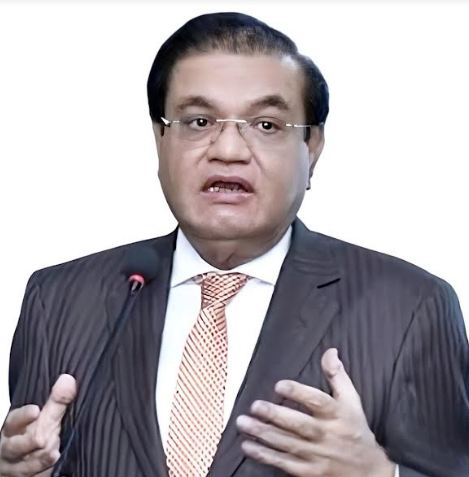
KARACHI, MAR 15 /DNA/ – Chairman of National Business Group Pakistan, President Pakistan Businessmen and Intellectuals Forum and All Karachi Industrial Alliance, and former provincial minister Mian Zahid Hussain said on Friday that the country’s economic conditions are improving.

The improved situation infuses confidence in the local and foreign investors, while the central bank is also considering some reduction in the interest rate.

Mian Zahid Hussain said the business community wants the Central Bank to slash interest rates by at least four percent. 

Talking to the business community, the veteran business leader said that during the current year, the overall economic conditions are better than last year.

However, it is the new government’s responsibility to improve further the conditions, and they will continue to receive the unconditional support of the business community. 

The business leader said there is yet to be an immediate solution to Pakistan’s economic problems. A long battle will have to be fought for this, which will be a test of the new government and the finance minister, and success will be the only option. 

Mian Zahid Hussain said promoting investment is needed instead of relying more on loans. He said there is an urgent need to reduce the burden of taxes on the public and the industrial sector and that the tax base needs to be increased. 

He said that to increase the tax revenue, it has become necessary to levy tax on wholesale, retail, property, and agricultural income. At the same time, the FBR’s system should be modernized to increase its effectiveness and transparency. 

Mian Zahid Hussain said that the salaries are currently being paid by taking loans, and this situation can only continue for a short time, so there is a need to reduce the expenses. 

Transparency in the salary and pension system, elimination of ghost employees, sale of loss-making public companies, and elimination of losses in the electricity and gas sector have become necessary. 

He said the government had completed all the targets for receiving the IMF’s last tranche of the current standby program. The review negotiations are ongoing, which will have a positive result in case of a success.

Pakistan will receive 1.1 billion dollars from the IMF, which will pave the way for a new long-term package. The IMF has asked for a solid plan to eliminate power losses, privatize failed government institutions, increase the tax base, and innovate the FBR. 

If Pakistan agrees to correct the problems, all long-standing economic issues will be solved, and the economy will be revived. 

Mian Zahid Hussain further said that PTI should return to the national mainstream and play a positive role, including supporting the IMF program and GSP Plus.

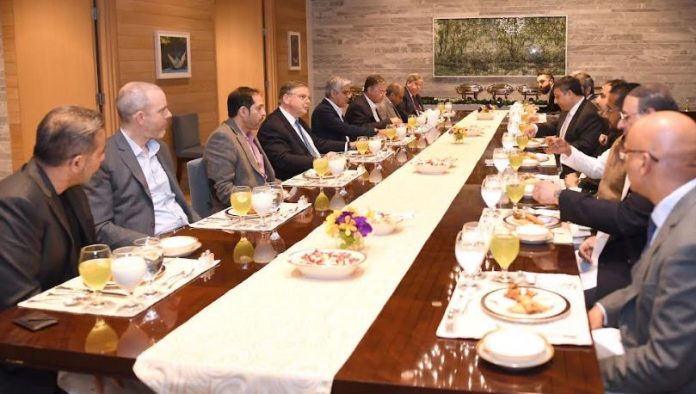
Ambassador Blome hosts iftar dinner for prominent Pakistani business figures

Ambassador Blome hosts iftar dinner for prominent Pakistani business figures

ISLAMABAD, MAR 15 /DNA/ – The United States Ambassador to Pakistan, Donald Blome, hosted a prestigious Iftar dinner for distinguished business leaders of Pakistan. The event, held at the Ambassador’s residence, served as a platform for fostering stronger bilateral ties and promoting economic cooperation between the two nations.

Among the notable attendees were the Chief Executive Officer of Murree Brewery, renowned for its quality beverages, and Member of the National Assembly (MNA) Isphanyar Bandhara, representing the business community with his insightful perspectives.

Ambassador Blome emphasized the importance of such gatherings in enhancing mutual understanding and exploring avenues for collaboration in various sectors. He highlighted the significance of economic partnerships in bolstering the relationship between the United States and Pakistan.

Stay Connected

64FansLike
60FollowersFollow

Latest Reviews

Exchange Rates

USD - United States Dollar
EUR
1.17
GBP
1.35
AUD
0.72
CAD
0.73