Home Blog Page 986

Tennis rallies around Sabalenka at Miami Open after boyfriend’s death

Tennis rallies around Sabalenka at Miami Open after boyfriend's death

MIAMI, Mar 20 (AFP/APP/DNA): World number two Aryna Sabalenka intends to play in the Miami Open this week, organisers said Tuesday, as fellow players offered their support following the death of her boyfriend in an apparent suicide.

Sabalenka’s partner, Belarusian former NHL ice hockey player Konstantin Koltsov, 42, died late Monday after jumping from the balcony of a room in an upmarket resort in Miami, police said.

 Two-time Grand Slam winner Sabalenka practiced at the Miami Open’s Hard Rock Stadium venue early on Tuesday afternoon as organisers said she had not asked to withdraw and was “intending to play.”

The 25-year-old from Minsk, who won the Australian Open in 2023 and retained her Melbourne title earlier this year, is due to face Spain’s Paula Badosa in the second round.

Badosa, a close-friend of Sabalenka’s, said the match would be “uncomfortable”.

“Yesterday I spoke with her a lot of time. This morning the same. So I know what she’s going through,” she told a press conference.

“I know the entire situation, what is happening. That for me is a little bit shocking also to go through that because at the end she’s my best friend and I don’t want her to suffer. It’s a very tough situation,” she added.

“At the same point playing against her, it’s also uncomfortable.”

Miami-Dade police spokesman Argemis Colome said in an email that on Monday at 12:39 a.m. (0439 GMT), police “were dispatched to the St. Regis Bal Harbour Resort, in reference to a male that jumped from a balcony.

“The Miami-Dade Police Department, Homicide Bureau, responded and has taken over the investigation of the apparent suicide of Mr. Konstantin Koltsov. No foul play is suspected.”

Bal Harbour is a high-end district in the northern part of Miami Beach, known for a luxury shopping mall and plush accommodations.

Sabalenka frequently trains out of Miami and keeps a residence in the city.

Former world number one Caroline Wozniacki said the situation was “heartbreaking.”

“I can’t even imagine what she’s going through right now. I’m saying that. I’m also tearing up. It’s such a terrible situation. It’s so hard. I reached out to her and I told her that I was here if she needed anything.

“I love Aryna. I think she’s such a great person. She’s always so happy and out there. To see her go through that, it’s heartbreaking. I can’t even imagine what she’s going through right now. Everyone grieves in a different way.

“She was walking past today. I was giving her her space. I let her know that if she ever needs anything, I’m here, we’re here for her,” she said.

American Jessica Pegula said that the players were aware of the tragic news and offering support to Sabalenka.

“I think all of us all heard about it last night and then obviously there’s more news about it this morning, which was just really horrible,” she told reporters.

“All you can do is really offer support for however she wants to deal with it. You never know how someone is going to take it or how they want to grieve and everyone’s so different,” she said.

Koltsov’s death had earlier been confirmed by the Belarus hockey federation.

“We are in mourning,” the federation said on its website.

Koltsov’s playing career included a stint with the Pittsburgh Penguins in the NHL, where he made 144 appearances between 2003 and 2006.

“The Penguins extend their deepest condolences to the family and friends of former Penguins forward, Konstantin Koltsov,” the team said in a statement.

He also played for Belarus at two Winter Olympic Games — Salt Lake City in 2002 and Vancouver in 2010 — as well as nine world championships.

He had three children with his wife Julia, whom he divorced in 2020 before he began a relationship with Sabalenka.

COMSTECH spearheads halal authentication lab initiative in Uganda

COMSTECH spearheads halal authentication lab initiative in Uganda

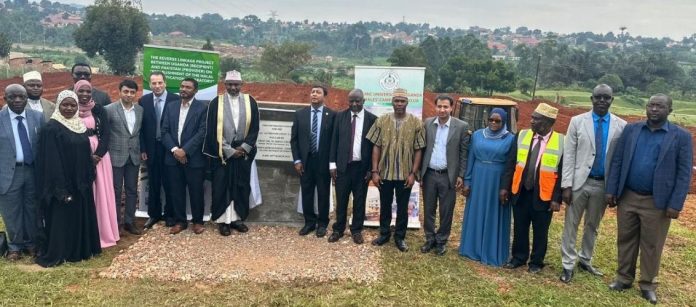
ISLAMABAD, MAR 20 /DNA/ – COMSTECH organized a ground breaking ceremony for the establishment of Halal Authentication Laboratory at Islamic University in Uganda. The ceremony for the reverse linkage project between Uganda and Pakistan on “Establishing of the Halal Authentication Laboratory”, was held at the Islamic University in Uganda (IUIU).

Muhammad Iqbal Choudhary, Coordinator General, COMSTECH was the Chief Guest in the ceremony. The ceremony was attended by Prof. Ismail Simbwa Gyagenda, Rector, IUIU, H.E. Dr. Issahaq Umar Iddrisu, The Islamic Development Bank (IsDB) Manager, Regional Hub Kampala, Uganda, H.E. Dr. Shk Ramadhan Mubajje, Mufti of Uganda, Mr. Sameh Hussein, Lead Technical Cooperation Specialist (IsDB), Prof. Dr. Syed Ghulam Musharraf, and Dr. Shakil Ahmed Technical Leads, ICCBS, University of Karachi, Pakistan.

The ceremony agenda included discussions regarding the project, it’s implementation strategy and timeline, training of human resources, along with composition of the project steering committee.

Furthermore, the esteemed guests visited the site of construction of the laboratory where H.E. Prof. Dr. Muhammad Iqbal Choudhary, Coordinator General COMSTECH, laid the foundation stone of the laboratory.

COMSTECH has played a pivotal role in developing the project in support with Islamic Development Bank and International Center for Chemical and Biological Sciences (ICCBS). This is a part of the COMSTECH Africa initiative in science and technology. Under this initiative, COMSTECH has also helped in the launching of master degree program in ICT in The Gambia, a citrus processing unit in Nigeria, faculty of engineering in Chad and training of eye surgeons from 10 west African countries.

The construction of the Halal Authentication Laboratory has begun and is expected to be completed by August, 2024.

Will not tolerate any terrorism from across border: PM Shehbaz

Will not tolerate any terrorism from across border: PM Shehbaz

Following recent skirmishes on the Pak-Afghan frontier, Prime Minister Shehbaz Sharif on Wednesday asserted that the goverment would not tolerate any cross-border terrorism.

In the early hours of Monday, Pakistan struck Afganistan’s Khost and Paktika provinces in “intelligence-based anti-terrorist operations”, which, according to the Afghan interim government, killed eight people.

The Foreign Office had confirmed the strikes, saying they were aimed at the Hafiz Gul Bahadur group, which recently targeted security forces in North Waziristan, martyring seven soldiers.

The air strikes were responded to by Afghanistan forces which used heavy weapons, including mortars, to target troops across the border in Kurram and North Waziristan.

Tuesday remained relatively calmer as guns on both sides of the boundary remained silent, barring the Angoor Adda border.

Earlier this year, Pakistan conducted retaliatory strikes in Iran after the latter laun­ched attacks in Pakistan targeting what it described as bases for the militant group Jaish al-Adl in the border town of Balochistan’s Panjgur.

Addressing the first meeting of the apex committee since the new government came to power, PM Shehbaz said today: “We will not tolerate any terrorism from across the border. Under no circumstances.”

At the outset of the meeting, the committee prayed for the martyrs in last week’s North Waziristan attack. The premier recalled that thousands of lives had been lost to terrorism.

“Unfortunately, again, terrorism has reared its head. The reality is that despite such great sacrifices and resources expended, our martyrs and warriors are risking their lives to eliminate terrorism,” PM Shehbaz said.

Recalling his visit to the martyrs’ families, the premier quoted the father of 23-year-old Captain Ahmed Badar as saying: “Prime minister, terrorism must be eradicated.”

“I also told him that we cannot tolerate this terrorism anymore. Pakistan’s borders are a red line against terrorism,” the prime minister said.

“We want to exist in a very peaceful environment with our neighbouring brothers — do trade, commerce and expand our relations — but unfortunately, if a neighbour’s land is used for terrorism, this is intolerable” he asserted.

PM Shehbaz requested “neighbouring countries” to “come and sit” to devise a plan against terrorism “with sincerity of purpose work towards eradicating it”. “I am hopeful that our neighbouring country will carefully consider my invitation,” he added.

Resurgent terrorism
Pakistan has witnessed an uptick in terror activities in 2023 year, especially in KP and Balochistan after the banned militant Tehreek-i-Taliban Pakistan ended its ceasefire with the government in November 2022.

The ISPR said earlier this month 10 militants were killed in two separate operations by security forces in the North Waziristan district. It added that Pakistan expected the Afghan government to fulfil its obligations and deny the use of Afghan soil by terrorists.

Last month, a late-night attack on a police station in Dera Ismail Khan was repulsed. Gunmen had mounted an attack using heavy weapons but fled in the cover of darkness when police personnel fired back.

In December last year, 23 soldiers were martyred and more than 30 troops wounded after militants belonging to the Tehreek-i-Jihad Pakistan (TJP) stormed a compound used by the military in Dera Ismail Khan’s Daraban area.

According to an annual security report issued by the Centre for Research and Security Studies, Pakistan witnessed 1,524 violence-related fatalities and 1,463 injuries from 789 terror attacks and counter-terror operations in 2023 — marking a record six-year high.

KP and Balochistan were the primary centres of violence, accounting for over 90 per cent of all fatalities and 84pc of attacks, including incidents of terrorism and security forces operations.

Final review of SBA for $1.1 bln tranche with IMF positively concludes

Final review of SBA for $1.1 bln tranche with IMF positively concludes

DNA

ISLAMABAD, MAR 20: Pakistan and International Monetary Fund (IMF) on Wednesday reached a staff-level agreement on the second and final review of the 9-month Stand-By Arrangement (SBA) for the final tranche of US$1.1 billion in April.

“Upon the approval of the IMF’s Executive Board, Pakistan will have access to SDR 828 million (around US$1.1 billion),” IMF team leader Nathan Porter said in a press statement on the conclusion of a six-day talks between Pakistan and the Fund’s officials.

An IMF team, led by Nathan Porter, visited Islamabad from March 14-19, 2024, to hold discussions on the second review of Pakistan’s economic programme supported by an IMF SBA.

Porter, in the statement, said the Fund team reached a staff-level agreement with the Pakistani authorities on the second and final review of Pakistan’s stabilization program supported by the IMF’s US$3 billion (SDR2,250 million) SBA approved in January 2024. “This agreement is subject to approval by the IMF’s Executive Board, upon which the remaining access under the SBA, US$1.1 billion (SDR 828 million), will become available.”

Acknowledging the measures taken by Pakistan to stabilize the national economy, he said “Pakistan’s economic and financial position has improved in the months since the first review, with growth and confidence continuing to recover on the back of prudent policy management and the resumption of inflows from multilateral and bilateral partners.”

However, he said, growth was expected to be modest this year, and, “Inflation remains well above target, and ongoing policy and reform efforts are required to address Pakistan’s deep-seated economic vulnerabilities amidst the ongoing challenges posed by elevated external and domestic financing needs and an unsettled external environment.”

He said the newly elected government was committed to continue the policy efforts that started under the current SBA to entrench economic and financial stability for the remainder of this year.

In particular, he said, the authorities were determined to deliver the FY24 general government primary balance target of Rs401 billion (0.4 percent of GDP), with further efforts towards broadening the tax base, and continue with the timely implementation of power and gas tariff adjustments to keep average tariffs consistent with cost recovery while protecting the vulnerable through the existing progressive tariff structures, thus avoiding any net circular debt (CD) accumulation in Fiscal Year 2024.

“The State Bank of Pakistan remains committed to maintaining a prudent monetary policy to lower inflation and ensure exchange rate flexibility and transparency in the operations of the FX market,” he added.

Porter further said the authorities also expressed interest in a successor medium-term Fund-supported program with the aim of resolving Pakistan’s fiscal and external sustainability weaknesses permanently, strengthening its economic recovery, and laying the foundations for strong, sustainable and inclusive growth.

While these discussions are expected to start in the coming months, key objectives are expected to include strengthening public finances, including through gradual fiscal consolidation and broadening the tax base (especially in under-taxed sectors) and improving tax administration to improve debt sustainability and create space for higher priority development and social assistance spending to protect the vulnerable.

The other objectives of the discussion include restoring the energy sector’s viability by accelerating cost-reducing reforms through improving electricity transmission and distribution, moving captive power demand to the electricity grid; strengthening distribution company governance and management and undertaking effective anti-theft efforts; returning inflation to target, with a deeper and more transparent flexible forex market and supporting external rebalancing and the rebuilding of foreign reserves.

Besides promoting private-led activity through the above-mentioned actions as well as the removal of distortionary protection, advancement of State Owned Enterprises (SOEs) reforms to improve the sector’s performance, and the scaling-up of investment in human capital to make growth more resilient and inclusive and enable Pakistan to reach its economic potential would come under discussion.

Learning from China’s Innovation Initiative…

Qamar Bashir

By: Qamar Bashir

Under the dynamic leadership of President Xi Jinping, China has steadfastly maintained its position as the world’s second-largest economy since 2010. President Xi’s visionary approach and relentless drive have propelled China’s economic ascent, earning him a reputation as an unstoppable force. With his sights set on securing the top spot in the global economy, President Xi recognizes that innovation is the key to unlocking this ambition. Hence, his unwavering emphasis on developing “New Quality Productive Forces” marks a monumental shift in China’s economic strategy, aimed at cultivating fresh sources of growth and advancing high-quality development.

Since its introduction in 2023, the concept of new quality productive forces has commanded considerable attention and support, finding prominence in critical discussions and policymaking forums. Positioned as the paramount objective of the government’s agenda for 2024, it underscores China’s unwavering dedication to accelerating the adoption of innovative, high-quality production methodologies. President Xi’s leadership in championing this transformative initiative reaffirms China’s commitment to shaping the future of global economic progress through innovation-led growth.

In today’s rapidly evolving global landscape, the significance of fostering a culture and ecosystem of innovation cannot be overstated. Beyond mere technological advancements, innovation serves as the cornerstone for a nation’s prosperity across multiple fronts.

Economically, it fuels productivity, enhances competitiveness, and cultivates high-skilled employment opportunities, thereby propelling sustainable growth. Moreover, innovation breeds adaptability and resilience, enabling countries to navigate unforeseen challenges with agility and fortitude.

Furthermore, it acts as a beacon, attracting both investment and top-tier talent, thereby nurturing a virtuous cycle of progress. Yet, the impact of innovation transcends the economic realm, permeating into social spheres such as healthcare, education, and environmental sustainability, where it catalyzes transformative change and elevates living standards for all. In essence, a robust culture and ecosystem of innovation lay the foundation for a nation’s ascent towards unparalleled success and enduring prosperity.

In the fiercely competitive arena of global innovation, certain nations perennially establish themselves as frontrunners. According to the 2023 Global Innovation Index, Switzerland, Sweden, the United States, the United Kingdom, and Singapore reign as the world’s foremost innovative economies. Notably, China distinguishes itself as the sole middle-income economy within the GII’s top 30, securing the 12th spot, closely trailed by Japan at 13th. Israel, making a significant resurgence, reclaims its position within the GII’s top 15, ascending two ranks to secure the 14th position.

Unstoppable China, eyeing for top position on the innovation ladder, has adopted the concept of New Quality Productive Force that marks a significant shift from traditional growth models towards a more sustainable and innovative approach. Unlike previous paradigms where quantity and quality often took precedence, this groundbreaking endeavor places innovation squarely at the center stage. The emphasis now lies on the development of new technologies, processes, and business models to drive efficiency and spur growth.

Recognizing the transformative potential of scientific and technological innovation, efforts are directed towards cultivating new industries, models, and growth drivers. Emphasis is placed on fostering original and disruptive innovation, with a keen eye towards its timely application across specific industries and industrial chains. Moreover, initiatives aimed at expediting the green transformation of growth models underscore China’s commitment to environmental sustainability, aligning with global goals such as carbon peaking and neutrality.

Furthermore, China’s pursuit of high-quality development hinges on comprehensive reforms aimed at reshaping the economic landscape and science and technology management systems. By addressing bottlenecks that impede the development of new quality productive forces, China seeks to create a conducive environment for innovation-led growth.

In tandem with these initiatives, China is committed to nurturing a virtuous cycle of education, science, technology, and talent. By enhancing mechanisms for talent training, introduction, utilization, and mobility, China aims to cultivate a skilled workforce capable of driving forward the development of new quality productive forces.

.At the heart of this initiative is the commitment to achieving High-Tech, High-Efficiency, High-Quality production. This framework aims to harness technologically advanced methods, minimize waste, and deliver goods and services of unparalleled quality.

As the new government in Pakistan is trying to navigate its path towards economic development, there’s much to glean from China’s remarkable transformation. Just as China shifted its focus from quantity to quality and from quality to innovation, Pakistan can adopt a similar approach to drive progress with a view to propel itself from 88th position out of 132 economies as per Global Innovation Index (GII) by the World Intellectual Property Organisation (WIPO) amongst the top 15 countries.

Though the target is formidable but not impossible provided we are able to prioritize the production of high-quality goods and services over sheer quantity which will enhance Pakistan’s global competitiveness and position itself as a hub for excellence. Embracing rigorous quality standards across industries, investing in research and development, and fostering a culture of innovation are crucial steps that Pakistan can take to emulate China’s trajectory.

Pakistan can do this by excelling in knowledge and technology outputs, creative outputs, and business sophistication, though challenges persist in infrastructure, human capital and research, and institutional development. Despite these hurdles, Pakistan’s strengths in mobile application creation, high-tech imports, and domestic market scale underscore its growing innovation potential.

Pakistan can draw invaluable lessons from China’s experience by investing heavily in innovation and technology-driven initiatives. By fostering an ecosystem that nurtures entrepreneurship, supports research and development, and encourages collaboration between academia and industry, Pakistan can unleash its potential for innovation-led growth. Embracing emerging technologies such as artificial intelligence, renewable energy, and digital infrastructure can catalyze economic transformation and propel Pakistan onto the fast track of development and progress.

Pakistan can emulate this strategy by prioritizing strategic reforms that streamline bureaucratic processes, improve regulatory frameworks, and create an enabling environment for business growth. Additionally, investing in critical infrastructure projects such as transportation networks, energy systems, and digital connectivity can unlock new avenues for economic development and enhance Pakistan’s competitiveness on the global stage. By embracing strategic reforms and infrastructure development initiatives, Pakistan can pave the way for accelerated growth, job creation, and improved living standards for its citizens, mirroring China’s remarkable journey towards prosperity.

Qamar Bashir

Press Secretary to the President (Rtd), Former Press Minister at Embassy of Pakistan to France, Former MD, SRBC


Unity in Action: COAS, Saudi Crown Prince align on key regional issues

Unity in Action: COAS, Saudi Crown Prince align on key regional issues

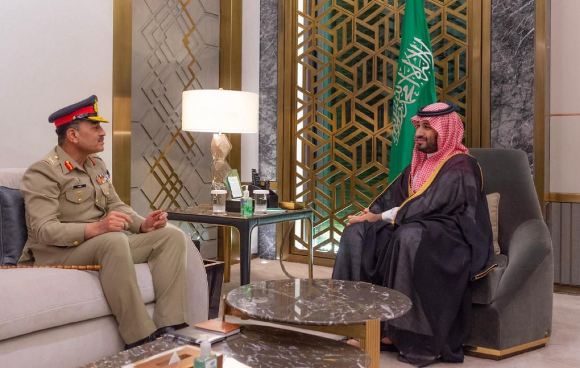
RIYADH, MAR 20 /DNA/ – General Syed Asim Munir, NI (M), Chief of the Army Staff (COAS) visited Kingdom of Saudi Arabia (KSA) on an official visit.

During the visit, COAS called on Prince Mohammad bin Salman bin Abdulaziz Al Saud, The Crown Prince and Prime Minister of KSA; HRH Prince Khalid bin Salman bin Abdulaziz Al Saud, Defence Minister of KSA; His Excellency General Fayyadh Bin Hamed Al-Ruwaili, Chief of General Staff (CGS) Saudi Armed Forces and Engineer Talal Abdullah Al Otaibi, Assistant Minister of Defence of KSA and other senior military leadership.

Wide ranging issues of mutual interest, including regional peace and security, bilateral defence & security cooperation came under discussion.

HRH Prince Mohammad Bin Salman highlighted that KSA and Pakistan have historic brotherly and strong relations, and both countries have always stood up for each other. The Crown Prince also expressed desire to further strengthen the bilateral ties and that KSA will always standby with Pakistan in future as well.

COAS thanked the Saudi leadership for the warm sentiments and support for Pakistan.

The new Palestinian prime minister maps out his vision for a path to peace

The new Palestinian prime minister

It will require reunification—and reforms—across the Palestinian territories, says Mohammad Mustafa

As i step into the role of prime minister-designate of the Palestinian National Authority (PNA) under excruciating and unprecedented circumstances, I am acutely aware of the monumental challenges that lie ahead. The Palestinian people find themselves at yet another critical juncture, facing a tragic confluence of crises that are testing our resilience and ingenuity, qualities we have proved we possess in abundance time and time again.

There are, however, at least a couple of differences this time: the injustices are more horrific than ever, and they are on global display.

At this pivotal moment, Palestinians and the international community aremore galvanised and determined to create real change than perhaps ever before. It is therefore imperative that we chart a clear path forward to stop the humanitarian catastrophe in Gaza, end the occupation and establish an independent Palestinian state in the West Bank and the Gaza Strip with East Jerusalem as its capital. It is time we were given a fair chance at realising our collective aspirations for justice, freedom, security, peace and prosperity—fundamental rights that Palestinians have been denied for 76 years.

Foremost among our priorities is addressing the dire situation that has transpired since October 7th. The devastation wrought by the continuing Israeli bombardment and deprivation (on top of years of siege) has left our people in Gaza in ruins, with unimaginable human suffering.

The statistics are staggering, and the personal stories behind them are devastating. In less than six months, more than 30,000 people have been killed in Gaza, at least 13,000 of them children. On average, ten children every day lose at least one limb, and more than 17,000 are now considered “unaccompanied”, or without a parent. At least 70,000 people are injured and 1.7m—75% of the population of the Gaza Strip—have been internally displaced. Over 60% of housing units have been destroyed or damaged, the education and health systems have completely collapsed, and food and water insecurity have reached catastrophic levels. Nothing can justify the hell that the people of Gaza are experiencing.

Nor, for that matter, can anything excuse the deterioration that is occurring at the same time in the West Bank. As settlers ramp up violence and the occupation’s restrictions continue to make it difficult to pay salaries and live stable lives, the pressing security and economic situations have again become impossible to ignore.

Immediate action is needed to end this suffering. Our priority, therefore, will be to continue to work with regional and international partners to secure an immediate and permanent ceasefire and lead a humanitarian relief campaign to help our people in Gaza. In parallel, we aim to establish an independent, competent and transparent agency for Gaza’s recovery and reconstruction and an internationally managed trust fund to raise, manage and disburse the required funds. The siege must end, and the Palestinian people of Gaza (and the West Bank) must be allowed to live and thrive.

Crafting a proactive blueprint is essential. This blueprint must not only tackle the immediate crises we face, but also pave a path for a sustainable and prosperous Palestinian state that allows for the inalienable right of the Palestinian people to self-determination, a cornerstone for peace and stability in the region.

To realise this vision we must bring together various parties and voices that are committed to the principles and frameworks established by the Palestine Liberation Organisation (plo). Acknowledging the complexities on the ground, we must forge a non-partisan, technocratic government that can gain both the trust of our people and the support of the international community. This government will foster the engagement of all Palestinian factions and parties in a constructive dialogue at the plo level. The aim should be to reach a consensus on how to bring about peace, an independent Palestinian state and the democratic governance of our institutions.

Central to this vision is the reunification of our institutions and laws across Gaza, the West Bank and East Jerusalem under cohesive governance, facilitating economic integration and ensuring freedom of movement and access (until the establishment of a permanent territorial link). This vision has been the international consensus and the only accepted way forward to lasting peace and stability, yet its implementation remains long overdue.

The incoming Palestinian government is determined to undertake all necessary internal reforms to gain the trust of our people and to succeed in the enormous tasks ahead. We will undertake comprehensive reforms that include improving financial controls and transparency, streamlining the bureaucracy, strengthening the rule of law, safeguarding the independence of the judiciary, fighting corruption, upholding human rights and freedom of expression, empowering civil society and oversight bodies, and preparing for elections.

To be clear, we will pursue a policy of zero tolerance towards corruption and full commitment to transparency. An effective and accountable government is crucial not only for garnering international support and credibility but, more important, for gaining the trust of our own people.

The scepticism that greets declarations of reform may be understandable given the history of our governance. But I am committed to showing progress and accountability. My government’s measures will include putting together a credible and professional cabinet and establishing a Transformation Office tasked with charting the required reforms and implementing them in co-operation with civil-society groups and international organisations with relevant experience, such as the World Bank and the undp. To succeed, this will require support from the international community, to ensure that the restrictive and disabling policies of the Israeli government are brought to an end.

An essential step in regaining the trust of our people and ensuring the legitimacy of our governance is the commitment to hold democratic elections. We aim to hold both presidential and parliamentary elections, a vital step towards reinvigorating our democratic institutions. We will strive for a process to make these free, fair and inclusive. However, the realities on the ground in Gaza, the West Bank and East Jerusalem must be conducive to ensuring these elections are genuinely representative.

Improving the fiscal stability of the pna and revitalising our economy will be an important task, but also a daunting one given our significant reliance on dwindling external aid and the systemic restrictions imposed by the occupation. However, it is not insurmountable. Israeli restrictions must be removed. Then, with the assistance of the international community and our private sector, including in the diaspora, we will be able to diversify our revenue sources, reduce dependence on external aid and create a thriving, resilient economy.

Moving forward requires bold ideas and reforms, decisive action, engagement, transparency and pragmatism. It is time for the suffering of Palestinians to finally end. We are a strong and capable people, but we cannot do this alone. The support of the international community and our regional partners is indispensable in fostering peace, security, stability and prosperity for Palestinians and the region. The time is now to free Palestine—once and for all. ■

Mohammad Mustafa is the prime minister-designate of the Palestinian National Authority.

Minister Aurangzeb highlights CPEC’s role in Pakistan’s economic strategy

Minister Aurangzeb highlights CPEC's role in Pakistan's economic strategy

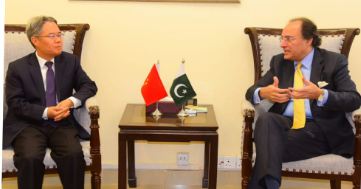
ISLAMABAD, MAR 19 /DNA/ – Ambassador of China,  Jiang Zaidong called on Minister for Finance & Revenue Mr. Muhammad Aurangzeb to discuss key matters pertaining to economic cooperation and bilateral relations between Pakistan and China, at Finance Division, today.

Ambassador of China H.E. Mr. Jiang Zaidong extended felicitations to Mr. Muhammad Aurangzeb upon his appointment as Federal Minister for Finance and Revenue and expressed confidence towards further strengthening of economic ties between the two countries.

Minister for Finance & Revenue Mr. Muhammad Aurangzeb expressed gratitude towards the Chinese leadership for their invaluable support to Pakistan in various sectors, particularly highlighting the roll-over of SAFE deposits and the refinancing of commercial loans, which have significantly contributed to Pakistan’s economic stability. He further emphasized the paramount importance of the China-Pakistan Economic Corridor (CPEC) in Pakistan’s growth strategy and overall economic recovery.

Both sides agreed to advance their collaboration in various sectors, including industrial zones, agriculture, mineral and mining, as well as renewable energy. It was discussed that next phase of CPEC would focus on monetisation of gains made during the first phase.

Concluding the meeting, both sides reiterated the desire to collaborate closely to further deepen and enhance the economic relationship between the two countries, reflecting the strong bonds of friendship and cooperation that exist between Pakistan and China.

US Ambassador, FM Aurangzeb discuss bilateral cooperation

US Ambassador, FM Aurangzeb discuss bilateral cooperation

ISLAMABAD, MAR 19 /DNA/ – Ambassador of the United States to Pakistan, Mr. Donald Blome, paid a courtesy visit to Minister for Finance & Revenue Muhammad Aurangzeb at the Finance Division today, to discuss important matters related to bilateral cooperation and mutual interests between Pakistan and the United States.

Ambassador of the US, Mr. Donald Blome, extended felicitations to Mr. Muhammad Aurangzeb upon his appointment as Minister for Finance and Revenue and conveyed confidence towards further strengthening of economic ties between the two countries.

Minister for Finance & Revenue Mr. Muhammad Aurangzeb warmly welcomed Mr. Donald Blome and underscored the significance of Pakistan-US bilateral relations, highlighting their importance at political, economic, and security levels.

Minister Aurangzeb shared that the new government is fully prepared to tackle the economic challenges and is determined to bring about macroeconomic stability in the country. He reiterated the government’s commitment to completing the ongoing IMF program and continuing the economic reform process initiated under the Extended Fund Facility (EFF) 2019 and Stand-By Arrangement (SBA) 2023, with a focus on achieving fiscal and debt sustainability, social protection, and rebuilding foreign exchange reserves.

Highlighting the priority areas for reforms, Minister Aurangzeb outlined the the government’s foremost priority of bringing reforms in the Federal Board of Revenue (FBR) to prevent revenue leakages through end-to-end digitization, enhancing the State-Owned Enterprise (SOE) reforms, strengthening social protection measures, improving public financial management, implementing energy sector reforms, removing distortionary subsidies, and fostering private sector-led economic growth. Recognizing the United States as one of Pakistan’s largest trading partners and a significant source of foreign direct investment, Minister Aurangzeb expressed appreciation for the economic ties between the two nations.

Ambassador Blome congratulated Government on positive step taken so far that resulted in visibly positive signs in the economy and hoped that it will help further stabilise the economy.

Concluding the meeting, both sides acknowledged the critical nature of the relationship between Pakistan and the United States and expressed the desire to continue enhancing bilateral relations between the two countries.

Chinese, Pakistani vocational institutions sign agreement

 China’s Yantai Vocational College (YOC)

ISLAMABAD, MAR 19 (DNA) — China’s Yantai Vocational College (YOC), Chinese logistics firm Sino Mall (Pvt) Ltd., and Government Monotechnique Institute, Mehrabpur, Sindh on Monday signed a framework agreement to co-construct Ban·Mo College in Pakistan.

In this connection, the Ban Mo College signing, unveiling and opening ceremony of the first phase training course was held at the YOC, which was attended online by officials of Pakistan’s Embassy, Beijing and Sindh Technical Education and Vocational Training Authority (STEVTA), Gwadar Pro reported on Tuesday.

The agreement aims to deepen international exchanges and cooperation in vocational education, particularly in line with the ‘Belt and Road’ initiative, according to TANG Int’l Education Group.

As per the agreement, the YOC will provide pre-job training for Sino Mall’s Chinese employees in overseas logistics management, as well as Chinese + Professional skills training for its local employees in Pakistan.

Development of logistics, Chinese teaching resources and vocational education courses, facilitating international academic education and exchange visits for Pakistani students, and responding to Sino Mall’s language and skill training needs in other specialties are also part of the agreement.

Utilizing YOC’s teaching resources and online platforms for education services in Pakistan, developing professional standards and course standards recognized by Pakistani education authorities, conducting community activities, volunteer services, and vocational training for Pakistani residents are also included in the scope of the agreement.

The three parties will jointly develop the logistics Chinese teaching resource base and construct characteristic vocational education courses and co-construct a high-level logistics industry-college-research training base, integrating practical teaching, enterprise production and social technology services.

The agreement envisages construction of a Ban Mo College in Mehrabpur, Sindh, according to Mansoor ul Hassan Siddiqui, Director General TANG Pakistan. — DNA

Stay Connected

64FansLike
60FollowersFollow

Latest Reviews

Exchange Rates

USD - United States Dollar
EUR
1.17
GBP
1.35
AUD
0.72
CAD
0.73