Home Blog Page 980

Activists endorse IMF advice as taxing cigarettes cuts down smoking

IMF

DNA

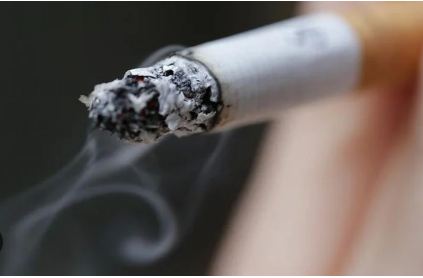
ISLAMABAD, MAR 25: The International Monetary Fund (IMF) has revealed that the consumption of cigarettes in Pakistan has witnessed a notable decline of 20-25 percent following a significant increase in prices or taxes on tobacco products.

This revelation featured in Technical Assistance Report of the commission– Pakistan Tax Policy Diagnostic and Reform Options. The report was released in February.

Earlier, the global lender advocated imposition of uniform excise rates on both local and foreign cigarette manufacturers.

The IMF’s proposal, which advocates for equal taxation measures for all cigarette producers, aims to address health concerns associated with smoking while ensuring fair taxation practices. It suggests subjecting e-cigarettes to similar taxation as traditional tobacco products, citing comparable health impacts.

Capital Calling, an Islamabad-based think tank, has endorsed the IMF’s recommendation, aligning it with the guidelines set forth by the World Health Organization (WHO). The objective behind these proposals is to establish equitable taxation across all cigarette products, regardless of their origin.

Health activists have rallied behind the IMF’s stance, emphasizing the need for restructuring tobacco taxation in Pakistan.

At a recent event organized by the Society for the Protection of the Rights of the Child (SPARC), activists urged the Government of Pakistan to transition to a Single Tier Tobacco Taxation System, thereby eliminating the existing dual-tier system.

Malik Imran Ahmed, Country Head of Campaign for Tobacco Free Kids (CTFK), underscored the alignment between the IMF’s recommendations and ongoing discussions within Pakistan. These discussions aim to address fiscal and external sustainability weaknesses while promoting economic recovery and inclusive growth. Ahmed stressed the urgent need to reform Pakistan’s cigarette taxation system as part of broader efforts to strengthen public finances and enhance debt sustainability.

The IMF’s advocacy for taxation on tobacco products is not only aimed at reducing cigarette consumption but also at generating additional revenue for the government. By implementing uniform excise rates and eliminating disparities between local and foreign cigarette manufacturers, Pakistan can streamline its taxation system and alleviate the healthcare costs associated with tobacco-related illnesses.

Ahmed said that as Pakistan continues to navigate economic challenges, it is imperative for policymakers to heed the IMF’s recommendations regarding tobacco taxation. By prioritizing public health and fiscal sustainability, Pakistan can pave the way for a healthier and more prosperous future for its citizens.

Ambassador of Japan meets FM Ishaq Dar

Japan

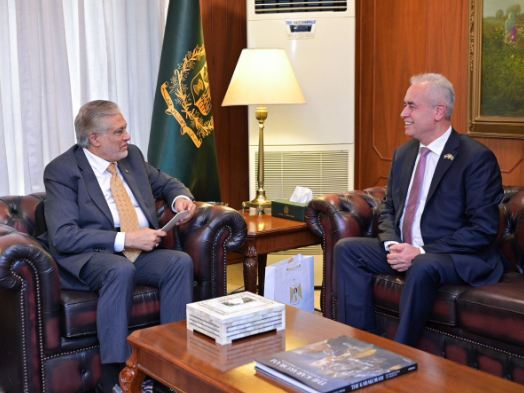
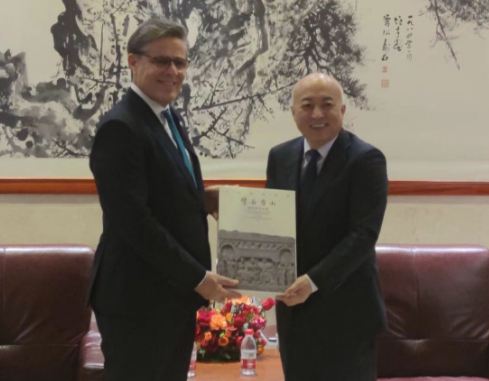
ISLAMABAD, MAR 25 /DNA/ – Ambassador Mitsuhiro Wada of Japan paid a courtesy call on Foreign Minister Ishaq Dar today at the Ministry of Foreign Affairs.

During the meeting, bilateral relations and collaboration in trade, investment, and export of manpower were discussed.

FM appreciated the longstanding development partnership between Pakistan and Japan. He also stressed the need to further enhance this mutually beneficial relationship in all domains.

The discussions highlighted the commitment of both countries to strengthen cooperation and deepen ties for the prosperity and development of their peoples.

Palestine Ambassador meets Foreign Minister Ishaq Dar

Palestine Ambassador meets Foreign Minister Ishaq Dar

ISLAMABAD, MAR 25 /DNA/ – Ambassador Ahmed Jawad A. A. Rabei of the State of Palestine paid a courtesy call on Foreign Minister Ishaq Dar to convey his warm wishes on the assumption of office.

During the meeting, FM thanked the Ambassador and reiterated Pakistan’s unwavering support for the Palestinian cause. He also called for an urgent and unconditional ceasefire in Gaza.

The discussions underscored the longstanding and close ties between Pakistan and Palestine, reaffirming commitment to mutual cooperation and solidarity.

Pakistan, Turkey aim to boost economic partnership

Pakistan, Turkey aim to boost economic partnership

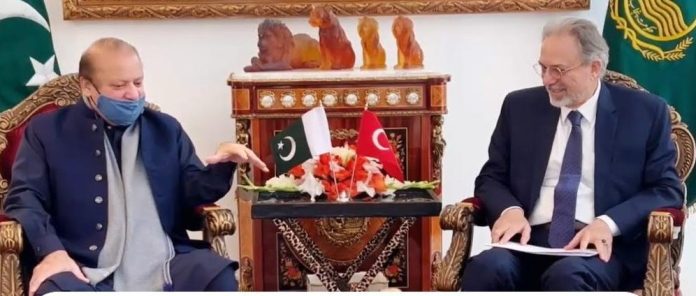
LAHORE, MAR 25 /DNA/ – Turkish Ambassador to Pakistan, Mehmet Pacaci, called on Chief Minister Punjab Maryam Nawaz Sharif and PML-N Quaid Muhammad Nawaz Sharif to discuss issues of mutual interest and increase in cooperation in various fields.

PML-N Quaid Muhammad Nawaz Sharif said,”The people of Pakistan and Turkiye are bound to each other in the relationship of Islamic brotherhood.”

Chief Minister Punjab Maryam Nawaz Sharif said,”Pakistan and Turkiye want to increase cooperation in commercial, economic and other fields.” She added,”Increasing trade volume between Pakistan and Turkiye is the need of the hour.”

Madam Chief Minister highlighted,”There are vast investment opportunities in Punjab in housing, tourism, solar energy, health, education, vocational training and other sectors.” She added,”A very favorable investment ecosystem and incentives are being provided for investment in Punjab. Turkish investors should take advantage of these investment opportunities. We will provide them all kinds of facilities in this regard, because we want to benefit from the experience and expertise of Turkiye’s rapid development.”

Turkish ambassador said,”Pakistan and Turkiye have historical brotherly relations. Cooperation between the two countries is exemplary.” He assured to increase cooperation with Punjab government in various fields. He added,”Steps will be taken at a fast pace to further promote relations with Punjab.” Potential agreements in this regard were also discussed in the meeting.

Turkish Commercial Counsellor Nurettin Demir, Ghazanfar Mahmood, Director of the Embassy Office, Senior Provincial Minister Marriyum Aurangzeb and other relevant officers attended the meeting.

HEDP 8th steering committee reviews progress

HEDP 8th steering committee reviews progress

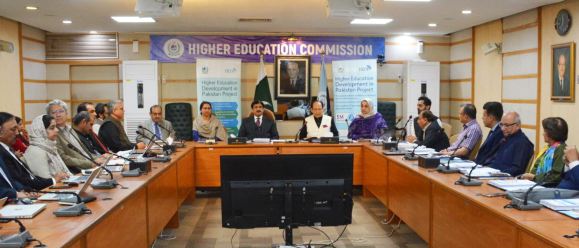
Islamabad, MAR 25 /DNA/ – HEC’s Higher Education Development in Pakistan (HEDP) project held its eighth Steering Committee (SC) meeting at the Higher Education Commission (HEC) Secretariat, Islamabad. SC is the highest forum of the project comprising senior officials from federal ministries, provincial higher education departments, vice chancellors, and private sector representatives.

HEDP is a five-year US$ 400 Million national flagship project (2019/20 – 2023/24) of HEC to implement key higher education priorities. The committee members reviewed the progress made so far on the project.

Dr. Zia Ul-Qayyum, Executive Director, HEC chaired the meeting saying that HEDP is a key investment for higher education as it is supporting HEC in its various areas of research, quality assurance, IT initiatives and capacity building. “I am glad to share that HEDP has a good standing of achieving 81% of its targets, and this has also been validated by the recent World Bank mission that has improved the project rating.”

Project Coordinator HEDP Dr. Mehmood ul Hassan Butt gave an overview of the HEDP project, its history, progress, plans, and the recently held World Bank Mission that has further improved the project rating to satisfactory in seven components. He along with his team briefed the committee on the key project initiatives, including the physical and financial progress. In addition, it was apprised that the project is moving towards its last year and the team is working closely with HEC officials as eventually these will be taken over by the HEC staff to sustain these initiatives.

Technical heads of the project components updated members on the progress of each of their components of the project. Component 1 has recently completed award of 10 Rapid Technology Transfer Grants (RTTG) – focused on addressing Pakistan’s current financial distress by encouraging industry-academia collaborations to enable import substitutions. It is also working to gather the outputs and impacts of the grants awarded in last years in terms of research publications, recognitions, awards, and innovative ideas/ products developed.

Component 2 team has recently completed the establishment of 41 Quality Enhancement Cells in Affiliated Colleges (QECACs) as well as training faculty of affiliated colleges on General Pedagogy across Pakistan. It is also working closely with the HEC QAA division to facilitate implementation of new HEC QA policy.

The IT component head briefed members on the ambitious plans and the activities including Data Center, the Student Life Cycle system, Enterprise Resource Management and allied computing and storage facilities for HEIs.

A few of these have already been signed off while others are under final stages of procurement. The project has also supported NAHE in conducting faculty training need assessment studies in Punjab and Sindh in addition to other professional capacity building initiatives.

The committee members appreciated the efforts of the HEDP team and provided valuable suggestions. The lack of public funding for the Higher Education sector of Pakistan was discussed and allied mitigation strategies for revenue generation models and financial autonomy were proposed accordingly. Members were briefed that under Component 6, overall more than 100 HEIs were given substantial financial support focusing on making them self-sustainable.

However, the investment proposals received from HEIs need further strengthening by utilizing their intellectual capital and by developing market industry collaborations. The members also explained the grim situation of Affiliated Colleges (ACs), in their respective regions. They suggested increasing project activities based on regional needs and offered their support to collaborate with provincial departments. The Committee appreciated the project efforts and suggested to develop sustainablity plans especially around IT and quality assurance initiatives.

CM Maryam meets Finance Minister Muhammad Aurangzeb

CM Maryam meets Finance Minister Muhammad Aurangzeb

Lahore, MAR 25 /DNA/ – “Together we will pull Pakistan out of economic crisis,” said Punjab Chief Minister Maryam Nawaz Sharif in her meeting with the Federal Finance Minister Mr Muhammad Aurangzeb while discussing country’s economic woes.

Mr Muhammad Aurangzeb congratulated Chief Minister Maryam Nawaz Sharif on assuming charge of her office, and declared her election as country’s first female Chief Minister a great milestone in the democratic history of Pakistan. He hailed Maryam Nawaz Sharif’s initiatives for social welfare of the people.

Madam Chief Minister thanked Mr Muhammad Aurangzeb for the good words. She also congratulated him on assuming charge as Finance Minister, and expressed her best wishes for his success.

Madam Chief Minister said,”Finance Minister Muhammad Aurangzeb is expected to take people-friendly decisions for economic turn around of the country.”

Provincial Finance Minister Mujtaba Shujaur Rahman, Senior Provincial Minister Marriyum Aurangzeb, and Former Senator Pervaiz  Rashid also attended the meeting.

Ramifications of Terrorist Attack in Russia on Pakistan

Qamar Bashir

By: Qamar Bashir

The devastating attack on a music concert in Moscow, Russia, resulting in the tragic loss of over 133 lives, sent shockwaves reverberating across the globe. This heinous act has deeply wounded the collective spirit of the Russian nation and stirred anguish among people worldwide. The brazen assault on innocent concertgoers, unprecedented in Moscow, strikes at the heart of a city known for its robust security measures, fortified by Russia’s formidable security apparatus and renowned intelligence agency, the KGB.

This time, it appears that the attackers managed to breach the legendary security of Moscow, the capital city of one of the world’s most powerful nations. This breach may have occurred due to various factors, including intelligence failures, potential inside collusion, or complacency within the security apparatus. Alternatively, the perpetrators might have been exceptionally well-prepared, possessing high levels of skill, resources, and connections both inside and outside the country. These factors likely facilitated their undetected entry into Russia, circumventing border security measures. Once inside, they could have arranged transportation, acquired funds, weapons, and even concert tickets with ease. This enabled them to carry out their heinous act, indiscriminately firing upon concertgoers, resulting in the tragic loss of over 133 lives, and later setting fire to the venue.

The four terrorists were apprehended along with eleven accomplices; their confessional videos are available on social media platforms. It’s possible that they were not as ready to leave as they were to enter Russia. The US quickly announced that ISIS, specifically the ISIS Khurasani Group, or ISIS-K, was behind the attack. They claimed that Russian intelligence had been tipped off by the US about an impending terrorist strike in Moscow, but they dismissed the information as a false flag.

Vladimir Putin disputed the US’s claim that ISIS was to blame, placing the responsibility instead on Ukraine, the West, and the US and all those countries which have been supporting Ukraine against Russia.

He also warned that anyone who planned, encouraged, assisted, supported, or funded this heinous act would face consequences, but the way he intended to carry out that punishment would send shockwaves around the globe.

The vows made by Putin have put Ukraine, the entire West, and the US on edge. Unlike weaker and less resourceful countries like Iraq, Kuwait, Libya, Syria, Iran and Afghanistan, or Pakistan, the US and the West now facing Russia possess a formidable war machine. It boasts a highly trained and battle-hardened army, a feared intelligence agency in the form of the KGB, and nuclear capabilities that could devastate the world multiple times over. As a member of OPEC, Russia stands as one of the top exporters of oil, petroleum products, wheat, and other essential crops, as well as industrial products, weapons, and weapons systems. Its self-sufficiency in food, industrial goods, military hardware, and energy makes Russia one of the most secure countries in the world.

To counter any potential Russian attempts to retaliate against those it accuses of masterminding the attack, the US, Ukraine, and Western countries have started mulling on ways and means to defuse Russian anger and putting all safety and defense mechanism in place to minimize the impact of imminent Russian attempt to take revenge of the attack from perceived masterminds, abettors and facilitators.

They are fiercely engaged in diplomatic dialogue with Russia to de-escalate tensions and prevent further escalation of the situation involving direct negotiations, diplomatic channels through international organizations such as the United Nations, and diplomatic initiatives led by neutral parties.

They are thinking of building a coalition of international allies to demonstrate solidarity and support for Ukraine and rallying support from NATO allies, European Union member states, and other countries sharing similar concerns about Russian impending actions.

They are mulling over ways and means to maintaining a strong military presence in the region to deter potential Russian aggression and respond effectively to any hostile actions involving deploying additional troops, conducting military exercises, and enhancing defense capabilities to ensure readiness to defend against any threats, besides, Intensifying intelligence-sharing mechanisms among allied countries to gather information on Russian intentions and activities involving sharing intelligence on potential threats, monitoring Russian military movements, and coordinating efforts to counter any hostile actions.

Moveover, to deter Russia from taking retaliatory actions, they are lining up targeted economic sanctions against Russia if it escalates tensions or takes aggressive actions against Ukraine or other countries. This could involve imposing sanctions on key Russian individuals, entities, and sectors, as well as restricting trade and financial transactions to exert economic pressure on Russia.

Strengthen cyber defense capabilities to protect against potential Russian cyberattacks targeting critical infrastructure, government institutions, and private sector entities may also be on the cards. This could involve enhancing cybersecurity measures, investing in advanced technologies, and conducting cybersecurity exercises to prepare for potential threats.

If the security situation escalates, and Russia decides to retaliate on a large scale deploying kinetic means, and to use oil, wheat, and gas as weapons and disrupt maritime trade, it would pose a significant global repercussions, extending to countries like Pakistan, which has a historical legacy in the Afghan conflict against the USSR.

In the event of maritime trade route disruptions, Pakistan would confront economic challenges, including higher prices for essential commodities, decreased exports, and overall economic instability. Additionally, as a nation heavily reliant on imports for its energy needs, Pakistan could face shortages and increased prices of oil and gas, precipitating energy crises and economic strain.

An escalation in commodity and oil prices would profoundly impact Pakistan’s economy, primarily through inflationary pressures and widening trade deficits. As a nation heavily reliant on imported commodities and oil, Pakistan would face increased production costs, leading to higher prices for goods and services, ultimately affecting consumers’ purchasing power. Moreover, the country’s trade deficit could further expand as the prices of imported commodities rise, straining its balance of payments and potentially depleting foreign exchange reserves.

Additionally, Pakistan’s energy sector, which heavily depends on imported oil and gas, would bear the brunt of escalating oil prices. Higher energy production costs would translate into increased electricity prices and transportation expenses, posing challenges to industrial productivity and economic growth. The government, meanwhile, may face heightened fiscal pressures to maintain subsidies on essential commodities, potentially straining public finances and diverting resources from other development priorities.

Furthermore, the escalation in commodity and oil prices could exert pressure on Pakistan’s foreign exchange reserves, affecting the country’s ability to meet external debt obligations and finance imports.

To counteract these potential ramifications, Pakistan would need to engage in diplomatic efforts, collaborating with regional and international partners to mitigate the impact of maritime trade disruptions and ensure the security and stability of trade routes. Pakistan would also need to implement effective economic management strategies, policy interventions, and efforts to diversify its energy sources and reduce reliance on imported commodities. Such measures are crucial to navigating the economic impacts of rising global commodity prices and ensuring the stability and resilience of Pakistan’s economy in the face of external shocks.

By: Qamar Bashir
Press Secretary to the President(Rtd)
Former Press Minister at Embassy of Pakistan to France
Former MD, SRBC

Closing ceremony of China-Pakistan Gandhara Art Exhibition held in Shenzhen

Closing ceremony of China-Pakistan Gandhara Art Exhibition held in Shenzhen

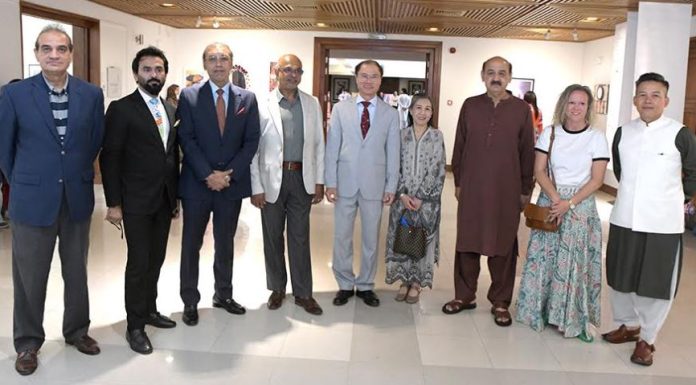
SHENZHEN, MAR 24 /DNA/ – The closing ceremony of the exhibition titled “Gandhara Heritage along the Silk Road: A Joint China-Pakistan Exhibition” took place at the Shenzhen Museum today, attended by senior Chinese officials including Mr. Wang Xudong, Director of the Palace Museum; Mr. Zeng Xianglai, Director of Culture, Radio, Television, Tourism, and Sports Bureau of Shenzhen; Mr. Jia Jianwei, Director of Gansu Provincial Museum; and Mr. Huang Chen, Director of Shenzhen Museum. Pakistan side was represented by Ambassador Khalil Hashmi, along with the Acting Consul General of Pakistan in Guangzhou and officials from the Pakistan Embassy in Beijing and the Pakistan Consulate-General in Guangzhou.

The ceremony marked the successful culmination of the largest Gandhara exhibition in China’s history, showcasing over 170 artifacts from seven different museums in Pakistan. The exhibition debuted last year at the prestigious Palace Museum in Beijing for three months but due to overwhelming interest from the Chinese audience, it evolved into a touring exhibition, making stops in Gansu and finally Shenzhen, following necessary legal procedures.

Speaking on the occasion, Ambassador Hashmi reflected on the significance of the initiative, highlighting the successful collaboration between Pakistan and China in organizing the largest Gandhara Art Exhibition in China’s history. He emphasized the importance of cultural exchanges and people-to-people initiatives, expressing gratitude to Director Wang Xudong and his team for their efforts in executing the Joint Exhibition.

Ambassador Hashmi also hinted at future joint initiatives, indicating ongoing plans for further exhibitions showcasing shared heritage between the two countries. Additionally, he illuminated Pakistan’s rich historical legacy as the seat of Gandhara civilization and its contributions to cultural exchanges along the ancient Silk Road.

Director Wang Xudong, expressing his delight at being part of this momentous exhibition, paid homage to Pakistan’s rich heritage. He shared insights into the experience of contributing to and witnessing the exhibition’s impact.

As the final phase of the exhibition concludes, preparations are underway for the dispatch of artifacts back to Pakistan, with a de-installation team scheduled to arrive after Ramadan.

Four Test cricketers named in seven-member men’s selection committee

Lahore, MAR 24 /DNA/ – Chairman PCB Mohsin Naqvi announced the men’s selection committee during a press conference at the headquarters of Pakistan Cricket, Gaddafi Stadium in Lahore.

The selection committee comprises seven members including former Test players, Wahab Riaz, Mohammad Yousuf, Abdul Razzaq and Asad Shafiq while the captain and coach of the respective national men’s team will also be part of the committee. The seventh member will be a data analyst, who will be responsible for providing the members with statistics and data to help in the selection.

Wahab Riaz, who played 27 Tests, 91 ODIs and 36 T20Is, was the chairman of the former selection committee. Mohammad Yousuf formerly led the Pakistan Men’s U19 team as head coach in the ACC U19 Asia Cup and the ICC Men’s U19 World Cup 2024.

Yousuf represented Pakistan in 90 Tests, 288 ODIs and three T20Is.

Asad Shafiq, who recently announced his retirement from competitive cricket, played 77 Tests, 60 ODIs and 10 T20Is for Pakistan in a ten-year international career. Abdul Razzaq played 46 Tests, 265 ODIs and 32 T20Is in his career.

The selection committee will not have any chairman with each member having equal power and the same committee will also be responsible for the selection of the U19 and A team other than the national selection affairs.

Chairman PCB Mohsin Naqvi: “I have mandated the seven-member selection committee, comprising of four former Test players, with the powers to select the national men’s teams for international cricket. I will not interfere with the working of the selection committee. They are experienced and professional in their domain and I am confident that they will do their job with dedication and honesty.

CDA imposes heavy taxes on properties in Islamabad

CDA imposes heavy taxes on properties in Islamabad

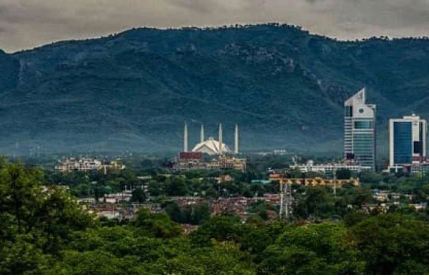
ISLAMABAD, Mar 24 (APP/DNA): Capital Development Authority (CDA) has imposed heavy taxes on real estate properties in federal capital Islamabad.

According to notification, owners of 140 square yards plots in sectors and housing societies like Shehzad Town, Margala Town, and Rawal Town will now pay Rs24,000 in taxes.

Farmhouse owners with eight kanals will pay Rs180,000, while those with 90 to 120 kanals will pay Rs442,000.

Commercial properties in the blue area will be taxed at Rs32 per square foot for ground floor, Rs22 per square foot for basement, and residential apartments at Rs26 per square foot.

Stay Connected

64FansLike
60FollowersFollow

Latest Reviews

Exchange Rates

USD - United States Dollar
EUR
1.17
GBP
1.35
AUD
0.72
CAD
0.73