Home Blog Page 977

Alarming rise of kidnapping in the Philippines

Chinese women are reportedly being targeted in a new wave of gambling-related kidnappings in the Philippines, alarming Beijing's

Dr. Muhammad Akram Zaheer

Chinese women are reportedly being targeted in a new wave of gambling-related kidnappings in the Philippines, alarming Beijing’s ambassadors in Manila and the local Filipino Chinese community.The Philippine Daily Inquirer reported that the Chinese Embassy has also investigated and verified specific cases to protect the legitimate rights and interests of Chinese citizens in the country.The victims are “mostly Chinese women, and recently Cambodian and Vietnamese,” said Teresita Ang-See, founding president of the Movement for the Restoration of Peace and Order (MRPO).

Several organized crime syndicates focusing exclusively on kidnap for ransoms operate in and around the National Capital Region. Some criminal groups target workers or customers of POGO companies, Chinese nationals, East and South Asian expatriates, short-term travelers, and members of the Chinese-Filipino business community and their families. Criminal abductions of Westerners occur less frequently, though the threat remains. Most victims are rescued by authorities or released unharmed relatively quickly after the abductors receive a ransom payment.

In the past three years, the Philippines has emerged as a major hub for online gaming, according to Filipino officials, attracting more than 100,000 Chinese nationals who work in virtual casinos catering to players back in China where gambling is illegal. The online casinos generate tax revenue and desperately needed jobs in Manila’s crowded downtown area. But at the same time, they’ve pushed up rents and created new challenges for the Philippine National Police. Online gaming platforms allow players to gamble remotely. They sign up, choose a game and it is played over a livestream in another jurisdiction.

Manila has become the number one hotspot worldwide for online gaming, in front of Malta, the Isle of Man and Curacao, according to David Lee, a lawyer at Taiwanese firm Lin & Partners who specializes in gaming laws. “The Philippines pioneered online casinos in the early 2000s, when Cagayan, a province to the north of the country, started awarding licenses to a handful of operators,” explains Ben Lee, the founder of GamiX, a Macao-based consultancy firm focused on the gaming industry in Asia. “But they really took off in 2016, when President Rodrigo Duterte came into office.”

Duterte handed the right to issue offshore gambling licenses to the Philippine Amusement and Gaming Corporation (PAGCOR), a government entity that operates casinos and regulates the industry. “It began to aggressively develop the industry by awarding dozens of licenses,” said lawyer David Lee. Chinese businessmen were quick to seize the opportunity and the number of POGOs mushroomed. Last November, Manila expelled hundreds of Chinese nationals who had been arrested in a series of raids against online gaming operations and other cyber-crimes in Palawan province, for allegedly working illegally in the country, according to CNN Philippines.

Many Chinese nationals working in the Philippine casino industry are attracted by the promise of jobs not available at home, experts say. “These are mostly young people, in their 20s, with little job prospects in China,” said Ben Lee. Some are lured to the Philippines with the promise of high-paying jobs in prestigious tech companies, but upon arrival they discover they will be working for an online gambling platform and paid a fraction of what they were promised, he added. “The workers frequently have their passports confiscated, are crammed 10 to a room meant for three to four people and have to work 12-hour shifts, with only one day off per month,” said Pitlo. On the job, they are expected to approach prospective players in social media chat groups and convince them to give online gaming a try, according to Lee. Once players are hooked, they are encouraged to wager increasing amounts of money, he added. POGOs cater to foreign customers and thus employ foreign nationals as customer service representatives to “effectively invite players and attend to their needs and concerns,” the PAGCOR spokeswoman said. Most of these foreigners are Chinese nationals, she said. “But we can’t categorically say they are based in China or are targeting players in China,” she added. “They might be catering to Mandarin speaking people in other countries

“In their free time, their Chinese employees often gamble at the casinos and end up in debt,” explained Elmer Cereno, a spokesman for the Philippine National Police-Anti Kidnapping Group. “They are then approached by loan sharks who offer to lend them money. “When they fail to pay it back, the loan sharks kidnap them and try to get ransom from their relatives back home, he said. On October 2019, police rescued two Chinese POGO workers, whose families had been asked to pay ransoms ranging between 68,000 yuan and 80,000 yuan (about $9,800 to $11,500) for their release, according to a summary of the case seen by CNN. They had been abducted from a hotel six days earlier and held by five Chinese nationals in an office building in Taguig, a suburb south of Manila. Between January 2017 and October 2019, Philippine police dealt with 65 cases of kidnap-for-ransom involving POGO workers or casino customers, leading to the arrests of 132 people, according to an official tally provided to CNN by the Philippines police. “Almost all the victims and perpetrators were Chinese nationals,” said Cereno. Manila has its own concerns about the industry, with top officials suggesting that the influx of Chinese workers could turn to spying, posing a risk to national security. “You would also start getting worried when a whole building, a condominium tower is occupied by only one nationality where you might not be able to guard their activities,” Philippine National Security Adviser Hermogenes Esperon, Jr. said in July 2019.

The recent kidnapping cases led by Chinese are getting worse and worse! A Chinese national who is working in Philippine just released a guess how much to kidnap a Filipino Chinese to remind everyone to be wary of being used as a “walking peso”; Unexpectedly, because of the incentive of the high kidnapping reward, these scum without convergence, but intensified, is bound!.

The worst areas of kidnapping are now concentrated in Makati and Pasay, as these two places have a large number of gaming parks and homes, such as 1322, TechZone, and some bars popular with Chinese people. As long as you dare to step out of your house, the chance of being randomly kidnapped in the street is very high! And this rampant army of kidnappers is said to be from Cambodia up to a thousand people!

Some abductees said they were scared to escape: “On July 22, I am Angelina, angel city is in the van slammed to a car, get in the car after I had a meal with blindfold my eyes, with handcuffs handcuff me, after 15 minutes I was taken to a village, in after they took me 80000 pesos, and my We Chat borrow money from friends and relatives, with my pay treasure to loans, After two days of signed, they persecute me and forced me to record video to their borrowing 1 million yuan for commercial turnover, he ask my family to 1 million yuan, with a gun on my head, my family have got 560000 yuan, the last is powerless, they open video beat me in front of my family, If you don’t pay off a million dollars, 100,000 for one hand.”Here has been more than one victim broke the news, kidnappers from the northeast, Hunan, we do not say that the region is black, but vigilance is better! Now in the Philippines, no Chinese can be trusted.Chinese Embassy in Manila urged Philippine agencies to strengthen law enforcement.It also reminded Chinese citizens to “stay away from immoral activities” and avoid online gambling and telecom fraud.

“Electoral Trend in Iran is Changing due to Social Media”, says Iranian expert

Iran

DNA

ISLAMABAD: “The current pattern of conservatism and reformism would change in Iran”, said Mr. Pooya Mirzaei. He was speaking at the event hosted by Iran Program of Institute of Regional Studies, Islamabad.

Mr. Mirzaei highlighted that the Middle East, West Asia and South Asia did not have any record of holding elections prior to the arrival of western culture. While the civilization of this region was much older than the western civilization, the concept of democracy actually prevailed in the west, he added. While analyzing the low voters’ turn out in the elections, Mr. Mirzaei argued that lack of voters’ participation didn’t mean the opposition to the system. In fact, many countries in the west had much less voters’ participation. He further alluded to the fact that opposition of Iran mainly resided outside of the country.

When asked about the future of reformist front, Mr Mirzaei reasoned that reformists were still a powerful minority within the parliament. He also mentioned that unlike the popular narrative, Supreme Leader seat in Iran was not an unelected post, instead, the leader was elected through the Assembly of Experts who contested elections every eight years through city councils. In this sense, the system of Iran was quite similar to the electoral systems of France and the US, Mr. Mirzaei debated.

Mr. Fraz Naqvi, the head of Iran Program said that elections in Iran reflected the divisions within the conservative camp as four separate coalitions of conservative faction came at top. He further argued that the differences within the Iranian coalitions were not the manifestation of deep-rooted disagreements that could disrupt the state’s system, instead they were reflective of Iran’s vibrant electoral culture. While concluding, Mr. Naqvi predicted that these elections would prove crucial for the upcoming presidential elections in Iran in 2025.

“Six Judges’ Allegations: Yet Challenges in Substantiation…”

Qamar Bashir

By: Qamar Bashir

In a remarkable development, six judges of the Islamabad High Court have penned a letter to the Supreme Judicial Council underscoring deeply troubling allegations of blatant, aggressive, and intimidating interference by the executive branch in both lower and higher judiciary affairs. The accusations range from manipulating bench formations to exerting undue pressure on judges to sway decisions in critical cases. Moreover, there are claims of defiance against judicial directives, orders, and judgments, often enforced through coercive measures such as the use of brute force or intimidation tactics like throwing crackers at residences, abducting close relatives, and covert surveillance. Such allegations, if substantiated, raise profound questions about the sanctity of judicial independence and the rule of law.”

The noteworthy aspect of this situation is the decision to make the letter public. With decades of experience in government circles, it’s clear that officials, including judges, are obligated to maintain confidentiality in their official correspondence. Various regulations, such as the Efficiency and Discipline Rules for government servants and the Judicial Code of Conduct, emphasize the importance of confidentiality, especially in legal proceedings. The relevant Article V of the Judicial Code of Conduct stresses that judges should avoid engaging in public controversies, particularly political ones, to uphold the integrity of their position.

Typically, matters concerning the Supreme Court are communicated to the public through its public relations department, often pertaining to administrative issues or clarifications on court actions. However, in this instance, the letter addressed to the Supreme Judicial Council on March 25, 2024, was made public the following day, March 26, 2024. This move likely aimed to achieve several objectives.

By revealing allegations of interference by intelligence agencies, the judges aimed to highlight potential threats to judicial integrity. They likely hoped that public scrutiny would compel authorities to address the issue promptly and reinforce the importance of judicial independence. However, making internal correspondence public carries risks, including undermining confidentiality and inviting political or legal repercussions. Depending on how the allegations are perceived, it could also affect public confidence. While transparency is essential for accountability, it must be balanced with protecting the judicial process’s integrity and minimizing potential fallout.

Whether the letter was leaked without the consent of the Chairman of the Supreme Judicial Commission, or the six judges who wrote it, remains unclear. However, the gravity of the allegations made by these judges cannot be overstated. Accusing the executive branch of blatant interference in the judiciary, including manipulation of bench formations, intimidation of judges, defiance of judicial directives, and even resorting to acts of violence and threats against judges and their families, constitutes a direct assault on the foundational principles of democracy, rule of law, and judicial independence.

If proven true, these allegations would not only undermine the credibility and integrity of the judicial system but also pose a significant threat to the fundamental principles of justice and separation of powers.

However, both the judges and Supreme Judicial Council know very well that the spying agency operatives are professional trained and proficient to leave no trace of evidence of their alleged interference and intimidations to the judges or their victims or targets. They employ sophisticated protocols including encryption, secure communication channels, anonymous communication platforms, steganography, covert operatives, and deniable operations to ensure their communications and actions remain untraceable and without evidence.

Utilizing advanced encryption methods, secure networks, and anonymous tools, they conceal their identities and activities, making it challenging for outsiders to intercept or attribute their actions. Covert operatives operate discreetly, while deniable operations provide plausible deniability. This makes proving their involvement in suppression and intimidation activities exceptionally difficult, necessitating thorough investigation and forensic analysis to uncover any traces of their involvement.

Therefore, handling allegations of interference and intimidation by spying agencies in the absence of concrete evidence presents a significant challenge for the Supreme Judicial Council. However, despite the difficulty in proving such allegations, the Council may still take appropriate steps to address the situation and uphold the integrity of the judiciary. They do so by employing various techniques and methods.

Evidently,  in the absence of direct evidence, the Council will have to  rely on witness testimonies and corroboration from multiple sources to substantiate the allegations. Witness testimonies, especially from the judges themselves and other individuals who may have been subjected to intimidation or interference, can provide valuable insights into the nature and extent of the alleged actions.

Moreover, given the gravity of the situation, it may be necessary for the Supreme Judicial Council to collaborate with other relevant institutions, such as law enforcement agencies or independent investigative bodies, to ensure a comprehensive and transparent investigation. Any attempts to obstruct or undermine the investigation must be met with swift and decisive action to uphold the rule of law and protect the judiciary from undue influence or intimidation.

The Council may enlist the help of independent experts or investigative agencies to conduct forensic analysis or investigations into any suspicious activities or incidents reported by the judges. Although direct evidence may be scarce, expert analysis of circumstantial evidence or patterns of behavior may reveal potential links to interference or intimidation tactics.

SJC may provide  strong protections for whistleblowers who come forward with information about interference or intimidation. SJC  can encourage individuals with knowledge of such actions to step forward and provide valuable testimony. Ensuring confidentiality and protection from retaliation can help overcome barriers to reporting.

In cases where traditional investigative methods may not yield sufficient evidence, the Council could consider establishing a public inquiry or commission with broad powers to investigate the allegations thoroughly. Such inquiries can compel testimony, gather evidence, and make recommendations based on their findings.

Given the sensitive nature of the allegations and the challenges in investigating espionage-related activities, the Council may seek assistance and expertise from international organizations or experts with experience in dealing with similar issues.

Regardless of the outcome of the investigation, the Council can implement measures to enhance judicial integrity and resilience against potential interference in the future. This may include strengthening security protocols, providing training on identifying and responding to intimidation tactics, and promoting a culture of transparency and accountability within the judiciary.

While proving allegations of interference and intimidation by spying agencies may indeed be challenging, the Supreme Judicial Council has a responsibility to thoroughly investigate such claims and take appropriate action to safeguard the independence and integrity of the judiciary. Even in the absence of direct evidence, the Council can still take steps to address the underlying concerns and uphold the principles of justice and the rule of law.

Ultimately, the Supreme Judicial Council’s response to these allegations will be a crucial test of the judiciary’s independence and its ability to uphold the rule of law in the face of external pressures. It is essential for the Council to demonstrate its commitment to justice, accountability, and the protection of judicial independence by thoroughly investigating these allegations and holding accountable those responsible for any wrongdoing. Failure to do so would not only undermine public trust in the judiciary but also jeopardize the foundations of democracy and the rule of law in Pakistan.

By: Qamar Bashir

Press Secretary to the President (Rtd)

Former Press Minister at Embassy of Pakistan to France

Former MD, SRBC

PM Shehbaz, law minister to meet CJP

SC holds full  court meeting on judges’ letter

Special Correspondent

ISLAMABAD: Prime Minister Shehbaz Sharif is to meet Chief Justice of Pakistan Qazi Faez Isa to discuss situation arising out of the letter written by the Islamabad High Court judges to the Supreme Judicial Council.

Law Minster Azam Nazir Tarar and Attorney General of Pakistan will also accompany the prime minister.

Earlier,  A full court meeting of the Supreme Court judges was held in the federal capital to deliberate on a letter written by the six Islamabad High Court judges about the alleged interference of spy agencies in the judiciary.

The Supreme Court judges including Chief Justice of Pakistan (CJP) Qazi Faez Isa attended the huddle that lasted for over two hours in the federal capital.

The development took place after the bar associations and legal experts called for a probe into the letter.

The sources said that the Attorney General for Pakistan (AGP) Mansoor Usman Awan met the CJP and discussed the matter.

After the meeting, AGP, while talking to journalists, said that the matter is serious and it should be probed.

Bar associations of Sindh, Lahore, Islamabad and Khyber Pakhtunkhwa as well as senior lawyers condemned the alleged interference, urging the top judge to look into the matter.

The letter, written a day earlier on Tuesday, urged the council to convene a judicial convention over the alleged interference of members of the executive, including operatives of intelligence agencies, in judicial affairs.

The IHC judges — who wrote the letter to the SJC — include Justice Mohsin Akhtar Kiyani, Justice Tariq Mehmood Jahangiri, Justice Babar Sattar, Justice Sardar Ejaz Ishaq Khan, Justice Arbab Muhammad Tahir, and Justice Saman Fafat Imtiaz.

Pakistan Advocates for Global Peace and Dialogue at Inter-Faith Iftar Gathering

Pakistan Advocates for Global Peace and Dialogue at Inter-Faith Iftar Gathering

ISLAMABAD, MAR 27 /DNA/ – Foreign Minister Ishaq Dar welcomed the Prime Minister of Pakistan and the Islamabad-based diplomatic community to the Ministry of Foreign Affairs for a special inter-faith iftar dinner. Expressing gratitude for their presence, Minister Dar appreciated their contributions in fostering dialogue and cooperation between their respective nations and Pakistan. The event highlighted the importance of promoting unity and understanding across diverse cultures and faiths.

For Muslims across the world, the holy month of Ramadhan holds a special religious and social significance. It is a time for reflection, unity, and compassion. As we gather here tonight, representing diverse nations and cultures, it is important to appreciate the power of dialogue and cooperation in fostering mutual understanding and harmony.

Pakistan’s foreign policy is deeply rooted in the principles of peace, equality, and justice. Pakistan will continue to champion multilateralism, peace, development and mutual prosperity.

As you may be aware, Pakistan is a candidate for the non-permanent seat of the UN Security Council for the years 2025 and 2026. Our Security Council candidature has been endorsed by Asia Pacific Group of countries. We are extremely grateful to the countries that have already expressed their support and we seek the invaluable support of all other countries as well.

During its term at the Council, Pakistan will promote the Council’s mandate for the maintenance of international peace and security and help revitalize the Council to address contemporary challenges; reach across political divides; and promote multilateralism.

In this holy month of peace and fasting, we must not forget the people of Gaza who are faced with starvation and war awaiting an end to the last six months of bloodshed and misery. Time has come for an urgent and unconditional ceasefire, as called for by the United Nation Security Council.

Our collective dream of peace and prosperity cannot be realized without settlement of outstanding regional disputes. It is therefore, important to resolve longstanding disputes on the agenda of the UNSC including Palestine and Kashmir.

This week’s terror attack in Moscow and the deadly attack in Besham remind us that terrorism is a collective and persistent threat for everyone across the globe. Pakistan will continue to promote regional and global partnerships in combating this menace.

Let me share with you that in Holy Quran it is stated that “whoever takes a life it will be as if they killed all of humanity; and whoever saves a life, it will be as if they saved all the humanity.”

Therefore, our war against terrorism will not end till peace wins.

Together, we have a unique opportunity to promote dialogue and understanding among nations, regardless of our differences. Pakistan stands ready to build bridges and partnerships with countries around an agenda of peace for the entire world.

President visits Chinese Embassy, condoles killing of Chinese citizens

President visits Chinese Embassy, condoles killing of Chinese citizens

ISLAMABAD, MAR 27: President Asif Ali Zardari visited the Embassy of the People’s Republic of China today and offered condolences on behalf of the Government and people of Pakistan over the killing of Chinese citizens in a terrorist attack in Bisham. He strongly condemned yesterday’s terrorist attack, saying that the Pakistani nation shared the grief of the Chinese people. He added that the people of Pakistan stood in solidarity with the Chinese people in this hour of grief.

Upon his arrival, the President was received by the Ambassador of the People’s Republic of China to Pakistan, Mr Jiang Zaidong. The Secretary of the Ministry of Foreign Affairs was also present on the occasion.

During the meeting, the President said that enemies in the region couldn’t accept the fact that Pakistan and China were further strengthening their bilateral ties. He assured the Chinese Ambassador that the criminals involved in the gruesome act would be apprehended and brought to justice. He further said that all necessary measures would be taken to ensure the security of the Chinese citizens working on various projects in Pakistan.

The Chinese Ambassador thanked the President for personally visiting the Embassy to offer condolences. He appreciated that Pakistanis from all walks of life had condemned the terrorist attack.

Mr Jiang Zaidong highlighted that Chinese workers had made outstanding contributions towards Pakistan’s socio-economic development. He said that terrorists were enemies of humanity and needed to be hunted down for targeting innocent people. He underscored the need for increasing counter-terrorism cooperation and providing enhanced security to Chinese workers in Pakistan. The Ambassador reiterated his country’s resolve to further strengthen cooperation with Pakistan and continue its support for CPEC and other projects.

While registering his remarks in the visitor’s book at the Chinese Embassy, the President stated that the inhuman attack struck at the core of shared values and the enduring friendship between the two countries. “This incident was orchestrated by the enemies of Pakistan-China friendship”, he added. He also wrote that Pakistan would never allow terrorists to undermine our shared goals for peace, prosperity and security in the region.

Pakistan can play an important role in global economy by becoming a part of BRICs

Ambassador of Brazil to Pakistan

ISLAMABAD, MAR 27 /DNA/ – Ambassador of Brazil to Pakistan, Olyntho Vieira on Wednesday said that  Pakistan can play an important role in the global economy by becoming a part of the international multilateral forum BRICS.

Pakistan is a big market in terms of its population which can play an important role in BRICS and promote trade with these countries, the Ambassador said.

Ambassador of Brazil to Pakistan, Olyntho Vieira said this in call on meeting with President Islamabad Chamber of Commerce and Industry (ICCI) Ahsan Zafar Bakhtawari and Secretary General UBG, FPCCI Zafar Bakhtawri.

The Brazilian ambassador said that the BRICs have an important role in the future global economy and with it, South-South cooperation will also grow and international multilateralism will be strengthened.

He said that Pakistan is the largest market in terms of population in the Islamic world, which is important because of its geo- Strategic location and there is a need to strengthen the trade relations between Brazil and Pakistan.

He said that Pakistan and Brazil have vast trade and cooperation opportunities in technology and fruits, especially mango and Citrus, which need to be expanded further.

Brazilian Envoy said that Brazil is part of various economic and trade integration forums in the world and South, South Cooperation are very important from which Pakistan can take full benefits.

The Ambassador said that between Pakistan and Brazil there is a mutual trade of $45 million in which Brazil is in trade surplus.

He said that Brazil is exporting soybeans and cotton to Pakistan, while Pakistan is exporting surgical equipments, textiles and fruits to Brazil.

He said that in the same way, Brazil is a big market with which Pakistan can be connected with the market of South America by being economically connected.

Meanwhile, Islamabad Chamber of Commerce and Industry ,President Ahsan Zafar Bakhtawari said that the signing of Free Trade Agreement (FTA) between Pakistan and Brazil will promote mutual trade in both countries and both countries will be able to benefit from each other’s markets.

He said that the role of the business community is very important for the promotion of mutual trade relations between Pakistan and Brazil and ICCI is ready to play its full role in this regard.

Ahsan said that Brazil is a big trade market which is connected to a big trade block like BRICs and its trade and economic relations with Pakistan are important.

He said that there are wide possibilities of cooperation between Pakistan and Brazil in the field of sports, especially in football. Brazil can co-promote football in Pakistan.

Meanwhile, Zafar Bakhtavari highlighted the international importance of Brazil and its role in global trade and expressed hope for the expansion of mutual economic and trade relations between the two countries in the future.

SIFC’s Agriculture Plans and Water Scarcity…

Qamar Bashir

By: Qamar Bashir

Upon perusing the Special Investment Facilitation Council (SIFC)’s website, one encounters an impressive brochure detailing the Green Pakistan initiative. The brochure boasts a professional design, featuring easily readable text accompanied by high-definition images showcasing various facets of the GPI, painting an impressive picture.

The initiative commences with a vision statement, which articulates its overarching goal: “Ensure food security and optimize agricultural production in Pakistan through innovative technologies and sustainable, precision-driven agricultural practices based on the agro-ecological potential of the land, while safeguarding the well-being of rural communities and preserving the environment.”

Furthermore, the brochure outlines the mechanism to achieve this mission, emphasizing the utilization of innovative technologies and sustainable, precision-driven agricultural practices tailored to Pakistan’s agro-ecological potential. It underscores the importance of prioritizing the welfare of rural communities and the conservation of the environment in the pursuit of food security and agricultural optimization.

In an effort to attract investors, the brochure leverages Pakistan’s diverse climate zones and vast land resources, encompassing a total of 79.6 million hectares. Within this expanse, 24.1 million hectares are cultivated, with an additional 9.1 million hectares available for agriculture, and 22.4 million hectares designated for range use. Through strategic marketing, smart business propositions are being presented to potential investors, promising enticing returns on investment. These plans aim to catalyze a transformation in Pakistan’s agriculture, livestock, and afforestation sectors by deploying state-of-the-art machinery and cutting-edge digital technologies. The objective is to transition to modern mechanisms, maximizing output, and unlocking Pakistan’s immense agricultural potential.

But what it does not tell is that Pakistan is Water scarce country facing a frightening situation. The country ranks 14 among the 17 ‘extremely high water risk’ countries of the world, a list that includes hot and dry countries like Israel, Lebanon, Jordan, Iran and Saudi Arabia.

It also does not factor in the 1991 Water Accord, canal water allocation among provinces based on a baseline volume of 144.8 billion cubic feet (BCF).  48%  of this water is allocated to Punjab, 42% to Sindh, 7 percent to Khyber Pakhtunkhwa, and 3 percent to Balochistan.

The brochure was also silent about the fact that Pakistan is already facing climate-related threats to water resources as is evident from the change in monsoon patterns, receding glaciers, rising temperatures and recurrence of floods and droughts. As per IMF, Pakistan’s per capita annual water availability has reduced from 1500 cubic meters in 2009 to 1017 cubic meters in 2021.

Perhaps the brochure was also silent over the fact over 80 percent of its population experiencing ‘severe water scarcity’ for at least one month annually, largely due to the over-extraction of groundwater for irrigation purposes. This unsustainable practice has led to the depletion of Pakistan’s groundwater resources, which serve as a crucial backup water supply. If current trends persist, the entire country may confront water scarcity by 2025. Complicating matters further is Pakistan’s status as a lower riparian country to India, with 78 percent of its water inflows originating from there. Moreover, inefficient water usage exacerbates the crisis, with only two-thirds of available water being utilized, while one-third is lost or discharged into the sea.

It also did not mention that Pakistan ranks 36th globally in total renewable water resources while most efficient countries in terms of renewable water resources are Denmark, Sweden, Finland an Norway and the bottom five water-stressed countries are Yemen, Qatar, United Arab Emirates (UAE), Lebanon and Israel. This shift from water abundance to water stress is evident in Pakistan’s diminishing share of global renewable water resources, accounting for just 0.5 percent despite its 2.8 percent share of the global population. Particularly alarming is the state of the Indus Basin aquifer, ranked as the 2nd most over-stressed underground water reserve globally. With over 60 percent of irrigation, 70 percent of drinking water, and 100 percent of industrial water dependency on groundwater.

As the SIFC’s brochure entices investors to invest in bringing an additional 9.1 million hectares of land under cultivation and developing 22.4 million hectares of range land for livestock development, it must address a crucial question: how will it provide the immense amount of additional water required for such a vast expansion, especially considering Pakistan’s looming water crisis?

By 2025, Pakistan is projected to require 274 million acre-feet (MAF) of water, while its current water resources remain at 191 MAF, resulting in a staggering demand-supply gap of approximately 83 MAF.

With a water consumption rate per hectare calculated at around 7.93 MAF per million hectares, cultivating an additional 9.1 million hectares of land and developing 22.4 million hectares of range land would necessitate approximately 72.23 MAF and 177.83 MAF (totaling 250 MAF) of additional water, respectively. This demand represents 130% more than the country’s current water resources. Addressing this critical water scarcity challenge is paramount for any investment initiative aiming to expand agricultural and livestock development in Pakistan, necessitating innovative solutions and comprehensive water management strategies to bridge the widening gap between water demand and supply.

As the beacon of hope for Pakistan’s agricultural and range land development, the SIFC has the potential to catalyze the realization of the nation’s aspirations for rapid progress. The accompanying brochure should outline a comprehensive strategy to address the formidable challenge of bringing an additional 250 MAF of water into the country’s water system to remain within the 1991 water accord and to pre-empt any possible political uprising, as every province zealously guard every drop of water which has been allocated to it.

While this goal may seem daunting, it is achievable through political commitment, consensus-building, meticulous planning, resource allocation, and leveraging human expertise, intellect, and knowledge, along with regional and international cooperation. A multifaceted approach is necessary, focusing on innovative solutions and strategic investments.

Firstly, the SIFC can provide leadership and allocation of resources to construction of new dams, delay action dams,  reservoirs, and storage facilities  to capture and store water during periods of abundance, ensuring a dependable water supply during dry seasons.  Additionally, investments in modern irrigation systems and water conveyance networks can optimize water distribution and minimize losses, thereby enhancing water use efficiency across agricultural, industrial, and domestic sectors.

Secondly, embracing advanced water conservation and efficiency measures is crucial. Implementing cutting-edge technologies and practices, such as drip irrigation, precision agriculture, and water-efficient industrial processes, can significantly reduce water wastage and enhance productivity. Moreover, promoting rainwater harvesting techniques at both individual and community levels presents a sustainable means of augmenting water supplies, particularly in rural areas where access to conventional water sources may be limited.

Lastly, fostering collaboration and innovation on a national and international scale is essential for achieving long-term water security. Strengthening water governance frameworks, enforcing regulations, and promoting integrated water resource management strategies are vital steps toward optimizing water allocation and usage.

Furthermore, forging partnerships with neighboring countries for transboundary water management and exploring regional water-sharing agreements can unlock synergies and mitigate the impacts of water scarcity across borders.

SIFC might also benchmark Singapore and Australia. Both made significant investments in water infrastructure, technology, research, and governance reforms to combat water scarcity. Singapore’s ongoing efforts, spanning several decades, include funding for desalination plants, NEWater facilities for wastewater recycling, and water-sensitive urban design practices. Similarly, Australia has heavily invested in water management reforms, especially during severe droughts, with initiatives like water efficiency programs, irrigation modernization, and infrastructure for water recycling and desalination.

By embracing these strategies with determination and foresight, SIFC can provide an additional water of 250 MAF into the existing water resources of the county and pave the way toward a more resilient and water-secure future for the people of Pakistan.

By: Qamar Bashir

Press Secretary to the President (Rtd)

Former Press Minister at Embassy of Pakistan to France

Former MD, SRBC

Azerbaijan ambassador welcomes Dr. Abrarul Hasnain for Iftar gathering

Azerbaijan ambassador welcomes Dr. Abrarul Hasnain for Iftar gathering

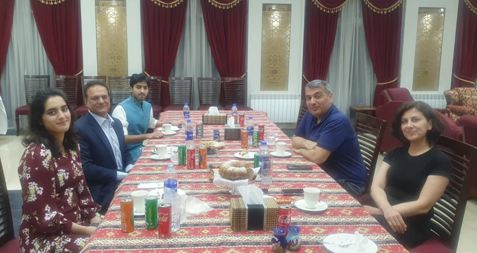
ISLAMABAD, MAR 27 /DNA/ – Ambassador of Azerbaijan Khazar Farhadov hosted iftar dinner for Dr. Abrarul Hasnain, the renowned dentist of Islamabad. The Ambassador hosted Iftar dinner at his residence.

Expanding trade ties between Pak, Ethiopia need of the hour

Expanding trade ties between Pak, Ethiopia need of the hour

Ethiopian Ambassador Jemal Baker Abdula said Ethiopian Airlines is very well received in Pakistan and now we are working to expand our operations to Islamabad and Lahore

Mehtab Pirzada

ISLAMABAD, MAR 27 /DNA/ – The founding chairman of Pakistan Association of Exhibition Industry, Khursheed Barlas, along with the delegation including Fahad Barlas, Canonier Exhibition, Aminur Rahman, Shamreez Iqbal, EC members, along with Ethiopian Ambassador to Pakistan, Jemal Baker Abdula, visited the Embassy of Ethiopia. Chairman Khurshid Barlas briefed Ethiopian Ambassador Jamal Baker Abdullah about Islamabad, Peshawar, Quetta and international events organized by Pakistan Association of Exhibition Industry.

In this regard, Pakistan Association of Exhibition Industry of Ethiopia Pakistan also wants to organize the Ethiopia Expo to increase the trade fair. Khurshid Barlas further said that we will take our trade delegation to Ethiopia and there we will meet with the industrialists and business community regarding the Expo. And will review the situation regarding the conference and expo.

This will promote the business relations between the two countries. Ambassador Jemal Baker Abdula said that Africa and engagement are important in Pakistan’s Africa policy. Ethiopian Airlines is well received in Pakistan Ethiopia is trying to connect the entire region by sharing its resources with sister countries to ensure fair and equitable development in the entire region.  Ethiopia is giving great importance to advancing bilateral relations with Pakistan.

He said that the establishment of institutional links between Pakistan and African countries is indispensable for the fruits of Pakistan’s foreign policy related to Africa. Jemal Baker Abdula said that in the last year and a half, we organized a 75-member trade delegation to visit Ethiopia and facilitated the arrival of a 50-member trade delegation from Ethiopia to Pakistan. Jemal Baker Abdula held a detailed discussion on strengthening the cooperation between the commercial institutions of the two countries. Finally, the founder chairman of Pakistan Association of Exhibition Industry Khurshid Barlas presented the shield to Ethiopian Ambassador Jemal Baker Abdula.along with  PAEI Delegation  Fahad Barlas Convener Exhibition, EC Member Shamriz Iqbal.

Stay Connected

64FansLike
60FollowersFollow

Latest Reviews

Exchange Rates

USD - United States Dollar
EUR
1.17
GBP
1.35
AUD
0.72
CAD
0.73