Home Blog Page 975

Pakistan and the Tri-Border Market Proposal

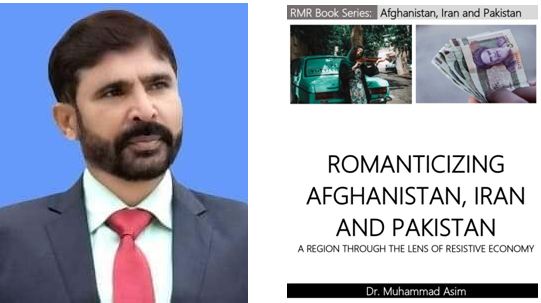
Book Review by Dr. Muhammad Akram Zaheer

Book Review by Dr. Muhammad Akram Zaheer

In a bid to encourage economic collaboration and enhance regional connectivity, a groundbreaking proposal for a jointly administered market at the tri-borderland of Afghanistan, Iran and Pakistan has emerged during 2021, heralding a new era of cooperation among the neighboring nations.

Discussed by former governments of Imran khan in Pakistan and Hassan Rouhani in Iran, interpreted by esteemed political economist Dr. Muhammad Asim, the proposal aims to capitalize on historical ties and geographical proximity to establish a platform for shared economic activities. Dr. Asim’s careful research and advocacy have garnered attention, culminating in the presentation of his findings at prestigious academic forums and publications, including the International Studies & Research Institute in Tehran.

The proposed market holds immense promise for the socio-economic development of the region, offering opportunities for trade, investment and cultural exchange. By leveraging existing agreements such as the China-Pakistan Economic Corridor (CPEC) and the Chabahar-Gwadar Memorandum of Understanding 2016, stakeholders envision a robust network that transcends borders and propels growth.

However, amidst the optimism, challenges loom large. Tensions between major powers, security concerns of Iran and bureaucratic hurdles from Pakistan pose significant obstacles to the realization of this ambitious vision. Critics raise questions about the feasibility of implementation and the need for comprehensive strategies to address underlying issues.

Nevertheless, proponents remain steadfast in their belief that the benefits of regional integration far outweigh the challenges. They emphasize the importance of pragmatic leadership in Pakistan similar to post-1979 Iran and post-US Afghanistan, must commitment to national interests and inclusive dialogue in navigating the path forward.

As the proposal gains traction on both national and international platforms, Iran and Afghanistan as the two major stakeholders have been urged to seize the opportunity to chart a course towards peace, progress and prosperity. In fact, tri-border market initiative can stand as a testament to the potential of collective action in transforming the socio-economic landscape of Afghanistan, Iran and Pakistan.

In a world characterized by geopolitical complexities and economic interdependence, the tri-border market proposal offers a beacon of hope for a brighter future in the heart of South Asia. It is a testament to the power of cooperation and the resilience of nations determined to overcome barriers and forge a path towards shared prosperity. And, this has been realized by the Iran and post-US Afghanistan but the Pakistan, which was behind the proposal of this market, has been unfortunately turned its face from such mode of action since April 2022.

Jauhar Saleem appointed as President IRS

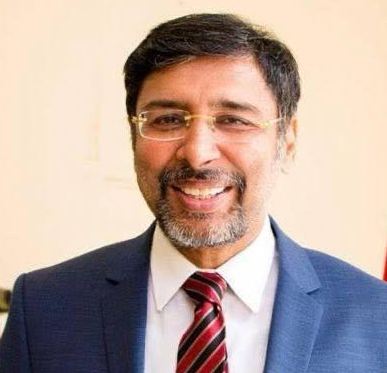
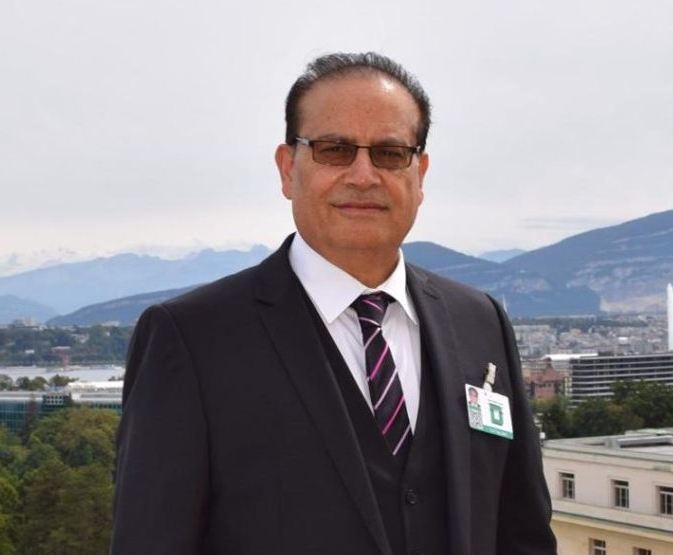
Ambassador Jauhar Saleem

ISLAMABAD, MAR 31 /DNA/ – Ambassador Jauhar Saleem has been appointed as President of the Institute of Regional Studies (IRS). Ambassador Saleem has previously worked at the highest echelons of Pakistan Foreign Service, including as Foreign Secretary, Special Secretary Additional Foreign Secretary, Head of the Foreign Service Academy and Director General for European affairs. He also served as Pakistan’s ambassador to Germany, Italy, Bosnia & Herzegovina, and Bahrain, as well as Pakistan’s Permanent Representative to Food and Agriculture Organization (FAO), International Fund for Agricultural Development (IFAD), and the World Food Program (WFP).

He was  the elected President of 38 member country International Development Law Organization (IDLO) from 2020-2022.

Jauhar Saleem studied English Literature, Government, International Relations and International Economics at Government College University, University of Pennsylvania, and Johns Hopkins. He also did a fellowship at Georgetown University and was visiting faculty member of prestigious universities in Europe and America. Ambassador Saleem has also been contributing regularly to print and electronic media as an international relations expert.

He replaces Ambassador Nadeem Riyaz in his current role.

Pakistan to become true business partner of Libya

Pakistan to become true business partner of Libya

Saifullah Ansar

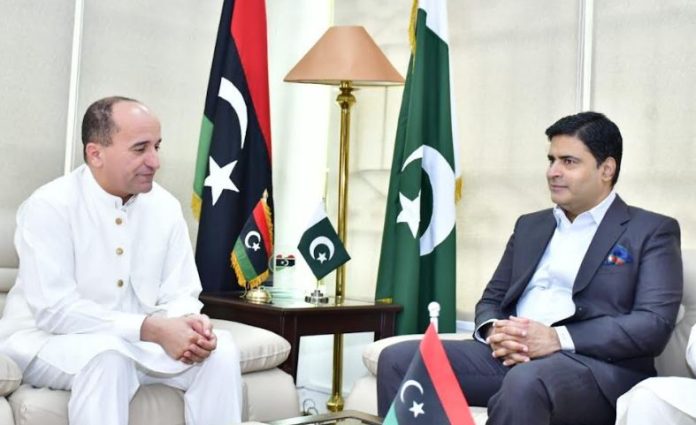
ISLAMABAD, MAR 31 /DNA/ – Libyan Ambassador to Pakistan Moamer Z.O.AbdalMotalb has said that Libya and Pakistan are bound by bonds of brotherhood, strong relations, common goals and a promising future for a diversified and stable strategic partnership.

He said that there is a strong need to join forces in joint efforts to create an investment environment to pave the way for broader partnership in all fields to alleviate the difficulties and expand actual work opportunities between the two brotherly countries.

This has been stated by the Ambassador while talking to President Islamabad Chamber of Commerce and Industry Ahsan Zafar Bakhtawari who called on him along with a delegation.

The sides discussed strengthening the distinguished bilateral relations between the State of Libya and the Islamic  Republic of Pakistan.

The envoy added that for exchange and understanding between the two countries and what economic actors and the private sector aspire to in this field especially since Pakistan possesses all the technical and cognitive capabilities that qualify it to be a true partner of the State of Libya.

The envoy also congratulated leadership of Islamabad Chamber of Commerce and Industry for its tangible engagements and aspirations to advance trade and development and explore economic goals.

On his part President Islamabad Chamber of Commerce and Industry Ahsan Zafar Bakhtawari said that relations between Pakistan and Libya always remained friendly and bonded as both the countries share similar religious identities, cultural links, particularly their Islamic heritage.

Ahsan Zafar Bakhtawari said that there exists numerous opportunities for the Pakistani workforce in Libya adding that for the strengthening of bilateral relations and promotion of business and trade with Libya restoration of direct air links was much need, upon which the Ambassador said that Libya remained under severe sanctions which are now being abolished step by step and hopefully this air link will be restored in near future.hence will go a long way in bolstering two countries connectivity.

President ICCI went on to say that ICCI on its part was passionate to play its role in exploring the investment opportunities between the two countries for the benefit of the business community and the people

On this occasion Secretary General UBG Zafar Bakhtawari,Senior Vice President ICCI Faad Waheed, and former President ICCI Ejaz Abbasi were also present.

Romania centre explores world’s most powerful laser

Romania

Magurele, Romania, March 31 (AFP/APP/DNA): “Ready? Signal sent!” In the control room of a research centre in Romania, engineer Antonia Toma activates the world’s most powerful laser, which promises revolutionary advances in everything from the health sector to space.

The laser at the centre, near the Romanian capital Bucharest, is operated by French company Thales, using Nobel prize-winning inventions.

France’s Gerard Mourou and Donna Strickland of Canada won the 2018 Nobel Physics Prize for harnessing the power of lasers for advanced precision instruments in corrective eye surgery and in industry.

“The sharp beams of laser light have given us new opportunities for deepening our knowledge about the world and shaping it,” said the Nobel Academy’s citation.

At the centre, in front of a wall of screens displaying light beams, Toma checks a series of indicators before starting the countdown.

On the other side of the glass, long rows of red and black boxes house two laser systems.

“I will not lie. From time to time, things can get a little stressful,” 29-year-old Toma told AFP during a recent on-site press visit.

  “But it’s also very joyful to work here. And we are very happy that we have results” as teams of international researchers come to the centre, she added.

– ‘Incredible odyssey’ –

Nobel prize winner Mourou confessed he was “very moved” by his “incredible odyssey” — from the United States where he spent 30 years, to bringing this project to fruition in Europe.

It was born in the 2000s out of the European Union’s Infrastructure ELI project.

“We start from a small luminous seed with very, very little energy, which will be amplified millions and millions of times,” said Mourou, 79, trying to give a sense of the “huge step taken”, the “phenomenal powers” achieved.

Scientists have always pushed to create more powerful lasers.

By the mid-1980s however, they had hit a wall, as they could not increase the power without destroying what was amplifying the beam.

That was when Mourou and his then-student Strickland invented a technique called Chirped-Pulse Amplification (CPA), which managed to boost power while keeping the intensity safe.

It works by stretching an ultra-short laser pulse in time, amplifying it, and squeezing it together again, creating the shortest and most intense laser pulses the world has ever seen.

Already it has been applied in corrective eye surgery, but it has also opened the way for scientists to continue pushing the boundaries of laser power.

“We will use these ultra-intense pulses to produce much more compact and less expensive particle accelerators” to destroy cancer cells, said Mourou.

– Age of the laser –

Other possible applications include treating nuclear waste by reducing the duration of its radioactivity, or cleaning up the debris accumulating out in space, he added.

For Mourou, just as the last century was that of the electron, the 21st century will be that of the laser.

The scale of the operation at the research centre is dizzying.

The system is capable of reaching a peak of 10 petawatts (10 to the power of 15 watts) for an ultra-short time, in the order of a femtosecond (one millionth of a billionth of a second).

It took “450 tons of equipment” — carefully installed — to get an “exceptional level of performance”, said Franck Leibreich, laser solution managing director at Thales.

The high-tech building housing the centre cost 320 million euros ($350 million), mainly financed by the EU.

Thales bills it as the largest investment ever made in scientific research in Romania.

Meanwhile, countries including France, China and the United States are already advancing their own projects to manufacture even more powerful lasers.

Seeking Justice: Azerbaijan remembers victims of ethnic hatred and intolerance

Seeking Justice: Azerbaijan remembers victims of ethnic hatred and intolerance

BAKU, MAR 31 /DNA/ – Ministry of Foreign Affairs of Azerbaijan solemnly commemorated the Day of Genocide of Azerbaijanis, honoring the memories of the innocent victims who fell victim to the massacres perpetrated by Armenians fueled by ethnic hatred and intolerance.

The genocide perpetrated against the Azerbaijani people over numerous years, tragically etched into our history, remains yet to receive its rightful political and legal assessment.

We bow our heads in deepest respect and sorrow, praying that Allah may grant peace to the souls of the genocide victims.

Calls for Ceasefire Ignored: Gaza continues to suffer under Israeli aggression

Pakistan condemns Israel’s military aggression against Rafah City in Gaza

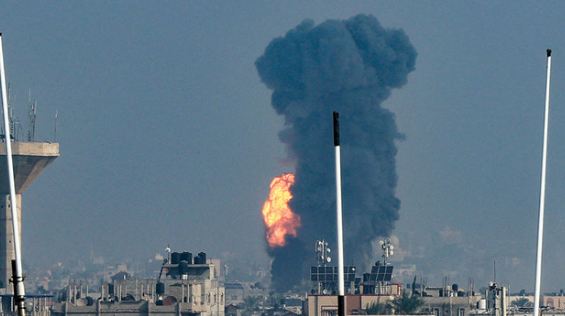
ISLAMABAD, MAR 30 /DNA/ – The Ministry of Foreign Affairs and Expatriates condemns the ongoing war of genocide against our people for the 177th day in a row, including the occupation’s deliberate deepening of murders through starvation and thirst and deprivation of treatments and medicines, and the expansion of circles of death through continuous displacement in preparation for emptying the Gaza Strip of its population, as well as the operations of dividing and fragmenting the Strip by constructing colonial streets to deepen  Control it. 

Unfortunately, the international failure continues to force Israel to comply with Security Council resolutions and the precautionary orders of the International Court of Justice calling for a ceasefire, the protection of civilians, and the introduction of relief aid in a sustainable manner, while international demands, positions and appeals unfortunately take on the nature of begging without being translated into real pressures and measures that suggest sanctions. 

A deterrent to the Israeli government because of its refusal to meet these demands.  The strange irony clearly appears in the positions of a number of countries that continue to demand that Netanyahu stop killing civilians and ensure their protection, while at the same time supplying the Israeli government with weapons, in a blatant principled and moral contradiction that reveals the low level of seriousness of those positions.

Trade through Gwadar, Basra Seaports to bring revolution in Iraq-Pakistan relations-Envoy

Gwadar

ISLAMABAD, MAR 30 /DNA/ – Iraq and Pakistan enjoy the best relationship and that by initiating  trade through Gwadar and Basra seaports the  relations  between the two countries can be heightened  to new heights. Both the sides are committed to fostering their multilateral relationship and that   Pakistani manpower  has a vast spectrum in the fields of agriculture, medical and petro-chemical in Iraq.

The  two countries also enjoy exemplary ties in the field of defence and that Iraq has recently procured a complete package of Super Mushahk from Pakistan.This has been stated by Iraq’s Ambassador to Pakistan Hamid Abbas Lafta  while talking to a delegation of ICCI which called on him under the leadership of Ahsan Zafar Bakhtawari, President Islamabad Chamber of Commerce and Industry.    

The Ambassador said that both the countries always demonstrate complete harmony at regional and international forums, adding that Iraq is a country of opportunities with a strong economy, having an annual budget of $110 billion and wants to promote ties with all the countries. He mentioned that although both Pakistan and Iraq  are bonded in strong relationships yet the trade relations are at the lowest level which needs to be enhanced and  for this purpose the Chambers of both the sides can play  a significant role.

The envoy further said that the Iraqi government has unveiled its national action plan for the investments and the Pakistani businessmen have to come forward to avail these opportunities. He further said that the doors of his embassy are open for the business community of Pakistan in particular for the ICCI and that the Embassy will feel pride in sharing Iraq’s business opportunities with the Chamber for the benefit of the business community.

On his part,  President Islamabad Chamber of Commerce and Industry Ahsan Zafar Bakhtawari said that despite having a huge potential by both the sides,  the trade volume is not upto the mark  and to overcome the problem direct connectivity between the two brotherly countries  was much needed.He said that along-with other multiple investment opportunities in different areas Pakistan also enjoys the tourism potential especially the northern areas, thereby the Iraqi side must grasp this opportunity also.He added that Islamabad Chamber of Commerce and Industry will chalk out a plan for its participation in the Trade Exhibition to be held in Najaf in the month of June  to showcase its products in Iraq to boost business ties between the two countries.

He further said that ICCI was determined to play its role in the promotion  of business relations between the two countries.On this occasion Secretary General UBG Zafar Bakhatwari expressed the hope that the Ambassador being a dynamic figure will continue to play his role in furthering the ties between the two countries and that in this connection the  bilateral visits of the highest leadership of both the sides will be a momentous one.Executive member ICCI Ch. Mohammad Ali was also  part of the delegation.

Jamil Athar appointed chairman of APNS Punjab Provincial Committee for 2024-25 term

APNS

KARACHI, MAR 30 /DNA/ – The President, Nazafreen Saigol Lakhani and the Secretary General, Sarmad Ali of the All Pakistan Newspapers Society have appointed Mr. Jamil Athar to be Chairman of the Punjab Provicial Committee (Excluding Isb, Rwp.) for the year 2024-25 and Mr. Mohsin Seyal to head the Punjab Govt. Recovery Committee of the APNS for the year 2024-25 as Chairman. The members of the committees are here-under:

Punjab Provincial Committee (Excluding Isb, Rwp.)

1          Mr. Jamil Athar                             Chairman                 Daily Tijarat

2          Mr. Mohsin Siyal                           Vice Chairman         Daily Aftab

3          Mr. Imtinan Shahid                       Member                   Sr. V. President/Daily Khabrain

4          Mr. S.M. Munir Jilani                    Member                   Joint Secretary/Daily Paigham

5          Mr. Bilal Mahmood                       Member                   Daily Nawa-i-Waqt

6          Mr. Usman Mujib Shami               Member                   Daily Pakistan

7          Mr. Mohsin Bilal                            Member                   Daily Ausaf

8          Mr. Muhammad Waqar-ud-din     Member                   ​Daily Dunya

9          Mr. Hamayon Tariq                      Member                   ​Daily Business Report, Fsd

10        Mr. Shahid Mahmood                   Member                   ​Daily Tijarati Rahbar, Fsd

11​        Ms. Saadia Shariff                        Member                   Daily Jang

12​        Mr. Humayun Gulzar                    Member                   Daily Sayadat

13​        Mr. Fahad Safdar                         Member                   Daily Sarzameen

14​        Mr. Imran Raza ​                            Member                   Daily Dawn

15        Syed Sajjad Bokhari ​                    Member ​                  Daily Abtak 

16        Mr. Awais Rauf                             Member                   Daily Jehan-e-Pakistan

17        Ch. Abdul Rehman                       Member                   Daily Nai Baat         

18        Mr. Muhammad Owais Raazi      Member                   Daily Taqat

19        Mr. Abid Abdullah                         Member                   Daily Times

20        Mr. Awais Khushnood                   Member                   Daily Sahafat

Punjab Govt. Recovery Committee

1          Mr. Mohsin Seyal                          Chairman                 Daily Aftab

2          Mr. Awais Khushnood                   Vice Chairman         Daily Sahafat

3          Mr. S.M. Munir Jilani                    Member                   Joint Secretary/Daily Paigham

4          Mr. Imtinan Shahid                       Member                   Sr. Vice President/Daily Khabrain

5          Mr. Usman Mujib Shami               Member                   Daily Pakistan

6          Mr. Irfan Ather                              Member                   Daily Tijarat

7          Mr. Imran Raza                             Member                   Daily Dawn

8          Mr. Noorullah                                Member                   Daily Jang

PM Shehbaz offers condolences to Russia over Crocus City Hall Attack

PM Shehbaz offers condolences to Russia over Crocus City Hall Attack

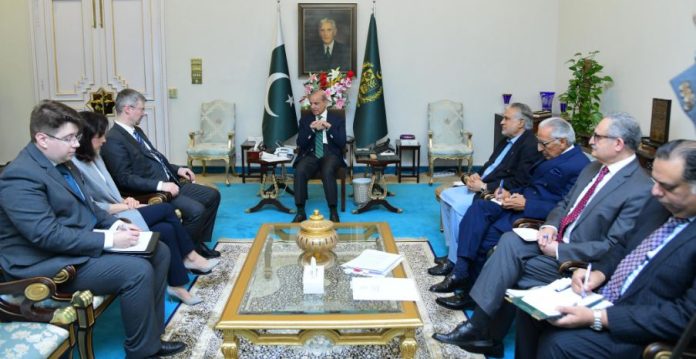
ISLAMABAD, MAR 30 /DNA/ – Amb. Albert P. Khorev, Ambassador of the Russian Federation called on Prime Minister Muhammad Shehbaz Sharif on 29 March 2024.

The Prime Minister expressed deep condolences on the loss of precious lives in the Crocus City Hall attack outside Moscow last week and said Pakistan stood in solidarity with Russia at this tragic hour.

The Prime Minister also thanked President Vladimir Putin for the congratulatory message sent to him on his re-election.

While noting the historic cordial ties between both countries, the Prime Minister said that Pakistan wanted to enhance bilateral cooperation with Russia in a number of areas particularly in energy, trade and investment. He stressed the need for early convening of the 9th session of the Inter-governmental Commission (IGC), due to be hosted by Russia later this year.

The Prime Minister also urged the Russian side to send a delegation to Pakistan to hold discussions with their counterparts to identify ways to enhance the existing level of trade and investment ties between the two countries.

While fondly recalling their meeting on the sidelines of the SCO Summit in Samarkand in 2022, he reiterated his invitation to President Putin to undertake an official visit to Pakistan at his earliest convenience.

The Ambassador assured the Prime Minister that Russia wanted to build stronger ties with Pakistan. He said that, in addition to energy, trade and investment, Russia was also keen to enhance cooperation in education and culture.

Both countries are also actively involved in SCO.

“US President’s Letter: A New Chapter in US-Pakistan Ties”

Qamar Bashir

By: Qamar Bashir

The HOB interviewer Jonathan Swan in June 2021 had questioned the former Prime Minister of Pakistan, “Would you allow the American government to have the CIA here in Pakistan to conduct cross-border counterterrorism missions against Al-Qaeda, ISIS or the Taliban?”. The answer was; there is no way we are going to allow any bases, any sort of action from Pakistani territory into Afghanistan. Absolutely not,”. This statement was projected by the PTI social media’s well oiled machine as an act of great bravery and  gallantry and was spinned inside and around the world as an evidence of Pakistan’s defiance of USA dictates and US bullying.

The entire leadership of the PTI capitalized on this statement, making it a rallying point in public meetings, media interviews, and press conferences. They sought to garner political mileage by invoking patriotic sentiments among the people of Pakistan. However, their bold defiance of the United States, the world’s sole superpower, proved to be a costly miscalculation. The repercussions soon became evident as the former Prime Minister’s government, already struggling, faced further challenges. The decision by the establishment to withdraw crucial support compounded the political instability, ultimately leading to the downfall of the PTI government.

Naturally, Imran Khan’s defiant statement was viewed by US policymakers as a challenge to their strategic interests in the region. They interpreted it as a signal of Pakistan asserting sovereignty and independence in its foreign policy decisions, especially concerning military cooperation with the United States and US’s counterterrorism interests in the region. Furthermore, it was perceived as potentially indicative of a shift in Pakistan’s alignment or a reevaluation of its relationship with the United States, a shift having significant implications for US security interests in South Asia and broader regional stability and prompted them to reassess their approach to engaging with Pakistan and managing bilateral relations.

The anger of the US president over the Prime Minister’s undiplomatic reply, “Absolutely not,” became apparent when, in August 2021, President Joe Biden made phone calls to nearly every country in the world but notably omitted contacting Imran Khan. This action was widely interpreted as an indication of disapproval of Khan’s stance on the Afghan policy by US policymakers. The decision by President Biden to exclude a phone call to former Prime Minister Imran Khan could have been perceived differently by US and Pakistani policymakers.

From the perspective of US policymakers, the decision to knowingly,  ignoring Imran Khan was a reflection of shifting priorities or diplomatic considerations and was a deliberate signal of their desire to reassess and recalibrate the US-Pakistan relationship based on evolving strategic interests and objectives.

The opposition in Pakistan of that time interpreted it  as a snub and a sign of waning importance in the eyes of the US fuelling perceptions of strained bilateral relations or a downgrading of Pakistan’s significance in US foreign policy priorities.

The culmination of US anger was manifested in the form of a secret communication, known as Cipher, between our Ambassador Asad Majeed and US Assistant Secretary of State, Donald Lu. Allegedly, this communication conveyed a clear message to Pakistan’s influential establishment to remove Imran Khan from power and install a compliant setup in the future government. This directive coincided with the IMF’s refusal to enter into a Standby Agreement, exacerbating fears of an impending default in Pakistan’s economy. The prospect of default sent waves of concern throughout the country’s powerful circles.

Allegedly, in an effort to avert imminent default and regain favor with the US, the establishment expedited a regime change operation. Initially, crucial support that was instrumental in maintaining Imran Khan’s government was withdrawn. Subsequently, Imran Khan was not only ousted from power but also faced over 200 legal cases and imprisonment. His marriage was deemed illegal, and his wife was also imprisoned. Imran Khan himself was permanently disqualified from holding office. The entire leadership of the PTI was either incarcerated or went into hiding. The PTI’s symbol and name were seized, and the party’s political capital was eroded. Allegedly, misguided PTI advocates, assuming control after the party lost its leadership, decided to merge with an unknown party, Sunni Itehad, thereby losing its brand identity. Despite initial electoral victories, the PTI transitioned from a winning majority, as per Form 45, to a defeated party as per form 47.

With this turn of events, the US appeared to have accomplished its primary objective: removing the independent-minded Imran Khan from power and punishing him for his defiance and confrontations with the US. Following the attainment of these goals, the IMF swiftly approved a Standby Agreement, disbursed over $ 3 billion with the last installment approved in January 2024, and signaled its readiness to engage Pakistan in another IMF program lasting at least three years.

The reward for regime change became apparent during Donald Lu’s testimony before a subcommittee of the US House Committee on Foreign Affairs on March 20, 2024. In his remarks, Lu indirectly validated the legitimacy of the current government highlighting the United States’ commitment to supporting the newly installed government of Shahbaz Sharif in Pakistan, even in cases where certain policy decisions may appear contrary to US interests. However, the biggest reward was yet to come.

In an unprecedented and remarkable move, the President of the United States, the most powerful nation on the face of the earth, extended a letter to Shahbaz Sharif today (29 March, 2024), providing much-needed legitimacy to his government. In this letter, the President promised an “enduring partnership” between the two countries, deeming it critical for ensuring the security of their respective populations, as well as people around the world. He pledged that the United States would continue to stand with Pakistan in addressing the most pressing global and regional challenges of our time. Furthermore, he expressed a shared vision for a future characterized by greater health security, economic growth, and access to education for all. Additionally, the President underscored the importance of strengthening climate resilience, supporting sustainable agriculture and water management, advancing Pakistan’s recovery from the devastating floods of 2022, and protecting human rights.

Receiving a letter from the President of the United States after many years signifies a significant shift in diplomatic relations and underscores the importance of the relationship between the two countries. It indicates a renewed commitment to bilateral cooperation and partnership, as well as a recognition of Pakistan’s role in addressing global and regional challenges.

The letter symbolizes the United States’ acknowledgment of Pakistan’s government as legitimate and establishes a foundation for ongoing dialogue and collaboration on key issues of mutual interest. Additionally, it demonstrates a willingness on the part of the United States to engage constructively with Pakistan and work together towards common goals, including promoting security, economic growth, education, climate resilience, and human rights. Overall, receiving such a letter signifies a positive development in diplomatic ties and opens avenues for enhanced cooperation and engagement between the two nations.

However, a key consideration remains the extent to which Pakistan can align with the United States in its efforts to counter local, regional, and global terrorism. The epicenter of these challenges lies in Pakistan’s most challenging neighborhood, including India, Iran, and Afghanistan. Therefore, while the letter signifies potential opportunities for cooperation, navigating the complexities of regional dynamics and security concerns will remain paramount for Pakistan’s foreign policy decisions.

By: Qamar Bashir

Press Secretary to the President (Rtd)

Former Press Minister at Embassy of Pakistan to France

Former MD, SRBC

Stay Connected

64FansLike
60FollowersFollow

Latest Reviews

Exchange Rates

USD - United States Dollar
EUR
1.17
GBP
1.35
AUD
0.72
CAD
0.73