Home Blog Page 969

Policy to block Facebook in country created: Najibullah Haqqani

Policy to block Facebook in country created: Najibullah Haqqani

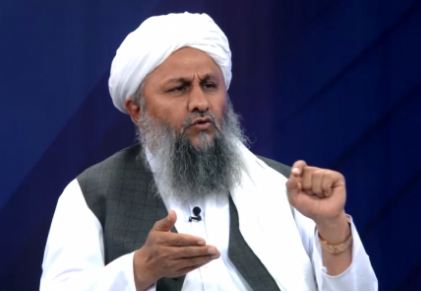
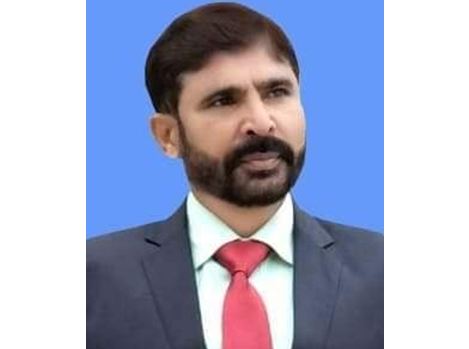
KABUL, APR 6: Najibullah Haqqani, the acting Minister of Telecommunications and Information Technology, in an exclusive interview with TOLOnews, announced the completion of a policy by his ministry to restrict or block Facebook in the country.

Haqqani stated that the country’s youth currently need education and should not be distracted by social networks.

The acting Minister of Telecommunications and Information Technology said: “Our youth are in a situation where they are academically weak and the majority of them are illiterate. Wasting their time and spending money on these things is to the benefit of the company and to the detriment of the nation. Hence, a policy has been created to restrict and block Facebook.”

Najibullah Haqqani also said that telecommunications networks during the previous government in the country paid the Islamic Emirate for the security of their sites. He stressed that in the previous system, they had the most governance over the geography of Afghanistan.

The acting Minister of Telecommunications and Information Technology added that efforts have been made to prevent cybercrimes in the country and a laboratory is also to be established in this area.

Najibullah Haqqani added, “We were providing security in those areas and we had facilitated the telecommunications networks to provide services. I don’t know what the previous system was getting out of their work.”

This interim government official also mentioned in the interview that they currently have 241 active systems in the tripartite security and education institutions and plan to create new systems for several other ministries in the near future.

He added: “A few months ago, our teams started working to survey all the ministry systems, collect their specifications, and then we will be able to connect all systems together.”

The acting Minister of Telecommunications and Information Technology emphasized that no one has the right to violate individuals’ privacy and only security institutions are permitted to access individuals’ locations for the purpose of preventing anti-security events and tracking criminals.

“Extrajudicial Killing: Responding to India’s Actions”

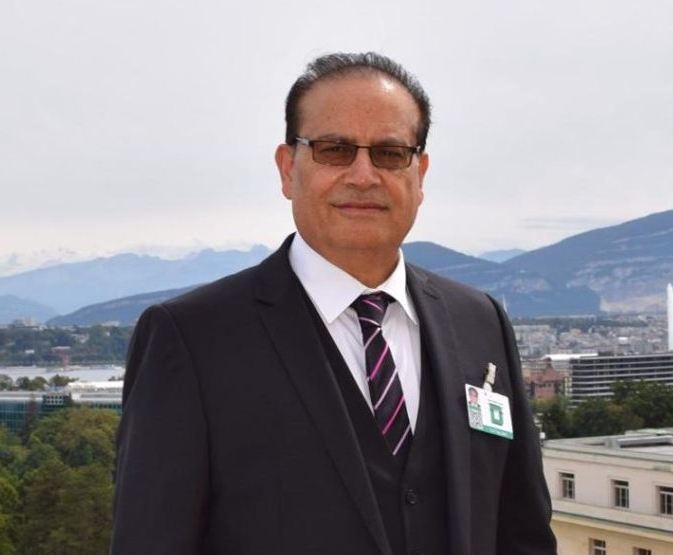
Qamar Bashir

By: Qamar Bashir

In January 2024, Pakistan’s Foreign Secretary made a significant revelation, alleging that India had orchestrated at least 12 extrajudicial killings in Pakistan linked to the Kashmir cause and the Khalistan movement. This disclosure marked the third high-profile accusation against India following similar allegations involving Canada and the United States. By engaging in these unlawful acts, India has aligned itself with countries like the USA, Russia, and Israel, known for eliminating adversaries both domestically and internationally with impunity.

The statement made by Pakistan’s Foreign Secretary made in January this year did not gain significant traction and was dismissed within and outside the country as routine accusations exchanged between the two countries for political point-scoring, lacking substantial evidence.

The Foreign Secretary’s statement was vindicated when similar allegations were corroborated by an investigative report by “The Guardian,” on April 4, 2024 disclosing that nearly 20 killings in Pakistan since 2020 were attributed to India. The Guardian report was authenticated when in a revealing interview with CNN, Indian Defense Minister Rajnath Singh admitted to carrying out extrajudicial killings and warned of similar actions in Pakistan if terrorists sought refuge there after committing acts of terrorism. While aimed at Pakistan, this admission hinted at India’s readiness to extend such operations across international borders, including in the territories of influential nations like the USA and Canada.”

The narrative of the Indian espionage agency was compelling. This is how the narrative unfolds. India has successfully managed the rebellion and insurgency in Jammu and Kashmir and has, for the most part, tightened its grip over Sikh separatists inside the nation. However, neutralizing their handlers—who were mostly based in Pakistan, the US, and Canada—was a more pressing issue.  To resolve the issue, the Indian government authorized RAW to conduct covert operations to kill firebrand Sikh and Kashmiri leaders and handlers, in the US, Canada, and Pakistan motivated by the KGB, Mossad, and CIA, which are notorious for eliminating its enemies abroad.

The Raw launched strikes in three distinct nations as part of Compliance. It eliminated Hardeep Singh Nijjar, a well-known Sikh activist who was shot and killed in Vancouver, Canada, in September of 2023. On 30 Nov, 2023,  RAW enlisted the help of a hitman in New York to murder Gurpatwant Singh Pannun, another Sikh activist, but before the killer had accomplished the task, the US security forces frustrated the attack.

The Raw was particularly careful while targeting Pakistan. It First created sleeper cells in the UAE, later established a system to finance the killing spree through Dubai, Nepal, and Mauritius. Later, it cultivated local criminals, Afghan illegal aliens, and Jihadis to carry out the assassinations of individuals primarily connected to Lashkar-e-Taiba and Jaish-e-Mohammed, allegedly linked with masterminding high profile terrorist attacks inside India.

The narrative, while seemingly logical and compelling, ultimately failed to achieve its objectives in any of the three cases. Canada and the United States reacted assertively, issuing stern warnings to India and demanding accountability for the masterminds, financiers, and RAW operatives involved in the killings. Canada went a step further by expelling the Indian Ambassador and downgrading diplomatic and economic ties. This action could potentially jeopardize Canadian Investment of $3,754.05 Mn and Bilateral trade of $9.9 Bn in 2022 with India. Similarly, strained relations with the United States  will impact Indian exports of $118.8 billion and US investments totaling $63.03 billion.

The Guardian report garnered significant attention in Pakistani media, becoming the main topic of prime-time talk shows, however, the Pakistani government did not provide its official response until the next day, when the Foreign Office spokesperson issued a detailed press release beginning with customary rhetoric, but later offered specific details about two assassinations: that of Shahid Latif and Mohammad Riaz.

In both cases, a RAW agent stationed abroad recruited a professional killer in Pakistan, who then assembled a team of target killers responsible for targeted assassination. In both the cases, assassins were apprehended, leading to the disclosure of the entire plan to Pakistani authorities.

The Press Release primarily drafted for consumption of the media ended with a safe, calibrated and measured customary response, where it condemned India, charged it for breaking the United Nation Charter, violating the sovereignty and integrity of Pakistan and international diplomatic norms, and calling on the international community for collective action to hold India accountable. However,  it fell short of outlining Pakistan’s concrete counteractions.

While behind closed doors, the government must be thinking of adopting a firm and strategic approach, drawing inspiration from the responses of Canada and the United States to similar incidents and giving a befitting response to India.

Though the diplomatic relations between India and Pakistan have already been downgraded, however, similar to Canada’s expulsion of the Indian Ambassador and reduction of diplomatic ties, Pakistan may be considering diplomatic measures to register its protest.

Pakistan-India economic ties have already been downgraded, and this development has impeded any possible efforts through formal or informal channels to reconnect any meaningful trade, investment and business ties.

Pakistan must be actively engaging with the international community, particularly through the United Nations and other multilateral forums, to raise awareness and seek support for holding India accountable for its actions. This could involve filing formal complaints or seeking resolutions condemning India’s violation of Pakistan’s sovereignty.

The Pakistani ISI (Inter-Services Intelligence) on its part must be conducting thorough investigations to uncover any other instances of foreign interference or covert operations on Pakistani soil. This could involve strengthening counterintelligence measures and monitoring suspicious activities more closely and developing appropriate, proportional and effective countermeasures as deterrent to any such attack in future.

While maintaining restraint and prioritizing de-escalation, the Pakistani armed forces must have already increased vigilance and readiness to defend the country’s sovereignty against potential threats or provocations. This may have included enhancing border security, and maintaining preparedness to respond effectively to any hostile actions, similar to the responses against past airspace violations by India, Iran, and Afghanistan.

Pakistan’s response should be calculated, strategic, and focused on exposing India’s misconduct on the international stage while ensuring the protection of Pakistan’s national interests and security besides increasing collaboration with allied nations and multiplying diplomatic efforts aimed at garnering support and achieving accountability for India’s extrajudicial actions.

By: Qamar Bashir

Press Secretary to the President (Rtd)

Former Press Minister at Embassy of Pakistan to France

Former MD, SRBC

PTI hits out at Maryam for absurd remarks against KP govt, PTI

PTI

DNA

ISLAMABAD, APR 6: Pakistan Tehreek-e-Insaf (PTI) leaders fired salvos at the fake Chief Minister Punjab for her preposterous remarks labeling Khyber-Pakhtunkhwa (KP) as a corridor of terrorists and smugglers, adding that the pirates of Jati Umra were actually responsible for resurgence of terrorism because they ganged up with other crooked and criminals to oust PTI government to create chaotic situation in the country.

Speaking at a press conference along with PTI Secretary Information Punjab Shaukat Mahmood Basra, PTI Central Information Secretary Raoof Hasan blasted Maryam Nawaz for blaming KP government and PTI for political instability and calling the province a corridor of militants and smugglers, which was the most absurd things.

Raoof stated that the Al-Sharifain were known for their enmity with KP, which was evident from Nawaz’s statement who used to called people as fool for inflicting him and his party repeated drubbing.

Similarly, he recalled that Shehbaz Sharif even once addressed Taliban to spare Punjab, which meant that they could carry out terrorist activities elsewhere in the country.

PTI CIS also lambasted Maryam for accusing KP of transporting lethal strings to Punjab.

Raoof said that Al-Sharifains and their facilitators were responsible for the resurgence of the terrorism in the country because PML-N, PPP, MQM and others conspired to topple a stable PTI government to create a political vacuum in the country, which was filled by terrorists.

He recalled that terrorism was not a new phenomenon as it was issue date back when his father Nawaz was part of the government with the military that imported terrorism in Pakistan and despite lot of efforts, the country was yet to rid this menace.

Contrary to it, he recalled that PTI adopted a quite positive attitude towards the center, as recently KP Chief Minister Ali Amin Gandapur visited Islamabad to meet Prime Minister Shehbaz Shahrif and then Interior Minister visited Peshawar, wherein he called on the Chief Minister KP due to which they faced great backlashes and severe criticism from party cadres and supporters.

However, he stated that they conveyed their rational to the workers and activists to convince them that being a federating unity, it was constitutional obligation to keep a healthy working relationship with the center despite differences. Therefore, he added that they positively endured the criticism and convinced supporters that being federating unit they couldn’t forgo their responsibilities.

However, he lamented that despite all the good gesture by the provincial government, the center miserably failed to honour its responsibilities, as it neither appointed officers sought by the KP government nor release the long-pending funds of the province due to which the province facing a financial constraints.

Moreover, Raoof lashed out at Amir Muqqam and others who were openly advocating to enforce governor rule in the KP despite the fact that enforcing governor rule against the assembly’s resolution was unconstitutional.

However, he lamented that the constitution was binned, rule of law none-existence and morality was ruined during the past two years.

Raoof recalled that the political parties blamed PTI for resurgence of terrorism forgot their past, which publically badmouthed the judges and generals, as the people did not forget Nawaz’s Gujranwala speech, adding that Sharifs were a history of attacking state institutions as Nawaz goons attacked Supreme Court and bought judges and even BHC.

He made it clear that all governments except in KP were fake and unlawful and the reason of their frustration was that the nation rejected them on February 8, as none of the members of Sharif family including Nawaz could win their seats and soon the tribunals would expose their polls fraud before the nation.

Raoof vowed that they would continue their struggle against mandate theft until reclaiming their stolen mandate in KP, Punjab, center, Sindh and even Balochistan.

He went on to say that the people would not let the certificed criminals to escape the country and they would be held responsible for the devastation caused in the country.

Speaking on the occasion, Basra said that the entire al-shariffen and theft minister were taking revenge of the humiliating crushing in the elections from the people of the country.

He said that pirates of Jati Umra known for its anti-people and anti-formers policies, adding that they were committing economic murder of the farmers and destroying their livelihoods under the guise of poor policies.

Basra sought clarification from the theft minister regarding wheat procurement and support price because the pirates of Jamti Umra known for economic exploitation of the farmers.

He said that putting all the burden of the worst economic policies of the incompetent and criminal government on the farmers was highly condemnable.

PTI leader recalled that due to very expensive fertilizers and the highest production cost, the farmer was afraid of heavy financial loss because of the government announced wheat price.

He reminded that Imran Khan’s government has adopted a commendable policy of improving the economy of the farmers who were given better reward for their labor to revive the country’s economy.

He made it clear that PTI would never allow the mandate thieves to destroy the lives of farmers and the country’s economy come what may.

Tragic Loss: Naib Subedar Khalid martyred in landslide clearance operation

Tragic Loss: Naib Subedar Khalid martyred in landslide clearance operation

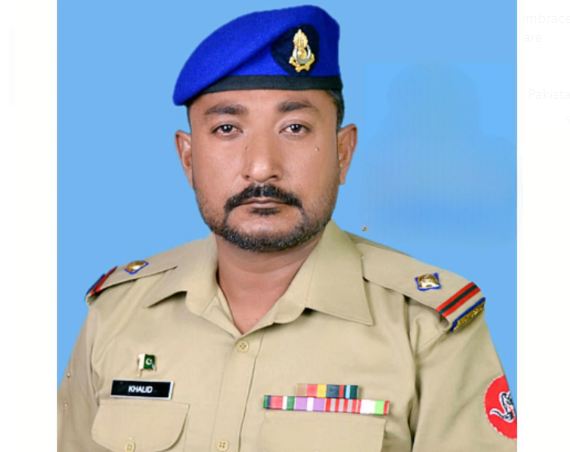
RAWALPINDI, APR 6 /DNA/ – Landslide near Gonar Farm, Chillas had blocked Karakoram Highway for all types of traffic. In order to help the affected traffic and stranded people, a detachment of Frontier Works Organisation (FWO) headed by Naib Subedar Khalid and 2 x soldiers immediately reached the site and started the clearance.

During the process of clearance, another slide was triggered that critically injured the detachment.

However, Naib Subedar Khalid succumbed to the critical injuries and embraced shahadat on 6 April. Whereas Sapper Waseem and Lance Naik Azmat are recovering from serious injuries.

The nation is grateful for their service and dedication to assist people. Pakistan Army remains committed to serve the nation against all adversities.

Speakers show grave concerns over influencing judiciary

Speakers show grave concerns over influencing judiciary

Islamabad, MAY 6 /DNA/ – The speakers at the Devcom-Pakistan ‘Public Forum’ urge the Executive to take all possible measures to stop spy agencies undue fiddling and influence on the rule of law, saying the judiciary is the last hope of justice against all forms of tyrannies in the society.   

They said the spy agencies influencing or interfering with the judiciary has raised potential dangers to the principles of justice, democracy, and the rule of law. While intelligence agencies may play a crucial role in national security and gathering intelligence to protect citizens, their involvement in judicial matters is an attempt to undermine the independence of the judiciary, one of the cornerstones of a democratic society. Any form of interference from spy agencies could compromise this independence, leading to biased judgments or decisions that may serve the interests of the Establishment rather than upholding the rule of law.

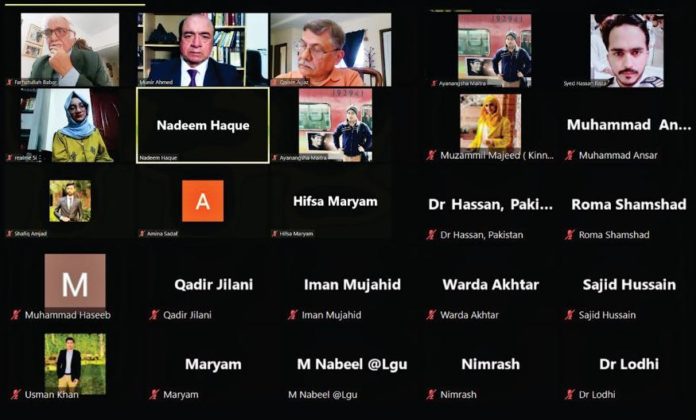
The Devcom-Pakistan weekly online public discussion was organized on Saturday with the keynote speech by former Senator Farhatullah Babar, the Board Member of the Human Rights Commission of Pakistan (HRCP). The other guest speakers included Vice Chancellor Pakistan Institute of Development Economics (PIDE) Dr. Nadeem ul Haq, Executive Director Devcom-Pakistan Munir Ahmed, development expert Qaiser Aijaz, journalist Sadia Rasheed, and social worker Amina Sadaf.   

Farhatullah Babar said that independence of judiciary is enshrined in all the three constitutions of 1956, 1962 and 1973 and enhanced by jurisprudence like the Al-Jehad Trust case the judiciary has security of tenure, adequate emoluments & pensions and exemption from accountability by the executive, elements necessary for its independence. However, judiciary independence has been undermined by repeated martial laws on the one hand and by pliant and compromised PCO judges who readily took oath of allegiance to the dictator on the other, he said.

Farhatullah Babar said the pliant and PCO judges legitimized repeated military interventions, abrogation of constitutions, murder of elected Prime Minister, dissolution of assemblies and political parties and much worse, not once but many times over. The judges-general nexus has been the greatest undermined independence of judiciary more than anything else. He said however it is reassuring that now the judges appeared to jettison the past as evident from the recent verdict in the ZAB case and the letter written by 6 IHC judges calling it “a most welcomed step in course correction”.

“The judiciary needs to be supported in this by all other institutions taking similar steps for course correction. The letter by the judges is also an opportunity to politicians, the generals, media and the people to correct their course, he said.

He said that the six judges had taken a bold step in exposing the agencies who undermined their independence. Now the political parties should make legislation defining the mandate of the intelligence agencies to end their meddling. He said that a Bill to make legislation for ISI was endorsed by the Senate sometime back. All political parties must join hands in getting that bill passed, he said.

He also called for implementation of the SC verdicts of 2012 in Asghar Khan case and 2019 in Faizabad dharna case and to hold accountable those in the agencies who manipulated public mandate and indulged in politics in violation of their oath. Not doing so will be a huge disservice to the country, he said.

Dr. Nadeem ul Haq said our system is the extension of the colonial system and we are forced to live in it. Not likely to come out of it very soon because the power mongers all around us. They want power by hook or by crook, and on the other hand politicians lack capacity to understand the legislation-making process. They also lack planning and management skills. They only want to come to power by abusing the system and that encourages the nonpolitical forces to intervene in every state institution.    

Executive Director Devcom-Pakistan Munir Ahmed said Allowing spy agencies to influence the judiciary undermines the system of checks and balances that is essential for preventing abuse of power and safeguarding individual rights. The judiciary serves as a check on the executive and legislative branches of government, and any undue influence from intelligence agencies weakens this vital function. After deteriorating Pakistan’s political system, now spy agencies are up to ruin the remaining meager trust over the judiciary, adding more to the dark-side of the Establishment.   

Munir Ahmed said the abuse of spy agencies to influence the judiciary opened the door to potential abuse of power, including politically motivated prosecutions, surveillance of political opponents, and erosion of civil liberties. Without proper oversight and accountability mechanisms, intelligence agencies may act with impunity, undermining democratic principles and the rule of law. Their involvement in judicial matters may further obscure the decision-making process and limit transparency, making it difficult for the public to trust the integrity and impartiality of the judiciary.

Qaiser Aijaz said Justice Munir’s legacy shall end now. Now the institutions have been exposed for their maneuvered decisions, illogical pressures and lack of transparency. All the civil society and general public shall stand by the independent judiciary, and say no to all the pressures. The judiciary also needs to exercise their powers rationally, and without succumbing to any pressures.     

PCB finalises coaches for Pakistan men’s team

PCB finalises coaches for Pakistan men’s team

LAHORE: Former South African batter Gary Kirsten and ex-Australian pacer Jason Gillespie have been finalised by the Pakistan Cricket Board (PCB) for the role of white-ball and red-ball head coach, respectively, for the national men’s side, Geo News reported on Saturday.

The decision will be announced after all the formalities have been completed as the PCB has advertised the posts on its website and sought applications till April 15, sources added.

Kirsten, who is currently a part of the Gujarat Titans coaching staff during the ongoing Indian Premier League (IPL) 2024, was the head coach of Indian team that lifted the ICC Cricket World Cup 2011 title.

Meanwhile, Gillespie recently resigned from his role as South Australia and Adelaide Strikers men’s head coach. In 2014 and 2015, he had previously led Yorkshire to consecutive division one titles.

The PCB also issued an advertisement on Saturday for the role of assistant coach of the Pakistan cricket team, who will provide support to the red-ball and white-ball coach. The applicants for the role must possess a minimum of Level 2 coaching accreditation and three years of experience with an international team, franchise or a domestic side.

Interested candidates may apply by latest 5pm on April 20, according to the PCB’s advertisement.

It must be noted Pakistan’s previous coaching staff, which included Mickey Arthur, Grant Bradburn and Andrew Puttick, who were transferred to the National Cricket Academy (NCA) in Lahore, left their respective positions in January this year after a change in their portfolios in November 2023.

In April 2023, Arthur was named Director of the Pakistan men’s cricket team while Bradburn was roped in as head coach. Former South Africa cricketer Puttick worked as batting coach since April 2023.

The decision was taken amicably between all the parties involved, according to PCB.

Sohail Imran

Alexei Navalny’s Journey in Russian Politics

Alexei Navalny’s Journey in Russian Politics

Dr. Muhammad Akram Zaheer

Opposition parties in Russia operate within a challenging political landscape dominated by the ruling United Russia party and President Vladimir Putin’s administration. Despite attempts at pluralism, opposition parties often face significant obstacles such as limited media access, restrictive legislation on political activity and occasional harassment of activists. Prominent opposition figures like Alexei Navalny have garnered international attention for their anti-corruption campaigns and calls for political reform but they face substantial barriers to electoral success. Efforts to enact meaningful political reforms in Russia have been met with mixed results with some limited measures introduced to enhance transparency and accountability in government. However, broader systemic changes remain elusive as the Kremlin maintains a tight grip on power and resists substantial shifts towards greater democratization. The future of opposition politics and political reforms in Russia hinges on complex dynamics between state controls societal demands for change and international pressure for respect of democratic norms.

Asa prominent Russian opposition leader and anti-corruption activist, Alexei Navalny has gained international recognition for his outspoken criticism of the Russian government under President Vladimir Putin. He born on June 4, 1976 and grew up in Russia and initially pursued a legal career. However his experiences with corruption and injustice in the country led him to become a vocal advocate for political reform. Navalny’s activism gained momentum in the late 2000s when he started blogging about corruption in Russian politics. His blog which he called “LiveJournal,” became widely popular for exposing the alleged financial misdeeds of Russian officials and oligarchs. Navalny’s sharp wit and straightforward style resonated with many Russians who were disillusioned with the systemic corruption prevalent in their country.

In 2011, Navalny played a crucial role in organizing and leading protests against alleged fraud in the parliamentary elections. He coined the term “party of crooks and thieves” to describe the ruling United Russia party and this phrase gained widespread use in public discourse. Despite facing arrests and harassment, he continued to challenge the government, using social media and online platforms to disseminate information and rally support. In 2013, he ran for the position of Moscow mayor, finishing second in the election with a strong showing that surprised many observers. However, his political ambitions were hindered by legal troubles. In 2014, he was convicted of embezzlement charges, which he and his supporters contended were politically motivated. The European Court of Human Rights later ruled that Navalny’s conviction was arbitrary and manifestly unreasonable. Navalny’s most significant challenge to the Russian government came in 2020 when he was poisoned with a nerve agent known as Novichok. After falling seriously ill, he was airlifted to Germany for medical treatment. Subsequent investigations by independent laboratories confirmed the presence of Novichok in his system, leading to widespread condemnation and accusations against the Russian government. Navalny accused Putin of orchestrating the poisoning, an allegation that the Kremlin vehemently denied. Upon recovering from the poisoning, Navalny returned to Russia in January 2021, despite facing the imminent threat of arrest. He was promptly detained upon his arrival, sparking protests across the country. In February 2021, Navalny was sentenced to two and a half years in prison for violating the terms of his probation, a decision widely criticized as politically motivated.

Due to critic of the Russian government he faced imprisonment and was sent to a prison in the Russian Arctic after being poisoned the year before. The circumstances surrounding his demise raise questions, as the cause of death was undisclosed, and the customary practice of handing over the body for burial to family members was not followed. This deviation from the norm may stem from Russian President Vladimir Putin’s desire to prevent a thorough examination of the body by doctors and to instill fear in the population. There are two potential motivations behind this unusual handling of Navalny’s death. Firstly, Putin may be avoiding scrutiny into the cause of death, and secondly, he might be attempting to intimidate and terrorize the public. While it’s conceivable that Navalny died of natural causes, the peculiar actions taken by the Russian authorities raise suspicions. The narrative takes a geopolitical turn as Russia achieves success in Ukraine, with Putin hinting at potential further conquests in the west and north, as revealed in his interview with Tucker Carlson. Publicly making such threats poses a military risk, considering the United States is viewed as Putin’s primary adversary. Putin seems to gauge a divided U.S. stance on Ukraine and a potential weariness of the ongoing conflict. Consequently, he may believe that by escalating Russia’s ruthlessness, the U.S. could be swayed to abandon its support for Ukraine.

The current week presents two strategic moves for Putin: the capture of a significant Ukrainian city and the willingness to resort to Stalinist tactics, blaming the U.S. for compelling him into such actions, thereby undermining the U.S. position further. Putin’s focus appears to be on the United States, and he aims to demonstrate his readiness for ruthless actions. This calculated move is deemed low-risk, as even if it fails, it maintains the status quo while sowing discord and destabilizing the U.S. stance. While speculative, these observations suggest that Putin has carefully considered his course of action. Despite the challenges and risks he faced, Alexei Navalny remained a symbol of opposition to the Russian regime, inspiring many Russians to question the status quo and demand political change. His activism and resilience underscored the complexities of dissent in contemporary Russia, where opposition figures often face suppression, legal challenges, and, in Navalny’s case, even physical harm.

ECC holds detailed discussions on wheat procurement targets

ECC holds detailed discussions on wheat procurement targets

News stories appearing in a section of the Press have given the misleading impression that ECC has delayed the decision on wheat procurement targets. There is no truth to these assertions.

ISLAMABAD, APR 6 /DNA/ – ECC of the Cabinet discussed the matters related to wheat procurement in its meeting held on 4th April 2024. After considering the views of the relevant Federal Ministries, the members of the ECC felt that it would be advisable to include the Provincial governments in the deliberations, as they would be responsible to implement the decisions on the ground. The meeting was therefore reconvened on 5th April and representatives of all the Provincial governments participated. They provided updates to the Committee on the latest situation relating to procurement of wheat in their respective areas and apprised it of their requirements for bank credit for the purpose. The Committee after detailed deliberations approved the procurement target proposed by the Ministry of Food Security and the Provinces and the cash credit limits required for the purpose.

The relevant departments did not suggest any enhancement or reduction in targets presented by the Ministry of Food Security, neither did the ECC approve any such change. The Government of Punjab informed the Committee that it was closely monitoring the wheat situation in the Province and had initiated procurement process. They further informed that the provincial government would continue to intervene to make sure that farmers are able to sell their produce at the support price level.

The ECC in its inaugural meeting resolved that all the matters brought before it would be deliberated in detail with a view to make informed decisions, instead of rushing through and rubber-stamping hasty measures. The Committee would also continue to ensure that all the stakeholders are onboard before arriving at decisions which have far reaching implications. The detailed discussions during the meetings of the ECC on 4th & 5th April, 2024 are reflective of this policy.

Regional Peace at Risk: Pakistan urges responsible behavior from India

Regional Peace at Risk: Pakistan urges responsible behavior from India

ISLAMABAD, APR 6 /DNA/ – Pakistan denounced the provocative remarks made by the Indian Defence Minister during a recent televised interview, in response to a media revelation regarding India’s clandestine operations within Pakistan.

On 25 January 2024, Pakistan provided irrefutable evidence, elucidating India’s campaign of extrajudicial and transnational assassinations on Pakistani soil. India’s assertion of its preparedness to extra-judiciously execute more civilians, arbitrarily pronounced as “terrorists”, inside Pakistan constitutes a clear admission of culpability. It is imperative for the international community to hold India accountable for its heinous and illegal actions.

Pakistan stands resolute in its intent and ability to safeguard its sovereignty against any act of aggression, as demonstrated by its robust response to India’s reckless incursion in February 2019, which laid bare India’s hollow claims of military superiority.

India’s ruling dispensation habitually resort to hateful rhetoric to fuel hyper-nationalistic sentiments, unapologetically exploiting such discourse for electoral gains.

Such myopic and irresponsible behaviour not only undermines regional peace but also impedes the prospects of constructive engagement in the long term.

Pakistan has always demonstrated its commitment to peace in the region. However, our desire for peace should not be misconstrued. History attests to Pakistan’s firm resolve and ability to protect and defend itself.

UAE cuts diplomatic ties with Israel

UAE cuts diplomatic ties with Israel

UAE ambassador terms current state of affairs as “the darkest day”

DUBAI, APR 5 /DNA/ – The United Arab Emirates (UAE) announced to suspend diplomatic coordination with Israel after the death of seven aid workers in Gaza by the occupation forces, reported Israeli media.

A Tel Aviv based news channel quoted official sources as saying that the Emirati foreign ministry has ‘expressed outrage’ with the Israeli ambassador Amir Hayek over the incident.

The media reported that Israel’s Foreign Minister, Israel Katz, called his Emirati counterpart, Abdullah bin Zayed, by phone to discuss the matter.

Meanwhile, Director General of the Israeli Foreign Ministry, Yaakov Blitshtein, met with Ambassador Mohammed Mahmoud Al-Khaja in an attempt to find a resolution.

Ambassador Al-Khaja described the current state of affairs as “the darkest day in the relations between the countries.”

Israeli Prime Minister Benjamin Netanyahu claimed that the killing of the workers was “unintentional.

The UAE is among the countries who signed the US-brokered Abraham Accord deals to normalise ties with Israel in September 2020.

Stay Connected

64FansLike
60FollowersFollow

Latest Reviews

Exchange Rates

USD - United States Dollar
EUR
1.17
GBP
1.35
AUD
0.72
CAD
0.73