Home Blog Page 961

CM Visits Girls High School Murree

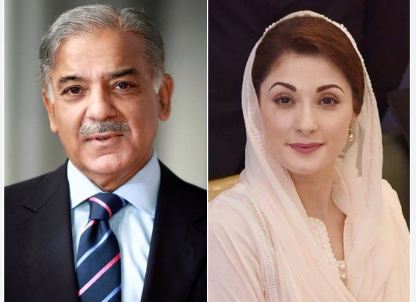
PODA greets Maryam Nawaz on her groundbreaking role and commitment to women's rights

LAHORE, APR 15 (DNA) — Teachers and students of the Government Girls High School, Murree got pleasantly surprised to see Chief Minister Maryam Nawaz Sharif, who reached there in heavy rain.

Madam Chief Ministeriii inquired about the studies and other issues from the students. She asked them,”Where do you come from? If there is any problem or need, let me know.”

Madam Chief Minister expressed her love and affection for the girls, and directed to get the best medical treatment for a girl with disability in one arm. She appreciated arrangements of the school. Chief Secretary Zahid Akhtar Zaman was also present at the occasion. — DNA

Saudi Foreign Minister receives warm welcome in Islamabad

Saudi Foreign Minister receives warm welcome in Islamabad

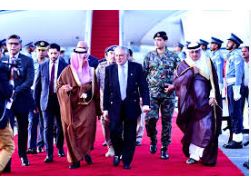
ISLAMABAD, APR 15 /DNA/ – Foreign Minister of the Kingdom of Saudi Arabia, Prince Faisal Bin Farhan Al Saud was accorded a warm red carpet welcome upon arrival in Islamabad today.

🔷 He was received by Foreign Minister Mohammad Ishaq Dar at the tarmac reflecting the closeness and brotherhood of the two countries.

🔷 The Saudi Foreign Minister was presented bouquets by children upon arrival and he inspected the static guard as the military band played.

🔷 Pakistan and KSA have long standing fraternal relations marked by religio-cultural affinities.

🔷 The people of Pakistan hold the Custodian of the Two Holy Mosques, His Majesty King Salman and HRH Crown Prince Mohammad bin Salman in the highest esteem.

🔷 This visit will lend a positive impetus to transforming bilateral cooperation into an enduring and mutually rewarding economic partnership.

FM engages US business leaders to enhance investment climate

FM engages US business leaders to enhance investment climate

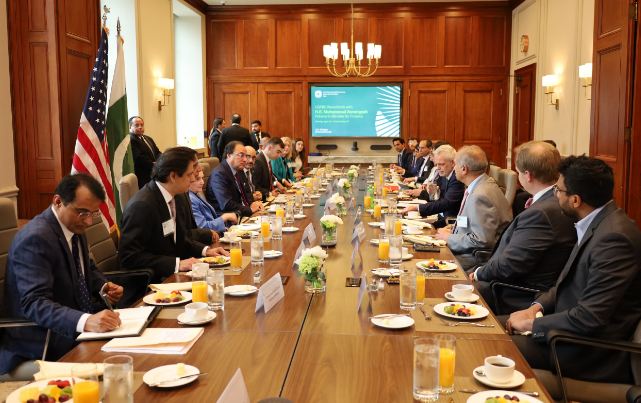
WASHINGTON DC, APR 15: /DNA/ – Federal Minister for Finance and Revenue Mr. Muhammad Aurangzeb met with a delegation from the US Pakistan Business Council (@_USPBC) today, in Washington DC to discuss the government’s commitment to improving the business climate in Pakistan.

During the meeting, the Finance Minister highlighted the government’s dedication to attracting both foreign and domestic investments in key sectors. These sectors include agriculture, IT, mines & minerals, and energy.

IMF urges Pakistan to tax non-essential items including cigarettes

Final review of SBA for $1.1 bln tranche with IMF positively concludes

ISLAMABAD, APR 15 /DNA/ – The International Monetary Fund (IMF) has recommended Pakistan to overhaul tax machinery and to tax non-essential items including cigarettes to boost revenue and improve public health.

The global lender has given a set of recommendation and taxing non-essential items including cigarettes has received appreciation by health advocates and experts.

“This is a crucial time for the government to fix economic problems and implement the IMF recommendation,” said Professor Muhammad Zaman, head of Zaman Research Center at Quaid-i-Azam University (QAU).

He said the IMF report has referred to a phenomenal study on this subject conducted by Capital Calling, an Islamabad-based think tank, which says the cigarette consumption has decaresed due to increase in prices.

He said there is a need to bring into account the cost of morbidity and mortality that smoking inflicts on the society.

“Smoking is injurious to health regardless of the cigarette brand,” he said.

He pointed to critical flaws within Pakistan’s tax system particularly the cigarette industry, which have facilitated a loss of Rs567 billion during last seven years, as revealed by the Sustainable Development Policy Institute (SDPI).

The study further exposed the influence of multinational cigarette companies on policymakers, particularly evident in the introduction of a three-tier excise duty structure in 2017, which prioritized revenue collection over public health considerations. However, subsequent analysis proved this approach to be ineffective and misleading in revenue generation.

The SDIP research highlighting global best practices and how high and middle-income countries have successfully used high cigarette taxes to reduce consumption and boost government revenues.

Pakistan, however, lacks a coherent strategy in utilizing cigarette taxation and pricing as a public health tool.

Dr. Hassan Shehzad from the International Islamic University Islamabad (IIUI) echoed sentiments from the World Health Organization (WHO), stressing the need to shield tobacco tax policies from vested interests of cigarette companies to ensure effective development, implementation, and enforcement of public health initiatives.

Chinese firm to send 5,000 aid PV power generation systems to Pakistan

China-Pak companies sign $43 mln new energy order

ISLAMABAD, APR 15 (DNA) — As many as 5,000 sets of household photovoltaic power generation systems, supported by China, have been completed and will soon be shipped to Pakistan.

This project is one of the South-South cooperation material assistance projects of China’s Ministry of Ecology and Environment to address climate change. It is contracted and implemented by Lattice Technology Co., Ltd of China Energy Conservation and Environmental Protection Group (CECEP), Gwadar Pro reported on Monday.

The 5,000 sets of household photovoltaic power generation systems included approximately 80,000 products across 9 categories. From program design to production inspection, Lattice High-tech successfully completed the project in less than 30 days.

The aid will be installed in Balochistan province, where the temperature in some parts can exceed 50 degrees Celsius. Lattice High-tech fully investigated the local climate environment and people’s electricity habits to customize the design of household photovoltaic power generation systems.

The system mainly consists of monocrystalline silicon photovoltaic modules, lithium iron phosphate batteries, solar controllers, inverters, LED lamps, power boxes, photovoltaic brackets, etc. These components are utilized to power home lighting and small household appliances by converting solar energy into electricity.

According to Lattice High-tech, in addition to production, they will also invite Pakistani technicians to China for technical and installation guidance training to enhance China-Pakistan technical exchanges and share Chinese experience.

The successful implementation of this aid project will effectively alleviate the pressure on local electricity supply, address the issue of lighting in remote areas, and enhance Pakistan’s capacity to deal with climate change. — DNA

Nationalism proved to be a toxic concept: Ovamir Anjum

Nationalism proved to be a toxic concept: Ovamir Anjum

DNA

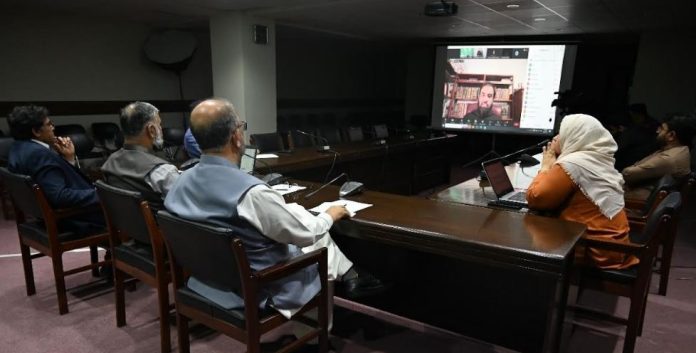
ISLAMABAD, APR 15: Amidst global turmoil and evolving dynamics, scholars and political scientists must reevaluate the concept of nationalism and its divisive implications. The current state of the world calls for a more inclusive and compassionate approach to governance based on moral principles and humane values. A reimagined caliphate as a confederation of governments would uphold universal human rights and foster solidarity among diverse communities.

This was suggested by Dr Ovamir Anjum, renowned scholar and Imam Khattab Endowed Chair of Islamic Studies at the University of Toledo, US, during a lecture on “The Crisis of the Nation-State System: Quest for a Viable Alternative,” held at the Institute of Policy Studies (IPS), Islamabad.

The session, attended by academics, scholars, and students alike, served as a platform for critical discourse and reflection, inspiring people to strive for a better future through collaboration and collective action.

Dr Anjum highlighted that nationalism, while often touted as a unifying ideology, has served as a divisive factor within societies. It can exacerbate existing social, economic, and political tensions and lead to exclusionary practices where nationalist affiliations may unleash havoc, as is evident today in Israeli aggression in Gaza and global complicity in the genocide. He further underscored that at the core of nationalism lies fabricated notions of identity, which undermine the inherent equality of all human beings.

“Nationalism is a powerful yet often bloody idea,” he stressed, cautioning against its divisive nature that fosters hatred and xenophobia by categorizing individuals as insiders and outsiders. He emphasized that the pursuit of nationalism often leads to violence and oppression.

While examples like the European Union and the USA offer models where civilization and a collective sense of affiliation to certain values overshadow other identities, the Islamic model of caliphate is as practical and productive today as it has ever been in the past. Islam serves as a unifying force for Muslims around the world, but the nationalist movements within Muslim-majority countries have sought to assert their distinct national identities, sometimes at the expense of religious unity. The scholar urged Muslims worldwide to reconsider the concept of nationalism and its far-reaching implications.

Central to Dr Anjum’s vision is reimagining the caliphate as a confederation of governments, promoting political and economic stability while upholding universal human rights. He argued that this model offers a viable alternative to the system characterized by oppression and division, envisioning a future where justice, compassion, and solidarity prevail. Moreover, in the rapidly changing world, it offers a path towards much-needed unity and resilience in the Muslim world.

The speaker underscored the importance of addressing immediate obligations while nurturing long-term aspirations. He called upon young Muslims to transcend artificial borders, engage in meaningful dialogue, and collaborate on pressing issues such as economic development, religious discourse, and education.

Drawing upon his extensive research and expertise, Dr Anjum shed light on the complexities of contemporary challenges facing the Muslim world, ranging from the allure of extremist ideologies to the pitfalls of maintaining the status quo. His insights provide valuable perspectives for navigating turbulent times and emphasize the need for unity and understanding.

The largest halal fair in Russia will open on 14 MAY

The largest halal fair in Russia will open on 14 MAY

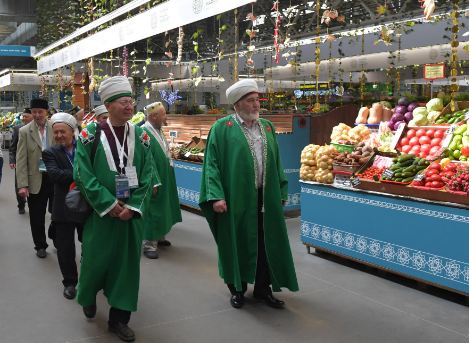
ISLAMABAD, /DNA/ – More than 40 thousand visitors and 4.5 thousand goods according to Halal standards from all over the world. On 14-19 May 2024 in Russia (Kazan, Republic of Tatarstan) will open the country’s largest trading platform for Muslims – the International Trade Fair Kazan Halal Market.

The fair will be held as part of the annual International Economic Forum “Russia – Islamic World: KazanForum”, which traditionally gathers representatives of all countries of the Organisation of Islamic Cooperation (OIC).

“In recent years, trade turnover between Russia and the OIC states has been growing. In 2021, it totalled $113.3 billion, a 43.2% increase compared to 2017,” said Hussein Ibrahim Taha, Secretary General of the OIC, in an address to the participants of KazanForum-2023. The halal market and mutual supply of products complying with the norms of Islam opens new opportunities, he believes.

“The global Halal market is growing very fast and is now estimated at $2.6 trillion. I hope the work of the Forum will contribute to the further development of the Halal industry in Russia and trade. And by 2028, the market is expected to be worth more than $11 trillion,” said the OIC Secretary General in May 2023.

The development of the industry and foreign trade is facilitated by the international fair of the best halal products within the framework of KazanForum.

At Kazan Halal Market one can buy food, clothes, accessories, cosmetics and other consumer goods with Halal certification from leading manufacturing companies of the Islamic World. In 2023, visitors could familiarise themselves with products from Iran, Afghanistan, Senegal and Turkey. It is expected that this year companies from Indonesia and Malaysia will show additional interest in the fair and in entering the growing Russian Halal market.
A total of 400 exhibitors took part in Kazan Halal Market and presented 4,500 products. The fair became a place of attraction for Halal connoisseurs and a convenient platform for family shopping. It was visited by more than 40 thousand guests, including:

  • Official delegations from Malaysia, Pakistan, Uzbekistan, Morocco, Bahrain, Chad, Senegal, Iran, Turkey, Gabon;
  • Representatives of foreign media;
  • participants of the All-Russian Forum of Tatar religious figures;
  • young diplomats of the OIC countries;
  • deputies of the State Duma of the Russian Federation;
  • members of regional governments of the Russian Federation.
    In 2024, the Kazan Halal Market International Trade Fair will be held on 14-19 May in the Kazan Agro-Industrial Park. Participants will be able to present their products on the trade area of 5 thousand square metres. Participation fee – 210 USD for 1 equipped trading place with a showcase. Specialisation of the fair: food products, wholesale and retail trade, consumer goods.

PM for maximising renewable energy utilization, improving transmission system

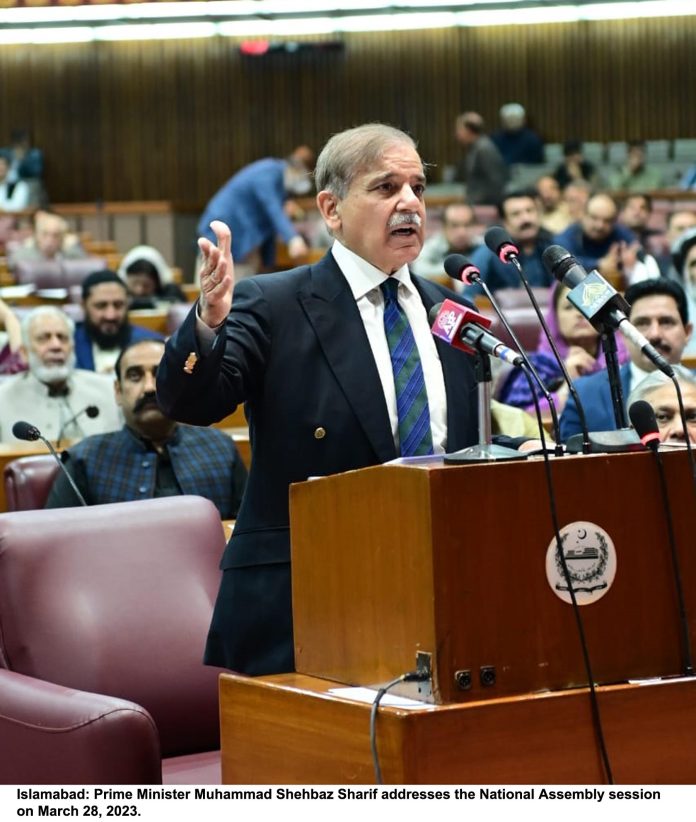
Islamabad: Prime Minister Muhammad Shehbaz Sharif addresses the National Assembly session on March 28, 2023.

ISLAMABAD, Apr 15 (APP/DNA): Prime Minister Muhammad Shehbaz Sharif on Monday, emphasising the improvement of power transmission network, directed the Ministry of Energy to maximize the utilization of renewable energy resources to reduce the country’s oil import bill by billions of dollars.

“Ultimately, we have to move to renewable energy. The oil import worth billions dollars can be controlled by using alternative resources like solar, wind and hydel. Make cold calculations and I believe, you will be the winner in long term,” he remarked addressing a meeting, he chaired to review the power sector’s performance.

The prime minister said utilizing renewable energy resources would also ensure riddance from the crude oil tanker mafia acting as parasites and eating up the national funds.

He pointed out that the country currently imports oil worth $27 billion to meet its power and transportation requirements, and the figure could be significantly reduced by transitioning to alternative energy sources.

Discussing the ongoing drive against power theft, he lauded the performance of the Punjab government and expressed the hope that the other provinces would also follow the suit to overcome the challenge.

Prime Minister Shehbaz Sharif said that strengthening the country’s power transmission system required utmost efforts and investment, otherwise the power production and investments in the sector would go down the drain, unless the flaws in the transmission network were removed.

He asked the Ministry of Energy to engage world-class consultants to suggest the government ways forward to boost the country’s power transmission system.

Additionally, the prime minister mentioned the heavy rains affecting parts of the country and expressed condolences for the lost lives.

Prime Minister Shehbaz told the participants that he had asked the Chairman of the National Disaster Management Authority (NDMA) to coordinate with the provinces and Provincial Disaster Management Authorities to dispatch relief items to the affected areas.

Iran’s Operation, “the True Promise”…

Qamar Bashir

By: Qamar Bashir

Israel, the US, UK, and France mobilized their diplomatic, military, and reconnaissance assets in response to potential retaliation from Iran following Israel’s direct attack on the Iranian Embassy in Damascus, resulting in its destruction and the deaths of seven high-ranking officials from Iran’s Revolutionary Guards. Sensing a retaliatory threat, prompted Joe Biden and other world leaders to issue public warnings and threats to Iran, urging it to refrain from any retaliatory actions. Biden emphasized the ironclad alliance between the US and Israel, warning Iran against attacking Israel and pledging full support and defense. To demonstrate seriousness, the US redirected its naval assets towards the Middle Eastern theater.

But Iran had had enough and its resolve to punish Israel for orchestrating several attacks on Iran which left the entire Iranian nation wounded, bruised and angered, brushed aside all the warnings and intimidations and both spiritual and formal leadership in Iran vowed revenge, declaring that the time had come to punish Israel for his acts of aggressions.

Iran mobilized its strategic military assets, preparing to turn threats into action. Both civilian and military leaderships named the retaliatory strikes “Operation True Promise.” Iran’s military and defense experts convened to strategize and outline the objectives, scope, impact, and expected outcomes of Operation True Promise.

On the other side of the isle, the combined reconnaissance and intelligence assets of Israel, the US, UK, France, and their allied countries in the Middle East—including Jordan, Saudi Arabia, the UAE, and other nations hosting US military assets—were mobilized. Military strategists collaborated to accurately assess the scope and scale of the potential retaliatory attack. Air, land, and sea assets were placed on high alert and fully prepared to neutralize any impending threats.

Iran’s military strategists knew very well the formidable challenge its operation was faced with from the combined airpower of Israel and its allies including US, UK and France in particular. Acknowledging their collective destructive and defensive power and their overwhelming and vastly superior capabilities, the operation “True Promise” needed to be carefully orchestrated, and the launching of varied aerial assets needed to be timed carefully to challenge the air superiority of Israel and its allies to achieve the intended objectives.

Iran first launched 170 suicide drone, knowing very well that they being slow moving will most likey will be intercepted and destroyed even before reaching to their intended targets. As anticipated, as soon as the drones entered into the middle east airspace, they were intercepted by the pilots of Israel, US, UK, who, sitting in their sophisticated fighter jets, with precise weapons systems relished bringing these drones to the ground. As a Result, hardly any drone successfully penetrated the Israel air defense.

While successfully engaging them with drones, Iran put to test their ground to air and sea to air defense system. It fired additional 120 ballistic missiles, and 30 cruise missiles simultaneously launched from the militias in Iraq, the Houthis in Yemen, and Hezbollah in Lebanon. As expected and as claimed by the Israeli defense forces commander, more than 99% of these threats were neutralized, but admitted that the Iranian attack was “unprecedented” and was thwarted by unprecedented accuracy. It also admitted that Nevatim air force base in Israel’s southern Negev desert was hit, one 7 year old girl died and 12 people in southern Israel received hospital treatment.

Iran asserted that it had achieved all of its set objectives. First and foremost, Iran aimed to demonstrate to Israel and its allies that there exists at least one country willing to challenge their perceived invincibility and pose a credible threat to their security. The second objective focused on ensuring there were no civilian casualties on the Israeli side during the retaliatory strikes.

This strategic choice aimed to position Iran on higher moral ground, even amidst conflict, by demonstrating a commitment to minimizing harm to civilians. Additionally, by avoiding civilian casualties, Iran aimed to differentiate itself from Israel, which has been criticized for civilian casualties during ongoing operations in Gaza since October 2023. Iran’s this strategy had successfully prevented Israel from leveraging such casualties to justify its actions or sway international public opinion against Iran.

The third objective was to limit the extent of damage inflicted during the retaliatory strikes to prevent providing Israel and its allies with justification or leverage for a counter-attack on Iranian assets and thereby has successfully minimized the risk of further escalation or retaliation, thus safeguarding its own assets and strategic interests.

Israel was quick to exploit the attack, both internal and internationally. Internally, it claimed that the Iran attack was squarely defeated, and now Israel reserves the right to give a befitting and decisive response to Iran’s direct attack on Israel. The Israeli War cabinet hurriedly convened its meeting to strategize the response.

Internationally Israel requisite the emergency meeting of The United Nations Security Council in the afternoon of 14 April describing the Iranian attack as a “clear violation” of the UN Charter and international law, accused Iran of stoking regional instability, demanded unequivocally condemnation of Iran and designate the Islamic Revolutionary Guard Corps (IRSC) as a terrorist organization.

Iran defended its attack by saying that the operation was in exercise of its right to self-defense under Article 51 of the UN Charter in response to Israel’s 1 April attack against an Iranian facility in Damascus. It declared that the matter between Iran and Israel has been concluded, but added that if Israel were to make “another mistake”, Tehran’s response would “be considerably more severe”. Iran also warned the US to remain uninvolved in the conflict.

The US also jumped in to exploit the attack and hurriedly convened the meeting of G-7 countries (Canada, France, Germany, Italy, Japan, the United Kingdom, and the United States, as well as the European Union) to coordinate a rebuke to Iran for its unprecedented aerial attack on Israel, and to prevent a wider regional escalation. The joint statement unequivocally condemned in the strongest terms” the direct attack by Iran and reaffirmed their commitment towards Israel’s security.

The Iranian attack generated a diverse reaction in the diverse world public. According to Press TV, Iran’s official TV Channel, it was the first night since October 2023, when the entire population of Gaza did not sleep, not because of the fear of Israel’s air bombardment, but to celebrate the Iranian attack on Israel. Yemen, Syria and Hezbollah issued public statements declaring the Iranian attack as legitimate and an act of self defense. The Iranian public came out on the streets with joy and congratulated the Iranians leadership for conducting a successful operation.

Highly controlled Iranian attack has minimized the escalation of the hostility and war to spread to the region of the world. Iran has declared a ceasefire by declaring the matter between Israel and Iran as concluded. With no civilian or military casualties, there would be much less public pressure on the Israeli government to take revenge. Israel has taken the matter to the UN showing its intention to resolve the issue on the platform of the United Nations. The G-7 leaders in their joint statement have shown no appetite for escalating the war. Israel currently has too much on his plate, dealing with Hamas, hostage release, planning and preparing for ground attack on Rafah, dealing with Hezbollah, Iraqi Militia, hostile Syria and Houthis in Yemen. Therefore most likely there may be a big pause before Israel and its allies consider direct attack on Iran.

By: Qamar Bashir
Press Secretary to the President (Rtd)
Former Press Minister at Embassy of Pakistan to France
Former MD, SRBC

CM Maryam Nawaz Sharif pays tribute to leadership of PM Shehbaz

Maryam Nawaz

DNA

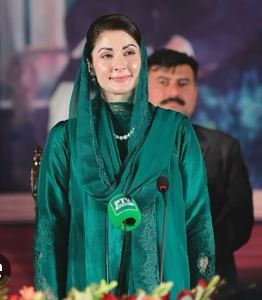
Lahore, 14 Apr: Chief Minister Punjab Maryam Nawaz Sharif while paying tribute to the Prime Minister Muhammad Shehbaz Sharif on Pakistan’s economic indicators getting improved stated that under the vibrant leadership of Quaid Muhammad Nawaz Sharif, Pakistan’s economy has once again started treading on the path of progress. The fruits of economic progress during the tenure of PML-N government are prominently coming to surface.  The Chief Minister highlighted, ”The common man would be provided relief with the reduction in electricity rates and price- hike. Big international financial institutions including IMF, ADBP highly acknowledge Pakistan’s economic policies.”
She stated, ”Owing to PM Shehbaz Sharif’s economic policies, the investors confidence is enhancing. For the first time in the history, 100 index Stock Exchange has crossed its 70 thousand psychological barrier.”  Madam Chief Minister said,” Good news are awaiting Pakistanis and their is a strong likelihood of reduction in the inflation rate up to 12.2 percent next year. For the first time, rupees 500 reduction occurred in the price of 20 kg flour bag and their is a further possibility of rupees 300 reduction in the flour price according to market indicators. The Economic & Social Survey Of Asia & Pacific Region have termed Pakistan’s economic indicators as excellent. In the UN Report, Pakistan’s economic progress moving forward briskly in the next fiscal year has been predicted. The growth rate would increase from 2% to 2.3%  during the current and next financial year in Pakistan.”
Madam Chief Minister acknowledged that Pakistan has successfully completed its current economic program with the IMF and its economy is showing satisfactory performance along with increase in its foreign reserves. She stated that Pakistan’s economy would further improve with the launching of new economic program with the IMF. The Pakistani nation reposes its complete trust in the leadership of PM Muhammad Shehbaz Sharif, she concluded.

Stay Connected

64FansLike
60FollowersFollow

Latest Reviews

Exchange Rates

USD - United States Dollar
EUR
1.17
GBP
1.35
AUD
0.72
CAD
0.73