Home Blog Page 955

Eid Joy Overflows at Malaysian High Commission: A showcase of friendship and cooperation

Eid Joy Overflows at Malaysian High Commission: A showcase of friendship and cooperation

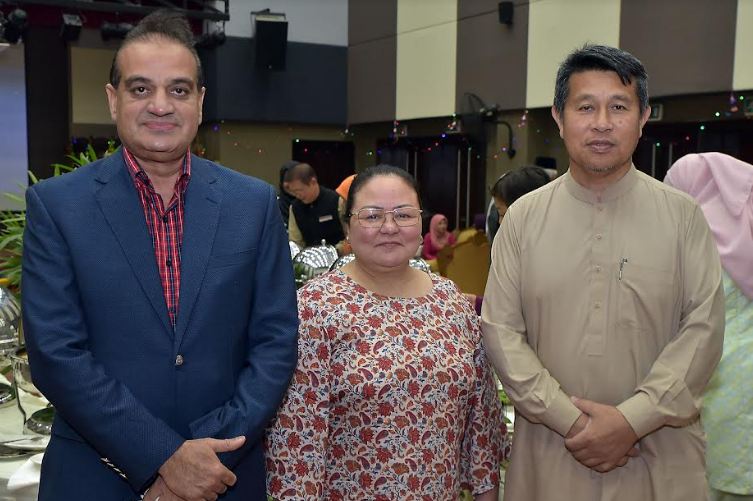
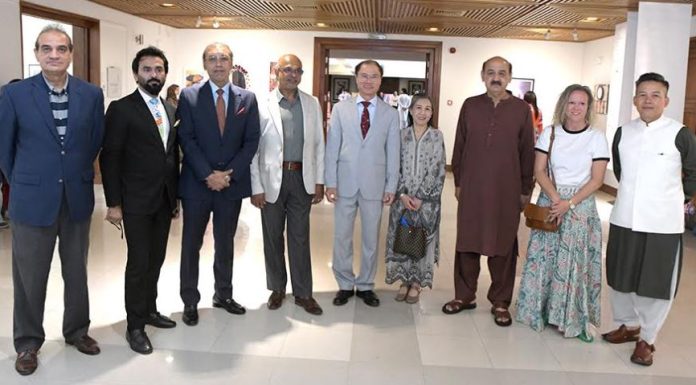
ISLAMABAD, APR 19 /DNA/ – The High Commissioner of Malaysia to Pakistan, Ambassador Mohammad Azhar Mazlan and spouse, Madam Amelia Amani Azhar hosted an Eid-Ul-Fitr Open House at the Malaysian High Commission. The invited guests represented a cross section of the society from the diplomatic corps, senior government officials, Pakistani captains of industry, friends of the media as well as the Malaysian diaspora were among those present to celebrate the joyous occasion of Eid-Ul-Fitr.

Donning their national customes, the host-hostess with his team and families at the High Commission welcomed the guests with renowned Malaysian Hospitality. The guests were served with a delightful array of traditional Malaysian and Pakistani cuisines such as mee goreng, mutton curry, nasi goreng, satay with peanut sauce and traditional Eid cookies.

Such a gathering reflects the true spirit of friendship and peaceful co-existence amongst nations especially with the host nation, Pakistan. Addressing the gathering, Ambassador Azhar underscored the importance of cultural understanding and mutual respect in strengthening bilateral ties, emphasizing the commonalities and traditions that bind the people of Malaysia and Pakistan.

In his remarks, Ambassador Azhar expressed gratitude to the guests for joining in the celebration and reiterated Malaysia’s commitment to advancing cooperation with Pakistan in various fields, including trade, investment, education, and tourism, among others. Considering the candid remarks and feedback from those present, the gathering was a success, exemplifying the strong brotherly ties and cooperation between Malaysia and Pakistan.

ISSI hosts Int’l Conference next week on “Pakistan in the Emerging Geopolitical Landscape” Curtain Raiser

ISSI hosts Int’l Conference next week on “Pakistan in the Emerging Geopolitical Landscape” Curtain Raiser

ISLAMABAD, APR 19 /DNA/ – The Institute of Strategic Studies Islamabad (ISSI) and the Friedrich-Ebert-Stiftung (FES) Pakistan Office will be co-hosting a one-day International Conference, titled “Pakistan in the Emerging Geopolitical Landscape,” at ISSI on 24 April 2024.

Building on the success of last year’s International Conference – “Pakistan’s Strategic Frontiers”, this year’s event will delve into the relationship between Pakistan’s strategic position and the rapidly shifting dynamics of West and Central Asia. The Conference agenda focuses on three key themes. The first working session, titled “Unraveling Afghanistan’s Shifting Landscape,” will examine the evolving situation in Afghanistan, particularly its impact on Pakistan’s security and foreign policy considerations.  The second session, titled “From Dependency to Diversity: The Evolution of the Middle East,” will analyze the changing environment within the Middle East and its influence on Pakistan’s regional partnerships and economic interests. The third and final session, titled “Rising Non-Conventional Security Threats in Afghanistan, Central Asia, and the Middle East,” will seek to address the growing challenges posed by non-traditional threats like cyberwarfare, pandemics, and climate change, emphasizing the necessity of regional collaboration to mitigate these threats.

Through in-depth discussions and expert insights, the Conference aims to achieve a broad set of objectives.  It will analyze the impact of the evolving regional landscape on Pakistan’s foreign policy, security concerns, and economic opportunities.  The Conference will also explore the changing nature of security threats and their implications for regional stability.  Furthermore, the discussions will emphasize the importance of fostering regional connectivity and economic cooperation for sustainable development.  Ultimately, the Conference seeks to generate valuable knowledge on how Pakistan can effectively navigate its changing regional environment, enhance its diplomatic space, and promote economic development.

By bringing together renowned international and Pakistani scholars, academics, practitioners, policymakers, and diplomats, the Conference seeks to create a platform for constructive dialogue and contribute to deeper understanding of Pakistan’s role in the emerging geopolitical landscape. The Conference aims to foster a comprehensive and more nuanced appreciation of the complex challenges and opportunities Pakistan faces in the evolving global environment.

Turkish General MetinGürak extends support for Pakistan Navy initiatives

Turkish General MetinGürak extends support for Pakistan Navy initiatives

DNA

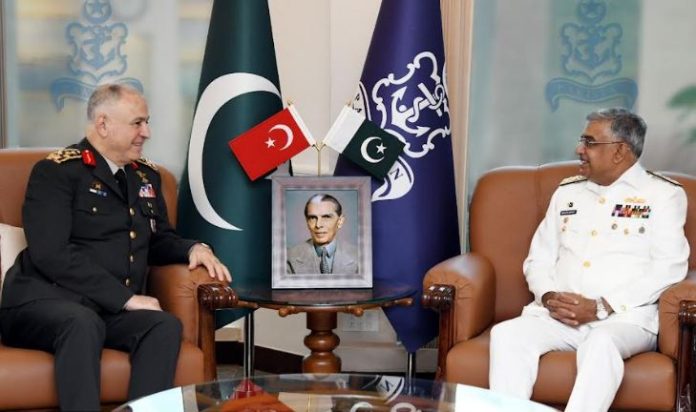
ISLAMABAD, APR 19: Turkish Chief of the General Staff, General MetinGürak visited Naval Headquarters Islamabad and called on Chief of the Naval Staff, Admiral Naveed Ashraf. Upon arrival at Naval Headquarters, the dignitary was received by Chief of the Naval Staff.

Later, General MetinGürak called on Chief of the Naval Staff in his office, where matters of mutual interests, regional maritime security environment and bilateral naval collaboration were discussed. Various avenues of cooperation including training, exchange of visits and conduct of bilateral naval exercises between the two Navies were also focused. The Naval Chief highlighted Pakistan Navy’s initiatives to ensure maritime security and peace in the region through Regional Maritime Security Patrols. The visiting dignitary acknowledged Pakistan Navy’s efforts and commitments in support of collaborative maritime security in the region.

The recent visit of Turkish Chief of the General staff will further augment and expand defence ties between the two brotherly countries in general and the defence forces in particular.

Growing Pak-Afghan Conflict

Growing Pak-Afghan Conflict

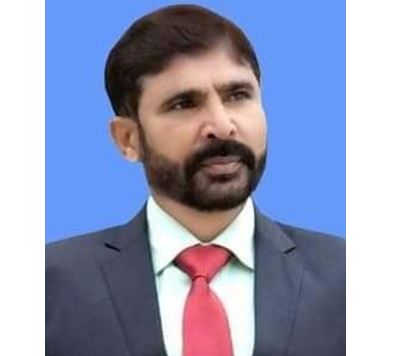
Dr. Muahammad Akram Zaheer

The recent escalation of terrorist activities aimed at critical infrastructure and development ventures associated with the multibillion-dollar China-Pakistan Economic Corridor (CPEC) within Pakistan has plunged the nascent government into a precarious predicament. Already grappling with daunting economic woes and a deteriorating security environment, the Islamabad administration now confronts heightened apprehensions. Pakistan has borne the brunt of five major assaults, three of which specifically targeted Chinese ventures. The most recent incident claimed the lives of five Chinese engineers engaged in the Dasu hydropower project in the Khyber Pakhtunkhwa province, a venture managed by the Power Construction Corporation of China which is also engaged in other pivotal hydroelectric schemes across Pakistan. In response to these assaults, Chinese enterprises have halted operations, precipitating substantial economic repercussions for Pakistan, including the displacement of approximately 2000 laborers from these project sites.

Amidst the momentum of advancing the second phase of the China-Pakistan Economic Corridor (CPEC) with a focus on establishing special economic zones (SEZs) in Pakistan, recent assaults on Chinese interests have raised concerns. Against the backdrop of these attacks, the Pakistani leadership, both civilian and military, has reaffirmed their commitment to safeguarding Chinese nationals and CPEC initiatives, highlighting the perceived threat posed by external forces intent on undermining the strategic partnership between Pakistan and China. While suspicions have been cast on groups allegedly backed by the Indian intelligence agency R&AW for previous assaults, no specific entity has claimed responsibility for the recent incidents involving Chinese engineers. Despite initial finger-pointing towards Tehreek-e-Taliban Pakistan (TTP), the group has disassociated itself from such actions, a move likely driven by the risk of damaging the TTP’s ties with the Afghan Taliban, who maintain a significant relationship with China.

China and Pakistan have collaboratively established an investigation team dedicated to scrutinizing recent attacks. In an effort to bolster Pakistan’s anti-terrorism endeavors, China might consider expanding its investments to aid the financially strained Pakistani military in its costly counterterrorism operations. While previous attempts by Chinese authorities to establish security firms in Pakistan were politely declined, Beijing, perceiving the terrorism threat potentially surpassing Pakistan’s capacity, may propose deploying Chinese security forces or establishing military bases within the country. Such a move would signify Pakistan’s acknowledgment of its limitations in combating domestic terrorism and would challenge the military’s self-proclaimed role as the nation’s primary defender. Additionally, the deployment of Chinese forces in Pakistan would significantly impact its relations with the United States and raise concerns in New Delhi regarding Chinese influence in South Asia. Complicating matters further are Pakistan’s initial findings suggesting that terrorists in recent attacks on Chinese national’s utilized weaponry sourced from the United States via Afghanistan.

Pakistan has long voiced concerns about bearing the brunt of heightened terrorism resulting from the flawed withdrawal of US forces from Afghanistan. In recent times, the Pakistani civil-military establishment has subtly suggested that unless the United States intensifies its cooperation in counterterrorism efforts, Pakistan may increasingly turn to China for support. This plea from Islamabad seems to have resonated in Washington, as evidenced by an unprecedented gesture: President Joe Biden personally reached out to Prime Minister Shehbaz Sharif through a letter, underscoring America’s enduring commitment to collaboration with Pakistan. While this unexpected communication from the Biden administration serves to reaffirm the existing support from the US to Pakistan, it also carries a nuanced message, cautioning against the Pakistan Army’s potential inclination to involve Chinese military presence in the region.

The assessment of the terrorism situation in Pakistan, potentially surpassing the capacity of its military to handle, raises significant geopolitical concerns, particularly for Beijing, which has vested interests in regional stability. In response to this, there’s a possibility that China may reconsider its previous offer to deploy security forces or establish military bases within Pakistan. Such a move would undoubtedly have far-reaching implications, not only for the security dynamics of the region but also for the broader geopolitical landscape. Both Washington and New Delhi would likely view this prospect with unease, given their respective strategic interests in the region. For Washington, the presence of Chinese military forces in Pakistan could further complicate its already complex relationship with Beijing, raising concerns about Chinese influence in South Asia. Similarly, for New Delhi, Chinese military presence in Pakistan would exacerbate existing tensions and potentially shift the balance of power in the region, posing a direct challenge to Indian interests. Consequently, the prospect of Chinese intervention in Pakistan’s counterterrorism efforts represents a delicate and potentially destabilizing development that all major stakeholders would prefer to avoid.

British Army Chief affirms Pakistan’s significance

British Army Chief affirms Pakistan's significance

LONDON: APR 19 /DNA/ – Several decorated British military officers paid glowing tributes to the allure of Pakistan while referring to the hospitality of Pakistanis as being unparalleled. They appreciated the professionalism and versatility of the Pakistan Army, calling it one of the best and most disciplined military organisations in the world.

Around 50 senior British military men of the Quetta Association who studied and served in Pakistan Army’s elite Command and Staff College in the last 50 years shared their views after attending a luncheon in their honour hosted at the Army and Navy Club in London. UK Army Chief General Patrick Sanders was the Chief Guest on the occasion.

The event was organised to cherish the indelible imprints of the British officer’s stay at Quetta. Veteran British officers paid rich tributes, unbounded homage and reverence to the great institution at Quetta.
Notable British military officers who attended the event included Lieutenant General Sir Alistar Irwin (1980 graduate), Lieutenant General Anthony Palmer (1981 graduate), Brigadier Nick Thompson (1971 graduate), Brigadier Tony Berry (1970 graduate) and Major General Seumas Kerr (1985 graduate).
They were accompanied by their wives who were equally delighted in reminiscing the good old memories of the past.

The event was conducted by Colonel Taimur Rahat, Army and Air Adviser at Pakistan High Commission London. He spoke on the achievements of the Staff
College and informed the audience of the value that Staff College beholds for the training and grooming of officers from 1905 onwards. Col Taimur gave various
examples of how command and staff echelons in all major battles fought by the British Army from 1900s to 1950s were groomed at Quetta. He stated that students
who studied from this prestigious institution have gone on to become Viceroys, Governor Generals, Presidents and Field Marshals. Some are even credited with being founding fathers of various Arms / Services in their country’s armed forces. Countless have laid the supreme sacrifices of their lives in almost every theatre and battlefield of the world. The message of Commandant Command and Staff College Major General Nassem Anwer was also read out in the gathering to the applause of everyone.
Souvenirs were presented on the occasion to the Chief Guest and other notables by spouse of the High Commissioner, Pakistan High Commission.

Commenting about the professionalism of the Pakistan Armed Forces, the British
Army Chief said there was no comparison to the Pakistan military’s professional finesse and expertise. General Patrick Sanders termed Pakistan as UK Army’s foremost priority in various avenues of Defence Association and Defence Collaboration during his tenure. He fondly recalled the glimpses of his visits to Pakistan over the years and lamented about his forthcoming trip to Pakistan as his last in uniform. He spoke at length on the significance of Pakistan as an extremely vital country situated exactly at the centre of the East and the West. General Patrick Sanders referred to the enriched association and tapestry between the Pakistani and British militaries and highlighted the potential of collaborating in the Defence Industry. He praised the leadership of COAS Pakistan Army General Asim Munir and fondly narrated his personal connection and affinity with him.

General Patrick also lauded the efforts of Defence Wings of Pakistan and British High Commission for their fervent pursuit of military diplomacy in taking the long- standing ties to another level. General Patrick Sanders affirmed the role Pakistan Military plays in defence and nation building. He said that Pakistan army was battle-hardened and known for its ability to defend the country as well as providing vital help to the partner countries. He also recognised the honesty and integrity of the Pakistani Armed Forces officers and recalled unique generosity of the Pakistani nation.

Finance Minister commends WB’s blueprint to propel Pakistan to High Middle-Income status

Finance Minister commends WB’s blueprint to propel Pakistan to High Middle-Income status

DNA

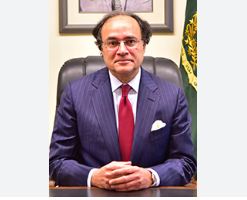
ISLAMABAD, Federal Minister for Finance and Revenue on Friday appreciated the World Bank’s Thought Leadership and its insightful report titled “From Swimming in the Sand to High and Sustainable Growth,” giving a clear roadmap for propelling Pakistan to a High Middle-Income country. 

He expressed these views while attending the “Roundtable on Implementing for Faster Results and Greater Impact,” organized by the financial institution on the sidelines of the World Bank Group-IMF Spring Meetings in Washington D.C.

 The report laid out a clear roadmap for Pakistan to become a High Middle- Income country by 2047, with the potential for the economy to grow from GDP of over US$ 300 billion to US$ 3 trillion.

It cited that owing to the disruptive effects of the COVID-19 pandemic, Pakistan has diverged from that outlined path, thus, achieving the objective of reaching upper-middle-income status by 2047 will require returning to a path of sustained and focused structural reforms.

The finance minister emphasized that the World Bank’s focus on climate change, digitalization and human development aligned with the government’s priorities.

He commended the World Bank’s initiative to launch a single platform to enhance its operational effectiveness.

Meanwhile, the finance minister met with representatives from Moody’s Investor Service and briefed them on Pakistan’s key economic indicators and macro-economic stabilization achieved after entering into a Stand-by Arrangement (SBA) with International Monetary Fund (IMF).

He highlighted the government’s key priorities including tax and energy sector reforms, as well as the privatization agenda. The finance minister indicated the government’s intention to tap international capital markets, focussing on the Middle East and China, to support Pakistan’s economic growth and development.

He also addressed questions related to inflation, foreign exchange reserves, debt repayments, external account vulnerability, and domestic liquidity, expressing confidence in the government’s ability to address these challenges and create an environment conducive to sustainable economic growth.

He hoped that Moody’s Investor Service would upgrade Pakistan’s credit rating soon, reflecting the country’s improved economic fundamentals and the government’s commitment to reforms.

He also addressed an important “Roundtable with Investors” and highlighted Pakistan’s stable macroeconomic indicators and outline the government’s reform agenda.

Aurangzeb apprised the investors of Pakistan’s declining inflation rates, stable currency, robust growth in the agriculture sector, strong remittance inflows, rising foreign exchange reserves and a buoyant stock market.

These are positive indicators, he said, adding underscored the country’s improved economic outlook. He informed them about the government’s intention to enter into a larger and extended programme with the International Monetary Fund (IMF), building upon the successful Stand-By Arrangement (SBA).

He also discussed key priorities of the government around taxation, energy sector reforms and privatization program.

The finance minister noted that the World Bank’s focus on climate change, digitalization and human capital development aligned well with government’s priorities.

The participating investors appreciated the government’s efforts to stabilize the economy and expressed keen interest in exploring potential investment opportunities in Pakistan.

In a meeting with Saudi Fund for Development (SFD) CEO Sultan Abdulrahman Al-Marshad, Finance Minister Aurangzeb discussed potential avenues for enhanced economic cooperation between Pakistan and Saudi Arabia.

During the meeting, he briefed the CEO on his recent visit to Saudi Arabia as well as the recent visit of a high-level Saudi delegation to Pakistan.

Both sides reviewed and expressed satisfaction with the progress of ongoing development projects.

The finance minister also discussed funding of ongoing projects including Diamer Bhasha Dam and the N-25 highway from Karachi to Chaman.

He assured Pakistan would pitch bankable and investable projects to Saudi investors, highlighting the country’s investment potential and favourable policies.

The finance minister met with UK’s Minister of State for Development and Africa Andrew Mitchell and acknowledged the long-standing relations between Pakistan and the Kingdom rooted in shared history and mutual understanding.

He expressed gratitude for the UK’s support in areas such as education, health, financial management and governance.

Aurangzeb briefed him on the favourable economic indicators of the country and priority areas of taxation, energy sector and state-owned enterprise (SOE) reforms, highlighting government efforts to create a conducive environment for foreign investment and economic growth, transparency, and inclusive participation.

He also invited British International Investment (BII) to invest in bankable projects in Pakistan and thanked the UK Minister for planning a visit to Pakistan in August 2024.

Meeting with Citibank officials, the finance minister briefed them on the positive economic indicators including buoyant stock market, renewed interest of foreign buyers and institutional flows on the back of Stand-by Arrangement (SBA) signed with IMF.

He informed them that Pakistan had successfully repaid Eurobond on time, apprising them that the government had initiated discussions with IMF on a larger and extended programme and “It is fully committed to carrying out both short-term and long-term reforms in the areas of taxation, energy sector overhaul and SOE reforms.”

It is pertinent to mention here that Finance Minister is leading Pakistan’s delegation in the IMF / World Bank’s 2024 Spring Meetings being held in Washington DC.

Other delegates include Finance Secretary, Imdadullah Bosal; Secretary Economic Affairs Division, Dr. Kazim Niaz ; Governor State Bank of Pakistan, Jameel Ahmed and Senior Joint Secretary, Economic Affairs Division, Adil Akbar Khan.

Pakistan “deeply disappointed” by UNSC dissensus on Palestine’s full UN membership; regrets US veto: FO spox

Pakistan

DNA
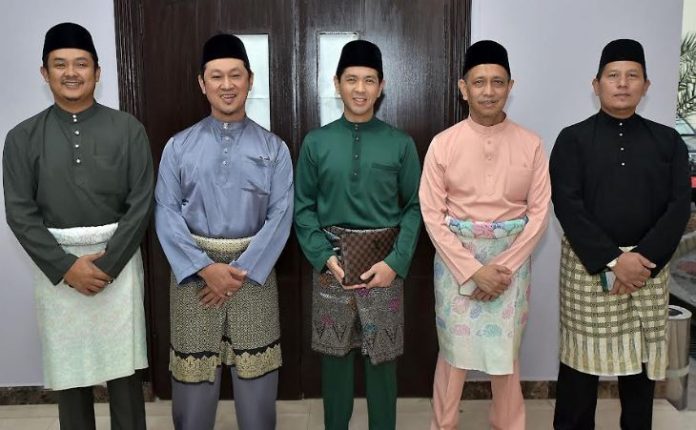
ISLAMABAD, Pakistan on Friday expressed its deep disappointment at the United Nations Security Council’s (UNSC) inability to reach a consensus on Palestine’s full membership of the United Nations, also regretting the US decision to veto the draft resolution.

“Pakistan is deeply disappointed by the result of last night’s debate at UNSC and its inability to reach a consensus and recommend Palestine’s membership to the United Nations General Assembly (UNGA). We regret the US decision to veto the draft resolution granting full membership of the UN to Palestine,” Foreign Office spokesperson Mumtaz Zahra Baloch said in her weekly press briefing.

The Security Council blocked Palestine’s bid to become a full member of the United Nations due to a United States veto on a widely supported resolution that would have recommended the granting of such status. The proposal, submitted to the 15-member Council by Algeria, received 12 votes in favour, with the United States casting a negative vote and Switzerland and the United Kingdom abstaining.

A Council resolution requires at least nine votes in favour and no vetoes from its five permanent members — China, France, Russia, the United Kingdom and the United States — to pass.

“We believe, the time has come for admission of Palestine to the UN. This will be a step towards correcting the historic injustice suffered by Palestinians for over 75 years. It will affirm their right to self-determination,” she remarked.

The spokesperson said that the people of Palestine had their inherent right to live in a sovereign Palestinian state with the pre-1967 borders and Quds Al-Sharif as its capital.

To a question, she said the upcoming Organisation of Islamic Cooperation (OIC) summit in Gambia would consider several proposals including those on Palestine, Jammu and Kashmir as well as Islamophobia.

The spokesperson said that during the recent visit of a high-powered Saudi delegation to Islamabad, Foreign Minister Ishaq Dar and his Saudi counterpart Faisal bin Farhan Al Saud had also called for de-escalation, immediate ceasefire, and lifting of the siege in Gaza. The stumbling block in the implementation of the ceasefire is the Israeli occupation authorities, she added.

Apprising the media of the diplomatic engagements during the last week, she started with the visit of a Saudi delegation to accelerate discussions and enhance cooperation in the follow-up of the understanding reached between Prime Minister Shehbaz Sharif and Crown Prince Mohammed bin Salman Al Saud during the former’s recent visit to the Kingdom.

She said at the investment conference held during the visit, both sides discussed investment projects in energy, mining, IT, construction, human resource development, and exports. She said during the “very positive and constructive” visit, Pakistan discussed several projects for Saudi investment and expressed the hope that both sides would conclude their negotiations soon to materialise the projects.

Responding to a query, the spokesperson said the statement by the Indian external affairs minister on Kashmir was unfortunate as it was India that had taken the Kashmir issue to the United Nations. She said nothing could absolve Indian authorities from their responsibilities of implementing the UN resolutions on the dispute.

She expressed dismay over the Indian authorities’ decision to prohibit the observance of key religious events like Jumuatul Wida, Shab-e-Qadr and Eid-ul-Fitr at the Srinagar Jamia Masjid. This was the fifth consecutive year when Eid-ul-Fitr congregation was not allowed at this mosque, she added.

Spokesperson Baloch said imposing curbs on religious leaders and preventing Kashmiris from religious gatherings posed serious challenges to the religious freedom of Muslims in IIOJK. She reiterated that Pakistan would continue extending its moral, political and diplomatic support to the people of Kashmir till their right to self-determination in accordance with the UN Security Council’s resolutions.

To another question, the spokesperson reiterated that Pakistan’s repatriation policy was limited to the illegal foreigners living in Pakistan and the country has so far no plan to repatriate the Afghan Citizen Card holders.

COMSTECH distinguished scholar visits Malaysia

COMSTECH distinguished scholar visits Malaysia

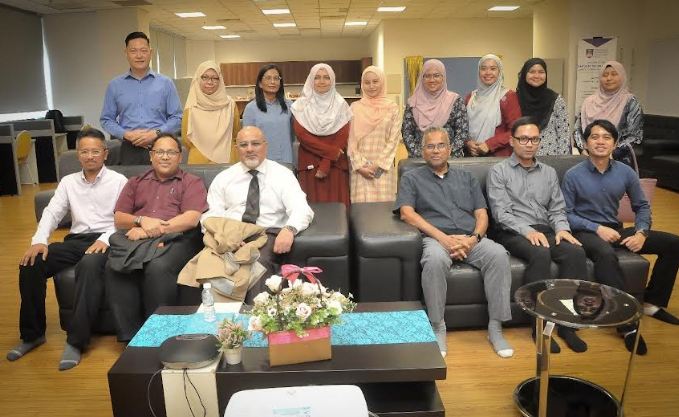
ISLAMABAD, Apr 19 /DNA/ – COMSTECH distinguished scholar, Prof. Dr. Murtaza Najabat Ali visited Universiti Teknologi MARA (UiTM), in Malaysia, under COMSTECH Distinguished Scholar Program.

Prof. Dr. Murtaza Najabat Ali, is a COMSTECH Distinguished Scholar in the fields of biomaterials, drug delivery systems, medical device research and development. He is CEO of Revive Medical Technologies (RMT), Inc., a pioneering medical devices and healthcare equipment R&D company headquartered in the USA, with R&D facility in Pakistan. His expertise spans non-active and active medical devices / wearable devices, AI-based solutions, biomaterials, and drug delivery systems.

His visit, scheduled from April 16 to 19, was organized in partnership with the College of Engineering at UiTM. Prof. Murtaza was warmly received by Prof. Dr. Hamidah Mohd Saman, Assistant Vice Chancellor of the College of Engineering, UiTM. He had productive discussion with Prof. Datuk Dr. Shahrin bin Sahib, Vice Chancellor of UiTM, who expressed keen interest in utilizing Prof. Murtaza’s expertise to enhance UiTM’s research capabilities and bridge the gap between academic research and commercialization in the biomedical field.

During his visit, Prof. Murtaza delivered talks at the Faculty of Pharmacy, Hospital Al-Sultan Abdullah, and at the College of Engineering at UiTM. He also engaged with the Business Innovation & Technology Commercialization Centre (BITCOM) at UiTM, providing insights into regulatory pathways and strategies for overcoming challenges in commercialization and FDA approval processes for biomedical products.

In addition, he shared his expertise in a radio interview at UiTM’s Konti Radio UFM 93.6Mhz, and highlighted the role of COMSTECH in enhancing scientific research and collaboration among OIC member states.

Furthermore, Prof. Murtaza also toured various medical research facilities at UiTM Sungai Buloh Campus, and Institute of Medical Molecular Biotechnology (IMMB).

Prof. Murtaza’s visit to UiTM highlights the commitment of COMSTECH and UiTM to fostering collaboration and knowledge exchange in biomedical research and development.

Saudi Arabia acknowledges Pakistan army’s contributions to regional peace and stability

Saudi Arabia acknowledges Pakistan army's contributions to regional peace and stability

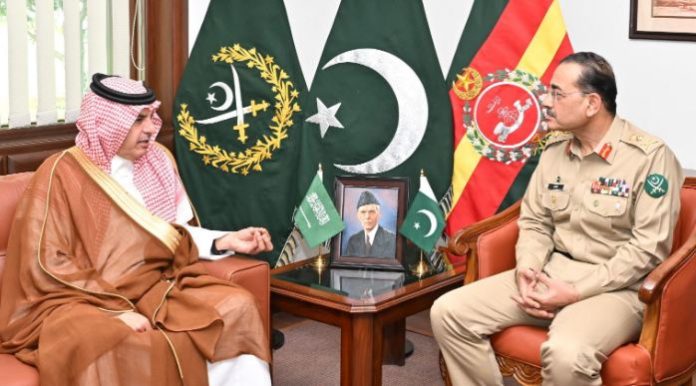
Rawalpindi, APR 19 /DNA/ – Major General (Engineer) Talal Bin Abdullah Al-Otaibi, Assistant Minister of Defence, Kingdom of Saudi Arabia (KSA) called on General Syed Asim Munir, NI (M), Chief of Army Staff (COAS), at GHQ. During the meeting, matters of mutual interest and measures to further enhance bilateral defence collaboration including defence production and military training were discussed.

COAS affirmed Pakistan Army’s continuing support towards capacity building of Royal Saudi Land Forces. The visiting dignitary acknowledged Pakistan Army’s achievements and sacrifices in war against terrorism and Army’s valuable contributions towards regional peace and stability. The visiting dignitary also participated in the 5th Meeting of Pakistan-KSA Defence Collaboration at GHQ, which he co-chaired by CGS Pakistan Army.

The forum discussed challenges to global and regional security and their implications on Defence Forces. Forum noted that rapid advancements in modern technologies necessitated defence industrial cooperation in critical capabilities between the two brotherly countries.

Both sides reiterated their resolve to solidify the efforts in defence collaboration with focused approach to target specific capabilities in land, air and sea domains. In this context, concrete proposals were deliberated by the forum to meet tangible objectives within specific timelines.

Islamabad event marks Bangladesh’s Independence and National Day

Islamabad event marks Bangladesh's Independence and National Day

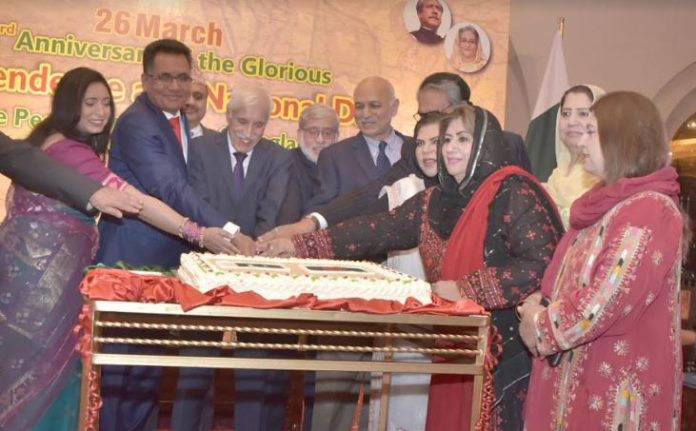
ISLAMABAD, APR 17 /DNA/ – Federal Minister for Maritime Affairs Qaisar Sheikh, former Senator Mushahid Hussain Sayed, Chief Justice of the Federal Shariat Court Iqbal Hameedur Rehman, High Commissioner of Bangladesh Ruhul Alam Siddiqui and others cutting cake to celebrate the Independence and National Day of Bangladesh. 

Stay Connected

64FansLike
60FollowersFollow

Latest Reviews

Exchange Rates

USD - United States Dollar
EUR
1.17
GBP
1.35
AUD
0.72
CAD
0.73