Home Blog Page 952

Pakistan-Africa ties poised for a quantum leap

Pakistan-Africa ties poised for a quantum leap

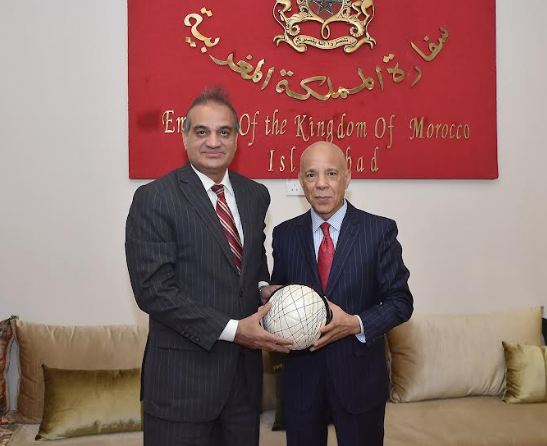
Ambassador of Morocco Mohammad Karmoune says African Continental Free Trade Agreement presents an opportunity for Pakistan to reinforce its trade and investment connections with African nations, opening up new possibilities for businesses and strengthening overall economic ties with the continent

Ansar Mahmood Bhatti

ISLAMABAD: Mohammad Karmoune, the Dean of the African Group and Ambassador of Morocco, has expressed his admiration for Pakistan’s Look Africa policy. He emphasized that this strategic approach creates a mutually beneficial scenario where both partners stand to gain from each other’s expertise and resources.

In a special talk about Pakistan-Africa relations, Ambassador Karmoune further said, Pakistan Africa Relations were set by the Bandung Conference 69 years ago. In 1955, Asian and African nations (29 in total) met in Indonesia, from 18 to 24 April, to discuss peace, development, economic cooperation and the role they have to play in the context of Cold War, in conformity with the principles of the UN Charter and International Law.
The Bandung Conference, he said, is called now the Non- Aligned Movement. It is at its 19th summit. The last one was held in Uganda in January 2024 and it brought together 120 member states.

Ambassador Karmoune further said, the change in name has led, of course, to the updating in the objectives, which hovers now around common human problems, shared prosperity, the advance of science and technology, the protection of the environment, food security, reduction of the global warming and response to the effects of climate change, combatting international terrorism and transnational organized crime.

‘In the case of Pakistan and Africa, their relations are based on the principles of mutual respect, cooperation, and solidarity. In the time of the African struggle for independence, Pakistan was among the nations, which actively supported the liberation struggle of the African countries’.

He said, in the post-independence of African countries, Pakistan was there by contributing to the continent’s peace and security through the participation in the UN peacekeeping cooperation in the Continent. The country has provided more than 200,000 troops to 46 United Nations Peacekeeping Operations, predominantly in Africa.

The Moroccan ambassador said, on the economic level, Africa stands out as a land of immense opportunities. Despite maintaining cordial relations, trade figures between Pakistan and African nations have remained modest, at around $7 billion.

 The will to develop it to a high level has been expressed, on the part of Pakistan, by the initiative of “Look Africa” policy launched in 2017.

The Initiative aims at opening opportunities for Pakistani enterprises to do business with Africa. This initiative was later incorporated in the overall “Engage Africa” Policy, which has resulted up until now in the organization of four Trade Development Conferences and Single Country Exhibitions in different parts of the Continent (Nairobi 2020, Lagos 2021, Johannesburg 2022 and Cairo 2024). The objective is to increase the volume of economic exchange with African countries to its maximum potential, he added.

In addition to this initiative, the country is negotiating Preferential Trade Agreements with three of the five African economic blocs (SACU, ECOWAS and EAC).

Ambassador Karmoune said, African Continental Free Trade Agreement presents an opportunity for Pakistan to reinforce its trade and investment connections with African nations, opening up new possibilities for businesses and strengthening overall economic ties with the continent.

To overcome their common obstacles for developing their economies and forging a strong and effective partnership for peace  progress and shared prosperity, Pakistan and Africa need to work together to launch joint ventures in different economic sectors such as Fertilizers (building fertilizer plants in different African regions), Agriculture, ICT, Health, Mines, Inrastructure, Tourisme, Banking, Insurance sector, Car Industry, Renewable energy, vocational and university training

‘In line with the Bandung principles, Pakistan and Africa need to maintain unity, solidarity and coordination to make their voice heard in all international and regional platforms’.

On the diplomatic level, he said, Pakistan has up until now opened at least 20 embassies across the continent to consolidate its cooperation with the 54 sovereign states and takes it to higher levels.

The two regions need to build on the Bandung principles to continue to defend the sovereignty and territorial integrity of all nations, to advocate the settlement of all international disputes by peaceful means, such as negotiation, conciliation, arbitration for the promotion of peace and stability.

In view of the current challenges in the international arena, the objectives and principles of the Bandung spirit remain as relevant today as the time of the founding of the organization. Pakistan and Africa need more coordination to confront emerging threats and challenges which impede efforts to attain greater economic development and social progress.

The emergence and spread of pandemics and health emergencies, including COVID-19, have taught us that there is no country or region which is immune from these threats and that collective efforts are needed to contain them.

The dreamed of shared prosperity needs of us to take huge steps in order to enhance economic and social development. Such development can be achieved mainly through science and technology, industrial cooperation and the promotion of trade and investments.

 On the international level, Pakistan and Africa need to work together to further promote, preserve and reform multilateralism, and push for full respect of the principles of international law and the maintenance of international peace and security, the Ambassador concluded.

Health experts call FED increase on cigarettes mandatory to control consumption

Health experts call FED increase on cigarettes mandatory to control consumption

ISLAMABAD, April 21 (DNA): The health experts in the wake of the snowballing economic burden in terms of public health and economic costs due to rising cigarette consumption have called for implementation of World Bank’s recommendation for increase in Federal Excise Duty (FED) on cigarettes.

Director Center for Research and Dialogue (CRD), Amjad Qamar was of the view, “Increasing FED on cigarettes will check the steady rise in consumption and ensure a healthier future for Pakistan’s youth.”

He further stated that Pakistan was one of the largest tobacco-consuming countries and low prices of cigarettes were the major contributor in the respect.

“Cigarettes are more affordable in Pakistan than the rest of the region,” Qamar added.

Taxation policies of the successive governments have failed to generate revenue as well as to curb the alarmingly high smoking rate due to policies that are often manipulated by industry giants, particularly the multinational companies.

The country, according to Federal Board of Revenue (FBR) yearbooks, has lost Rs 567 billion revenue during the last seven years.

On the other hand, a study conducted by the Pakistan Institute of Development Economics (PIDE) pointed out that the cost of smoking-related diseases and deaths was Rs 615.07 billion ($3.85 billion) in 2019, amounting to 1.6% of the GDP.

Country Director, Campaign for Tobacco Free Kids (CTFK), Malik Imran Ahmed referred to World Banks report titled ‘Pakistan Development Update,’ and said that a significant revenue gain of 0.4 percent of GDP (PKR 505.26 Billion) could be achieved by applying the current rate on premium cigarettes (Rs. 16.50 per cigarette) to standard cigarettes as well.

The report underscores the potential for economic and health benefits through this measure.

Malik Imran added that aligning cigarette taxation with the World Bank’s recommendation is a crucial step toward safeguarding the health and well-being of Pakistan’s children.

Higher excise duty on cigarettes not only deters smoking but also generates much-needed revenue for essential public services, he said.

Earlier, International Monetary Fund (IMF) has also recommended Pakistan to overhaul tax machinery and to tax non-essential items including cigarettes to boost revenue and improve public health.

The global lender has recommended the government to introduce single tier tax structure alongside a significant increase in taxes on tobacco products.

According to the IMF’s Technical Assistance Report titled “Pakistan Tax Policy Diagnostic and Reform Options,” released in February, the consumption of cigarettes in Pakistan has witnessed a notable decline of 20-25 percent following substantial hikes in taxes on tobacco products.

Counting of votes underway on by-polls in 21 national and provincial seats

Counting of votes underway on by-polls in 21 national and provincial seats

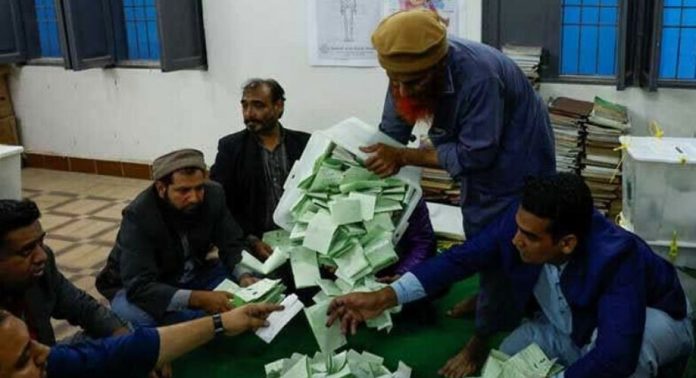
ISLAMABAD, APR 21: Counting of votes is underway for 21 national and provincial seats after polling concluded amid the temporary suspension of cellular services in specific districts of Punjab and Balochistan to “safeguard” the electoral process.

According to the Election Commission of Pakistan (ECP), by-elections were held today on five vacant seats of the National Assembly; 12 of the Punjab Assembly, and two each of the Khyber Pakh­tunkhwa and Balochistan legislatures.

Separately, re-polling in all constituencies of Balochistan’s PB-50 (Qila Abdullah) was also held today.

Polling began at 8am and concluded at 5pm, following which the vote counting began, with unconfirmed and unofficial results awaited.

The Pakistan Telecommunication Authority (PTA) had announced a day earlier that “cellular services will be temporarily suspended in specific districts of Punjab and Balochistan during the by-elections” on April 21 (today) and 22 (Monday).

It said the decision had been taken on the directives of the interior ministry to “safeguard the integrity and security of the electoral process”.

It should be mentioned that mobile and internet services were also shut down during the February 8 general elections. Meanwhile, access to social media platform X has been disrupted since Feb 17 — when the former Rawal­pindi commissioner accused the chief election commissioner and chief justice of Pakistan of being involved in rigging.

Iqbal condemns ‘murder’ of party worker in Narowal
Minister for Planning, Development and Special Initiatives Ahsan Iqbal condemned the “murder”“ of a PML-N worker in Narowal during the byelections.

While speaking to the media, Iqbal accused PTI workers of his party worker’s death. “The murderers would not be spared from the law,” he said adding that he would call the deceased a “political martyr”.

“He stood for the right cause, for which he was killed,” he added.

The ECP took notice of the incident and said that a formal investigation will be conducted outside Narowal’s Zafarwal polling station.

“Regional Election Commissioner Gujranwala has been appointed the inquiry officer for the probe,” an ECP spokesperson said.

The ECP also took notice of a presiding officer signing a blank form 45 in Punjab Assembly’s PP-149 Lahore constituency, it said in a press release on its wesbite.

The commission has sought an immediate report from the Election Commissioner Punjab so that this matter can be resolved and the commission can take further legal action.

Sporadic violence elsewhere
In Sheikhupura’s PP-139, the polling process was temporarily stopped after a “firing incident”.

In a statement, the Punjab election commissioner’s office said that due to a “firing incident” at a polling station (Government Primary School Nizampura), the polling process had been stopped.

However, it had later resumed after the police controlled the situation, the statement added.

Workers of PTI-SIC and PML-N argue outside Lahore College polling station — via Mian Shoaib
In Lahore, at polling station number 171 (Lahore College), workers of the PTI and Sunni Ittehad Council (SIC) coalition had a scuffle with those of the PML-N on the issue of setting up polling camps. The argument was then resolved with the help of police.

The provincial election commission’s control room also took notice of reports of the polling process in Gujrat and Rahim Yar Khan’s PP-266 stopping.

In a separate statement, the spokesperson said that the police controlled the situation at the polling station in question in Gujrat.

It added that a scuffle in Rahim Yar Khan took place outside a polling station at Mohib Shah.

Istehkam-i-Pakistan Party’s (IPP’s) Shoaib Siddiqui claimed there were reports of a face-off in Union Council 184.

Separately, SIC’s Mian Shahzad Farooq claimed that his party workers were being arrested in NA-119 and that the polling agent had been forced out of the returning officer’s office after he went there to file a complaint.

Across Lahore, 24 superintendents, 45 senior deputy police officers (SDPOs) and 168 inspectors, station house officers (SHOs), and investigation in-charges will serve their duties during the by-elections.

A total of 195 pickets were established at Lahore’s entry and exit points while the security was on “high alert”.

Lahore Capital City Police Chief (CCPO) Bilal Siddique Kamyana said the security officials were providing “complete security for the peaceful conduct” of the by-election.

In a statement, the CCPO emphasised there was “zero-tolerance” for exhibition of arms and firing incidents.

He highlighted that voters would be able to enter the polling stations after getting clearance from the three-tier security arrangement.

CCPO Kamyana further said that officials of anti-riot force and reserve forces would remain alert to deal with any untoward incident.

In Bhakkar’s PP-93, District Police Officer (DPO) Mohammad Naveed visited “sensitive” polling stations of the area.

Bhakkar District Superintendent of Police (DSP) special branch Malik Tariq Awan and troops of the Pakistan Army also accompanied the DPO during the visits and gave a briefing to the officials on duty.

DPO Naveed ordered the officials to put all resources to use to ensure peaceful polling process.

In Sindh, by-elections were held in Kambar-Shahdadkot’s NA-196, where PPP’s Khurshid Junejo was contesting against Tehreek-i-Labbaik Pakistan’s (TLP) Mohammad Ali.

Sindh Election Commissioner Sharifullah directed officials to remain alert to ensure clear, transparent and peaceful polls, urging the public to use their right to vote.

Army deployed for by-election security
A day ago, the interior ministry allowed the suspension of mobile internet services to “maintain law and order” in 13 districts and tehsils in Punjab on the recommendations of the provincial government.

The Punjab home department had on Friday written a letter to the interior ministry stating that the by-elections had been scheduled for April 21 in Punjab’s four districts and nine tehsils, adding that there was a need to suspend the mobile internet services to maintain law and order and avoid any untoward incident.

The home department had sought the suspension of mobile internet services in Gujrat, Kasur, Sheikhupura and Lahore districts as well as in Talagang, Chakwal, Kallar Kahar, Ali Pur Chatha, Zafarwal, Bhakkar City, Sadiqabad, Kot Chutta and Dera Ghazi Khan City tehsils.

The interior ministry has also decided to deploy the army and civil armed forces at a request made by the ECP almost two weeks ago.

As per an order issued by the ministry, the civil armed forces and the Pakistan Army units would be used as second and third tiers of security and would be available till April 22.

“The exact number of troops, date/period, area and mode of deployment would be worked out by the ECP in consultation with all concerned stakeholders based on ground requirement/assessment,” the order read.

A PTI spokesman said the electoral rules and regulations were being flouted as was the case during the general elections, besides victimising the party leaders, workers and supporters.

Vacant seats
The general elections for Bajaur’s NA-8 and PK-22 had been postponed because of the murder of a candidate, Rehan Zeb Khan.

As for NA-44, Dera Ismail Khan, the constituency was vacated by PTI-backed Ali Amin Gandapur, who retained his provisional assembly seat to become KP’s chief minister. Similarly, Lahore’s NA-119 was vacated by Punjab Chief Minister Maryam Nawaz, who preferred to become an MPA from PP-159.

Prime Minister Shehbaz Sharif won polls for two NA and two provincial legislature seats. He left the NA-132, Kasur, as well as Lahore’s PP-158 and PP-164 seats vacant, and retained NA-123, Lahore, seat.

PPP Chairman Bilawal Bhutto-Zardari won two seats in the NA. He retained NA-194, Larkana, seat and left NA-196, Qamber Shahdadkot, seat vacant. PPP Co-Chairman Asif Ali Zardari vacated NA-207, Shaheed Benazirabad, seat to be elected as the country’s president. Zardari’s daughter, Aseefa Bhutto Zardari, has already been elected unopposed from the seat vacated by her father.

The polls for KP Assembly seat PK-91, Kohat, were postponed after the death of an ANP leader. A Sindh Assembly seat fell vacant after the death of Abdul Aziz Junejo, who won elections from PS-80, Dadu. In Balochistan, BNP-M chief Sardar Akhtar Mengal retained the NA-256 seat and left Khuzdar’s PB-20 seat vacant.

In Punjab, PML-N leader Ghulam Abbas retained NA-53, Rawalpindi, seat and left PP-22 seat.

Similarly, PML-Q’s Chaudhry Salik Hussain retained NA-64 and vacated PP-32, Gujrat, seat.

The PP-36, Wazirabad, seat fell vacant after Muhammad Ahmad Chattha did not take oath. The PP-54, Narowal, seat fell vacant as PML-N’s Ahsan Iqbal did not take oath. He preferred to retain NA-76, Narowal, seat. Shei­k­hupura’s PP-139, fell vacant because PML-N’s Ra­­­na Tanveer did not take oath. Like­wise, the prime minister’s son Hamza Shehbaz did not take oath for PP-147, Lahore.

PP-149 from Lahore fell vacant because IPP’s Aleem Khan retained the city’s NA-117 seat. The polls for PP-266, Rahim Yar Khan, were postponed because of the death of a candidate. The PP-290, Dera Ghazi Khan, was declared vacant after Awais Leghari did not take the oath.

BISP registration process continues

BISP registration process continues

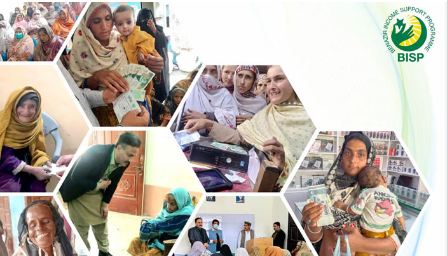
ISLAMABAD, APR 21 (DNA) —The registration process for the National Socio-Economic Registry (NSER) survey of the Benazir Income Support Programme (BISP) is currently underway in Sargodha, as well as other parts of the country.  The tehsil offices of the programme have established registration centres to facilitate the process.

Deputy Director BISP Sargodha Malik Mazhar Awan while talking to media here on Sunday, said that low-income groups could register themselves with the BISP by visiting the registration centres, opened from Monday to Saturday. People have been asked to bring their Computerised National Identity Cards (CNICs) and B forms of their children for registration purposes.

Individuals are required to provide their electricity or gas bills to update a database for future government subsidies, he added. The official urged people to provide their accurate data at the time of registration, while those who would provide false information would not be allowed to become part of the programme.

People having any complaint about the programme could contact the office concerned. “We are ready to resolve the complaints of citizens in shortest possible time, he added.  The deputy director said, “We encourage not only poor segments to participate in the survey but also middle class, lower and upper middle class for compilation of their data.

” It will help the government provide them any subsidy or facility in the time of any emergency in future based on their socioeconomic data, he explained.  The objective behind the data compilation was not only to provide quarterly cash transfers of BISP but also to accommodate the vulnerable population in other subsidy initiatives of the government, he added. — DNA

Mass grave found at Khan Younis hospital after Israeli withdrawal

Mass grave found at Khan Younis hospital after Israeli withdrawal

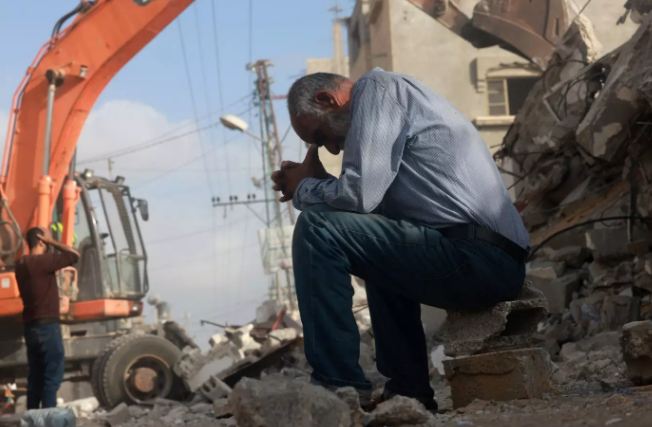
GAZA, APR 21: Israeli fighter jets kill nine children in latest Rafah strike. The death toll from Israeli air strikes targeting two Palestinian homes in densely populated Rafah, in the south of Gaza, has risen to 19, including 14 children.

According to local sources, the first raid targeted a house belonging to the Joudeh family in Ashdod camp in the centre of Rafah, killing four people, including a husband, his wife and their daughter.

Reportedly, one of the victims was pregnant. Medical teams performed a cesarean on the dead woman and were able to save the baby’s life.

In the second strike, which targeted the Abdel-Al family home in east Rafah, 15 people were killed, including 13 children and two women. Many are still missing, and rescue teams are trying to recover those trapped beneath the rubble.

G7 denies Kiev involvement in Moscow terror attack

G7 denies Kiev involvement in Moscow terror attack

MOSCOW: Russian investigators have found a link between Ukrainian nationalists and last month’s massacre that killed over 140.

Ukraine’s backers in the Group of Seven (G7) have denied that the country was involved in last month’s deadly terrorist attack in Moscow Region, according to a joint statement by the group’s foreign ministers issued on Friday. Russian authorities have claimed they found a money trail linking the perpetrators of the massacre to Ukrainian nationalists.

“We firmly reject the Russian authorities’ baseless attempts to blame Ukraine for the tragic terrorist attack near Moscow on March 22, which was claimed by ISIS. We call on Russia to stop using this tragedy in its disinformation efforts against Ukraine,” the ministers said in a joint communique issued after their meeting on the Italian island of Capri.

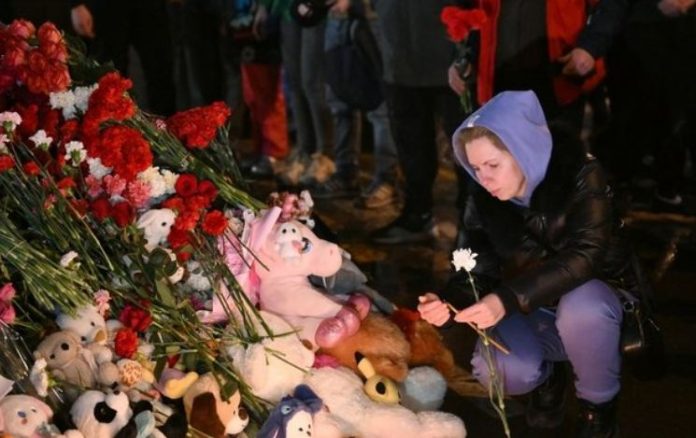
Four gunmen stormed the Crocus City Hall concert venue just outside Moscow on March 22, shooting everyone in sight before setting the building on fire. The tragedy resulted in more than 140 deaths. The suspects, all Tajik nationals, were detained several hours after the attack near the Ukrainian border. ISIS-K, an Afghanistan-based offshoot of the international terrorist organization Islamic State, claimed responsibility.

However, the head of Russia’s FSB security agency, Aleksandr Bortnikov, later suggested that the Ukrainian security services may have been involved in preparing the assault, possibly using the Islamists as proxies.

European Commission spokesman Peter Stano said the EU rejected the suggestion that Kiev had anything to do with the terror plot, accusing Moscow of using the attack “as a pretext to increase the illegal aggression against Ukraine.” Kiev, which initially claimed that Moscow itself had staged the massacre, has also staunchly denied any involvement.

This week, the secretary of the Russian Security Council, Nikolay Patrushev, said Russian investigators had confirmed a link between the perpetrators of the terror plot and Ukrainian nationalists.

Earlier in April, Russia’s Investigative Committee said it had obtained information that could indicate the suspects’ “connection with the Ukrainian special services.” Previously, the investigators claimed to have “confirmed data” that the alleged gunmen received “significant sums of money and cryptocurrency” from Ukraine prior to the attack.

In the records of interrogations of the suspected gunmen released by FSB, the perpetrators claimed they had specific instructions to flee towards the Ukrainian border.

Earlier this month, Russian UN Ambassador Vassily Nebenzia said that persistent Western attempts to shield Kiev from accusations seemed suspicious.

“Amid such relentless attempts to pin the blame on ISIS and shield Kiev at any cost… a question about Western security services’ involvement in orchestrating this terrorist attack remains open,” the diplomat said at a UN Security Council meeting on April 12, adding that the evidence of Ukraine’s involvement in the attack was “irrefutable.” In his statement, Nebenzia urged the West to “cooperate” with Moscow in capturing and bringing to justice those who ordered the massacre.

By-elections: Polling underway on 21 vacant seats amid suspension of internet, cellular services in Punjab, Balochistan

By-elections

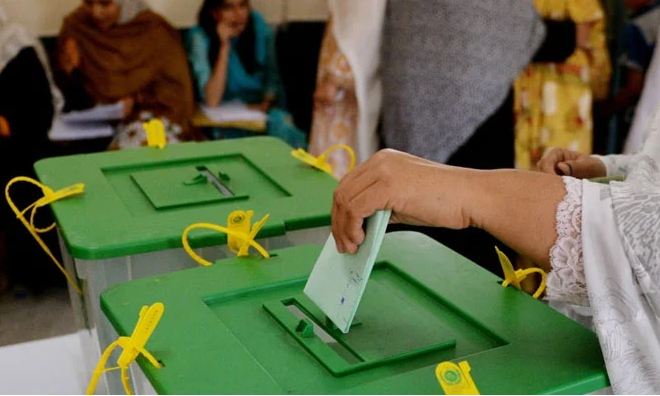
ISLAMABAD, APR 21: Polling is underway for by-elections on around two dozen National Assembly and provincial assembly seats on Sunday (today) amid suspension of cellular and internet services in specific districts of Punjab and Balochistan to maintain law and order situation during the electoral process.

The voting for the first major by-poll, which are taking place after the February 8 general elections, started at 8am and will continue till 5pm today without any interval.

A day earlier, the federal government announced that cellular services will remain temporarily suspended in specific districts of Punjab and Balochistan during the by-elections on April 21-22.

The Pakistan Telecommunication Authority (PTA) issued a statement, saying that the decision has been taken to safeguard the integrity and security of the electoral process.

Army deployed during by-polls
Meanwhile, at the request of the Election Commission of Pakistan (ECP), the federal government has approved the deployment of Pakistan Army and Civil Armed Forces (CAF) troops during the polling process.

The government said that it would use the armed forces units as a quick response force.

The notification mentioned that the CAF and Pakistan Army units would be used as second and third tiers of security and they would be available with immediate effect till April 22 in 21 constituencies.

PML-N worker killed amid clashes with PTI
As the polling was taking place, a clash between Sunni Ittehad Council (SIC) and Pakistan Muslim League-Nawaz (PML-N) workers took place in PP-54 in Narowal.

During the incident, a PML-N worker, Muhammad Yousuf, was killed after the opponents hit his dead with a stick during the fight, said the police.

The police said that the worker was taken to hospital where he succumbed to injuries, adding that the polling was stopped in this constituency.

PML-N leader Ahsan Iqbal said that PTI cannot win elections through hooliganism. He added that the killers will be brought to justice.

Meanwhile, an argument broke out between workers of both parties in NA-199 constituency of Lahore.

The police said that the clash took place at polling station number 171 of Lahore College, adding that the workers grabbed and dragged each other.

However, the police took the workers to their camps to resolve the matter.

Meanwhile, another clash broke out between SIC and PML-N workers in PP-139 constituency in Sheikhupura. The workers beat each other, injuring three people.

The police said that the fight took place over election camp, adding that they took two people into custody. The polling had stopped briefly due to firing, however, it resumed after a while.

Another incident took place in Rahim Yar Khan during which workers of two political parties clashed and broke windows of cars. The fight happened in PP-266 constituency.

On the other hand, SIC’s candidate Chaudhry Muhammad Mayo for PP-164 constituency, while speaking to Geo News, claimed that the police arrested their worker Chaudhry Shabbir Gujjar and has been taken to a police station.

He alleged that there have been complaints of rigging in the constituency, adding that they have informed the ECP about the matter.

Where are by-polls being held?
The elections are being held on five NA seats, 12 Punjab Assembly seats, two each in Khyber Pakhtunkhwa and Balochistan Assemblies and one in Sindh Assembly.

The NA seats include NA-8 and NA-44 (KP) NA-119 and NA-132 (Punjab) and NA-196 (Sindh). Pakistan Peoples Party (PPP) has won one seat in the form of NA-207, Nawabshah from where Aseefa Bhutto Zardari has been elected unopposed.

The provincial assembly seats include PK-22 and PK-91 (KP), PB-20 and PB-22 (Balochistan) and PS-80 (Sindh). The Punjab Assembly seats where the by-polls are taking place include PP-32 (Gujrat), PP-36 (Wazirabad), PP-54 (Narowal), PP-93 (Bhakkar), PP-139 (Sheikhupura), PP-147, PP-149, PP-158, PP-164 (Lahore), PP-266 (Rahim Yar Khan) and PP-290 (Dera Ghazi Khan).

The NA-119 (Lahore) was vacated by Punjab Chief Minister Maryam Nawaz and PML-N’s Ali Pervez Malik is up against Pakistan Tehreek-e-Insaf (PTI)-backed SIC’s Shahzad Farooq for the seat.

Moreover, Tehreek-e-Labbaik Pakistan’s (TLP) candidate Muhammad Zaheer and six independent candidates are also vying for the seat.

Meanwhile, elections are also being held on PP-147 (Lahore), which was vacated by PML-N’s Hamza Shehbaz. PML-N’s Malik Riaz, SIC’s Muhammad Madni, Shahrukh Jamal, TLP’s Muhammad Yasin and eight independent candidates are aiming for the slot.

The seat PP-149 (Lahore) was vacated by Istehkam-e-Pakistan Party’s (IPP) Abdul Aleem Khan. IPP’s Shoaib Siddiqui, SIC’s Zeeshan Rashid, TLP’s Muhammad Zaheer and 11 independents are seeking to win the seat.

Prime Minister Shehbaz Sharif vacated NA-132 (Kasur) and two of his provincial assembly seats in Lahore, PP-158 and PP-164, while retaining his NA-123 seat in the National Assembly.

A very tough contest is expected in NA-132 on which SIC’s Muhammad Hussain Dogar is contesting against PML-N’s Malik Rasheed Ahmad Khan, whereas the TLP is also in contest.

PML-N’s Chaudhry Muhammad Nawaz, SIC’s Moonis Elahi, TLP’s Muhammad Munir and 19 independent candidates are vying for the PP-158 seat vacated by PM Shehbaz.

Meanwhile, SIC’s Muhammad Yousuf, PML-N’s Rashid Minhas are eyeing the PP-164 slot.

Meanwhile, in Sindh, voting is taking place on NA-196 (Qamber Shadadkot). This seat was vacated by Pakistan Peoples Party (PPP) Chairman Bilawal Bhutto-Zardari.

In KP, the polling is taking place on NA-44 (Dera Ismail Khan) seat which was left vacant after Chief Minister Ali Amin Gandapur retained his provincial assembly seat, PK-113.

By-poll is also being conducted on the NA-8 (Bajaur) seat, the election for the seat was suspended ahead of the February 8 general elections after one of the candidates Rehan Zeb Khan was murdered.

Rising energy cost biggest issue of value added textile exporters: PHMA

Rising energy cost biggest issue of value added textile exporters: PHMA

LAHORE, APR 21 /DNA/ – The Pakistan Hosiery Manufacturers & Exporters Association (PHMA) has said that high cost of doing business has proved to be dangerous for the value-added export-oriented knitwear industry, as the ever-increasing gas and power tariffs are the real threat to the economy amidst frequent upward revisions in policy rate and continuous fluctuations in rupee against dollar.

These views were expressed in an interactive session held here at PHMA Zonal office to review the challenges faced by the PHMA members, with the PHMA North Zone Senior Vice Chairman Amanullah Khan in the chair. Participants of the meeting urged the Central Bank to allocate funds for renewable energy schemes, including solar energy financing exclusively to the export-oriented value-added textile sector. This strategic allocation will not only boost apparel sector’s growth but also promote a more inclusive and resilient economy.

He said that all stuck-up claims of the exporters, including DLTL, DDT, Customs Rebates and Sales Tax refunds should be released. The liquidity crunch was a major stumbling block in the way of improving exports. Demanding the restoration of zero rating regime, he suggested that the Sales Tax regime for export sector should be totally separated from the local business and that refund of Sales tax to exporters be ensured within 72 hours of the filing of claim.

The apparel sector was showing regular growth in exports and should be encouraged through long term policy measurers so that foreign exchange earnings for Pakistan could be increased.

PHMA North Zone Senior Vice Chairman Amanullah Khan, in his address, proposed the central bank to review its credit policies by fixing a special quota to finance the knitwear hosiery sector’s small and medium enterprises, as only the large industries have been availing government’s all major concessional export loaning facilities, while very limited financing is left for the PHMA members which are the backbone of the economy. We must advocate for targeted and fixed allocations for apparel sector SMEs in renewable and solar energy financing, particularly those aimed at the export-oriented sector.

PHMA leader cautioned the government saying the move of increasing energy tariffs was unwise and would sabotage hard efforts of exporters to enhance Pakistan’s exports in previous years. He asked the govt to ensure a level-playing field by offering competitive energy tariffs and continuing the Duty Drawback of Local Taxes and Levies scheme, as committed in the new five-year textile and apparel policy. He stressed that energy rates for industries should be brought at par or below the tariff prevailing in the competing regional countries.

He demanded a level-playing field with regional competitors through continuation of previous concessionary energy tariffs for the export industry, terming the previous government’s decisions to discontinue the tariff concession for five export-oriented sectors unwise and disastrous for exporters.

He remarked that at a time of unsatisfactory export volumes and low industrial growth, the hike in electricity tariffs for the export industry was surprising, as it will prove dangerous for the country’s knitwear industry.

PHMA Senior Vice Chairman observed that the disruption of concessions committed under the Textile Policy 2020-25 has resulted in decline in industry’s textile exports. He claimed that export performance was severely set back by the drastic turn in macroeconomic conditions during 2023-24, of which the historic rise in bank lending rates; raw material and, retraction of concessional gas and electricity tariffs damaged prospects of export growth irreparably.

He said that Pakistan’s core issue was high cost of doing business which rendered its industrial production uncompetitive, suggesting the government to work on bringing around significant improvements in ease and cost of doing business for the export industry.

Focus on export growth necessarily involves promoting textiles as this sector contributes 62% of all exports. Pakistan’s textile industry, however, is facing a major crisis as it is rapidly losing credibility and competitiveness in the global market.

The $19.3 billion industry, which relies heavily on exports, is experiencing a decline in global shipments. This situation is causing concern among its loyal international customers, who are becoming increasingly skeptical about the industry’s ability to meet deadlines and fulfill orders in a timely manner.

‘Pakistan Environment Awards’ to spotlight best green initiatives on June 4

‘Pakistan Environment Awards’ to spotlight best green initiatives on June 4

ISLAMABAD, APR 21 /DNA/ – To celebrate and recognize the commendable efforts of organizations towards environmental stewardship through Corporate Social Responsibility (CSR) and environmental compliance and conservation, Devcom-Pakistan (Development Communications Network) will confer the Pakistan Environmental Award upon the best green initiatives to mark the World Environment Day (WED) on June 4.

Speaking to this scribe about the new initiative, Devcom-Pakistan Executive Director Munir Ahmed said a number of corporate organizations and projects have delivered exemplary outputs but lack due appreciation and recognition. The Pakistan Environmental Award will also encourage every organization in the corporate sector to adopt the green technologies, environmental compliance, and engage the communities in environmental conservation and protection. The event will include the presentations of best practices and a conference to explore the way forward for a climate resilient Pakistan.

Munir Ahmed said: In an era where the preservation of our planet is more crucial than ever, the corporate sector in collaboration with the government and the citizens can take numerous CSR initiatives besides playing a pivotal role in promoting sustainable practices. The industry shall take measures in mitigating the adverse impacts of business operations on the environment. CSR embodies the responsibility of organizations to operate in a manner that not only benefits their bottom line but also contributes positively to society and the environment. Pakistan’s corporate sector organizations have numerous CSR initiatives that have contributed towards conservation and protection of Environment but remain low-profiled.

Devcom-Pakistan aims to spotlight those companies that have demonstrated an unwavering commitment to environmental sustainability, paving the way for a greener and more sustainable future by recognizing their efforts with an exclusively designed award and providing them an opportunity to narrate their CSR for Environment success stories to the relevant stakeholders and media.

Munir Ahmed said the Pakistan Environmental Award will be given in 12 categories including the Sustainability Leadership Award to recognize the companies or individuals who have demonstrated exceptional leadership in implementing sustainable practices across their operations. The Carbon Footprint Reduction Award will honour the organizations that have significantly reduced their carbon emissions through innovative strategies and initiatives. The Renewable Energy Excellence Award will acknowledge companies or projects that have made remarkable contributions to the adoption and promotion of renewable energy sources. The Water Conservation Achievement Award shall be celebrating initiatives that have led to significant reductions in water usage, conservation of water resources, or innovative water management practices. The Biodiversity Conservation Award has to recognize the efforts to preserve and protect biodiversity through habitat restoration, conservation projects, and sustainable land management practices. The Waste Reduction and Recycling Award will highlight the organizations that have implemented effective waste reduction, recycling, and waste-to-resource initiatives, leading to minimize waste generation and increased recycling rates.

He said the other six awards including the Green Product Innovation Award will be honouring companies that have developed innovative and sustainable products or technologies that contribute to environmental protection and resource conservation. The Environmental Education and Awareness Award will be given to the initiatives that have successfully raised awareness about environmental issues, promoted eco-conscious behaviors, and empowered communities to act in their vicinity. The Climate Adaptation and Resilience Award will be acknowledging efforts to build resilience to climate change impacts through adaptation strategies, resilience-building projects, and community engagement. The Supply Chain Sustainability Award will celebrate companies that have implemented sustainable practices throughout their supply chains, promoting transparency, ethical sourcing, and fair labor practices. The Community Engagement for Environmental Impact Award will recognize organizations that have engaged with local communities to address environmental challenges, promote sustainable development, and foster environmental stewardship. The Corporate Ecosystem Responsibility Award will spotlight the companies that have demonstrated a holistic approach to environmental responsibility by considering the broader impacts of their operations on ecosystems and biodiversity.

Will IK be released any time soon?

Qamar Bashir

By: Qamar Bashir

In an interview with a national TV channel, Mr. Rauf Hassan disclosed several key aspects of PTI’s policies and decisions on pressing issues. These included the party’s stance on bilateral relations between Saudi Arabia and Pakistan, their approach to the six judges’ charge sheet against the executive and intelligence agencies, their policy towards JUI, the return of the election symbol of PTI, the reintegration of deserted party members, the party’s perspective on internal divisions within PML(N), and the efforts to improve relations between PTI and the influential establishment.

I know Mr. Rauf Hassan from the date of his appointment as Special Assistant to the Prime Minister for the Ministry of Information. As Joint Secretary, I received and ushered him to his office. Though he was not very popular amongst the PTI’s political leadership of that time, following the removal of many frontline leaders after the crackdown on the party, he virtually emerged as PTI’s primary spokesperson, particularly in handling complex and challenging decisions.

While reacting to Sheer Jan Marwat’s statement on Saudi Arabia, he said that Mr. Imran Khan, was shocked to hear the unwarranted and obnoxious comments and narrated many instances where Saudi Arabia had rescued Pakistan from difficult financial, economic, and diplomatic situations. He advised the PTI’s core committee to meet with the Saudi Ambassador and explain to him the party’s stated position, emphasizing that the PTI greatly values the bilateral, fraternal, and brotherly relations with Saudi Arabia and that PTI had no intention to derail Saudi Arabia’s investment commitment in Pakistan.

He said that currently, a status quo exists between PTI and the Establishment and relations are icey without any sign of melting, and effectively poured cold water on assumption of IK’s release any time soon. He said after the Chairman’s arrest, there was great pressure on him to leave the country, and as soon as the conditions were made favorable, he would be called back. However, the chairman refused to succumb to any pressure whatsoever. He emphasized that the army, an important and vital institution of the country, already has its plate full owing to external and internal security and safety threats. Therefore, they should focus on their core functions and leave politics to the politicians and the people of Pakistan, who are the final authority to accept or reject any political leader. Mr. Rauf Hassan, however, said that the establishment would have to enter into negotiations with the Chairman, as currently, he is the only legitimate and genuine leader in the country.

While discussing the possibility of rapprochement with the JUI, he mentioned that within PTI there are two factions: one headed by Mr. Asad Qaiser in favor, and the rest of the party against such a proposal. He said that the history of animosity between JUI and PTI is very bitter, and it would perhaps take much more time and effort to mend fences and develop a consensus on relevant issues confronted by the nation.

Regarding the decision to take back party leaders who had deserted the party under immense pressure from the establishment, he clarified that the party is well aware about the hardships they had faced and therefore had made a clear distinction between those who left the party, gave derogatory statements against it, and joined other parties, and those who, though left the party, neither gave statements against the party nor joined another party. When specifically asked about Mr. Fawad Hussain, he categorically said that he falls in the first group while Malika Bukhari and Shireen Mazari fall in the second group.

In the matter of the Election Symbol, he said that intra party elections were conducted exactly in accordance with the law, results were submitted to the Election Commission who after examination accepted the result. However, since then, PTI has held two more meetings and will approach the Election Commission for the fourth time. He expressed doubt that PTI would not get back the election symbol until all by-elections are complete and there would be no need to continue depriving the party of its election symbol.

Regarding Mian Nawaz Sharif’s decision to become a party to the Supreme Court’s suo moto proceedings on six judges’ letters, he said that in principle, PTI would stay away from any proceedings as it believes that the judiciary, as a pillar of the state, should be able to resolve the matter amongst themselves, and any outside interference or indulgence would be counterproductive. He added that without a strong, independent, free, and fair judiciary, the state cannot function properly, as is the case in Pakistan currently. He mentioned that the helplessness, unfairness, and biasness of the judiciary were admitted by none other than the judges themselves, and this is the reason the state structure in Pakistan has crumbled. He advised the judiciary to reclaim its lost space as quickly as possible to put the country back on the path of progress and development.

Referring to the internal division within PML(N), he said that, according to credible information the house of PML(N) and the family of Mian Nawaz Sharif have clearly been divided into Nawaz and shahbaz groups. Nawaz Sharif’s group believes that Shahbaz, in connivance with the Establishment, has betrayed Nawaz Sharif and effectively destroyed his political career. He said that the conflict between the two factions simmering within the family and close circles of PML(N) will soon escalate to the national level, and many deals that were made underhand by both factions of the PML(N) will wreak havoc on the entire party and its followers.

However, despite many policies of the PTI being unveiled, many burning questions remain. When and how will the Chairman of PTI’s ordeal finally end? Will he be breathing in fresh air any time soon? Without Imran Khan, will the movement kick started by the PTI and its allied parties in Balochistan, demanding the reissuance of election results on the basis of form 45 gain enough momentum to pose credible pressure on the government and the establishment to either reissue the election results, or decide to conduct fresh elections? Questions also remain about how the incumbent government of PMM(N) will deliver and survive when stalwarts of its own party are withdrawing their support, alleging that even in PML(N), picking and choosing was exercised to select certain candidates and reject others. Another question is how strongly and how soon Nawaz Sharif will commence opposition to the government of his own brother.

By: Qamar Bashir
Former Press Secretary to the President
Former Press Minister to the Embassy of Pakistan to France
Former MD, SRBC

Stay Connected

64FansLike
60FollowersFollow

Latest Reviews

Exchange Rates

USD - United States Dollar
EUR
1.17
GBP
1.35
AUD
0.72
CAD
0.73