Home Blog Page 951

Plastics pollution issue needs inclusive action to protect nature

Plastics pollution issue needs inclusive action to protect nature

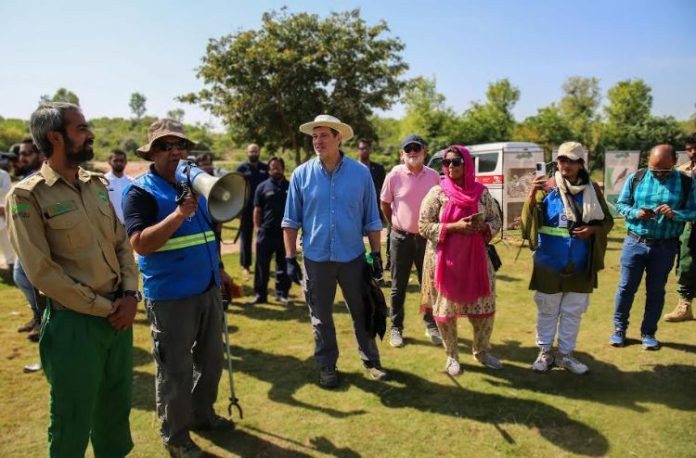
ISLAMABAD, APR 22 /DNA/ – Deputy Chief of Mission (DCM), U.S. Embassy Islamabad, Andrew Schofer on Monday said plastic pollution in the natural ecosystems of the Capital is a complex issue that demanded a stakeholder inclusive intervention to protect mother from the scourge of plastic pollution. 

Addressing the World Earth Day cleanup activity at the Kinara Park near Rawal Lake, organized by the U.S. Embassy, Islamabad Wildlife Management Board (IWMB) and Friends of Margalla Hills National Park, the US envoy demanded enhanced mass mobilization and education to take responsibility for protecting natural ecosystems dwindling due to increased anthropogenic activities.

The Earth Day recalls mankind’s efforts to recognize its responsibility towards environmental conservation and preservation. It started back in 1970 after whooping impacts of industrialization initiated to degrade land, air, water and soil on the planet to celebrate the mother earth’s beauty and call for action to address threatening challenges to the environment.

The theme for this year is Planet Vs Plastics as the menace of plastic pollution has casted mind-blowing impacts on human health, ecology and marine life at large as 1-2 million tonnes of global plastic produced rests in the oceans leading to death of an estimated 100,000 or more marine mammals, turtles and one million seabirds every year.

Schofer said, “Your environment is your home and it is necessary to give it back once enjoying all its resources. However, it’s important to ensure and pass on awareness to masses on plastic pollution. The issue of plastics is very complex and needs government, civil society, volunteers, academia and activists response to resolve the crisis,” he said.

DCM, Andrew Schofer thanked the IWMB and the Friends of Margalla Hills National Park for joining the cleanup activity. 

He termed the cleaning activity and important opportunity for the Embassy staff to engage in the cleanup work to stir motivation for beating plastic pollution.

“This is not only the place where we work, it is where we live and it’s our home too. All of us enjoyed hospitality of Pakistani friends and the parks around the capital with unique environmental features,” he said. 

He hoped that since it was the Earth Day and a cleaning activity was held at the park to create awareness on reducing single-use plastics, and littering to control plastic pollution, more people would join the drive and follow suit the endeavour to protect mother nature.

Unity Foods Set to Host the 7th Edition of Leaders in Islamabad Business Summit

Unity Foods Set to Host the 7th Edition of Leaders in Islamabad Business Summit

DNA

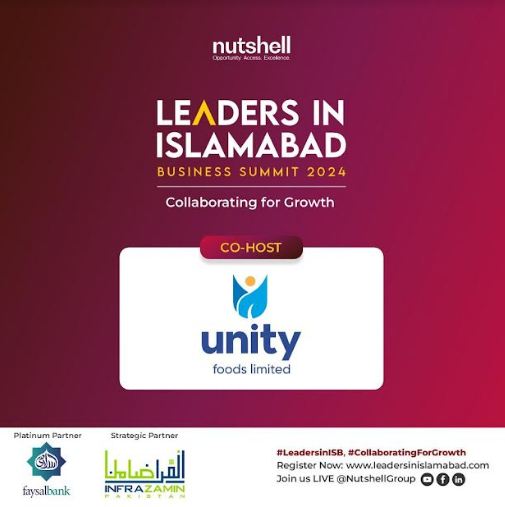
Islamabad, April 22 – The 7th Edition of the Leaders in Islamabad Business Summit (LIIBS), Pakistan’s premier corporate event, is set to be hosted in the capital city on April 23rd and 24th, 2024. Unity Foods stands as a proud supporter of the conference that brings together global leaders, strategists, innovators, and futurists to discuss and shape the business landscape of tomorrow.

Under the overarching theme of “Collaborating for Growth,” LIIBS 2024 aims to foster cooperative efforts among industry stakeholders to drive sustainable leadership initiatives within the country. Sponsorship of the holistic event signifies the commitment of Unity Foods to facilitating discussions, influencing strategic frameworks, and executing ideas that contribute to the sustainable development of Pakistan’s business ecosystem.

The Summit this year will welcome distinguished government representatives, including Muhammad Aurangzeb, Federal Minister for Finance & Revenue; Prof. Ahsan Iqbal, Federal Minister for Planning, Development & Special Initiatives; Senator Dr. Musadik Malik, Federal Minister for Petroleum & Water Resources; Sardar Awais Ahmad Khan Leghari, Federal Minister for Energy (Power Division); and Shaza Fatima Khawaja, Minister of State for IT & Telecom along with a diverse array of corporate leaders from across different industries in the country.

“We are honored to continue our partnership with Nutshell for the Leaders in Islamabad Business Summit as the principal sponsors and co-host, said Mr. Farrukh Amin, CEO, Unity Foods while expressing his commitment towards the annual leadership conference. “At Unity Foods, we envision a future where collaborative efforts drive sustainable growth and prosperity in Pakistan’s business landscape. Through innovative and mechanized infrastructure, we are committed to ensuring food security and excellence in the country. LIIBS 2024 provides a platform to engage in meaningful dialogue and shape strategic frameworks that will contribute to the nation’s economic development.”

The two-day conference will welcome senior executives from leading firms in Pakistan’s finance, education, technology, agriculture, telecom, logistics, energy, media and digitalization sectors. 

Australian HC opens ‘The guiding light’ exhibition

Australian HC opens ‘The guiding light’ exhibition

Mehtab Pirzada

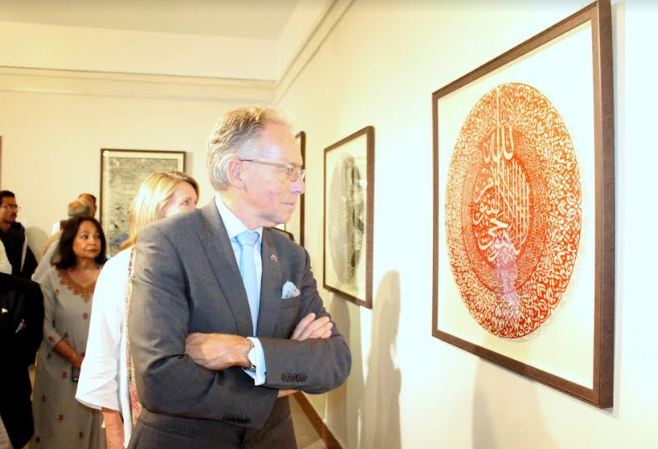
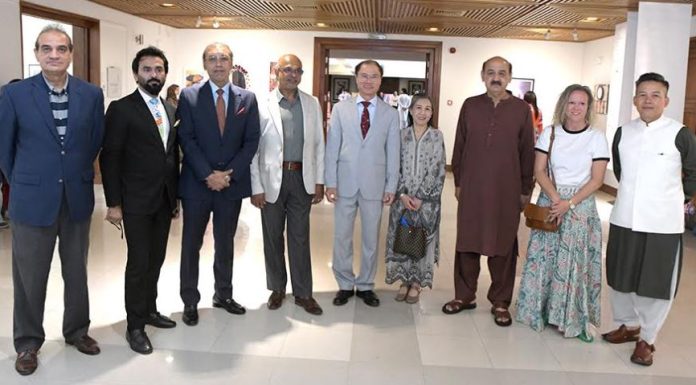
Islamabad, The Pakistan National Council of Arts (PNCA) presented the highly anticipated solo exhibition by acclaimed artist Mr. Tusif Ahmad, titled “The Guiding Light.” The exhibition, hosted by the Visual Arts Division, opened its doors on Monday, 22nd April, at 2 PM, marking a significant cultural moment in the capital’s art scene.

The inauguration, graced by His Excellency, Mr. Neil Hawkins, the Australian High Commissioner, and Mr. M. Ayoub Jamali, Director-General of PNCA, received an enthusiastic reception.

“Tusif Ahmad’s art serves as a beacon of cultural understanding and appreciation,” remarked Mr. Hawkins during the inauguration. “Having had the pleasure of encountering his works firsthand, I am truly inspired by his ability to convey the beauty and depth of Islamic art through his intricate paper-cutting designs.”

Tusif Ahmad, hailed for his mastery in papercutting art, skillfully unveiled the beauty of Islamic art through his intricate designs, calligraphy, and illustrations depicting verses and surahs from the Holy Quran. Drawing inspiration from his teacher, the esteemed artist Sadequain, Tusif incorporates hidden illustrative symbols into his works, adding depth and meaning to each piece.

Mr. Tusif Ahmad, a renowned paper-cutting artist, brings forth a mesmerizing collection that beautifully showcases the essence of Islamic art. Drawing inspiration from his rich cultural heritage and guided by his mentor, the esteemed artist Sadequain, Tusif’s journey into the world of art has been profound and captivating.

Having relocated to Australia in 2006, Tusif discovered his passion for paper cutting art, a medium that allows him to express the beauty of Islamic narratives with intricate designs and verses from the Quran. His dedication to promoting dialogue, harmony, and cultural appreciation shines through in each meticulously crafted piece.

“We are delighted by the overwhelming response to The Guiding Light exhibition,” said M. Ayuob Jamali, Director General- PNCA. “Tusif Ahmad’s work truly embodies the spirit of cultural exchange and artistic innovation, and we are grateful to all who joined us in celebrating his talent and vision.”

The exhibition will not only feature Tusif’s stunning artworks but will also include an Artist Talk & Workshop on Papercut Art on 24th April 2024, from 11 am to 1 pm. Those interested in participating in the workshop can register via email at [email protected].

The exhibition will be open for viewing from 10 am to 4 pm daily, with the exception of Saturdays when the gallery will be closed. We invite art enthusiasts and cultural connoisseurs to join us in experiencing the beauty and depth of The Guiding Light as we celebrate the talent and vision of Mr. Tusif Ahmad.

Security Forces neutralize eleven terrorists in KP operations: ISPR

Security forces kill four terrorists in D.I.Khan

Rawalpindi, 22 APR /DNA/ – leven terrorists have been sent to hell in two different operations in Khyber Pakhtunkhwa.

An intelligence based operation was conducted in Dera Ismail Khan District on reported presence of terrorists. During conduct of the operation, after an intense fire exchange, ten terrorists were successfully neutralised and sent to hell.

In another encounter in North Waziristan District, own troops effectively engaged the terrorists’ location as a result of which one more terrorist was sent to hell.

The killed terrorists remained actively involved in numerous terrorist activities in the area against security forces as well as the innocent civilians. Arms & ammunition were also recovered from them.

Locals of the area appreciated the operations by the Security Forces, who remain determined to eliminate the menace of terrorism from the country.

Iran’s Pragmatic Approach towards Afghan Taliban

Iran’s Pragmatic Approach towards Afghan Taliban

Dr. Muhammad Akram Zaheer

Iran’s relationship with the Afghan Taliban is characterized by complexity and caution, as the two are not traditional allies. Tehran’s approach to the Taliban is influenced by numerous bilateral and regional factors, including historical animosities and disputes. One significant source of tension is the sectarian divide, as Iran, a predominantly Shia Muslim country, has a longstanding ideological rift with the Sunni Taliban. Additionally, a longstanding dispute over water resources adds to the contentious relationship. Despite these challenges, Iran has not adopted the hostile stance it took towards the Taliban in the 1990s; instead, it has sought to establish a more pragmatic and normalized relationship with the group since the latter’s takeover of Kabul in August 2021. Iran’s cautious approach to the Taliban’s ascent to power was rooted in its desire to see the withdrawal of US and Western forces from Afghanistan, which Tehran viewed as a potential source of regional stability. This shift in Iran’s stance toward the Taliban marks a significant departure from its previous confrontational interactions with the group. Overall, Iran’s engagement with the Taliban regime is a balancing act aimed at securing its own interests while navigating the complex geopolitical landscape of the region.

Iran’s current overtures toward the Taliban reflect its strategy of seeking alternatives to the US-dominated global order and its pragmatic approach towards achieving specific objectives in Afghanistan. While anti-American sentiment is not the primary driver of Tehran’s cautious engagement with the new Afghan government, Iran hopes to address its own security and political concerns through this relationship. These include the growing terror threat from the Islamic State-Khorasan Province (ISKP), the critical issue of water supply to eastern Iran, and the migration of Afghan refugees. Iran’s approach has been pragmatic and aims to deepen trust with Kabul, even though it has not officially recognized the Taliban regime.Despite allowing visits from prominent Afghan opposition leaders such as Ahmed Massoud and Ismail Khan, Iran understands that no domestic Afghan group currently poses a credible threat to the Taliban’s consolidated control. The major challenge to the Taliban, and by extension Iran, comes from ISKP, whose extremist agenda and violent attacks pose a significant threat to regional stability and security. ISKP’s strict interpretation of sharia law and anti-Shi’a stance makes it an inveterate enemy of Tehran.The mutual threat posed by ISKP has encouraged Iran and the Taliban to set aside their differences and collaborate on counter-terrorism efforts. Iran’s intelligence minister has publicly acknowledged cooperation with the Taliban against ISKP fighters, while Iranian parliamentarians have praised collaborative efforts that have prevented terrorist attacks. This counter-terrorism partnership offers Iran benefits, including greater border security and opportunities for joint intelligence operations with the Taliban.Such cooperation helps Iran address internal critics of its relationship with the fundamentalist Sunni Taliban by emphasizing the importance of these efforts for national and regional security. Terrorist attacks, such as those in Kerman, have prompted calls in Iran to increase security along the Afghan border. At a recent UN Security Council meeting, Iran highlighted the regional security risks posed by terrorism, drug trafficking, and border control deficiencies in Afghanistan. Through its pragmatic engagement with the Taliban, Iran seeks to safeguard its interests while contributing to regional stability.

Iran’s policy toward the Afghan Taliban is heavily influenced by geopolitical considerations, much like the approaches of China and Russia. Iran is cautious about the potential influence of other regional powers in Afghanistan and seeks to maintain a delicate balance with the Taliban regime to preserve its own interests. By refraining from actions that could provoke the Taliban, Iran aims to consolidate its position with the new leadership in Kabul, thereby limiting the impact of its rivals, particularly Saudi Arabia, the United States, and Pakistan. Tehran’s primary concern is to prevent Pakistan from dominating the power dynamics in a Taliban-led Afghanistan, making the containment of Islamabad’s influence a central focus of its strategy. Moreover, Iran is wary of any aggressive moves by the Taliban along the Iran-Afghanistan border that could embolden Sunni extremist groups within Iran, posing a threat to the country’s security and stability.

Tehran’s engagement with the Taliban in Afghanistan is significantly influenced by economic considerations. With Afghanistan’s foreign aid still suspended, the Taliban is keen to develop economic ties with Iran to sustain its economy. Currently, about one-third of Afghanistan’s total imports are sourced from Iran, making the economic relationship between the two neighbors crucial. Tehran has taken proactive measures to bolster bilateral trade and commerce, such as hosting the Iran-Afghanistan Joint Economic Committee meeting in November 2023. This meeting was notable as it was the first since the Taliban regained power, and it was attended by the Taliban’s Deputy Prime Minister, Mullah Abdul GhaniBaradar. The meeting resulted in the decision to create working groups to identify obstacles hindering economic cooperation between the two countries. On February 24, 2024, a technical delegation from Afghanistan visited Iran to evaluate the facilities of the Chabahar Free Trade Zone, a key area that could accommodate Afghan exports. Such visits not only foster economic ties but also help in improving political relations between the two nations. Tehran’s interest in using Afghanistan as a transit route for Iranian energy and other exports aligns with India’s vision of Afghanistan as a gateway to Central Asia. In a recent meeting in Kabul, Indian diplomat J.P. Singh discussed with the Taliban’s foreign minister Amir Khan Muttaqi the potential for enhancing economic cooperation and initiating bilateral transit using Iran’s Chabahar Port, commonly known as the “Golden Gate” to landlocked Afghanistan. These developments indicate a growing interdependence among Iran, Afghanistan, and India, driven by economic and strategic interests.

The Helmand River dispute between Iran and Afghanistan is a complex and potentially volatile issue rooted in the shared dependence on the river for water, agriculture, and livelihood amidst increasing scarcity. The Helmand River’s origin in Afghanistan’s Hindu Kush Mountains and its flow into Iran’s Sistan-Baluchestan province creates a vital connection for both nations. Afghanistan’s construction of a dam on the river for irrigation and power generation has heightened tensions, prompting violent clashes between the two sides. Despite these disputes, mutual cooperation would be beneficial for both nations as they seek to manage their water resources sustainably and avoid further conflict.Iran’s hosting of anti-Taliban Afghan opposition leaders and significant numbers of Afghan refugees grants it tactical leverage against the Taliban, potentially complicating Iran-Afghan relations. In January 2022, Tehran hosted a meeting between the Taliban and Afghan opposition figures, indicating a willingness to engage with both sides. The Taliban’s focus on diplomatic acceptance has likely prevented open criticism of Iran’s support for Afghan opposition leaders. This complex relationship between Iran and Afghanistan is further complicated by Iran’s recruitment of Afghan Shi’a Hazara fighters for proxy conflicts in Syria through the Fatemiyoun Division. This recruitment strategy serves Iran’s regional interests, but its impact within Afghanistan remains a source of concern for regional stability.Iran’s political influence in Afghanistan is less pronounced compared to other countries in the region, such as Syria and Iraq. However, the possibility of deploying the Fatemiyoun brigade within Afghanistan to aid the Taliban against ISKP could strengthen ties between Iran and the Taliban while advancing Iran’s strategic interests. Nevertheless, such an intervention could provoke significant political and security repercussions in the region and draw reactions from neighboring powers. The Helmand River dispute, coupled with the broader geopolitical dynamics, poses challenges to maintaining peace and stability in the region.

          The rapprochement between Revolutionary Iran and the fundamentalist Taliban is a significant development that should not be underestimated. Despite their divergent ideological foundations, strategic cultures, and geopolitical attitudes, both sides are cautiously working towards reconciliation. Iran’s approach to the Taliban seems to be driven by a pragmatic view that the new Taliban regime may be more reformed and less harmful than its previous iteration. This cautious engagement aims to foster regional stability, with both sides seeking avenues to build on their newfound rapport. However, regular communication and cooperation are essential to navigate potential misperceptions and hurdles.It is too early to predict the future trajectory of Iranian-Afghan relations, as the region remains volatile and prone to geopolitical rivalries and jihadist terrorism. The common threat posed by the Islamic State Khorasan Province (ISKP) could foster closer intelligence and law enforcement cooperation. Yet, ongoing border skirmishes and disputes over water-sharing continue to test the depth of Iran-Taliban ties.Domestically, Iran’s conservative and reformist factions hold differing views on long-term engagement with the Taliban. Nonetheless, the Iranian regime appears to prioritize broader geopolitical objectives over certain negative aspects of its relationship with Afghanistan. As a result, engaging with the Taliban has become a pragmatic necessity for Iran to advance its interests and maintain stability in the region.

Pak-Iran trade volume ‘not acceptable’, to be increased to $10bn, says Raisi

Pak-Iran trade

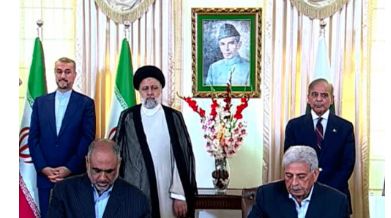
ISLAMABAD, APR 22 – Iran and Pakistan decided on Monday to increase the trade volume between the two countries to $10 billion, Iranian President Ebrahim Raisi said, saying that the existing volume was “not acceptable”.

Raisi made the remarks during a joint address with Prime Minister Shehbaz Sharif, after the two held a meeting in Islamabad following the Iranian president’s arrival in Pakistan on a three-day official visit — the first of its kind by any head of state after the February 8 general elections.

Raisi said: “We are committed to strengthening relations at high levels. […] Economic and trade volume between Iran and Pakistan is not acceptable. We have decided as a first step to increase trade volume between our two countries to $10bn.”

Meanwhile, addressing the joint press conference, PM Shehbaz called for strengthening Pak-Iran ties despite challenges: “We have to keep this relationship strong despite the challenges we both face.”

The premier said that the two leaders had detailed discussions on “religious, cultural, diplomatic, investment, and security matters” during their meeting.

The prime minister, calling Raisi an “ocean of political intelligence and wisdom”, and said Iran would progrss further under his leadership.

“Pakistan and Iran can prosper and our borders can see progress,” the prime minister said, expressing hope that the shared border can adapt for trade and business.

PM Shehbaz further expressed hope for the relationship between the neighbours to be “firm and stable”, noting that today was an opportunity to “make this friendship a happy and prosperous one”.

The prime minister also said in Farsi: “Our eyes cooled down, heart became joyful after seeing you.” He also recited a verse by Persian poet Mohammad-Taqi Bahar.

In their meeting, PM Shehbaz and Raisi agreed on joint efforts to eradicate terrorism, state-run Radio Pakistan reported. The two leaders also held discussions to increase trade and communication links between their countries, the report added.

PM Shehbaz was quoted as saying that the entire nation welcomed the Iranian president’s visit while Raisi expressed gratitude to the premier for the warm welcome accorded to him, Radio Pakistan said.

Earlier, Foreign Minister Ishaq Dar called on the Iranian president in Islamabad, where they discussed bilateral relations as well as regional and global developments, Radio Pakistan reported.

Raisi and Dar “emphasised the importance of enhanced efforts to further consolidate bilateral relations in diverse fields”, the report said, adding that the two leaders also “affirmed commitment to peace and constructive dialogue for resolving regional challenges”.

Foreign Minister Ishaq Dar meets Iranian President Ebrahim Raisi in Islamabad. — PID
The Foreign Office (FO) had stated earlier that Raisi would visit Lahore and Karachi and meet with the provincial leadership.

It should be mentioned that the Sindh government has announced a public holiday on April 23 (Tuesday) in the Karachi division to “avoid inconvenience to the general public” upon the visit of foreign dignitaries.

Raisi’s arrival
Iranian President Ebrahim Raisi arrives in Pakistan on a three-day official visit. — DawnNewsTV
Raisi arrived at the Islamabad airport and was received by Housing Minister Mian Riaz Hussain Pirzada and Pakistan’s Ambassador to Iran Mudassir Tipu, the FO said.

“The Iranian president is accompanied by his spouse and a high-level delegation comprising the foreign minister and other members of the cabinet and senior officials,” it said.

Iran’s news agency IRNA said that Raisi’s visit was taking place at the invitation of President Asif Ali Zardari.

“President Raisi will visit several Pakistani cities to meet with a number of ulema, elites and business persons there. A visit to Lahore, the cultural heart of Pakistan, is also among the president’s plans,” it said.

Iranian President Ebrahim Raisi at the Prime Minister’s House alongside Prime Minister Shehbaz Sharif. — DawnNewsTV
Shortly after reaching the country, the Iranian president arrived at the Prime Minister’s House where he was received by Prime Minister Shehbaz Sharif. He was presented with a guard of honour and anthems of both countries were also played on the occasion.

Later, the two also planted a tree in a lawn at the Prime Minister’s House to mark International Earth Day.

According to Radio Pakistan, the two leaders would also participate in a ceremony regarding naming a highway in Islamabad as Iran Avenue. It said that the two would also hold a press talk, adding that the prime minister would also host a lunch for the Iranian president and his delegation.

Significance of visit
Raisi’s visit to Pakistan had been in doubt as Middle East tensions rose after Iran launched an unprecedented missile and drone attack on Israel a week ago in retaliation for an airstrike on the Iranian consular building in Damascus earlier this month. Then, on Friday, central Iran received what was presumed to be an Israeli attack.

Tehran has played down the apparent Israeli attack and indicated it had no plans for retaliation, a response that appeared gauged towards keeping the conflict in Gaza from expan­ding to a regionwide conflict.

Pakistan has called on all parties in the Middle East to “exercise utmost restraint and move towards de-escalation”.

Raisi’s visit is also significant as Pakistan and Iran seek to mend ties after tit-for-tat missile strikes in January. The cross-border strikes stoked regional tensions already inflamed by Israel’s military offensive in Gaza.

Tehran carried out the strikes against an anti-Iran group in Pakistan the same week it targeted Iraq and Syria. Pakistan responded with a raid on “militant targets” in Sistan-Balochistan province. Both countries have accused each other of sheltering militants in the past.

Pakistan is also counting on a joint gas project with Iran to solve a long-running power crisis that has sapped its economic growth.

A $7.5 billion Iran-Pakistan gas pipeline intended to feed Pakistani power plants was inaugurated with great fanfare in March 2013. But the project immediately stagnated following international sanctions on Iran.

Tehran has built its own section of the 1,800-kilometre pipeline, which should eventually link its South Pars gas fields to Nawabshah.

In February, the outgoing caretaker government in Pakistan approved the construction of an 80km section of the pipeline, primarily to avoid the payment of billions of dollars in penalties to Iran due to years of delays.

Washington has warned that Pakistan could face US sanctions, saying it does not support the pipeline going forward.

Mr. PM national game is at the verge of annihilation

Mr. PM national game is at the verge of annihilation

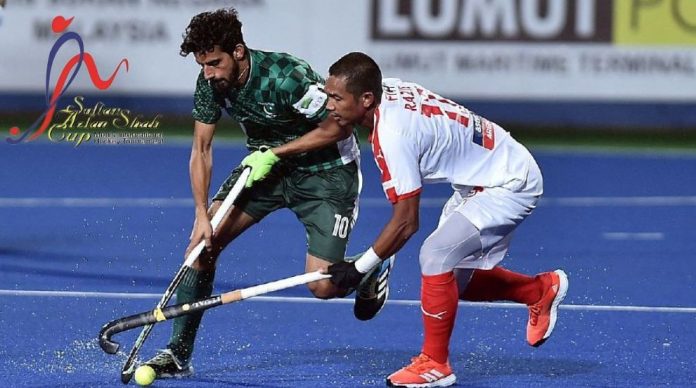
The Azlan Shah Hockey Cup in Malaysia is fast approaching, slated for the first week of May. However, there’s still uncertainty looming over which team will represent Pakistan in the tournament: the one currently undergoing rigorous training in Islamabad or the contingent stationed in Karachi

Ansar M Bhatti

ISLAMABAD: In the fabric of a nation’s identity, few threads are as vibrant and enduring as its national game. It symbolizes unity, heritage, and the collective spirit of its people. Yet, behind the cheers of victory and the camaraderie of competition, there lies a sobering reality: the imminent threat of annihilation facing our national game.

The roots of this crisis run deep, stemming from a variety of factors that have gradually eroded the foundation of our national game. Economic constraints, dwindling interest among the youth, and neglect from authorities have all contributed to its decline. What was once a source of national pride and passion has now been reduced to a mere shadow of its former self.

At the heart of this predicament lies a lack of vision and commitment from those in positions of power. The custodians of our national game, including policymakers and sports administrators, have failed to institute meaningful reforms and initiatives to revitalize its dwindling fortunes. Instead, bureaucratic inertia and short-sighted decision-making have allowed the decay to fester unchecked.

Presently, Pakistan’s hockey landscape is divided into two factions, each asserting its authority over the Pakistan Hockey Federation. Tariq Bugti, appointed by caretaker Prime Minister Anwaarul Haq Kakar, helms one faction, while the other is led by Karachi MP Ms. Shehla Raza. This schism marks an unprecedented occurrence in Pakistan hockey, with two parallel federations vying for legitimacy. Consequently, players find themselves grappling with uncertainty, unsure of which federation to heed for guidance.

In recent times, the Pakistan Football Federation found itself in turmoil, resulting in a ban from FIFA due to internal strife among its officials. Unless significant improvements occur, the Pakistan Hockey Federation could find itself in a similar predicament, as it remains under close scrutiny by the IHF.

The Azalan Shah Hockey Cup in Malaysia is fast approaching, slated for the first week of May. However, there’s still uncertainty looming over which team will represent Pakistan in the tournament: the one currently undergoing rigorous training in Islamabad or the contingent stationed in Karachi. With the departure for the event set for May 2 at the latest, or possibly by May 4, clarity is urgently needed to ensure proper preparations and logistics for the participating team.

Given that sports administration falls under the jurisdiction of the Inter-provincial Coordination ministry led by Ahsan Iqbal, it is crucial for the Ministry to address the current situation. Recently, Ahsan Iqbal received a briefing regarding the status of the hockey federation, wherein it was emphasized that Tariq Bugti is the rightful President of the Federation. However, an official communication from the Ministry is still awaited, leading to unease among both players and fans. Clarifying the Ministry’s stance promptly would not only alleviate concerns but also foster transparency and confidence within the sporting community.

The Prime Minister being the Chief Patron of the hockey federation ought to look into the matter personally. Ultimately, the fate of our national game rests in our hands. It is a reflection of who we are as a nation and what we aspire to be. Let us rise to the occasion and stand united in our resolve to preserve and protect the legacy of our national game for posterity. The time to act is now, before it’s too late.

NZ stun Pak to keep series alive

NZ stun Pak to keep series alive

Sports Desk

Put into bat first, Pakistan racked up 178/4 in the allotted 20 overs, courtesy of a blistering cameo at the backend by Shadab.

RAWALPINDI: Mark Chapman’s swashbuckling half-century powered New Zealand to beat Pakistan by seven wickets in the third T20I of the five-match series here at Pindi Cricket Stadium on Sunday.

Earlier, openers Babar Azam and Saim Ayub scripted a solid start for the home side, notching up 54 runs in the batting powerplay.

Saim, who was the core aggressor of the opening stand, fell victim to Ish Sodhi after a brisk knock.

He smashed five boundaries and a six on his way to a 22-ball 32.

His dismissal halted the flow of runs for Pakistan as only 30 runs came off the next overs.

The dire need to accelerate took a toll on Babar as he too, fell victim to Sodhi, in an attempt to play a big shot.

He scored 37 off 29 deliveries with the help of four boundaries and a six.

Pakistan then lost two more batters Mohammad Rizwan — retired hurt — and Usman Khan in quick succession, resulting in them slipping to 103/3 in 12.5 Overs.

But a sensational partnership between Muhammad Irfan Khan Niazi and Shadab Khan bolstered the team’s total.

The duo added 62 off 34 deliveries before Shadab perished in the penultimate over.

He remained the top-scorer for Pakistan with a quickfire 41 off 20 deliveries which featured four boundaries and two sixes.

Meanwhile, Irfan stood his ground firm and carried his bat all the way through with an unbeaten 30 off 20 deliveries.

Sodhi led the bowling charge for New Zealand with two wickets while Duffy and Michael Bracewell made one scalp each.

By-elections big message for PTI, says Atta Tarar

Atta Tarar

PTI voters have not come out today [during by-elections],” he claimed while, adding that his party was satisfied with the poll results and had always accepted the election outcomes.

DNA

Lahore: Federal Information Minister Attaullah Tarar said on Sunday that the voter turnout of today’s by-elections was a “big message” for the Pakistan Tehreek-e-Insaf (PTI).

“PTI voters have not come out today [during by-elections],” he claimed while, adding that his party was satisfied with the poll results and had always accepted the election outcomes.

Calling upon political parties to use relevant forums for addressing the election-related complaints, he was of the view that the Nawaz Sharif-led party used to raised objections to the election results “within the system” but the PTI founder Imran Khan always tried to “bulldoze” the existing mechanism.

Commenting on today’s electoral event, the PML-N stalwart said that voter turnout is usually low in by-polls and only loyal supporters head towards the polling stations for their parties.

He expressed satisfaction over the by-polls and said that results were pouring in from all polling stations, as well as Form 45 was being issued. 

US Embassy Deputy Chief honors FC KP Team at 120th Murree Brewery Polo Cup

US Embassy Deputy Chief honors FC KP Team at 120th Murree Brewery Polo Cup

Diplomats attend 120th Murree Brewery Polo Cup

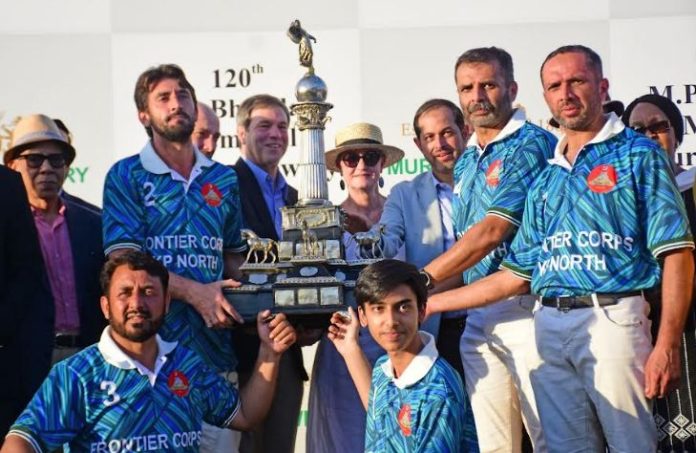
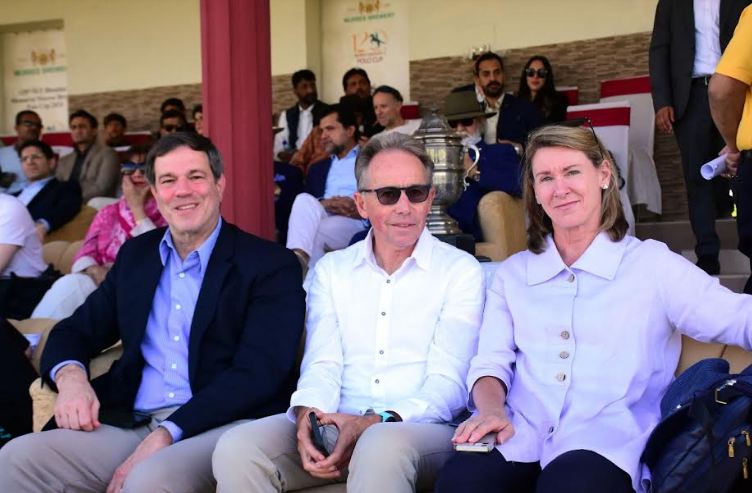
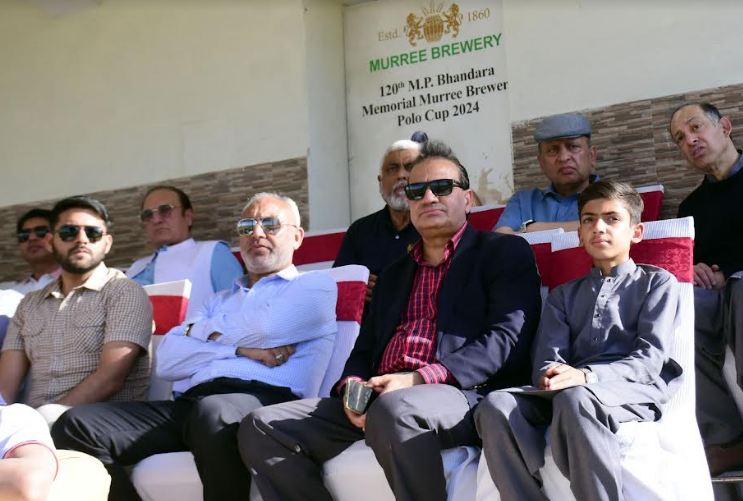
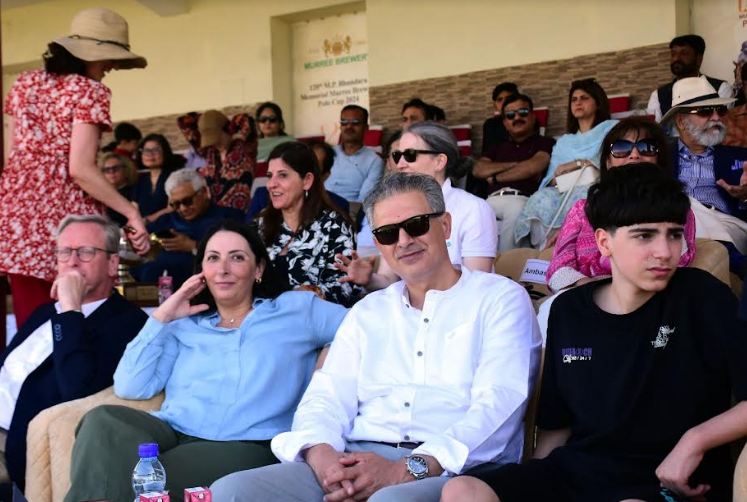
RAWALPINDI, APR 21 /DNA/ – Deputy Chief of Mission at the US Embassy, Andrew Schofer, joined by other ambassadors and high commissioners, presented the winners’ trophy to the FC KP team at the 120th Murree Brewery Polo Cup. The thrilling tournament took place at the Rawalpindi Race Course Ground, drawing a large crowd of diplomats and polo enthusiasts.

The event saw FC KP emerge victorious, showcasing exceptional skill and sportsmanship on the field. CEO of Murree Brewery, Isphanyar Bhandara, extended a warm welcome to all guests.

The 120th Murree Brewery Polo Cup served as a testament to the enduring popularity of the sport and provided a platform for friendly competition and cultural exchange among participants and spectators alike.

Stay Connected

64FansLike
60FollowersFollow

Latest Reviews

Exchange Rates

USD - United States Dollar
EUR
1.17
GBP
1.35
AUD
0.72
CAD
0.73