Home Blog Page 949

IHC judges’ letter Full court meeting decides to give an institutional response

IHC judges’ letter Full court meeting decides to give institutional response

DNA

Islamabad: A full court meeting was held under the chairmanship of Chief Justice Amir Farooq to give suggestions to the Supreme Court on the issue of the letter written by 6 judges of the Islamabad High Court to the Supreme Judicial Council regarding the interference of the executive in the affairs of the judiciary.

Sources said that in the meeting, the proposals of all the judges of the High Court, the two district and session judges of East and West of the federal capital were considered.

The full court session headed by Chief Justice Islamabad High Court Justice Aamir Farooq continued for two and a half hours, in which 8 judges including 6 judges who wrote letters to the Supreme Judicial Council participated.

Islamabad High Court Chief Justice Aamir Farooq, Justice Mohsin Akhtar Kayani, Justice Mian Gul Hasan Aurangzeb, Justice Tariq Jahangiri, Justice Babar Sattar, Justice Sardar Ejaz Ishaq, Justice Arbab Muhammad Tahir and Justice Taman Rifat Imtiaz attended the meeting.

Similarly, Justice Mian Gul Hasan Aurangzeb, who did not sign the letter, also attended the meeting.

After hearing the Supreme Court’s suo moto notice, the suggestions received from all the judges were considered in the meeting held for the suggestions requested from the High Court.

According to the sources, the Islamabad High Court has unanimously decided to give an institutional response to any interference in the judiciary.

The Islamabad High Court unanimously decided to send all the proposals to the Supreme Court, no disagreement was raised on the proposal of any judge in the full court, the draft of the proposals will be prepared and sent to the Supreme Court before the scheduled date.

It should be noted that in the light of the Supreme Court orders, the High Court judges have already submitted their proposals.

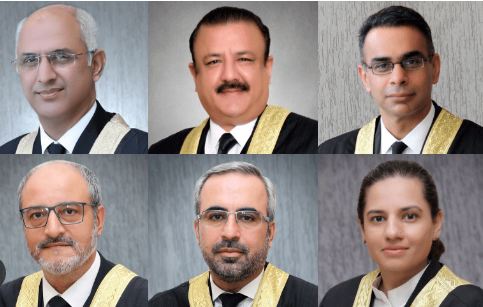
Last month, six IHC judges addressed a letter to the Supreme Judicial Council (SJC), highlighting alleged interference by agencies in judicial affairs, including attempts to pressure judges and conduct secret surveillance in their homes.

Dated March 25, the letter, signed by IHC Justices Mohsin Akhtar Kayani, Tariq Mehmood Jahangiri, Babar Sattar, Sardar Ejaz Ishaq Khan, Arbab Muhammad Tahir, and Saman Rafat Imtiaz, outlined seven instances of such alleged interference and intimidation by intelligence officials.

The open letter, copies of which were distributed to all apex court judges, suggested the possibility of a judicial convention to discuss the interference of intelligence operatives with judicial functions and the intimidation of judges, which undermines judicial independence.

In response, the Supreme Court initiated suo motu proceedings based on the letter, soliciting input from all high court judges on the matter.

Following the Supreme Court’s directive, the IHC chief justice requested suggestions from the judges by Monday.

Iranian President Raisi arrives in Karachi on third leg of Pakistan visit

Iranian President Raisi arrives in Karachi on third leg of Pakistan visit

KARACHI, APR 23: After his engagements in Islamabad and Lahore, Iranian President Seyyed Ebrahim Raisi, accompanied by a delegation, arrived in Karachi on the third leg of his visit to Pakistan on Tuesday.

Sindh Chief Minister Murad Ali Shah, Governor Kamran Tessori and others noted members of the provincial cabinet extended a warm welcome to the visiting dignitaries upon their arrival at the Jinnah International Airport in Karachi.

President Asif Ali Zardari’s daughter, First Lady Aseefa Bhutto, was also present at the airport to welcome the visiting dignitaries.

Strict security measures were in place at the airport and its surrounding areas to avoid any untoward incident.

Sources privy to the development said that besides meetings with the governor and the chief minister, the Iranian president will address members of the business forum and attend a dinner at the CM House.

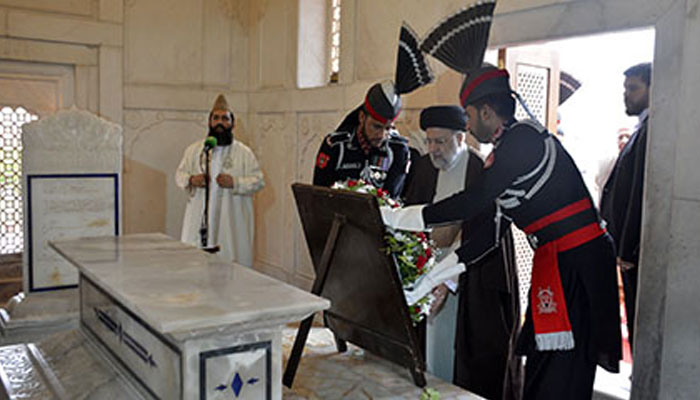
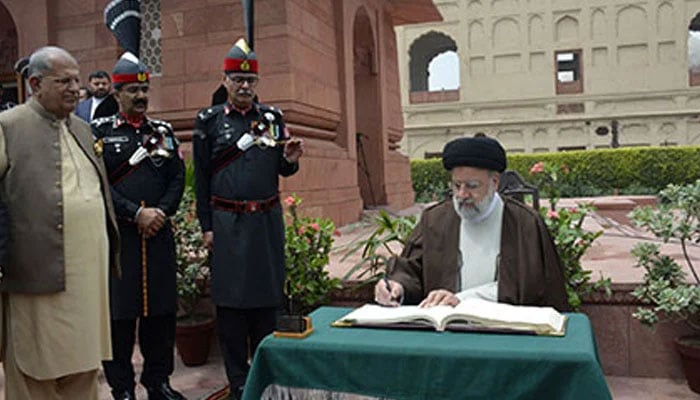
Iranian President Seyyed Ebrahim Raisi visits Quaid-e-Azam Mohammad Ali Jinnahs mausoleum. — PTV/ Screengrab
Iranian President Seyyed Ebrahim Raisi visits Quaid-e-Azam Mohammad Ali Jinnah’s mausoleum. — PTV/ Screengrab 

Later, President Raisi visited Quaid’s mausoleum and paid his respects to the founder of Pakistan.

After visiting the Quaid’s mausoleum, the Iranian president met Sindh governor at the CM House. They discussed various issues, including matters of mutual interest during the meeting.

Both the officials agreed to increase cultural exchanges between the two countries.

“Pakistan and Iran have historical relations,” said the Sindh governor. While the Iranian president thanked Governor Tessori for the warm welcome and excellent hospitality.

Iranian president conferred honorary PhD degree

In recognition of his services for further bolstering ties between the two nations, Sindh Governor Tessori, being the chancellor of the University of Karachi, awarded an honorary degree of doctorate in philosophy (PhD) to the Iranian president.

Speaking on the occasion, the governor said: “It is an honour for the University of Karachi to confer the honourary degree on the Iranian president.”

Stressing the need for ideal relationship among the Muslim countries, the governor said that he wanted to furthering strengthen ties between Pakistan and Iran.

He invited the Iranian business community to invest in Pakistan and take advantage of favourable and business friendly environment in the country.

He wished Iranian investors to join the Special Investment Facilitation Council (SIFC) projects.

The Iranian president touched down in Islamabad on Monday on a three-day official visit from April 22 to 24. Raisi’s visit is the first by any head of state to Islamabad after the February 8 general election.

Strict security measures have been taken, including air surveillance along with temporary internet suspension during the dignitary’s movement. To avoid the consequent inconvenience to the general public, the provincial governments announced a local holiday in Lahore and Karachi.

President Raisi’s Lahore visit

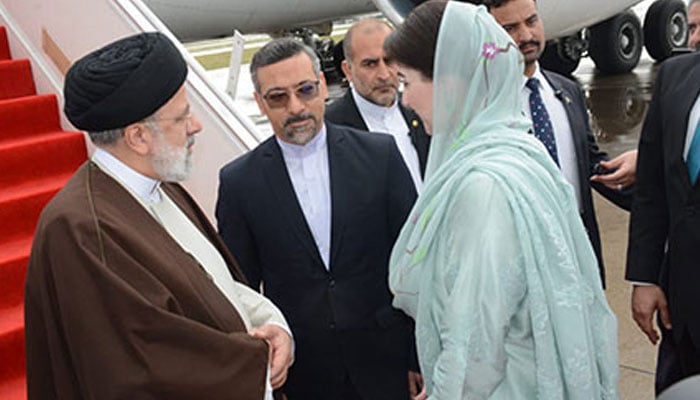
Earlier today, the Iranian president arrived in Lahore where he was warmly welcomed by Punjab Chief Minister Maryam Nawaz at the Allama Iqbal International Airport.

Punjab CM Maryam Nawaz welcomes Iranian President Seyyed Ebrahim Raisi at the airport on April 23, 2024— X/ForeignOfficePk/pmln_org

Later, the visiting dignitary held separate meetings with CM Maryam and Governor Baligh Ur Rehman. The governor hosted a luncheon in honour of the distinguished guest and his delegation.

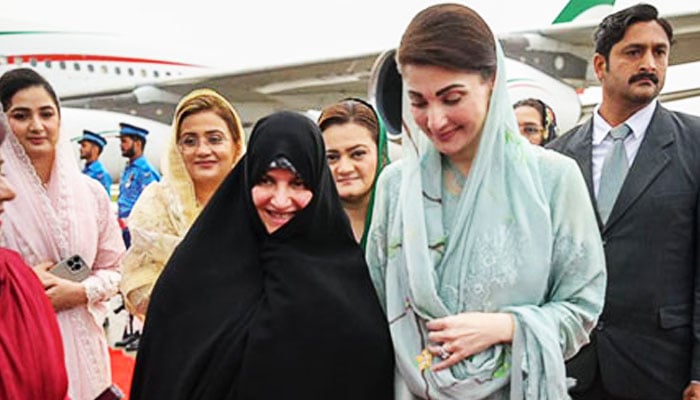
Punjab CM Maryam Nawaz receives Iran’s First Lady Jamileh Alamolhoda at the airport on April 23, 2024— X/ForeignOfficePk/pmln_org

Meanwhile, the president visited the historic Government College University (GCU) and addressed the students and faculty.

Addressing the students, President Raisi said that Pakistan and Iran enjoy deep-rooted historical, religious, cultural and civilizational ties and both countries were keen to develop centres of arts and learning besides the promotion of arts and sciences.

“It was need of the hour to pay special attention to arts, sciences and technology to shine among the comity of nations.”

On Allama Iqbal, the Iranian President said the poetry of poet of the East Allama Dr Muhammad Iqbal enjoys special acceptance in Iran.

He said Pakistan and Iran maintain the same stance on the issue of Palestine issue. President Raisi said Iran would further enhance its cooperation with Pakistan in the energy and other sectors.

Meanwhile, the Iranian president visited the mausoleum of national poet Allama Dr Muhammad Iqbal in Lahore. He laid a floral wreath at the mausoleum and offered fateha.

Iranian President Seyyed Ebrahim Raisi lays floral wreath at the mausoleum of National Poet Allama Dr Muhammad Iqbal on April 23, 2024— X/ForeignOfficePk/pmln_org

President Raisi penned his admiration for Iqbal’s literary legacy in the visitors’ book.

Iranian President Seyyed Ebrahim Raisi pens his admiration for Allama Muhammad Iqbals literary legacy in the visitors book on April 23, 2024— X/ForeignOfficePk/pmln_org
Iranian President Seyyed Ebrahim Raisi pens his admiration for Allama Muhammad Iqbal’s literary legacy in the visitors’ book on April 23, 2024— X/ForeignOfficePk/pmln_org

High Commissioner of Australia pays courtesy call on PM Shehbaz

High Commissioner of Australia pays courtesy call on PM Shehbaz

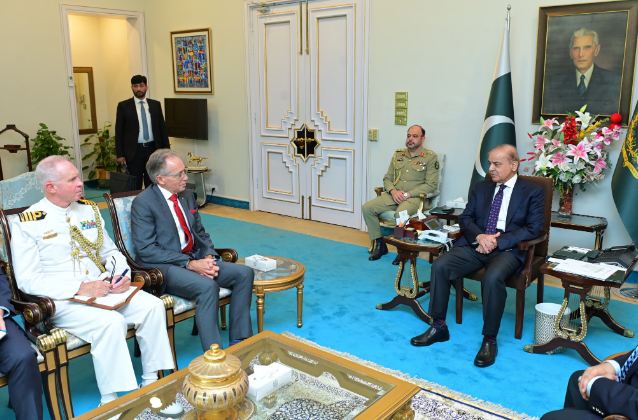
ISLAMABAD, APR 23 /DNA/ – High Commissioner of Australia, Neil Hawkins paid a courtesy call on Prime Minister Muhammad Shehbaz Sharif earlier today.

The Prime Minister said both Pakistan and Australia enjoyed friendly and cordial ties. He expressed satisfaction on the current state of bilateral relations and said Pakistan was keen to enhance cooperation in agriculture, livestock, mining etc. He also invited Australian companies and experts to share their expertise and best practices with Pakistani counterparts. The Prime Minister also acknowledged the contribution of Pakistani diaspora in Australia, including a significant number of students.

The High Commissioner reaffirmed the desire of the Australian side to strengthen its ties with Pakistan and assured the Prime Minister of his cooperation. He also briefed the Prime Minister on some of the upcoming bilateral engagements, including visits of senior Australian defence officials to Pakistan. While noting the priority areas indicated by the Prime Minister, the High Commissioner also expressed interest in strengthening sports and cultural cooperation, particularly in cricket and hockey. 

The High Commissioner also praised the valiant efforts of Pakistani security guards whose bravery saved many lives during the recent stabbing attacks in Sydney. One Pakistani security guard lost his life while another was injured during the attack in which five women were killed.

US warns Pakistan of ‘possible sanctions’

US cautions against 'potential threat of sanctions' over Pakistan-Iran agreements

“We advise anyone considering business deals with Iran to be aware of potential risk of sanctions”

Agencies

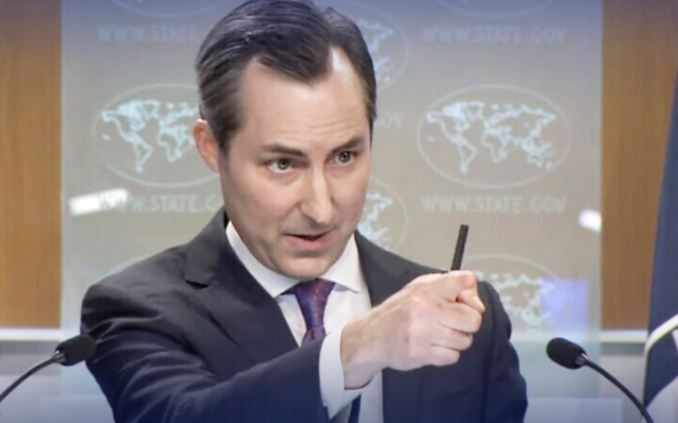
WASHINGTON: The United States State Department Tuesday warned against the “potential risk of sanctions” in light of the business deals between Pakistan and Iran following Iranian President Seyyed Ebrahim Raisi’s official visit to Pakistan.

Without mentioning Pakistan in a statement, a State Department spokesperson said: “We advise anyone considering business deals with Iran to be aware of the potential risk of sanctions.”

The spokesperson, while commenting on Islamabad’s trade and economic ties with Washington, said US is Pakistan’s biggest export market and one of its largest investors.

“We have also been a leading investor in Pakistan for the past 20 years. Pakistan’s economic success is in both of our interest, and we look forward to continuing our partnership,” they added, stressing the significance of economic relations between both countries.

However, considering Islamabad’s closeness with Tehran amid President Raisi’s three-day visit and the bilateral agreements signed between the two nations, the spokesperson hinted towards these relations being at risk with chances of potential sanctions owing to Iran’s position in the world.

“We do not preview potential sanctions actions,” the spokesperson said and referred journalists to the Government of Pakistan for any further comment on the matter.

The State Department’s statement comes at a crucial standpoint in Pakistan’s history as it works to advance its “brotherly ties” with Iran by welcoming their president, months after their cross-border skirmishes in January.

The statement also holds significance following Iran’s standing at the global level, owing to its regional activities and recent clashes with Israel after it attacked its embassy in Damascus, killing two senior members of the Islamic Revolutionary Guard Corps.

Meanwhile, both Tehran and Islamabad also signed a total of eight accords on varying subjects to enhance cooperation in the different fields including trade, science technology, agriculture, health, culture, and judicial matters with both PM Shehbaz and President Raisi witnessing the momentous occasion.

In his address during joint presser with the prime minister, the Iranian president revealed that both Pakistan and Iran have agreed to increase trade volume to $10 billion.

The signing ceremony also marked the ratification of a security cooperation agreement between the governments of both countries.

RCCI Think Tank Session on Economy of Pakistan and Future Challenges

RCCI Think Tank Session on Economy of Pakistan and Future Challenges

DNA

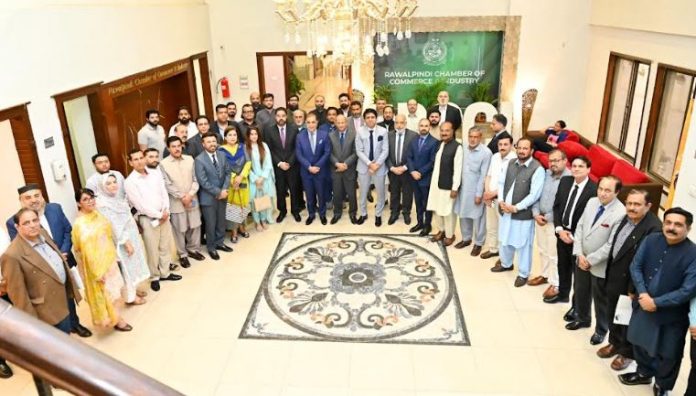
Rawalpindi: The Rawalpindi Chamber of Commerce and Industry has organized a Think Tank session on “Economy of Pakistan and Future Challenges”. President RCCI Saqib Rafiq along with Chairman RCCI Think Tank and Group Leader, Sohail Altaf and Vice Chairman Think Tank and Former President, Raja Amer Iqbal  welcomed the Chief Guest  Dr. Ashfaque Hasan Khan (SI), renowned Economist and Director General, NUST Institute of Policy Studies (NIPS).

Senior Vice President Muhammad Hamza Sarosh, Vice President Faisal Shahzad, Immediate Past President Ch. Nadeem A. Rauf, Former Presidents, Executive Committee members, representatives from tax bar associations, women members & distinguished members of RCCI also attended the session.

In his welcome remarks President RCCI Saqib Rafiq shared the scope and aim of RCCI Think Tank and remarked that the idea behind this was not to identify the challenges and shortcomings in the economy but at the same time provide the viable solutions to address economic challenges.

Chairman Think Tank, Mr. Sohail Altaf said that Pakistan stands at a critical juncture in its economic journey. While we have made significant strides in recent years, we also face formidable challenges that require bold and decisive action. From structural weaknesses to external pressures, from socio-economic differences to environmental sustainability, the road ahead is fraught with both obstacles and opportunities.

Dr. Ashfaque Hasan appreciated RCCI’s initiative of Think Tank on Economy and assured his support and assistance for recommendations and input for policy reforms. Dr. Ashfaque Hasan also gave a detailed presentation on current economic challenges, historical data analysis and way forward to come out of the economic hurdles.

Vice Chairman Raja Amer Iqbal in his address shared historical background and data analysis on Pakistan GDP Growth and Debt obligations.

A detailed Question and Answer session was also held where participants asked questions on different factors, including, inflation, interest rate, cost of production, competitiveness, amnesty schemes, IMF loans, industrialization and debt payments.

Sitara-i-Imtiaz, President’s Award, and Tamgha-i-Imtiaz presented to outstanding officers

Eminent Scientists, Engineers honored with civil awards by Pakistan's president

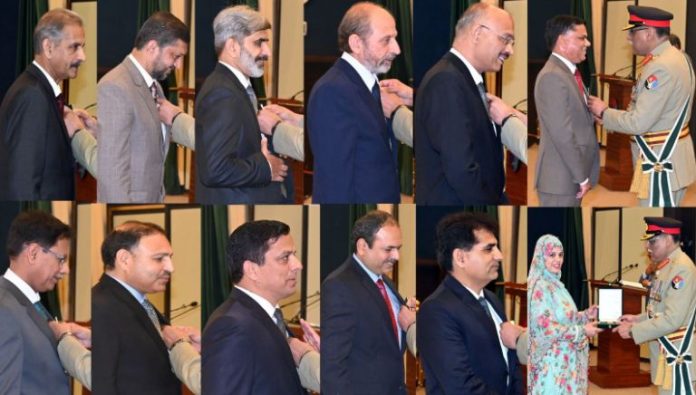
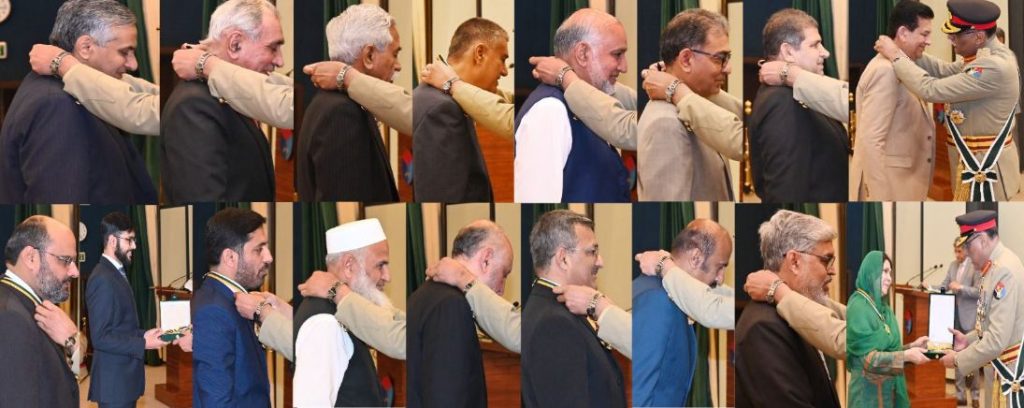
RAWALPINDI, APR 23 /DNA/ – On behalf of the President of Islamic Republic of Pakistan, General Sahir Shamshad Mirza, Chairman Joint Chiefs of Staff Committee, conferred civil awards to the eminent scientists and engineers from strategic organizations for their meritorious services at the Investiture Ceremony held at Chaklala Garrison, Rawalpindi.

A total of 35 awardees were conferred with the awards, 7 x officers were awarded Sitara-i-Imtiaz, 15 x officers were awarded President’s Award for Pride of Performance and 13 x officers were awarded Tamgha-i-Imtiaz.

Chairman JCSC lauded the services of the scientists and engineers; hailing them as the nation’s unseen heroes. While addressing the awardees, the CJCSC said, “You, all, have selflessly contributed towards strengthening the foundations of a resilient nation; and for that, we are forever indebted to you.”

Pakistan may lose around 50 billion if 10 sticks cigarette packs are allowed

Pakistan may lose around 50 billion if 10 sticks cigarette packs are allowed

ISLAMABAD, APR 23 /DNA/ – Expressing profound concern, health activists questioned recent efforts by the tobacco industry to introduce 10-stick packs. This move, according to the activists, not only jeopardizes the progress made in tobacco control but also directly impacts children and low-income individuals, who are most vulnerable to the harmful effects of tobacco consumption.

Malik Imran Ahmed, Country Head, Campaign for Tobacco Free Kids, stated that the attempts for 10-stick packs by the tobacco industry are deeply troubling. It will not only undermine the progress made in tobacco control but also directly target children and low-income individuals who are most vulnerable to the harmful effects of tobacco consumption. Many countries in the world have banned single-stick and small-stick packet sales because they’re easier to purchase for children, youth, and low-income groups, and hence the health burden is very high.

Imran added that the tobacco industry’s claims of being one of the highest contributors to the economy are blatant lies. This contribution is forced in the forms of direct taxes. And even those taxes are not up to the benchmark recommended by WHO and World Bank. In fact, the tobacco industry is still making a profit from this situation by indulging in practices such as under-reporting, price adjustment, and pooling its products in the illicit market. If 10-packet cigarettes are allowed for export, there’s a solid chance that the tobacco industry will sell them in the local market. And when they’ll be questioned, they’ll say they’re counterfeit products. Therefore, to keep people safe, it’s better not to allow these packets in the first place. The tobacco industry doesn’t have any legal permits for these so-called export deals, and the burden caused on the national exchequer by these deadly products is much higher than these so-called export deals. So the government should stay vigilant.

Dr. Khalil Ahmad Dogar, Program Manager, SPARC, said that with approximately 31.9 million adults aged 15 years and above reported as current tobacco users, constituting nearly 19.7% of the adult population, the dire consequences of tobacco consumption extend far beyond individual health.

Dr. Khalil urged the government to take proactive measures to protect public health and prevent the exploitation of children and low-income groups by the tobacco industry. We call upon the authorities to reject any proposals that endanger the health and well-being of our citizens.

Pakistani Cultural, Educational Center inaugurated at Belarusian State University

Educational Center

DNA

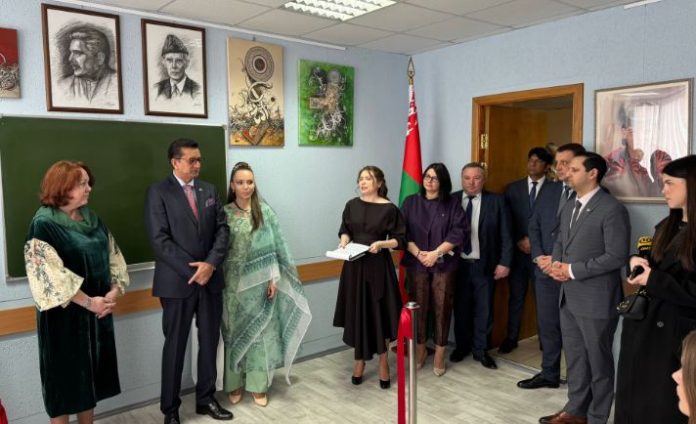
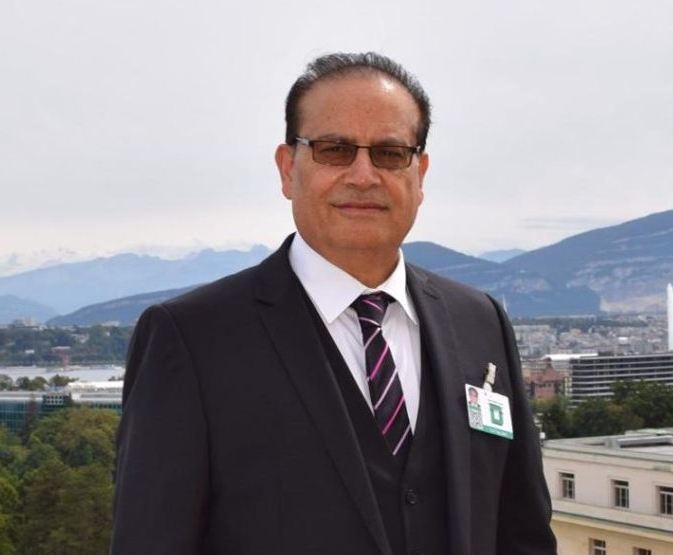
Minsk, Belarus – In a significant stride towards fostering cultural ties and educational exchange, the Embassy of Pakistan in Belarus and the Belarusian State University of Culture and Arts (BSUCA) held an opening ceremony of the Pakistani Cultural and Educational Center today. The center was jointly inaugurated by Sajjad Haider Khan, Ambassador of Pakistan to Belarus, and the Vice Rector of the University, with numerous faculty members, media, and students in attendance.

Located at the heart of the university campus, the newly unveiled Centre provides for permanent display of cultural artifacts, literary works, coffee table books on Pakistan that highlight the cultural heritage and tourism attractions of Pakistan. The display also features exquisite artworks by renowned Pakistani artists and photographs that capture the picturesque landscapes of Pakistan. Additionally, the center is adorned with vibrant Pakistani truck art, handmade wall hangers, intricately embroidered bags and wallets, brass artefacts and wooden vases that showcase the rich artisan skills of Pakistan.

During the inauguration, Ambassador Khan expressed deep gratitude towards the university for hosting the center on its campus.

The Vice Rector of the University extended his appreciation to the Embassy for its generous contributions to the establishment of the center and praised the successful collaboration. The two sides reaffirmed their commitment to furthering cultural cooperation.

Punjab CM, Iranian President emphasize people-to-people contacts for bilateral growth

Punjab CM, Iranian President emphasize people-to-people contacts for bilateral growth

Lahore, APR 23 /DNA/ – Chief Minister Punjab Maryam Nawaz held a meeting with Iranian President Dr. Seyyed Ebrahim Raisi in Lahore today.

They reaffirmed commitment to enhancing cultural exchanges and fostering people-to-people contacts. The Chief Minister explained the measures taken in the province for socio-economic development and expressed a desire for close engagement with Iranian cities and provinces for mutual benefit and prosperity.

President Raisi appreciated the rich cultural history of the city of Lahore and expressed admiration for the poet of the East, Dr. Muhammad Iqbal, who is revered in Iran as “Iqbal-e-Lahori”.

Wakhan Corridor: Vital for CPEC and BRI

Qamar Bashir

By: Qamar Bashir

An important development that went unnoticed by the Pakistan media radar was the construction of a 50-kilometers stretch of the Silk Road, extending from the Wakhan district of Afghanistan to the Chinese border. This road was inaugurated by Afghanistan’s Ministry of Rural Rehabilitation and Development in September last year (2023). With the construction of this road, Afghanistan has established a direct link with China, reducing the distance and lowering the cost for the import and export of commercial goods between the two countries. Meanwhile, the Afghan and Chinese governments are feverishly discussing the commencement of traffic through the Wakhan Corridor, a narrow strip of territory in northeastern Afghanistan stretching 350 kilometres to China and separating Tajikistan from Pakistan. It is located at the confluence of three mountain ranges — the Hindu Kush, Karakoram, and the Pamir, forming the Pamir knot.

The construction of the road and the serious discussions between the two governments are highly significant and have the potential to impact Pakistan both positively and negatively. Positively, it could extend the China-Pakistan Economic Corridor (CPEC) from Pakistan to Tajikistan through Afghanistan, and link the landlocked Central Asian states with the Karachi and Gwadar ports. Negatively, it could reduce Afghanistan’s reliance on Pakistan for transit trade.

With the opening of the Wakhan Corridor, a highway linkage between Tajikistan and Pakistan through Azad Kashmir could be established, creating a significant opportunity for enhanced trade and economic activity in the region. This route could facilitate the trade of various goods such as minerals, textiles, agricultural products, and manufactured goods. Central Asian states could export natural resources such as oil, gas, and minerals, while importing goods like textiles, machinery, and electronics. Though, the trade volume would depend on several factors such as infrastructure capacity, ease of trade regulations, and market demand. However, with the potential opening of new trade routes and access to the warm waters of the Arabian Sea through Karachi and Gwadar Port, trade volumes could be substantial.

If CPEC were extended through Afghanistan to Central Asia, the benefits for Pakistan could be significant. It could further enhance Pakistan’s strategic position as a trade hub, increase connectivity with Central Asian markets, and boost economic growth. In dollar terms, the benefits could include increased revenue from transit fees, expanded trade opportunities, and improved economic ties with regional countries. This would strengthen Pakistan’s geopolitical position and the  development of infrastructure along this route would stimulate economic growth, create job opportunities, and foster cultural exchanges and people-to-people connections, contributing to greater understanding and cooperation in the region.

Additionally, the corridor would provide Central Asian states with a shorter and more efficient route to access international markets via Gwadar Port, which is strategically important due to its location at the mouth of the Strait of Hormuz. It would enhance its strategic importance by providing an alternative route for trade that bypasses traditional chokepoints and improves connectivity between South Asia, Central Asia, and the Middle East, facilitating greater economic cooperation and integration in the region.

For Afghanistan, the direct access to China through the Wakhan border would enable Afghanistan to carry out its entire trade of over $1.3 billion with China through this route. As a result, Pakistan could potentially experience a reduction in its geopolitical advantage and security leverage over Afghanistan. Alternatively, Afghanistan would reduce its dependence on Pakistan and vulnerability to disruptions in transit trade, thus weakening Pakistan’s ability to use security concerns. Afghanistan would potentially seek closer ties with other regional powers, diminishing Pakistan’s geopolitical leverage in the region.

For China, the opening of the Wakhan border would give a much-needed boost to extending Chinese reach to diverse markets as part of the Belt and Road Initiative. However, security and cross-border terrorism will continue to be Beijing’s primary focus. Therefore, the opening of the road will largely depend on the ability of the Taliban to maintain control over Afghan territory, prevent the emergence of any real threat to China’s domestic security by groups and militants inside Afghanistan, and Chinese willingness to set up a border control regime and construct necessary infrastructure such as roads, highways, and bridges to link Afghanistan with China through the Wakhan Corridor.

After the opening of this trade route, all traffic originating from Afghanistan for China, either via sea or through the Karakoram Highway, will be diverted toward the Wakhan border. This route will assume high significance as China is increasingly tapping many areas of Afghanistan for mining precious and rare minerals. China has signed impressive deals, including a $10 billion deal for access to lithium deposits in Afghanistan and a $3 billion deal to develop Afghanistan’s largest copper deposit near Kabul. In Badakhshan, China is exploring minerals such as gold, lapis lazuli, and various gemstones. Additionally, China is exploring copper reserves in Balkh, a rare mineral in Helmand, and iron ores in Herat, as well as iron, copper, and precious stones in Kandahar.

The current route for transporting millions and millions tonnes of minerals every day extracted from Afghanistan and transported to China involves using the Karakoram Highway, which is far more costly compared to transportation directly from Afghanistan to China through the Wakhan Border. The distance between Badakhshan Province and Xinjiang’s capital, Urumqi, via the Wakhan Border is approximately 600-800 kilometers, whereas the distance from Badakhshan’s capital, Faizabad, to Urumqi via KKH is approximately 1500 km. This means that all minerals being transported through the Karakoram Highway will be diverted to the Wakhan Border, depriving the KKH of a significant amount of traffic and depriving the government of Pakistan of transit fees, levies, customs duties, and Pakistani trucks of business, negatively impacting all businesses along the entire route.

The development of the Wakhan Corridor has transitioned from a mere discussion to a tangible possibility. This vital route is set to open soon, presenting Pakistan with numerous strengths, weaknesses, opportunities, and threats. It is imperative for the government of Pakistan to proactively position itself to assess the current scenario and future prospects. A comprehensive vision, mission, strategies, and plan should be developed to fully exploit the potential of the Wakhan Corridor and leverage the strategic significance of the region, which is at the center of imperial ambitions and geopolitical complexities. Failure to do so may result in Pakistan missing out on significant economic and strategic opportunities while facing potential challenges from shifting geopolitical dynamics in the region.

By: Qamar Bashir

Former Press Secretary to the President

Former Press Minister to the Embassy of  Pakistan to France Former MD, SRBC

Stay Connected

64FansLike
60FollowersFollow

Latest Reviews

Exchange Rates

USD - United States Dollar
EUR
1.17
GBP
1.35
AUD
0.72
CAD
0.73