Home Blog Page 948

Assistant-Secretary-General UNDP calls on the Foreign Minister

Assistant-Secretary-General UNDP calls on the Foreign Minister

ISLAMABAD, APR 24: /DNA/ – Assistant Secretary General (ASG), United Nations Development Programme (UNDP), Ms. Kanni Wignaraja, called on Foreign Minister Mohammad Ishaq Dar, today.

The Foreign Minister appreciated the important work carried out by the UNDP since the catastrophic floods in Pakistan in 2022, on the Sustainable Development Agenda and climate action.

The Foreign Minister said expressed Pakistan‘s desire to enhance cooperation with the UNDP in strengthening climate resilience and adaptation and pursuing Sustainable Development Goals (SDGs) and socio-economic development. He emphasized that the UN system could play a critical role in supporting developing countries in terms of the achievement of SDGs as well as climate agenda, by galvanizing international solidarity and cooperation.

The Foreign Minister added that assistance to countries most vulnerable to climate change will enable them to rebuild from natural disasters and to adapt to the ever more frequent and more ferocious climate impacts.

Assistant Secretary General Wignaraja thanked the Government of Pakistan for its continued cooperation and support to the UNDP in implementation of various projects in Pakistan. She also appreciated Pakistan’s active diplomatic engagement at the United Nations.

CAMEA, FES host Int’l conference on Pakistan’s geopolitical role

CAMEA, FES host Int’l conference on Pakistan's geopolitical role

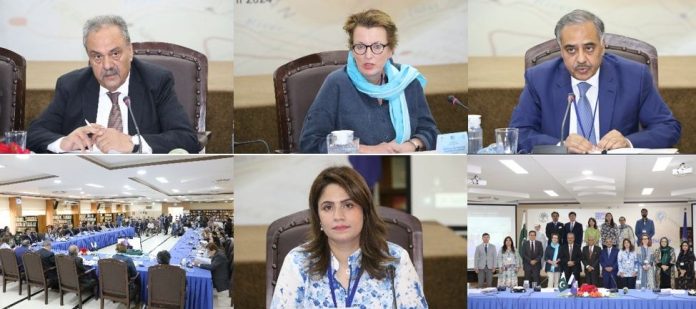
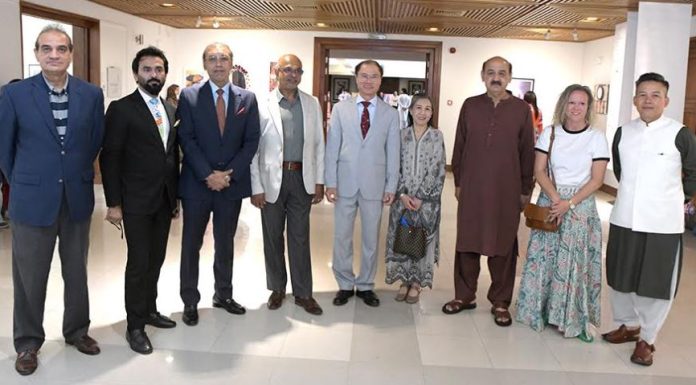
ISLAMABAD, APR 24 /DNA/ – The Centre for Afghanistan, Middle East & Africa (CAMEA) at the Institute of Strategic Studies Islamabad (ISSI), in collaboration with the Friedrich-Ebert-Stiftung Pakistan Office, hosted a one-day International Conference, titled “Pakistan in the Emerging Geopolitical Landscape.” The Chief Guest at the Inaugural Session was Ambassador Asif Durrani, Pakistan’s Special Representative on Afghanistan.

Ms. Amina Khan Director CAMEA, in her introductory remarks, brought attention to the undergoing major transformations around the globe highlighting the need for increased global partnerships and equitable progress. Amidst these global shifts, the world, including Pakistan, stands at a critical juncture as regional dynamics, especially in West and Central Asia, impact Pakistan’s foreign policy and security, emphasizing the necessity to embrace international norms to navigate the complexities of the current global landscapes. While shedding light on the deliberations of the one-day Conference, Ms. Khan said that it will focus on three key areas: Afghanistan post-August 2021, the evolving Middle East, and emerging non-traditional security threats in Afghanistan, Central Asia, and the Middle East; issues that are vital for Pakistan’s future.

Ambassador Sohail Mahmood Director General ISSI, in his welcome remarks, stated that amidst historic transformations globally the world today is marked by intense polarization, volatility, and fragmentation. Traditional threats including major-power competition and wars in Europe and the Middle East are accentuated by new challenges such as cyber warfare and climate change. Some see a ‘decline of the West’ and ‘rise of the rest.’ A shift towards multi-polarity is also discernable. Similarly, technology adds complexity, from informational warfare to AI militarization. He stressed that Pakistan, like others, grapples with these complexities, from cross-border terrorism to volatility of food and fuel prices to extreme weather events. From instability in South Asia to conflict in the Middle East, and cross-border terrorism to hybrid warfare, Pakistan faces the fallout of a complex array of challenges. Like others, Pakistan must navigate these threats and challenges while seizing available opportunities. He added that “it is our considered view that for tackling all these phenomena successfully – on national and international scale – a collaborative approach is indispensable.” Specifically, an approach that puts a premium on adherence to time-honoured principles of inter- state relations and international law, renewal of faith in equal security, fostering international cooperation and solidarity, and strengthening cooperative multilateralism. Furthermore, an approach that prioritizes peaceful coexistence, eschews zero-sum perspectives, and seeks win-win outcomes is critically important.

Ambassador Asif Durrani, Pakistan’s Special Representative on Afghanistan, while making his remarks stated that Pakistan’s neighbourhood is infested with challenges, conflicts and disputes, further compounded with major power rivalry. In the past, the Iranian revolution, the breakup of the Soviet Union and the rise of China created new paradigms for regional peace and security. He underlined the concern that the Ukrainian crisis is considered the revival of the Cold War rivalry; the Israel-Hamas conflict has further compounded the global war; Iran-Israel conflict if not contained urgently can engulf the Middle East and beyond.  While shedding light on Pakistan, Ambassador Durrani emphasized that Pakistan’s unique geography enhances its geopolitical and geo-economic value as it sits in the middle of important regions like Central Asia and the Middle East. Moreover, due to its position Pakistan has also suffered at the hands of conflict – post-Soviet withdrawal, American intervention in Afghanistan – in the past two decades. While talking about Pakistan’s internal and external challenges, Ambassador Durrani pointed out that Pakistan has been in a constant flux partly rooted in history and partly due to the unstable conditions in the region. He highlighted four important factors that impact Pakistan’s regional and global perspectives; Pakistan-India relations, the situation in Afghanistan, Pakistan’s proximity to the Middle East, and Pakistan-China relations. Concluding his remarks, Ambassador Durrani brought attention to the fact that the future outlook for Pakistan in the regional context points to a mixed picture: India continues to work on anti-Pakistan pursuits; the western border persists as an avoidable irritant in the short to medium term; and Iran-China relations offer a basis for a durable partnership in terms of security and economics. Moreover, the Indo-U.S. relations, flux in the Middle East politics, and Israel’s atrocities against the Palestinians pose a formidable challenge for Pakistan. While these challenges are alarming, they also underscore the importance for Pakistan to forge a stable regional policy prioritizing neighborhood.

Dr. Almut Weiland-Karimi, Country Director FES, Pakistan in her remarks stated that we are living in troublesome times with world order shifting from the West to the East and the ‘Global South.’ These transformations are not happening in isolation. Today the world is interconnected, impact of decisions made in South Asia have a close impact on other continents and regions across the globe. To meet this challenge the world must work together to benefit from the opportunities that exist, especially concerning issues that are a mutual threat or a challenge including climate change and the global economy. She stressed that there is a need to foster dialogues regarding these issues. Similarly, Pakistan is situated in an important neighbourhood and with the complex geopolitical environment it is equally important for Pakistan to navigate its position wisely. Concluding her remarks she extended her gratitude to all the speakers of the conference.

The Inaugural Session of the Conference was attended by a large number of academics, practitioners, think-tank experts, diplomats, and members of civil society and the media.

President Zardari, High Commissioner Hawkins pledge to strengthen Australia-Pakistan relations

President Zardari, High Commissioner Hawkins pledge to strengthen Australia-Pakistan relations

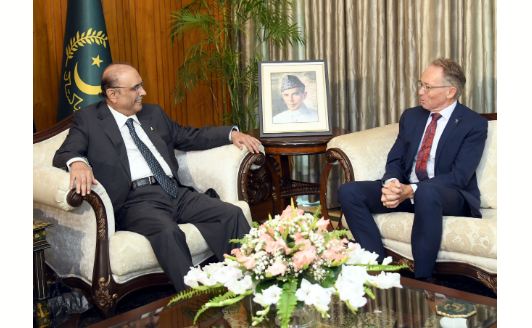
ISLAMABAD, APR 24 /DNA/ – High Commissioner of Australia to Pakistan, Neil Hawkins, called on President Asif Ali Zardari at Aiwan-e-Sadr.

During the meeting, both dignitaries discussed bilateral relations between Australia and Pakistan, emphasizing the importance of strengthening ties in various fields including trade, education, and cultural exchange.

High Commissioner Hawkins conveyed Australia’s commitment to further enhancing cooperation with Pakistan for mutual prosperity and development.

President for stronger economic and cultural ties with China

President for stronger economic and cultural ties with China

DNA

ISLAMABAD, 24 APR: President Asif Ali Zardari has stated that Pakistan and China enjoy long-term strategic relations, which need to be further strengthened in the areas of trade, economy, agriculture, people-to-people contacts, and culture. He underlined the need for both countries to continue to work together to take bilateral relations to new heights.

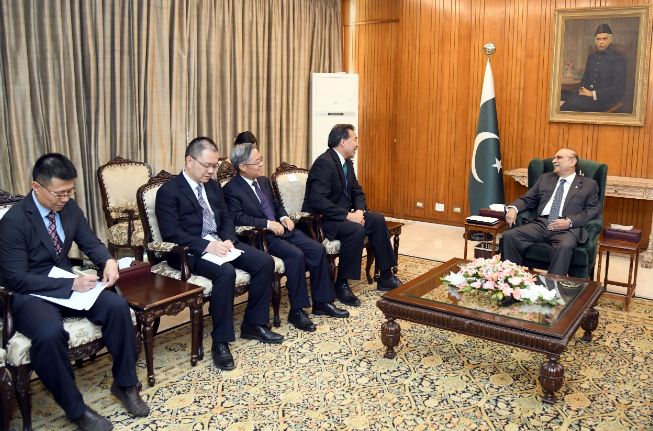
The President expressed these views while talking to the visiting Chairman of China International Development Cooperation Agency (CIDCA), Mr Luo Zhaohui, who along with his delegation called on him, at Aiwan-e-Sadr, today. The Ambassador of China to Pakistan, Mr Jiang Zaidong, the Deputy Chairman Planning Commission, Dr Jahanzeb Khan, and senior officials of the Chinese and Pakistani governments attended the meeting.

While reiterating Pakistan’s firm commitment to China Pakistan Economic Corridor (CPEC), the President said that Pakistan considered CPEC of immense strategic importance and was fully committed to the timely completion of all CPEC projects. Highlighting the importance of Gwadar Port, he said that Gwadar Port would not only promote regional connectivity but would also make the transport of goods to China cost-effective. He also suggested to undertake joint training projects to equip human resources with skills keeping in view the Chinese demand for skilled workforce.

Chairman of China International Development Cooperation Agency (CIDCA), Mr Luo Zhaohui, briefed the President about CIDCA’s role in Pakistan’s socio-economic development as well as its contributions in the health and education sectors. He also underlined the need to promote tourism and agricultural cooperation between the two countries.

The President expressed grief over the unfortunate terrorist attack on Chinese workers in Bisham, saying that Pakistan would make all-out efforts to provide a safe environment for the Chinese workers and investors in Pakistan.

The Chairman of CIDCA said that the enemies of the two countries wanted to harm bilateral relations but they would never succeed in their designs.

The President thanked the Government of China for its support to Pakistan and for playing a vital role in Pakistan’s economic development. He also appreciated CIDCA’s contributions to the rehabilitation of flood-affected people and reconstruction of schools in Khyber Pakhtunkhwa and Sindh, besides constructing housing units for Lady Health Workers in Sindh and Balochistan.

Ambassador Jemal, Climate Minister Romina launch green legacy initiative

Ambassador Jemal, Climate Minister Romina launch green legacy initiative

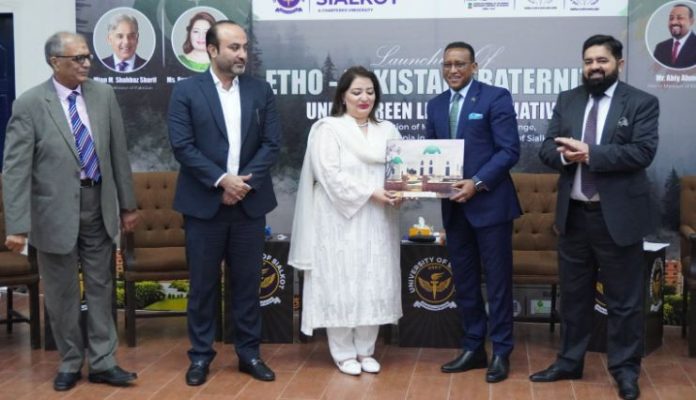
SIALKOT, APR 24 /DNA/ – Jemal Beker Abdula, Special Envoy and Ambassador of the Federal Democratic Republic of Ethiopia to the Islamic Republic of Pakistan, along with Coordinator to the Prime Minister of Pakistan on Climate Change with status of Federal Minister Romina Khurshid Alam on Tuesday launched the “Ethio-Pakistan Fraternity Under Green Legacy” initiative of Ethiopia’s PM Abiy Ahmed at the University of Sialkot in presence of government officials, religious community, businessmen, academia students, civil society and media.

The initiative was launched as part of a collaboration among the Embassy of the Federal Democratic Republic of Ethiopia, the Ministry of Climate Change and the University of Sialkot.

More than 200 plants of different indigenous species were planted under the “Ethio-Pakistan Fraternity Under Green Legacy” Initiative which was followed by a climate walk in the town which was participated by a large number of people.

Addressing the launching ceremony, H.E. Ambassador Jemal Beker expressed gratitude for the Government of Pakistan for joining hands with the Ethiopian Embassy for fostering brotherhood and fraternity between the two big nations.

“Today we gather here not only to save the planet earth but also connecting the two big and historic nation the heirs of civilizations and protectors of the rule-based world order while fighting together the global challenges such as terrorism and climate change,” the Ambassador remarked.

H.E. Ambassador Jemal Beker recalled the recent flash flood that brought devastation to Pakistan’s shore which, he had personally witnessed during his visit to tent cities in Sindh.

“Climate change is an existential threat that will not spare any place or area on this planet earth if we did not come together to combat this challenge which is not a problem for only Pakistan or Ethiopia but the rest of the world,” he said.

To this end, he said the Embassy of FDR Ethiopia launched the Green Legacy Initiative to contribute to the efforts of the Government of the Islamic Republic of Pakistan towards greener and cleaner future for the next generations.

The Ambassador said the Embassy along with other stakeholders would do massive plantation throughout the week in other major cities including Lahore, Faisalabad, Gujranwala, Sheikhupura and others.

“Our efforts in this regard are completely aligned with the vision of H.E. Dr. Abiy Ahmed who transformed Ethiopia under his Medemer philosophy which strongly advocates for aligning all the resources to provide home grown solutions to the home grown problems,” the Ambassador stressed.

He said H.E. Dr. Abiy Ahmed, Prime Minister of Ethiopia, mobilized the whole nation under the Green Legacy initiative and so far, more than 32.5 billion seedlings planted across the country in the last five years which included the saplings of fruits like avocado, papaya, banana, oranges, olives and many others.

Likewise, coffee, animal feed and floral plants were also planted that taking us closer to our target of 50 billion seedlings until 2025.

In addition to that, more than 150,000 nurseries were set up in the country as well as over a million jobs.

Speaking on the occasion, Romina Khurshid lauded Ambassador Jemal Beker Abdula for fostering fraternity between the two nations through Green Legacy Initiative.

The Coordinator to the Prime Minister of Pakistan said she was delighted to make a formal announcement regarding the collaboration between the Embassy of Ethiopia in Islamabad and the Ministry of Climate Change of Pakistan regarding the Ethio-Pakistan Fraternity Under Green Legacy Initiative.

She said Prime Minister HShehbaz Sharif had accorded the approval to formalize the collaboration at bilateral level between the two countries and assured of the Government of Pakistan’s strong commitment in this regard.

Palestinian Ambassador visits ICCI

Palestinian Ambassador visits ICCI

ISLAMABAD, APR 24 /DNA/ – Ambassador of Palestine Ahmed Jawad Amin Rabei has expressed immense gratitude to Pakistan government people and the business community for encompassing resolute support to the cause of an independent State of Palestine.

He said that Israeli actions in Gaza have created a history of atrocities which have embarrassed the entire humanity urging the international community to take concrete and immediate steps for the resolution of the Palestine issue.

The Palestinian Ambassador expressed these views while speaking at Islamabad Chamber of Commerce and Industry during his meeting with its President Ahsan Zafar Bakhtawari on Wednesday.

The envoy went on to say that he is well aware of the sentiments of the Pakistani nation for the Palestinian brothers and sisters and the way the Pakistan government is raising voice for the rights of the Palestinians and condemning the Israeli atrocities in Gaza. He also expressed his gratitude to the ICCI President Ahsan Zafar Bakhtawari for his whole-hearted support to the cause.

Ahsan Zafar Bakhtawari, President, Islamabad Chamber of Commerce and Industry said that the entire Pakistani nation stands united on the issue of Palestine and our hearts beat with the Palestinian people.  He said that the genocide of the innocent Palestinians is not acceptable at all and stressed that the world powers especially the United Nations play its role in stopping Israeli brutalities. He said that Pakistan supports the right of self-determination and establishment of a secure & sovereign Palestinian state to end this conflict. He assured that the business community of Pakistan is always ready to extend all possible support to the Palestinian brothers and sisters to mitigate their sufferings. He added that Islamabad Chamber of Commerce and Industry in collaboration with the National Disaster Management Authority will arrange the transportation of daily use items for the Palestinian families. 

Vice President Islamabad Chamber of Commerce and Industry in his welcome address introduced the office bearers and executive members with the guest. Secretary General United Business Group Zafar Bakhtawari said that the entire Pakistani nation feels the pain and sufferings of Palestinian brothers with the hope that the day is not far away when Palestinians will get liberation from the Israeli occupation and we will be able to offer prayers in Al-Aqsa mosque. Those who expressed their views on the occasion include Mr. Ashfaq Chheena,  Parveen Khan, Javaid Iqbal and Ashfaq Chattah. Khalid Chaudhry, Assad Haider, Malik Maqsood, Waseem Chaudhry and others were also present.

Pakistan, Iran agree on swift FTA finalization, target $10 b trade over five years

Pakistan, Iran agree on swift FTA finalization, target $10 b trade over five years

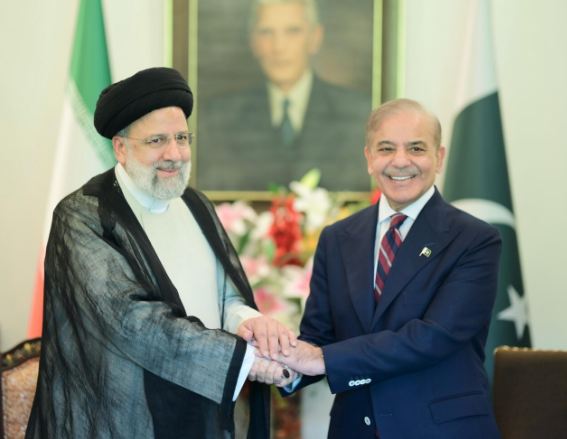
ISLAMABAD, Apr 24 (APP/DNA): Pakistan and Iran agreed to expeditiously finalize the Free Trade Agreement (FTA) and boost their bilateral trade to USD10 billion over the next five years through joint economic projects, setting up of joint border markets, economic free zones, and new border openings.

The bilateral ties and cooperations were discussed during the delegation-level talks between Prime Minister Shehbaz Sharif and Iran’s President Dr. Seyed Ebrahim Raisi who was on an official visit to Pakistan from April 22-24, accompanied by a high-level delegation comprising Foreign Minister Amir Abdollahian, as well as other members of the cabinet and senior officials.

Agreeing to turn the common border from a ‘border of peace’ to a ‘border of prosperity’, both countries reiterated the importance of cooperation in the energy domain, including trade in electricity, power transmission lines and Iran-Pakistan Gas Pipeline Project, according to a joint statement issued by Foreign Office on the culmination of Raisi’s visit on Wednesday.

Both sides underscored the imperative of a long-term durable economic partnership and collaborative regional economic and connectivity model, particularly for socio-economic development in Iran’s Sistan-Balochistan and Pakistan’s Balochistan provinces.

The two sides reviewed the entire spectrum of Pakistan-Iran bilateral relations, exchanged views on regional and global issues of mutual concern, and signed multiple accords.

Pakistan and Iran reiterated their commitment and dedication to further strengthening the bilateral fraternal relations by promoting academic, cultural and tourism activities, and enhancing tourism to historic religious sites.

Both leaders reiterated the importance of forging regular cooperation and exchange of views between political, military and security officials of the two countries to combat threats such as terrorism, narcotics smuggling, human trafficking, hostage-taking, money-laundering and abduction.

For swift finalization of FTA, both sides agreed to hold the next sessions of Annual Bilateral Political Consultations (BPC) and Joint Business Trade Committee (JBTC) as well as the 22nd round of the negotiations of the Joint Economic Commission (JEC) soon.

They also agreed to facilitate the regular exchange of economic and technical experts, as well as delegations from chambers of commerce from both countries to intensify economic cooperation. The declaration of ‘Reemdan border point’ as an international border crossing point under TIR and the opening of the remaining two border sustenance markets was also agreed upon.

There was consensus to fully operationalize barter trade mechanisms between the two sides to facilitate economic and commercial activity, particularly under ongoing collaborative endeavours, such as border sustenance markets.

Regarding connectivity, two sides expressed satisfaction over the regular shipment of goods under the TIR Convention and agreed to fully operationalize the Convention for further efficient, speedy and barrier-free trade.

As members of Belt and Road Initiative (BRI) and Economic Cooperation Organization (ECO), the two countries expressed firm resolve to enhance cooperation in connectivity, infrastructure development, and energy sectors and agreed to expand linkages between Gwadar and Chahbahar ports.

The two countries condemned terrorism in all its forms and manifestations, and agreed to adopt a collaborative approach to confront this menace and to leverage the existing bilateral institutional mechanisms to effectively combat and counter this threat, while fully upholding the principles of the UN Charter, particularly the principles of sovereignty and territorial integrity of member states.

Taking note of developments at regional and global levels, both sides stressed the importance of peaceful settlement of disputes through dialogue and diplomacy to find mutually acceptable solutions to common challenges.

The two leaders highlighted the need to resolve the issue of Kashmir through dialogue and peaceful means based on the will of the people of that region, and in accordance with international law.

They expressed their strong and unequivocal condemnation of the ongoing Israeli regime’s aggression and atrocities against the Palestinian people, and called for an immediate and unconditional ceasefire, unimpeded humanitarian access to the besieged people of Gaza, return of the displaced Palestinians, as well as ensuring accountability of the crimes being committed by the Israeli regime.

Both sides expressed satisfaction over close bilateral ties in all mechanisms of SCO and underscored the importance of early resumption of the activities of the SCO-Afghanistan Contact Group to coordinate efforts to maintain stability and develop economic ties in the region. They also called for active cooperation among the regional countries within the framework of ECO.

Pakistan and Iran reaffirmed their commitment to the development of Afghanistan as a peaceful, united, sovereign and independent state, free from the threats of terrorism and drug trafficking. Noting that the existence of terrorist organizations in Afghanistan posed a serious threat to regional and global security, the two sides reaffirmed their willingness to enhance cooperation on counter-terrorism and security and to develop a united front against terrorism.

President Raisi also met President Asif Ali Zardari, Senate Chairman Yusuf Raza Gilani and National Assembly Speaker Sardar Ayaz Sadiq.

The two sides expressed their agreement to release each others’ prisoners and take measures for their extradition based on the Treaty for the Extradition of Criminals and the Accused between Iran And Pakistan approved by the two countries in 1960 and the Agreement on the Transfer of Convicts between the two countries approved in 2016.

Both sides strongly condemned the attack on the Consular Section of the Iranian Embassy in Damascus and called it a violation of international law and the UN Charter, as well as illegal under the Vienna Convention on Diplomatic Relations of 1961.

Two leaders called on the UN Security Council to prevent the Israel regime from its adventurism in the region and its illegal acts attacking its neighbours and targeting foreign diplomatic facilities.

Pakistan and Iran condemned rising incidents of Islamophobia, desecration of the Holy Quran and sacred symbols in some countries, and welcomed the adoption of the UN General Assembly Resolution 78/264 titled “Measures to Combat Islamophobia” in this regard and called for an early appointment of a United Nations Special Envoy to combat Islamophobia.

Prime Minister Shehbaz and President Raisi welcomed all dimensions of the cooperation between the two countries in multilateral fora including the UN, ECO, SCO, OIC, D-8 Organization for Economic Cooperation, Asia Cooperation Dialogue (ACD),  initiatives of the Meeting of Foreign Ministers of Afghanistan’s Neighboring Countries and others.

They also expressed their agreement to start negotiations on free trade in ECO.

President Raisi paid homage to Allama Muhammad Iqbal as he visited Allama Iqbal Mausoleum in Lahore. In Karachi, he also attended a wreath-laying ceremony at Mazar-e-Quaid.

He also addressed a widely attended meeting of the business community from both sides in Karachi.

President Raisi also extended invitations to the president and the prime minister of Pakistan to pay official visits to Iran.

Decision to end tax amnesty schemes is correct: Mian Zahid

Decision to end tax amnesty schemes is correct: Mian Zahid

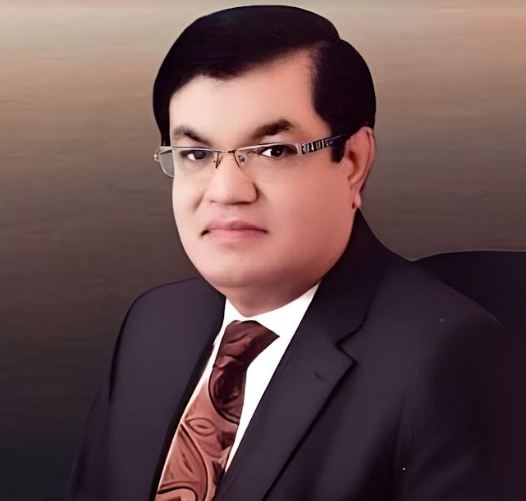
KARACHI, APR 24 /DNA/ – Chairman of National Business Group Pakistan, President Pakistan Businessmen and Intellectuals Forum, All Karachi Industrial Alliance, and former provincial minister Mian Zahid Hussain said on Wednesday that the business community supports the Prime Minister’s interest in improving tax administration and relevant laws.

He said that PM Shahbaz Sharif’s efforts to raise tax income are commendable as it is necessary to save the country facing pressing economic issues.  

Mian Zahid Hussain said that a correct decision has been made to end tax amnesty schemes, which have served no purpose for decades.

Talking to the business community, the veteran business leader said that Prime Minister Shehbaz Sharif’s interest in supervising tax reforms is commendable.

He added that the PM is working day and night to increase the tax revenue, which is necessary for the current situation to put the country back on track.

The business leader said that the Prime Minister is rightly concerned about billions of rupees being stuck in tax disputes. The government’s decision to end tax amnesty schemes is also correct, which was the long-standing desire of the lenders. 

Mian Zahid Hussain said that the country’s economy has been destroyed, and it is no longer possible to restore it through traditional measures, so it is necessary to resort to non-traditional measures to increase the resources.

For this, the tax base should be increased, and instead of burdening the public, the burden should be placed on the wealthy classes. 

Mian Zahid Hussain said some elements deliberately keep billions of rupees in tax matters hanging with the bureaucracy and courts. Still, steps are being taken to stop this process, which is in the country’s interests. 

Strict action is needed against the black sheep who delay tax matters worth trillions of rupees for their gains. 

Mian Zahid Hussain said that the share of tax in Pakistan’s economy is nine percent. At the same time, it is seventeen percent in the neighboring country India. India has far surpassed Pakistan in the economic field, one of the reasons being that its revenue is almost double that of Pakistan. 

If this can happen in India, why not in Pakistan, he said, adding that the Finance Minister has revealed that foreign exchange reserves will increase to ten billion dollars by June while PIA will be sold by July, which is encouraging. 

After PIA, all the failed should be sold. A complete ban should be imposed on creating new departments because there are dozens of central and provincial departments where officers and staff receive salaries and benefits for doing nothing. 

He noted that due to the government’s efforts, international organizations’ confidence has been restored, and investors’ trust has also been restored. 

Inflation is coming down while the rupee is stabilizing. Overall, conditions are improving, and things are expected to improve considerably within a year.

Blinken back in China seeking pressure but also stability

Blinken back in China seeking pressure but also stability

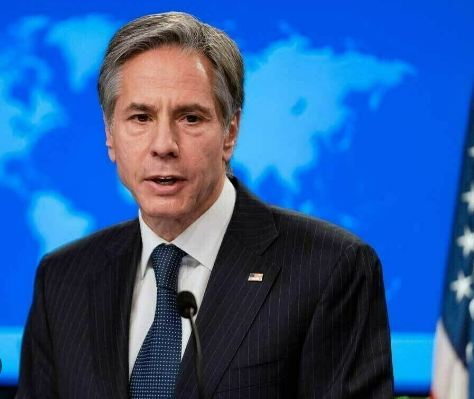
SHANGHAI, APR 24 (AFP/APP/DNA): US Secretary of State Antony Blinken returned Wednesday to China on his second visit in a year, as the United States ramps up pressure on its rival over its support for Russia while also seeking to manage tensions with Beijing.

The US diplomat will meet China’s top brass on Friday in Beijing, where he is also expected to plead for restraint as Taiwan inaugurates a new leader, and to raise US concerns on Chinese trade practices — a vital issue for President Joe Biden in an election year.

But Blinken is also seeking to stabilise ties, with tensions between the world’s two largest economies palpably easing since his last visit in June.

At the time, he was the highest-ranking US official to visit China in five years, and the trip was followed by a meeting between the countries’ presidents in November.

At that summit in California, Chinese President Xi Jinping agreed to a US wish list including restoring contact between militaries and cracking down on precursor chemicals to fentanyl, the powerful painkiller behind an addiction epidemic in the United States.

Blinken opened his visit in Shanghai. He will meet students and business leaders in what an aide called a bid to highlight warm ties between the American and Chinese peoples.

The friendly side trip — the first visit by a US secretary of state to the bustling metropolis since Hillary Clinton in 2010 — would have been unthinkable until recently, with hawks on both sides previously speaking of a new Cold War between the two powers.

100 additional scholarships provided by Pakistan to Palestinian people

100 additional scholarships provided by Pakistan to Palestinian people

ISLAMABAD, APR 23 /DNA/ – Today, 100 more scholarships were covered at Al-Refah University.
following the 5000 previous scholarships for our dear Palestinian students in many different Pakistani Universities.

During the visit to Al-Refah University, As Ambassador of the State of Palestine, I was honored to sign
an agreement to provide 100 scholarships to Palestinian students, provided by the university in all its nine branches throughout the Islamic Republic of Pakistan,covering various undergraduate and postgraduate degrees (Master’s, PhD’s).


The scholarships are fully covered In addition to 50 thousand rupees for each student from the Alkhidmat Foundation for the entire period of study.


Grateful for the sisterly Pakistan for their generous and unwavering support across various humanitarian, diplomatic, political, moral, and educational sectors.

Stay Connected

64FansLike
60FollowersFollow

Latest Reviews

Exchange Rates

USD - United States Dollar
EUR
1.17
GBP
1.35
AUD
0.72
CAD
0.73