Home Blog Page 946

“US Country Report: A True Reflection, or…”

Qamar Bashir

By Qamar Bashir

Pakistan’s Foreign Affairs promptly rejected the US Department of State’s 120-page “2023 Country Reports on Human Rights Practices: Pakistan” without acknowledging its comprehensive compilation process where the source of almost all necessary data rests in Pakistan. The compilation involves gathering data from embassy and consulate reports, local NGOs, media coverage, government agencies, international organizations, academic institutions, testimonies, diplomatic channels, official government reports, and open-source intelligence. The report aims to provide a thorough and accurate assessment of human rights conditions in Pakistan indicating a failure to address shortcomings.

Rather than addressing issues and implementing reforms, Pakistan tends to respond with generic statements disconnected from reality which is shortsighted, as baseless rejection only draws more attention to the report’s contents, prompting further scrutiny. Pakistan’s tendency to ignore issues and reject criticism perpetuates poor human rights practices rather than fostering improvement.

“There is nothing in the report that has not been discussed almost on a daily basis by our courts, political parties, civil society, and both traditional and social media. Our media and civil society, day in and day out, in their reports, comments, and analyses, discuss, refer to, and quote, rightly or wrongly, all those issues, matters, and incidents which were referred to in the report. These include unlawful or arbitrary detentions and  killings, including extrajudicial killings; enforced disappearances; torture; and cases of cruel, inhuman, or degrading treatment or punishment by the government or non state actors.”

“They discuss harsh and life-threatening prison conditions; political prisoners; arbitrary or unlawful interference with privacy; punishment of family members for alleged offenses by a relative; and serious abuses in conflict, including reportedly unlawful civilian deaths and enforced disappearances.

The elite journalists and opposition political parties have raised concerns about significant restrictions on freedom of expression and media freedom. These include violence against journalists, unjustified arrests, and disappearances of journalists, as well as censorship and serious constraints on internet freedom. Additionally, there are substantial interferences with the freedom of peaceful assembly and association, including overly restrictive laws governing the operation of non-governmental organizations and civil society groups.

The media and civil society have been vocal about issues such as restrictions on religious freedom, coerced or forced returns of individuals to countries where they may face torture or persecution, government corruption, and government restrictions on both domestic and international human rights organizations. They have also highlighted extensive gender-based violence, including domestic or intimate partner violence, sexual violence, and child and early forced marriage.

Media reports also suggest physical abuse of criminal suspects in custody, leading to injuries or deaths. Besides, lengthy trial delays at both the commencement and conclusion of trials, along with the failure to adequately investigate, discipline, and prosecute those responsible for killings, have contributed to a culture of impunity.

Our media is full of reports that there is a significant increase in attacks against police and security forces. According to the independent think tank Center for Research and Security Studies, there were at least 386 reported deaths of police and military personnel in terrorist attacks and counterterror operations during the first three quarters of the year. The number of attacks and casualties were higher than in 2022 or 2021.

However, they may not realize that these commentaries and analyses are being recorded, compiled, and reported upon by human rights watchdogs around the world, including those in the US reflecting negatively on our human rights record.”

The impugned report comprehensively cataloged a multitude of incidents, events, and statements with detailed dates, names, and qualifications forming its foundation. Noteworthy examples include the killing of seven Shia Muslims, including four teachers, in Upper Kurram, Khyber Pakhtunkhwa, on May 4, apparently in retaliation for the earlier killing of a Sunni Muslim; a suicide bombing in Mastung, Balochistan, on September 29, which claimed the lives of at least 60 individuals during a religious procession; and an attack by Tehreek-e-Jihad on Pakistan Air Force Training Base M.M. Alam in Mianwali, Punjab, resulting in the deaths of nine militant attacks on November 4.

Ironically, instead of addressing these issues, there was a tendency to blame rating agencies for using inaccurate data, ignoring the fact that much of the data originates from within our own country, often from government sources.

During my tenure as Joint Secretary, I compiled a comprehensive report on all international ratings, rankings, and indexes, revealing a dismal picture of our nation’s neglect, lethargy, aimless governance, and widespread lawlessness. It underscored the multitude of challenges we faced, including multiple power centers, injustice, economic stagnation, and social degradation.

Surprisingly, the government at that time took my report seriously. It was shared with the Prime Minister and other key government figures, who instructed me to develop a robust plan of action to improve our international ratings and rankings. I diligently crafted such a plan, which was subsequently shared with the higher echelons of the government. The national security advisor was entrusted with leading the implementation of this plan, and I was tasked with briefing him on the report and the proposed strategy.

However, as fate would have it, the government was dissolved before any significant progress could be made. Sadly, this scenario mirrored the fate of similar plans throughout Pakistan’s history—promising initiatives often succumbing to the tide of political change, leaving crucial reforms languishing on the shelf.

It is imperative that reports by the US statement department and such other reports reflecting our national performance and responsibilities are thoroughly reviewed and referred to relevant committees of the National Assembly and Senate for in-depth analysis. These committees should scrutinize the reports meticulously, identifying any inaccuracies in the data and bringing them to the attention of the rating agencies for clarification or amendment.

Furthermore, these committees should establish robust collaboration with the focal persons of rating agencies in Pakistan, providing them with accurate and reliable data to ensure the integrity of subsequent reports. If the data and analysis in the report are found to be accurate, the committees should then formulate a comprehensive plan of action to address the shortcomings highlighted.

Rather than blaming the mirror, we must have the courage to acknowledge the reflections it presents and strive to ensure that what the mirror reflects is indeed a true representation of our nation’s beauty and charm. This approach fosters accountability and facilitates proactive measures to enhance our national performance and reputation.

By Qamar Bashir

Former Press Secretary to the President

Former Press Minister to the Embassy of Pakistan to France

Former MD, SRBC

Pakistan Hockey Federation still in a shambles

Pakistan Hockey Federation still in a shambles

In a significant move, Rana Mashood has delegated the critical task of team selection for the upcoming Azlan Shah hockey tournament to chief coach Roelant Oltmans. This decision aims to streamline the process and ensure the squad’s competitiveness, commencing from May

Ansar M Bhatti

ISLAMABAD: Recent efforts aimed at reconciling the divergent factions within the Pakistan Hockey Federation (PHF) have yet to yield resolution on key issues. Spearheaded by the Prime Minister Youth Program chief, Rana Mashood, a gathering was convened on April 25, inviting representatives from both factions.

Tariq Bugti, designated as PHF President by the prior caretaker government, and Shehla Raza, assuming a self-appointed role, met with Rana Mashood to outline the ongoing challenges. Accompanying them were Rana Mujahid from Bugti’s faction and Haider from Raza’s group, further enriching the discourse.

In a significant move, Rana Mashood has delegated the critical task of team selection for the upcoming Azlan Shah hockey tournament to chief coach Roelant Oltmans. This decision aims to streamline the process and ensure the squad’s competitiveness, commencing from May 4.

However, recent developments have also seen the exclusion of Umar Bhutta, a veteran former Pakistan captain, from the training camp. Bhutta’s abrupt departure has raised eyebrows and sparked discontent among players and commentators, who advocate for a more dignified transition for such a stalwart.

Looking ahead, the fate of the PHF, particularly under Shehla Raza’s leadership, appears uncertain. Rana Mashood’s endorsement of the ongoing Islamabad camp suggests a shift in legitimacy, potentially marginalizing Raza’s faction. Despite encouragement for Karachi camp players to integrate with the Islamabad contingent, no significant crossover has materialized thus far.

Meanwhile, Tariq Bugti might sustain his role as PHF President until a new appointment is made, with the Pakistan Olympic Committee entrusted with resolving the Secretary’s appointment. These deliberations underscore the complexity of PHF’s internal dynamics and the broader efforts to rejuvenate Pakistan’s hockey landscape.

UNODC, Pakistan join hands to combat smuggling of migrants

UNODC

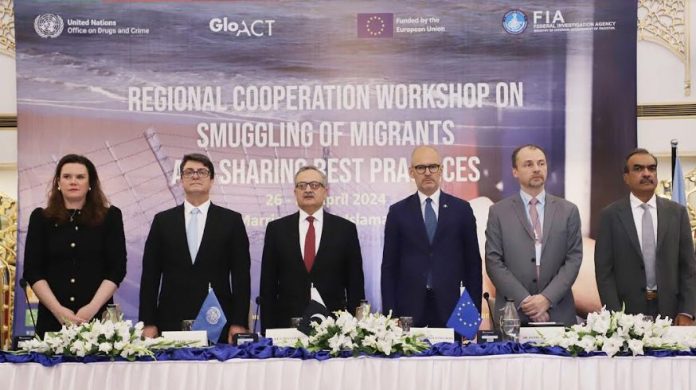
ISLAMABAD, APR 26 /DNA/ – The Federal Investigation Agency (FIA) and the Ministry of Foreign Affairs (MoFA) are hosting a regional conference in collaboration with the United Nations Office on Drugs and Crime (UNODC) and the European Union (EU) to discuss the challenges of smuggling migrants on 26-27 April at the Marriott Hotel Islamabad.

Migrant smuggling is a crime with high profits and a low risk of punishment for the criminals involved. Smugglers sell illegal and dangerous services to desperate people and are often part of a well-organized, multinational network. International cooperation is vital to combat this crime.

“This regional cooperation workshop constitutes a veritable part of our desire to benefit from the perspectives, expertise, as well as cooperation of our regional and international partners. The international community needs a “comprehensive approach” that helps safe, orderly and regular migration on the one hand, while addressing the negative impacts of irregular migration on the other” said Mr. Syrus Sajjad Qazi, the Foreign Secretary.

“Recent incidents, including the tragic event where 350 Pakistanis were on board a packed trawler that capsized off southern Greece on 14 June 2023, are a stark reminder of the urgent need for increased collaboration among nations to effectively address this complex crime,” said Jeremy Milsom, UNODC Representative in Pakistan.

The conference, held as part of the PROTECT: Improving Migration Management and Migrant Protection in Selected Silk Route Countries project, funded by the European Union, and implemented in the framework of the Global Action against Trafficking in Persons and the Smuggling of Migrants (GLO.ACT), will explore mechanisms to improve information-sharing between countries and emphasize victim-centered approaches to combat migrant smuggling.

The Deputy Head of the EU Delegation to Pakistan, Mr. Philipp Gross, highlighted: “The importance of regional cooperation cannot be overstated in addressing the multifaceted challenges posed by human trafficking and smuggling of migrants. Routes originating in Pakistan, traversing through Iran and Türkiye, and ultimately reaching the European Union, serve as critical pathways for irregular migration. Formal and informal cooperation mechanisms along these routes are essential to disrupt criminal networks, dismantle smuggling rings and protect vulnerable migrants. The European Union launched the Global Alliance to Counter Migrant Smuggling in November 2023, to strengthen international cooperation to prevent and respond to migrant smuggling, and to provide alternatives to irregular migration. Today’s regional conference is a primary example of key countries strengthening cooperation along a whole-of-route approach to counter this crime, In parallel, consistently addressing the root causes of irregular migration, such as poverty and conflict, remains imperative to deter people from embarking on perilous journeys. The EU remains committed to support Pakistan and regional partners towards these shared objectives.”

Participants will discuss common challenges faced by countries, best practices in border security and investigations, and discuss the possibility of establishment of a regional task force.

“It shouldn’t take tragedies to bring us all together,” Milsom added. “The support of the European Union has led to significant milestones in the fight against migrant smuggling worldwide. This event is a unique opportunity.”

The conference held under the umbrella of the UNODC Country Programme III of Pakistan (2022-2025).

Ambassador Jemal inaugurates Ethio-Pakistan Unity Enclave in Faisalabad

Ambassador Jemal inaugurates Ethio-Pakistan Unity Enclave in Faisalabad

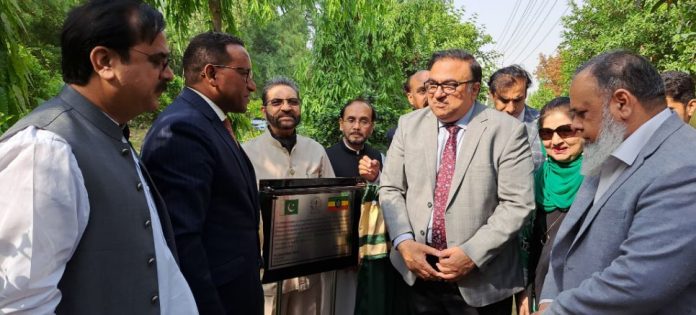
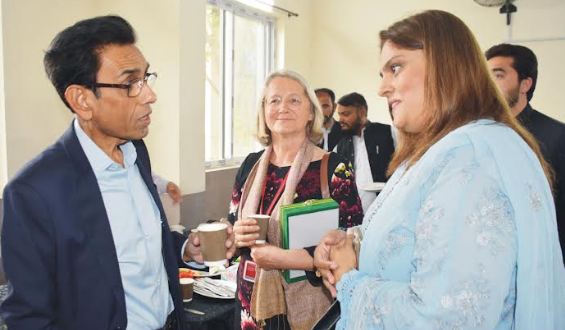
FAISALABAD, APR 26 /DNA/ – Jemal Beker Abdula, Special Envoy and Ambassador Extraordinary and Plenipotentiary of the Federal Democratic Republic of Ethiopia to the Islamic Republic of Pakistan, along with Faisalabad Chamber of Commerce and Industry (FCCI) President Dr. Khurram Tariq inaugurated Ethio-Pakistan Unity Enclave at the Chamber on Friday.

The FCCI set up the enclave at its vicinity to celebrate the Ethio-Pakistan Fraternity Under Green Legacy Initiative launched by the Faisalabad Chamber in collaboration with the Ethiopian Embassy Islamabad in the city.

H.E. Ambassador Jemal Beker Abdula and FCCI President Dr Khurram Tariq launched the initiative by planting saplings of indigenous species at the Enclave.

A large number of people from all walks of life including business and religious community, academia, students, civil society and media took part in the plantation campaign under the Green Legacy initiative of H.E. Dr. Abiy Ahmed, Prime Minister of Ethiopia.

Addressing the launching ceremony of the enclave, H.E. Ambassador Jemal Beker Abdula lauded the FCCI leadership and all those who had contributed to a historic initiative of the Ethiopian Embassy Islamabad that is aimed at fostering fraternity and brotherhood between the two countries through the Green Legacy initiative.

He said it was imperative for both Ethiopia and Pakistan to share their experiences, knowledge and expertise to fight the looming threat of climate change together.

The Ambassador recalled the devastation unleashed by the flash floods in Pakistan in 2022 that he had personally witnessed during his visit to the tent cities of Sindh.

Highlighting importance of the Green Legacy initiative, he said the visionary leader of Ethiopia H.E. PM Dr. Abiy Ahmed worked out a home grown solution to the climate change under his Medemer philosophy that advocated for alignment of all resources to resolve home grown problems.

He said Prime Minister of Ethiopia, Dr. Abiy Ahmed has been mobilizing the whole nation under the Green Legacy initiative since 2019 and so far, more than 32.5 billion seedlings were planted across the country in the last five years which included saplings of fruits like avocado, papaya, banana, oranges, olives and many others. Likewise, coffee, animal feed and floral plants were also planted taking us closer to our target of 50 billion seedlings until 2025.

In addition to that, more than 150,000 nurseries were set up in the country as well as over a million jobs created through the Green Legacy Initiative.

FCCI President Dr. Khurram expressed gratitude to H.E. Ambassador Jemal Beker Abdula for introducing the Green Legacy Initiative in the Islamic Republic of Pakistan.

He said history has been made with the launch of Ethio-Pakistan Unity Enclave at the FCCI Sustainability Park which reflected growing relations between the two countries.

Egypt Sends Negotiators to Israel, Fearing Time Is Running Out for Rafah

Egypt Sends Negotiators to Israel

Cairo’s intelligence chief leads effort to spur new Gaza cease-fire proposal and stave off invasion of crowded border city

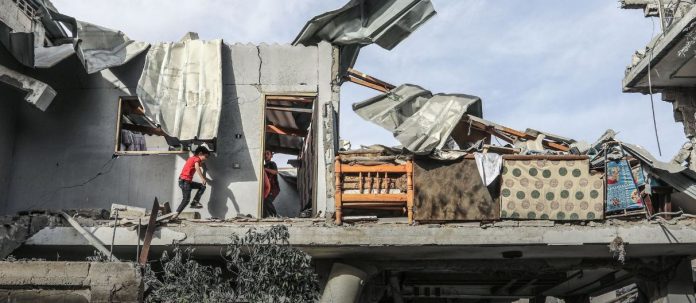
CAIRO, APR 26: Egypt’s president dispatched his intelligence chief to Israel on Friday in a last-ditch effort to revive talks toward a cease-fire in Gaza that would also free Israeli hostages and hold off a planned Israeli military offensive against Hamas in the city of Rafah.

Abbas Kamel, Egypt’s chief of general intelligence, is leading a delegation that was set to meet with David Barnea, the head of Israel’s Mossad intelligence agency, and an array of other top Israeli officials.

Complete independence impossible without economic stability: COAS

Complete independence impossible without economic stability: COAS

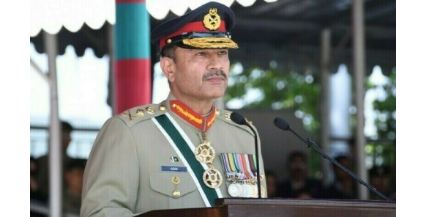
RAWALPINDI, APR 26: Chief of Army Staff (COAS) General Asim Munir on Friday said that complete independence was not possible without first achieving economic stability.

According to the Inter-Services Public Relations (ISPR), the army chief made the remarks while addressing the Green Pakistan Initiative conference. The remarks were also carried by state-run APP and Radio Pakistan.

The federal government’s Green Pakistan Initiative is aimed at introducing the latest farming on 4.4 million acres of land across the country. The government is eyeing to fetch around $40 billion during the next five years through the agricultural initiative and hopes to create four million jobs through this process.

The initiative seeks to revolutionise agriculture with the help of the armed forces and the promised partnerships of friendly countries. It was inaugurated at the National Seminar on Food Security and Agriculture in July last year and Gen Munir had assured the military’s full support of the initiative.

In his address, the army chief also said: “We are all a united team. God willing, with the cooperation and support of the people, the efforts of those who distract and obstruct Pakistan’s development journey will fail.”

He said “negative propaganda and social media trolls” would not be able to distract from working towards the nation’s prosperity and development.

“In today’s era, complete independence is not possible without economic stability,” he said. “No instability will be tolerated in Pakistan’s journey towards prosperity and development.” he added.

He called on everyone to collectively reject “negative forces” and remain focused on the country’s path towards progress and stability.

In December, the army chief had assured farmers that the country wanted to focus on “agriculture first” to regain the lost glory of the Green Revolution, which once saw Pakistan being counted among Asia’s fastest growing economies.

Talking about the Green Pakistan Initiative, COAS Munir had said that a major chunk of its revenue would go to the provinces, while the rest would be allocated for farmers and agricultural research.

Vowing to suppress all kinds of mafias, with the nation’s help, the army chief had revealed plans to make ‘agricultural malls’ in all districts, where various facilities would be available for farmers.

Iranian Attack on Israel: Escalating to de Escalate

Iranian Attack on Israel: Escalating to de Escalate

Nasir Abbas Shirazi

Escalating to de-escalate is a strategy to take some appropriate action to avoid further action to end the conflict at least for the time being. It contains elements of capability, commitment, political will to act, and capacity to inflict unbearable loss to the adversary.

The goal of this escalation is not to defeat the enemy but to compel him to a situation where the enemy avoids further escalation. The Middle East has been a hot spot because of unending conflicts because of foreign interference and the interests of great powers. The rules of engagement in this region and anywhere else were simple; you do not mess with Americans. However, after the assassination of Iran’s IRGS’s commander Major General Qasem Suleimani’s assassination by Americans, Iran completely changed the rules of engagement. Ira responded militarily and targeted the main U.S. military base of Ain-ul-Asad in Iraq.

With this direct hit at American bases for the assassination of its General, Iran established four new rules and principles of engagement. First, Iran would respond militarily if attacked militarily. Second, Iran will respond directly as a state if attacked by any state. Third, Iran will not use any of its like-minded armed groups if attacked directly but will retaliate with state apparatus. Fourth, Iran’s military demonstrated by attacking the Ain Al Asad base which was used to assassinate its general that a response would be aimed at the location used to attack Iran or its interests.

The Iranian response resulted in the world fearing a U.S. retaliation to the direct attack at her base would start a spiral of incidents with a capacity to transform conflict into a full-scale regional war. Contrary to this, calm and restraint were witnessed even during the reign of hawkish President Trump. This time, the then-set rules by Iran were again being tested when Israel, violating international law, struck the Iranian embassy in Syria – Iran, re-establishing those four rules of engagement, retaliated directly within Israel from Iranian territory. 

Despite the hype created by Israel, America, and its Western allies – France, Germany, and Britain – Iran crossed the threshold with Israel by creating an effective level of deterrence. Iran launched a well-coordinated, comprehensive attack with 300 projectiles including drones, cruise, and ballistic missiles. The level of escalation was so calculated that it only hit the military installations throughout Israeli-occupied territories including Tel Aviv, Golan Heights, Nevatm air base, areas close to Dimona nuclear facility, Eilat point, and other strategically important locations. It demonstrated a clear message that any attack on Iranian soil will not go unanswered. Iran with this retaliation again showed the capacity, capability, and will to retaliate and inflict serious damage.

It was a loud and clear message that if Israel retaliates and attacks continue, the response would be harsher, destructive, accurate, and painful. Israel used to play with the psychological pressure of its military might, its invincibility, powerful allies, and state-of-the-art missile defense system – all shattered with Iranian retaliation and this loss of prestige is Irreparable. 

Following the retaliation, the U.S. distanced itself by declaring that the U.S. would not be part of any Israeli counterattack. The U.S. policymakers and analysts know how bad participating In Israel’s counterattack could go. The US has military bases all over the Middle East and, the U.S. naval fleet present in the Red Sea, Gulf, and other territorial waters – they all could come under direct Iranian attacks as Iran had proved this after Sulemani’s assassination.

One of the rules of engagement established by Iran was that it would attack the place of origin of attacks on Iran so the U.S. is unable to use any of its bases in the regional countries for a coordinated attack on Iran with Israel for those states would be the immediate target of Iranian retaliation. Moreover, the regional countries are after a rapprochement with Iran and are not willing to take any risk and face the situation like the Ain-ul-Asad in their homeland. Also, Europe is on the brink of an economic crunch and cannot afford disruption in the strategic energy and trade routes, mostly under Iranian control, causing unbearable economic consequences. 

In the prevalent situation, Israel is isolated at the international level to act or react and is facing enormous domestic pressure – Netanyahu and his war cabinet are only after some safe passage following a humiliating defeat in Gaza and the fact that it is unable to attack the Iranian mainland keeping in mind the Iranian promise and capacity of inflicting crushing response. The political situation at home and in the region is also not favorable for Netanyahu and his war cabinet. They failed on the diplomatic front by no consensus at the UN in their favor. War on Gaza is about to complete 200 days and the people in the siege are still in high spirits, still fighting the aggression. Israel is witnessing clear failure as it has achieved zero goals spoken about before the start of the war in Gaza – it has created unsustainable domestic challenges for Netanyahu followed by international isolation caused by its brutalities in Gaza where Israel has killed more than 34 thousand Palestinians. 

Iranian attacks were highly celebrated in the West Bank, Gaza, and other Palestinian areas providing a boost to their morale while simultaneously eradicating barging chips for Israel on the negotiation table. The situation is evident that Israel is not in the position to escalate further by attacking Iranian soil and possibilities for a cease-fire under the terms and conditions set by resistant movements like Hamas are growing. Iranian escalation is resulting in de-escalation and providing the environment for a successful ceasefire at least for the time being.

Nasir Abbas Shirazi is a senior lawyer, seasoned political analyst, and the president of Centre for Pakistan and Gulf Studies. He also serves as a visiting faculty member, teaching Middle Eastern and South Asian studies at different universities in Islamabad, Pakistan. His area of expertise lies ingeo-politics, geo-economics and geo strategic of the Middle Eastern region. He can be reached at [email protected]

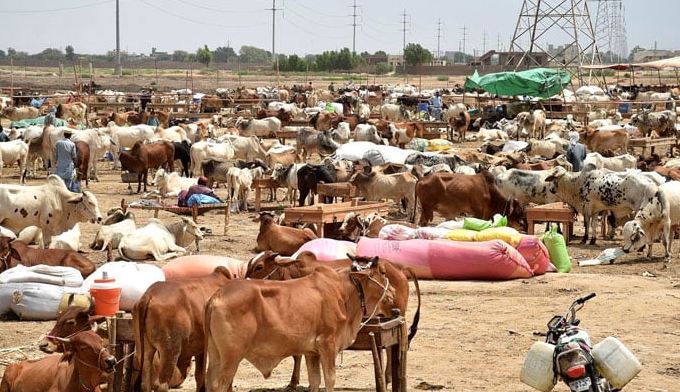
Eid ul Adha: When and where will cattle markets be set up in Karachi this year?

Eid ul Adha

KARACHI: Eid ul Adha is just around the corner and people, especially children, get excited about the sacrificial animals they will buy.

Some people purchase cows, some goats or sheep, while some opt for camels to sacrifice during Eid.

The management of the cattle market in Karachi has announced that it will set up the market in Taiser Town at Northern Bypass from May 10 this year.

According to the notification, ATMs and temporary branches of major banks will also be set up so that people can easily withdraw money if they purchase an animal for sacrifice.

Additionally, an ambulance will also be available for emergency medical assistance in the cattle market in case a mishap happens or someone gets injured.

Eid ul Adha will be celebrated in June but the central cattle market will be set up in the first week of May.

Moreover, the buyers and sellers will also be able to park their cars easily as there will be a vast area for parking. There will also be temporary food stalls.

Facilities for traders are also being increased including free supply of 30 litres of water per person along with free provision of land for cattle sheds.

Meanwhile, to ensure that the sacrificial animals remain healthy, they will be inspected. A certificate from the Veterinary Department will also be mandatory to confirm the animals are healthy.

FPCCI Vice President advocates for closer academia-industry collaboration

FPCCI Vice President advocates for closer academia-industry collaboration

ISLAMABAD, APR 26 /DNA/ – Qurat ul Ain Vice President Federation of Pakistan Chamber of Commerce & Industry (FPCCI), met Khalid Maqbool Siddiqui Federal Ministry of Federal Education and Professional Training. She  apprised the FM about gap between academia and industry, esearch and cooperation, tecnical education, and other issues

Federal Minister for Education reiterated the government’s dedication to revolutionizing the education sector in Pakistan. By implementing comprehensive strategies and fostering collaboration with key stakeholders, the Ministry aims to create a brighter future for the nation’s youth. He futher said that bridge the gap between academia and industry is our big mission. in this case will be provide cutting-edge IT skills to the youth,so that ensuring their relevance in the ever-evolving job market.

Minister Siddiqui futher said  that the industry and universities should work together to solve the country’s problems through research and cooperation. he said that people with technical education and technical experience are in demand all over the world. He said that the government is paying special attention to vocational education.

He futher said that women were very important pillar of our society and skillful women needed to move forward for progress, in every field including politics, religion and education women should play their role. said that the government were spending a lot of money for the promotion of higher education and now it was the responsibility of the universities to pay special attention to research in line with the requirements of the modern era and bring the public sector universities to national and international rankings.

FM Siddiqui said that the business community was the backbone of the country’s economy and the government was taking pragmatic steps to resolve all their problems. He emphasized on the business community pay special attention to increase exports so as to increase the country’s foreign exchange.

Ms. Qurat ul Ain Vice President FPCCI said that fortunately we had abundance of natural and human resource but unfortunately we were not utilizing the potential of our manpower. She said that the secret of various developed nations was skilled labor. She said that the governments should devise good policies to facilitate industrialists. He said that we should reduce gap between our import and export.

Ms. Quratul Ain Vice President Federation of Pakistan Chambers of Commerce and Industry (FPCCI) has urged upon the government to set up a policy to promote technical education in the country so that the target to provide employment to  people could be achieved. She said that there was a need to launch a National Technical Education Progrmme to produce skilled labour to meet the requirement of our industries as well as to cater for the growing need of the Arab and Gulf countries. Pakistan’s rapid population growth and the corresponding expansion of the workforce are a burden on the national economy. Millions of young people enter the job market annually, but they are unable to find work and do not contribute to national growth due to lack of relevant skills. In addition to the school requirement, there is a great requirement for establishment of a large number of vocational training centers.

Vice President FPCCI Ms. Qurat ul Ain futher said that  She also urged the government to evolve policies requiring compulsory linkages between institutions and industry for all existing and upcoming industries in relevant areas in order to foster employability skills. She said that with the provisioning of better technical training facilities the country would be able to export of skilled labour and thereby earn foreign exchange. In short service sector required better planning to give much desired boost to our human capital, She added.

ISSI’s in-house session on elections in India

ISSI’s in-house session on elections in India

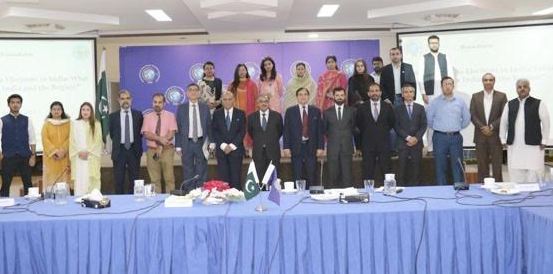
The participants exchanged views on the length and breadth of the 7-phase electoral process; relevant developments including issuance of major parties’ election manifestos; the tone and tenor of the election campaign by various parties; the role of the Indian Election Commission; the political dispositions and likely inclinations of the various regions of India from the North to the South; and the approaches of the Indian media and civil society

ISLAMABAD, APR 26 /DNA/ – The India Study Centre (ISC) at the Institute of Strategic Studies Islamabad (ISSI) organized an in-house session on the on-going 18th Lok Sabha elections in India. The event was attended by diplomats, academics, practitioners, and researchers of various Islamabad-based think-tanks.

The participants exchanged views on the length and breadth of the 7-phase electroal process; relevant developments including issuance of major parties’ election manifestos; the tone and tenor of the election campaign by various parties; the role of the Indian Election Commission; the political dispositions and likely inclinations of the various regions of India from the North to the South; and the approaches of the Indian media and civil society.

It was noted that a divisive and polarizing rhetoric was griping the general environment, while several government Ministers had pointedly invoked Pakistan in their campaign shenanigans to garnar electoral dividends. Analysts felt this did not portend well either for India’s internal social harmony or for its external engagement in the neighbourhood.

The experts also underscored the importance of extreme vigilance by Pakistan as desperation on the part of the ruling dispensation in India could lead to any ill-considered misadventure (false flag). In terms of Pakistan-India relations, it was deemed purdent to await the final outcome of the elections and its aftermath and then to make a realastic assesment including the steps India would be preperad to take to create a conducive environment for a result-oriented dialogue process on all outstanding disputes.

The 7-phases of the voting in the Indian elections will be completed by 1 June and the results announced on 4 June 2024.

Stay Connected

64FansLike
60FollowersFollow

Latest Reviews

Exchange Rates

USD - United States Dollar
EUR
1.17
GBP
1.35
AUD
0.72
CAD
0.73