Home Blog Page 943

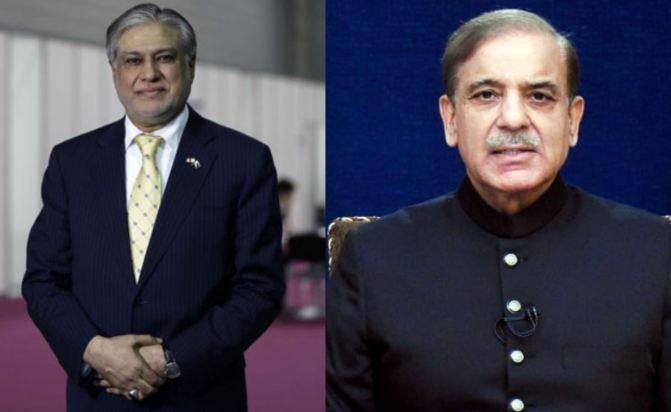
Ishaq Dar appointed as deputy prime minister of Pakistan

Ishaq Dar appointed as deputy prime minister of Pakistan

ISLAMABAD, APR 28: Prime Minister Shehbaz Sharif appointed on Sunday Foreign Minister Ishaq Dar as the deputy prime minister of Pakistan.

The decision was announced while PM Shehbaz Sharif is currently in Saudi Arabia to attend the World Economic Forum, accompanied by FM Ishaq Dar.

The appointment was confirmed through a notification issued by the Cabinet Division.

The notification stated that “The Prime Minister has been pleased to designate Mr. Muhammad Ishaq Dar, Federal Minister of Foreign Affairs, as Deputy Prime Minister of Pakistan with immediate effect and until further orders.”

It’s pertinent to mention, that Ishaq Dar has become the third individual to hold this prestigious position in Pakistan’s political history. 

Zulfiqar Ali Bhutto was the first deputy prime minister of Pakistan from December 7, 1971, to December 20, 1971.

Following Bhutto, Chaudhry Parvez Elahi assumed the role, and served from June.

Everything is anticlockwise in Pakistan

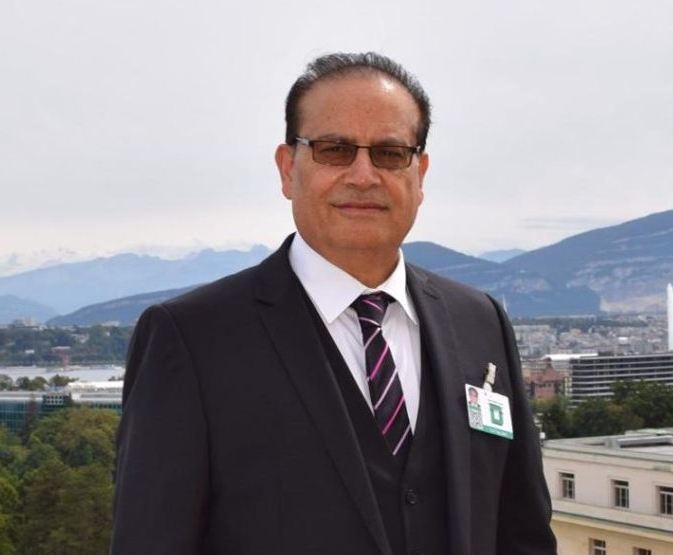
Qamar Bashir

By: Qamar Bashir

Ironically, everything in Pakistan seems to be upside down and anticlockwise. The country often experiences the opposite of what is typically needed for sustained and rapid progress and development. Major decisions that heavily impact the country are often made behind closed doors, based on hearsay, opinions, desires and vested interests rather than deep research and thorough analysis. Factors such as considering all pros and cons, anticipating all possible outcomes, identifying stakeholders, and assessing the policy’s impact on them are often overlooked. Additionally, there is a lack of measuring benefits versus losses. In a more ideal scenario, policies would be tested on a smaller target population to evaluate outcomes before being implemented nationwide.

In our case, knee-jerk reactions often lead to policies being arbitrarily imposed on the nation without thorough consideration of their implications. Only after these policies fail to produce the desired results do authorities conduct studies to identify their faults, a process that should ideally precede policy implementation.

For instance, the government imposed a policy of telemetry to encourage businesses and households to adopt solar energy. This policy aimed to help produce cost-effective electricity, reduce the burden on the country’s fragile distribution system, decrease the import bill of LNG, Furnace Oil, and diesel, fill the demand-supply gap, avoid and reduce load shedding, and add excess energy to the national grid.

Initially, the policy faced challenges in gaining traction. However, following multiple increases in electricity charges, which became so exorbitant that even upper-middle-class households earning up to Rs 300,000 per month struggled to make payments without sacrificing essential necessities such as children’s education, decent clothing, nutritious food, and rent payments if they did not own their accommodation.

 Telemetry emerged as the most viable solution to address the hefty electricity charges. As demand for telemetry increased, a robust supply chain developed to cater to this growing demand. creating many job opportunities all along the supply chain. Households with some savings left, invested in telemetry and began benefiting from reduced electricity bills, while contributing cost-effective and clean energy to the national grid, saving millions in the process to the government.

All of a sudden, the government decided to reverse this policy, citing illogical, irrational, and outrageous reasons, which even in their hearts they knew had no basis and would hurt people and the country immensely.

The first reason given was that the government is supposedly subsidizing affluent households by paying them Rs. 19, and in some cases Rs. 22, for each unit of electricity transferred to the national grid. However, this claim is inaccurate. In reality, it is the households that are subsidizing the government. The government sells electricity to consumers at the rate of Rs. 65 per unit, while it purchases the electricity from households at Rs. 19, which is 3.4 times less than the selling price.

If the government decides to punish people for generating clean and environmentally friendly energy by either reducing the purchase price or reversing the policy altogether, households may install batteries to store the energy instead of transferring it to the national grid which would deprive the national grid from cost effective and clean source or energy.

Furthermore, the government is unfairly charging affluent households for converting to solar systems, portraying them as if they are committing a heinous crime and making them feel guilty for increasing the burden of electricity charges on the poor segment of society. In reality, the failure of the government to pay back hefty electricity charges to the Independent Power Producers is a major factor contributing to the ballooning electricity circular debt, and the telemetry policy has nothing to do with it.

The government is also unfairly charging affluent households as if they are violating the telemetry policy for converting too fast on solar energy, without realizing that it was the duty and responsibility of the policy makers and the planners to determine the speed of conversion on solar system through automatic check and control system, notwithstanding the fact that the government should encourage fast conversion of households to clean energy instead of terming them some kind of criminals instead of rewarded them for fast conversion of the country to the clean electricity system.

The government is adamant about shifting the burden of their incompetencies to affluent households without realizing that responsible governments worldwide are encouraging and providing meaningful incentives for households to convert to clean energy sources.

In their eagerness to punish households for the success of their own policy, they overlook many examples of countries where telemetry is encouraged due to its overwhelming benefits.

Successful implementations can be seen in countries like Germany, Australia, and the United States, where households are encouraged to adopt solar energy systems due to numerous benefits. Firstly, at the household level, such systems can significantly reduce electricity bills, providing long-term savings. They offer energy independence, particularly in Pakistan with unreliable grid power, and can serve as a backup power source during outages. Additionally, excess energy generated can be sold back to the grid, further offsetting costs and potentially providing an additional income stream.

On a national or country level, promoting solar energy reduces reliance on fossil fuels, which enhances energy security and reduces the risk of price fluctuations in fossil fuel markets.

Diversifying the energy mix with renewables like solar also helps to mitigate climate change by reducing carbon emissions. This shift toward cleaner energy sources can lead to improvements in air quality and public health while contributing to biodiversity conservation by reducing habitat destruction and pollution associated with fossil fuel extraction and use.

Governments worldwide have introduced various incentives to promote solar energy adoption. For instance, Germany’s feed-in tariff scheme guaranteed fixed payment rates for renewable energy producers, including households with solar panels, leading to a rapid increase in installations.

In the United States, federal and state-level tax credits, rebates, and other incentives help reduce upfront costs for households and businesses. These incentives not only benefit individual households but also society as a whole by reducing carbon emissions, improving air quality, and creating jobs in the renewable energy sector.

Foregoing in view, instead of blaming affluent households for a crime they never committed, the government should devise a plan to subsidize the poor segments of the society to convert their households to solar systems.

The government should also consider phasing out Independent Power Producers (IPPs) that were created due to incompetence, lack of relevant knowledge and foresight by government policy makers, planners, and implementers.

A third viable option is to reduce electricity prices, which would automatically discourage further conversion to solar systems, though this is highly inadvisable.

Furthermore, the government should, in all fairness, bring to justice all those who were responsible for the installation of IPPs, grid losses, electricity theft, making faulty and short-sighted policy decisions, and those who received massive kickbacks in the process. They should desist from victim-blaming, which in this instance is not the government but the people of Pakistan.

By: Qamar Bashir

Press Secretary to the President (Rtd)

Former Press Minister at Embassy of Pakistan to France

Former MD, SRBC

QAU’s ZRC offers digital solutions to make Islamabad roads safer

QAU’s ZRC offers digital solutions to make Islamabad roads safer

ISLAMABAD, APR 28 /DNA/ – Road safety should not be confused with traffic management, says Prof Muhammad Zaman, head of Zaman Research Center (ZRC) at Quaid-i-Azam University (QAU).

He was speaking at a function to evaluate performance of his team, dedicated to HEC’s Grand Challenge Fund (GCF) project titled Optimal Use of Available Resources: A Prototype Model of Road Safety in Islamabad.

He said that road safety is a concept that includes countering pollution, saving lives and offering solutions. He said Islamabad needs 300 busses to overcome its mass transit needs. “We have developed Apps after thorough research that can tell commuters which bus to take and how long they have to wait for it. We have monitored movement of people digitally on different routes and roads,” he said.

“On the basis of our work, we are able to offer the city managers solutions to traffic problems. We can tell them which new routes are to open. Our Apps are working and QAU students are benefiting from these,” he said.

He said that his team has developed smart parking mechanism for Islamabad. He said there is a need to pool buses in the federal capital so that available resources are used optimally. “If we make a pool of buses, we will cut down the number of vehicles on our roads in a big way. It will lead to saving resources that are needed to ply these buses. It will also cut down pollution levels,” he said.

“However, the existing lot of bureaucrats is alien to the concept of pooling and red tapes have been hampering these solutions from being presented to the masses for whom they are meant for. Out-of-the-box thinking is need of the hour as we have resources enough to solve our problems but we lack strategy,” he said.

Researchers from QAU, IIUI, NUST, LUMS, and Ibadat University etc. attended the event and presented their work. A decent dinner was arranged at the end.

𝗜𝗿𝗮𝗻 𝘄𝗮𝗻𝘁𝘀 𝘀𝘁𝗿𝗼𝗻𝗴 𝘁𝗿𝗮𝗱𝗲 𝗿𝗲𝗹𝗮𝘁𝗶𝗼𝗻𝘀 𝘄𝗶𝘁𝗵 𝗣𝗮𝗸𝗶𝘀𝘁𝗮𝗻, 𝗦𝗲𝘆𝘆𝗲𝗱 𝗘𝗯𝗿𝗮𝗵𝗶𝗺 𝗥𝗮𝗶𝘀𝗶

𝗜𝗿𝗮𝗻 𝘄𝗮𝗻𝘁𝘀 𝘀𝘁𝗿𝗼𝗻𝗴 𝘁𝗿𝗮𝗱𝗲 𝗿𝗲𝗹𝗮𝘁𝗶𝗼𝗻𝘀 𝘄𝗶𝘁𝗵 𝗣𝗮𝗸𝗶𝘀𝘁𝗮𝗻

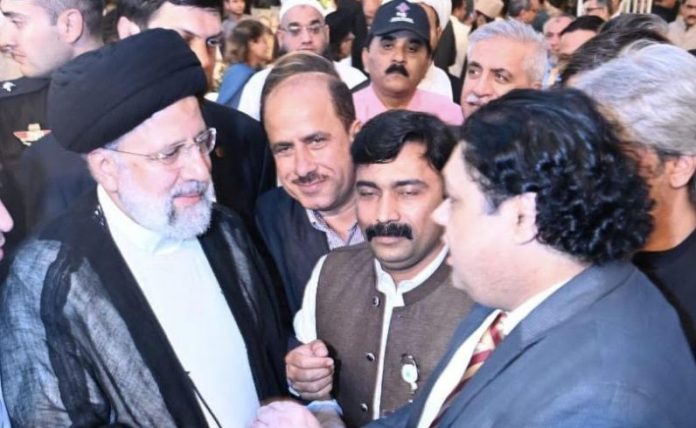
KARACHI, APR 28 /DNA/ – President of the Islamic Republic of Iran, Dr. Seyyed Ebrahim Raisi has said that Iran wants strong trade relations with Pakistan. The historical and cultural relationship between the two countries is beyond temporary conflicts. During his visit to Pakistan President of the Islamic Republic of Iran,

Dr. Seyyed Ebrahim Raisi was speaking to Mr. Syed Aamir Sajjad prominent personality well-known economic analyst, columnist, businessmen among other business leaders of the community at Chief Minister House, Sindh.

The Iranian president said that he wants to promote all kinds of trade relations with Pakistan, especially “Investment in the energy sector is in the interest of both countries.” Dr. Seyyed Ebrahim Raisi

added that Iran has always supported Pakistan in all difficult times. No temporary or regional conflict can hinder the brotherly relations of the two countries.

On this occasion, the current situation and the promotion of economic relations between the two countries were also discussed.

Mr. Syed Aamir Sajjad said that Iran Pakistan Cooperation in Energy Sector can become a Game Changer for Pakistan. If the Energy cost can be reduced and controlled then the production cost of every thing produced in Pakistan can be reduced to a significant amount. This means that a high end product can be produced in less cost keeping the high quality standard. This may result in significant savings which can be reinvested back in research, technology, total quality management, quality assurance of the product & industry.

Mr. Syed Aamir Sajjad is a young prominent businessman, columnist, and economic analyst. About 500 columns on the economic situation of Pakistan have been published in newspapers and the same number of economic analysis have been broadcasted on various TV channels. He has a very strong grip on Pakistan & International global economy and his opinions are given great importance.

World Economic Forum: PM Shehbaz holds talks with Kuwaiti Amir

World Economic Forum: PM Shehbaz holds talks with Kuwaiti Amir

RIYADH, APR 28 /DNA/ – Prime Minister Muhammad Shehbaz Sharif met the Amir of Kuwait, His Highness Sheikh Meshal Al-Ahmad Al-Jaber Al-Sabah on the sidelines of the World Economic Forum (WEF) Special Meeting in Riyadh today.

The Prime Minister thanked His Highness the Amir for sending him a warm congratulatory letter upon his re-election.

While congratulating His Highness Sheikh Meshal Al Ahmad Al-Jaber Al-Sabah on assuming the role of Amir, the Prime Minister expressed his desire to work closely with His Highness to transform bilateral ties into a mutually beneficial economic partnership that would serve the best interests of the peoples of both countries. Pakistan and Kuwait had signed a number of MoUs and agreements to deepen cooperation in trade and investment in November 2023. The Prime Minister assured the Kuwaiti leadership that these MoUs and agreements would be implemented in an efficient and timely manner.

In addition to bilateral ties, the regional situation, particularly with regards to the crisis in Gaza, was also discussed.

The Prime Minister reiterated his invitation to the Amir of Kuwait to undertake an official visit to Pakistan at his earliest convenience.

PUC, HOAP reinforce Saudi directive: Private Hajj bookings through registered companies only

Pakistan Ulema Council (PUC)

DNA

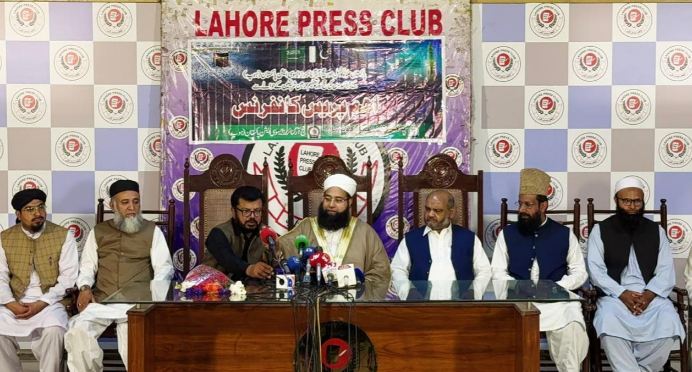
LAHORE: Pakistan Ulema Council (PUC) Chairman and Hajj Organizers Association of Pakistan (HOAP) Patron-in-Chief Hafiz Muhammad Tahir Mehmood Ashrafi on Sunday emphasized the pilgrims regarding private Hajj bookings through companies registered with the governments of Pakistan and Saudi Arabia reinforcing the directive from Saudi Ministry of Hajj and Umrah.

Addressing a press conference along with other HOAP representatives, including Saeed Ahmed Malik, Chaudhry Ehsanullah, Malik Abdul Khaliq, Chaudhry Muhammad Adil, Khalid Mahmood Bhatti, Pir Shafat Ahmed Boudla, Shahid Manzoor, and Zeeshan Qamar, he informed that private Hajj bookings were still open, with Hajj operation set to commence on May 9, and training sessions starting from May 5.

Ashrafi urged the pilgrims to focus solely on their religious duties and refrain from engaging in political, sectarian, or communal activities, including raising slogans or displaying images in the Haramain Sharifain.

Ashrafi further highlighted the issue of individuals engaging in political and sectarian activities during their pilgrimage, urging the Pakistani government to take action against them.

He emphasized that training sessions for private pilgrims, organized by HOAP, would be conducted regularly in Lahore, Karachi, and Islamabad, with the code of conduct set to be issued next week.

Ashrafi also warned against fraudulent practices by unregistered companies on social media and fake websites, advising the public to book only through officially registered quota holders or tour operators.

Additionally, he announced that, in accordance with the instructions of Saudi Arabia’s Crown Prince Muhammad bin Salman and with the efforts of Saudi Ambassador to Pakistan Nawaf bin Said Al-Malki, this year’s Road to Makkah program would include pilgrims from Karachi, benefiting 24,000 private pilgrims and ensuring a smooth process without any complaints.

He praised Pakistan’s Ministry of Religious Affairs and Interfaith Harmony for implementing corruption-free measures, acknowledging the efforts of Minister Chaudhry Salik Hussain, and Saudi Minister of Hajj and Umrah Dr. Tawfiq bin Fawzan Al-Rabiah besides governments of Pakistan and Saudi Arabia.

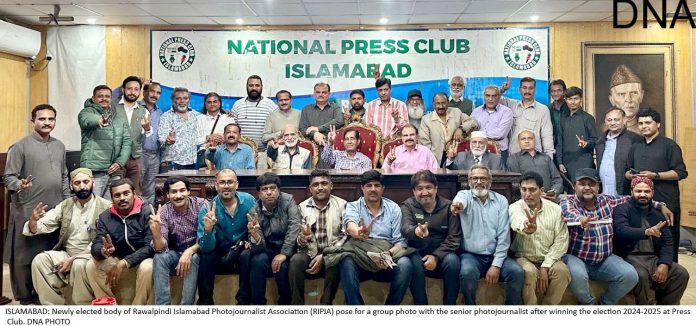
Sohail Shahzad Cheetah elected President of Islamabad Photojournalists Association (RIPJA)

Sohail Shahzad Cheetah elected President of Islamabad Photojournalists Association (RIPJA)

ISLAMABAD, APR 28 /DNA/ – In the Annual Elections of Ripja, The panel of photojournalists took the field, Sohail Shahzad Cheetah President, Shahid Qureshi aka Raju Secretary while Syed Mehdi was elected Finance Secretary, polling continued uninterruptedly from 11 am to 4 pm in the National Press Club Islamabad, in which the twin cities Photojournalists actively participated, the total number of voters was 60, out of which 53 votes were cast, the results were announced by Chairman Election Committee Faisal Hakeem along with Election Committee members Nadeem Chaudhry and Izharul Haq Khan Niazi, according to details, Rawalpindi. About the annual elections of Islamabad Photojournalists Association (RIPJA) in the year 25.2024, the photojournalist’s panel has done a clean sweep, the photojournalists panel has taken all the seats of the executive and governing body, Sohail has won 33 votes of the photojournalists panel.

Shahzad was elected as the president while against him, Ahmad Arif Sheikh, president of Ripja Photojournalists Panel, got 19 votes, Shahid Qureshi aka Raju was elected as secretary with 29 votes, while Javed Qureshi, the candidate of Ripja Photojournalists Panel, got 20 votes. Syed Mehdi was elected as Finance Secretary with 34 votes. His opponent Ramzan Mughal, candidate of Ripja Photojournalists Panel, got 18 votes. Secretary, Raja Imran was elected press secretary by getting 33 votes, while Adnan Bukhari 34, Agha Mehroz 32, Aamir Qureshi 34, Amjad Hussain 31, Anjum Naveed 33, Imran Jafari 30, while Irfan Ali was declared successful by getting 29 votes. While his opponents are Dr. Mushtaq 17, Irfan Haider 21, Sajjad Hussain 15, Syed Fateh Ali Gilani 16, Tahir Naveed 13, Ahmed Kamal 16, Azhar Ali Khan 28, Khurshid Ahmed 22, Taha Warsi 21, Raja Sajid Rashid 18. , Sunny Ghori 18, and Kamran Ali Abbasi 17 votes, the total number of voters was 60, out of which 53 voters exercised their right to vote, polling continued peacefully, after the polling was over, Election Committee Chairman Faisal Hakeem. announced the results along with the committee members Nadeem Chaudhry and Izharul Haq Khan Niazi, the newly elected president of Ripja Sohail Shehzad addressed the Ripja members Mian Khurshid, Muzamil Pasha, Azhar Abidi, Agha Mehroz, M Javed, Javed Nasir, Zabiya after his success.

He thanked his seniors including Al Hasan and Sohail Malik and all the supporters. He also thanked Election Committee Chairman Faisal Hakeem, Izhar Khan Niazi and Nadeem Chaudhry and reiterated that he would also take the colleagues of the competing group with him in the future. But after the operation of Muzmal Pasha in the condition of illness and appreciated the process of casting votes, all the officials elected from the ceremony also spoke, including Shahid Qureshi General Secretary and Finance Secretary Syed Mehdi and Senior Vice President M Javed, Faheem Malik Abid Zia. Included.

PM Shehbaz meets IMF Managing Director Kristalina Georgieva

PM Shehbaz meets IMF Managing Director Kristalina Georgieva

RIYADH, APR 28 /DNA/ – On the sidelines of the World Economic Forum Special Meeting in Riyadh, Prime Minister Muhammad Shahbaz Sharif met Kristalina Georgieva, Managing Director (MD) of the International Monetary Fund (IMF).

This was the first meeting between the Prime Minister and MD IMF since his re-election. They last met in Paris in June 2023 on the margins of the Summit for New Global Financial Pact.

The Prime Minister thanked Ms. Georgieva for her support to Pakistan in securing the USD 3 billion Standby Arrangement (SBA) from IMF last year that was now nearing its completion. The IMF Executive Board is expected to meet tomorrow to decide on the final tranche of USD 1.1 billion under SBA.

The MD of IMF appreciated the leadership of the Prime Minister Muhammad Shehbaz Sharif for timely securing SBA last year.

The Prime Minister informed the MD IMF that his government was fully committed to put Pakistan’s economy back on track. He had directed his financial team, led by Finance Minister Muhammad Aurangzeb to carry out structural reforms, ensure strict fiscal discipline and pursue prudent policies that would ensure macro-economic stability and sustained economic growth.

Both sides also discussed  Pakistan entering into another IMF program to ensure that the gains made in the past year are consolidated and its economic growth trajectory remains positive.

MD IMF shared her institution’s perspective on the ongoing program with Pakistan, including the review process. The Prime Minister also extended a cordial invitation to the MD IMF to visit Pakistan at her convenience.

US, Pakistan partner on “Green Alliance” to combat climate change

US, Pakistan partner on

LAHORE, APR 28: U.S. Deputy Chief of Mission (DCM) Andrew Schofer, during his April 25-28 visit to Lahore, underscored the U.S. government’s efforts to support Pakistan through the U.S.-Pakistan “Green Alliance” Framework to address key challenges relating to climate change, food security, and energy. DCM Schofer was accompanied by Consul General Lahore Kristin Hawkins, Consul General Karachi Conrad Tribble, and Consul General Peshawar Shante Moore during his visit. 

DCM Schofer hosted a reception to emphasize the need for urgent action to adapt to climate change and promote cooperation in climate-smart agriculture, clean energy, and water management through the U.S.-Pakistan “Green Alliance” Framework. “Global challenges like climate change require creativity, strong partnerships, and diverse perspectives,” DCM Schofer said, adding that the United States is supporting projects like a Women in Energy Scholars Program to combat the effects of climate change in Pakistan.  

While in Lahore, DCM Schofer and the U.S. Consul Generals based in Lahore, Karachi, Peshawar also participated in an exhibition cricket match with female athletes from South and Central Punjab. “The athletes participating in today’s match embody determination and resilience, which will serve them well both on and off the field,” DCM Schofer said, adding that the United States is currently supporting a program in Punjab to empower female students through sports.   

The United States government is deeply committed to advancing gender equity and to fostering an environment where all individuals, regardless of gender or gender identity, have equal opportunities to thrive. “Beyond sports, the United States supports a wide range of initiatives to empower women and girls with new skills, knowledge, and opportunities,” DCM Schofer said. “From our Academy for Women Entrepreneurs to our TechGirls exchange program to our Women in Energy Scholars program, we are committed to supporting the aspirations and education of Pakistan’s dynamic and talented women and girls.” 

DCM Schofer and CG Hawkins also had the opportunity to celebrate the 20th anniversary of the English Access Scholarship Program. Since 2004, more than 27,000 Pakistani students have graduated from the Access program, including more than 6,000 here in Punjab Province. The Access program is about more than learning the English language – it empowers young people to become future leaders and opens doors to independence and economic success. Alumni and teachers from the program joined the celebration, highlighting the positive effect the program had in their own lives. The U.S. Mission is currently sponsoring English programs in three cities across Punjab – Faisalabad, Multan, and DG Khan – and looks forward to continuing our educational partnerships across Pakistan. 

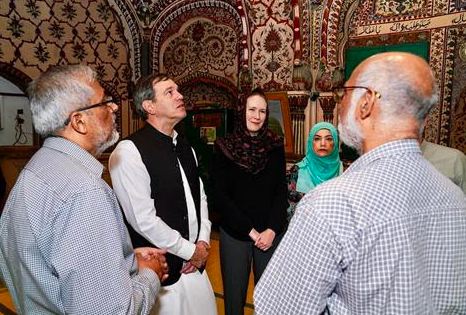
During his visit to Lahore, DCM Schofer and the U.S. Consul Generals also toured the Walled City of Lahore, including the Lahore Fort and Wazir Khan and Sunehri Mosques. The U.S. government has funded 35 cultural preservation projects worth $8.4 million across Pakistan, with 20 of these projects located in Punjab. These projects are a testament to the U.S.-Pakistan joint commitment to cultural preservation. “These projects not only strengthen communities, but also build a sense of belonging, contribute to economic development, and educate future generations about Pakistan’s diversity and history,” said DCM Schofer.   

Pakistan squad announced for Azlan Shah Hockey Cup

Pakistan squad announced for Azlan Shah Hockey Cup

AFZAL JAVED / DNA

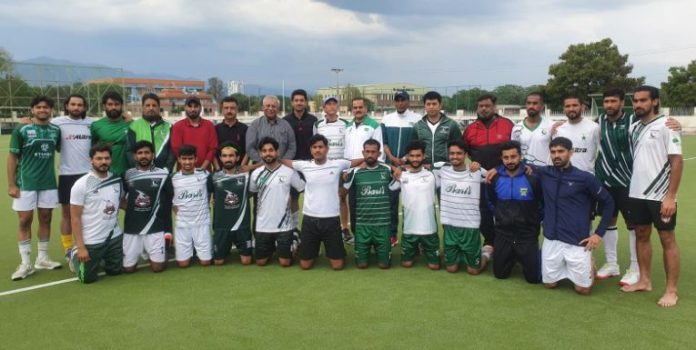
ISLAMABAD, APR 28: Ammad Shakeel Butt will lead the 18-member Pakistan squad in the upcoming Sultan Azlan Shah Hockey Cup, set to be held in Malaysia from May 4.

The squad was announced on Sunday by the head coach Roelant Oltmans who has been given all the powers to decide on the selection of the Pakistan national squad till the time the government decides on the fate of Pakistan Hockey Federation (PHF).

Taking immediate measures by Rana Mashhood, Prime Minister Advisor on Youth Affairs who empowered Dutch coach Roelant Oltmans to select the final travelling squad in coordination with the Deputy Director General Pakistan Sports Board Shahid ul Islam and representative of Pakistan Olympic Association (POA) Manzoor ul Hassan have done their job according to given mandate.

Around 44 players including ten from the Karachi camp also attended trials which were conducted into different sessions at the Naseer Bunda Hockey Stadium Islamabad.

Ammad Shakeel Butt has been appointed as the captain of the national hockey team along with Abu Bakar will assist Ammad as vice-captain while seven reserve players were also included in the Pakistan squad.

Other players include Abdullah, Muneebur Rehman, Osama Bashir, Ehtsham, M Abdullah, Sufyan, Salman Razzak, Arshad Liaquat, Moin Shakeel, Zakaria Hayat, Murtaza Yaqoob, Ghazanfar Ali, Abdul Rehman Senior, Hunain Shahid, Rana Waheed and Ijaz Ahmed.

Speaking to the media, Roelant Oltmans said that he tried to prepare the best team by looking at the current talent as our target is the Nations Hockey Cup, adding that after the Azlan Shah cup, the team for the Nations Cup can be changed.

He said that we are not worried about the results of the Azlan Shah Cup, we have to prepare a better team, if the players show good results, then we can win the event

President Pakistan Hockey Federation Tariq Hussain Bugti  and Secretary General PHF Rana Mujahid along with a number of former international hockey players also witnessed the final trials session.

Stay Connected

64FansLike
60FollowersFollow

Latest Reviews

Exchange Rates

USD - United States Dollar
EUR
1.17
GBP
1.35
AUD
0.72
CAD
0.73