Home Blog Page 941

Chinese’ solar lights illuminate Gwadar

Chinese’ solar lights illuminate Gwadar

ISLAMABAD, APR 30 (DNA) — Thanks to the efforts of Chinese companies, the streets and public places in Gwadar are now illuminated by solar energy.  Local residents in Gwadar had been experiencing unstable power supply, particularly during the night, prior to this development.

The China Communication and Constructions Company, in collaboration with the Consulate General of the People’s Republic of China in Karachi, have jointly undertaken the project to illuminate the main streets and public spaces of Gwadar. 

A total of 73 solar-powered street lights have been installed at various locations where public activities are concentrated. Of these, 18 poles have been installed at the junction of the East Bay Expressway with the jetty, 19 poles at the fish landing area on the west bay along Marine Drive, 26 poles at the fish harbor (jetty), and 10 poles at the District Headquarters Hospital (DHQ).

Ali Baloch, a local resident near Maritime Drive, told Gwadar Pro that before, such facilities were unavailable for local commuters at these points.  He emphasized that there was a clear recognition of the need for improved infrastructure by both the local community and the Chinese companies involved. 

Additionally, he expressed optimism that with the installations of solar-powered street lights, commercial activities, especially those related to fishing, would be able to continue throughout the day due to the improved visibility and safety provided by the solar lighting.

Meanwhile, in 2022, 4,000 sets of solar photovoltaic systems and LED lights were donated to local residents for their homes by Chinese companies, in collaboration with the Chinese Embassy and China’s Ministry of Ecology and Environment.  This additional initiative further underscores China’s commitment to improving the lives of the local population in Gwadar. — DNA

Pakistan’s inadequate measures against tobacco industry result in over 160,000 deaths annually

Pakistan's inadequate measures against tobacco industry result in over 160,000 deaths annually

ISLAMABAD, APR 30 /DNA/ – Pakistan’s performance in preventing the influence of multinational tobacco manufacturing companies has been found unsatisfactory, resulting in the deaths of above one hundred and sixty thousand people in the country annually, a global study reveals.

An international watchdog on tobacco control, the Global Center for Good Governance in Tobacco Control (GGTC) in its latest finding of 2023 has included Pakistan in an index where the tobacco industry heavily influences the governments.

According to the findings of the international watchdog Pakistan’s performance in adopting measures to prevent the industry’s influence, ensuring transparency, and avoiding the conflict of interest with the multinational tobacco companies has remained unsatisfactory.

Mentioning the names of Pakistan Tobacco Company and British American Tobacco, the GGTC said that in 2021, 163,672 deaths in Pakistan occurred primarily by these two top producers of tobacco.

It further said that in Pakistan, tobacco companies are not prohibited from promoting themselves through so-called socially responsible activities and from promoting their products through sponsorships of events, activities, or individuals.

According to GGTC findings, tobacco taxes in Pakistan as a percentage of retail price is 61% while the global standard is 70%.

Meanwhile, the International Monitory Fund (IMF) Technical Assistance Report titled ‘Pakistan Tax Policy

Diagnostic and Reform Options’ released in February, on the consumption of cigarettes in Pakistan, has advised Pakistan to overhaul its tax system by increasing taxes on non-essential items like cigarettes and applying a uniform tax on cigarettes regardless of their national or multinational brand.

Pakistan is currently contributing only 0.5% percent of GDP in revenue during FY21 while cigarette taxation has contributed 0.19% of the GDP, at current levels as a percentage of GDP, and has remained relatively stable in recent years.

The World Bank also in its report Pakistan Development Update’ has highlighted that a significant revenue gain of 0.4 percent of GDP equal to 505.26 billion rupees could be achieved by applying the current rate on premium cigarettes, which is Rs. 16.50 per cigarette to standard cigarettes as well.

On the other side, a recent study by London’s Imperial College titled ‘Tobacco & global environment footprint’ has ranked Pakistan among nine poor countries that produce 90 percent of cigarettes for the world.

The study finds that tobacco production in underdeveloped countries should be a cause of concern for policymakers as out of the top 10 tobacco-producing countries, 9 including Pakistan are developing and falling in the category of low-income food-deficit countries (LIFDCs).

Ambassador Blome Hosts Pakistan Cricket Team Ahead of T20 World Cup in US

Ambassador Blome Hosts Pakistan Cricket Team Ahead of T20 World Cup in US

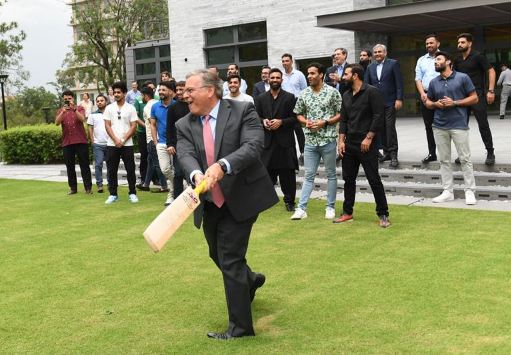
Islamabad, APR 30 /DNA/ – In a display of support for Pakistan ahead of the highly anticipated T20 Cricket World Cup 2024, U.S. Ambassador Donald Blome hosted the Pakistan National Team Cricket players for a meet-and-greet at the U.S. Embassy in Islamabad on April 29.

The Ambassador welcomed the national team players and accompanying Pakistan Cricket Board Chairman Mohsin Naqvi at his residence and extended his best wishes to the players for their upcoming T20 Cricket World Cup matches in the United States.

In dual gestures of sports diplomacy, Ambassador Blome presented the team members with a commemorative embassy cricket ball and autographed softball bat; the Pakistani team reciprocated by presenting the Ambassador with a signed cricket bat and team jersey.  The Ambassador then participated in an impromptu cricket demonstration with members of the National Team.

The United States is set to make history this June by hosting the T20 Cricket World Cup for the very first time.  Adding to the excitement, both Pakistan and the United States have been slated to play within the same group stage and will compete in a highly anticipated matchup scheduled for June 6.

Uber quits app in Pakistan; to operate through subsidiary brand Careem

Uber

ISLAMABAD, APR 30: Uber said on Tuesday that it had made the decision to cease operating its ride-hailing app in Pakistan. “We’ve made the decision to cease operating the Uber app in Pakistan,” a spokesperson for Uber told Dawn.com.

“Our subsidiary brand Careem will continue to operate, with the Careem app offering ride-hailing services across Pakistan and earning opportunities for drivers,” the spokesperson added.

In 2019, Uber had acquired its rival Careem for $3.1 billion. The two companies had said they would continue to operate their respective regional services and independent brands.

In October 2022, Uber had ceased operations in Karachi, Multan, Faisalabad, Peshawar and Islamabad. It had decided to operate in the five cities through Careem and through the Uber app in Lahore.

In an email sent to users in Lahore today, Uber said it had made the “difficult decision to no longer offer the Uber app services in Lahore as of April 30”.

“Ride-hailing services will continue to be offered through our subsidiary brand Careem and you will have the option to sign up and request a trip on Careem to have a seamless experience,” the email read.

“In light of this, Careem Rides may reach out to you to check in and sign up. Please fill the form provided below by May 3, 2024 if you do not want your details to be shared with Careem.

“If you currently hold Uber Cash balance in your Uber Wallet, we will be communicating with you in due course on the process for reclaiming your Uber Cash balance,” it said as users were also offered a 50 per cent discount on five rides with Careem.

Users in Lahore who tried to access the app were met with the message: “Uber no longer in Lahore”. They were also told they could use Careem to avail 50 per cent off on five rides with code LHR50.

ChatGPT faces Austria complaint over ‘uncorrectable errors’

ChatGPT

VIENNA, APR 30 (AFP/APP/DNA): A Vienna-based privacy campaign group said Monday it would file a complaint against ChatGPT in Austria, claiming the “hallucinating” flagship AI tool has invented wrong answers that creator OpenAI cannot correct.

NOYB (“None of Your Business”) said there was no way to guarantee the programme provided accurate information. “ChatGPT keeps hallucinating — and not even OpenAI can stop it,” the group said in a statement.

The company has openly acknowledged it cannot correct inaccurate information produced by its generative AI tool and has failed to explain where the data comes from and what ChatGPT stores about individuals, said the group.

Such errors are unacceptable for information about individuals because EU law stipulates that personal data must be accurate, NOYB argued.

“If a system cannot produce accurate and transparent results, it cannot be used to generate data about individuals,” said Maartje de Graaf, data-protection lawyer at NOYB.

“The technology has to follow the legal requirements, not the other way around.”

ChatGPT “repeatedly provided incorrect information” about the birth date of NOYB founder Max Schrems “instead of telling users that it doesn’t have the necessary data”, said the group.

OpenAI refused Schrems’s request to rectify or erase the data despite it being incorrect, saying it was impossible, NOYB added.

It also “failed to adequately respond” to his request to access his personal data, again in violation of EU law, said NOYB, and the firm “seems to not even pretend that it can comply”.

OpenAI said it was “committed to protecting data privacy” in response to an AFP request for comment.

“We want our AI models to learn about the world, not individuals; we do not actively seek personal information to train our models, and we do not use publicly available information on the Internet to profile, advertise to, or target people, or to sell their data,” said an OpenAI spokesperson.

NOYB, which has emerged as a fierce critic of tech giants since its creation in 2018, said it was asking Austria’s data protection authority to investigate and fine OpenAI to bring it in line with EU law.

Bursting onto the scene in November 2022, ChatGPT sparked a frenzy among tech users dazzled by its ability to reel off dissertations, poems or translations in mere seconds.

But criticism of the technology has prompted legal action in some countries.

Italy temporarily blocked the programme in March 2023, while France’s regulatory authority began an investigation after a series of complaints.

A European working group has also been set up to improve coordination, although NOYB said it was sceptical about the authorities’ efforts to regulate AI.

PM satisfied as $1.1 bln final IMF tranche to bring in economic stability

Shehbaz Sharif

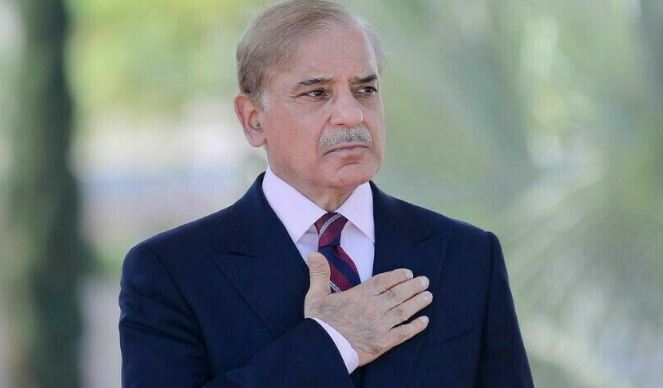
ISLAMABAD, Apr 30 (APP/DNA): Prime Minister Shehbaz Sharif on Tuesday, expressing satisfaction over the disbursement of $1.1 billion final tranche by the International Monetary Fund (IMF), hoped that it would help bring economic stability to the country.

On Monday, the IMF Executive Board completed the second review under the Stand-By Arrangement (SBA) for Pakistan, allowing for an immediate disbursement of around $1.1 billion, bringing total disbursements under the arrangement to around $3 billion. The IMF and Pakistan had reached the Staff Level Agreement on the second and final review on March 20, 2024 for the remaining $1.1.

The prime minister, in a statement, said that in 2016, Pakistan Muslim League-Nawaz Quaid Nawaz Sharif had completed the IMF program in his tenure, and the current one was the second SBA nearing completion.

Highlighting the significance of the IMF program to save Pakistan from economic default, Prime Minister Shehbaz said that the bitter and tough decisions were coming to fruition in the form of economic stability.

“Allah has given us the opportunity to improve the economy. We will make all possible efforts to bring in the economic stability. The real success is not to get loans but to get rid of them,” he remarked.

He said the time of riddance from the loans and economic prosperity would arrive soon if the efforts in the right direction continued with the same passion.

The prime minister appreciated Finance Minister Muhammad Aurangzeb and his team, and thanked the IMF Managing Director for supporting Pakistan in difficult times.

Deputy Prime Minister Ishaq Dar: what’s next?

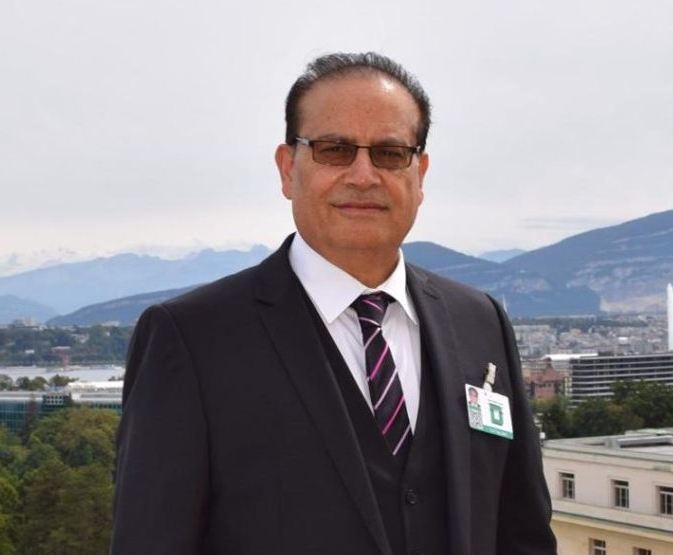
Qamar Bashir

By  Qamar Bashir

After the elections, Nawaz Sharif was left heartbroken, and his die-hard fans were devastated by his decision to decline the premiership. Feeling humiliated and dejected, Nawaz Sharif’s ability to make rational decisions was clouded by agony and pain. Seizing the opportunity, the architect of Pakistan’s political landscape acted swiftly, tactfully proposing Shahbaz Sharif as Prime Minister in Nawaz Sharif’s place. According to some close associates, Nawaz Sharif was threatened to consider a hundred times before deciding against it, with the possibility of his constituency results and those of his daughter being made public, adding to his humiliation and indignation. He knew that his beloved daughter would rather endure desperation and pain than be denied the Chief Ministership of Pakistan’s largest province, for which she had worked tirelessly.

The threat was enough to compel Nawaz Sharif to take a back seat and watch the premiership, for which he had waited, suffered, and worked so hard, slip away from his grasp and be bestowed upon Shahbaz Sharif, who had solidified his connections with the establishment during his previous tenure.

Nawaz Sharif also witnessed with utter indignation when his long-time favorite, Ishaq Dar, was denied the Ministry of Finance. This decision came as a profound surprise to Dar, who felt deeply humiliated when his pride as a financial wizard was severely and mercilessly wounded.

Ironically, this critical ministry was handed to an unelected professional with no experience or expertise in handling complex public financial matters. Furthermore, this individual was not accountable to the people of Pakistan for his performance as Finance Minister.

Despite being offered the consolation prize of Minister of Foreign Affairs, Ishaq Dar found himself ill-suited for the role, much to the dismay of the people of Pakistan who were disheartened to see him as the country’s top diplomat.

Amidst the drama of suspense, intrigue, deception, and conspiracies, Shahbaz Sharif played his cards masterfully. He achieved everything he desired in life, without apprently alienating his elder brother and  his leader, positioning himself as the most suitable candidate for the premiership by aligning himself, his political ideology, and his complete obedience with the architects of the election results.

Once elected as Prime Minister, Shahbaz Sharif’s obedience was legendary. He appointed all unelected nominees for the important cabinet portfolios, accepted all policy decisions, and left no opportunity, event, or media discourse untouched to express his admiration, gratitude, and thanks to the architects.

As the shock, sorrow, and agony of the election results subsided, Nawaz Sharif and his close associates came to the stark realization that they had been completely marginalized and excluded from the political chessboard of Pakistan. They understood how Rana Sanaullah, who could have undoubtedly been the next interior minister, was sidelined to make way for Mr. Naqvi, who had earned praise and blessings from the establishment for ruthlessly cracking down on the PTI during the 9th May incident and manipulating the election results to disadvantage some of the the PML(N) candidates while rewarding the others.

Upon recognizing this reality, they devised a plan of action to reassert themselves within the government and the party. In the public domain, they began injecting the narrative that the election results were manipulated to deprive Nawaz Sharif of the premiership and deny his close associates victory in the elections and their guaranteed place in the cabinet. Discreetly, they withdrew PML(N) support from the current government by disassociating the party’s manifesto from the incumbent government. They then moved to assert themselves in the formation of the cabinet by advocating for Ishaq Dar to be appointed as Deputy Prime Minister. Finally, they orchestrated a shift in the party’s presidency from Shahbaz Sharif to Nawaz Sharif.

Out of the four planned actions, the most damaging and far-reaching consequence was the statement that the PML(N) is not responsible for implementing its manifesto. This assertion was based on the flimsy ground that since Shahbaz Sharif’s government is heading a coalition government and the PML(N) could not achieve a simple majority in parliament, they are not accountable for implementing their manifesto or the performance of Shahbaz Sharif’s government. This leaves the question open as to whose manifesto Shahbaz Sharif’s government is following. This was a severe blow to the government of Shahbaz Sharif and a shock to its architect.

In essence, this statement implies that Shahbaz Sharif’s government does not have the mandate of the people to govern. It represents a profound loss of confidence in the government’s policies and leadership, significantly undermining its legitimacy and credibility. This situation is akin to a building whose foundation has been pulled out, and it is on the verge of collapse with a slight touch.

The second attack by the Nawaz Sharif faction was to elevate Mr. Ishaq Dar, a close confidant of Nawaz Sharif, to the position of Deputy Prime Minister. This means that Dar now holds significant authority, as both the interior minister and finance minister, along with the entire cabinet, will report to him before making any policy decisions in their respective spheres. As Deputy Prime Minister, Dar is second-in-command and will step in as Prime Minister when necessary. He will lead Cabinet meetings, represent the government at official functions, and handle day-to-day government operations. He will also oversee specific policy areas, ensuring coherence and alignment with the overall government agenda.

The third attack was to deprive Shahbaz Sharif of the coveted post of President of the PML(N). This move may not have been questioned, if Nawaz had been Prime Minister. His realization of the conspiracy against him has made him adamant to strip Shahbaz Sharif of all powers. This action will leave Shahbaz Sharif without any significant authority; Deprived of the party’s presidency, the PML(N) manifesto, and the Prime Minister’s absolute power, Shahbaz Sharif will become a leader without legitimacy or authority.

This reaction is crucial on several fronts. If the PML(N) decides to withdraw its support from the current government, Shahbaz Sharif’s administration would collapse immediately. Now, assuming he is no longer the Prime Minister and holds no significant portfolio within the party, his fate becomes uncertain and his political future could hang in the balance.

Furthermore, the question arises: who would be the next favorite of the architect if Shahbaz Sharif is sidelined? This is a complex and difficult question to answer at this juncture. However, one thing is clear: regardless of Shahbaz Sharif’s prowess in the game of politics, both he and his architect will undoubtedly encounter shocking surprises from the experienced and seasoned player, Nawaz Sharif. As the situation unfolds, the dynamics of Pakistani politics are bound to shift, and the outcomes may be unpredictable.

By  Qamar Bashir

Former Press Secretary to the President

Former Press Minister to the Embassy of Pakistan to France

Former MD, SRBC

Dar as Dy PM: Nawaz in, Shehbaz down, Establishment out?

To withstand the influence of the Establishment demands exceptional courage and remarkable efficiency from the PML-N administrations, both in Punjab and on the federal stage. Given the current context, this endeavor seems akin to a Herculean feat, suggesting that neither Nawaz’s return to power nor the containment of the Establishment’s influence will come easily

Analysis

Ansar M Bhatti

In a surprise move Foreign Minister Ishaq Dar has been elevated as the Deputy Prime Minister of Pakistan – a move that seeks to relieve Prime Minister Shehbaz Sharif of some of his administrative responsibilities or burden whatever we may call it. However, beyond mere delegation, Dar’s elevation holds deeper implications. It is poised to reinforce Nawaz Sharif’s influence over governmental affairs significantly.

With Dar assuming the role of deputy prime minister, Nawaz Sharif, who is anticipated to assume the presidency of the party, gains a pivotal channel to advocate his vision and objectives. This move strategically situates him to garner the trust and backing of the party’s supporters and stakeholders. Nawaz Sharif’s intervention couldn’t have come at a more critical juncture. The party was teetering on the brink of disarray, plagued by lackluster performance and internal discord, which threatened its very existence in the political arena.

After this significant appointment, particularly the dynamics of civil-military relations may undergo a shift, seemingly unfavorable for the PML-N. Having been marginalized, Nawaz Sharif appeared determined to regain influence within the prime minister’s domain. The underlying motive, it seems, was to rectify the perceived ‘insult’ inflicted upon him by his exclusion from the prime minister’s office. By orchestrating the appointment of Ishaq Dar as the deputy prime minister, he may have sought to settle certain scores. However, political analysts caution that the potential ramifications of this maneuver could be substantial.

Ishaq Dar, a prominent figure within the PML-N, harbored aspirations to serve as the finance minister, a position of significant influence within the government. However, his ambitions were thwarted by opposition from international financial institutions, complicating his path to securing the portfolio. Additionally, strained relations with the Establishment further hindered his prospects, ultimately leading to his departure from the finance ministry.

The subsequent appointment of Mohsin Naqvi as Interior Minister brought further challenges for the PML-N, adding to the perception of instability within key ministerial positions. Given the pivotal role that both the finance and interior ministries play in governmental performance, Shehbaz Sharif’s leadership was perceived as compromised due to his lack of control over these crucial portfolios.

Recognizing the need to address this power imbalance, the appointment of Ishaq Dar was intended to restore equilibrium within the government. Moreover, under this arrangement, there was a potential for the finance and interior ministers to fall under the supervision of the deputy prime minister, further solidifying the government’s operational structure.

The PML-N finds itself in a challenging position due to its close ties with the Establishment. The perception that the party ascended to power through these connections has dealt a significant blow to its credibility. The leadership, especially the Nawaz faction, is keen to shed this perceived “stigma” to prevent the party from facing extinction. The appointment of the deputy prime minister seems to be a step in this direction.

Nevertheless, should the party aspire to rejuvenate its dwindling popularity, it must take decisive action. This entails fulfilling the pledges made to its electorate during the campaign period. Presently, the plight of the common citizenry persists, with challenges such as escalating electricity and fuel costs at the forefront. Additionally, inflation looms as another formidable adversary, exacerbating the burdens faced by the populace. Addressing these pressing issues necessitates not only political stability but also economic stability; for without the former, the latter remains an elusive goal.

The imminent IMF tranche is on the horizon, and Saudi investments could potentially bolster Pakistan’s economic landscape. However, the specifics of Saudi interest remain ambiguous. While the government has proposed stakes in sectors like PIA and hospitality, clarity on Saudi preferences is lacking. Recent interactions with the Saudi foreign minister failed to elucidate their investment focus, indicating Saudi Arabia’s indecision.

Concerns loom regarding Pakistan’s law and order and legal framework, posing potential barriers to attracting not only Saudi but other foreign investments as well. Saudi Arabia prioritizes a stable political environment where all stakeholders, including PTI, are aligned. This stance wasn’t well-received by certain quarters, evidenced by PTI member Sher Afzal Marwat’s allegations of Saudi interference in toppling the Imran Khan government.  Marwat’s statement aimed to sour Saudi-PTI relations but appears to have had limited impact. Marwat’s actions suggest he may be trying to hedge his bets by playing both sides or perhaps that is what most of PTI leaders think about him.

The PML-N, under the leadership of Nawaz Sharif, has long been characterized by its contentious relationship with the Establishment. So, it’s hardly shocking that the party continues to follow this familiar trajectory. What’s truly captivating, though, is how the conflict has reared its head sooner than expected.

To withstand the influence of the Establishment demands exceptional courage and remarkable efficiency from the PML-N administrations, both in Punjab and on the federal stage. Given the current context, this endeavor seems akin to a Herculean feat, suggesting that neither Nawaz’s return to power nor the containment of the Establishment’s influence will come easily.

IMF and Pakistan: A Historical Account

IMF and Pakistan: A Historical Account

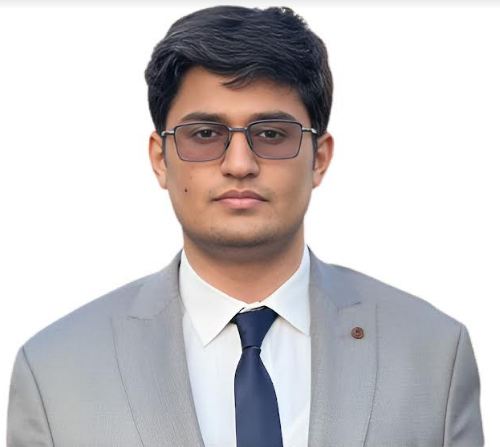
Afnan Wasif

Pakistan has availed 23 IMF programs since 1958, but due to internal and external reasons, adoption of IMF policies has not benefited substantially. Pakistan has earned the unfortunate title of “one-tranche nation” which alludes to the nation’s history of taking out loans at crucial junctures and then prematurely abandoning them due to a balance of payments crisis.

Pakistan first sought assistance from the IMF in 1958 when General Ayub Khan initiated the country’s engagement with the IMF by signing an agreement to obtain special drawing rights (SDR) 25 million through a Standby Agreement.

After a while, in 1965 and 1968, respectively, Ayub’s finance team pursued two consecutive IMF programs. On this occasion, however, they ultimately withdrew the entire agreed upon amount, or about SDR 112 million. At this point, Pakistan formally joined the IMF’s clientele.

The second time Pakistan knocked the door of IMF was during the tenure of Zulfiqar Ali Bhutto on May 18, 1972. Under Bhutto’s leadership, Pakistan approached the IMF three times, withdrawing 314 million out of an agreed amount of 330 million SDR. Pakistan’s relationship with the IMF became strained after Bhutto was succeeded by General Zia Ul Haq, who continued the country’s reliance on the IMF. During Zia’s regime, Pakistan approached the IMF twice, securing 2.187 billion SDR of which 1.079 billion was utilized.

Over time, Pakistan’s reliance on IMF loans increased. During the tenures of Benazir Bhutto and Nawaz Sharif, Pakistan approached the IMF a total of eight times. The Pakistan People’s Party (PPP) sought IMF assistance five times, while the Pakistan Muslim League-Nawaz (PMLN) sought it three times. Even during the military rule of General Pervez Musharraf, who took power in 1999 after ousting Nawaz Sharif, Pakistan continued to seek IMF support, approaching the IMF twice within nine years and securing 1.33 billion SDR.

After democracy was restored in 2008 following General Musharraf’s departure and the Pakistan People’s Party (PPP) assumed power, their initial strategy was to approach the IMF for a substantial bailout, securing the largest IMF package in Pakistan’s history amounting to 4.94 billion SDR. In accordance with IMF conditions, Pakistan was required to implement certain reforms, including enhancing tax administration, eliminating certain tax exemptions, and establishing an interest rate corridor. However, these macroeconomic policies did not adequately address the underlying structural challenges in the economy. There was general agreement between the authorities and the IMF mission on key policy priorities, which included tighter fiscal measures, a less accommodative monetary policy stance, and structural reforms. Nonetheless, the economy’s performance remained below its potential.

Upon returning to power in 2013, the PML-N government followed past practices by promptly approaching the IMF and securing the second-largest loan in Pakistan’s history, totaling 4.399 billion SDR. According to the IMF’s assessment, this three-year program, completed in September 2016, enhanced macroeconomic stability. The IMF’s final assessment indicates that as a result of this program, economic growth improved, the fiscal deficit was reduced, and foreign currency reserves were replenished. Additionally, structural reforms were initiated as part of this process.

In 2019, during the PTI government, the IMF’s executive board approved a three-year, $6 billion loan for Pakistan, disbursing $2 billion annually under an extended fund facility (EFF).

Subsequently, in 2023, during the PDM government, Pakistan approached the IMF again as the previous EFF had expired. On June 30, 2023, the IMF reached a staff-level agreement with Pakistan on a $3 billion standby arrangement.

Following the 2024 General Elections, the PML-N government led by Shehbaz Sharif is preparing to conclude negotiations for a new IMF loan by May 2024, aiming for a minimum of $6 billion. With the existing $3 billion IMF arrangement expiring in late April, the government is seeking a larger, extended loan to maintain macroeconomic stability and facilitate essential structural reforms. This marks Pakistan’s 24th medium-term bailout package, emphasizing a commitment and dedication to lasting and enduring structural changes.

The author is a student of Strategic Studies at National Defence University, Islamabad. He tweets @afnanwasif

Stay Connected

64FansLike
60FollowersFollow

Latest Reviews

Exchange Rates

USD - United States Dollar
EUR
1.17
GBP
1.35
AUD
0.72
CAD
0.73