Home Blog Page 937

The Army Knows its Constitutional Limits…

Qamar Bashir

By: Qamar Bashir

The army chief said that while the army understands its constitutional limits, those who criticize the army should also be aware of the constitutional boundaries set by Article 19 of the constitution which subjects all citizens to reasonable restrictions imposed by law which inter alia include  the integrity, security, or defense of Pakistan, public order, decency and  morality.

The army chief’s speech at the passing-out parade of cadets at Pakistan Air Force (PAF) in Risalpur on May 2nd, 2024 was seen as a calculated and well-timed response to politicians, media personnel, and social media activists who have been unjustly criticizing the army and called for the army to uphold its oath, which includes respecting the Constitution of the Islamic Republic of Pakistan and refraining from engaging in any political activities.

The army chief’s words can be interpreted as a rebuke to those who are using traditional and social media to condemn the army. He seems to be implying that the army knows its responsibilities and no one has the right to dictate its actions. Instead, individuals should be mindful of their own actions and avoid crossing the boundaries set by Article 19 of the constitution.

Interestingly, the abuse and condemnation of the army on social media platforms are not unique to Pakistan. For example, in countries like the United States, United Kingdom, India, and others, the military has been subjected to criticism and abuse on social media on account of political differences, human rights concerns, and accountability issues. These countries have also implemented various remedial actions.

In the United States, the Communications Decency Act of 1996 includes provisions related to online harassment and obscenity. Additionally, the Uniform Code of Military Justice (UCMJ) includes provisions that address disrespectful behavior towards the military.

The Malicious Communications Act 1988 in the United Kingdom criminalizes the sending of electronic communications with the intent to cause distress or anxiety. Similarly, the Communications Act 2003 includes provisions related to offensive and menacing messages sent over electronic communications networks.

In India, the Information Technology (Intermediary Guidelines and Digital Media Ethics Code) Rules, 2021, require intermediaries to take down certain types of content, including those that threaten public order or national security. Additionally, the Indian Penal Code includes provisions related to defamation, hate speech, and incitement to violence that can be applied to online behavior.

In Pakistan, there are 52 media laws, rules, regulations, and codes of conduct primarily aimed at imposing reasonable restrictions on the freedom of the press and social media. These can be used against any person found disseminating biased, baseless, false, and venomous propaganda against the armed forces of Pakistan. However, if there is a need to enact new laws, it should be done only after conducting a nationwide debate and benchmarking the best practices globally, involving all stakeholders to ensure their complete buy-in.

Additionally, social media platforms should be engaged proactively to implement policies, refine the existing tools and invent new ones  to combat abusive behavior on these platforms to combat hate speech and harassment and holding accountable those  who violate these policies.

Conscious efforts should be made to strengthen support for and promote traditional media, operated by seasoned, experienced, and highly refined professionals. These individuals are adept at the art and science of making difficult, sensitive, and critical communications in the best interests of our institutions, the people of Pakistan, and the country as a whole. This will enhance credibility in traditional media and discourage the spread of misinformation that often occurs in the unregulated jungle of social media. In social media, facts and reality are distorted with total impunity, often driven by the prime objective of increasing views, which translates to higher revenue. This creates added incentive for social media activists to create sensationalism, anarchy, and chaos in society. Therefore, the public should be incentivized to turn to traditional media by weaning them off social media.

However, the most important intervention which will address this issue comprehensively lies in  correcting the misconceived perception about the Pakistan army and its alleged involvement  in non-traditional roles such as anti-narcotic duties, anti-smuggling duties, and engaging in commercial activities like housing schemes, construction, large scale manufacturing and banking and serving general are appointed against civilian posts  which lead to the perceptions of overreach and a deviation from army core mandate of national defense.

Secondly, a misconceived perception which needs correction is the army’s alleged involvement in politics, victimizing disfavored politicians and rewarding  favored ones, including raising and eliminating political parties, influencing election results, and intimidating judges and election commissions, while the army time and again has assured that it has no role to play in the politics maneuvering.

Thirdly, misplaced perception is that army and institution under it are involved in human rights abuses, including abductions, torture, and intimidation of citizens, journalists and political activists to suppress free speech and dissent.

While it is paramount that the false and malicious propaganda against Pakistan’s most important and vital institution must stop, equally important is to take steps to improve Pakistan’s ranking on the Freedom of Press Index which currently rests at 150 out of 180 countries.

To dispel misperceptions about the Pakistan Army, an immediate and comprehensive strategic communication plan must be put into action. This plan should start by identifying the key misperceptions. Messaging should be crisp, clear, and consistent, emphasizing the Pakistan Army’s core mandate of national defense, its contributions to security, and its unwavering commitment to democratic values.

Engaging with stakeholders, including government officials, civil society organizations, and the general public, and forging partnerships with credible allies such as respected public figures and scholars, are crucial steps. Continuous monitoring and evaluation, coupled with transparency and sustained engagement, are fundamental elements for successfully dispelling misperceptions and fostering positive relationships with the public in Pakistan.

By: Qamar Bashir

Former Press Secretary to the President

Former Press Minister to the Embassy of Pakistan to France

Former MD, SRBC

US Ambassador meets new Punjab officials

US Ambassador meets new Punjab officials

LAHORE, MAY 3 /DNA/ – U.S. Ambassador Donald Blome met with new Punjab officials to explore opportunities to strengthen the U.S.-Pakistan partnership in Punjab province.  He also held meetings and events focused on U.S.-Pakistan collaboration in the fields of IT, health, and culture.  U.S. Consul General in Lahore Kristin Hawkins joined Ambassador Blome for his series of engagements.

As part of his routine interactions with Pakistani officials, Ambassador Blome met with Punjab Chief Minister Maryam Nawaz Sharif, Acting Governor and Speaker of the Punjab Assembly Malik Muhammad Ahmad Khan, and Punjab Assembly Leader of the Opposition Malik Ahmad Khan Bhachar.  The Ambassador highlighted U.S. interest in strengthening our trade and investment relationship with Pakistan, discussed the positive impacts of initiatives under the U.S.-Pakistan “Green Alliance” framework, and explored additional areas for future collaboration.

The Ambassador visited the offices of Systems Limited and Remington Pharmaceuticals to learn more about ongoing U.S.-Pakistan collaborations in the IT and health sectors.  “The U.S. government is providing nearly $85 million in funding to address the issue of malnutrition in Pakistan, including $12 million to treat severely malnourished children,” Ambassador Blome said.  “I appreciated the opportunity to hear about the work Remington Pharmaceuticals is doing to combat malnutrition and other global health challenges, including in collaboration with U.S.-based partners.”  

The Ambassador visited Forman Christian College to see a USAID-constructed women’s dormitory and to visit the U.S. government-funded EducationUSA office, which provides free advising services on study abroad opportunities in the United States.  Another highlight of his trip was attending a concert at the Lahore Fort by Raining Jane, a band comprised of four American women.   

“Back home in the United States, Raining Jane has played a leadership role in supporting girls’ dreams of becoming musicians, by establishing a Rock n’ Roll Camp for Girls in Los Angeles,” Ambassador Blome said.  “I’m so pleased they are able to be here to inspire the next generation of Pakistani musicians, both women and men, to be influential leaders in their own communities.”

Making Saudi investment a success is critical

Saudi investment

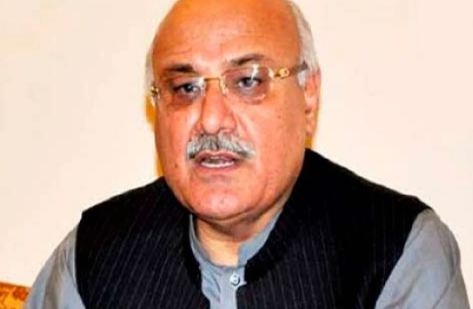
ISLAMABAD, MAY 3 /DNA/ – Muhammad Hanif Mughal, Chairman of Pakistan Tehreek-e-Shadbad, said on Friday that Pakistan has lost numerous chances to grow economically. 

Politicians and bureaucracy tend to scare away investors, which should be changed; that is critical for the success of Saudi investment, he added. 

In a statement issued today, Dr Muhammad Hanif Mughal said that no other country has as many opportunities as Pakistan to boost the economy, but all such opportunities have been wasted due to vested interests.

He observed that our politicians and bureaucracy are experts in driving away investors, a major obstacle to investment and national development. 

He said that now, the friendly country of Saudi Arabia wants to invest billions of dollars in Pakistan, which should be allowed to succeed. 

Riyadh is particularly interested in investing in the agricultural sector; nevertheless, energy projects were also addressed during the discussions between the high-ranking officials of both countries. 

He said Saudi investors and investments should be protected and allowed to work freely so other countries could also follow suit to invest in Pakistan.

Apart from this, people and institutions who have stopped investments in Pakistan should be consulted to find and correct the problems discouraging investors. 

He said Saudi investors and their investments should be protected from problems, which is crucial for the economic stability of Pakistan. 

With Saudi investment, the relations between the two countries will be more stable, while the reputation of Pakistan will grow, the economy will prosper, and employment opportunities will increase. 

He noted that some hostile countries and negative elements are worried about Saudi investment in Pakistan. They may target Saudi investors like the Chinese working are targeted. 

Therefore, the foolproof security of investors be ensured so they can work with peace of mind, he demanded.

Hanif Mughal observed that there is a realization at the top in Pakistan that we need to modify our internal dynamics to attract foreign investment.

The government is trying to make Pakistan an attractive destination for capital from other countries. Still, much must be done before making the country an investment destination. 

He said that Pakistan is facing revenue, energy, and security issues, which require attention. It is also essential to put an end to corruption and bureaucratic red tape and establish a regulatory and administrative environment that emphasizes the simplicity of conducting business. 

In the meantime, the Saudi offers are likely to be realized shortly and additional foreign investors from the Gulf region and beyond may start to investigate the investment potential in Pakistan. 

On the other hand, it is essential to ensure an environment of domestic political stability which is necessary to attract huge foreign investments. 

It should not be overlooked that FDI allows the transfer of technology and it can also promote competition in the domestic input market. Recipients of FDI often gain employee training for operating new businesses, which contributes to human capital development and profits generated by FDI contribute to tax revenues.

World Bank, PIDE set to debate fiscal and governance reforms

PIDE

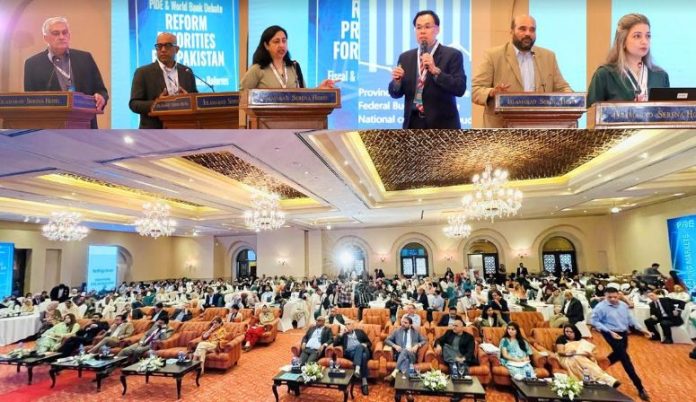
ISLAMABAD, MAY 3 /DNA/ – A collaborative event between The World Bank Group (Pakistan) and the Pakistan Institute of Development Economics (PIDE) concluded successfully, bringing together an array of stakeholders committed to shaping Pakistan’s economic endeavours. This pivotal gathering, designed to support the nation’s new economic development agenda over the next five years, was marked by rich discussions and a shared commitment to actionable reforms.

Dr. Nadeem ul Haque, Vice Chancellor of the Pakistan Institute of Development Economics (PIDE), spearheaded a pivotal economic reform initiative titled “ISLAAH: Immediate Reform Agenda – IMF and Beyond,” beginning with his opening remarks at this significant event. This strategy emerges in response to Pakistan’s pressing need for substantial external financing, highlighted by an IMF report which necessitates over USD 120 billion in the next five years. Dr. Haque’s comprehensive reform agenda addresses crucial sectors including regulatory modernization, tax reform, market liberalization, energy efficiency, and enhancements in agriculture and banking. A key feature of the reforms is the introduction of a ‘Regulatory Guillotine’ aimed at eliminating burdensome regulations that hinder business growth and innovation. These reforms are designed to rejuvenate Pakistan’s economic landscape, facilitating a more business-friendly environment, optimizing export strategies, improving import regulations, and enhancing overall sectoral efficiencies. The goal is to catalyze investment, create jobs, and promote higher GDP growth, thus steering Pakistan towards long-term economic stability and prosperity.

While talking on “Reforms for a Brighter Future: Time to Decide,” Mathew Verghis, Regional Director of the World Bank Group (South Asia) stated that Pakistan’s economic model is unsustainable due to its reliance on borrowing to finance its fiscal and current account deficits, leading to a growing debt level, which has reached 80% of GDP. He further added that Pakistan’s spending exceeds its revenue, and it imports more than it exports, resulting in increased domestic and external borrowing. However, he also noted that Pakistan has the potential for a brighter future, leveraging its youth, natural resources, and strategic location to achieve 7-8% annual GDP growth, and emphasized the need to prioritize reforms addressing the current economic crisis.

Dr. Durre Nayab, Joint Director, PIDE talked about “Public Administration for the 21st Century”. She addresses critical inefficiencies in Pakistan’s governance system, proposing comprehensive reforms across various sectors including the cabinet, civil bureaucracy, judiciary, and local government. It highlights the necessity to reduce the size of the federal cabinet, limit political appointments, and emphasize expertise and performance in governance roles. The reforms aim to professionalize and streamline public administration by eliminating outdated practices, introducing competitive hiring processes, digitalizing operations, and enabling greater autonomy at the local government level. Additionally, the presentation calls for the restructuring of ministries and autonomous agencies to enhance transparency, accountability, and effectiveness in public service delivery, thereby aligning with modern governance standards and promoting a more responsive and efficient administrative framework.

Mr. Derek H.C. Chen, Senior Economist at the World Bank, outlines a comprehensive review of Pakistan’s federal tax system, aiming to enable a modern and efficient tax structure. It discusses the need for substantial reform due to Pakistan’s low revenue collection compared to international standards and the complexities within the current tax system marked by numerous special provisions and concessional rates. The review provides detailed analyses of specific taxes such as sales tax, personal income tax, and corporate income tax, revealing inefficiencies and the potential for broadening the tax base. Key recommendations include rationalizing concessions, enhancing tax policy and administration, and leveraging potential revenue from provincial sources. The chapter emphasizes the critical role of systematic and phased reforms to increase tax collection efficiency, support fiscal sustainability, and ensure equitable economic growth.

Dr. Ahmad Waqar Qasim, Senior Research Economist, PIDE extensively critiques the existing regulatory framework in Pakistan, highlighting it as a significant impediment to economic activity due to its complexity and the burdensome nature of obtaining permissions. It identifies the pervasive regulatory burden as an “invisible tax” that stifles economic initiatives across all sectors. The review underscores the necessity of a “Regulatory Guillotine” approach, which has been successful in various countries, to streamline regulations by eliminating unnecessary permissions and simplifying the process through digital governance. This approach is advocated as essential for fostering investment, enabling efficient markets, and reducing the bureaucratic inclination towards excessive control. The presentation also calls for the implementation of regular Regulatory Impact Analyses (RIA) to ensure new regulations are justified by clear cost-benefit analyses, thereby promoting transparency and accountability in regulatory practices. Overall, the document argues for substantial deregulation to remove the barriers currently hindering economic growth and investment in Pakistan.

Ms. Maliha Haider, Education Specialist at the World Bank, highlighted significant strides made in Pakistan’s educational system, including expanding access to free and compulsory education and introducing innovative reforms such as merit-based teacher recruitment and public-private partnerships. Despite these efforts, Pakistan still faces substantial challenges, underscored by its low education spending relative to South Asia, which contributes to high dropout rates and learning poverty. The document ‘Spend Better, Spend More: How to Make Education Expenditure Count for Children in Pakistan’ outlines a comprehensive reform agenda aimed at enhancing efficiency in public education expenditure to improve children’s learning outcomes. It emphasizes the need for increased spending to at least 4.3% of GDP, improving spending efficiency, equity, management, coordination, and greater involvement of parents and civil society. The proposed reforms are designed to address systemic inefficiencies and are supported by evidence-based approaches that promise enduring benefits and a foundation for continuous improvement in the education sector.

As the debate concluded, the participants expressed optimism about the adoption and implementation of the proposed reforms and the positive impacts they are expected to bring to Pakistan’s economy.

Chain Stores ask govt to promote digital payments to enhance taxes from retailers

Chain Store Association of Pakistan

DNA

LAHORE, MAY 3: The Chain Store Association of Pakistan (CAP), in a bid to expedite tax reforms whilst ensuring a more conducive environment for compliant businesses, has urged the authorities to prioritize an accelerated adoption of digital payments in the retail sector to improve documentation and tax generation.

CAP Chairman Rana Tariq Mehboob and Co-founder Asfandyar Farrukh, in a press release issued today, expressed concern over the slow progress in documenting the retail trade, due to stagnation of both the FBR-POS integration of Tier-1 businesses and ‘Tajir Dost’ drive to register smaller retailers. This lack of progress is primarily due to lack of sustained consultation with the private sector, no continuity of policies, inconsistency in their implementation and increasingly complex procedures. A clear 5-year roadmap is the need of the hour instead of ad-hoc measures.

The CAP representatives highlighted the potential benefits of embracing digital payments, including enhanced transparency, reduced cash handling costs/risks, and simplified tax compliance.

As cash-oriented sectors are digitalized and documented businesses are allowed to grow without a heavy tax burden, their contribution to taxes will surely increase as a by-product of the transitional growth. The retail trade body has emphasized the importance of implementing a comprehensive policy framework to promote digital payments across all sectors, especially retail, through tax incentives and associated measures.

They pointed to successful models in parts of the country, such as those observed in the restaurant industry in Punjab and ICT. The reduced sales tax rate of 5 percent, instead of 16 and 18 percent respectively, has incentivized customers to pay digitally due to the noticeable incentive. This has multiplied the quantum of documented transactions and resultant government revenues.

Farrukh underscored the need to implement this model in the retail sector to incentivize digital payments for promotion of a quicker transition to a cashless economy. He proposed that GST should be similarly slashed for all retail transactions made through any digital payment method, to encourage faster adoption among businesses and consumers alike.

Although payments via debit and credit cards have shown substantial growth, the RAAST person-to-merchant payment system being rolled out by State Bank of Pakistan and private banks/fintechs will be a game-changer. Through RAAST, anyone with Jazzcash, Easypaisa or any mobile banking app is able to make a payment to a retailer of any size without any added cost, he pointed out.

The strategy of raising revenues by imposing a high tax rate on a low base has failed because it is contrary to economic principles and ground realities. Speedy adoption of digital payments at a much lower tax rate will aid in the documentation of business turnovers leading to an improved generation in the quantum of sales tax by broadening the base in addition to enhanced income tax collection over time, added Mehboob.

The share of digital payments can be gradually brought up to 50% of the retail trade’s contribution to the annual GDP, estimated to be upwards of Rs. 12 trillion. Currently, an estimated 90% of the retail trade is undocumented and undertaxed. Whereas, based on a reduced GST rate of 5% on only Rs. 2 trillion, Rs. 100 billion can be generated in indirect taxes and an additional sum in direct taxes, which is more than is currently collected.

In light of these recommendations, CAP has urged policymakers to take quick and decisive action through a collaborative approach with key players of the ecosystem. They called for a concerted effort to accelerate the adoption of technology, streamline tax procedures, and enact policies that fast-track the use of digital payment solutions to achieve the success that has so far remained elusive.

APCMA shows concerns over deteriorating law and order situation

ISLAMABAD, MAY 1 /DNA/ – All Pakistan Cement Manufacturers Association (APCMA) has shown serious concerns over deteriorating law and order situation, which is threatening their heavy investments.

“The law and order situation in Dera Ismail Khan, Dera Ghazi Khan, Kohat, Mianwali and adjacent areas has seriously jeopardized the day to day operations of the areas’ cement units,” said the spokesman of APCMA.

He added that recently some workers of a cement unit in one of the above mentioned areas were kidnapped by terrorists and they killed one of them. Terrorist are generally demanding huge amount of money as extortion and give warnings of serious consequences in case their demands are not met. 

“This is a serious situation and the government should take strict measures to control and manage the law and order situation in those areas,” said the spokesman.

He added that the cement industry is in expansion phase and heavy investments have been planned which could be jeopardized due to this situation, creating long term issues for the industry.

“Besides, the industry’s investment of billions of rupees in the said areas has also been endangered by these terrorist activities,” said the spokesman.

He added that this deteriorating law and order situation could also pose threats to local employment and create unrest in the said locality.

The cement industry is amongst the highest contributors to the national exchequer and has contributed approximately PKR 240 billion in taxes in FY 2022-23. Furthermore, the cement industry also earns valuable foreign exchange by exporting cement and such exports in the year 2022-23, clocked-in at approximately USD 210 million.

The APCMA spokesman appealed to the government to immediately take strict measures to establish peace in the said areas in order to save the industry’s investments and employment base.

Students hold demo in against Israeli aggression

Students hold demo in against Israeli aggression

DNA

LAHORE: Hundreds of students from different universities on Tuesday held a protest demonstration outside the US consulate against Israeli aggression in Palestine.


Male and female students were wearing keffiyehs (a Palestinian national symbol) to express unwavering solidarity with Palestinians and condemn the ongoing genocide perpetrated by the state of Israel with the support of the US.


The students were carrying Palestine flags and placards inscribed with slogans against Israel and America and in favour of Palestine. The protest was led by the Progressive Students Collective (PSC) and joined by diverse groups of students, social and political activists, academics, artists, and concerned citizens from all walks of life, united in their demand for justice and freedom for Palestine.

Mian Iftikhar elected president ANP

Mian Iftikhar elected president ANP

ISLAMABAD, MAY 01 (DNA) — Mian Iftikhar Hussain has been elected provincial president of Awami National Party (ANP) Khyber Pakhtunkhwa while Syed Aqil Shah and Hussain Shah Yousafzai as vice president and general secretary respectively.

The new office bearers were elected during a meeting of the provincial council held here at Bacha Khan Markaz on Wednesday. Council and party workers from across elected the new provincial office bearers with consensus. Other elected provincial office-bearers include Shahi Khan Shirani (VP-I), Qasim Ali Khan (VP-II), Salahuddin Khan (VP-III), and Iram Fatima has been elected as vice president (women).

Similarly, Rehmat Ali Khan and Motawakil Khan Advocate were elected as Additional General Secretary and Deputy General Secretary while Hamid Khan Toofan was elected as Joint Secretary (I) and Ayaz Shoaib Khan as Joint Secretary (II).  Matiullah Marwat was elected Joint Secretary (III) and Shaheen Zameer as Joint Secretary (Women).

Arsalan Khan will be the provincial spokesman while Haroon Khan as provincial finance secretary. Tariq Afghan advocate and San Gulzar advocate as provincial secretaries of Youth Affairs, Akbar Hoti advocate as provincial coordinator of social media, and Gulshan Yousaf as Secretary of Minority Affairs. — DNA

Maryam suggests critics serve people so their videos also go viral

Maryam suggests critics serve people so their videos also go viral

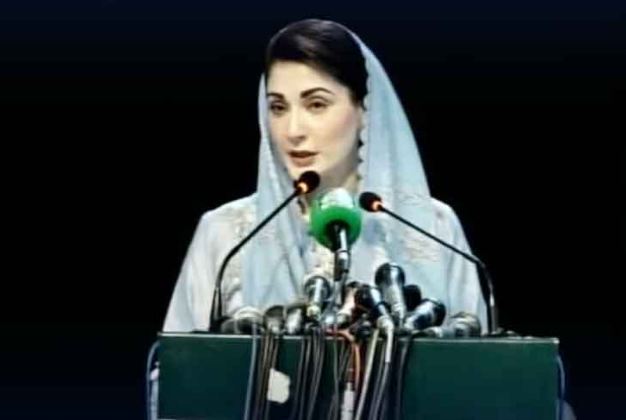
Lahore, MAY 1: Punjab Chief Minister Maryam Nawaz has suggested her detractors also serve the people so that their videos will also be made, asking them to get out of their rooms and serve.

In her speech at the inauguration ceremony of a field hospital in Lahore, the chief minister said it was a dream to provide health facilities to the people at their doorsteps. “I congratulate those who made the project of field hospitals a success. A field hospital has all the facilities of a clinic,” she announced. 

She further said that the facility of lady health workers will also be available at the field hospital, as well as OPD, immunization, and first aid. The facility of surgery is also available in case of an emergency, besides the availability of X-ray machines, radiology, ultrasound, ECG, a pharmacy, and maternal and child health services.

Maryam Nawaz said the Punjab government will provide health facilities to the poor, adding that medicines will be stored in Punjab in a modern way. She further said that former prime minister Nawaz Sharif started the health card program and ran it successfully. For this purpose, she said hospitals with 10 beds each were built, while the health cards were previously used to favour patients on a referral basis.

The CM further said that Pakistan’s first state-of-the-art cancer hospital was going to be built, which will start functioning in a year. The construction of the cancer hospital is going on day and night, she said, adding that state-of-the-art hospitals will be built in every district of Punjab.

Maryam also dispelled the impression that the upcoming air ambulance service was being launched for the rich, saying it would cater to the poor rather. She also retorted that it was alleged that money was being wasted on building motorways, but today the entire country was benefiting from a network of motorways.

PM wants wealthy, businessmen, industrialists to prioritize improving conditions of labour class

Shehbaz Sharif

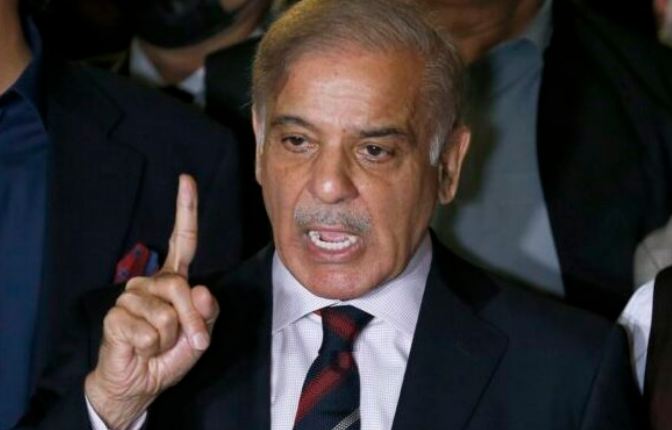
LAHORE, May 1 (APP/DNA): Prime Minister Muhammad Shehbaz Sharif on Wednesday said that they were fully cognizant of the value of the labourers and workers in the national economy and stressed upon the wealthy, businessmen, investors and industrialists to prioritize improving the conditions of the workers.

Addressing a gathering of labourers and workers from different sectors at his residence in connection with the observance of International Labour Day, the prime minister said that the country’s economic situation was challenging but they were striving to turn it around, with collective efforts and sincerity.

He said that Pakistan would soon become a powerful country through the functioning of a fair system and on the basis of hard work by the employers and the employees including workers.

The prime minister said that the government was striving to bring about substantial changes in the national economy and to recover billions of rupees being wasted due to corruption.

Referring to his recent visit from the Kingdom of Saudi Arabia, he said that Crown Prince Mohammed bin Salman and other leadership desired to see Pakistan moving on the path of progress.

The Saudi business and investors’ delegation would soon visit Pakistan which would increase businesses and job opportunities in the country, he added.

The prime minister said that in the upcoming fiscal budget, they would try to provide further relief to the labour class.

Calling upon the business people and well-to-do class, the prime minister said that they should also think beyond their families and businesses and invest in certain education and health projects for the deprived classes like those established in the developed countries.

“It was not an objective behind the creation of Pakistan that there would be a difference between the rich and the poor.
Quaid-e-Azam Muhammad Ali Jinnah led a massive movement in which the people offered huge sacrifices. The motive was the establishment of a welfare state in which everyone would have equal opportunities to excel in life on the basis of one’s capacity and ability and take the country forward,” he added.

The prime minister reiterated that they were striving to end corruption and promised that all the organs of government and other state institutions, with their collective efforts, would carve a niche for Pakistan among the comity of nations.

He said that the labourers and workers worked hard in the most difficult conditions and helped their employers generate their businesses. Both were like the wheels of the same carriage and their work led to progress and prosperity of the nation and country.

He said if the workers were deprived of their due rights, a country could not achieve progress.

The prime minister opined that due to price hikes and inflation, life for the common man had become hard.

The prices of petroleum products had been reduced but it could not be a substitute for the daily price hike as the labour class had to meet the requirements of education for their sons and daughters, treatment for their parents, and other daily expenditures and were living from hand to mouth, he observed.

The prime minister emphasized that under the teachings of the Holy Quran and the Prophet’s (Peace Be Upon Him) messages, it was their abiding duty to bridge the differences between the rich and the poor.

The prime minister recollected that his father was also a worker who attained his earlier education in Amritsar and during his 30s settled in Lahore, where he worked along with his brothers in a steel factory.

He also recited Dr Allama Iqbal’s verse about the plight of labourers and workers and said that these couplets represented a powerful message, reflecting the voice of millions of workers in Pakistan.

The labour day started after the Chicago incident and then the movement became global, he said, adding that the Quranic teachings and the Seerah of the Holy Prophet (PBUH) highlighted the value of hard work.

The prime minister also welcomed the workers and labourers at his residence and said that he felt immense pleasure in hosting them at the residence of the late Mian Muhammad Sharif.

Earlier, the Chairman of PM Youth Programme Rana Mashhood Ahmed Khan highlighted the personal loan scheme for the deserving children of workers and said that under the prime minister’s tenure as chief minister of Punjab, Danish schools and Educational Endowment Funds were established.

Stay Connected

64FansLike
60FollowersFollow

Latest Reviews

Exchange Rates

USD - United States Dollar
EUR
1.17
GBP
1.35
AUD
0.72
CAD
0.73