Home Blog Page 936

An Ode to the women of 21st Century

An Ode to the women of 21st Century

By: Dr Hani Zarbaft Ali

You are the giver of life, the creator of miracles, the magician. You were born with the heart of a thousand fearless, kind, loving mothers.

You were born with the fire of a queen and conqueror, the blood of a warrior who bleeds and dies.

You were born with the wisdom of a sage and a shaman, there’s no wound you can’t heal.

You were born to tell your own story, so don’t kneel before them. You were born to passionately desire and name your own destiny. You are more than what meets the eye.

You are infinitely loved. Remember your strength and grace, the depth of your deep ocean heart.

You are divine, as you have been from the beginning. In the words of the women’s rights activist and former South African

President Nelson Mandela:

“Freedom cannot be achieved unless women are liberated from all forms of oppression.” Through his presidential policies and advocacy as a human rights icon, Mandela campaigned for an end to the oppression of women worldwide. “Human rights mean nothing as long as women are bound by poverty and despised,” he said in a speech on International Women’s Day in 1996.

Today marks the celebration of all those women who have strived to change the notion of women’s role in modern society, pulling them from the clutches of patriarchy, violence, oppression & from the dearth of education. To the Pakistani women leaders, who are an icon for the emerging Gen-Z, whose hard work and dedication have instilled in modern women an irrevocable passion for new horizons. To name a few of my personal favourites: Pakistan’s first female Prime Minister, the woman democrat Benazir Bhutto, is an epitome of foresight & utmost valour, who singlehandedly lead a male dominated political marathon and remained in the national memory. She is held in high regards on National & International forums till date Ms Jinnah, the mother of the Nation, a dentist by profession & a great protagonist of civil rights, who played a pivotal role in uniting the women for Pakistan Movement & has inspired the generations through her wisdom & strength, in the historic Pakistani Movement.

Dr Nigar Johar, the Military’s first 3 star female surgeon general, laid the benchmark for females to pursue their passion in surgery & allied with an unstoppable force.

Dr Sania Nishter, the first female Cardiologist, who is currently serving as Special Assistant of Prime Minister on Poverty Alleviation and Social Protection, is described as a passionate leader who has a deep understanding of her field of work. As a global health and development leader, Dr. Nishtar is responsible for Ehsaas, the government’s flagship social protection programme that is improving the lives of millions of Pakistanis and helping empower women.

Samina Baig, the first Pakistani woman to summit Everest and all seven of the world’s highest peaks, showed there are no physical barriers for women to achieve heights in both the physical and figurative realms.

& lastly, the most precious of all to me, my mother Sababat Ali, who’s one of a kind, & is admired by many in the professional sphere. She herself began her career at the United Nations as a young diplomatic writer and economist. She left her mark as a former chairperson of the International Women’s Human Rights Organization of Pakistan. And at present is an Advocate at Global Law firms Isb, an Educationist by passion, & an absolutely phenomenal mother of 3 daughters.

I’m in awe of today’s women, who have come a long way to safeguard the rights of those underprivileged females who are still fighting the vicious cycles of modern day carnage at the expense of their rights to education, and basic livelihood. The hallmark of a progressive society is education without gender disparity, where men are the support system to their female counterparts, where a woman feels safe to work & is not seen as a vulnerable entity or a mere ornament of amusement, where violence is not justified, & a punishable crime. A woman is a force to be reckoned with, she’s a mother, a teacher, a doctor, a scientist, a lawyer, a pilot, an engineer, a politician, alas anything under the sun is in her domain.

And the age old adage, “behind every successful man, there’s a woman” has stood the test of time. Here’s to all the women across the globe who have gone above & beyond to secure an honourable place in the modern world & revere those who laid the foundation for women empowerment, and to those who continue to break the stigmas & shackles of a repressed nation to a more peaceful & equitable society.

The author is a 2024 grad from RMC, Khyber Medical University, Peshawar, her widespread interests revolve around public health & Interventional medicine.

China under Xi Jin Ping’s Rule

China under Xi Jin Ping’s Rule

By: Gazala Anbreen

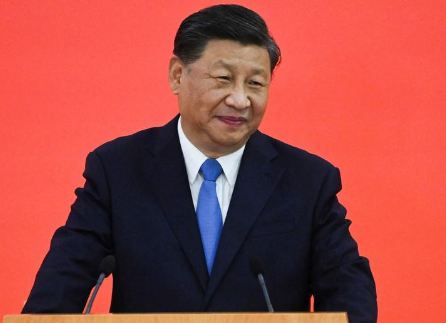
In 2012 Xi Jin Ping became China’s president for the first time. In 2018 the China’s National People’s Congress scrapped the two term limit on its President. However, some people have been terming this as Xi’s attempt to become lifelong president. The reason they offer is that there must be robust young leadership who have the ability to handle the contemporary problems.

One year ago he was given a historic third term in March, 2023. He is a man of loyalty having an unending patience. Although he may not be as visible on social media as he should be, his steadfast resolve and enduring courage to take bold decisions for the weal and welfare of his nation has earned him the title of hero of Chinese people.

His popularity seems out of question. Since Mao Zedong no one has been so popular in actual. He has reshaped the communist party, the military and the government. The people of China have an unflinching trust in his leadership.

During his early days of life, he returned to the poor country side to integrate the poor Chinese workers and peasants. In Liangiahe he made dams and new roads and learned complicated power dynamics in China.

He started out with the vision of the Chinese dream. The projects he envisioned revitalized the whole China and established him as a top leader. He reorganized the military too. Owing to his congenial temperament and a balanced personality, he made a few enemies.

He also speaks about preserving traditions of the past. His political ideology known as Xi thought has been introduced in school curriculum and is taught to the students of age six years in order to make them more patriotic as this age is generally very impressionable and would enable them to think in line with the political values upheld by Xi Jin Ping. This is important for instilling in the young students the nationalist values in order to promote a cohesion and maintain their identity as Chinese people.

  The doctrine of Xi thought encompasses the elimination of poverty and an uncompromising approach to national security and the belief in the Chinese Communist party as the only force for securing their ideology. His is the story of perseverance. Building the strong China which leads at the international arena is the spirit of the Xi thought.

He gives paramount importance to loving his country as a supreme virtue. Two years ago in 2022 the Chinese government banned the use of foreign text books in the schools making students more confident. A crackdown on the private tuition was also launched and since 2021 private tutors have been banned from giving online classes or in unregistered venues. Xi thought was first enshrined in the Chinese constitution in 2018 to infuse loyalty in the students.

Since Mao he is the first leader to have been taught while in power. The term of Chinese nationalism was made popular in 2013. Tending Chinese nationalism is the part of his agenda which is also known as Chinese dream.

On Oct 18, 2017 Xi said:

“The Chinese dream is a dream about history, the present and the future. It is a dream of our generation, but even more so a dream”. That means becoming a global leader in areas as for instance, sciences, diplomacy and culture.

Under leadership of Xi Jin Ping, with the stature of a true leader, China’s influence is gradually growing. He has a unifying philosophy. In Jan 17, 2017 he said “We Chinese know only too well what it takes to achieve prosperity. We will open our arms to the people of other countries and welcome them aboard the express train of China’s development”

One of the signatures of his Presidency has been a massive anti-corruption drive. Corruption hunt has been praised for its effectiveness. He positioned himself as an anti-corruption leader whom the Communist party could always count on. His anti-corruption crackdown serves as an example for the whole world and people take him as a hero. He initiated a massive anti-corruption drive that punished 300,000 officials including politicians in 2015 alone. In another clampdown on corruption and misconduct in 2021, more than 600,000 officials were punished.

 The people of China take him as a stabilizing force. Stable societies foster a culture of book reading and cherish a love for it so did XI. In his own words:

“Wherever I went, I always took a book with me. What had I brought with me, several reference works. The dictionary of idioms, the Xinmin dictionary, a concise dictionary of philosophy. I would memorize an entry and then its meaning before going out to hoe the fields and memorize another during a break”.

 Several years after even in 2015 (February 13 at Liangjiahe) he used to recall time when he read books while herding the sheep “As a shepherd, I’d pen the sheep in on the hilltop and then I’d sit there, reading, reading and thinking”.

During a speech at Peking University in 2014 he said “I would go everywhere, looking for books. One should be deeply ashamed of any gap in one’s knowledge”.

Some experts talk about slowing down of Chinese economy. There is no doubt that COVID wreaked havoc in terms of loss of lives and inability to acquire the set economic targets. China’s economy is in the grip of challenges. It can be seen in the growth rate projections of past years. In 2019 the growth rate was 5.95%. In 2020 it slumped to a mere 2.24%. In 2021 the Chinese economy resurfaced with a growth rate of 8.45%.  In 2022 the growth rate was lowered to 2.99%. In 2023 it was 5.2 % and in 2024 as of now the growth rate stands at 4.6%. This timeline shows the resurgence of Chinese economy and its ability to navigate through challenges with an undaunted determination and a stout resolve.

But the hard reality remains that COVID outbreak caused a major blow to many sectors as property sector and construction works have suffered from many setbacks owing to this pandemic. Not only there was a loss of lives but the economy also sputtered. It has made cities like Shenzhen and Tianjin suffer in respect of many industries. As a result there was a reduced spending on tourism and retail services. The policymakers are trying to deal with the property market down turn. There is a slump in real estate sector. Yuan also saw a decline against the American dollar but now it is steadying up. In 2019 1 USD was equal to 6.90 CNY. In 2020 1 USD was equal to 6.92 CNY. In 2021 1 USD was equal to 6.76 CNY. In 2022 1 USD was equal to 6.73 CNY. In 2023 1 USD was equal to 7.07 CNY and as of now the current exchange rate is 1USD = 7.23 CNY. Among other factors are trade tensions of China with other economies and the decline in global demand for exports of China.

China’s ambitious integrated OBOR project is facing problems and challenges on many counts. Let us explore these in detail.

OBOR is Chinese growth plan through a collaborative way. It involves six corridors. First passage will connect China Mongolia and Russia. Second passage is new Eurasian land Bridge which will pass through Jiangsu province and enter in Netherlands. Third is China-Central Asia-West Asian Economic corridor. It will link Xinjiang to oil rich countries like Turkiye and others. Fourth is Indian China peninsula economic corridor connecting India and China. CPEC, its flagship project will enable China have an access till Arabian Sea. CPEC for Pakistan is very important both for China and Pakistan. Through this the region will be developed and employment avenues will be increased. Sixth is Bangladesh China Myanmar economic corridor. The Maritime silk route will enhance connectivity by establishing sea routes linking Asia, Europe and Africa.

 Investment is from 8 to 10 trillion dollars. Tracks, bridges and roads will be made under this project and it will connect nearly 70 countries of the world. It includes projects pertaining to power, thermal, solar, wind energy, residential, schools and many others are being introduced. Land and sea are its core components. These projects will be sustainable and cooperative.

China needs a working environment to be created to have a political collaboration on this project. The alliances like B3W, AUCUS and QUAD the examples of block politics were initiated and may be termed an attempt to counter balance BRI.  

Why resistance is being posed to this level is easy to construe. This project will enable China gain economic dominance by having a decisive say in many regional issues. The debt it will be giving to developing countries for the materialization of these projects are also interpreted as traps by the critics. OBOR will enable China gain economic dominance having access to the three continents.

 To have geopolitical realignment is another strategic vision of China. Instead of Strait of Malacca China will have an alternate option for the supply routes. Different options will be provided by this project for energy supply route benefiting many countries.

OBOR will ensure a vital route for the countries along South China Sea. Since World War II South China Sea is an important trade route through which the countries bordering it like Malaysia, Philippine, Singapore, Indonesia use it for trade through sea route. From 50 to 70 years America has many air bases and has a significant presence with its naval bases in countries like Philippine and air bases in Indonesia and bases in Brunei. Hence American dominance will be challenged with every passing day as OBOR progresses.

KTC implements track and trace tax stamps, calls for measures to get rid of cigarettes smuggling

KTC implements track and trace tax stamps, calls for measures to get rid of cigarettes smuggling

ISLAMABAD, MAY 3 (DNA): Khyber Tobacco Company (KTC) Limited becomes the first tobacco manufacturing company to implement track and trace tax stamps on its products and was committed to be truly compliant to all applicable health and fiscal regulations and to contribute to community development through our robust CSR program.

The KTC in a statement issued on Friday said that implementing the track and trace stamps not only enhanced traceability but also signified the company’s dedication to upholding fiscal responsibilities within the country.

Being a leading publicly listed national company in the tobacco industry in Pakistan, the KTC acknowledged the efforts of the Federal Board of Revenue (FBR) in its crackdown on illicit sectors. However, it called for more measures to get rid of the menace of cigarettes smuggling in Pakistan. The unchecked increase in smuggling does not only jeopardize the government revenue but also kills the national companies which are finding it hard to sustain in such an environment.

The KTC urged policy makers to address the recent decline in its cigarette sales witnessed over the last year which is a direct result of the exponential increase in the smuggling of cigarettes of international brands openly available in Pakistan.

The company emphasized the need for continued vigilance and collaborative efforts to eradicate the menace of smuggled cigarettes from Pakistan’s markets.

Despite facing challenging circumstances, KTC remains committed to its mission of providing quality products to its customers while adhering to local fiscal regulations.

Furthermore, KTC takes pride in its progressive stance as the first-ever tobacco company in Pakistan to be led by a woman CEO. This milestone underscores the company’s commitment to diversity and inclusivity in its leadership ranks.

Chairman Bilawal strongly condemns terror attack in Khuzdar, Balochistan

Chairman Bilawal strongly condemns terror attack in Khuzdar, Balochistan

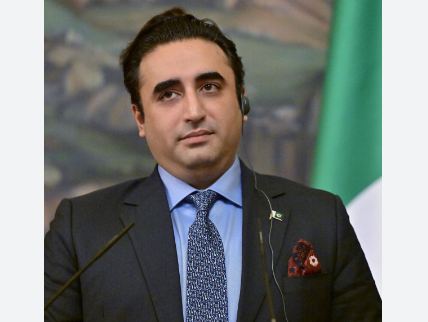
ISLAMABAD, MAY 1: /DNA/ – Chairman Pakistan Peoples Party, Bilawal Bhutto Zardari has strongly condemned the terrorist bomb blast in Khuzdar.

Chairman Bilawal expressed deep sorrow over the martyrdom of Press Club President, Muhammad Sadique Mengal in the blast. He extended heartfelt condolences to the affected families and the journalist fraternity.

Such cowardly acts will not dampen the spirits of the Pakistani nation, Chairman Bilawal stated. He further said that the despicable elements involved in this heinous crime will receive nothing but humiliation.

Chairman Bilawal also prayed for a speedy recovery of all those injured.

Chief Commissioner Islamabad assumes office, sets vision for development

ISLAMABAD, MAY 3 /DNA/ – Chaudhry Muhammad Ali Randhawa has officially assumed the role of Chief Commissioner Islamabad, marking a new chapter in the capital’s development trajectory.

In his inaugural visit to Faisal Mosque, Chief Commissioner Randhawa, accompanied by officers from the engineering wing, underscored his commitment to the city’s landmarks. He issued directives for immediate renovation and construction work, ensuring that necessary repairs are completed today, with comprehensive maintenance to follow promptly.

During discussions with the Capital Development Authority (CDA) board members, Chief Commissioner Randhawa was briefed on ongoing projects and the administrative structure of the CDA. Emphasizing a proactive approach, he urged swift completion of all projects within stipulated timelines and the enhancement of administrative efficiency.

“Completing ongoing projects and improving administrative processes are key priorities,” stated Chief Commissioner Randhawa. “We are committed to ensuring timely completion of all development initiatives, including the restoration of our iconic landmarks.”

Under his leadership, Islamabad looks forward to a future of progress and development, with a renewed focus on efficiency and excellence.

Mrs. Farrukh Khan hails Pakistan’s first space mission as sign of progress and innovation

Mrs. Farrukh Khan hails Pakistan's first space mission as sign of progress and innovation

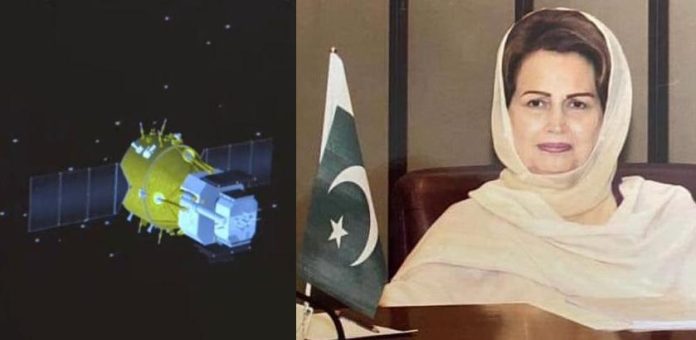
ISLAMABAD, MAY 3 /DNA/ – The central leader of Pakistan Muslim League, Working National Assembly Mrs. Farrukh Khan has congratulated the nation on the departure of Pakistan’s first space mission “IQB”. It is the day of putting, we pay tribute to the pioneers, in the future we will have to count the light instead of measuring the darkness.

Mrs. Farrukh Khan said that this wonderful achievement is due to the dedication, skill and vision of our scientists, engineers and technicians. It is a proof that today Pakistan has also turned this dream into reality. He said that it is a sign of progress and innovation of our nation.

The member of the National Assembly said that this success will start a new era in space exploration, scientific research and technological development. He said that the appreciation of Pakistan-China friendship.

The China-Pakistan partnership not only underlines the strength of our diplomatic ties but also highlights the role of unity in achieving extraordinary goals.

Punjab wins Prime Minister National Talent Hunt Table Tennis League

Punjab wins Prime Minister National Talent Hunt Table Tennis League

AFZAL JAVED

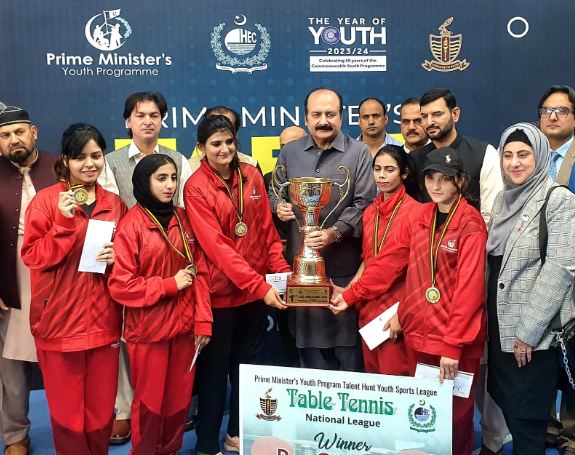
ISLAMABAD: Punjab Men’s and women’s team won the finals of Prime Minister’s National Talent Hunt Table Tennis League at the Rodham Hall, Pakistan Sports Complex Islamabad on Friday.

The six day event is being organised by the Higher Education Commission (HEC), Punjab B defeated Punjab A by 3-0 in the women’s team event final. Punjab A Captain Ramsha Niaz defeated Tayyaba Latif after a tough match by 11-7, 6-11, 11-4, 8-11, 11-9. In the second match Saba Syed defeated Tania Khan 11-7, 6-11, 11-2, 8-11, 11-8 while Shamila Javed defeated Laila Nayab 9-11, 12-10, 8-11 11-5, 11-7. Khyber Pakhtunkhwa won the third position in the women’s team event.

In the final men’s team event, Punjab A defeated Khyber Pakhtunkhwa by 3-1 games. Punjab A Atta Ul Mannan defeated Awais Khan 11-6, 8-11, 11-7, 11-4. KPA’s Obaid Shah defeated Punjab’s Paras Azam 10-12, 11-8, 11-6, 11-7 while Punjab’s Usman Nawaz defeated Haroon Khan 11-7, 11-9, 6-11, 11-8 and Atta Ul Mannan won the game by defeating Ubaid Shah 11-7, 11-5, 11-8.

Chairman Prime Minister’s Youth Program Rana Mashhood Ahmed Khan was the chief guest of the closing ceremony, who along with the host Government College University Lahore Director of Sports Wasim Akhtar, Pakistan Sports Board Deputy Director General Shahid Salam and officials of the Higher Education Commission distributed prizes to the players.

Speaking on the occasion Rana Mashhood, has reiterated the government’s commitment to provide a platform for young talent to shine in various fields, including sports, health, culture and art, adding that PM’s vision was to identify and groom talented young players to represent Pakistan at international levels.

He expressed his excitement about the abundance of talent in every province of Pakistan, which he witnessed during his travels across the country. He emphasized the importance of merit-based selection and the development of young talent to propel the country forward.

Chairman PMYP announced plans to organize leagues like the Pakistan Super League (PSL) in other sports, ensuring a comprehensive approach to talent development. He assured that players identified through the Talent Hunt Program would receive world-class training and grooming, enabling them to make Pakistan proud on international platforms. He predicted that within a year, Pakistani players will be making a mark globally, thanks to the government’s initiatives.

Rana also commended the Higher Education Commission, Pakistan Sports Board, and Table Tennis Federation for their support of the PM’s Youth Programme.

Pakistani lunar payload successfully launches aboard Chinese moon mission

Pakistani lunar payload successfully launches aboard Chinese moon mission

HAINAN, MAY 3: In a historic first, a Pakistani satellite will orbit the moon as part of China’s historic Chang’e-6 lunar mission, which was launched from Hainan, China, on Friday.

The mission, which aims to explore the moon’s “dark side”, will employ lunar research payloads from multiple countries, including Pakistan’s iCube Qamar satellite.

The Institute of Space Technology (IST) on Tuesday said Pakistan’s “historic” lunar module iCube-Q, which was designed by IST in collaboration with China’s Shanghai University (SJTU) and Pakistan’s national space agency Suparco, will be aboard Chang’e-6.

The mission, dubbed Chang’e, is named after the mythical Chinese moon goddess.

Chang’e-6 aims to collect around two kilogrammes of lunar samples from the far side of the Moon and bring them back to Earth for analysis. Chinese state news agency Xinhua hailed it as “the first endeavour of its kind in the history of human lunar exploration”.

“Chang’e-6 will collect samples from the far side of the Moon for the first time,” Ge Ping, vice director of China’s Lunar Exploration and Space Engineering Centre, told journalists.

China will send a robotic spacecraft in the coming days on a round trip to the moon’s far side in the first of three technically demanding missions that will pave the way for an inaugural Chinese crewed landing and a base on the lunar south pole.

The probe is set to land in the immense South Pole-Aitken Basin, one of the largest known impact craters in the solar system. Once there, it will scoop up lunar soil and rocks, and carry out other experiments in the landing zone.

With no direct line of sight with the Earth, Chang’e-6 must rely on a recently deployed relay satellite orbiting the moon during its 53-day mission, including a never-before-attempted ascent from the moon’s “hidden” side on its return journey home.

On Chang’e-6, China is carrying payloads from France, Italy, Sweden and Pakistan, while Chang’e-7 will bear payloads from Russia, Switzerland and Thailand when it launches in 2026.

Nasa is banned by US law from any collaboration, direct or indirect, with China.

Under the separate Nasa-led Artemis programme, US astronauts will land near the south pole in 2026 — the first humans on the moon since 1972.

iCube Qamar
The iCube-Q orbiter carries two optical cameras to image the lunar surface. The module is a cube satellite or CubeSat — miniature satellites typically characterised by their small size and standardised cubic design.

Due to their compact size and relatively low cost compared to traditional satellites, CubeSats offered opportunities for universities, research institutions and commercial entities to participate in space missions and gather valuable data for scientific advancement and innovation.

Beijing’s “space dream”
Plans for China’s “space dream” have been put into overdrive under President Xi Jinping.

Beijing has invested heavily in its space programme over the last decade, targeting a string of ambitious undertakings to close the gap with the two traditional space powers — the United States and Russia.

The country has notched several notable achievements, including building a space station called Tiangong, or “heavenly palace”, to which it sent a fresh crew of three astronauts last month.

Beijing has landed robotic rovers on Mars and the moon and made China the third country to independently put humans in orbit. China aims to send a crewed mission to the moon by 2030, with further plans to build a base on the lunar surface.

Reactions
President Asif Ali Zardari and Prime Minister Shehbaz Sharif congratulated the nation on the successful launch of Pakistan’s maiden lunar mission.

State-run broadcaster Radio Pakistan reported that the president congratulated the IST, Suparco and the China National Space Administration on the achievement.

He said the successful launch would be a “milestone” for Pakistan’s space programme. The president also commended the cooperation between Pakistan and China in aerospace.

PM Shehbaz hailed the iCube-Q satellite as “Pakistan’s first step in space” and said that Pakistani scientists and engineers were “proving their mettle … like the expertise they exhibited in the nuclear technology [programme]”.

The prime minister said that Pakistan and China’s friendship, which was “higher than Himalayas, deeper than ocean, and sweeter than honey” had now “crossed the frontiers of space”.

The premier watched the live launch of the mission.

The acceptance of Pakistan’s mission among eight countries was the recognition of the capabilities of the country’s scientists and experts, he added.

“This is a historic milestone in the technological development. By this achievement, Pakistan has entered a new era of exploring space for productive purposes,” the prime minister remarked.

PM Shehbaz said the achievement would help build Pakistan’s capacity in the satellite communications besides opening up new avenues for scientific research, economic development and national security.

“Our sons of soil have proved that they have the capability، passion and expertise to explore space. God willing, Pakistan will achieve excellence in the fields of space and economy too as it had done in the field of nuclear technology on May 28, 1998.”

By realising the dream of self-dependence in the communications infrastructure, Pakistan will “join the comity of nations playing a leading role in the sector”, he remarked.

Calling Pakistan’s development in science and technology, modern sciences and skill development the need of the hour, the prime minister reiterated the resolve to uplift the country’s youth in the said fields to ensure that the country achieved “excellence” in the field of inventions.

Deputy Prime Minister and Foreign Minister Ishaq Dar took to X to “congratulate the young Pakistani students and scientists on the launch” of the lunar mission.

“Today’s launch from Hainan … is a good example of countries and organisations coming together for space cooperation and shared benefits,” he added.

Jam Kamal highlights deep-rooted friendship between Pakistan, Australia

Jam Kamal

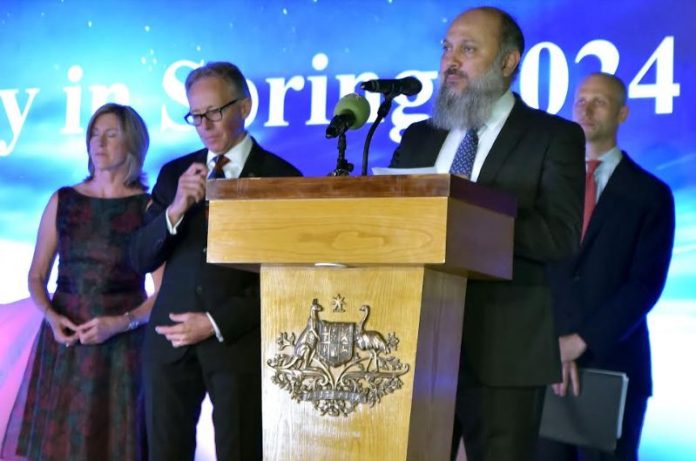
ISLAMABAD, May 3 (DNA): Minister for Commerce Jam Kamal Khan on Friday highlighted the deep-rooted friendly relations between Pakistan and Australia, which spanned over political, economic, and defence sectors.

He was speaking as a chief guest at a ceremony held to celebrate ‘Australia Day in Spring’ to mark the enduring ties between the two nations, a news release said.

Prominent among those who attended the ceremony was Australia’s High Commissioner in Pakistan Neil Hawkins.

The minister emphasized the significance of sports, particularly cricket, squash, and hockey in fostering mutual recognition between Australia and Pakistan, noting Neil Hawkins’ enthusiasm for hockey.

Turning to bilateral ties, Jam Kamal underscored Pakistan’s commitment to strengthening its relationship with Australia and emphasized mutual respect and cooperation.

He praised Australia’s role as a development partner, especially in sectors such as agriculture and education.

Addressing trade relations, the minister acknowledged the existing trade surplus enjoyed by Australia and emphasized the untapped potential for further collaboration.

He outlined Pakistan’s major exports to Australia, including textiles rice, surgical equipment and steel products, noting recent increases in imports of Canola and other commodities from Australia.

Proposing new steps to enhance bilateral cooperation, Jam Kamal called for intensified efforts to deepen agro-trade and urged the reduction of trade barriers.

He highlighted the need for a level playing field in textiles and encouraged exploration of new avenues such as agro-tech industries and fruit exports.

Expressing gratitude for the Pakistani diaspora in Australia, the minister praised their contributions across various fields and commended the Australian Government’s recognition of their efforts.

He also thanked Australia for offering scholarships to Pakistani students under various education schemes.

Japan announces MEXT (Ministry of Education, Culture, Sports, Science and Technology) Scholarships 2025

Japan announces MEXT (Ministry of Education, Culture, Sports, Science and Technology) Scholarships 2025

ISLAMABAD, MAY 3 /DNA/ – The Government of Japan has announced its MEXT Scholarships 2025 for the talented Pakistani students to apply for their Undergraduate and graduate studies (Masters & PhD)and get a chance to study in the prestigious universities of Japan.

The Embassy of Japan in Pakistan is now accepting applications for the MEXT undergraduate and Research Scholarships (Masters & PhD) 2025. Every year the Ministry of Education, Culture, Sports, Science and Technology (MEXT) of Japan offers scholarships to international students who wish to study in under-graduate and graduate courses at the Japanese universities.

MEXT research scholarship is fully funded by the Government of Japan and provides an excellent opportunity for the aspiring students in Pakistan to  apply and get a chance to study at the high-quality universities in Japan.

Stay Connected

64FansLike
60FollowersFollow

Latest Reviews

Exchange Rates

USD - United States Dollar
EUR
1.17
GBP
1.35
AUD
0.72
CAD
0.73