Home Blog Page 931

World Bank’s Vice President for South Asia calls on PM Shehbaz

PM Shehbaz

ISLAMABAD, MAY 8 /DNA/ – World Bank and Pakistan agree to work on a new robust and ambitious Country Partnership Framework  to carry forward reform and development agenda

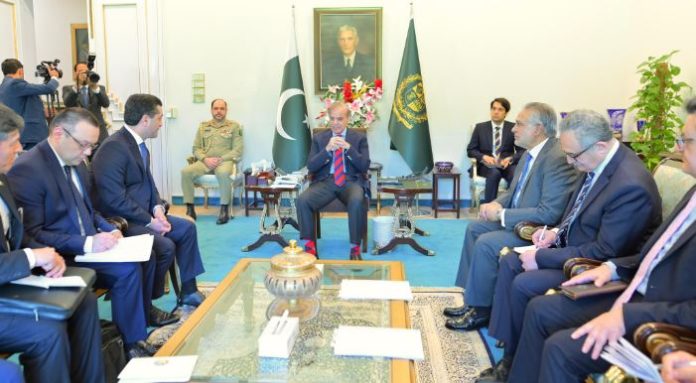
Mr. Martin Raiser, Regional Vice President of World Bank for South Asia along with a delegation including Country Representative Mr. Najy Benhassine called on Prime Minister Muhammad Shehbaz Sharif in Islamabad today.

Welcoming Mr. Martin Raiser, Prime Minister Shehbaz Sharif lauded the contribution of the World Bank to the development of Pakistan. The Prime Minister appreciated the support extended by the Bank for building climate resilient infrastructure in the wake of 2022 floods in Pakistan. He briefed the delegation on the reform agenda of the Government including digitization of the entire tax system, power sector reform, enhancing per acre yield in the agriculture sector, addressing the issue of child stunting, etc.

Appreciating Pakistan’s aggressive reform agenda, Mr. Martin Raiser said the World Bank is ready to collaborate with Pakistan in its journey of transformation of the economy aimed at sustainable development.

Both sides agreed to engage in a long-term, focused partnership under a new Country Partnership Framework with an annual review mechanism to assess progress and ensure that results are achieved. The strategy will include flexibility for future course correction. The new partnership will have the ambition to achieve transformational impacts over a decade on a selective set of critical development priorities for Pakistan.

The initial set of priorities that were discussed in the meeting included structural economic reforms including domestic resource mobilization, particularly via digitalization and tax policy reforms. Human capital development, specifically addressing child stunting and improving foundational learning was also discussed. Likewise, energy sector reforms, including increased participation of the private sector in transmission and distribution, and transition to green energy to make energy cheaper, cleaner and financially sustainable shall also be agreed. In order to better cope with the increased water scarcity and climate-related shocks, both sides emphasized collaboration in climate adaptation.

For increasing economic opportunities, including in the agriculture sector, Pakistan will benefit from the Bank’s expertise in mobilizing global expertise and best practices, institutional capacity building, leveraging digital transformation and private sector participation, including via the World Bank’s private sector arm, the International Finance Corporation and the Multilateral Investment Guarantee Agency.

Both sides agreed that the process for preparation of the new Country Partnership Framework will consist of consultations with Federal and Provincial governments as well as academia, parliamentarians, civil society, development partners and the private sector. The World Bank will coordinate with stakeholders to discuss the partnership priorities duly aligned with the key development priorities and strategy of the Government of Pakistan.

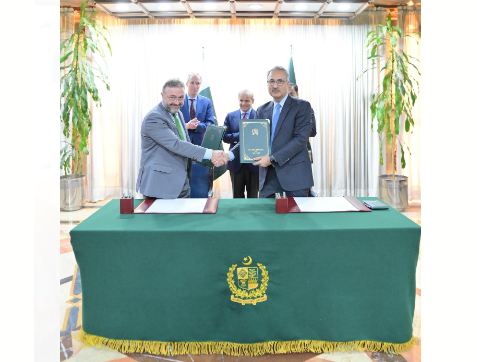
The Prime Minister witnessed the signing of a joint communique in this respect, signed by the World Bank’s Country Representative Mr. Najy Benhassine and Secretary of Economic Affairs Division Dr. Kazim Niaz.

Minister of Economic Affairs Ahad Khan Cheema, Minister Finance Muhammad Aurangzeb, Minister Petroleum Dr. Musadik Malik, Minister of State for IT Shaza Fatima Khawaja, Deputy Chairman Planning Commission Dr. Jehanzeb Khan and senior officials of the Government of Pakistan also attended the meeting.
Newspaper industry issues to be addressed amicably: Tarar

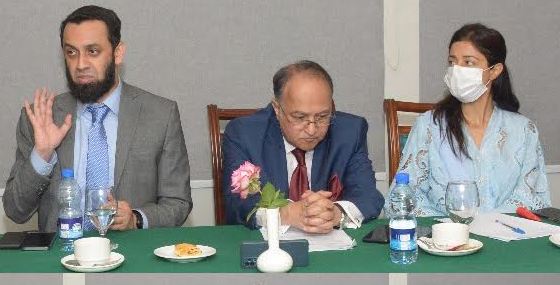
Newspaper industry issues to be addressed amicably: Tarar

Minister was requested that the regional quota be implemented; ads should be released to APNS members only

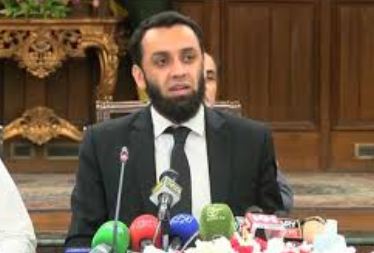
ISLAMABAD, MAY 8 /DNA/ – The Federal Government firmly stands for the promotion of print media and the issues confronted by newspapers will be amicably addressed,” stated Mr. Attaullah Tarar, the Federal Minister  for Information & Broadcasting.

Mr. Tarar was addressing a meeting of the Executive Committee of the All-Pakistan Newspapers Society at Islamabad chaired by its President Ms. Nazafreen Saigol Lakhani, Mr. Sarmad Ali, Secretary General APNS welcomed the Minister and apprised him about the problems being faced by the print media. These included long pending notification of 35% increase in the government advertisement rates approved by the Prime Minister in his last tenure.

He reminded that the Prime Minister during his last meeting with APNS office bearers  had given an assurance that  an amount of Rs. 50 crore will be released to newspapers before Eid as initial payment of outstanding dues of the print media against advertising released by the federal government. However, the print media was paid Rs 4.6 crores only.

The APNS office bearers also explained the hardship faced by members in getting renewal of their registration by the Press Registrar office due to a highly complicated procedure practiced by the Press Registrar and requested that the procedure be made hassle free and that the registration be made one time as stipulated in the law.

 The APNS members requested that the regional quota be implemented in letter and spirit and no publications other than regional newspapers be given advertisements from this quota. They also requested that in the forthcoming budget GST, custom and import duties on imports of newspaper consumables like ink and printing plates be exempted.

Mr. Atta Ullah Tarrar assured that the issues being faced by the newspaper industry will be addressed to the satisfaction of the print media’s. He stated that he would take up the issue of  increase in the government advertisement rates with the Finance Ministry for its incorporation in the next fiscal budget. He reiterated that the Ministry of Information had disbursed an overall amount of Rs.1.3 billion to media outlets before Eid.

He stated that he has asked the ministry to evolve a mechanism for future budgetary arrangements for payment of advertisement expenses. He assured that the old liabilities will be cleared in the first quarter of next financial year. Mr. Tarrar proposed a joint committee of Information Ministry and APNS to evolve a system for registration of newspapers. He stated that the newspapers played a pivotal role in countering fake news and disinformation. In order to promote newspaper readership, the Federal Minister stated that he would ask the Information Ministry to suggest to the Ministry of Aviation and other government ministries and departments to subscribe to newspapers as in the past. In this respect he proposed to initiate a pilot project with the Ministry of Education to promote newspaper readership at the school and college levels in the ICT.

Earlier the Executive Committee, on the recommendations of the Advertising Committee, granted provisional accreditation to M/s. Starcrest Communications (Pvt.) Ltd Karachi, M/s. SAP Communications (Pvt.) Ltd. Islamabad and M/s. URS Digi (Pvt) Ltd. Islamabad.

The members expressed condolence to Mr. Ahmed Baloch, Publisher Daily Kainat Bahawalpur on the sad demise of his mother.

The meeting was attended by the following. Ms. Nazafreen Saigol Lakhani, President, Mr. Imtinan Shahid, Senior Vice President, Mr. Sarmad Ali, Secretary General, S.M Munir Jillani, Joint Secretary, Mr. Waseem Ahmed, (Daily Awam, Quetta), Mr. Mohsin Bilal,( Daily Ausaf), Mr. Humayun Tariq,( Daily Business Report), Mr. Ansar Mahmood Bhatti, (Monthly Centre Line), Mr. Muhammad Waqaruddin, (Daily Dunya), Mr. Javed Mehr Shamsi, (Daily Kaleem). Ms. Rukhsana Saulat Saleemi, (Weekly Nikhar), Mr. Bilal Mahmood, (Daily Nawa-i-Waqt). Mr. Sardar Khan Niazi, (Monthly Naya Rukh), Mr. Faisal Zahid Malik,( Daily Pakistan Observer), Mr. Humayun Gulzar, (Daily Sayadat), Mr. Irfan Ather, (Daily Tijarat), Syed Haroon Shah, (Daily Wahdat), Mr. Nasir Dad Baloch, (Daily Sindh Sujaag),

Mr. Mehtab Khan, (Daily Ausaf), Mr. Tahir Mughal , (Daily Nawa-i-Pak) attended the meeting as special observer.

Following attended on ZOOM. Ms. Fauzia Shaheen, (Monthly Dastak), Ms. Zahida Abbasi, (Daily Nau Sijj), Mr. Mohsin Siyal, (Daily Aftab), Mr. Tahir Qureshi, (Monthly Naye Ufaq).=DNA

===============

East or West-Who Will Rule the 5th Industrial Revolution?

East or West-Who Will Rule the 5th Industrial Revolution?

By: Raza Haider

The world economy saw a‘great divergence’ as a result of the first two Industrial Revolutions (IR-1 and IR-2) between 1750 and 1950 AD. During this timeframe, the economic shift occurred from “East to West” as a result of industrial development by Western European nations led by Great Britain. The key to their success was using then-new technologies like steam power, mechanization, automobiles, railways, telegraphs, or electricity at every level of industrialization. This technological trendgave rise to the 3rdIndustrial Revolution which was led this time by the United States of America (USA) in the 1960s consisting of new inventions like the computer and internet which not only revolutionized every aspect of life but also expanded the industrial economy’s proportion in the total economy.

Currently, we are experiencing the 4th Industrial Revolution (IR-4), which is being driven by the USA and dominated by emerging technologies such as Artificial Intelligence (AI), robotics, big data, Internet of Things (IoT), cloud computing, cyber security and augmented reality. While the impact of these emerging technologies on industry, military, economy, and social life is becoming evident, discussion on the 5th Industrial Revolution, or IR-5, has already started. IR-5would be centred on the co-working of humans and robots in all fields of life including industries, but the question arises that who will be the leader of this upcoming industrial revolution?

TheUSAand Western European countries that benefited from the first four industrial revolutions appear to have an inherent advantage because of their knowledge base, robust economy and experience, which can facilitate higher adoption of new skills, training, and technology. More significantly, these countries are aware of the importance of digital economies and are doing so to gain an advantage in emerging digital value chains. However, accumulation of wealth and experience cannot be the only reason to sustain technological and economic sovereignty till the time emerging technologies are integrated into their industry. As technology has now become a key factor in determining national power, there are indications that the economic divide between the countries who ‘have’ technologies and those who ‘have not’is increasing. Some countries are falling behind while few countries are emerging as new leaders especially in East Asia region.

East Asia began to embrace technology as a key instrument to boost economic progress in the post-1960 era. This mainly includes China, Japan, Hong Kong, Singapore and South Korea resulting into a growing economic divide known as the ‘East Asian Miracle’which may mark the start of yet another ‘great divergence.’In recent decades, East Asia has transformed into a hubnot only for the manufacturing of high-tech products like semi-conductors, chips, smartphones, telecommunication equipment or biotechnologies; but also as a leader in the development of autonomous robots, drones, Electric Vehicles, Next Gen IT, 3D manufacturing machines and artificially intelligent products which is only possible through heavy investments, consistent policies and incentives for investors, skilled human resource and entrepreneurship.

For example, Chinais primarilyfocused on becoming a global leader in ten high-tech industriesby 2025 including aerospace, high-speed railway, nanomaterials, IT,and electric vehicles emphasizing the incorporation of nascent technologies into manufacturing supply chains aligning them with the requirements of the Next Industrial Revolution.  Similarly, in Hong Kong, there are 17 programmes under theInnovation and Technology Fund (ITF) with funding of USD 32.8 billion to support R&D, facilitate technology absorption, developnew talent, support start-ups, and foster an IT culture in the country. Similar programmes are in progress in other East Asia countries like Japan, South Korea, and Singapore. Considering all these technological developments, it is envisaged that while the USis currently leading the world in innovation of emerging technologies; East Asian countries, with their highly developed digital economies, R&D investments, technology firms, and innovation systems are emerging as potential leap froggers. Therefore, it is envisaged that“East Asia will share the leadership of5th Industrial Revolution with the USA”,as the region is highly committed to adopting new technologies and creating institutional support for digital breakthroughs in their trade, industry, and society.

In the context of Pakistan, adopting emerging technologies is the only viable solution for a proactive strategy aimed at attaining equitable, sustainable, and innovation-driven industrial growth. As a way forward, three suggestions are made. Firstly, STEM (Science, Technology, Engineering, Maths) education ought to be mandated in schools so that the future generation can learn about and be interested in new technologies, as well as have the opportunity to digitizein the future, even in non-technical industries like business, education, healthcare, and agriculture. Secondly, awareness campaigns are needed for decision-makers to encourage technology-driven start-up programmes for the digital economy. Finally, a national industrial policycentered around indigenization and digitalization(like‘Made in China 2025’) is needed to enable the industrial sector to play a major role in the country’s overall economic advancement.

To conclude, while earlier industrial revolutions were led by UK and the USAwhich significantly contributed to their economic power, it is envisaged that the next industrial revolution would be shared by the USA and East Asian nations, given the scale of R&D and digital breakthroughs in those eastern countries. Pakistan’s industrial sector needs to be reorganizedand digitalizedthrough a comprehensive ‘Industrial Digitalisation Policy’to take full advantage of opportunities through systematic innovations and to develop our human resources to handle future industries.

Raza Haider is currently serving as Director (Emerging Technologies and Aerospace Industry) at the Centre for Aerospace & Security Studies, Islamabad, Pakistan. He can be contacted at: [email protected].

Indonesian Embassy partners with All-Pakistan Women Universities Consortium for Online Sessions about Indonesia

Indonesian Embassy partners with All-Pakistan Women Universities Consortium for Online Sessions about Indonesia

DNA

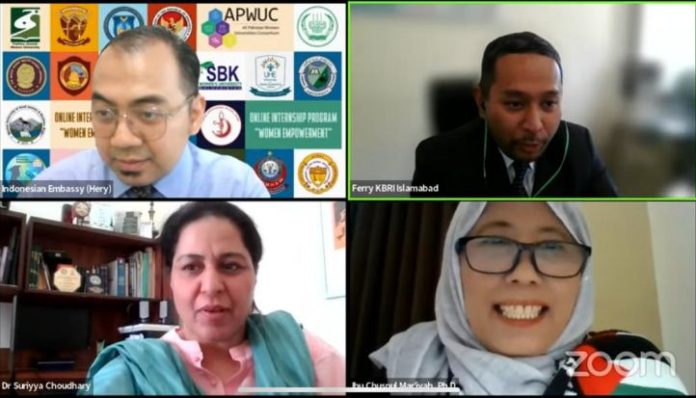
ISLAMABAD: The Embassy of the Republic of Indonesia in Islamabad launched the first session of its 4th Online Internship Program (OIP) 2024 in collaboration with Fatima Jinnah Women University (FJWU) in Rawalpindi and All-Pakistan Women Universities Consortium (APWUC) on 7 May 2024 with the theme “Women Empowerment”. The OIP has been divided into ten online lecture sessions with the participation of top speakers from Indonesia and will continue until June 6 2024.

The OIP 2024 was officially opened virtually by the Director General of Information and Public Diplomacy, Ministry of Foreign Affairs of Indonesia, Ambassador Siti Nugraha Mauludiah. “I appreciate the friendship between the two countries and hope that OIP can encourage the young generation to understand the strong history between Indonesia and Pakistan, then implement it in the current context.”

Earlier, speaking at the opening ceremony of OIP held at the Fatima Jinnah Women University, the Chargé d’ Affaires of Indonesia Mr. Rahmat Hindiarta underlined the close Indonesia-Pakistan relations that had been built by the founders of both countries, President Soekarno and Quaid-e-Azam Muhammad Ali Jinnah.

“Now, on the way to 75th Anniversary of Indonesia-Pakistan Diplomatic Relations, it is time to fill this excellent relationship with stronger cooperation in relevant areas of mutual interest. For this reason, the Indonesian Embassy in Islamabad has set up priorities for Indonesian diplomacy in Pakistan, including the economy and people-to-people contacts. And APWUJ is one of the right partners for the Embassy,” he said.

On this occasion, Prof. Dr. Uzaira Rafique, Vice Chancellor of Fatima Jinnah Women University (FJWU) and chairperson of the All-Pakistan Women Universities Consortium (APWUC) in her remarks said that APWUC campuses are a free place for Pakistani female students to actualize their potentials.

“I invite all participants to seriously pay attention to the sessions to improve understanding on the dynamics of Indonesia and note various elements that are relevant for Pakistan. Hopefully in the future, we can visit Indonesia to see more about Indonesia’s progress,” she remarked.

The first session started with the lecture of Ms. Chusnul Mariyah, Ph.D. from the Faculty of Political Sciences, University of Indonesia on “Indonesian Politics : Between Islam and Nationalism.” She highlighted the trends of oligarchy, nepotism, and abandoning merit system in political recruitment in Indonesian domestic politics.

She also stressed that democracy cannot be taken for granted, but it must be continuously pursued at all times. “Elections with integrity are very important. (To campaign for it) we need the catchy terms, such as halal politics or halal elections”. Addressing hundreds of female students from women universities in Pakistan, Ms. Mariyah explained in detail on how to achieve certain position through halal ways.

The current OIP is more special this time since the Indonesian Embassy is collaborating with the consortium of 18 women universities throughout Pakistan.

To further strengthen friendly relations between the young generation of the two countries, the Indonesian Embassy in Islamabad also showcased the Indonesian medley dances created by the Indonesian students at the International Islamic University Islamabad (IIUI) along with the dancing performances of FJUW students.

The other speakers of OIP include Prof. Dian Masyita, Ph.D. from the Indonesian International Islamic University (UIII), Ms. Angela Tanoesoedibjo, Vice Minister of Tourism and Creative Economy, and Fourth Indonesian President’s daughters, Ms. Alissa Wahid and Ms. Yenny Wahid, the activists of democracy, pluralism, and religious moderation.

Pak, Uzbekistan to start work on trade corridor with Afghanistan: Uzbek Minister

Pak, Uzbekistan to start work on trade corridor with Afghanistan: Uzbek Minister

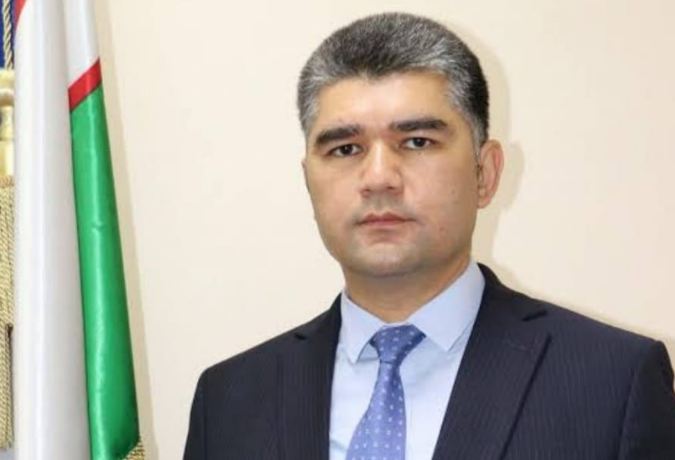
ISLAMABAD, MAY 8 (APP): Uzbek Deputy Minister for Transport and Aviation, Jasurbek Choriev has said that Pakistan and Uzbekistan have decided to start work on the trilateral trade corridor with Afghanistan, which is of great importance in regional economic integration.

Including Afghanistan, all three parties are willing to complete this trade corridor and its completion will increase regional trade and boost economic activities in the regional countries, Jasurbek Choriev said this at the Tashkent International Investment Forum (TIIF) while talking to APP.

The minister said that Pakistan was our foremost priority economic partner as well in the recent future, with which we are working in many spheres at the economic and trade level.

He said that the Pakistan-Uzbekistan partnership is of great importance in regional economic and trade integration and Uzbekistan considers Pakistan will have a significant partner in this regard.

The Minister said that Uzbekistan is the central country of Central Asia and similarly, Pakistan is also a Geo-Strategically important country of South Asia located in the neighbouring Central Asia.

He said that air, rail and road connectivity between Pakistan and Uzbekistan is essential to increase bilateral trade between the two countries.

Jasurbek Choriev said that the direct flight between Pakistan and Uzbekistan will start in October this year 2024.

He said that Pakistan and Uzbekistan have a central role in global and regional trade and the strategic partnership of the two countries can usher in a new era of economic prosperity in the region.

Replying to a question,he said that the economic and trade relations between the two countries started from the historic Silk route and both countries are determined to revive the old Silk route.

Great Silk Road is a historical trade artery between East and West, which is of great cultural, economic and geopolitical importance, he said.

Meanwhile highlighting the significance of Tashkent International Investment Forum, the Minister said that in TIIF, international experts and representatives of government agencies explored opportunities to expand ties, economic cooperation and cultural exchange along the ancient routes of the Silk Road.

First and foremost, “we think about the economy and new transportation routes that will benefit everyone, not only Uzbekistan, and here respect for the law and culture of other countries plays a big role,Jasurbek Choriev said.

He said that in this forum participants discussed ways to revive this ancient route in the modern era, expand trade and economic ties, and promote intercultural dialog between countries once linked by the Silk Road.

“We need to take concrete steps to realize the concept of the New Silk Road -ensuring safe and efficient transport corridors, developing logistics infrastructure and strengthening cooperation between the states of the region” he said.

The Political Divisions in Nebraska’s Electoral Future

The Political Divisions in Nebraska's Electoral Future

Dr. Muhammad Akram Zaheer

Nebraska is a triply landlocked state in the Midwestern region of the United States. It borders South Dakota to the north; Iowa to the east and Missouri to the southeast, both across the Missouri River; Kansas to the south; Colorado to the southwest; and Wyoming to the west.

Nebraska is the 16th largest state by land area, with just over 77,220 square miles. With a population of over 1.9 million, it is the 37th most populous state and the 7th least densely populated. Its capital is Lincoln, and its most populous city is Omaha, which is on the Missouri River.

Nebraska was admitted into the United States in 1867, two years after the end of the American Civil War. The Nebraska Legislature is unlike any other American legislature in that it is unicameral and its members are elected without any official reference to political party affiliation.

The setback for a Donald Trump-backed initiative, Nebraska encountered a stumbling block in its endeavor to adopt a winner-take-all system for presidential elections in November. The proposal, supported by the former president, faced a critical moment on Wednesday as state lawmakers voted down a procedural motion, effectively thwarting its advancement.

The Republican-dominated state legislature dealt a decisive blow to the measure, rejecting the procedural motion by a commanding margin of 36 votes to eight. This outcome dashed hopes for proponents of the winner-take-all system, with one GOP state senator lamenting the missed opportunity, labeling it as “the last chance to pass winner-take-all this session.” The defeat underscores the complexities and divisions surrounding electoral reform efforts, highlighting the challenges in altering established election procedures within the American political landscape. Despite the endorsements from former President Trump and Nebraska Governor Jim Pillen, LB 764, a legislative proposal by state Senator Loren Lippincott aiming to allocate all five of Nebraska’s Electoral College votes to the top-performing presidential candidate, has languished in the Government, Military and Veterans Affairs Committee for over a year, resulting in renewed efforts to overcome the impasse through procedural maneuvers.

The bill’s intention to alter the allocation of electoral votes in the state has sparked significant debate and contention, reflecting broader national discussions on election reform and the Electoral College system. With its prolonged stagnation in committee, LB 764 underscores the complexities and challenges inherent in enacting electoral legislation, particularly when it involves fundamental changes to the electoral process. The involvement of prominent political figures such as Trump and Governor Pillen highlights the significance and polarizing nature of the proposed reforms, further amplifying the stakes involved in the ongoing legislative deadlock. As Nebraska navigates the intricacies of electoral reform, the fate of LB 764 remains uncertain, emblematic of the broader tensions surrounding electoral systems in the United States.

GOP state Senator Julie Slama recently brought forth a procedural vote aimed at potentially transitioning Nebraska to a winner-takes-all system for presidential elections, mirroring the majority of states. This initiative, proposed minutes before the vote, was presented as a pivotal moment by Slama, who asserted that the vote on the motion to overrule the chair would effectively signal support for the winner-takes-all approach. In her impassioned plea, Slama emphasized the significance of transparency, declaring that constituents and the nation at large were keenly observing. Despite her efforts, Slama garnered the support of only seven fellow GOP colleagues, falling short of the required number for passage and significantly below the threshold needed to overcome an expected Democratic filibuster, which would demand 33 votes. The outcome underscores the complexities and divisions within the political landscape, revealing the challenges associated with enacting substantial electoral reforms.

Democratic state Senator John Fredrickson responded to Wednesday’s vote by addressing Trump and Turning Point USA CEO Charlie Kirk directly, particularly regarding Kirk’s suggestion that a potential Republican presidential candidate might lose “by exactly ONE electoral vote” in November due to Nebraska’s utilization of the congressional district method.

This method involves allocating two electoral votes to the state popular vote winner and one electoral vote to the popular vote winner in each congressional district. Fredrickson’s message, posted on X (formerly Twitter), emphasized the accountability of the Nebraska Legislature to the state’s voters rather than to Kirk or Trump. He declared, “The Nebraska Legislature answers to the voters of Nebraska, not Charlie Kirk or Donald Trump.” He underscored the significance of the vote as a means of safeguarding the Electoral College system in Nebraska, framing it as a victory for the populace’s influence within the state.

After Wednesday’s vote, Lippincott expressed determination to persist in his efforts to advance LB 764, acknowledging the challenging outlook for the current year while affirming plans for a renewed push in the following year, characterizing it as the “varsity try.” Despite the setback, Lippincott’s commitment signals a sustained effort toward achieving his legislative goals. Concurrently, Nebraska state Senator Mike McDonnell’s departure from the Democratic Party to join the GOP was notable. McDonnell cited the Democratic Party’s internal response to his anti-abortion stance as a primary factor in his decision. This move underscores the complexities within political parties and highlights the ongoing debates surrounding contentious issues such as abortion within political spheres.

Empowering women to lead climate action: Pakistan Gender Climate Award 2024

Climate

Mahnoor Ansar

ISLAMABAD: To celebrate the contributions of Pakistani women in climate action, the Embassy of France, the Embassy of the United Arab Emirates, the Delegation of the European Union, the French Development Agency (AFD), the United Nations Development Programme (UNDP), and the Civil Society Coalition for Climate Change (CSCCC) held the ceremony of the 2nd edition of the Gender Climate Award. The objective of the award is to highlight women’s commitment, leadership and concrete initiatives in the fight against climate change and its effects in three categories: climate action, green enterprise, and young climate journalism.

The proud winners of the Pakistan Gender Climate Award 2024 are: Qandeel Rehman (Climate Action), Umbreen Arif (Green Enterprise), and Khalida Niaz (Young Climate Journalism).

The winners received a trophy and a cash award of PKR 1.2 million each to advance their activity and use the funds to deepen the gender-climate nexus in their area of work.

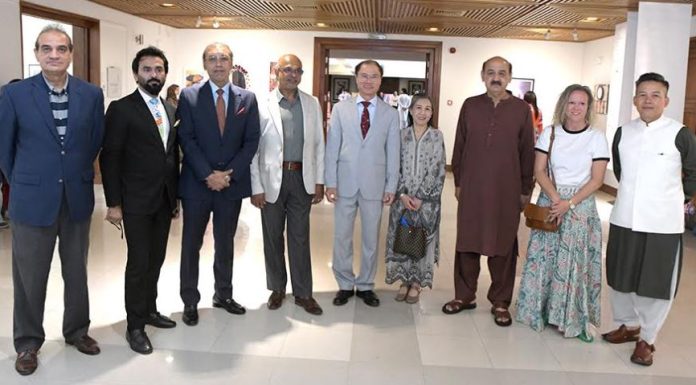
The Pakistan Gender Climate Award ceremony held at the Serena Hotel was attended by dignitaries from the Ministry of Climate Change and Environmental Coordination, diplomats, civil society, academia, youth and the media.

The Coordinator to the Prime Minister on Climate Change, Ms. Romina Khurshid Alam, lauded the initiative and pledged her support in taking the agenda forward to strengthen the gender- climate nexus. In her keynote address, she said, “Women are the change and will change the future. They are our champions and we have faith in their capabilities.”

The Ambassador of France, H.E. Mr. Nicolas Galey stated, “We are delighted that the Gender Climate Award, which was launched last year by the French Embassy, can bring together other prestigious partners this year, and even more in the future. This demonstrates global awareness of the impact of climate change, and the need for everyone – men and women, governments, international organizations, and NGOs – to meet this challenge together. By honoring the three winners of this award, we pay tribute to the extraordinary women of Pakistan for their leadership in climate action and their efforts to find innovative and concrete solutions to make their communities more resilient.”

The EU Amb. Dr. Riina Kionka highlighted the disproportionate impact of climate change on women, she said “Women are at the heart of our work in building a sustainable world. Investing in female leadership is key for climate solutions. We are delighted to honour the inspiring work of women in addressing climate challenges, be it through journalism, entrepreneurship, or advocacy”.

The Deputy Head of Mission, UAE Embassy, Mr. Muhammad Sultan AlKaitoob commented on the negative impact of climate change on the lives and livelihoods of women, He emphasized the need for action,“ The UAE recognizes the indispensable role that gender equality plays in building a sustainable and resilient future. Empowering women and girls not only enhances social cohesion but also accelerates progress towards achieving the Sustainable Development Goals, particularly those related to climate action”.

Mr. Samuel Rizk, the Resident Representative of UNDP congratulated the winners and encouraged them to become role models of inspiration. “We’ve got to move past old-fashioned ways of thinking and work together to make real change happen. Today’s winners serve as examples for young women and girls across Pakistan that show that the barriers can be broken down”.

In her concluding remarks, Senator Sherry Rehman said, “Climate and women are inextricably linked. The impacts of a planet on fire will further erode capital of women. Spotlighting women and empowering them to become leaders is key to resilience. Events such as this should be scaled up and held every year to inspire women”

The nation-wide call for applications made in November 2023 for the Gender Climate Award received a robust response. A total of 79 applications were received and evaluated by a five- member committee to select the winners. “We hope this is a trend that we can build on to raise awareness and encourage women to participate more actively in climate action” said Aisha Khan from CSCCC.

The three Gender Climate Award winners expressed their delight and gratitude for the recognition and saw it as an opportunity to become beacons of hope. The message from the three winners reiterated their resolve and spoke with one voice to say that nothing is impossible if you take challenges head on and demonstrate grit and perseverance to achieve your objective.

Algerian envoy visits RCCI, urges to promote bilateral trade ties

Algerian envoy visits RCCI

RAWALPINDI, MAY 8 /DNA/ – Brahim Romani, Ambassador of Algeria in Pakistan has said that his country was keen to promote trade and economic ties with Pakistan. The Algerian envoy stated this during a meeting with the Rawalpindi business community at the Rawalpindi Chamber of Commerce and Industry (RCCI).

Pakistan and Algeria have a bilateral trade agreement that was signed in February 2023. The two countries have seen an annualized increase in exports from 1995 to 2022, with Pakistan exporting $2.27 million in 1995 and $11.8 million in 2022, and Algeria exporting $115,000 in 2000 and $66.6 million in 2022, he added.

On the occasion, President RCCI Saqib Rafiq gave a summary and briefed the ambassador on the ongoing activities of the Chamber. He said that there are great opportunities to promote bilateral trade between Pakistan and Algeria in various sectors including energy, pharmaceutical and textile etc.

Saqib Rafiq while highlighting the ‘look Africa Policy’ of Government of Pakistan said that Africa has many opportunities for Pakistan, including its abundant natural resources, attractive investment opportunities, and high percentage of young population. Under the ‘Look Africa Plan’ Pakistan is seeking to negotiate preferential trade agreements with three African trading blocs, he further added.

Both sides discussed and showed strong desire to enhance trade, investment, and cultural exchange. Matters related to bilateral relations, investment opportunities, trade facilitation measures, cultural exchange and tourism, diplomatic relations & economic development came under discussion.

Senior Vice President Muhammad Hamza Sarosh, Vice President Mr. Faisal Shahzad, Former Presidents Raja Amer Iqbal & Malik Shahid Saleem, Executive Committee Members and distinguished RCCI members were also present.

Hollywood film on Pak culture to highlight country’s soft image: Tarar

Federal Minister for Information and Broadcasting Attaullah Tarar

The Hollywood production team thanked the minister for the cooperation and hospitality they received in Pakistan. They said they were inspired by the great cultural heritage and people of Pakistan

ISLAMABAD, May 08 (DNA): Federal Minister for Information and Broadcasting Attaullah Tarar said on Wednesday that the production of Hollywood film on Pakistan’s culture will give people around the world an opportunity to know more about the country and highlight its soft and positive image.

This he said during a meeting with the members of the Hollywood production team visiting Pakistan to shoot an international film on Pakistani culture.

He said the film produced by the Hollywood production team will be an important milestone for the Pakistani film industry.

 In the meeting, discussions were held regarding the great cultural heritage and history of the country, including the preparation of a film based on Pakistani culture.

The minister also apprised the Hollywood production team about the progress in the film industry in the country.

He thanked the Hollywood production team for deciding to produce a film on Pakistani culture.

“It is a great honour for our culture and people,”  he said adding Pakistan was a country with a great cultural heritage.

“Our history, literature, music, and art are unique and appreciated worldwide,”  Attaullah Tarar maintained.

The minister said he believed that this film would give the world a new opportunity to see the beauty and diversity of Pakistan.

While throwing light on the measures taken by the government for cinema revival, he said it was the only industry in Pakistan that enjoyed tax amnesty.

“The government under the leadership of Shehbaz Sharif restored the film policy in its previous term,”  he said and added that the film sector had been given the status of an industry so that the youth could get an opportunity to enter this sector.

He said a film finance fund had been established at Rs 1 billion in the budget of 2022-23. Moreover, he said medical insurance for artists and tax incentives for the film industry had boosted the film industry and its related sectors.

He said in the budget 2022-23, five years of tax exemption was given to filmmakers.

Similarly, income tax exemption of five years has been given on the establishment of new cinemas, production houses, and film museums whereas a tax exemption has been given for ten years on the export of film and drama.

He said that foreign filmmakers were also given concessions on joint film and drama projects with local producers.

 For this, the condition of shooting 70 percent of the film in Pakistan was applicable to promote business activities including tourism and culture.

He said through screen tourism, Pakistan has conveyed its narrative to the world.

 The minister assured to provide full support and cooperation to the Hollywood production team from the government and Ministry of Information and Broadcasting.

The Hollywood production team thanked the minister for the cooperation and hospitality they received in Pakistan.

They said they were inspired by the great cultural heritage and people of Pakistan.

 “Pakistan has huge filmmaking potential, we are committed to helping the local industry to grow”, they remarked.

They thanked the government, the people of Pakistan, and the local film industry for the cooperation provided to them during their stay in Pakistan.

They said they were fully enjoying their visit and they were highly impressed by the beautiful locations and heritage of Pakistan.

 The delegation comprised  James MC Milan, Andrew James Fiero, Luisa Iskin, Sadia Ashraf, Badr Ikram, and Mashal Saqib.

Trade, Security, Connectivity: PM Shehbaz, Uzbek FM discuss bilateral relations

Trade, Security, Connectivity: PM Shehbaz, Uzbek FM discuss bilateral relations

ISLAMABAD, MAY 8 /DNA/ – The Foreign Minister of Uzbekistan Bakhtiyor Saidov, currently on a two-day visit to Pakistan, called on Prime Minister Muhammad Shehbaz Sharif today. Congratulating the Prime Minister on his re-election, the Uzbek Foreign Minister also conveyed the invitation of President of Uzbekistan Shavkat Mirziyoyev for Prime Minister Muhammad Shehbaz Sharif to undertake an official visit to Uzbekistan at his earliest convenience. The Prime Minister expressed his gratitude to President of Uzbekistan, Mr. Shavkat Mirziyoyev and said that he was looking forward to meeting him.

The two sides discussed enhanced cooperation between Pakistan and Uzbekistan in the fields of trade and economy, security and defense, connectivity and people to people contacts. The importance of peace and development in Afghanistan for regional connectivity was also discussed.

Prime Minister Muhammad Shehbaz Sharif expressed Pakistan’s commitment to working with Uzbekistan to speed up and complete all bilateral trade and connectivity projects. He reaffirmed Pakistan’s readiness to provide access to Uzbekistan to Pakistani Ports. He also emphasized the importance of Uzbekistan-Afghanistan-Pakistan Railway Project and Pakistan’s commitment to its early completion.

Stay Connected

64FansLike
60FollowersFollow

Latest Reviews

Exchange Rates

USD - United States Dollar
EUR
1.17
GBP
1.35
AUD
0.72
CAD
0.73