Home Blog Page 923

Pakistan’s Auto Industry behind Global Standards

Pakistan's Auto Industry behind Global Standards

KARACHI, MAY 15 (DNA) — Pakistan Institute of Development Economics hosted a round table discussion titled ‘Revitalizing Pakistan’s Automobile Industry: Moving towards Consumer Welfare, Global Integration & Sustainable Mobility’ here in Karachi. The Round Table Conference was attended by representatives of Automobile Companies in Pakistan, Automobile parts manufacturers and academicians.

The conference focused primarily on three major themes, Localization Obsession and Supply Chain Constraints, Policy, Reforms and Industry Development, and Electrification and the Future of Mobility. The participants highlighted the major issues being faced by the industry as a whole and firms individually that have kept the automobile sector from developing into a major industry in Pakistan, and in the global automobile industry as well.

Dr. Nadeem Ul Haque, Vice Chancellor Pakistan Institute of Development Economics in his opening address to the conference put forth a pertinent question for the stakeholders to ponder upon. He questioned why has Pakistan’s automobile industry despite existing for many decades not been able to increase production numbers and quality to target export markets? Dr. Nadeem expressed his worry over the lack of technological adoption by Pakistan’s automobile industry which is lagging decades behind the world.

 Dr. Nadeem also criticized Pakistan’s continuous efforts focusing on localizing the entire automobile production chain which have to date not provided any benefit to the automobile industry, and suggested that instead Pakistan must focus on value addition through technological advancements to become part of the global value chain of the automobile industry.

Later, the PIDE team presented the findings of their ongoing research on the state of automobile industry in Pakistan and the future outlook. The Round Table Conference participants lauded PIDE’s efforts to not only research the industry, but to involve all relevant stakeholders and initiating a necessary dialogue for course correction.

All participants wholeheartedly expressed their views on the issues and future way of action to Revitalizing Pakistan’s automobile industry. While many differing opinions were shared, all members agreed that without transfer of technology and skills, the automobile industry cannot grow. Academia-industry linkages must also be strengthened for any indigenous innovation in the automobile industry that we wish to see.

 Academia must also step forward to provide Research & Development Support to the industry, particularly by working on current areas of improvement but with a futuristic approach. The role of government is also essential for the flourishment of automobile industry in Pakistan. It must focus on developing facilitative policy environment and regulations, which at the moment are rather repressive.

There was a unanimous agreement that the transition to EV is bound to happen, globally as well as in Pakistan, and we must decide if Pakistan wishes keep the pace with the rest of the world or stay far behind. In case of the former, it is important to foster competition in the automobile industry to provide consumers a fair chance of choosing a quality vehicle of their choice, and also look towards integrating into the global value chain. — DNA

Health activists proposed 26% increase on tobacco products  

Health activists proposed 26% increase on tobacco products  

ISLAMABAD, May 15 /DNA/ – Society for the Protection of the Rights of the Child (SPARC), held a briefing session with journalists on Wednesday at local hotel in which it was shared that SPARC along with other organizations wrote a letter to Finance Ministry of Pakistan and demanded to increase taxation on cigarettes.

It was proposed that tobacco taxation needs to be increased by at least 26% in upcoming federal budget. Pakistan faces a significant challenge with widespread tobacco consumption, with over 31.9 million adults aged 15 years and above identified as current tobacco users, constituting nearly 19.7% of the adult population. Smoking-related illnesses claim over 160,000 lives annually, representing a substantial 1.6% of the nation’s GDP each year. However, in the fiscal year 2022-23, cigarette taxes covered only 16% of these expenses, marking a decline from 19.5% in 2019.

Dr Khalil Ahmad, program manager SPARC stated that, the affordability of cigarettes and the devastating toll of smoking on public health are indeed pressing concerns that demand urgent action. When cigarettes are inexpensive, it can encourage more people, especially the youth and those with limited financial means, to start smoking or to continue the habit despite the known health risks. The loss of innocent lives due to smoking-related illnesses is tragic and preventable. It underscores the importance of implementing effective tobacco control measures, including increased taxation on cigarettes, to make them less affordable and discourage consumption. Furthermore, comprehensive tobacco control strategies should encompass not only taxation but also measures such as public education campaigns, smoke-free policies and support for smoking cessation programs.

Malik Imran Ahmad, Country Head Campaign for Tobacco-Free Kids (CTFK) said, that increasing tobacco taxes, as recommended by global health organizations like World Health Organization and the World Bank, can indeed be an effective measure to reduce consumption and generate revenue for healthcare. A 26.6% FED increase, as proposed for the fiscal year 2024-25, appears to be a significant step forward. Not only could it help recoup a substantial portion of healthcare costs, but it also has the potential to discourage hundreds of thousands of individuals from smoking. Additionally, the projected revenue increase could be valuable for funding various public health initiatives and strengthening the national economy.

It’s concerning to see the extent of tobacco consumption in Pakistan and the associated health and economic burden it brings due to easy affordability of cigarettes. Organizations such as Human Development Foundation, Aurat Foundation and Chromatic Trust alongside SPARC have raised their concerns on this crucial public health issue.

Dubai Leaks: Will Everyone Get Away?

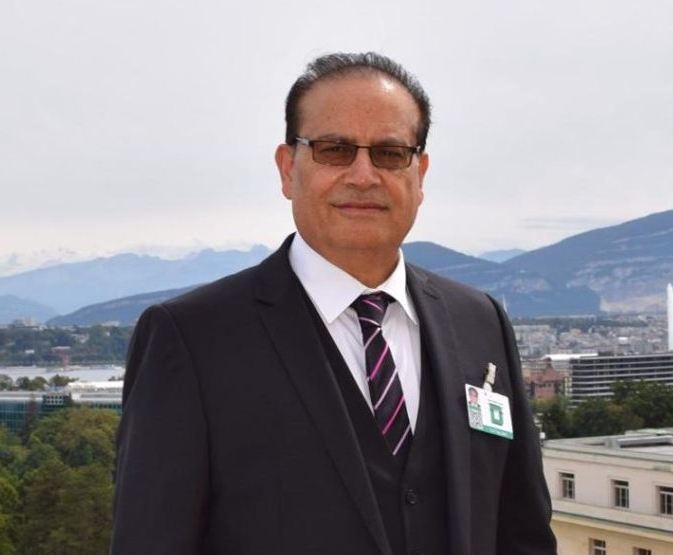
Qamar Bashir

By  Qamar Bashir

The politicians, parliamentarians, and members of both civil and military bureaucracy create a formidable force to shield one another from the fallout of leaks like Wikileaks, the Panama Papers, or revelations concerning Dubai properties. This network safeguards those in positions of power through compliant Federal Board of Revenue (FBR) and rubber nose accountability bodies to minimize or completely neutralize the adverse effects of such leaks. Notwithstanding the fact that serious concerns about the origins of these funds and potential illicit practices such as corruption, money laundering, and tax evasion not only undermine the integrity of financial systems but also deprive the government of essential revenue needed for public services and infrastructure.

Drawing from my experience of working as Deputy Commissioner Income Tax for more than ten years (1994-2005) I can tell with certainty that the entire accountability framework, including the FBR, would already  have started rectifying the gaps in the income tax and wealth tax records of prominent Pakistani figures including three children of President Asif Ali Zardari, Hussain Nawaz Sharif, the spouse of Interior Minister Mohsin Naqvi, Sharjeel Memon, Senator Faisal Vawda, Farah Gogi, Sher Afzal Marwat, several members of the Sindh and Balochistan assemblies, the late Gen Pervez Musharraf, former Prime Minister Shaukat Aziz, over a dozen retired generals, as well as a police chief, an ambassador, and a scientist.

I can also assert with certainty that tax authorities across Pakistan will be diligently examining the records of individuals beyond politicians and civil and military bureaucracies to determine if the properties leaked were declared, undeclared, or undervalued. Taxpayers and their lawyers have likely already been summoned to negotiate the cost of rectifying their records, a process that benefits themselves, their legal representatives, and the tax officials, ensuring that not a single penny goes to the government exchequer.

For those individuals whose wealth statements are available in the public domain and who either failed to declare the mentioned properties or undervalued them, they and their income tax lawyers are likely scrambling to initiate damage control measures.

The properties worth $11 billion in Dubai starkly contrasts with the economic realities facing the nation. With foreign exchange reserves far below this figure and a significant portion of the population living below the poverty line, this vast wealth disparity underscores systemic challenges in income distribution, governance, and economic development. In a country where over 40% of the populace struggles amidst inflation rates exceeding 35%, the concentration of such immense wealth abroad not only widens the gap between the rich and the poor but also exacerbates socioeconomic inequalities, hindering efforts to uplift marginalized communities and foster inclusive growth.

The $11 billion worth of leaked properties is merely the tip of the iceberg. Countless other properties have been discreetly acquired and stashed away in various countries worldwide, potentially totaling billions upon billions of dollars. This rampant acquisition of assets abroad significantly contributes to the impoverishment of our nation. It’s a stark representation of the systemic corruption and greed that plagues our society, draining resources that should be invested in uplifting our people and developing our nation.

As a senior civil servant who retired as the Press Secretary to the President in BS 21, I can attest to the fact that throughout their entire service, whether civilian or military, any bureaucrat can only afford a modest house and a middle-class car with their legal income. Similarly, my experience as Director General of the Minister’s Office for four Federal Ministers confirms that politicians can barely sustain their household expenses with their legitimate earnings, let alone accumulate significant assets.

Any wealth beyond these modest means is likely obtained through illicit means or illegal sources of income as civil and public servants are prohibited from engaging in business activities during their service.

How they launder black money through an intricate web of financial transactions is intriguing. The illicit funds are injected into the financial system through depositing cash into third-party bank accounts, acquiring high-value assets, or establishing shell companies. These funds undergo a series of transactions to obscure their origins, including transfers between accounts, investments across different markets, and international wire transfers through multiple jurisdictions. Subsequently, laundered funds are reintroduced into the economy disguised as legitimate assets, often through the sale of initially purchased high-value assets at deflated prices followed by reinvestment in legitimate businesses or the acquisition of real estate and other valuable assets.

Moreover, politicians and civil servants frequently exploit their positions of authority and leverage legislative influence to create loopholes or favorable conditions for concealing illicit wealth. They may also utilize personal connections and influence to access offshore banking systems or establish intricate corporate structures, further complicating the tracing of asset ownership.

The parliament and the executive often collaborate to introduce Tax amnesty schemes.  They declare previously undisclosed assets or income, often attributing them to gifts received from friends, relatives, or loyal party supporters. Through paying nominal taxes, which are often a fraction of the true value of their assets, they effectively launder their illegal wealth freely, use or invest it without fear of legal repercussions.

Letus create a hypothetical scenario that individuals implicated in illegal asset acquisition were US citizens. They could have faced various legal ramifications under U.S. law. This includes potential charges for money laundering, stemming from transactions involving proceeds of corruption or bribery. This would have led to hefty fines and lengthy imprisonment upon conviction on two accounts, failing to report income or assets gained through illicit means, subjecting them to IRS prosecution and civil penalties and violations of the Foreign Corrupt Practices Act (FCPA) carrying fines and imprisonment and forfeiture to seize properties and assets acquired illegally.

Let us create another hypothetical scenario in which the politicians, bureaucrats, civil and military implicated in the Dubai leaks were US citizens and had acquired assets as gifts from friends, supporters or well wishers. They could face charges of bribery targeting both the giver and recipient for exchanging something of value for official favors. They could  face honest services fraud charges for compromising their public duties. Failure to disclose the gift or avoid decisions benefiting the giver could lead to conflict of interest violations requiring to forfeit the gift, facing civil penalties and reputational damage with added consequences of legal risks, potentially tarnishing careers and undermining public trust.

But we all know with certainty that in Pakistan everyone will get away.

By  Qamar Bashir

Former Press Secretary to the President

Former Press Minister to the Embassy of Pakistan to France

Former MD, SRBC

Back off and lashback…

Qamar Bashir

By: Qamar Bashir

There is never a dull moment in Pakistan across any sphere of life. A lot is happening concerning the three pillars of the state. The establishment had dominated all three pillars until one decided to rebel, albeit to some extent, when six judges of the high court penned an SOS message to the Supreme Judicial Council, highlighting the pressure they faced in dispensing justice, particularly in politically consequential cases. Later, during a hearing by the Supreme Court in suo moto cases, the entire judiciary, from top to bottom, joined the outcry, sending chills down the spine of the entire nation and a message to the establishment to ease off, at least for the time being, concerning the judiciary.

However, the establishment’s stakes are too high, because the subdued and dominated judiciary was their primary tool to deal with non-compliant political elements. Without the judiciary on their side, they may feel handicapped in achieving their set objectives.

To push back defiant judges and regain control, a systematic campaign of character assassination, now familiar to us, was launched in both traditional and social media platforms. Detailed information about the assets of non-compliant judges and their families, travel histories, active visas, US residency status, and other sensitive details were obtained from official channels and injected into social media with a negative spin.

Vloggers were enlisted to hurl abuses, allegations, and insults at the six judges. A frontman filed a reference against Justice Kayani in the Supreme Judicial Council (SJC), alleging that Justice Kayani “waged a war against the forces of Pakistan in a planned manner by influencing and persuading other high court judges.”

The judges retaliated, noting that state institutions leaked confidential data, and specific X (formerly Twitter) accounts and hashtags were employed in conducting a smear campaign. They asserted that such actions would face consequences through contempt of court proceedings, which could even implicate “high office.”

True to their words, upon separate requests from Justice Mohsin Akhtar Kayani and Justice Babar Sattar, Chief Justice of the Islamabad High Court (IHC), Justice Aamer Farooq, constituted two separate larger benches to hear the complaints of the senior puisne judges. A three-member bench, comprising CJ Farooq, Justice Miangul Hassan Aurangzeb, and Justice Arbab Mohammad Tahir, was formed to hear Justice Kayani’s complaint, while another larger bench, consisting of Justice Kayani and Justice Tariq Mehmood Jahangiri, was established to address Justice Sattar’s complaint.

However, the matter did not conclude there. Justice Babar Sattar, presumed to be one of the motivators for the six rebel judges, lodged a written complaint on May 14, 2024, with the Chief Justice of the Islamabad High Court. He stated that he received an intimidating message from the head of an intelligence agency, urging him to back off from extensive scrutiny of the existence and mode of surveillance by the intelligence agencies in the case filed by PTI founder’s wife, Bushra Bibi, and Najam Saqib, son of former Chief Justice of Pakistan (CJP) Saqib Nisar, last year regarding audio leaks.

In the impugn case, the court had issued notices to the heads of intelligence and investigation agencies, including ISI, IB, and FIA, as well as relevant ministries, PTA, and PEMRA, to address the question of whether there exists a legal framework allowing surveillance of citizens.

Soon after Justice Babar Sattar’s letter was made public, the intelligence agencies promptly sought assistance from the Attorney General of Pakistan, who refuted Justice Babar’s claim of receiving a “back off” message, but realizing that their typical tactic had backfired.

In addition to the judiciary, which is struggling to regain its independence, albeit with some success, the establishment has retained many other weapons, including kinetic ones, in its arsenal to reassert control over the judiciary. However, it currently faces a challenging situation.

The establishment is facing a two-pronged strong defiance from the political front as well. Despite enduring punishing reprisals from the establishment, the PTI does not appear intimidated, scared, or compromising anymore. The party’s founder chairman and leaders have been displaying signs of almost total defiance. They reacted equally aggressively to the assertive press conference by the DG-ISPR. Instead of seeking forgiveness from the establishment, they are demanding that the establishment seek forgiveness from them.

Furthermore, the establishment is also facing blatant attacks from Maulana Fazal ur Rehman, who charges the army for actively participating in politics and threatens that as long as the army remains involved in politics, it would be treated as a politician and must face the consequences of being a politician.

The establishment faces another significant threat: its public image, which is deteriorating with each passing day. However, the Public Relations Wing, instead of utilizing public relations tools and strategic media management techniques, heavily relies on the coercive use of power, such as slowing down the internet and suspending social media platform services. Additionally, it leverages traditional media instead of addressing the core issues that are generating negative publicity and adversely affecting the image of the armed forces.

Despite these threats, the establishment possesses numerous strengths. It exercises total and unquestionable control over the two pillars of the state: the parliament and the government. The parliament is largely composed of members who owe their positions to the establishment’s patronage, without which they would have had little chance of being elected. Similarly, the government is formed by parliamentarians initially selected by the establishment.

As long as these two pillars remain subjugated, the establishment will persist in achieving its objectives across all sectors, including legislation, politics, justice, economy, finance, and business.

By: Qamar Bashir

Former Press Secretary to the President

Former Press Minister to the Embassy of Pakistan to France

Former MD, SRBC

OIC on the 76th Anniversary of the Palestinian Nakba

OIC

A Dark Stain in the Human Conscience and a Continuing Setback to the Values of Freedom and Justice

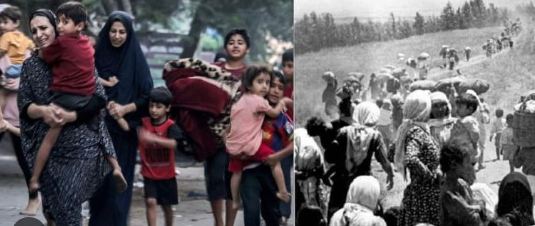
JEDDAH,  MAY 15 /DNA/ – This day, the Organization of Islamic Cooperation (OIC) recalls the 76th anniversary of the Nakba of Palestine’s land, people, and history, following the establishment of Israel, the colonial occupying power, and the accompanying crimes of genocide, ethnic cleansing, organized terrorism, forced displacement, deliberate destruction of hundreds of Palestinian villages, and confiscation of land and property of the indigenous Palestinian people. The repercussions of the Nakba chapters continue to unfold in an unprecedented manner through crimes of murder, destruction, forced displacement, and genocide as a result of the continuing Israeli aggression against the Palestinian people, which led to the killing of more than 35,000 martyrs and about 79,000 wounded, the majority of whom are women, children, and the elderly.

On this occasion, the OIC affirms that this painful memory is still alive in the individual and collective memory of the Muslim Ummah, as a dark stain in the human conscience and a setback to the values of freedom and justice, due to the human tragedies, mass displacement, and denial of the legitimate national rights of the Palestinian people. The OIC reaffirms the responsibility of the international community towards the necessity of putting an end to the Israeli occupation and activating international justice mechanisms to hold Israel, the occupying power, accountable for the crimes it has committed against humanity, and to rectify the historical injustice that continues to befall the Palestinian people.

The OIC also expresses its gratitude and appreciation for the role of the United Nations Relief and Works Agency for Palestine Refugees (UNRWA) and its tireless efforts in providing basic services to the Palestinian refugees, whose number is estimated at 6.5 million. The OIC further stresses the need for UNRWA’s continued role as an international living witness to the tragedy of refugees and embodiment of the commitment of the international community towards the implementation of UN resolutions, and the need to find a just and lasting solution to the issue of the Palestinian refugees.

On this occasion, the OIC pays a resounding tribute to the Palestinian people who, despite the repeated chapters and repercussions of this painful Nakba over the decades, were able to continue the path of their just struggle in all its forms, in order to defend their land, the cradle of civilizations, cultures, and divine religions, and to protect their national identity, continuing their efforts to embody their freedom, independence and sovereignty over their national territory.

On this occasion, the OIC reaffirms its unwavering support for the inalienable rights of the Palestinian people, foremost of which is their right to return, and the establishment of their independent state on the borders of June 4, 1967, with Al-Quds Al-Sharif as its capital.

£190m reference: IHC approves Imran Khan’s bail plea

Imran Khan

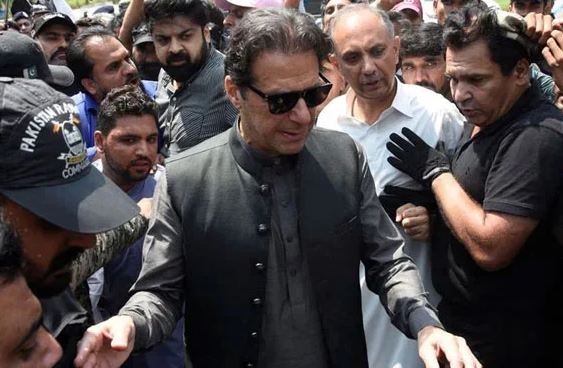
ISLAMABAD, MAY 15: The Islamabad High Court on Wednesday approved Pakistan Tehreek-e-Insaf (PTI) founder Imran Khan’s bail petition in the £190 million National Crime Agency (NCA) settlement reference.

A two-member bench, comprising IHC Chief Justice Aamer Farooq, Justice Tariq Mehmood Jahangiri, had reserved the verdict on the bail petition a day earlier.

The IHC, its short order today, ordered the authorities to release the PTI founder against the surety bond of Rs1 million.

Pakistanis own property worth $11bn in Dubai

Pakistanis own property worth $11bn in Dubai

Report based on data that provides detailed overview of hundreds of thousands of properties in Dubai

Monitoring Desk

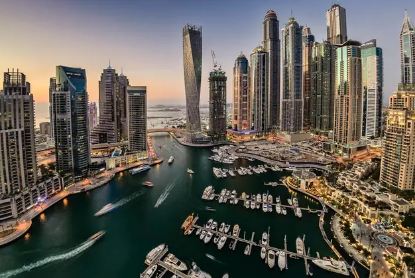
ISLAMABAD: A global collaborative investigative journalism project has revealed the ownership of properties of the global elite in Dubai. The list includes political figures, globally sanctioned individuals, alleged money launderers and criminals. Pakistanis have also been identified on the list and their combined value has been estimated at around $11 billion.

The project — ‘Dubai Unlocked’ — is based on data that provides a detailed overview of hundreds of thousands of properties in Dubai and information about their ownership or usage, largely from 2020 and 2022. Properties purchased in the name of companies and those that are in commercial areas are not part of this analysis.

The data was obtained by the Centre for Advanced Defence Studies (C4ADS), a non-profit organisation based in Washington, DC. It was then shared with Norwegian financial outlet E24 and the Organised Crime and Corruption Reporting Project (OCCRP), which coordinated a six-month investigative project with reporters from 74 media outlets in 58 countries, uncovering scores of convicted criminals, fugitives, and political figures who have recently owned at least one piece of real estate in Dubai. The News and Dawn were partners from Pakistan.

Among the Pakistanis listed in the Property Leaks are President Asif Ali Zardari’s three children, Hussain Nawaz Sharif, Interior Minister Mohsin Naqvi’s wife, Sharjeel Memon and family members, Senator Faisal Vawda, Farah Gogi, Sher Afzal Marwat, four MNAs and half a dozen MPAs from the Sindh and Balochistan assemblies. The Pakistani list also features the late Gen Pervez Musharraf, former prime minister Shaukat Aziz and more than a dozen retired generals as well as a police chief, an ambassador and a scientist – all of whom owned properties either directly or through their spouses and children.

In 2014, President Asif Ali Zardari had received foreign property as a gift. By the time he declared it in 2018, he had gifted it to someone. In 2014, a business tycoon co-accused with Zardari in the fake accounts case, Abdul Ghani Majid, declared in his wealth statement that he had granted a gift of Rs329m but neither mentioned its type nor the recipient. The JIT however recovered a memo about the purchase in March 2014 of a penthouse in Dubai. The Property Leaks data has now unveiled that Ghani had gifted this property to Zardari who gifted it to his daughter.

Chief Financial Officer of Omni Group Aslam Masood along with his wife is also shown as a listed owner of several properties in the data.

Sohrab Dinshaw is also a property owner in Dubai. A villa he purchased in 2015 carried a purchase price of AED 1271888 (Rs 96m).

All of the individuals mentioned were sent questions (except Aslam Masood who is deceased). None responded.

The Altaf Khanani network which was sanctioned by the US for involvement in money laundering has also surfaced on the list. His son, daughter, brother, and nephew are listed owners of several properties in Dubai. Three of them are facing sanctions. Another notable character is Hamid Mukhtar Shah, a Rawalpindi-based physician who was sanctioned by the US for his involvement in the kidnapping, detention of, and removal of kidneys from Pakistani labourers. He is listed as the owner of scores of properties.

The Property Leaks have also revealed that Interior Minister Mohsin Naqvi’s wife owns a property in Dubai which he didn’t declare in the nomination papers he submitted in March this year for the Senate election.

Per the Property Leaks data, Naqvi’s wife owns a five-bedroom villa in the Arabian Ranches. She received a rental income of AED600,000 (Rs45m) from this villa, which was purchased in August 2017 for AED4,347,888 (Rs329m) according to the record. The villa remained in her ownership till April 2023 when it was sold for AED4,550,000 (Rs344m) as per the record.

Since the data available and other organisations was updated till 2022, Naqvi’s wife’s name appeared once in it — related to the above-mentioned information. She however continues to be the owner of a property in Dubai, if Dubai’s land record is taken as a guide.

Responding to questions received from the media partner of this investigative project, she clarified that she had purchased another property in Dubai in January this year when Naqvi was still interim chief minister of Punjab. Two months later, he was a candidate for the Senate seat in March and chose not to declare this property. To a question regarding this, she said: “We will declare it in the current year’s tax declarations and for the ECP”.

According to the data leak assessed by economists and reporters, the number of residential properties owned by foreigners in Dubai put Indians first, at 35,000 properties and 29,700 owners. The total value of these properties is estimated at $17 billion that same year. Owners with Pakistani nationality come second among foreigners at 17, 000 owners of 23,000 residential properties followed by UK citizens and Saudi nationals.

Among the Pakistani owners, the average value per owner is estimated at $0.41 million (Rs11.40m). The combined value of the properties of Pakistanis has been estimated at around $11 billion (Rs30tr) whereas the total value of properties of 204 nationalities is $386 billion (Rs1073.70tr).

The Property Leaks data includes the controlling party of each property, as well as other identifying information such as his or her date of birth, passport number, and nationality. In some cases, the data captured renters instead of owners as mostly it came from official government documents as well as publicly owned utility companies.

The project’s reporters have only revealed the names of owners in cases that serve the public interest. This includes property owners who have been convicted or accused of crimes, are facing sanctions, or are public officials or their associates, including those accused of corruption or who have kept their properties hidden from the public.

Journalists used the data as a starting point to explore the landscape of foreign property ownership in Dubai. They spent months verifying the identities of the people who appeared in the leaked data, as well as confirming their ownership status, using official records, open-source research, and other leaked datasets. Reporters have only included people in the project if their identities could be independently confirmed through other sources.

Dubai’s official land registry was also used to ascertain whether individuals appearing in the data remain property owners. In some cases, reporters could not determine current ownership status, usually because a property had been recently sold. In those cases, extra efforts were made to confirm that the person did own property in Dubai, including combing through real-estate transactions and rental databases.

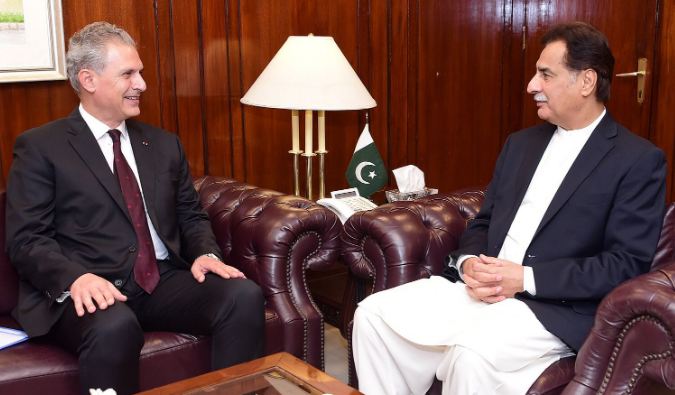
Jordanian ambassador to Pakistan calls on NA Speaker

Jordanian ambassador to Pakistan calls on NA Speaker

Enhancing parliament to parliament contacts vital for strengthening ties between Pakistan and Jordan

ISLAMABAD, MAY 14 /DNA/ – Speaker National Assembly Sardar Ayaz Sadiq has said that Pakistan and Jordan enjoy cordial ties based upon historical, cultural and religious commonalities.He also said that enhancing parliament to parliament contacts would further strength these ties. Both countries enjoy unanimity of views on regional and international issues including Palestine issue.He expressed these views during his meeting with Ambassador of Jordan to Pakistan Islamabad Dr. Maen Khreasat  at Parliament House who called on him in Parliament House Islamabad.

While highlighting vast opportunities of trade and invest in Pakistan, the Speaker  said that enhancing trade and  economic cooperation between both nations would further strengthen these ties.

He added, ” Exchanging Parliamentarians ties between both nations are pivotal for extending cooperation in diverse socio-economic fields.He further reiterated his commitment to strengthen parliamentary diplomacy.Further, he condemned the killings of innocent Palestinians and demanded urgent cease fire in Gaza Palestine.

Ambassador of  Jordan to Pakistan Dr. Maen Khreasat extended felicitations to Sardar Ayaz Sadiq for his successful election as Speaker National Assembly of Pakistan. He also said that both Jordan and Pakistan enjoy cordial relations based upon centuries old shared traditions and values. He also said that Jordan always supported Palestinian cause and condemned the brutality of Israelites on innocent Palestinians.

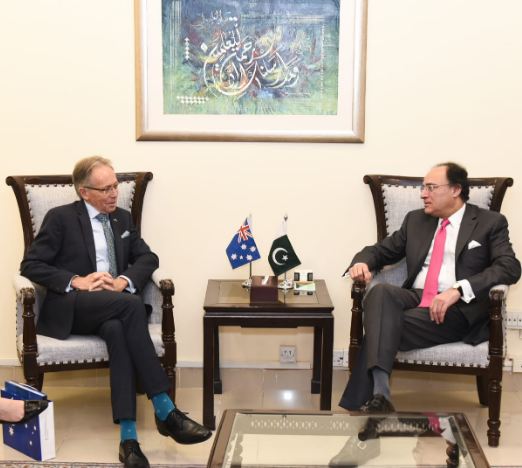
Australian HC meets Minister for Finance and Revenue Muhammad Aurangzeb

Australian HC meets Minister for Finance and Revenue Muhammad Aurangzeb

ISLAMABAD, MAY 14 /DNA/ – Australian High Commissioner to Pakistan, Neil Hawkins, called on Minister for Finance & Revenue Senator Muhammad Aurangzeb, at the Finance Division today, to discuss bilateral matters and to strengthen the longstanding relations between Pakistan and Australia.

The Finance Minister welcomed the Australian High Commissioner and underscored the long-standing mutual relations between Australia and Pakistan. Mr. Neil Hawkins extended his felicitations to Senator Muhammad Aurangzeb on his appointment as the Finance Minister. The Minister highlighted that Pakistan greatly values the relation with Australian Government and emphasized on the need to work together to further enhance and strengthen bilateral relations between the two countries especially in the areas of economic cooperation and trade.

During the course of discussion, the Finance Minister apprised the Australian High Commissioner of the various initiatives being undertaken by the Government under the leadership of the Prime Minister. While underscoring the need for digitalization, it was highlighted that the services of Mckinsey & Company have been engaged for digitalization of the tax system.

The Finance Minister further spoke of the resolve of government to privatize various

State-Owned Enterprises (SOEs), and also apprised the High Commissioner on the likely investments from Saudi Arabia and Qatar and the need to focus on the second phase of China-Pakistan Economic Corridor (CPEC).

The Australian High Commissioner briefed the Finance Minister on the engagements of the Australian Government with Agriculture Universities in Pakistan with a view to maximize production in the agriculture and livestock sectors. He assured continued support of Australian government for socio-economic development of Pakistan.  

The Finance Minister appreciated the Australian High Commissioner for his Cooperation and support.

KP Prosecutors observe pen down strike

PESHAWAR, MAY 14 (DNA) — On the call of the Prosecution Officers Welfare Association (POWA) the public prosecutors in Khyber Pakhtunkhwa on Tuesday observed a two-day pen-down strike against non-payment of allowance and no service structure for them.

An official release of POWA issued here said that a Prosecutor was an officer of Grade-19 and 20 but they were being deprived of Rs 20,000 allowance as it was frozen since 2018. It further demanded establishment of a prosecution department and service structure for them.

Earlier, the POs boycotted the courts’ proceedings and all sorts of official work. They did not take part in any court proceedings and police investigations and warned to prolong the two-day strike if their demands were not fulfilled. — DNA

Stay Connected

64FansLike
60FollowersFollow

Latest Reviews

Exchange Rates

USD - United States Dollar
EUR
1.17
GBP
1.35
AUD
0.72
CAD
0.73