Home Blog Page 921

PM for necessary arrangements to bring back students from Kyrgyz Republic

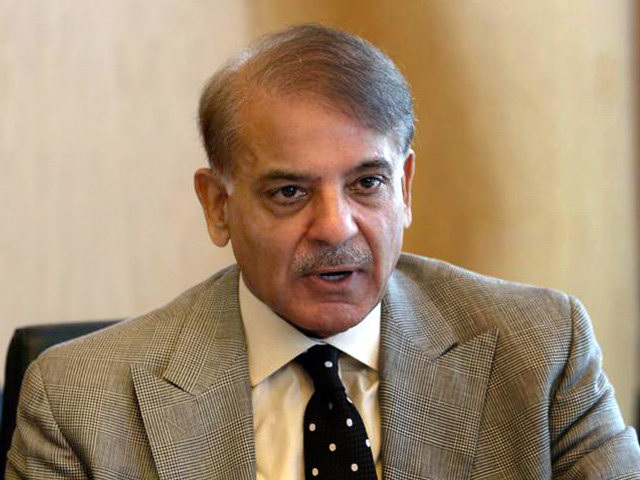
LAHORE, May 19 (DNA): Prime Minister Muhammad Shehbaz Sharif on Sunday contacted Ambassador of Pakistan in the Kyrgyz Republic Hassan Ali Zaigham and directed him for making necessary arrangements for a special flight being sent to Bishkek this evening to bring back Pakistani students.

The special aeroplane will bring back 130 students to Pakistan on Sunday night, PM Office Media Wing said in a press release.  

At the instructions of the prime minister, the government of Pakistan will bear all the expenses of the special plane.

The prime minister directed for keeping continuous contacts with all the students and their families, emphasising that the return of injured students should be a priority.

He further asked for bringing back those students back whose families were residing with them in Kyrgyzstan on urgent basis.  

The ambassador of Pakistan Zaigham apprised the prime minister of his meeting with the Kyrgyz deputy foreign minister. According to Kyrgyz authorities, the situation was under control and no new incident of violence took place in the last two days. Security measures had been enhanced and the foreign students including Pakistanis were safe.

The prime minister directed that despite return of normalcy in Bishkek, those students should be facilitated who wanted to return to Pakistan.  

A number of students have already returned from Kyrgyzstan on Sunday via commercial fli

Shaping Social Morals and Propagating Cultural Values through Electronic Media and Role of the Regulator

Shaping Social Morals and Propagating Cultural Values through Electronic Media and Role of the Regulator

(Part 2)

By Imran Ghaznavi

In the contemporary world, electronic media stands as a formidable force. It influences societal norms, shapes public opinion, and disseminates cultural values. Its pervasive presence, spanning television, radio, and digital platforms, confers upon it a significant responsibility. This responsibility encompasses the dual roles of shaping societal morals and propagating cultural values. Effective Electronic Media Regulatory Authority is crucial in engaging stakeholders and safeguarding public interest.

Electronic media, with its vast reach and influence, plays a pivotal role in shaping social morals. Television programs, news broadcasts, reality shows and online content serve as primary sources of information and entertainment. They impact viewers’ perceptions and behaviors. The portrayal of ethical dilemmas, social issues, and human interactions on screen can profoundly influence public attitudes. For instance, media coverage of social justice movements can galvanize public support and drive societal change. Responsible reporting on sensitive issues can promote understanding and empathy, which is highly crucial for our society where defamation laws are very weak and justice is hardly seen at the end of the day.

However, this influence is a double-edged sword. The dissemination of content that glorifies violence, promotes superficial values, or perpetuates stereotypes can have detrimental effects on societal morals. Media owners, producers and broadcasters bear a significant ethical responsibility. They must strive to create content that promotes positive values, encourages critical thinking, and fosters a more inclusive society. Educational programs, documentaries, and balanced news reporting can contribute to a well-informed and morally conscious public.

Cultural values are the bedrock of any society. They encompass traditions, beliefs, and practices passed down through generations. Electronic media plays a crucial role in preserving and propagating these values. By showcasing diverse cultural narratives, media can foster a sense of identity and continuity within a community. Television shows, films, and online content that highlight cultural heritage, traditional practices, and local arts can strengthen cultural pride and understanding.

Moreover, electronic media has the power to bridge cultural divides and promote intercultural dialogue. In an increasingly globalized world, media can introduce audiences to different cultures, fostering mutual respect and appreciation. Programs that celebrate cultural diversity and highlight common human experiences can contribute to a more harmonious and cohesive global society.

To effectively harness the positive potential of electronic media, robust regulations are essential. Media Regulator play a crucial role in ensuring that the content disseminated by electronic media serves the public interest. This involves setting and enforcing standards for content quality, ethical journalism, and responsible broadcasting. Regulator must also ensure robust and effective in-house research and mentoring mechanism with highly qualified human capital.

Engaging stakeholders is a key component of effective media regulation. Stakeholders, including media producers, broadcasters, advertisers, and the public, have vested interests in the media landscape. Regulators must facilitate dialogue among these groups to address concerns, gather diverse perspectives, and foster a collaborative approach to media governance.

One effective strategy of the regulator is to rejuvenate advisory committees and engage stakeholders. These committees should comprise active and notable professionals representing various sectors. These committees can provide valuable insights and recommendations on media policies and practices which should be seriously looked into. Public consultations and feedback mechanisms can also ensure that the voices of the community are heard and considered in regulatory decisions.

Transparency and accountability are fundamental to effective media regulation. Regulators should operate with a high degree of openness, clearly communicating their policies, decisions, and the rationale behind them. This transparency builds trust and ensures that regulatory actions are perceived as fair and unbiased.

While electronic media holds immense potential for positive influence, it also faces significant challenges. The rapid evolution of digital platforms, the proliferation of fake news, and the commercialization of content pose risks to the integrity and ethical standards of media. Media regulators must adapt to these changes and implement innovative solutions to safeguard public interest.

The rise of social media platforms, in particular, presents unique challenges. Unlike traditional media, social media content is often user-generated and less subject to regulatory oversight. This can lead to the spread of misinformation and harmful content. Regulators must find ways to collaborate with social media companies to enhance content moderation and promote responsible online behavior.

Despite these challenges, electronic media also offers unprecedented opportunities for positive impact. Advances in technology enable more interactive and engaging content, reaching wider audiences than ever before. Media can leverage these advancements to enhance educational programming, promote social causes, and foster a more informed and connected society.

Electronic media wields considerable power in shaping social morals and propagating cultural values. With this power comes a profound responsibility to create and disseminate content that promotes ethical standards and cultural understanding. Effective regulation, driven by stakeholder engagement and a commitment to transparency, is essential to ensuring that electronic media serves the public interest. By navigating the challenges and seizing the opportunities presented by the evolving media landscape, electronic media can play a pivotal role in fostering a more ethical, informed, and culturally cohesive society.

The responsibility of electronic media in molding the social fabric cannot be overstated. It must balance its powerful influence with a deep-seated commitment to ethical standards and cultural enrichment. As society continues to evolve, the role of electronic media in shaping morals and cultural values will remain a cornerstone of public life, necessitating vigilant and adaptive regulatory practices.

The author is a senior media and regulatory practitioner with academic excellence and over 34 year of industry experience. Can be reached at [email protected] website: www.imranghaznavi.com

PHF committed to revival of hockey: Bugti

PHF committed to revival of hockey: Bugti

The President of the Pakistan Hockey Federation (PHF) says the Army Chief has graciously extended the offer of complimentary medical care for all hockey players at military-operated hospitals

Exclusive

Ansar M Bhatti

ISLAMABAD: President of the Pakistan Hockey Federation, Tariq Hussain Bugti has emphasized the comprehensive efforts underway for the revival of hockey in Pakistan. He highlighted the significant gestures exhibited by Prime Minister Shehbaz Sharif and Chief of the Army Staff General Asim Munir towards the national hockey team, underscoring their deep commitment and keen interest in promoting hockey across Pakistan.

Bugti conveyed these sentiments during an exclusive interview with Daily Islamabad Post.

The President of the Pakistan Hockey Federation (PHF) further elaborated that the Army Chief graciously extended the offer of complimentary medical care for all hockey players at military-operated hospitals. Additionally, he reassured the team management of his unwavering commitment to both advancing the sport and ensuring the well-being of the players.

Tariq Bugti, reflecting on the recent triumphs in the Azlan Shah Hockey Cup held in Malaysia, eloquently expressed that the team’s stellar performance has been instrumental in breathing new life into hockey in Pakistan. He astutely noted that the additional victories secured by the team were not just desirable but absolutely essential for the complete resurgence of the sport, and crucial for sustaining the interest of young enthusiasts, underscoring the profound impact that sporting success can have on national morale and the cultivation of future talent.

The President of the PHF expressed his utmost appreciation for the unwavering support extended by both the Prime Minister and the Army chief. He expressed optimism that with their steadfast backing, the issues plaguing players, particularly those concerning employment, would be effectively resolved.

Emphasizing the urgency of revitalizing departmental hockey, he underscored the imperative of engaging with various departments. The Federation, he noted, is actively liaising with these entities to encourage the reactivation of their sports directorates.

In response to a query, the President revealed plans for the establishment of a dedicated Federation office in Islamabad. Discussions are presently ongoing with the Pakistan Sports Board, aiming to secure a suitable space within its premises for the Pakistan Hockey Federation (PHF). It is anticipated that these negotiations will culminate in the allocation of a fitting facility for the PHF’s operational needs.

Tariq Bugti, upon assuming office as the 26th President of the Pakistan Hockey Federation, prioritized the revitalization of the sport at its grassroots. Though daunting, he approached this task with determination and a sense of responsibility. Through collaboration with his colleagues at the Federation and relying on divine guidance, he successfully steered the national game back on course.

While recognizing the services of the Secretary PHF Rana Mujahid and Dutch coach Roelant Oltmans, and other team management members he said that all these officials need fulsome applause as despite a very short time they were able to cobble together a superb team that ultimately brought laurels for Pakistan.

While discussing the upcoming Nations Cup in Poland, he emphasized that Pakistan’s first match is scheduled for June 30th. The President of the PHF expressed optimism regarding the team’s performance in the tournament, highlighting the opportunity for Pakistan to enhance its international ranking through strong performance.

Balochistan govt to extend all-out support to Pak hockey team

Balochistan govt to extend all-out support to Pak hockey team

Mir Jan Muhammad Musuri Bugti encouraged the players and said that the Pakistan hockey team showed the best performance in the Sultan Azlan Shah Hockey Cup and proved that even today the spirit of winning is still there in the national team

DNA

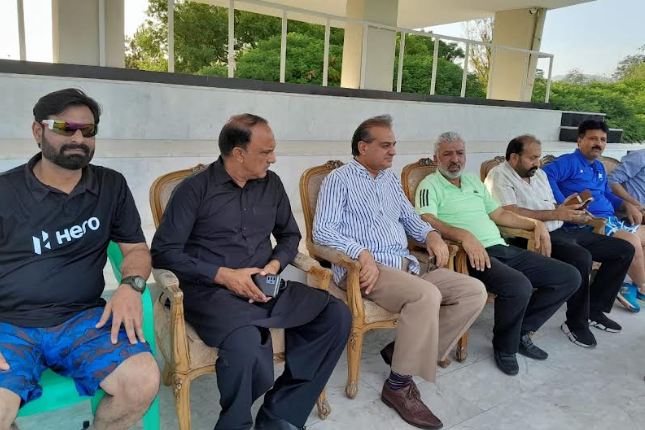
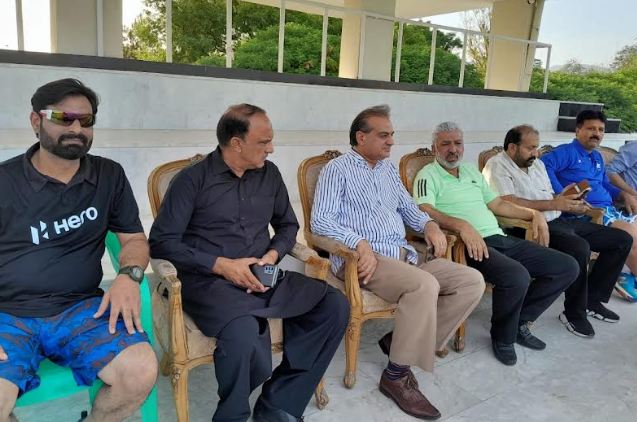
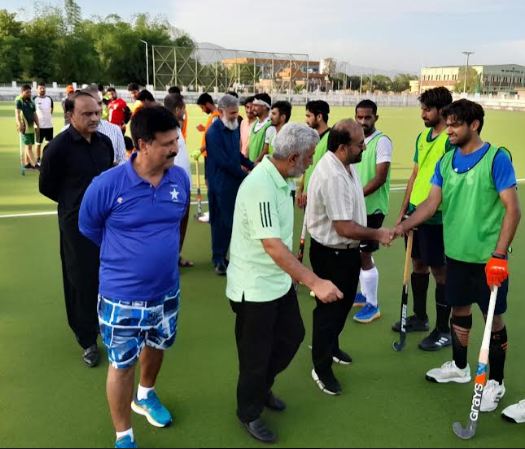
ISLAMABAD: Balochistan Chief Minister Mir Sarfraz Bugti’s elder brother Mir Jan Muhammad Masuri Bugti visited the ongoing national camp at Naseer Banda Hockey Stadium Islamabad. President PHF Tariq Bugti, Secretary General, Olympian Rana Mujahid Ali and Chief Editor of English newspaper Islamabad Post, Ansar Mahmood Bhatti were also present.

Meanwhile, Mir Jan Muhammad Musuri Bugti encouraged the players and said that the Pakistan hockey team showed the best performance in the Sultan Azlan Shah Hockey Cup and proved that even today the spirit of winning is still there in the national team.

 The national team remained unbeaten throughout the event. Defeated by Japan on shootout in the final but our heroes fought well. Balochistan government will continue to provide all possible support to national sports and athletes.

PHF President Mir Tariq Hussain Bugti thanked them for their arrival and said that their morale has been boosted by the encouragement of the players.

We are grateful to the military and national leadership who raised the morale of the players.

Empowered youth key to regional development: Ambassador Durrani

Empowered youth key to regional development: Ambassador Durrani

ISLAMABAD, MAY 18 /DNA/ – Not arms, but critical thinking, unity, and passion for change can drive the youth of this region forward. They need to have an inquisitive mind to question socio-economic injustices. These remarks were made by Ambassador Durrani, Pakistan’s Special Envoy for Afghanistan, addressing a gathering of Afghan and Pakistani youth leaders, hosted by the Center for Research and Security Studies (CRSS) as part of Pak-AfghanYouth Peace Initiative – Building Bridges, Improving Perceptions.

The envoy urged the youth from both sides to take an active role in regional development by focusing on their education, skills, and personal growth as they are the future leaders of the countries.

Regarding the sociopolitical situation in Afghanistan, he said that the pursuit of common interests in a fair socio-political environment is intrinsically linked to unity. By fostering solidarity, empathy, and collaboration, Afghans, especially the youth, can create a more just, developed, and equitable nation where everyone has the opportunity to thrive and contribute to the greater good. The youth of Afghanistan has the opportunity to change Afghanistan’s decades-long label of ‘conflict zone’ and take an active part in nation-building.

The participating Afghan youth voiced their concerns on the issues facing the education landscape in Afghanistan, particularly for females, the delays in visa issuance for Afghan students studying in Pakistan, as well as the challenges faced by those who have to return to Afghanistan due to their illegal status or expiration of the visa.

Mehnaz Akbar Aziz, former MNA, also joined the discussion where she underscored the significant role youth dialogues play in fostering unity between Pakistan and Afghanistan and that engaging the youth from both nations is crucial for bridging diplomatic gaps and building mutual understanding. She highlighted opportunities for youth engagement, such as academic exchanges and collaborative projects, which can help bridge diplomatic gaps.

A vital point of her address was the importance of supporting women’s education and their involvement in politics and law in both countries. She drew attention to the economic and psychosocial challenges faced by Afghan women as education remains banned for them in the country. Mehnaz lauded Pakistan’s efforts in educating Afghan refugees and shared statistics, noting that currently, 1.4 million Afghan refugees reside in Pakistan, with 50,000 enrolled in primary education. She stressed the importance of continued support for Afghan refugee youth’s education in Pakistan and urged the international community to help Pakistan create a more enabling academic environment for them.

The executive director CRSS, Imtiaz Gul noted that with the tons of information available in the offline and online space, youth have a huge onus to critically evaluate every bit of information they come across for its authenticity before disseminating it.

Elsa Imdad, CRSS research fellow and Global UGRAD alumna, concluded that Track III engagements and youth participation are only effective if the Track I stakeholders take ownership of such efforts and give agency to youth in the policymaking.

The forum concluded with policy recommendations aimed at fostering better relations, such as establishing educational corridors to empower women and ensuring their involvement in decision-making. They also suggested forming youth committees to address common challenges and prioritized collaboration over discord in diplomatic efforts. Additionally, there was a call for increased youth engagement for peace and unity and for promoting political maturity among young leaders. Strengthening academic exchanges and addressing longstanding issues in trade and transit – which are one of the major issues causing bad blood and negative perceptions – were seen as crucial steps.

The Pak-Afghan Youth Peace Initiative is a track III diplomacy effort supported by the US State Department, Global UGRAD Pakistan, and IREX. This initiative aims to foster goodwill and improve public perceptions between Pakistani and Afghan youth through dialogue, interactive workshops, community engagement, meetings with key stakeholders to discuss practical aspects of enhancing youth diplomacy and media interactions.=DNA

============

FTO Asif Jah inaugurates RCCI’s Export Dialogue Pakistan and 16th APCPC

FTO Asif Jah inaugurates RCCI’s Export Dialogue Pakistan and 16th APCPC

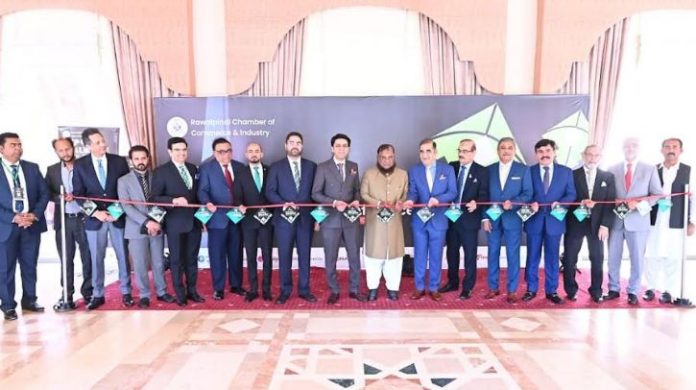
ISLAMABAD, MAY 19 /DNA/ – Dr. Asif Jah, Federal Tax Ombudsman was the chief guest at the Inauguration Ceremony of Export Dialogue Pakistan and 16th All Pakistan Chambers Presidents’ Conference organized by the Rawalpindi Chamber of Commerce and Industry (RCCI) at Serena Hotel, Islamabad.

RCCI President Saqib Rafiq, Group Leader Sohail Altaf, Senior Vice President Muhammad Hamza Sarosh, Vice President Faisal Shahzad, Presidents of FCCI and KCCI, former Presidents of RCCI and representatives and speakers from the export sector, among others, were present on the occasion.

FTO, Dr. Asif Jah, in his address, said that it was a great honor to be part of this important initiative from the Rawalpindi Chamber. No doubt, exports are the backbone of the economy. The FTO office has been facilitating the manufacturers and exporters. FTO entertained more than nine thousand complainants during the last one year besides getting a refund of Rs 17.74 billion to aggrieved tax payers. Also, the FTO office under its outreach program has been in coordination and close liaison with chambers across Pakistan. Even 20years old duty drawbacks and rebates issues were resolved through the FTO office.

He appreciated Chief Business Advisor Sohail Altaf, for his promising and effective role in bridging the gap between taxpayers and tax authorities in resolving key issues.

Earlier, Saqib Rafiq, President RCCI, in his opening remarks said that Export Dialogue Pakistan is an initiative aimed at getting recommendations on export enhancement, which ultimately helps in strengthening the national economy. “By prioritizing exports, Pakistan can generate much-needed foreign exchange, alleviate pressure on reserves, and stimulate sustainable economic growth, he added.

‘We want to promote collaboration with Japan’

‘We want to promote collaboration with Japan’

Investment & Other Fields of Mutual Interests for Socio-Economic Development need to be explored: Maryam Nawaz Sharif meets Japanese ambassador

Abid Raza/DNA

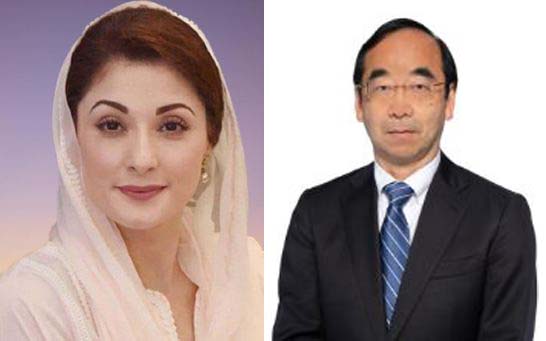
Lahore, 19 May 2024: “Punjab is emerging as a major consumer market. There are good investment opportunities for Japanese companies in Punjab,”said Chief Minister Punjab Maryam Nawaz Sharif in a meeting with Japanese Ambassador, Wada Mitsuhiro, in which all possible opportunities for strengthening trade, business and investment relations were discussed.  She added,”Skilled young manpower of Punjab can perform unprecedentedly in Japanese institutions.”

Exchange of cultural and educational delegations between Punjab and Japan were also discussed in the meeting. Madam Chief Minister said,”People-to-people interaction between Punjab and Japan is indispensable for the development of bilateral relations.” Moreover, the promotion of student-faculty programs between Punjab and Japan was also agreed in principle in the meeting.

Ambassador Wada Mitsuhiro said,”Japan attaches great importance to its relations with Pakistan.” He added,”We are determined to collaborate with Punjab government for the development of technology..”

H.E. Mr. Wada Mitsuhiro apprised Madam Chief Minister,”

Eleven Pakistani students are studying in Japan on MEXT scholarships for Masters/PhD degrees.” He added,”A number of Japanese projects are ongoing for public welfare in Pakistan.”

Nawaz Sharif demands accountability…

Qamar Bashir

By: Qamar Bashir

“Nawaz Sharif’s much-anticipated address to the PML(N) Central Working Committee was filled with expressions of past grievances and complaints against the judiciary, naming specific judges, and against the establishment, though without naming individuals, regarding the removal of his government three times: first in 1993, second in 1999, and third in 2017. He continues to wonder and seek answers about his unceremonious removal from power, which he believes was part of conspiracies against him, his government, and the country as a whole.

He questioned why, in the morning, he was a prime minister and by evening, he was labeled a hijacker. He questioned how a three-person bench, unelected and sitting in the Supreme Court, could declare an elected Prime Minister unfit for office.

He asserted that he would continue to seek answers to these questions for the rest of his life, vowing not to rest until all those involved in conspiracies against him, his government, his party, and his country are brought to justice.”

While indicating the masterminds behind the conspiracies, he pointed to former Chief Justice Saqib Nisar, who, in an audio leak, purportedly stated the intention to keep Nawaz Sharif and Maryam in prison while bringing Mr. Imran Khan to power. Nisar allegedly instructed an accountability judge to decide the case within six months and appointed Ejaz ul Hassan as a monitoring judge.

He then referred to another conspiracy involving Mr. Imran Khan, who was summoned to London by former ISI Chief Zaheer Ul Islam. Pervez Elahi and Tahir ul Qadri were also present, collectively hatching the conspiracy to remove his government through long marches and dharnas in 2013. Although the plan fizzled out, it resulted in significant costs for the nation, including delays in the visit of the Chinese President and the launch of CPEC.”

“Interestingly, all the answers to the questions he posed seem to rest with him, and perhaps no one can answer these questions better than him.

His first question was: How could three unelected judges of the Supreme Court remove an elected prime minister from power? According to him, such an occurrence had never happened anywhere else in the world.”

He has been the prime minister for three terms, he should have brought a constitutional amendment to give immunity to the prime minister from being removed by judges but he did not do so.  There are many countries which have granted immunity to the Prime Ministers and the presidents. France’s Constitution grants the President immunity from prosecution during their term, while Italy’s Parliament once passed a law granting Prime Minister Silvio Berlusconi immunity. In Kenya, the President is provided immunity from criminal proceedings during their tenure, and the Philippines’ Constitution offers similar protections to its President.

The claim that “nowhere in the world judges remove elected prime ministers” is not accurate. Courts have played a crucial role in removing elected officials in various countries. In Pakistan, Prime Minister Yousaf Raza Gillani was disqualified by the Supreme Court in 2012 for contempt of court, Thailand’s Constitutional Court removed Prime Ministers Samak Sundaravej in 2008 for a constitutional violation and Yingluck Shinawatra in 2014 for abuse of power. Italy’s Prime Minister Silvio Berlusconi faced multiple legal challenges, leading to his resignation in 2011. In South Korea, the Constitutional Court upheld the impeachment of President Park Geun-hye in 2017 amid a corruption scandal.

His second question was why his government was removed three times during his political career.

“The answer to this question also rests with him. All the parties and leaders of the country have been utilizing the establishment to achieve political objectives. The establishment has become so powerful and has wielded these powers for so long that it now assumes the role of kingmaker and is reluctant to relinquish this influence.  PML(N), under his leadership, allegedly benefited the most from the establishment’s role as kingmaker. Analysis, opinion-makers, political scientists, and election watchdog organizations are largely of the opinion that without the establishment’s outright support, PML(N) would not have been able to form governments at the center and in Punjab.  If he had learned a lesson, he would have refused the establishment’s help for his return to the country, absolving himself of all cases and playing a decisive role in winning his seat. He should have agreed to PTI’s demand that the election result should have been based on Form 45 and not on Form 47, which is derived from Form 45 and was allegedly manipulated. If he and PML(N) do not learn to refrain from seeking the establishment’s help, then what happened to Nawaz Sharif and what is currently happening to Imran Khan will continue unabated.”

His third question was that when the politicians have been subject to lethal accountability processes both by the courts and the establishment, why the judges and the establishment are out of the purview of the accountability. The answer to this question also rests with him.

While Nawaz Sharif’s three terms as Prime Minister saw significant political events, his failure to implement necessary reforms for ensuring the accountability of judges and the military remains a critical oversight. To address this, several constitutional reforms could be introduced: establishing an independent accountability commission to oversee all branches of government, implementing a robust judicial accountability process through an independent judicial council, subjecting military officials to civilian judicial review, strengthening parliamentary oversight committees, protecting whistleblowers who expose misconduct, mandating regular asset declarations for judges and military officials, and reinforcing civilian control over the military. Examples from countries like the United States, India, and South Korea demonstrate that these measures can promote transparency and accountability, ensuring balanced governance and reducing corruption in all branches of government.

“Now that PML(N) is once again in power, he should introduce constitutional reforms to end his quest for seeking answers.”

By: Qamar Bashir

Former Press Secretary to the President

Former Press Minister to the Embassy of Pakistan to France

Former MD, SRBC

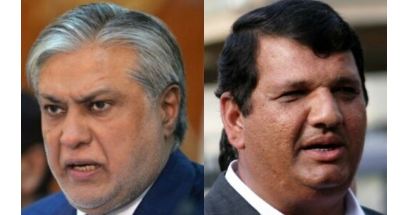
FM Dar, Amir Muqam to leave for Bishkek to ‘support’ Pakistani students after mob violence

FM Dar, Amir Muqam to leave for Bishkek to ‘support’ Pakistani students after mob violence

ISLAMABAD, MAY 18: Deputy Prime Minister and Foreign Minister Ishaq Dar and Kashmir Affairs Minister Amir Muqam will depart for Kyrgyzstan capital of Bishkek to support Pakistani students after several foreigners were subjected to mob violence late on Friday night.

Kyrgyz police said they had mobilised forces in the Central Asian nation’s capital yesterday to quell the violence, in which hundreds of Kyrgyz men attacked buildings housing foreign students, including Pakistanis.

What we know so far

Locals attack international students after video of fight with Egyptians goes viral on social media
Kyrgyz media outlet describes violence as “protest against foreigners”
Kyrgyz deputy PM meets Pakistan ambassador, assures situation is under control
Pakistan embassy says 5 Pakistanis injured, asks nationals to remain indoors; India issues similar instructions
FO hands demarche to Kyrgyz envoy
PM Shehbaz orders FM Dar, Kashmir Affairs Minister Amir Muqam to go to Bishkek
According to Pakistan’s embassy in Bishkek, foreign students living in the Kyrgyz capital, including those from Pakistan, were attacked by locals in the aftermath of their brawl with Egyptian nationals on May 13.

Kyrgyz private media outlet 24.kg reported that a “spontaneous protest against foreigners” that began last night in Bishkek ended this morning after police came to an agreement with the rioters and they dispersed a little later.

The report quoted the Kyrgyz health ministry as saying 29 people were injured in the violence. The country’s foreign ministry, meanwhile, said 14 foreigners were discharged from hospitals after treatment.

The Pakistani embassy in Bishkek reported there were no deaths. “Moreover, Kygyz Ministry of Internal Affairs has also issued press releases stating that the situation is under control,” it said.

A statement carried by state-run Pakistan Television said Prime Minister Shehbaz Sharif decided to send Dar and Muqam to Bishkek after monitoring the situation throughout the day and remaining in touch with the ambassador in Kyrgyzstan.

The two will leave for the Kyrgyz capital on Sunday morning via a special flight.

“Despite the satisfactory situation, it has been decided to send this delegation to provide necessary support and facilities to Pakistani students.

“The foreign minister will hold meetings with senior government officials in Bishkek and ensure the provision of medical facilities to the injured students,” the statement said, adding that Dar will also review issues regarding repatriation of Pakistani students.

An earlier statement from the Prime Minister’s Office said PM Shehbaz ordered Muqam to go to Bishkek immediately to provide assistance and support to Pakistani students.

“Engineer Amir Muqam will meet Pakistani students, listen to their problems and ensure that Pakistani students do not face any kind of difficulties in the current situation,” the premier said.

He added that the embassy should ensure support of the injured Pakistani students with the best treatment facilities.

The embassy “will not leave the sons and daughters of Pakistan alone in difficult times”, PM Shehbaz said.

He further said that officials should ensure the immediate return of those students who wanted to return to Pakistan at the government’s expense.

PM Shehbaz earlier said his office was in touch with the Pakistani embassy and “constantly monitoring the situation”.

“Deeply concerned over the situation of Pakistani students in Bishkek, Kyrgyzstan. I have directed Pakistan’s ambassador to provide all necessary help and assistance,” the PM wrote on X.

FM Dar earlier today said the reports of mob violence against Pakistani students in Bishkek were “extremely concerning”.

“We have established contact with the Kyrgyz authorities to ensure the protection of Pakistani students,” he said in a post on X.

“I have instructed our ambassador to Kyrgyzstan to fully facilitate them.”

Muqam also said that the Pakistani government was in contact with the Kyrgyz authorities to ensure the protection of its students in the incidents of violence in Bishkek.

In a statement, the minister expressed concern over the violent clashes in Kyrgyzstan and asked the students to stay in touch with the Pakistan embassy, adding that the safety of Pakistani students was more important to the government

He confirmed that no Pakistani student died in the violence.

KTC rubbishes market report as false, fabricated

KTC rubbishes market report as false

ISLAMABAD, May 18 (DNA): Khyber Tobacco Company (KTC) has taken an exception to a report “Pakistan Cigarette Market Assessment 2024” by Ipsos Pakistan and described it as false and fabricated.
 
The KTC in a statement issued here said KTC is a leading cigarette manufacturing company in Pakistan, and “is compelled to address the public regarding the baseless and defamatory allegations levelled against it” by Ipsos.
 
“The said report contains unsubstantiated claims and defamatory remarks regarding KTC’s business practices. These false allegations…have caused significant harm to KTC’s reputation and business interests,” it said.
 
KTC vehemently denies all accusations made in the report and asserts its steadfast commitment to compliance with all regulatory requirements, it added. 
 
“We assert with pride that we are among the preeminent national cigarette manufacturing entities, employing a workforce exceeding 400 individuals within the country, and serving as Pakistan’s foremost tobacco exporter during the fiscal year 2022-23. These factors significantly bolster our contributions to the national exchequer, in direct contradiction to the assertions made by Ipsos,” says KTC.
 
“Besides, KTC was among the initial proponents of executing the track and trace agreement with the Federal Board of Revenue (FBR), as evidenced by public records. The company has cooperated fully with regulatory authorities, including the FBR, and maintains a robust system of internal controls to ensure compliance with all applicable laws and regulations,” it says.
 
“KTC’s manufacturing units are subject to stringent oversight by FBR officials, with monitors stationed on the production floor,” it said.
 
“The defamatory nature of the report has not only harmed KTC’s reputation but has also triggered a detrimental media campaign against local cigarette manufacturers. KTC’s name, synonymous with quality and compliance, has been unfairly tarnished by these baseless allegations,” it says.
 
It says that “formal legal notices concerning defamation have been appropriately served to Ipsos Pakistan and its parent entity located in Paris, France.”
 
The KTC statement goes on to claim that “It has been brought to our attention that Ipsos Pakistan conducts its business operations within Pakistan through a single-member company (SMC) named ASB Associates, lacking a registered presence within Pakistan.”
 
“The evident non-compliance of Ipsos with established legal protocols within Pakistan is substantiated and verifiable,” it says.
 
“We remain steadfast in our commitment to upholding the highest standards of integrity and compliance across all facets of our operations, and we extend our gratitude for the continued support and trust of our esteemed clientele and stakeholders,” it says.

Stay Connected

64FansLike
60FollowersFollow

Latest Reviews

Exchange Rates

USD - United States Dollar
EUR
1.17
GBP
1.35
AUD
0.72
CAD
0.73