Home Blog Page 918

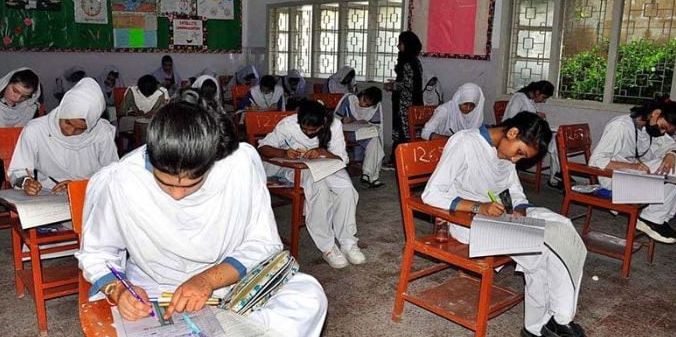
Intermediate Exams in Karachi to Start on June 1

Intermediate Exams in Karachi to Start on June 1

KARACHI, MAY 22: Board of Intermediate Education, Karachi (BIEK) Chairman Prof Nasim Ahmed Memon announced the exam schedule.

The intermediate exams will begin on June 1.

It is not possible to conduct them from May 28, said the chairman.

Memon said the board sought permission to extend the exams for four days.

He added that 21 higher secondary schools were set up as exam centres.

Intermediate exams will be held in the morning.

Matric exams are scheduled for the evening.

Matric exams were postponed due to hot weather.

Postponed papers will be taken from May 28 in the same centres.

It is not possible to hold matric and intermediate exams at the same time.

Provincial Minister for Universities and Boards Muhammad Ismail Rahoo has called a meeting about this.

Chairmen of both boards will attend the meeting.

Pakistan firmly upholds one-China principle: President

Zardari forms committee for talks with electables

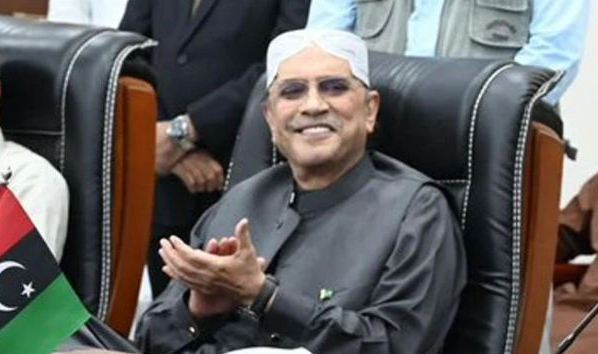
ISLAMABAD, May 22 (DNA): President Asif Ali Zardari reiterated Pakistan’s firm support for the one-China principle. He stated that Pakistan always chooses to stand on the right side of history.

“Pakistani people love China as there is no conditionality between us,” said President Zardari.

He made these remarks in an interview with Chinese media published on Wednesday.

The interview marked the 73rd anniversary of diplomatic relations between China and Pakistan.

This was President Zardari’s first interaction with foreign media after being re-elected in March.

Recalling past leaders’ rapport, Zardari mentioned his late father-in-law, former Prime Minister Zulfikar Ali Bhutto.

“Bhutto told the nation to look East, to look towards China,” Zardari said.

During his first term, President Zardari visited China nine times.

He reaffirmed Pakistan’s stance against any form of “Taiwan independence.”

“Taiwan is part of China. There’s no other way,” Zardari stated.

Pakistan will always stand with China and safeguard China’s core interests.

Zardari also commented on the development of Gwadar Port.

He noted significant progress at Gwadar Port since the launch of CPEC 11 years ago.

The Port welcomes investors from all over the world, Zardari said.

He mentioned Pakistan’s encouragement for more schools to adopt Chinese language into their curriculum.

Zardari emphasized the importance of strengthening people-to-people exchanges between the two countries.

He called for more policies to facilitate movement between Pakistan and China.

Appreciating China’s achievements, Zardari highlighted the importance of policy continuation.

He expressed Pakistan’s hope to be more involved in China’s development process.

Joint action committee rejects Punjab defamation bill

Joint action committee rejects Punjab defamation bill

Khayam Abbasi

ISLAMABAD: More than 80 civil society organisations registered their protest on Tuesday against the Punjab Defamation Bill (2024) passed by the provincial assembly a day earlier.

The provincial assembly yesterday passed the Defamation Bill, 2024, rejecting all amendments proposed by the opposition amid protests by the PTI-backed Sunni Ittehad Council and journalists covering parliamentary proceedings.

The SIC members tore apart copies of the bill after the House passed it through a voice vote.

Vetted by the Special Committee-1 in the absence of standing committees, the bill was tabled by Punjab Finance Minister Mujtaba Shujaur Rehman after the PML-N government refused to delay voting on the bill, even for a week, at the request of journalists.

On the occasion, the press gallery members walked out of the assembly to boycott the proceedings. They rejected the bill as a “curb on free media”.

A press release issued by civil society and journalists Joint action committee said they outrightly reject the Punjab Defamation Bill, given that it was a gross infringement on the fundamental rights of freedom of expression and press freedom.

It said that the bill served as a “draconian and regressive” tool to suppress dissent and criticism and particularly targeted journalists and the wider public.

“Its explicit mandate of safeguarding ‘public officials’ against defamation is nothing short of an authoritarian manoeuvre, designed to shield those in power from accountability and scrutiny,” it said.

It said that the bill’s provisions, which allow defamation actions to be initiated without proof of actual damage and imposing extortionate fines, amounted to nothing less than legal intimidation tactics.

Furthermore, the bill’s broad definition of “journalists” and “newspapers” to include social media users set a dangerous precedent for stifling freedom of expression online, the statement said.

“The proposed punishments, including the possibility of blocking social media accounts, are disproportionate and antithetical to democratic principles,” it said.

The alliance urged the Punjab government to heed civil society and stakeholders’ voices and reverse the effort to pass another regressive legislation akin to Peca (Prevention of Electronic Crimes Act).

It called for the defamation bill to be “scrapped entirely”, demanding the governor of Punjab to not sign the bill.
It said that future attempts to address disinformation and hate speech on online platforms should be initiated with inclusive consultations at the national level.

Opposition leader Shibli Faraz, Barrister Ali Zafar and other PTI leaders walked out of the Senate on account of the defamation bill passed by the Punjab assembly.

“The bill brought forward by the Punjab government regarding media is condemnable,” Faraz said while speaking to the Senate.

ISSI hosts Roundtable with SAARC Secretary General

ISSI hosts Roundtable with SAARC Secretary General

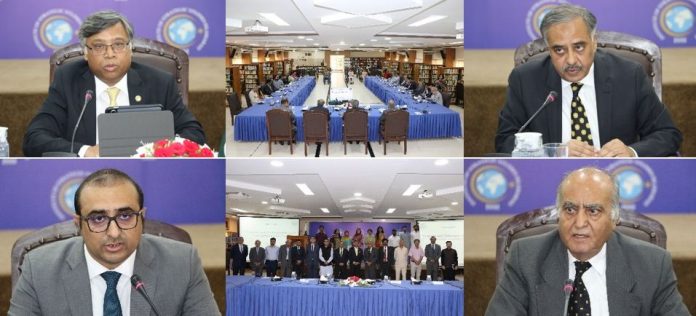
ISLAMABAD, MAY 21 /DNA/ – The India Study Centre at the Institute of Strategic Studies, Islamabad (ISSI) organised a Roundtable Discussion, titled “Prospects and Challenges of Regional Cooperation in South Asia”, with Ambassador Golam Sarwar, Secretary General of South Asian Association for Regional Cooperation (SAARC). The event was attended by diplomats, academics, practitioners, and researchers of various Islamabad-based think-tanks and Universities.

DG ISSI Ambassador Sohail Mahmood delivered welcome remarks.

During the Roundtable discussion, the importance of SAARC for the region was highlighted by the participants. It was noted that SAARC is a people-centric organization. It has played an instrumental role in addressing myriad of common challenges faced by member states like food insecurity, growing population, natural disasters, and deficient intra-regional trade and connectivity. Currently, among other things, the organisation envisions a ‘SAARC Youth Charter’, which will help promote cultural cooperation among youth of member states.

The participants focused on the need for improving implementation of SAARC’s decisions; strengthening economic cooperation and trade; and deepening regional integration and connectivity. The participants shared their perspectives on the progress made by SAARC so far and suggested ways to revive the SAARC process to make it a viable platform for regional cooperation. The need for resolving long-standing disputes and reducing bilateral tensions was emphasized by participants as a means of creating a conducive environment for regional cooperation.

Chairman BoG ISSI, Ambassador Khalid Mahmood, made concluding remarks.

WHO challenges illicit tobacco trade numbers in Pakistan, says trade share is 23%

tobacco

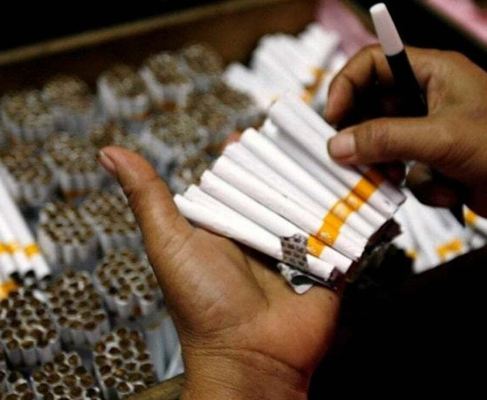
ISLAMABAD, MAY 21 /DNA/ – The World Health Organization (WHO) has contradicted claims by multinational tobacco companies regarding the illicit cigarette trade, revealing that the actual figure in Pakistan stands at 23 percent.

“Overall, the illicit trade of cigarettes in Pakistan accounted for 23.1% of the total trade. Locally produced cigarettes without a stamp of the tax authority are considered illicit products and account for 10.4% of the total number of packs,” said WHO study titled “Study on Incidence of Illicit trade of cigarettes in Pakistan: A case study for Islamabad Capital Territory”.

It further said that, in terms of the number of packs with counterfeit tax stamps as a percentage of total packs, it is 1.9%, and smuggled cigarettes account for 10.7% of the total consumption.

The latest report by the world health body has debunked myths and the tactics employed by multinational tobacco companies to evade taxes.

In the past, there had been several studies on the volume of illicit trade in Pakistan but they were conducted before the Track and Trace System was enforced in the country (July 2022). These studies found that illicit trade market in Pakistan ranges from 9 to 17% but they did not estimate the extent of the counterfeit issue, according to the WHO.

The report quoted data from Pakistan Bureau of Statistics (PBS) and said that tax evasion on domestically produced cigarettes in 2015-16 amounted to Rs.53.8 billion. An amount of Rs. 38.9 billion (72.7%) was evaded by the legitimated sector by under-reporting the production and Rs. 14.6 billion (27.3%) was evaded, it added.

“The most effective way to reduce tobacco consumption is to increase the price of tobacco products through higher taxes. In Pakistan, the cigarette industry claims that higher taxes trigger illicit trade, claiming smokers do not quit and opt for non-duty-paid cigarettes because they cost less,” the study said.

The world’s top health body emphasized that the prices of tobacco products in Pakistan should be increased by taxing the tobacco industry.

Anti-tobacco activists are pressing the government to raise tobacco taxes to 70% of the retail price, in line with WHO guidelines, to combat the alarming rate of tobacco consumption particularly among the youth.

Malik Imran Ahmed, Country Head of the Campaign for Tobacco-Free Kids (CTFK), said, “With over 60% of the population comprising youth, it’s crucial for the government to protect them from the ills of tobacco use,” he said, “as the move is expected to generate additional revenue, surpassing Rs 200 billion by year-end,”

Jordan envoy visits RCCI, desires enhancing trade ties with Pakistan

Jordan envoy visits RCCI

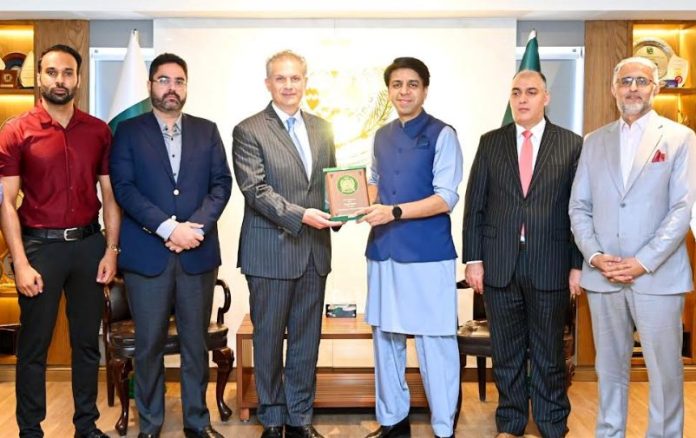
RAWALPINDI, MAY 21 /DNA/ – The Ambassador of Jordan, Maen A.M. Khreasat, paid an official visit to the Rawalpindi Chamber of Commerce and Industry (RCCI) and called on President RCCI, Mr. Saqib Rafiq. The meeting was attended by Senior Vice President Muhammad Hamza Sarosh, Former President Malik Shahid Saleem, Executive Committee member Malik Mudassar Maqbool and Ch. Akram.

During the meeting a wide range of areas for further enhancing bilateral trade and economic relations between Jordan and Pakistan were also discussed. 

Ambassador Maen A.M. Khreasat said that Jordan valued its historical and friendly relations with Pakistan and was keen to further enhance its trade ties with it for mutual benefit.

He said that his country was keen to expand its trade ties with Pakistan through enhanced bilateral cooperation across various sectors including tourism, Agricultural, hospitality and health services.

During the meeting, President RCCI, Mr. Saqib Rafiq, assured H.E. Dr. Maen A.M. Khreasat of RCCI’s full support in fostering stronger economic and trade relations between Pakistan and Jordan. He emphasized RCCI’s commitment to facilitating joint ventures, promoting bilateral trade, and enhancing investment opportunities. President Rafiq highlighted the chamber’s readiness to assist in organizing business forums, trade delegations, and cultural exchange programs to strengthen the ties between the two nations. He reiterated that RCCI would work tirelessly to support initiatives aimed at mutual growth and development, ensuring a prosperous partnership between Pakistan and Jordan. On the occasion, matters related to Strengthening Bilateral Trade, Economic Partnerships, Tourism Promotion, Investment Opportunities, Networking and Collaboration & Educational Collaborations were discussed. In the end President Saqib Rafiq presented chamber memento to Maen Kherasat. 

Health expert advises people to avoid exposure to sun

Health expert advises people to avoid exposure to sun

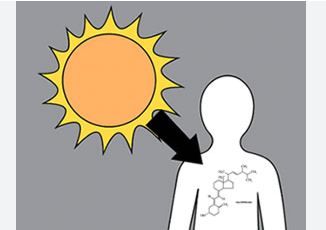
SUKKUR, MAY 21 (DNA) — Prominent health expert, Dr Abid Ali Shah advised people, especially those who are unwell and sensitive to heat, to avoid exposure to sun. Talking to media on Tuesday, he said heatstroke can cause death or permanent organ damage or disability if not properly treated in time.

It is very important that a person’s body temperature stays in the range of 36.1, 37.8°C. If one’s body temperature rises above this, a person may develop a heat-related illness, he said and added that the best way to prevent heat-related illness is to drink plenty of water.

Those suffering from lung infection, seizure, fever and asthma must take more care and limit their outdoor activities, he said. He suggested staying hydrated, organising outdoor activities during cooler hours of the day, limiting exposure to direct sunlight during the hottest hours and using ultraviolet eyewear and sun lotion.

He advised people to maintain good hygiene in order to avoid possible outbreak of the epidemic. Dr Abid Ali Shah stressed increased awareness among people also played a major role in preventing mass casualties as most people avoided direct exposure to the sun, remained indoors and used other precautionary measures.

He said citizens should wear loose light colored clothing to reduce heat absorption and facilitate sweat evaporation and heat dissipation. — DNA

PTI spokesperson Raoof Hasan injured in Islamabad attack

PTI spokesperson Raoof Hasan injured in Islamabad attack

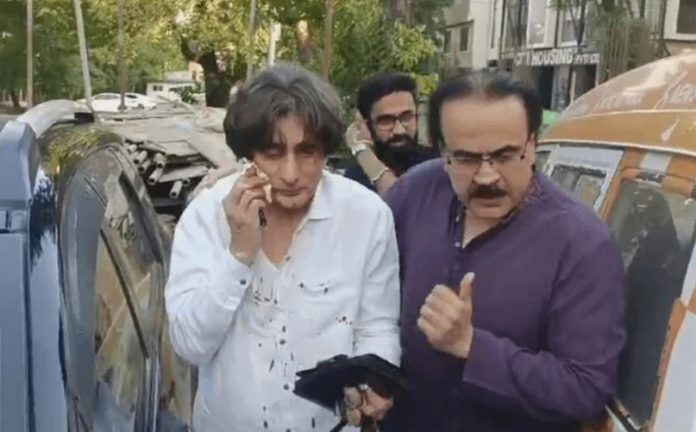
ISLAMABAD, MAY 21: PTI Central Information Secretary Raoof Hasan was injured in an attack in Islamabad on Tuesday.

“Very shameful and reprehensible!!” the party said in a post on X. Video footage shared by the party showed Hasan bleeding from the face with anchor Shahid Masood with him.

“This reprehensible act of violence is an assault on free speech, democracy, and the rule of law.

“Such shameful tactics will not deter Raoof Hasan or the PTI from our cause. Attempts to intimidate or silence us will only strengthen our resolve to fight for a just and equitable society,” the party said, adding that he was attacked outside the office of a private media channel.

A statement from the Islamabad police spokesperson said Hasan was attacked with a blade outside the office of a private TV channel. “Hasan was attacked on the face with a blade by transgenders according to eyewitnesses,” the statement said.

It added that the police were present on the spot and collecting evidence. “Strict action will be taken against the transgenders who have done this,” it said.

CCTV footage posted by the PTI seemed to corroborate the police account, showing Hasan being attacked by four individuals who appeared to be from the transgender community.

The party questioned who was the “ringleader” for the assailants.

Leader of the Opposition in the Senate Shibli Faraz raised the incident in today’s Senate session and said he wanted an immediate reaction from Law Minister Azam Nazeer Tarar on the issue because “this incident that happened is very serious that the state of affairs has reached this extent that the spokesperson of Pakistan’s biggest party is physically attacked. This is unacceptable.”

He called on the law minister to give his opinion on the matter and give the relevant orders. PTI Senator Barrister Ali Zafar said the party was staging a walkout.

Tarar said multiple aspects of the case needed to be dealt with as per the law, adding that it was the government’s responsibility to ensure that citizens were dealt with as per law.

He said there would be legal proceedings on any report filed by the aggrieved party. Tarar said he would share information from Interior Minister Mohsin Naqvi and the Islamabad police chief shortly.

Later, Faraz criticised the treasury benches for not even expressing verbal support for Hasan and condemning the incident. He said the incident was “no small matter” and held great symbolic value.

Calling for a complete investigation within 24 hours, Faraz said the party expected the government to give an incident report in Wednesday’s Senate session as well as a briefing from the interior minister on the culprits and their arrests.

PTI leader Hammad Azhar said the attack by “unknown persons was a sign of cowardice and panic”.

He also posted a picture of a blade, allegedly used to attack the PTI spokesperson. “Panic is at its peak,” he said.

“The worst period of fascism continues in Pakistan,” PTI leader Qasim Suri said while addressing the attack.

Journalist Mubashir Zaidi strongly condemned the attack.

Former PTI leader and federal minister Fawad Chaudhry said the attack was an “assault on Pakistan’s political values”, adding that all politicians irrespective of party or political affiliation should strongly condemn the incident.

Iranian Ambassador thanks Pakistan for condolences on President Raisi’s death

Iranian Ambassador Reza Amiri Moghadam

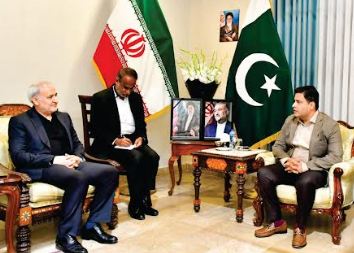
ISLAMABAD, MAY 21 /DAN/ – Iranian Ambassador Reza Amiri Moghadam thanked the Government of Pakistan and its people.

He appreciated their sympathies and solidarity over the death of President Seyed Ebrahim Raisi.

President Raisi, Foreign Minister Hussain Amirabdullahian, and other dignitaries died in a helicopter crash.

The Ambassador spoke with Ahsan Zafar Bakhtawari, President of the Islamabad Chamber of Commerce and Industry (ICCI).

Bakhtawari visited the Embassy with a delegation to offer condolences.

The Ambassador called Pakistan a great friend of Iran and promised to continue President Raisi’s vision.

He assured that agreements made during President Raisi’s recent visit to Pakistan would be implemented.

He thanked Pakistan’s President and Prime Minister for their concern and grief over the tragedy.

Bakhtawari praised President Raisi as a bold and dedicated leader of the Islamic world.

He mentioned Raisi’s efforts for peace and the restoration of diplomatic ties with Saudi Arabia.

Bakhtawari highlighted Raisi’s clear stance on the Palestine issue.

He noted that Raisi aimed to boost Pakistan-Iran trade to $10 billion.

Bakhtawari said Raisi’s death is a loss for the entire Muslim world and prayed for his soul.

He registered his sentiments in the Embassy’s Condolence Book.

Former ICCI President Zafar Bakhtawari praised Raisi’s contributions to Pakistan-Iran relations.

Executive member Maqsood Tabish mentioned Raisi’s rise from an orphan to President of Iran.

ICCI members Imran Chheena and Khalid Chaudhry were also part of the delegation.

Hungary’s Anti-Corruption Protests

Hungary’s Anti-Corruption Protests

Dr. Muhammad Akram Zaheer

A couple of weeks ago, the mass demonstrations in Budapest where protesters expressed their resentment against alleged financial corruption that they believed was rampant in the country and possibly facilitated or ignored by the government. These protests were immense, peaking at a reported 100,000 participants. Since then, there have been four or five more demonstrations, including some in mid-sized towns where Prime Minister Viktor Orban’s ruling party enjoys significant support. This reminded me of the large uprisings in other countries, such as the 1968 demonstrations in France that ultimately forced Charles de Gaulle from office when security forces could not suppress the movement. In Budapest, the protesters appeared to be predominantly anti-Orban, and the police seemed focused on maintaining peace rather than forcibly removing the demonstrators. Initially, I perceived this as a sign that Orban’s grip on power was weakening, given the apparent lack of strong resistance from his side. However, I must admit that I was mistaken in my assessment. I failed to recognize the fundamental differences between the context of Budapest in 2024 and Paris in 1968.

At a demonstration near Kossuth Lajos Square in downtown Budapest, Magyar told the crowd that he had shared a recording with investigators and urged them to demand justice and an investigation into the Schadl-Volner case, a major corruption scandal in Hungary. Thousands of people waved Hungarian flags and reacted loudly as Magyar read a statement accusing senior officials from the ruling Fidesz party of corruption due to their long hold on power. The crowd chanted, “Jail them! Jail them!” in response. Since 2010, Prime Minister Viktor Orban and the Fidesz party have dominated Hungarian politics, using their supermajority to change election rules, control the judiciary, limit independent media, and weaken the role of political opponents.

Magyar publicly broke with Fidesz after a scandal involving a pardon led to the resignation of Hungarian President Katalin Novak and caused Magyar’s estranged ex-wife, former Justice Minister JuditVarga, to withdraw from politics. Varga, who had planned to lead Fidesz in the upcoming European Parliamentary elections, claimed that Magyar’s recording was forced and part of a long-standing scheme to blackmail her, and she accused him of abusing her during their marriage. Magyar has consistently denied these accusations. On March 26, Magyar spent several hours at the Prosecutor-General’s Office and stated that the recording implicates officials in several crimes. He also mentioned that he possesses many more recordings related to the Schadl-Volner case and intends to share them with investigators. The Schadl-Volner case involves possible illegal activities by GyorgySchadl, the head of the chamber of judicial officers, and a former state secretary at the Justice Ministry, Pal Volner, and reportedly includes wiretaps and classified information.

Magyar believes that prosecutors have no other choice but to summon several government members as witnesses and insists that they must summon the prime minister as well. He argues that Prime Minister Orban is aware of much more wrongdoing than Magyar and his ex-wife knew. Magyar has accused Antal Rogan, a loyalist of Orban who manages the prime minister’s cabinet office and government messaging, of having significant influence within a corrupt political group. Fidesz officials have dismissed Magyar’s accusations as baseless and an attempt to harass his ex-wife. Magyar has called for a major rally in Budapest on April 6, hoping it will be the largest demonstration in the last 14 years to push for change. His previous call for an anti-government protest on March 15, a national holiday, drew an estimated 35,000 people, where he announced his intention to start a new political party. This rally followed significant anti-government protests in February, sparked by a controversial presidential pardon granted to a man convicted of helping cover up sexual abuse at a children’s home.

The Hungarian political landscape, shaped by Fidesz’s decade-long supremacy and its strategic alterations to the political system, remains resistant to immediate upheaval. However, the sustained public demonstrations and the mounting pressure from figures like Magyar indicate a brewing discontent that could eventually lead to significant shifts in Hungary’s political dynamics. While the immediate future may not mirror the swift changes seen in 1968 France, the persistent and organized efforts of the Hungarian opposition could pave the way for a gradual transformation in the country’s governance.

Stay Connected

64FansLike
60FollowersFollow

Latest Reviews

Exchange Rates

USD - United States Dollar
EUR
1.17
GBP
1.35
AUD
0.72
CAD
0.73