Home Blog Page 916

When there is no rule of law

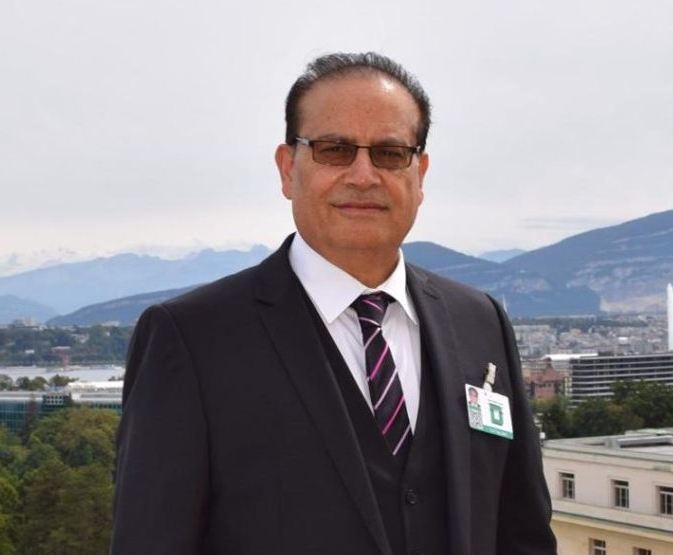
Qamar Bashir

By: Qamar Bashir

Pakistan’s ranking on the World Justice Project’s Rule of Law Index was 129th out of 140 countries, placing it among nations like Myanmar and Sudan, where the rule of law is severely compromised​​. The absence of rule of law creates a society marked by instability, injustice, and suffering. It undermines social cohesion, economic development, and human rights, leading to a deteriorating quality of life and widespread despair. The rule of law is essential for creating a stable, just, and prosperous society where individuals can thrive and communities can develop harmoniously.

In a society where laws are trampled, selectively employed, and the government and its institutions become above the law, numerous adverse consequences arise, leading to instability and suffering. Without the rule of law, a society faces chaos as individuals and groups may resort to violence or take matters into their own hands to protect their interests. Crime rates tend to increase, and personal safety becomes a significant concern.

The absence of rule of law erodes trust in institutions and government. People lose faith in their leaders and the fairness of the system, which can lead to social unrest and political instability. Public cynicism and apathy towards civic engagement increase, weakening the social fabric.

Those in power can govern arbitrarily, making decisions based on personal whims rather than established legal principles. This leads to corruption, favoritism, and abuse of power, as leaders and officials are not held accountable for their actions. In a lawless society, justice is elusive. Victims of crimes and abuses have little hope for redress, and perpetrators often act with impunity. This perpetuates cycles of violence and injustice, as there are no mechanisms to hold wrongdoers accountable.

Countries lacking rule of law often face international isolation. Other nations may impose sanctions or restrict diplomatic and economic ties, viewing the state as unstable and unpredictable. This further exacerbates economic difficulties and hinders development. Sustainable development is severely hindered without the rule of law. Education, healthcare, infrastructure, and other critical sectors suffer from neglect and corruption, preventing long-term progress and improvement in quality of life for the population.

In a country where there is widespread perception powerful Supra Executive(SE)  in a country has co opted legislatures, intimidate the judiciary, use the civil bureaucracy as tool to perpetuate terror, and where free press is throttled,  the country faces  serious and far-reaching implications for the democratic fabric and institutional integrity of the country.

Intimidating the judiciary undermines the principle of judicial independence, a cornerstone of democracy. When judges feel threatened or coerced, they may not be able to make impartial decisions based on the law and constitution. This can lead to a lack of fair trials, miscarriages of justice, and an overall erosion of public trust in the legal system. It may also discourage qualified individuals from serving in the judiciary, further weakening the institution.

When a country’s legislature is co-opted, it effectively diminishes the checks and balances that are essential to a functioning democracy. Legislatures are meant to represent the will of the people and provide oversight of the executive. If they are co-opted, they may fail to hold the government accountable, pass legislation without proper scrutiny, and ignore the needs and rights of the populace. This can lead to the enactment of laws that benefit a select few rather than the public at large and erode democratic norms

A free and independent press is crucial for transparency and accountability in governance. When the government throttles the free press, it limits the flow of information, restricts public discourse, and hampers investigative journalism. This can prevent the exposure of corruption, abuses of power, and other governmental malfeasance. Without a free press, citizens are left in the dark about the actions of their leaders, undermining informed public participation and eroding trust in democratic institutions.

When there is widespread perception that the government itself is involved in breaking the rule of law, abducting its own people, destroying properties and businesses, attacking its citizens using proxies, torturing individuals, abducting political activists, and undermining political parties while promoting others, the implications for the country, society, and its people are severe and multifaceted.

Trust in leaders and institutions erodes, leading to a breakdown in the social contract and a climate of suspicion and fear. Social and political instability becomes rampant, with protests, strikes, and civil disobedience escalating into violence. Human rights abuses create widespread fear and repression, stifling free speech and democratic engagement. Economic decline follows as instability deters investment, increasing poverty and unemployment. International isolation through sanctions and trade restrictions cripples the economy further, while diplomatic relationships deteriorate. Public disillusionment grows, leading to emigration of skilled individuals and further weakening the country’s prospects for recovery. The legal system breaks down, losing credibility and the ability to enforce laws impartially, resulting in corruption and lawlessness. Long-term consequences include generations growing up in an environment where violence and injustice are normalized, making the rebuilding of trust and restoration of the rule of law a challenging and lengthy process.

On the other hand, In a society where the government, institutions, and individuals follow the rule of law, numerous positive outcomes emerge. Trust in institutions and government strengthens, fostering social and political stability. Citizens are confident that justice is served impartially, which enhances personal safety and reduces crime. Human rights are protected, allowing free expression and active civic participation. This stability attracts investment, spurring economic growth and raising living standards. Public engagement increases, with citizens actively participating in the political process and community development. Accountability is maintained through a free and independent judiciary, a free press, and transparent institutions, reducing corruption and ensuring efficient use of public resources. The legislature enacts laws that promote fairness and social welfare, addressing societal issues equitably. A free press keeps the public well-informed, enabling educated decision-making and holding leaders accountable. Social cohesion and equality are strengthened, as everyone is treated equally under the law, fostering a sense of belonging and unity. Ultimately, such a society thrives, achieving prosperity, equality, and cohesion, with trust in leadership and a shared commitment to justice and fairness. Choice is ours.

By: Qamar Bashir

Former Press Secretary to the President

Former Press Minister to the Embassy of Pakistan to France

Former MD, SRBC
Independence Day of Azerbaijan

Independence Day of Azerbaijan

DNA

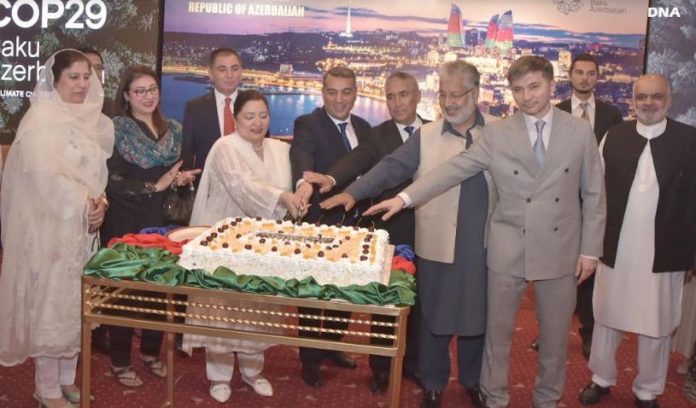
ISLAMABAD: Prime Minister’s Coordinator on Climate Change, Romina Khurshid Alam, Ambassador of Azerbaijan Khazar Farhadov and others cutting cake to celebrate the Independence Day of Azerbaijan.

IHC summons ISI, MI, IB officials on May 29

IHC

Court Reporter

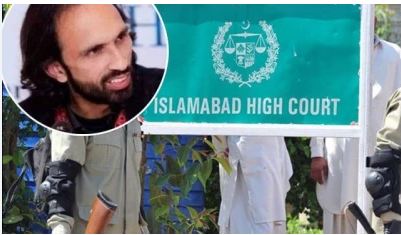
ISLAMABAD, MAY 24 /DNA/ – Islamabad High Court (IHC) senior puisne judge Justice Mohsin Akhtar Kayani on Friday summoned officials from the country’s intelligence agencies and the defence and interior ministries in a case about the recovery of missing Kashmiri poet Ahmed Farhad Shah.

The judge summoned the sector commanders of the Inter Services Intelligence (ISI) and Military Intelligence (MI), the director of the Intelligence Bureau (IB), Law Minister Azam Nazeer Tarar and the defence and interior secretaries in the next hearing on May 29.

The development came as Justice Kayani resumed hearing a petition seeking the recovery of the poet.

The Human Rights Commission of Pakistan had called for the immediate release of Shah, who had been allegedly abducted from his home on May 15.

A petition had been filed by Shah’s wife in the IHC the same day, requesting that he be found and produced before the court and to identify, investigate and prosecute those responsible for his disappearance.

On May 16, Justice Kayani had summoned a report from the defence secretary on the alleged role of intelligence agencies in the poet’s disappearance.

Earlier this week, the judge, expressing dissatisfaction with the “working” of the defence secretary, had called on intelligence agencies to shed the label of culpability in abductions.

Upon seeking an explanation from the defence secretary by 3pm the same day, the court had been informed that Shah was not in the custody of the Inter-Services Intelligence (ISI). Justice Kayani then summoned the defence and interior secretaries in person the next day.

However, on Tuesday, Attorney General of Pakistan (AGP) Mansoor Usman Awan had submitted the defence secretary’s report, stating that the official was sick. The judge again said that the secretary should appear before the court in the next hearing.

Justice Kayani then ordered the AGP to recover the missing poet within four days, which he took “full responsibility” of. Upon being asked about the ISI sector commander’s statement, Senior Superintendent of Police (SSP) Jameel Zafar told the court he could not do so due to the former’s absence.

During today’s hearing, AGP Awan and Islamabad Inspector General (IG) Ali Nasir Rizvi appeared before the court.

The court order, written in Urdu and available with Dawn.com, said: “The AGP was asked [whether] the law enforcement institutions, including ISI and MI, were performing their duties under any law to which the AGP said that the ISI is directly accountable to the prime minister of Pakistan while the MI is associated with the defence secretary and the armed forces of Pakistan.

“Looking at the explanation of this matter, the court considers it necessary that all the institutions should work within their constitutional limits, but in the present situation, we cannot do a comparative assessment of the administrative performance of the ISI with the police, FIA (Federal Investigation Agency) and CTD (Counter-Terrorism Department) until the court is briefed about official practices in institutions such as the ISI and MI, including the way to conduct investigation and inquiry.”

The order said the defence secretary was thus summoned in his personal capacity so he could submit a written explanation to the court on the above matters.

“This would allow the court to clarify the role of the agencies in the jurisdiction of police investigation in the future and lead them to be accountable in the jurisdiction of the court,” the order said.

At the outset of the hearing, AGP informed the court that a few call detail records (CDRs) were available that were being used to trace Shah.

At this, Justice Kayani asked him, “Are you saying that the state has failed?”

To the AGP’s reply in negative, the judge observed, “To recover [the missing person] is the state’s compulsion, otherwise it would be its failure.”

Justice Kayani then asked if the defence secretary was present, to which Awan said he was not as the court order had not mentioned so. “However, he will appear [if summoned],” the AGP assured the judge.

Justice Kayani then ordered: “The defence secretary should appear at the next hearing and explain to us the ISI’s workings.

“How many sector commanders and their sub-ordinates are in the ISI?” he asked, adding that intelligence agencies would no more remain “in hiding”.

The judge reiterated that not recovering Shah was the state’s failure, at which AGP Awan requested the court to not term it a failure: “If we are not able to present him [before the court], I’ll admit that the state has failed.”

At this point during the hearing, Justice Kayani, referring to the police officials present in the court, said they had appeared there as they were “answerable”.

“Transparency in the working is highly important,” the judge observed, noting that while performing their duties, policemen “get beaten and have their uniforms torn apart too”.

“If neither institutions are answerable nor can you make them answerable, what would happen? There must be a structure for agencies [where] someone is answerable to someone,” Justice Kayani noted.

The judge then remarked that at this point, Shah’s recovery was inconsequential compared to “a few things” that he said he would settle.

First batch of 720 Pakistani pilgrims arrives Jeddah

First batch of 720 Pakistani pilgrims arrives Jeddah

ISLAMABAD, MAY 24 (DNA) —Two planes of Saudi Airlines landed at the King Abdulaziz International Airport here on Friday morning carrying 720 intending Pakistani Hajj pilgrims from Karachi and Islamabad under the Road to Makkah Initiative, following the diversion of the pre-Hajj-flight operation from Madinah which concluded the other day.

As they stepped out of the planes, donning their Ihram and reciting the Talbiyah, their voices echoed with longing: “Labbaik Allahuma Labbaik (Here I am, O Allah, here I am!), Labbaik La Sharika Laka Labbaik (Here I am, no partner do You have, here I am), Inna Al-Hamda Wan-Ni’mata Laka Wal-Mulk (Indeed, all praise, grace, and sovereignty belong to You), La Sharika Lak! (No partner do You have).”

The first flight SV-3705, with 370 passengers on board, arrived by 5 a.m. (local time) and the second SV-3727 landed at 6:10 a.m. carrying 350 Hajj pilgrims. Director General Jeddah/Head of Pakistan Hajj Mission Abdul Wahab Soomro, Consul General Khalid Majeed, senior officials of the Consul and the Ministry of Religious Affairs, and representatives of the Saudi government welcomed guests of the Allah Almighty.

The guests of Allah Almighty were greeted with a warm welcome, showered with rose petals and presented bouquets, drinks, dry fruits and a variety of dates. The supporting staff of the Pakistan Hajj Mission was actively present at the airport to provide any kind of assistance to Pakistani Hajj pilgrims.

Under the Road to Makkah initiative, the passengers directly left their hotels avoiding long queues at the immigration counters, and their luggage was shifted automatically to their hotel residences.

In the first phase of the Hajj flight operation, a total of 34,316 Pakistanis reached Madinah by May 23 through 146 flights. From May 24 to June 09, as many as 114 flights will be operating to airlift 34,422 Pakistanis from their major cities to Jeddah. — DNA

Special Event at ISSI to celebrate “Africa Day 2024”

Special Event at ISSI to celebrate “Africa Day 2024”

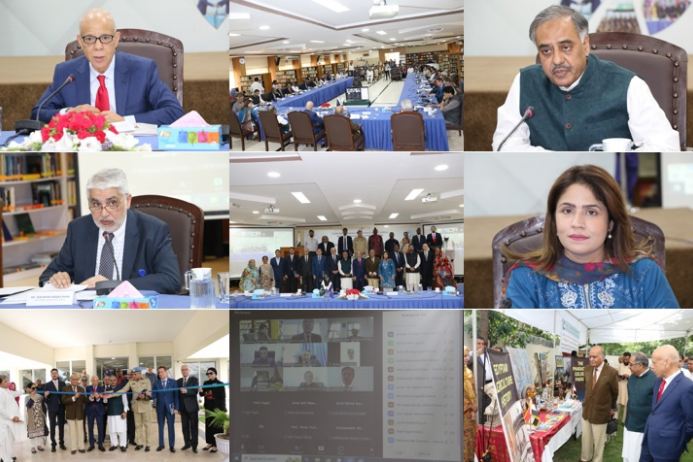
ISLAMABAD, MAY 24 /DNA/ – The Centre for Afghanistan, Middle East & Africa (CAMEA) at the Institute of Strategic Studies (ISSI) organized a special event to celebrate “Africa Day 2024.” The theme was “Pakistan’s Contribution to Peace, Security, and Prosperity in Africa.”

The Speakers included:  Director General ISSI Ambassador Sohail Mahmood; Dean of African Corps/Ambassador of Morocco, Mohammad Karmoune; Additional Secretary (Africa), Mr. Shehryar Akbar Khan; Sector Commander West MINUSCA, Central African Republic (CAR), Brig. Fahad Ayub; President Rawalpindi Chamber of Commerce and Industry (RCCI), Mr. Saqib Rafiq; Senior Research Fellow at Institute of Policy Studies (IPS), Dr. Tughral Yamin;  Senior Vice President Rawalpindi Chamber of Commerce and Industry (RCCI), Muhammad Hamza Sarosh, and Director CAMEA, Ms. Amina Khan.

The Heads of African Missions in Pakistan and Heads of Pakistan Missions in Africa also spoke on the occasion. Academics and members of the business community and students participated in the celebratory event. Stalls exhibiting African products and art work depicting African culture were also set up by African Missions in Islamabad.

During his welcome remarks, Director General Amb. Sohail Mahmood acknowledged contributions from partners including the Africa Division at the Ministry of Foreign Affairs, MO Directorate at GHQ, RCCI, African Missions in Islamabad, African students, and Pakistan’s Envoys in Africa. He highlighted Africa’s progress and the AfCFTA’s impact, reaffirmed Pakistan’s support for Africa’s development, and emphasized the role of Pakistani peacekeeping. Amb. Mahmood detailed Pakistan’s ‘Engage Africa’ policy, which helps strengthen and expand diplomatic and economic ties through new missions and joint initiatives. He stressed the strategic imperative of deepening Pakistan’s partnership with Africa and underscored the importance of a clear vision, consistent policy, and long-term strategy in this regard.   

Director CAMEA, Ms. Amina Khan highlighted the opening of new diplomatic missions in Rwanda, Djibouti, Ghana, Uganda, and Ivory Coast, and Ethiopia’s mission in Islamabad, signifying strengthened bilateral relations. Ms. Khan also commended Pakistan’s UN peacekeeping efforts and stressed the importance of cultural and educational exchanges for lasting partnerships and shared prosperity.

Ambassador Mohammed Karmoune discussed Morocco’s significant role in African peace and development, highlighting its contribution of personnel to UN peacekeeping and involvement in stabilizing regions like Somalia and the DRC. He also emphasized Morocco’s major investments in African infrastructure, banking, and telecommunications, including the Morocco-Nigeria Gas Pipeline, enhancing integration across 30 countries.

Mr. Shehryar Akbar Khan commended Africa’s advancements and Pakistan’s support, noting over 230,000 personnel deployed in UN peacekeeping over six decades, with 4,300 currently active. He highlighted the “Engage Africa” policy that fosters ties through training programs, reaffirming Pakistan’s dedication to Africa’s peace and development.

Brig. Fahad Ayub and Dr. Tughral Yamin praised the dedication and significant role of Pakistani peacekeepers in Africa. Brig. Ayub noted the deployment of 4,000 troops, efforts to increase female participation, and initiatives like agricultural support, highlighting their impartiality and trust earned. Dr. Yamin emphasized the peacekeepers’ professionalism and the challenging conditions they face, underlining the importance of continued support and recognition for their efforts.

Mr. Saqib Rafiq and Mr. Hamza Sarosh emphasized RCCI’s commitment to boosting Pakistan-Africa trade. Mr. Rafiq highlighted successful initiatives like the Pak-Africa Forum and a Cairo business event  that led to several MoUs, ongoing capacity-building efforts, and proposed a Trade Help Desk. Mr. Sarosh noted the nearly $4 billion in trade, potential for growth through the AfCFTA, and underscored Pakistan’s strengths in textiles and agriculture as crucial for entering African markets.

An interactive discussion followed, where representatives from the African Missions based in Pakistan shared their views. Representatives from the Pakistani Missions based in Africa also joined virtually and reiterated the importance of closer ties with Africa and offered their suggestions. At the end, the guests visited all the stalls established by African Missions in Islamabad, displaying African food and other products, which were introduced by the concerned Heads of Missions.

The event was attended by diplomats, practitioners, academics, students, and members of the business community, civil society, and the media.

Movie “Kazakh Khanate–Golden throne” screened at PNCA

PNCA

ISLAMABAD, May 24: /DNA/ – Pakistan National Council of the Arts (PNCA) and the Embassy of Kazakhstan organized screening of a movie titled “Kazakh Khanate –Golden throne” here at PNCA, auditorium on friday.

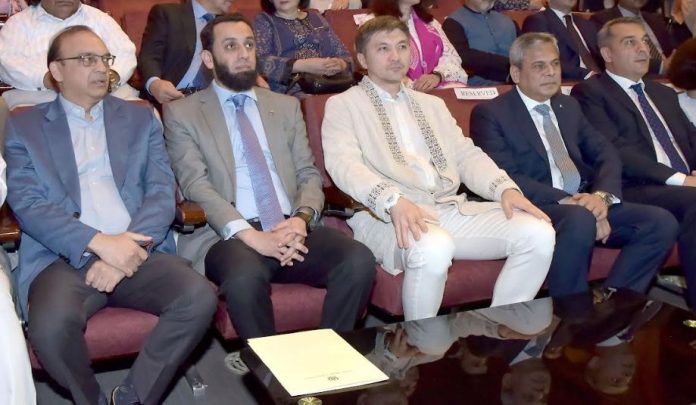
Minister for Information and Broadcasting and Minister for National Heritage & Culture Atta Ullah Tarar and Ambassador of Kazakhstan to Pakistan H.E Yerzhan Kistafin along with Director General PNCA Muhammad Ayoub Jamali and large number of people attended the movie screening.
The movie “Kazakh Khanate – The Golden Throne,” an exciting and highly anticipated historical movie portraying the first Kazakh Khans.

Kazakh Khanate is referred to as the “Kazakh Game Of Thrones” by BBC, the movie unfolds in the XV century, showcasing key events in the formation of Kazakh statehood under the leadership of Khans Zhanibek and Kerey.

Minister Attaullah Tarar, diplomats attend screening of Kazakh film at PNCA

Minister Attaullah Tarar

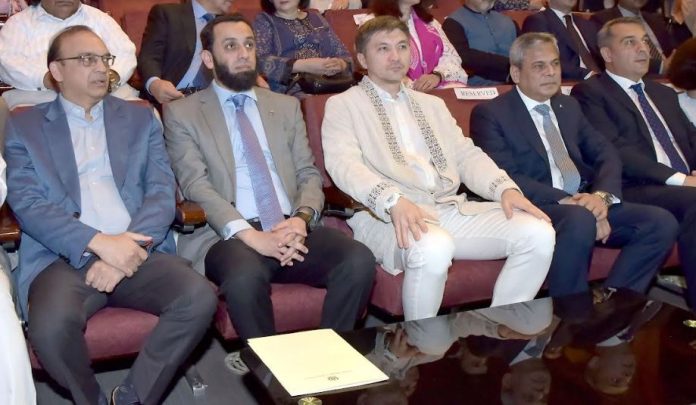
ISLAMABAD, MAY 24 /DNA/ – Federal Minister for Information and Culture Attaullah Tarar, Ambassador of Kazakhstan Yerzhan Kistafin, Ambassador of Azerbaijan Khazar Farhadov and others watching the Kazakh movie “Kazakh Khanate – The Golden Throne, at the PNCA.

The minister lauded the effort of the Kazah embassy and assured his full support in further strengthening especially the cultural linkages between the two countries. The minister promised to arrange country-wide screening of the movie. – DNA

Pakistan rejects Indian Supreme Court ruling on Kashmir: FO Spox

Pakistan rejects Indian Supreme Court ruling on Kashmir: FO Spox

ISLAMABAD, May 24 (APP): Pakistan has rejected the Indian Supreme Court’s recent order on Jammu and Kashmir. The court upheld its earlier ruling supporting India’s decision to revoke Jammu and Kashmir’s special status in 2019.

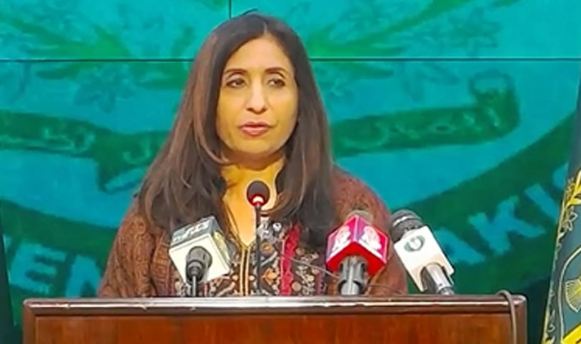
“We reject the recent Indian Supreme Court order,” said Foreign Office spokesperson Mumtaz Zahra Baloch.

She stated that the verdicts fail to recognize Jammu and Kashmir as a disputed territory.

The spokesperson emphasized Kashmiris’ right to self-determination as per UN Security Council resolutions.

Pakistan opposes unilateral decisions by India on the status of Jammu and Kashmir.

Baloch welcomed the recognition of the Palestine state by Ireland, Spain, and Norway.

This follows similar recognitions by the Bahamas, Tobago, Jamaica, and Barbados.

She called it a milestone for the Palestinian people’s quest for self-determination.

The spokesperson highlighted the humanitarian crisis in Gaza.

She stressed the urgency of establishing an independent Palestinian state with Quds Al-Sharif as its capital.

Baloch mentioned Prime Minister Shehbaz Sharif’s recent visit to the UAE.

He met President Mohammed bin Zayed Al Nahyan and discussed investment cooperation.

The UAE committed to investing $10 billion in various sectors in Pakistan.

The prime minister also visited Iran to offer condolences on the demise of Iranian officials.

He met with Iran’s Supreme Leader Ali Khamenei and Acting President Mohammad Mokhber.

Deputy Prime Minister Ishaq Dar visited Astana for the SCO Council of Foreign Ministers’ meeting.

He later traveled to Bishkek to address the welfare of Pakistani nationals affected by violence.

Turkish Foreign Minister Hakan Fidan recently visited Pakistan.

He met with PM Shehbaz, the Senate Chairman, military leaders, and Foreign Minister Dar.

Preparations for the Pakistan-Turkiye High-Level Strategic Cooperation Council were assessed.

Azerbaijan’s Foreign Minister Jeyhun Bayramov is scheduled to visit Pakistan from May 29-30.

He will meet Pakistani leadership and hold talks with Deputy Prime Minister Ishaq Dar.

Pakistan announce squad for volleyball series against Australia

Pakistan announce squad for volleyball series against Australia

AFZAL JAVED

ISLAMABAD: Pakistan Volleyball Federation (PVF) on Friday announced its fourteen member’s squad for the three matches’ volleyball series against Australia who are visiting for the first time in the country’s history.

According to Pakistan Volleyball Federation Chairman Chaudhry Muhammad Yaqoob, Pakistan squad comprising fourteen members with its full strength to compete in the highly anticipated event as the series against strong Australia will be a thrilling competition for both teams.

He said that Australian twenty member squad will arrive at Islamabad on Sunday (May 26). The first match of the three-match series will be held on May 28 at Liaquat Gymnasium, Pakistan Sports Complex, Islamabad, while the second match will be played on May 29 and the third match of the series will be held on May 30.

“All matches will be starting from 6:30 PM and entry of the fans and supporters are free”, said Chaudhry Yaqoob, adding that fans must come to cheer the green shirts as they showed the excellent performance and won the Central Asian Volleyball League which was held recently.

Chaudhry Yaqoob also vowed a commitment for the promotion of volleyball game which would be encouraged at national and international level as volleyball is one of the most famous international sports, adding that despite the lack of resources we are making strenuous efforts to improve our standards to compete internationally but we need full government support to utilize maximum resources for the promotion of volleyball game.

Murad Jehan will lead green shirts in the series along with Muhammad Kasheef Naveed appointed as Vice-Captain while Waleed Khan, Murad Khan, Aimal Khan, Usman Faryad Ali, Fakhar Ud Din, Afaq Khan, Abdul Zaheer, Musawer Khan, Muhammad Hamad, Haider Ali, Nasir Ali  and Muhammad Yaseen will be part of fourteen members Pakistan squad.

 Argentine Ruben Wolochin will be the head coach of the team. Saeed Ahmed Khan Sady and Ehsan Iqbal are named assistant coaches along with the squad. Brazilian Lucas Rodrigues, will be with the team as a physical trainer, while Muhammad Ismail Khan, Muhammad Sulaiman Amin and Juan Cobucci, Scoutman from Argentina will join the Pakistan Volleyball team as Assistant Scoutman. 

Matches Schedule

First Match, May 28: Pakistan vs Australia at 6:30 PM

Second Match, May 29: Pakistan vs Australia at 6:30 PM

Third Match, May 30: Pakistan vs Australia at 6:30 PM

PCB chief Naqvi stops announcement of Pakistan’s squad for T20 World Cup

PCB chief Naqvi stops announcement of Pakistan's squad for T20 World Cup

Lahore, MAY 24: Pakistan Cricket Board (PCB) Chairman Syed Mohsin Raza Naqvi stopped on Friday the announcement of the Pakistan squad for the forthcoming T20 World Cup, slated to happen jointly in the United States and West Indies.

Sources revealed that Naqvi expressed anger over the process of selection. The PCB chief had not raised questions over the names of the players for the mega event.

Naqvi had expressed disappointment at not holding the regular meetings of the selection committee.

According to sources, Naqvi said: “The squad will not be announced until the completion of the selection process.

In this regard, the PCB chief had sought the reply of the selection committee.

The PCB chief asked to hold a meeting of the selection committee.

Earlier, it was reported that the Pakistan squad will be announced on May 24 (today)

All the teams will have to finalise the World Cup squad by May 25.

Stay Connected

64FansLike
60FollowersFollow

Latest Reviews

Exchange Rates

USD - United States Dollar
EUR
1.17
GBP
1.35
AUD
0.72
CAD
0.73