Home Blog Page 915

Pak PWD’s engineers deprived of technical allowance

Pak PWD's engineers deprived of technical allowance

Mumtaz Ahmed Bhatti

ISLAMABAD: Engineers working for the Pakistan Public Works Department (Pak PWD) continue to face financial hardships as they remain deprived of the technical allowance that their counterparts in Punjab, Khyber Pakhtunkhwa, and Azad Jammu and Kashmir have been receiving for many years. This disparity has created a significant financial burden on the federal engineers.

The state-of-the-art buildings and infrastructure developed by Pak PWD engineers across the country stand as a testament to their efficiency and expertise, yet their financial struggles highlight a pressing issue that demands immediate government attention.The Pakistan Public Works Department is a key federal agency responsible for constructing and maintaining public buildings and infrastructure across the country. The department’s engineers play a crucial role in ensuring the quality and durability of these constructions, which include government offices, hospitals, schools, and other essential public facilities. Their expertise and dedication have led to the successful completion of numerous state-of-the-art projects that contribute significantly to the nation’s development.Despite their critical role, Pak PWD engineers are not receiving the technical allowance, a financial benefit provided to engineers to compensate for the specialized skills and knowledge required in their field.

 This allowance is meant to recognize the technical expertise of engineers and to provide financial support that reflects the complexity and importance of their work.While Pak PWD engineers continue to be deprived of this crucial financial benefit, their counterparts in the provincial departments of Punjab, Khyber Pakhtunkhwa, and Azad Jammu and Kashmir have been receiving technical allowances for an extended period. This disparity is a source of frustration and demoralization for federal engineers, who find themselves financially disadvantaged despite performing similar or even more complex tasks.

By offering this financial benefit, the government would be investing in the well-being and efficiency of its workforce, which is essential for sustaining the quality of public infrastructure.The deprivation of a technical allowance for Pakistan Public Works Department engineers is a critical issue that needs immediate government intervention.

The federal government must prioritize this issue and take swift action to approve the technical allowance for Pak PWD engineers.

Igniting flame of hope for hockey’s revival in Pakistan

Igniting flame of hope for hockey’s revival in Pakistan

People like Khawaja Junaid must be encouraged for shaping tomorrow’s champions as with each flick of stick and every thundering goal, these aspiring players are poised to honing their skills and forging a path towards a brighter future for national sport

Agencies

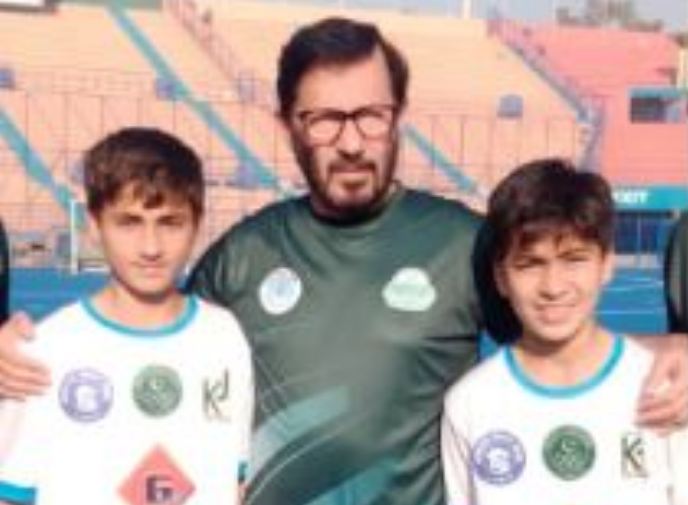
ISLAMABAD, MAY 26: Overly pleased with a hockey stick in one hand and a text book in other, 12-year-old prodigy, Zunair Khan is redefining the spirit of being a student-athlete.

Belonging to a humble family background, he had never thought to get a chance to pursue his dual dreams of a professional hockey player and studying at a top-notch institution. But thanks to Khawaja Junaid Hockey Academy, he got enrolled in Aitcheson College Lahore, also securing a slot in its hockey outfit.

Zunair’s exceptional talent in hockey was spotted by the coaches of Khawaja Junaid Academy during a talent hunt camp at National Hockey Stadium, where he had come to try his luck for becoming a future sport star.

“I had never thought of studying at this institution. But my nurturing at the academy proved that anything is possible with hard work and dedication,” remarked Zunair, a class 7th student.

Shahid Khan, another promising player from the same academy, echoed similar sentiments. “Being at this academy has been a life-changing experience for me. It’s not just about learning hockey skills; but acquiring overall commitment and dedication for a successful life,” he said.

Both Zunair and Shahid were picked up by Aitchison College last year from Khawaja Junaid Academy and awarded full tuition fee waiver and a comfortable lodging at college’s hostel due to their remarkable talent and commitment to the sport.

“The college has a rich legacy of providing highly talented players to Pakistan hockey including legends like Hassan Sardar and Akhtar Rasool. But unfortunately, then there was a gap and it is now after a hiatus of around three decades that it offered scholarships to two rising stars,” said Junaid Chattha, a German qualified, FIH level-2 coach, who along with former hockey great Mohibullah trains players at the academy.

Established in 2015, the academy started functioning at Allama Iqbal Town at a small grassy ground before it was properly launched in September 2021 at National Hockey Stadium. Currently, there are around 300 boys and 60 girls, aged 3 to 18 years, who are being imparted free training, kits and other accessories.

“The players at the academy undergo comprehensive training, designed to hone their skills and elevate their game to next level,” remarked Junaid Chattha. “We’ve also extended our operation to Islamabad where around 60 budding players are being trained at Naseer Bunda Hockey Stadium and soon we are going to launch our academy’s branch at Government Viqar-un-Nisa Post Graduate College for Women, Rawalpindi.”

Chattha informed that cost of one kid’s training, travelling and equipment is around Rs 12,000 a month and presently friends and relatives of Khawaja Junaid are sponsoring the academy while coaches and other staff work as volunteers.

Pakistan hockey was once a formidable side, claiming three Olympic gold medals in 1960, 1968 and 1984, three silver medals in 1956, 1964 and 1972 and two bronze medals in 1976 and 1992. It also won four World Cup titles in 1971, 1978, 1982 and 1994 and finished runners-up twice in1975 and 1990.

Pakistan’s hockey players of that era were adored as national heroes, with legends like Abdul Hafeez Kardar, Hassan Sardar, Kaleemullah, Samiullah, Shahnaz Sheikh and Shahbaz Ahmed inspiring the young generations. The team was also a dominating force at Asian Games winning six gold medals as its good old days were marked by thrilling matches, memorable victories and a sense of national pride.

But later it suffered three decades long decline and a team once known to be an unbeaten side, even failed to qualify for Summer Olympics thrice consecutively in 2016, 2020 and 2024.  It also failed to make a cut to coveted World Cup in 2014 and 2023 while in 2010 and 2018 it ended 12th.

Number of factors contributed to its downfall from a dominant side to a back bencher, prominently the lack of investment and funding with Pakistan Hockey Federation (PHF) time and again complaining about financial constraints.

Neglecting schools and clubs as nurseries for young talent led to a dwindling player base as our hockey also struggled to keep pace with evolving tactics, strategies and technologies in the sport. Limited participation in top-level international tournaments and lack of exposure to world-class competitions was another reason of downfall.

As promising athletes like Zunair and Shahid embark on a new journey, their stories are a testament to transformative impact of Khawaja Junaid Hockey Academy in nurturing talent and shaping the future of hockey in Pakistan.

“Every drop of sweat is a step closer to glory,” believes Khawaja. “Our efforts are for unfolding new chapters in Pakistan’s hockey – fuelled by passion and dedication of young players.”

Therefore, people like Khawaja Junaid must be encouraged for shaping tomorrow’s champions as with each flick of stick and every thundering goal, these aspiring players are poised to honing their skills and forging a path towards a brighter future for national sport.

Info minister hails ‘message of unity’ as KP CM Gandapur attends SIFC meet

Info minister hails ‘message of unity’ as KP CM Gandapur attends SIFC meet

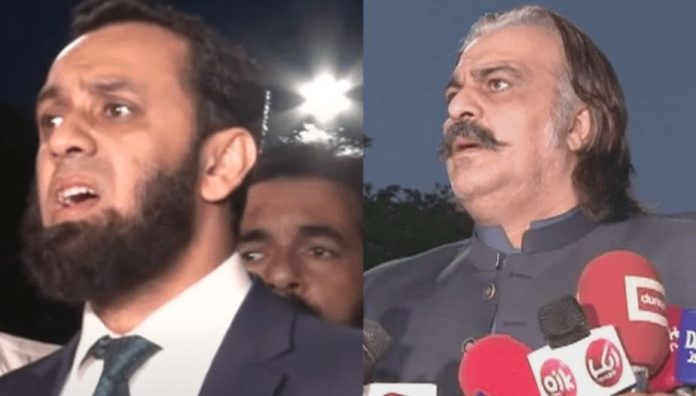
ISLAMABAD, MAY 25 /DNA/ – Information Minister Attaullah Tarar on Saturday said that a “message of unity” was sent as Khyber Pakhtunkhwa Chief Minister Ali Amin Gandapur attended an overall “productive” meeting of the Special Investment Facilitation Council (SIFC).

On Thursday, the PTI had lashed out at the government for allegedly excluding CM Gandapur from the invitation for today’s SIFC meeting.

The government formed the SIFC in June 2023 to bring together provincial and federal government representatives, as well as military officials, in a decision-making forum. Its goals include seeking solutions for economic revival and increasing FDI inflows.

Moreover, the council is managed by an apex committee comprising the prime minister, chief of army staff, chief ministers and other high-ranking government officials.

Addressing the media after today’s SIFC meeting in Islamabad, which was attended by CM Gandapur as well, the information minister said: “I want to say that all four chief ministers expressed complete trust regarding the SIFC, assured complete cooperation and also iterated the belief that the SIFC is a serious and effective forum and a lifeline to stabilise the economy, to develop the economy and to solve the country’s issues.”

He reiterated that CM Gandapur on behalf of his province also “fully assured that they will cooperate”.

Tarar said he was seated CM Gandapur in the meeting and had “small talks in a very cordial environment and good mood in which he talked about his province, we had many discussions on the province’s issues and we had some talks on a lighter note as well which I think is positive since we are political people and talks should always remain ongoing in politics”.

“He accepted that ‘we have our issues, there are constraints as well and oftentimes we have to talk because of them but we are not out of the SIFC. We express trust in the SIFC and accept it’.

“He talked about [the issues of] his province, definitely did and indeed he should as well. Along with that, he accepted the importance of the SIFC. I think today’s meeting was held in a very cordial atmosphere with great positivity and the frank discussion that was held about the economy, increasing investment, public-private partnerships … I think the good thing is that a message of unity was sent after today’s SIFC meeting that the Centre and the provinces are on one page.”

Tarar said the meeting’s participants agreed that investment, whether in the Centre or the provinces, would be promoted.

“I thank all chief ministers that they not only participated but gave very valuable input. This forum will move forward because of their input and coordination.”

Tarar said the meeting also discussed the United Arab Emirates’ recent pledge of $10 billion worth of investment in Pakistan’s economy, adding that the prime minister announced the formation of six specific regional desks in the SIFC to cater to investment from China, the United States, the UAE, Saudi Arabia, Qatar and the European Union.

He said the chief ministers supported the move.

“I think this was a very historic meeting whose dividends you will see in the coming days.”

Tarar said economic indicators were improving and amounts were being set aside by foreign countries for investment in Pakistan.

“Today was a very positive meeting. I congratulate all provincial governments for it. It was decided that there will be more frequent meetings of the executive committee in which many suggestions will be discussed which will then be brought to the apex [committee] and many decisions will be made in the executive committee.”

KP CM acknowledges ‘very good meeting’
Meanwhile, CM Gandapur too acknowledged that “it was a very good meeting”, saying that he had previously iterated the provincial government’s pleasure at KP’s resources being used for the country.

He said the resources of the province should continue to benefit both its residents and the larger country.

However, he added that the KP government would “never compromise” on its share of resources, adding that the issue was raised in the SIFC meeting and “the commitment has been given that the province’s resources, rights and share of the people will be protected and we too assured that our resources had always benefited the people and will continue to do so.”

Gandapur said the federal government was deliberating some additional taxes in KP and the former tribal areas but he had informed the SIFC members that such a step was not possible due to the already present financial circumstances of the province’s people and thus that such measures were not incorporated in the budget.

“They agreed with me and told me they would not include them,” he said, adding that the federal government said that it would hold further rounds of discussions with all stakeholders before levying the additional taxes.

He also downplayed the matter of his alleged exclusion from the invites for today’s SIFC meeting, saying that he had already given his clear message.

“Then they called us and want us to be a part of it so we are present and will do our work.”

Questioned about any meeting with Chief of Army Staff General Asim Munir and talks about the PTI, CM Gandapur said he met the army chief two times.

“When I am already getting the opportunity to talk to him then I don’t think I need to talk at a place where the opportunity is not there, the atmosphere is not right and other people are present,” he said.

PM commends SIFCs role in national prosperity, urges further collective efforts
Earlier, Prime Minister Shehbaz Sharif said the SIFC was playing a critical role in the country’s progress and prosperity and thanked the provincial governments for expressing their confidence in the platform.

Addressing the SIFC meeting, the prime minister said that all members should work tirelessly to build a Pakistan as perceived by the founding fathers.

The prime minister urged the provincial governments to further support the SIFC and move ahead in unison “like a family to compensate for the losses of the past” and overcome issues of poverty and hunger.

He said that the federal government did not get enough resources for initiating development projects after the distribution of resources among the provinces, therefore under such conditions, all governments should move together with unity.

Updating the members of SIFC about his recent visit to the UAE, he said the Emirati leadership had announced a $10bn investment in Pakistan and expressed their complete confidence in the SIFC.

“The leadership of brotherly countries and others as well are aware of the functioning of SIFC,” he observed.

“When SIFC was formed through legal procedures, certain concerns were expressed by a quarter but with the passage of time, its significance, efficiency and achievements had shut all kinds of criticism and everybody now fully supported its initiatives,” PM Shehbaz added.

The premier stressed that the SIFC members should resolve to achieve their targets and work tirelessly to “transform Pakistan into something upon which Pakistanis can feel pride”.

The prime minister also underlined the need of capacity building and enhancing professionalism of experts in different fields.

He said that he had already instructed the ministries clearly to hire consultants and experts and would soon seek their feedback.

The prime minister said that the digitisation process of the Federal Bureau of Revenue had already commenced.

He urged all stakeholders to redouble their efforts and promote the local talent and industry, adding that 60 per cent of the population comprised the youth, who should be trained in information technology while natural resources worth “billions of rupees” lying untapped be fully utilised.

The prime minister also credited SIFC for paving the way for the Reko Diq project in Balochistan.

Third polio case of 2024 reported in Pakistan

Third polio case of 2024 reported in Pakistan

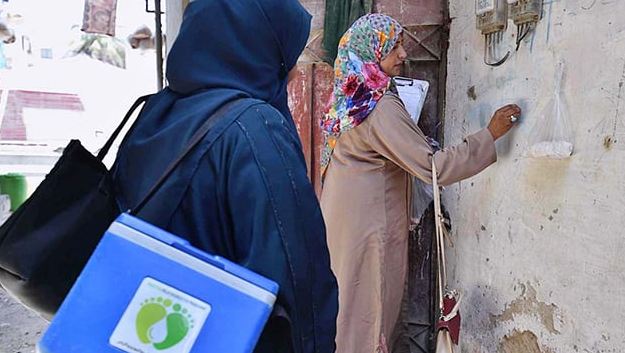
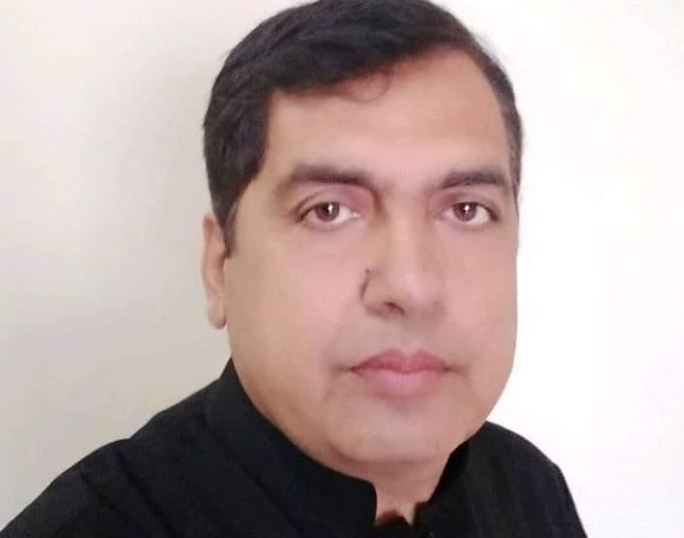
ISLAMABAD: The third polio case of the year has been reported from Killa Abdullah district of Balochistan, where a 12-year-old girl was found infected with Wild Poliovirus 1 (WPV1) officials said on Saturday.

According to the Regional Reference Laboratory for Polio at the National Institute of Health, WPV1 was detected in stool samples collected from a 144-month-old child in Darozai union council of Killa Abdullah, who developed symptoms of paralysis on April 20. Genetic sequencing of the isolated virus is underway.

It is the third polio case in 2024 in Pakistan as the previous two polio cases were also reported from different districts of Balochistan, officials said.

“It is incredibly tragic that another child has been affected by polio this year in Balochistan,” said Coordinator to the Prime Minister on National Health Services Dr Malik Mukhtar Ahmed Bharath, adding that polio is a terrible illness that changes not just the child’s life but also of the whole family.

“The government is bringing the polio vaccine to the citizens’ doorsteps in multiple polio vaccination rounds. I urge families to understand the risk this disease poses to children and make sure that they vaccinate all their children under the age of five when the polio worker shows up to their homes.”

Dr Shahzad Baig, Coordinator of the National Emergency Operations Centre for Polio Eradication, said that a detailed case investigation will be launched immediately to identify the origins of the virus, find populations that may have missed vaccination and take corrective measures to contain its spread.

“We have already conducted four polio vaccination campaigns this year, including two nationwide campaigns to boost children’s immunity and we will be conducting another campaign in June,” he added.

This is the third polio case from Balochistan this year and the first reported from Killa Abdullah after three years.

Last year, six polio cases were reported in the country, four from Khyber Pakhtunkhwa and two from Karachi.

PM stresses hard work for prosperity, says ‘witchcraft’ won’t help

PM stresses hard work for prosperity, says 'witchcraft' won't help

ISLAMABAD, MAY 25: Stressing the need for hard work and austerity to steer the cash-strapped country out of the economic crises, Prime Minister Shehbaz Sharif on Saturday remarked that “witchcraft” won’t help the nation.

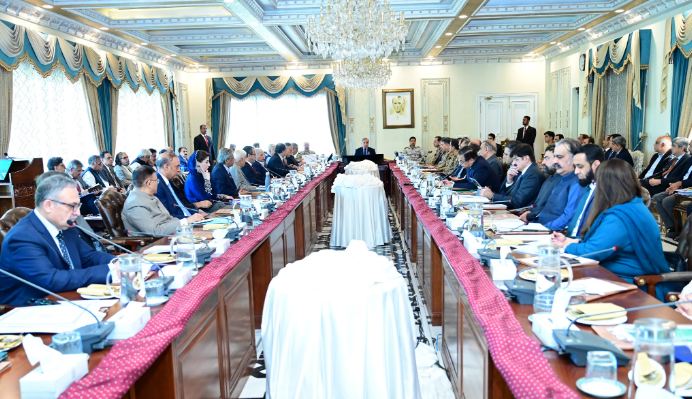
The country’s chief executive, who came into power in March this year, made the remarks while addressing the apex committee of the Special Investment and Facilitation Council’s (SIFC) 10th meeting at the Prime Minister’s Office.

Addressing the civil-military forum established to attract foreign investment, the premier said that joint efforts were being made to resolve the country’s issues.

Briefing the participants about his recent visits to Saudi Arabia and the UAE, PM Shehbaz said that during the meetings leaders and delegations of other countries expressed their satisfaction with the performance of SIFC.

Referring to the alleged criticism over the body, the premier said: “Concerns were expressed when the SIFC took legal form.”

Over time, the forum silenced its critics with its achievements, he said, adding: “SIFC playing a key role in the development of Pakistan.”

The premier said that all the provincial governments repose trust in the SIFC, adding that they would achieve their goals through the forum.

Moving on to economic reforms, PM Shehbaz told the participants that a foreign firm had been hired for the digitalisation of the Federal Board of Revenue (FBR).

The premier said that the UAE pledged to invest $10 billion in Pakistan.

Khyber Pakhtunkhwa Chief Minister Ali Amin Gandapur, Punjab’s Maryam Nawaz, Sindh’s Murad Ali Shah and Balochistan’s Sarfraz Bugti were among the attendees of the meeting.

According to a statement from the PM’s Office, the SIFC meeting met with PM Shehbaz in the chair to review various initiatives and projects that fall under the forum.

Chief of the Army Staff (COAS) General Syed Asim Munir, chief ministers from all four provinces, members of the federal cabinet, and high-level officials attended the meeting.

“The participants of the meeting reviewed progress on economic cooperation with friendly countries.”

Speaking on the occasion, COAS Gen Munir assured the government of the army’s cooperation in their steps for economic prosperity in the country.

He also assured the military’s cooperation on the government’s initiatives for socio-economic welfare.

The statement further said that the forum also reaffirmed its determination to improve the environment for investment.

Matters related to privatisation of loss-making state-owned enterprises were also discussed in the meeting.

The forum expressed satisfaction with the ongoing privatisation process and stressed the need to complete the process in collaboration with concerned stakeholders.

During his interaction with journalists following the meeting, firebrand CM Gandapur said that he attended the huddle to represent his province.

“[I] will not compromise on the share of the province.”

The CM said that he put forth the concerns of his province before the forum, adding that he would perform his role for the betterment of his province and the country.

“People gave us mandate to fight for their rights.”

During the meeting, the CM said that he opposed the proposal to impose tax on the merged districts. He was of the view that they could increase revenue by reforms in the mining sector.

“I will go to any extent to give relief to the people.”

Responding to a question, the chief minister said that presenting budget was their constitutional right.

A day earlier, taking lead over the federal government as well as other three provinces, CM Gandapur-led KP government unveiled its maiden over Rs1.75 trillion budget for the fiscal year 2024-25.

On the other hand, Information Minister Attaullah Tarar told the journalist that the SIFC’s 10th meeting was held in a pleasant atmosphere.

Talking to journalists, the minister said that the huddle conveyed a message that the federation and the provinces were on the same page on national issues.

CM Gandapur acknowledged the importance of SIFC, he said, adding:” Ali Amin Gandapur said that he is not out of SIFC.”

Matters related to $10 billion from UAE, economy’s positive indicators and other issues were discussed in the meeting, he added. The premier had already clarified that their focus would be on investment instead of aid, Tarar said.

To a question, the information minister termed UAE’s $10 billion investment pledge “big effort” of the army chief.

PTI calls May 25 darkest day in political history

PTI

State should shun oppression, release Khan before situation further escalates: PTI Spokesperson

ISLAMABAD, MAY 25 /DNA/ – Pakistan Tehreek-e-Insaf (PTI) declared May 25, 2022 as the darkest day in the political history of the country, because on this day, the state unleashed its full fury on peaceful marchers under leader of PTI Founding Chairman Imran Khan and subjected them to tear gas, rubber bullets and batons for hours in total disregard of the constitution and law.

PTI Spokesperson, in a statement, said that PTI Founding Chairman Imran Khan launched the movement of Haqeeqi Azadi two years ago and took out a historic peaceful Azad March to establish supremacy of constitution and rule of law in the country.

However, he stated that as the state’s fascism reached its peak, the peaceful participations of the Azad March were subjected to the worst state brutalities on May 25, 2022 and unleashed a reign of terror and cracked down on them in sheer violation of the constitution and law.

PTI Spokesperson recalled that on that day, human rights were trampled across the country and the sanctity of foul walls was desecrated, as on that night, houses were raided, women and children were harassed, and PTI leaders and workers were abducted.

He stated that during this state barbarism, two PTI workers were martyred, and dozens were injured, besides destroying properties and ransacking their homes.

PTI Spokesperson noted that the state machinery tried its best to push the country towards civil war; however it was Imran Khan who, despite facing and enduring all the worst state atrocities, held high the flag of peace and saved the country from internal turmoil and chaos.

He said that two years ago, the oppression and tyranny inflicted on the citizens marked the beginning of a shameful sequence of the state barbarity and fascism, adding that during these two years, Pakistan’s largest and only federal political party PTI, had been subjected to full-scale state brutality.

PTI Spokesperson lamented that under the pretext of a false flag operation on May 9, senior leaders, including women, and over 10,000 workers were rounded up and imprisoned. He went on to say that the state was still engaged in extrajudicial and illegal activities, while Imran Khan and PTI were continuously targeted with violence and revenge.

Pakistan needs stability, which can only be achieved by ensuring supremacy of constitution and law, he asserted.

PTI Spokesperson demanded an immediate end to the state oppression, release of Imran Khan to provide effective leadership to the country and nation before the crisis further aggravated and the situation reached to a point of no return.

PTI moves IHC to de-seal its central office in Islamabad

PTI

ISLAMABAD: Imran Khan-founded Pakistan Tehreek-e-Insaf (PTI) on Saturday moved the Islamabad High Court (IHC) seeking its order to de-seal its central secretariat in the federal capital.

The Capital Development Authority (CDA) had Thursday demolished a portion of the PTI Central Secretariat over a “violation of building rules”, drawing strong condemnation from the former ruling party.

The CDA said that its anti-encroachment team launched an operation to eliminate illegal construction and encroachment.

In response, the PTI voiced its concerns in the Senate and today, the party’s secretary general, Omar Ayub Khan, filed the petition and made secretary of interior, chief commissioner, CDA chairman, and IG Islamabad parties in the case.

In his petition, the PTI leader said: “Neither any order nor any notice was ever served upon the petitioner, hence, the impugned act of the respondents is due to malafide intention, blackmailing, without due process of law and violation of principle of natural justice and also contrary to Article 4 and 10-A of the Constitution.”

The petitioner argued that PTI, through its members Arshad Dad and Naseem ur Rehman, purchased commercial plot Number 1-A situated at Shopping Centre, Sector G-8/4-2 from Sartaj Ali in 2020.

It is pertinent to mention here that the CDA, following the operation, had said that encroachment by a “political party” was removed and added that the plot was allotted in the name of a person named Sartaj Ali.

The petitioner termed the CDA’s operation illegal unlawful and the result of malafide, political victimisation and violation of fundamental rights.

Govt censured for using force against PTI
A day earlier, Leader of Opposition in Senate Shibli Faraz Friday berated the government for using force against the PTI and arresting the party’s local chapter chief Aamir Mughal.

Addressing the Senate, Faraz said the treasury benches not only banned his party they also used all the tactics against it. It was not enough for them to snatch the party’s electoral symbol, he blasted.

Referring to the raid at the PTI office, the senior leader said his party’s central office was razed in Islamabad, Mughal was arrested and PTI workers were beaten by police with batons.

Faraz said the CDA demolished the building on the government’s desire. They had started using foul tactics after failure to compete with the PTI politically, he said. They were creating hatred for themselves through such actions, he said.

“You cannot (continue to) do politics through coercion. Whatever oppression you carry out, will be registered,” he said pointing towards the treasury benches.

The opposition leader had said the PTI central office was attacked and the party’s information secretary survived a lethal assault.

Govt’s stance
Backing the anti-encroachment operation, Law Minister Azam Nazeer Tarar, had informed the Senate that action had been taken in accordance with the law and for violating building bylaws.

He made the remarks while responding to a point of order raised by PTI Faraz in the Senate. The law minister further explained that the first notice was issued to the political party in 2020 for violating building bylaws.

“Notices were repeatedly issued from 2020 to 2024 at six-month intervals, with the final notice given on May 10 for ongoing violations.”

“In view of the last notice dated May 10, the action is in accordance with the law,” the minister added.

The minister elaborated that he had talked to the chairman of the CDA, who confirmed that the process had been ongoing for the past four years due to the violations. The final notice was issued to ensure compliance with CDA directions, he added.

The minister further explained that reminders were issued to the political party regarding two floors constructed without CDA approval and the misuse of a public place for parking containers. He said that the party had constructed illegal parking sheds.

He said that despite repeated requests, the party did not remove the illegal structures or vacate the public space, causing problems for the public.

Lithuania keen to expand, diversify ties with Pakistan

Lithuania keen to expand, diversify ties with Pakistan

The Vice Minister of Lithuania Egidijus Meilunas says they had very fruitful and friendly discussions at the Ministry of Foreign Affairs of Pakistan on political and economic developments in our countries, bilateral relations, relations between the European Union and Pakistan, situation in South Asia and Europe’

Ansar M Bhatti

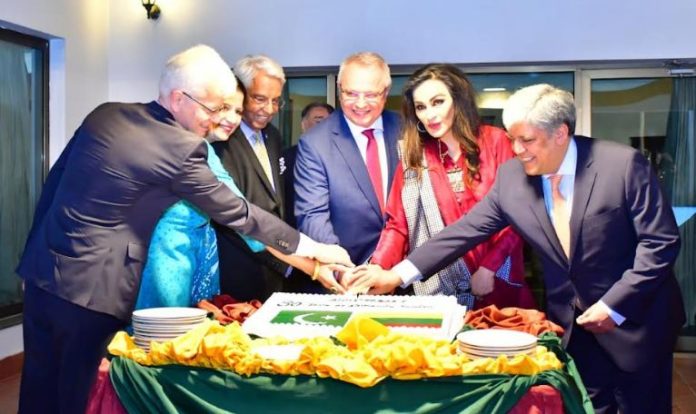
ISLAMABAD: The Vice Minister of Lithuania Egidijus Meilunas has said it was a great honour for him to be in Pakistan on occasion of the 30th anniversary of the diplomatic relations between the Republic of Lithuania and the Islamic Republic of Pakistan.

He said ‘these three decades were extremely dynamic for Lithuania. We established diplomatic relations between our two countries just in four years after Lithuania succeeded to restore its statehood after 50 years of Soviet occupation, and just in few months after withdrawal of Russian troops from the Lithuanian soil’.

This year Lithuania also marks the 20th anniversary of the European Union and NATO membership.

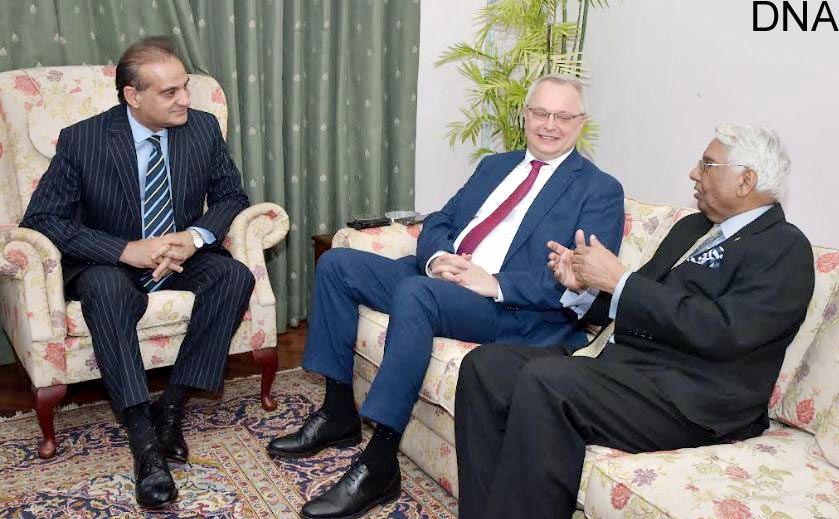
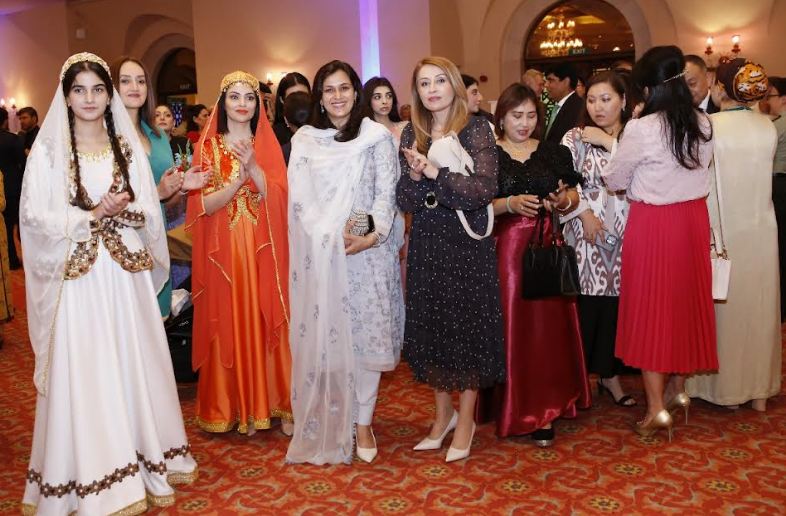
He expressed these views on the occasion of a reception. Seanor Sherry Rehman , Additional Secretary Ministry of Foreign Affairs, Lithuania Ambassador to Pakistan Ricardas Degutis (based in Ankara) and a  large number of guests attended the reception hosted by Masud Khan, Hon. Consul General of Lithuania in Pakistan.

Minister Meilunas further said, fast transformation period brought to Lithuania stability and security, contributed to firm establishment of the rule of law and respect to human rights, provided welfare, believe in the future of the sustainable development, and the most important – feeling of being integral part of the European and Euro-Atlantic family, where opinions are shared and heard, and culture of compromise and consensus in the politics is appreciated.

He added, ‘we had very fruitful and friendly discussions at the Ministry of Foreign Affairs of Pakistan on political and economic developments in our countries, bilateral relations, relations between the European Union and Pakistan, situation in South Asia and Europe’.

We also discussed other challenges for regional and global security. We live in very challenging and difficult times, so if we want to preserve our world order, based on rules and international law, we have to unite our efforts on protecting it, he added.

‘Our discussions reflected mutual interest in deeper understanding of our positions and concerns, as well as readiness to look at the opportunities to enhance bilateral links, especially in economic cooperation. Being strong in development of business service centers, startup ecosystem, fintech, software development, cyber security, life sciences, engineering and electronics Lithuania can be a very useful partner for Pakistani companies’.

He said he was very happy that my country is so well represented here by Mr Masud Khan, our Honorary Consul General in Pakistan.

He wished that the next 30 years of cooperation between Lithuania and Pakistan would be successful, productive, based on mutual respect and friendship.

Ambassador Khazar Farhadov says direct air links have further brought peoples of Pak, Azerbaijan closer

Ambassador Khazar Farhadov says direct air links have further brought peoples of Pak

Says Republic of Azerbaijan was chosen to next host COP29 in December 2023 with unanimous support from all countries, and it showcases the recognition of Azerbaijan`s leadership and efforts in addressing climate change at the national, regional, and global scales’

Ansar Mahmood Bhatti

ISLAMABAD: Ambassador of Azerbaijan to Pakistan Khazar Farhadov has said relations between Pakistan and Azerbaijan continue to grow on an upward trajectory in all fields.

Direct flights between Azerbaijan and Pakistan (from Islamabad, Karachi, and Lahore) which have been operated since 2022 by PIA, and 2023 by AZAL tremendously contribute to these relations. More than 50.000 Pakistani tourists visited Azerbaijan in 2023. I have to mention that Pakistan is one of the countries that is included in the online ASAN visa system of Azerbaijan.

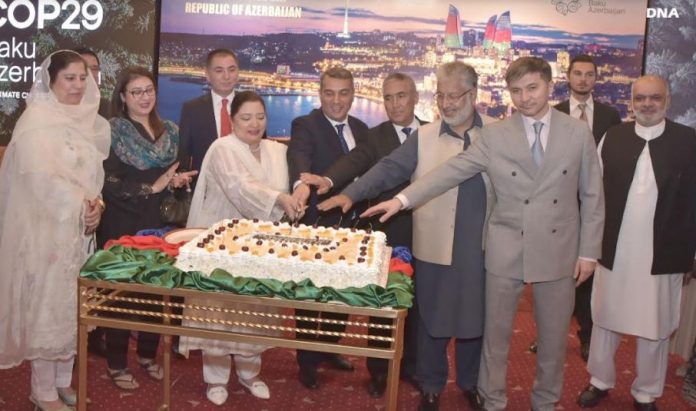
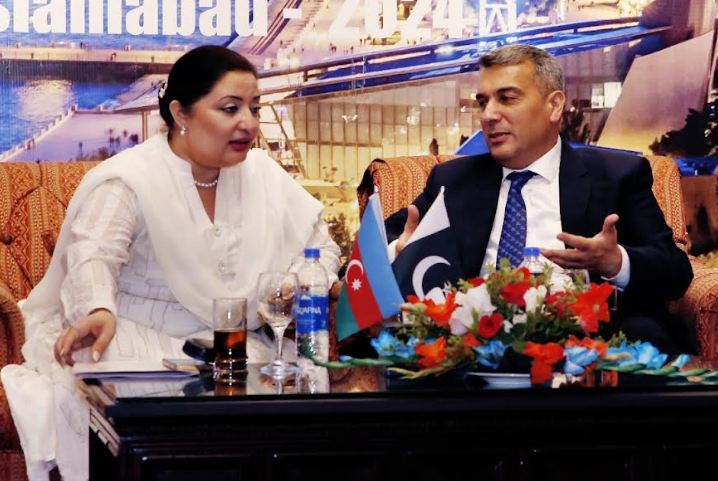
He expressed these views on the occasion of 106th anniversary of our independence. The Azerbaijan Democratic Republic was established on May 28, 1918, and that was the first democratic republic in the Muslim East. Prime Minister Coordinate on Climate Change Romina Khurshid was the chief guest. A large number of diplomats, members of the civil society and business fraternity attended the reception.

The Ambassador said the citizens of Pakistan can easily obtain a visa online within 3 hours and visit Azerbaijan. This direct connectivity brings people from all circles of the two countries closer.

In December 2022, the Government of Azerbaijan, taking into account the fraternal relations, exempted rice from the Islamic Republic of Pakistan with the same origin from import customs duty. It is not a coincidence that the trade turnover between the two brotherly countries reached up to 100 million dollars.

‘Within a remarkably brief span, Azerbaijan established its first parliament and government, defined its borders, instituted state attributes, and carried out crucial state-building measures. Important steps were taken in the field of state building, recognition of the Republic as a subject of international relations, and protection of its national interests’, he added.

Ambassador Khazar said, the Azerbaijan Democratic Republic, though it had an existence of only 23 months, played a pivotal role in the formation of democratic traditions and the history of national statehood, and laid a solid foundation for the future independence of the Republic by strengthening the sentiments of freedom and independence.

‘The legal successor of the Azerbaijan Democratic Republic, the independent Republic of Azerbaijan restored its independence in 1991 and managed to preserve its sovereignty thanks to the Great leader of Azerbaijan, Heydar Aliyev who has made an immense contribution to the people and the state of Azerbaijan. Azerbaijan has been implementing the policy of Heydar Aliyev, continuing and enriching it under the leadership of H.E. Mr. Ilham Aliyev, the President of the Republic of Azerbaijan’.

In 2020, under the leadership of the Supreme Commander-in-Chief of the Azerbaijani Armed Forces, President Ilham Aliyev, Azerbaijan liberated its internationally recognized territories from the almost 30-years occupation by Armenia, implementing UN Security Council 4 resolutions of 1993.

In this month, on May 1-3, 2024, the 6th World Forum on Intercultural Dialogue themed “Dialogue for Peace and Global Security: Cooperation and Interconnectivity” was held at the Baku Convention Center, he added.

‘It should be noted that the Republic of Azerbaijan was chosen to next host COP29 in December 2023 with unanimous support from all countries, and it showcases the recognition of Azerbaijan`s leadership and efforts in addressing climate change at the national, regional, and global scales’.

Ambassador said, Pakistan was one of the first countries that recognized the independence of the Republic of Azerbaijan on December 12, 1991. The diplomatic relations between the two countries were established on June 9, 1992, he concluded.

When there is no rule of law

Qamar Bashir

By: Qamar Bashir

Pakistan’s ranking on the World Justice Project’s Rule of Law Index was 129th out of 140 countries, placing it among nations like Myanmar and Sudan, where the rule of law is severely compromised​​. The absence of rule of law creates a society marked by instability, injustice, and suffering. It undermines social cohesion, economic development, and human rights, leading to a deteriorating quality of life and widespread despair. The rule of law is essential for creating a stable, just, and prosperous society where individuals can thrive and communities can develop harmoniously.

In a society where laws are trampled, selectively employed, and the government and its institutions become above the law, numerous adverse consequences arise, leading to instability and suffering. Without the rule of law, a society faces chaos as individuals and groups may resort to violence or take matters into their own hands to protect their interests. Crime rates tend to increase, and personal safety becomes a significant concern.

The absence of rule of law erodes trust in institutions and government. People lose faith in their leaders and the fairness of the system, which can lead to social unrest and political instability. Public cynicism and apathy towards civic engagement increase, weakening the social fabric.

Those in power can govern arbitrarily, making decisions based on personal whims rather than established legal principles. This leads to corruption, favoritism, and abuse of power, as leaders and officials are not held accountable for their actions. In a lawless society, justice is elusive. Victims of crimes and abuses have little hope for redress, and perpetrators often act with impunity. This perpetuates cycles of violence and injustice, as there are no mechanisms to hold wrongdoers accountable.

Countries lacking rule of law often face international isolation. Other nations may impose sanctions or restrict diplomatic and economic ties, viewing the state as unstable and unpredictable. This further exacerbates economic difficulties and hinders development. Sustainable development is severely hindered without the rule of law. Education, healthcare, infrastructure, and other critical sectors suffer from neglect and corruption, preventing long-term progress and improvement in quality of life for the population.

In a country where there is widespread perception powerful Supra Executive(SE)  in a country has co opted legislatures, intimidate the judiciary, use the civil bureaucracy as tool to perpetuate terror, and where free press is throttled,  the country faces  serious and far-reaching implications for the democratic fabric and institutional integrity of the country.

Intimidating the judiciary undermines the principle of judicial independence, a cornerstone of democracy. When judges feel threatened or coerced, they may not be able to make impartial decisions based on the law and constitution. This can lead to a lack of fair trials, miscarriages of justice, and an overall erosion of public trust in the legal system. It may also discourage qualified individuals from serving in the judiciary, further weakening the institution.

When a country’s legislature is co-opted, it effectively diminishes the checks and balances that are essential to a functioning democracy. Legislatures are meant to represent the will of the people and provide oversight of the executive. If they are co-opted, they may fail to hold the government accountable, pass legislation without proper scrutiny, and ignore the needs and rights of the populace. This can lead to the enactment of laws that benefit a select few rather than the public at large and erode democratic norms

A free and independent press is crucial for transparency and accountability in governance. When the government throttles the free press, it limits the flow of information, restricts public discourse, and hampers investigative journalism. This can prevent the exposure of corruption, abuses of power, and other governmental malfeasance. Without a free press, citizens are left in the dark about the actions of their leaders, undermining informed public participation and eroding trust in democratic institutions.

When there is widespread perception that the government itself is involved in breaking the rule of law, abducting its own people, destroying properties and businesses, attacking its citizens using proxies, torturing individuals, abducting political activists, and undermining political parties while promoting others, the implications for the country, society, and its people are severe and multifaceted.

Trust in leaders and institutions erodes, leading to a breakdown in the social contract and a climate of suspicion and fear. Social and political instability becomes rampant, with protests, strikes, and civil disobedience escalating into violence. Human rights abuses create widespread fear and repression, stifling free speech and democratic engagement. Economic decline follows as instability deters investment, increasing poverty and unemployment. International isolation through sanctions and trade restrictions cripples the economy further, while diplomatic relationships deteriorate. Public disillusionment grows, leading to emigration of skilled individuals and further weakening the country’s prospects for recovery. The legal system breaks down, losing credibility and the ability to enforce laws impartially, resulting in corruption and lawlessness. Long-term consequences include generations growing up in an environment where violence and injustice are normalized, making the rebuilding of trust and restoration of the rule of law a challenging and lengthy process.

On the other hand, In a society where the government, institutions, and individuals follow the rule of law, numerous positive outcomes emerge. Trust in institutions and government strengthens, fostering social and political stability. Citizens are confident that justice is served impartially, which enhances personal safety and reduces crime. Human rights are protected, allowing free expression and active civic participation. This stability attracts investment, spurring economic growth and raising living standards. Public engagement increases, with citizens actively participating in the political process and community development. Accountability is maintained through a free and independent judiciary, a free press, and transparent institutions, reducing corruption and ensuring efficient use of public resources. The legislature enacts laws that promote fairness and social welfare, addressing societal issues equitably. A free press keeps the public well-informed, enabling educated decision-making and holding leaders accountable. Social cohesion and equality are strengthened, as everyone is treated equally under the law, fostering a sense of belonging and unity. Ultimately, such a society thrives, achieving prosperity, equality, and cohesion, with trust in leadership and a shared commitment to justice and fairness. Choice is ours.

By: Qamar Bashir

Former Press Secretary to the President

Former Press Minister to the Embassy of Pakistan to France

Former MD, SRBC

Stay Connected

64FansLike
60FollowersFollow

Latest Reviews

Exchange Rates

USD - United States Dollar
EUR
1.17
GBP
1.35
AUD
0.72
CAD
0.73