Home Blog Page 914

A Booming Stock Exchange: A Real Head-Scratcher

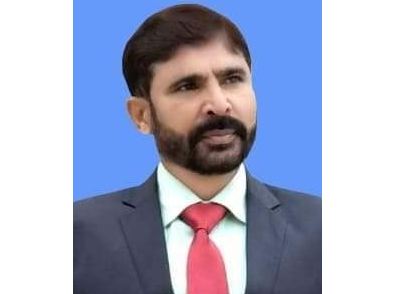
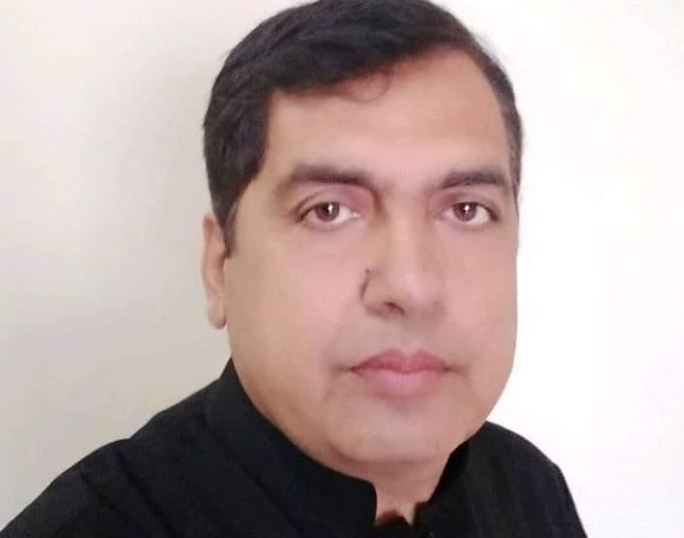
Qamar Bashir

By Qamar Bashir

Bulls have continued their stampede at the Pakistan Stock Exchange (PSX) since the start of 2024, reaching a new milestone of 75,983 points on May 26. The market has been rising steadily, breaching psychological and physical barriers almost daily. This boom is causing even the most seasoned economic experts to scratch their heads in bewilderment and amazement. Despite sluggish economic indicators, dismal performance in agriculture, services, SMEs, and large-scale manufacturing, as well as a highly toxic political, law and order, and security situation, the PSX continues to soar.

This surge appears to be occurring in a vacuum or could be likened to a balloon that might burst at any moment, given the country’s stagnant GDP growth. Last year, the GDP growth was -1.27%, and the projected GDP growth for 2024 is 1.7%. Exports as a percentage of GDP stand at 9.06%, while imports of goods and services constitute 17.99% of GDP. Foreign exchange reserves are extremely low, around $8.1 billion. Inflation is at a staggering 38%. The unemployment rate is historically high at 8%.

The car manufacturing industry hit a historic low, producing only 79,513 units in December 2023 compared to 235,454 units in December 2022. Foreign Direct Investment (FDI), which peaked at $4,582 million in 2022, declined to $1,857 million in 2023, with only $659 million recorded from July to April 2024.

The electricity sector’s circular debt crossed PKR 5.71 trillion in 2024. Additionally, state-run commercial entities have incurred losses amounting to a staggering Rs 1.395 trillion over the fiscal years, with no visible measures taken to plug these financial holes.

Human capital outcomes remain poor, with high levels of stunting at 38 percent and learning poverty at 78 percent. Poverty rate is 40.1 percent and since 2018 7 million more Pakistanis are  living below the poverty line.

Repeated delays in implementing the International Monetary Fund (IMF) Extended Fund Facility (EFF) program and the associated decline in external financing inflows saw foreign reserves fall to critically low levels, amid high inflation and sharp currency depreciation.

Following the expiry of the incomplete EFF program, and a nine-month Stand-By Arrangement (SBA) the government continues to face a challenging macroeconomic environment. Significant downside risks include policy uncertainty, worsening external conditions, risks associated with large domestic and external financing needs, and liquidity constraints.

 On top of this, the country is in the grip of a high-intensity political crisis. The legitimacy of the government is under question due to alleged massive rigging in the 2024 elections, wheat farmers are protesting to get the government to buy their crop, lawyers are protesting against the Chief Justice of the Lahore High Court, and the judiciary is struggling against executive interference.

Yet, despite these challenges, the stock market is breaking barrier after barrier and recently touched the highest mark in the country’s history. This situation cannot be easily explained by the realities on the ground.

The stock market’s robust performance amidst a highly toxic political, economic, and financial environment in Pakistan might be driven by several factors.

The market could be experiencing a speculative bubble fueled by short-term investors seeking quick profits, and an influx of hot money from foreign investors looking for rapid returns in a volatile market. Wealthy domestic investors might perceive stocks as a safer option compared to a weakening currency or real estate.

There is also a possibility of government intervention, with state funds being used to buy back shares of specific companies, artificially inflating their prices. Incomplete information available to investors might be causing investment decisions based on partial data. High-interest rates could be making bonds less attractive, driving investors towards the stock market.

 Finally, with a stagnant economy and limited investment opportunities in other sectors, the stock market might appear to be the only viable option for some investors, despite the underlying risks.

The Pakistan Stock Exchange (PSX) in 2024 has shown a significant divergence between high turnover and market capitalization across different sectors, reflecting complex economic and market dynamics. Sectors like commercial banks, with a turnover of 39,987.618 million and market capitalization of 20,235 million, and oil and gas exploration companies, with a turnover of 18,212.720 million and market capitalization of 1,455 million, exhibit high turnover, indicating active trading.

This activity is potentially driven by speculative bubbles, an influx of foreign “hot money,” and wealthy domestic investors seeking safer investment options amid a weakening currency and unstable real estate market.

The technology and communication sector, with a turnover of 116,185.825 million and market capitalization of 266 million, also reflects this trend. The high turnover in these sectors, coupled with relatively lower market capitalization, suggests speculative trading and short-term gains rather than genuine economic growth.

Conversely, sectors such as cable and electrical goods, with a turnover of 19,212.720 million but market capitalization of only 8.56 million, and sugar and allied industries, with a turnover of 1,579.653 million and market capitalization of 83.69 million, despite substantial turnover, show low market capitalization, indicating possible undervaluation due to investor concerns about future profitability, structural inefficiencies, or regulatory challenges.

The engineering sector, with a turnover of 18,099.937 million and market capitalization of 126.34 million, and glass and ceramics, with a turnover of 247.045 million and market capitalization of 62.16 million, further illustrate this disparity.

This discrepancy underscores the need for careful analysis to understand the true health and vulnerabilities of Pakistan’s economy amidst a backdrop of political instability, high inflation, and low foreign reserves.

To protect small and middle-level investors if the market bursts in the near future, the government should take several measures. These include implementing stricter regulations on speculative trading to prevent bubbles, ensuring greater transparency and accuracy of market information to help investors make informed decisions, and creating safeguards such as investor protection funds to compensate small investors in the event of a market crash. Additionally, the government should promote financial literacy programs to educate the public about the risks and rewards of stock market investments, and provide incentives for long-term investments in stable sectors to reduce market volatility. Strengthening regulatory bodies to oversee market activities and preventing market manipulation can also protect investor interests.

The government should act now to avoid facing severe consequences in the future.

By Qamar Bashir

Former Press Secretary to the President

Former Press Minister to the Embassy of Pakistan to France

Former MD, SRBC
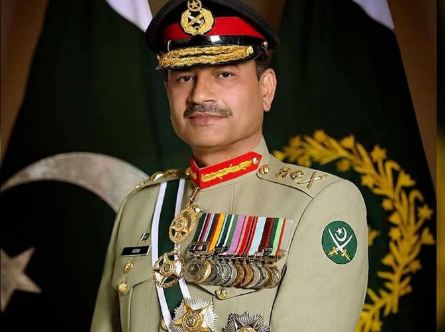
COAS Asim Munir affirms strong Pakistan-Iran ties amid tragic loss of Iranian leaders

COAS Asim Munir affirms strong Pakistan-Iran ties amid tragic loss of Iranian leaders

ISLAMABAD, MAY 26 /DNA/ – General Syed Asim Munir, NI (M), COAS Pakistan Army had a telephonic call with Major General Mohammad Bagheri, Chief of General Staff of Iranian Armed Forces and extended deep condolences over the sad and unfortunate incident of helicopter crash on 19 May 2024 which led to demise of President Ebrahim Raisi, Foreign Minster Amir Abdollahain and other important officials.

COAS expressed that Late President Ebrahim Raisi and Late Foreign Minister Amir Abdollahian were exceptional leaders and true friends of Pakistan.

COAS highlighted that loss of both the leaders and others was truly tragic and irreparable. COAS on behalf of all ranks of Pakistan Army extended prayers for the departed souls and well wishes for the bereaved families.

COAS said that Pakistan has historic, cultural and brotherly ties with Iran and the Armed Forces of Pakistan and Iran have always stood together. General Bagheri thanked COAS for sharing grief and vowed to continue the cooperation between the two militaries.

80-member business, trade delegation from Pakistan arrives in Addis Ababa, Ethiopia 

80-member business, trade delegation from Pakistan arrives in Addis Ababa, Ethiopia 

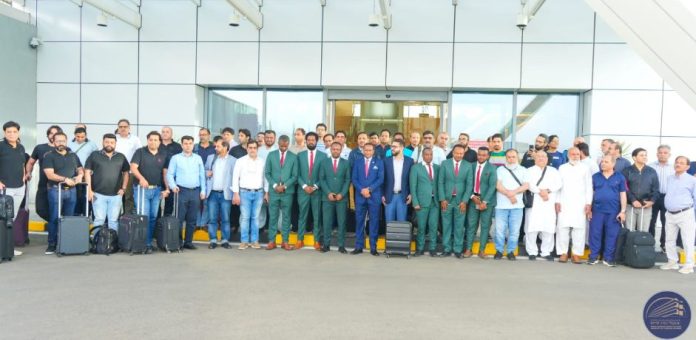
ADDIS ABABA, MAY 26 /DNA/ – A 80-Member Business and Trade Delegation from the Islamic Republic of Pakistan has arrived in Addis Ababa early on Sunday to explore business, trade and investment opportunities in the Federal Democratic Republic of Ethiopia (FDRE) for the five days.

Upon arrival, Special Envoy and Ambassador Extraordinary and Plenipotentiary of the FDR Ethiopia to Pakistan Jemal Beker Abdula along with Industrial Park Development Corporation and senior officials from the Ministry of Foreign Affairs received the trade delegation and accorded warm welcome in a splendid way at the Bole International Airport.

This is the second Business and Trade Delegation organized, coordinated and facilitated by the Ethiopian Embassy Islamabad within one and half year of its establishment in the Islamic Republic of Pakistan.

A large number of giant businesspeople including industrialists and investors are the part of this Business and Trade Delegation and will stay in Addis Ababa from May 26th to May 31st, 2024 for business engagements including participation in the 6th International Manufacturing Trade Fair, Ethio-Pakistan Business Forum, B2B and B2G meetings, industrial parks visits, and cultural nights.

The composition of the 2nd Business and Trade Delegation to Ethiopia is from across-sector that included agriculture and agro-processing, manufacturing, mining, tourism, ICT, fertilizer, chemicals, construction, pharmaceutical, surgical and other.

The objectives of this delegations are to introduce extraordinary business, trade and investment opportunities and incentives in diverse economic sectors of Ethiopia to the delegation and establish a solid connection between the business community of the two countries for further solidifying the Ethio-Pakistan relations. 

The delegation is arranged, coordinated and facilitated by the Ethiopian Embassy Islamabad after launching a comprehensive and massive mobilization campaign across Pakistan for mobilizing the business community from major economic sectors of Pakistan.

H.E. Jemal Beker Abdula, Special Envoy and Ambassador Extraordinary and Plenipotentiary of the FDR Ethiopia in Pakistan, led the mobilization campaign and personally visited the Business Chambers and Trade Associations in all the major cities of the Islamic Republic of Pakistan including Islamabad, Rawalpindi, Karachi, Lahore, Faisalabad, Gujranwala, Sialkot, Sheikhupura and others.

Strategic Choices for Belarus in the Region

Strategic Choices for Belarus in the Region

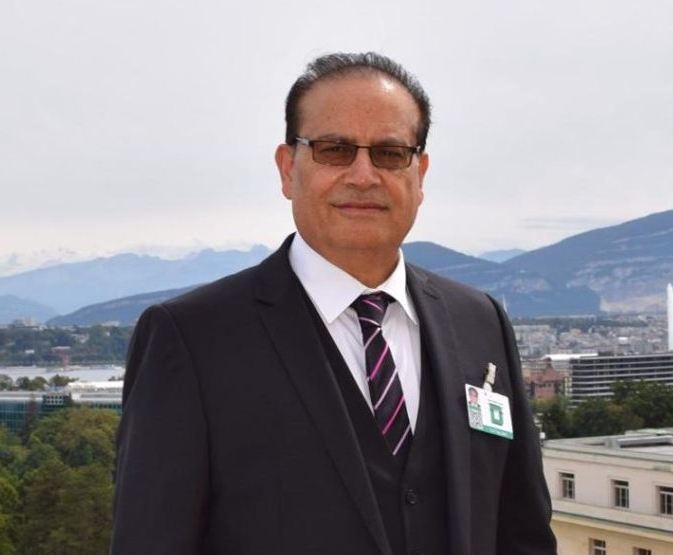
Dr. Muhammad Akram Zaheer

Belarus has been very close to Russia and have strong ties in trade and military cooperation. But recent events, like the conflict in Ukraine and sanctions against Russia, have made things more risky for Belarus.To deal with this risk, Belarus could try to make friends with other countries, like the European Union or China, to rely less on Russia. It could also work on building up its own industries to protect itself from problems outside the country.Inside Belarus, the government led by President Alexander Lukashenko faces challenges.

Some people are unhappy and want political changes. Lukashenko has to figure out how to keep things stable while also listening to these demands. Therefore, Belarus has to balance its old friendships with Russia, explore new partnerships, and handle its own problems at home. Recently, Belarus updated its military plans to deal with these challenges, which Russia supported because it brings Belarus closer to Moscow.Belarus and Russia have a long history together, dating back to their time in empires like the Soviet Union. They share a lot culturally and linguistically, and their presidents, Lukashenko and Putin, have a strong relationship.

In 1999, Belarus and Russia signed a treaty to get even closer, aiming for more political, economic, and military teamwork. While this “Union State” hasn’t become as powerful as the European Union, it shows they want to work together more.Russia has helped Belarus a lot during tough times, like after the 2020 election when there were protests. They trade a lot, especially in things like energy, machinery, and food. Belarus relies on cheap oil and gas from Russia, and Russia has given them loans and helped with their debts, which is really important for Belarus’s economy.

Belarus and Russia often do military exercises together, like the Zapad exercises. This shows how they work together in the military and can work together well. Both countries are part of a group called the Collective Security Treaty Organization (CSTO), which helps them with security. Belarus lets Russia use some of its military places, like radars and places for communication. Russia has promised to help Belarus with its military if there’s danger from outside, which makes their military bond stronger. Because both countries have been punished by the West, they’ve become closer in how they work together economically and politically to deal with these punishments. Belarus has supported Russia’s actions in the Ukraine conflict, even letting Russian forces use its land for moving things around and doing operations.

 This support has made Belarus more separate from the West but also more reliant on Russia. People in Belarus and Russia still do a lot together, like share media, education, and have family connections that cross borders. The relationship between Belarus and Russia is strong in many ways, like politics, money, military, and culture. Even though Belarus needs Russia more, both countries have built this partnership over many years.Belarus is very close to Russia in politics, the military, and the economy.

They have agreements like the Union State and military deals that tie them strongly to Russia. This close relationship with Russia often causes problems for Belarus with the EU, especially in Eastern Europe. Belarus is also part of the EU’s Eastern Partnership plan, which tries to create a common area with shared values and economic connections between the EU and six Eastern European countries. But Belarus doesn’t participate much in this because of its internal politics and its closeness to Russia.The presidential election in 2020 in Belarus caused a lot of disagreement and protests. This made the relationship between the EU and Belarus worse. The EU increased sanctions and supported groups in Belarus who oppose the government.

In 2021, Belarus was accused of causing a crisis with migrants at its borders with Poland, Lithuania, and Latvia as a way to get back at the EU for the sanctions. This made tensions even higher and led to more security measures and sanctions against Belarus from the EU.If Belarus makes big changes in its politics or leadership, it could improve its relationship with the EU. But Russia’s influence over Belarus is a big factor. If Russia changes its foreign policies or internal situation, it could affect Belarus’ relationship with the EU.The way the EU deals with Eastern Europe, especially how it balances democratic values and security concerns, will also affect how it deals with Belarus in the future.

Belarus is part of some regional groups. The CIS is one of them. It was made after the Soviet Union broke up and aims to help cooperation in politics, the economy, the environment, and other areas among the former Soviet countries. Belarus benefits from trade deals in the CIS, which help its economy. The CIS also helps Belarus with security and military cooperation. The EAEU is another group Belarus is in. It’s an economic union of countries in northern Eurasia. Being in this union helps Belarus trade more easily with other member countries like Russia, Kazakhstan, Armenia, and Kyrgyzstan. It also lets people move for work easily, which is good for Belarusian workers. The CSTO is a military group of some post-Soviet countries. It helps them work together for defense and security. Being in this group helps Belarus with its defense and makes the region safer.

The Union State between Russia and Belarus is another important partnership. It helps Belarus with energy and money from Russia, which is really important for its economy. This partnership also means Belarus follows Russia’s lead in politics, both inside and outside the country.The Eastern Partnership is the EU’s plan for its relationship with some post-Soviet countries including Belarus. Even though things are complicated with the EU, this partnership gives Belarus a way to talk and maybe work together with the EU on trade and human rights issues. Belarus can get help for its development projects through this partnership.

Belarus mainly looks to Russia and other post-Soviet groups for its partnerships, because it gets benefits like money and security from them. But it also tries to balance this with its relationship with the EU, looking for more ways to grow its economy and society.

RCCI delegation visits Iranian Embassy, offer condolence with Envoy

RCCI delegation visits Iranian Embassy

DNA

RAWALPINDI, MAY 26: A delegation of the Rawalpindi Chamber of Commerce and Industry (RCCI) visited the Embassy of Iran to condole the tragic death of Iranian President Dr. Ebrahim Raisi, Foreign Minister Amir Hossain Abdollahian, and other senior Iranian officials.

The delegation was headed by President RCCI, Saqib Rafiq along with Sohail Altaf Group Leader RCCI, and offered condolences to Dr. Reza Amiri Moghaddam, the Honorable Ambassador of the Islamic Republic of Iran to Pakistan.

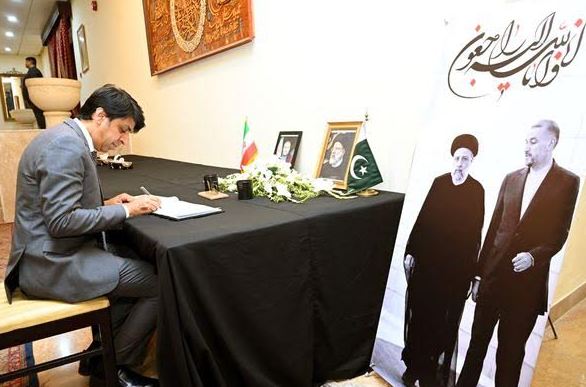
During the visit, Mr. Saqib Rafiq also signed a condolence book at the Iranian Embassy on this solemn occasion and expressed his thoughts and heartfelt sympathies and support on behalf of RCCI, acknowledging the significant loss and the impact of President Raisi’s passing on the Iranian nation.

Senior Vice President Muhammad Hamza Sarosh, Vice President Mr. Faisal Shahzad & Former President Mr. Zahid Latif Khan were also present in the meeting.

Call to raise minimum age of marriage to 18 years

Call to raise minimum age of marriage to 18 years

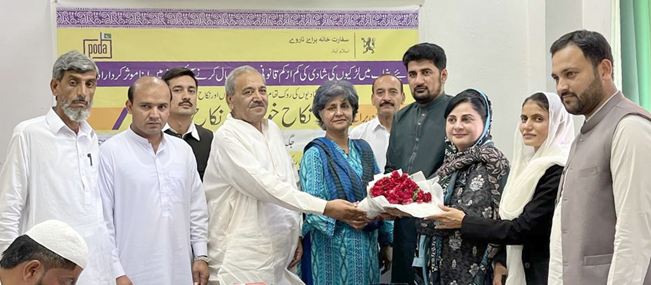
PINDIGHEB, MAY 26 /DNA/ – The participants of the training session organized by PODA organization, held at the Tehsil Municipal Administration (TMA) office in Pindigheb, unanimously supported the legal amendment to raise the minimum age of marriage to 18 years in the Punjab Child Marriage Restraint Act 2015.

Nikah khawans and nikah registrars representing ten union councils attended the one-day training held in the TMA Pindigheb hall. They emphasized the need to introduce the required amendment at the earliest to safeguard the fundamental rights of young girls, enabling them to benefit from Article 25-A of the Constitution, which obligates the state to ensure the education of children from 5 to 16 years of age. The training aimed to strengthen the role of nikah khawans and registrars in stopping child marriages. The activity was part of the project “Reduce Early Marriages to Enhance Gender Equality,” funded by the Royal Norwegian Embassy, Islamabad.

The participants also demanded a review of the existing nikah nama to accommodate current requirements and called for consultative sessions to gather practical and relevant recommendations.

The Project Manager, Nabeela Aslam, said that to protect girls’ constitutional rights to lead dignified lives as citizens of Pakistan, PODA is engaging with all segments of society to amplify the demand to increase the minimum age of marriage for girls. For this purpose, government officials of the relevant departments, members of the legal fraternity, media persons, mothers, daughters, community leaders, health workers, teachers, girls, role model women, religious scholars, and staff of basic health units across Punjab have been engaged through a wide range of activities to reduce early marriages in 41 districts of Punjab.

Addressing the gathering, the President of the Pindigheb Bar Association, Faisal Shehzad, urged the participants to ensure their effective role in ending child marriages. The participants noted that although there has been a decrease in child marriages, however the practice still exists, particularly among the weaker segments of society.

The focal person for all union councils of Tehsil Pindigheb, Naveed Abbas, elaborated on the actions taken by the union councils under his supervision, including the mandatory registration of marriages within three days.

The training was facilitated by the office of the Assistant Commissioner, Tehsil Pindigheb, Noor Zaman, and his staff. Around 30 people participated, including nikah khawans, registrars, lawyers, TMA staff, and media persons.

Khawaja Zahid Nasim, Advocate, and Hifza Bukhari, former Finance Secretary of the Supreme Court of Pakistan, led sessions of the training and engaged with participants to play their roles effectively in reducing early marriages. The participants received certificates for completing the training.

Pak PWD’s engineers deprived of technical allowance

Pak PWD's engineers deprived of technical allowance

Mumtaz Ahmed Bhatti

ISLAMABAD: Engineers working for the Pakistan Public Works Department (Pak PWD) continue to face financial hardships as they remain deprived of the technical allowance that their counterparts in Punjab, Khyber Pakhtunkhwa, and Azad Jammu and Kashmir have been receiving for many years. This disparity has created a significant financial burden on the federal engineers.

The state-of-the-art buildings and infrastructure developed by Pak PWD engineers across the country stand as a testament to their efficiency and expertise, yet their financial struggles highlight a pressing issue that demands immediate government attention.The Pakistan Public Works Department is a key federal agency responsible for constructing and maintaining public buildings and infrastructure across the country. The department’s engineers play a crucial role in ensuring the quality and durability of these constructions, which include government offices, hospitals, schools, and other essential public facilities. Their expertise and dedication have led to the successful completion of numerous state-of-the-art projects that contribute significantly to the nation’s development.Despite their critical role, Pak PWD engineers are not receiving the technical allowance, a financial benefit provided to engineers to compensate for the specialized skills and knowledge required in their field.

 This allowance is meant to recognize the technical expertise of engineers and to provide financial support that reflects the complexity and importance of their work.While Pak PWD engineers continue to be deprived of this crucial financial benefit, their counterparts in the provincial departments of Punjab, Khyber Pakhtunkhwa, and Azad Jammu and Kashmir have been receiving technical allowances for an extended period. This disparity is a source of frustration and demoralization for federal engineers, who find themselves financially disadvantaged despite performing similar or even more complex tasks.

By offering this financial benefit, the government would be investing in the well-being and efficiency of its workforce, which is essential for sustaining the quality of public infrastructure.The deprivation of a technical allowance for Pakistan Public Works Department engineers is a critical issue that needs immediate government intervention.

The federal government must prioritize this issue and take swift action to approve the technical allowance for Pak PWD engineers.

Igniting flame of hope for hockey’s revival in Pakistan

Igniting flame of hope for hockey’s revival in Pakistan

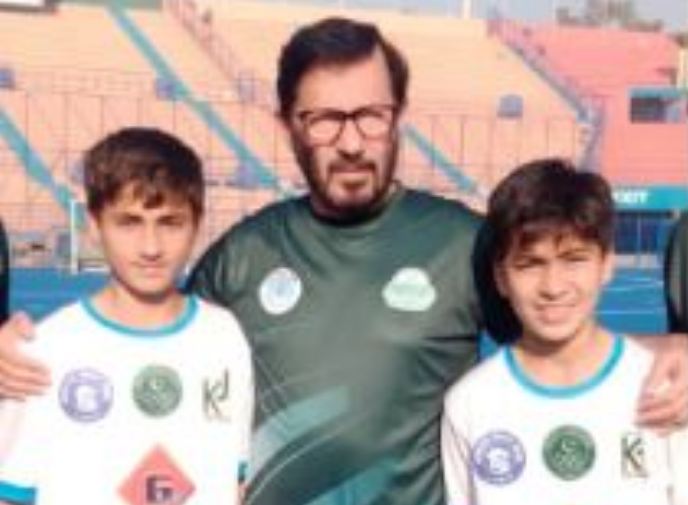
People like Khawaja Junaid must be encouraged for shaping tomorrow’s champions as with each flick of stick and every thundering goal, these aspiring players are poised to honing their skills and forging a path towards a brighter future for national sport

Agencies

ISLAMABAD, MAY 26: Overly pleased with a hockey stick in one hand and a text book in other, 12-year-old prodigy, Zunair Khan is redefining the spirit of being a student-athlete.

Belonging to a humble family background, he had never thought to get a chance to pursue his dual dreams of a professional hockey player and studying at a top-notch institution. But thanks to Khawaja Junaid Hockey Academy, he got enrolled in Aitcheson College Lahore, also securing a slot in its hockey outfit.

Zunair’s exceptional talent in hockey was spotted by the coaches of Khawaja Junaid Academy during a talent hunt camp at National Hockey Stadium, where he had come to try his luck for becoming a future sport star.

“I had never thought of studying at this institution. But my nurturing at the academy proved that anything is possible with hard work and dedication,” remarked Zunair, a class 7th student.

Shahid Khan, another promising player from the same academy, echoed similar sentiments. “Being at this academy has been a life-changing experience for me. It’s not just about learning hockey skills; but acquiring overall commitment and dedication for a successful life,” he said.

Both Zunair and Shahid were picked up by Aitchison College last year from Khawaja Junaid Academy and awarded full tuition fee waiver and a comfortable lodging at college’s hostel due to their remarkable talent and commitment to the sport.

“The college has a rich legacy of providing highly talented players to Pakistan hockey including legends like Hassan Sardar and Akhtar Rasool. But unfortunately, then there was a gap and it is now after a hiatus of around three decades that it offered scholarships to two rising stars,” said Junaid Chattha, a German qualified, FIH level-2 coach, who along with former hockey great Mohibullah trains players at the academy.

Established in 2015, the academy started functioning at Allama Iqbal Town at a small grassy ground before it was properly launched in September 2021 at National Hockey Stadium. Currently, there are around 300 boys and 60 girls, aged 3 to 18 years, who are being imparted free training, kits and other accessories.

“The players at the academy undergo comprehensive training, designed to hone their skills and elevate their game to next level,” remarked Junaid Chattha. “We’ve also extended our operation to Islamabad where around 60 budding players are being trained at Naseer Bunda Hockey Stadium and soon we are going to launch our academy’s branch at Government Viqar-un-Nisa Post Graduate College for Women, Rawalpindi.”

Chattha informed that cost of one kid’s training, travelling and equipment is around Rs 12,000 a month and presently friends and relatives of Khawaja Junaid are sponsoring the academy while coaches and other staff work as volunteers.

Pakistan hockey was once a formidable side, claiming three Olympic gold medals in 1960, 1968 and 1984, three silver medals in 1956, 1964 and 1972 and two bronze medals in 1976 and 1992. It also won four World Cup titles in 1971, 1978, 1982 and 1994 and finished runners-up twice in1975 and 1990.

Pakistan’s hockey players of that era were adored as national heroes, with legends like Abdul Hafeez Kardar, Hassan Sardar, Kaleemullah, Samiullah, Shahnaz Sheikh and Shahbaz Ahmed inspiring the young generations. The team was also a dominating force at Asian Games winning six gold medals as its good old days were marked by thrilling matches, memorable victories and a sense of national pride.

But later it suffered three decades long decline and a team once known to be an unbeaten side, even failed to qualify for Summer Olympics thrice consecutively in 2016, 2020 and 2024.  It also failed to make a cut to coveted World Cup in 2014 and 2023 while in 2010 and 2018 it ended 12th.

Number of factors contributed to its downfall from a dominant side to a back bencher, prominently the lack of investment and funding with Pakistan Hockey Federation (PHF) time and again complaining about financial constraints.

Neglecting schools and clubs as nurseries for young talent led to a dwindling player base as our hockey also struggled to keep pace with evolving tactics, strategies and technologies in the sport. Limited participation in top-level international tournaments and lack of exposure to world-class competitions was another reason of downfall.

As promising athletes like Zunair and Shahid embark on a new journey, their stories are a testament to transformative impact of Khawaja Junaid Hockey Academy in nurturing talent and shaping the future of hockey in Pakistan.

“Every drop of sweat is a step closer to glory,” believes Khawaja. “Our efforts are for unfolding new chapters in Pakistan’s hockey – fuelled by passion and dedication of young players.”

Therefore, people like Khawaja Junaid must be encouraged for shaping tomorrow’s champions as with each flick of stick and every thundering goal, these aspiring players are poised to honing their skills and forging a path towards a brighter future for national sport.

Info minister hails ‘message of unity’ as KP CM Gandapur attends SIFC meet

Info minister hails ‘message of unity’ as KP CM Gandapur attends SIFC meet

ISLAMABAD, MAY 25 /DNA/ – Information Minister Attaullah Tarar on Saturday said that a “message of unity” was sent as Khyber Pakhtunkhwa Chief Minister Ali Amin Gandapur attended an overall “productive” meeting of the Special Investment Facilitation Council (SIFC).

On Thursday, the PTI had lashed out at the government for allegedly excluding CM Gandapur from the invitation for today’s SIFC meeting.

The government formed the SIFC in June 2023 to bring together provincial and federal government representatives, as well as military officials, in a decision-making forum. Its goals include seeking solutions for economic revival and increasing FDI inflows.

Moreover, the council is managed by an apex committee comprising the prime minister, chief of army staff, chief ministers and other high-ranking government officials.

Addressing the media after today’s SIFC meeting in Islamabad, which was attended by CM Gandapur as well, the information minister said: “I want to say that all four chief ministers expressed complete trust regarding the SIFC, assured complete cooperation and also iterated the belief that the SIFC is a serious and effective forum and a lifeline to stabilise the economy, to develop the economy and to solve the country’s issues.”

He reiterated that CM Gandapur on behalf of his province also “fully assured that they will cooperate”.

Tarar said he was seated CM Gandapur in the meeting and had “small talks in a very cordial environment and good mood in which he talked about his province, we had many discussions on the province’s issues and we had some talks on a lighter note as well which I think is positive since we are political people and talks should always remain ongoing in politics”.

“He accepted that ‘we have our issues, there are constraints as well and oftentimes we have to talk because of them but we are not out of the SIFC. We express trust in the SIFC and accept it’.

“He talked about [the issues of] his province, definitely did and indeed he should as well. Along with that, he accepted the importance of the SIFC. I think today’s meeting was held in a very cordial atmosphere with great positivity and the frank discussion that was held about the economy, increasing investment, public-private partnerships … I think the good thing is that a message of unity was sent after today’s SIFC meeting that the Centre and the provinces are on one page.”

Tarar said the meeting’s participants agreed that investment, whether in the Centre or the provinces, would be promoted.

“I thank all chief ministers that they not only participated but gave very valuable input. This forum will move forward because of their input and coordination.”

Tarar said the meeting also discussed the United Arab Emirates’ recent pledge of $10 billion worth of investment in Pakistan’s economy, adding that the prime minister announced the formation of six specific regional desks in the SIFC to cater to investment from China, the United States, the UAE, Saudi Arabia, Qatar and the European Union.

He said the chief ministers supported the move.

“I think this was a very historic meeting whose dividends you will see in the coming days.”

Tarar said economic indicators were improving and amounts were being set aside by foreign countries for investment in Pakistan.

“Today was a very positive meeting. I congratulate all provincial governments for it. It was decided that there will be more frequent meetings of the executive committee in which many suggestions will be discussed which will then be brought to the apex [committee] and many decisions will be made in the executive committee.”

KP CM acknowledges ‘very good meeting’
Meanwhile, CM Gandapur too acknowledged that “it was a very good meeting”, saying that he had previously iterated the provincial government’s pleasure at KP’s resources being used for the country.

He said the resources of the province should continue to benefit both its residents and the larger country.

However, he added that the KP government would “never compromise” on its share of resources, adding that the issue was raised in the SIFC meeting and “the commitment has been given that the province’s resources, rights and share of the people will be protected and we too assured that our resources had always benefited the people and will continue to do so.”

Gandapur said the federal government was deliberating some additional taxes in KP and the former tribal areas but he had informed the SIFC members that such a step was not possible due to the already present financial circumstances of the province’s people and thus that such measures were not incorporated in the budget.

“They agreed with me and told me they would not include them,” he said, adding that the federal government said that it would hold further rounds of discussions with all stakeholders before levying the additional taxes.

He also downplayed the matter of his alleged exclusion from the invites for today’s SIFC meeting, saying that he had already given his clear message.

“Then they called us and want us to be a part of it so we are present and will do our work.”

Questioned about any meeting with Chief of Army Staff General Asim Munir and talks about the PTI, CM Gandapur said he met the army chief two times.

“When I am already getting the opportunity to talk to him then I don’t think I need to talk at a place where the opportunity is not there, the atmosphere is not right and other people are present,” he said.

PM commends SIFCs role in national prosperity, urges further collective efforts
Earlier, Prime Minister Shehbaz Sharif said the SIFC was playing a critical role in the country’s progress and prosperity and thanked the provincial governments for expressing their confidence in the platform.

Addressing the SIFC meeting, the prime minister said that all members should work tirelessly to build a Pakistan as perceived by the founding fathers.

The prime minister urged the provincial governments to further support the SIFC and move ahead in unison “like a family to compensate for the losses of the past” and overcome issues of poverty and hunger.

He said that the federal government did not get enough resources for initiating development projects after the distribution of resources among the provinces, therefore under such conditions, all governments should move together with unity.

Updating the members of SIFC about his recent visit to the UAE, he said the Emirati leadership had announced a $10bn investment in Pakistan and expressed their complete confidence in the SIFC.

“The leadership of brotherly countries and others as well are aware of the functioning of SIFC,” he observed.

“When SIFC was formed through legal procedures, certain concerns were expressed by a quarter but with the passage of time, its significance, efficiency and achievements had shut all kinds of criticism and everybody now fully supported its initiatives,” PM Shehbaz added.

The premier stressed that the SIFC members should resolve to achieve their targets and work tirelessly to “transform Pakistan into something upon which Pakistanis can feel pride”.

The prime minister also underlined the need of capacity building and enhancing professionalism of experts in different fields.

He said that he had already instructed the ministries clearly to hire consultants and experts and would soon seek their feedback.

The prime minister said that the digitisation process of the Federal Bureau of Revenue had already commenced.

He urged all stakeholders to redouble their efforts and promote the local talent and industry, adding that 60 per cent of the population comprised the youth, who should be trained in information technology while natural resources worth “billions of rupees” lying untapped be fully utilised.

The prime minister also credited SIFC for paving the way for the Reko Diq project in Balochistan.

Third polio case of 2024 reported in Pakistan

Third polio case of 2024 reported in Pakistan

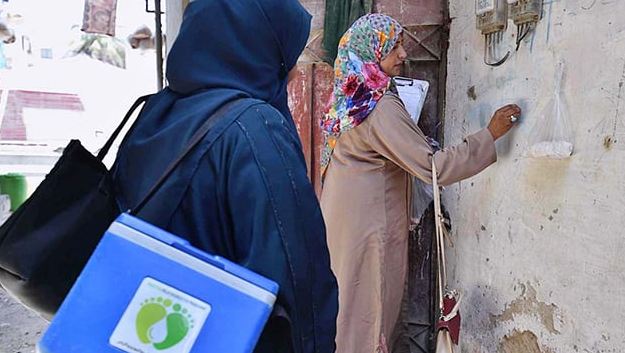
ISLAMABAD: The third polio case of the year has been reported from Killa Abdullah district of Balochistan, where a 12-year-old girl was found infected with Wild Poliovirus 1 (WPV1) officials said on Saturday.

According to the Regional Reference Laboratory for Polio at the National Institute of Health, WPV1 was detected in stool samples collected from a 144-month-old child in Darozai union council of Killa Abdullah, who developed symptoms of paralysis on April 20. Genetic sequencing of the isolated virus is underway.

It is the third polio case in 2024 in Pakistan as the previous two polio cases were also reported from different districts of Balochistan, officials said.

“It is incredibly tragic that another child has been affected by polio this year in Balochistan,” said Coordinator to the Prime Minister on National Health Services Dr Malik Mukhtar Ahmed Bharath, adding that polio is a terrible illness that changes not just the child’s life but also of the whole family.

“The government is bringing the polio vaccine to the citizens’ doorsteps in multiple polio vaccination rounds. I urge families to understand the risk this disease poses to children and make sure that they vaccinate all their children under the age of five when the polio worker shows up to their homes.”

Dr Shahzad Baig, Coordinator of the National Emergency Operations Centre for Polio Eradication, said that a detailed case investigation will be launched immediately to identify the origins of the virus, find populations that may have missed vaccination and take corrective measures to contain its spread.

“We have already conducted four polio vaccination campaigns this year, including two nationwide campaigns to boost children’s immunity and we will be conducting another campaign in June,” he added.

This is the third polio case from Balochistan this year and the first reported from Killa Abdullah after three years.

Last year, six polio cases were reported in the country, four from Khyber Pakhtunkhwa and two from Karachi.

Stay Connected

64FansLike
60FollowersFollow

Latest Reviews

Exchange Rates

USD - United States Dollar
EUR
1.17
GBP
1.35
AUD
0.72
CAD
0.73