Home Blog Page 913

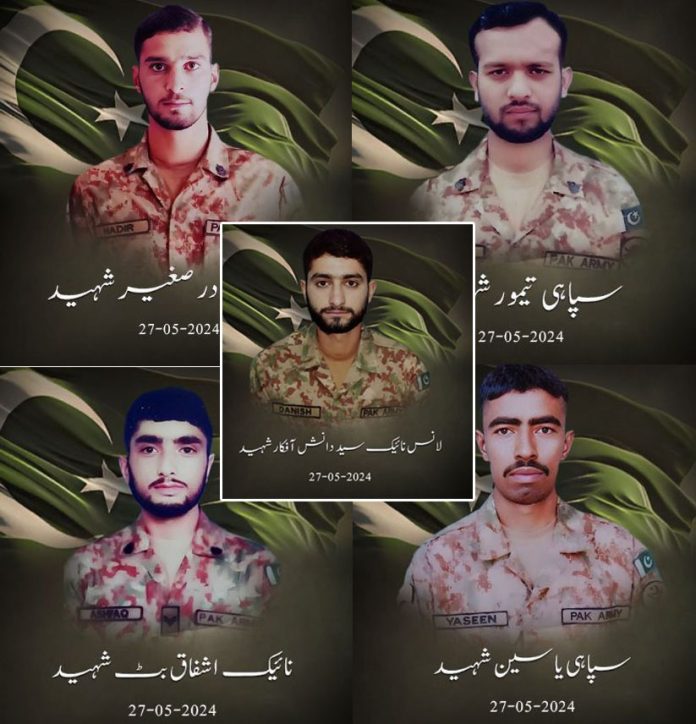
Captain Hussain Jehangir and five soldiers martyred in anti-terror operations in KP: ISPR

Captain Hussain Jehangir and five soldiers martyred in anti-terror operations in KP: ISPR

RAWALPINID, MAY 27 /DNA/ – On 26-27 May 2024, twenty three terrorists were sent to hell by the security forces in three seperate operations in Khyber Pakhtunkhwa Province.

On 26 May, an intelligence based operation was conducted in general area Hassan Khel, Peshawar District, where six terrorists were successfully neutralized by the security forces and multiple hideouts were busted. Captain Hussain Jehangir and Havildar Shafiq Ullah also embraced Shahadat on 26 May, while fighting gallantly.

On 27 May, in another operation conducted in Tank District, own troops effectively engaged the terrorists’ location, as a result of which ten terrorists were sent to hell.

The third engagement occurred in general area Bagh, Khyber District, wherein, the security forces sent seven terrorists to hell, while two terrorists were injured. However, during the intense exchange of fire, five brave soldiers; Naik Muhammad Ashfaq Butt (age 32 years; resident of district Kahuta), Lance Naik Syed Danish Afkar (age 30 years; resident of district Poonch), Sepoy Taimoor Malik (age 32 years; resident of district Layyah), Sepoy Nadir Sageer (age 22 years; resident of district Bagh) and Sepoy Muahmmad Yasin (age 23 years; resident of district Khushab), having fought gallantly, embraced Shahadat.

A large quantity of Weapons, ammunition & explosives was also recovered from the killed terrorists, who remained actively involved in numerous terrorist activities against the security forces as well as the innocent civilians.

Sanitization operations are being carried out to eliminate any other terrorist found in the area. Security forces are determined to wipe out the menace of terrorism from the country and such sacrifices of our brave soldiers further strengthen our resolve.

Film shows to promote ASEAN-Pak cultural ties

Vietnam

Vietnam enrich culture gives a message of peace, love to world: Ambassador of Vietnam

DNA

ISLAMABAD, MAY 27: Ambassador of Vietnam to Pakistan, Nguyen Tien Phong has said that Vietnam is enriched in culture and literature and its culture and art give the message of peace and love to the rest of the world. 

The Ambassador said that film, art and literature connect hearts and minds in the world communities and teach humanity and tolerance and also bring people’s hearts closer to each other.

The Vietnamese envoy said this while addressing the Vietnamese art film screening organized by the Embassy of Vietnam in Islamabad.

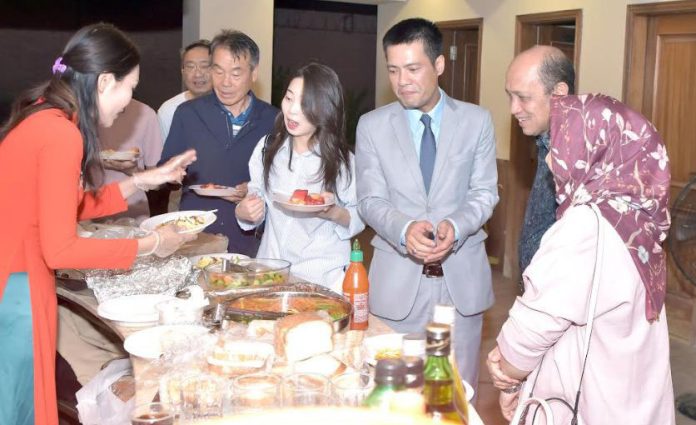
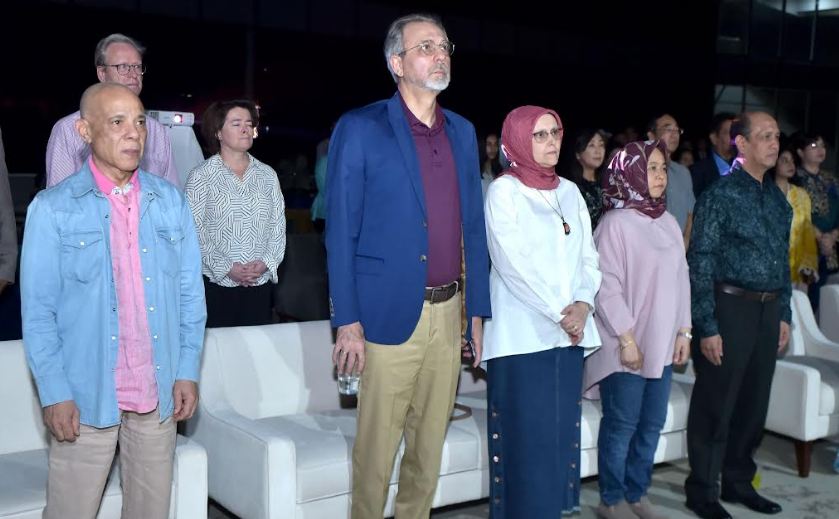
Ambassadors of different countries, including the, Chairperson ASEAN Committee Islamabad, Ambassador of Philippines, Maria Agnes M. Cervantes, High Commissioner of Malaysia to Pakistan, Mohammad Azhar Mazlan, Ambassador of Belgium,Charles DELOGNE, Ambassador of Turkiye Mehmet Paccaci, Ambassador of Morocco Mohamed Karmoune,  and Charge d’Affaires Indonesia in Islamabad , Rahmat Hindiarta and families of diplomats, writers and journalists from different walks of life participated and enjoyed the movie.

The Ambassador of Vietnam said that those great literary and academic personalities came to the fore in Vietnam and filmmakers played an important role in revealing the real identity of Vietnam and brought the local culture to the international level.

He said that today’s event is part of the vision in which ASEAN countries have been given an opportunity to promote their culture.

The ambassador said that the film “Yellow flowers and green gross” is an art film that highlights the lifestyle of the people of Vietnam and their cultural colors.

He said that Pakistan and Vietnam are also working to promote mutual culture and the Embassy of Vietnam is playing its full role in this regard.

It is pertinent to mention that the Vietnamese art Movie “Yellow Flowers on the Green Grass” is a 2015 Vietnamese drama, which was directed by Victor Vu.  It is adapted from the novel of the same name by ‘Nguyen Nhat Anh’.

The film stars Thinh Vinh and Trong Khang. The film is about the childhood of the brothers Thieu (Thinh Vinh) and Tuong (Trong Khang) in a poor rural village in central Vietnam in the 1980s.

They share and do everything together. However, when their friend next door, Man (Thanh My), comes to stay with them and a big flood hits their village, there is a big misunderstanding that leads to Tuong’s back injury. The film has an open ending with the scene of Thieu and Tuong studying in their house.

Pakistan commends Norway’s recognition of Palestine as a sovereign state: PM

Pakistan commends Norway's recognition of Palestine as a sovereign state: PM

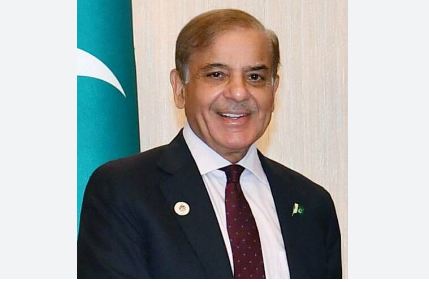
ISLAMABAD, MAY 26 /DNA/ – Pakistan extended its gratitude to Prime Minister Jonas Gahr Støre of Norway for the recent decision to recognize the State of Palestine. The phone conversation between Prime Minister Støre and Prime Minister Shehbaz Sharif underscored a shared commitment to the UN-backed two-state solution as the most viable path to enduring peace in the Middle East.

The International Court of Justice’s recent ruling, ordering Israel to cease its aggressive actions in Gaza and Rafah, reinforces the urgency of international recognition for Palestine. Norway’s principled stance, alongside Spain and Ireland, sets a bold example for the global community.

Pakistan hopes that this decisive move by Norway, Spain, and Ireland will inspire other nations to join in recognizing the statehood of Palestine. Furthermore, Pakistan urges the international community to lend similar attention to the plight of the resilient Kashmiri people, who have endured 76 years of occupation and oppression.

Australian team reaches Pakistan ahead of volleyball series

Australian team reaches Pakistan ahead of volleyball series

AFZAL JAVED

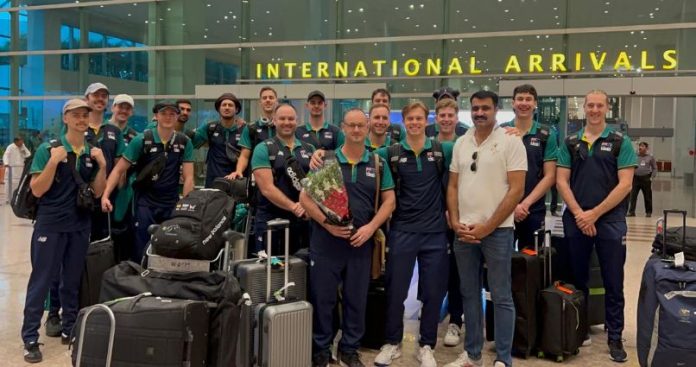
ISLAMABAD: The strong Australian volleyball squad arrived in Islamabad on Sunday ahead of a three-match volleyball series against the Green shirts as Aussies will be in action for the first time in the history of Pakistan organised by Pakistan Volleyball Federation (PVF) on the request of Australian Volleyball Federation.

The visiting team received a warm welcome on the arrival at Islamabad International Airport by the officials of Pakistan Volleyball Federation, Australia will take part in the practice session on May 27 (Monday) followed by the pre-event press conference at 5:00 PM at the local hotel Islamabad.

Nehemiah Mote is leading Australian Squad along with Luke Perry, Arshdeep Dosanjh, Jackson Holland, Trent O’dea, Matthew Aubrey, Max Senica, Beau Graham, Thomas Heptinstall, Sam Flowerday, Nicholas Butler, Ethan Garrett, William D’arcy Miles, Jacob Baird members of the playing squad while Daniel Ilott will act as head coach, James Begley, Alec Walker, Brendan Garlick will be coaches with team.

The first match of the three-match series will be held on May 28 at Liaquat Gymnasium, Pakistan Sports Complex, Islamabad, while the second match will be played on May 29 and the third match of the series will be held on May 30.

“All matches will be starting from 6:30 PM and entry of the fans and supporters are free”, said Chaudhry Muhammad Yaqoob, Chairman Pakistan Volleyball Federation, adding that Australia have some very good players in squad and fans must come to cheer the green shirts as they shown the excellent performance to won the Central Asian Volleyball League which was held recently.

Hike in Tobacco Taxes for FY-2024-25 demanded to save lives, strengthen economy

Hike in Tobacco Taxes for FY-2024-25 demanded to save lives, strengthen economy

ISLAMABAD, May 26 (DNA): Speakers of the police dialogue on tobacco taxation to highlight the contribution of the tobacco industry to Pakistan’s economy and the health cost burden due to tobacco use organized by the Society for the Protection of the Rights of the Child (SPARC) have called for immediate increase in tobacco taxation for the fiscal year 2024-25 terming it in larger interest of country and its people.

Speaking on the occasion, former caretaker information minister Murtaza Solangi said that low cigarettes prices were the reason why children and youth initiate smoking. He said that smoking-related illnesses and deaths incur substantial economic costs in Pakistan’s GDP every year. These increasing health cost burdens encompass healthcare expenses, productivity losses due to illness and premature death, as well as other indirect economic impacts, he added.

Solangi further stated that the tobacco epidemic requires comprehensive strategies encompassing public health interventions, strong tobacco control policies and awareness campaigns. By tackling tobacco use, Pakistan can mitigate economic losses associated with smoking-related illnesses, potentially alleviate the burden on its healthcare system and keep young people safe from the harms of tobacco use.

Country head Campaign for Tobacco Free Kids (CTFK), Malik Imran Ahmed shared in detail that the recent Federal Excise Duty (FED) reforms on tobacco have demonstrated promising results in terms of revenue generation. Collections from July 2023 to January 2024 have already surpassed PKR 122 billion, with projections for the full year exceeding PKR 200 billion, marking a substantial increase compared to previous fiscal years.

Furthermore, these reforms are expected to generate an additional PKR 60 billion in General Sales Tax (GST) on cigarettes for the fiscal year 2023-24. The combined impact of FED and GST is estimated to be around PKR 88 billion, indicating a remarkable relative growth of nearly 49% compared to the previous year.

Imran added that in addition to the financial benefits, these reforms play a crucial role in promoting public health by reducing tobacco consumption and potentially recovering 17.8% of the total healthcare costs associated with smoking in Pakistan. However, maintaining the current rate could result in a decrease in health cost recovery, highlighting the urgent need for further action.

To achieve similar levels of health cost recovery observed in 2023-24, a 37% increase in the FED rate for the upcoming year is recommended. This tax proposal presents a clear ‘win-win’ scenario, benefiting both the government and the people of Pakistan by enhancing revenue and safeguarding public health.

Dean Allied Healthcare Sciences, Lung Diseases and Tobacco Control, Health Services Academy, Prof. Dr. Matiur Rehman said that tobacco-related illnesses also known as non-communicable diseases such as cancer, diabetes and heart diseases contribute to over 160,000 deaths annually in Pakistan. These deaths not only affect individuals but also have long-term impacts on families, communities and the healthcare system, he noted.

Program Manager of SPARC, Dr. Khalil Ahmad Dogar said that the children of Pakistan were being targeted by the tobacco industry so that “replacement smokers” could be recruited. Around 1200 Pakistani children between the ages of 6–15 years start smoking every day. Khalil added that all stakeholders must cast their differences aside and unite to protect our children and youth from an industry which was causing billions of loss to the national exchequer. Increasing tobacco taxes was such a step which should be regularly implemented, he maintained.

Hamas armed wing says fired ‘large rocket barrage’ at Tel Aviv

Hamas armed wing says fired 'large rocket barrage' at Tel Aviv

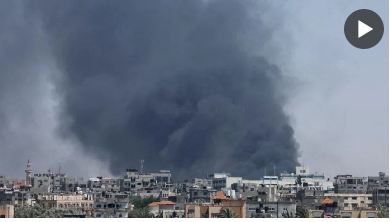
GAZA, MAY 26: Hamas armed wing al-Qassam Brigades said it launched a “big missile” attack on Tel Aviv on Sunday as the Israeli military sounded sirens in the central city warning of possible incoming rockets.

In a statement on its Telegram channel on Sunday, al-Qassam Brigades said the rockets were launched in response to what it called “Zionist massacres against civilians”.

Hamas Al-Aqsa TV said the rockets were launched from the Gaza Strip.

Rocket sirens had not been heard in Tel Aviv for the past four months. The reason for the sirens was not immediately stated by the Israeli military.

Israeli emergency medical services said they had received no reports of casualties.

A Booming Stock Exchange: A Real Head-Scratcher

Qamar Bashir

By Qamar Bashir

Bulls have continued their stampede at the Pakistan Stock Exchange (PSX) since the start of 2024, reaching a new milestone of 75,983 points on May 26. The market has been rising steadily, breaching psychological and physical barriers almost daily. This boom is causing even the most seasoned economic experts to scratch their heads in bewilderment and amazement. Despite sluggish economic indicators, dismal performance in agriculture, services, SMEs, and large-scale manufacturing, as well as a highly toxic political, law and order, and security situation, the PSX continues to soar.

This surge appears to be occurring in a vacuum or could be likened to a balloon that might burst at any moment, given the country’s stagnant GDP growth. Last year, the GDP growth was -1.27%, and the projected GDP growth for 2024 is 1.7%. Exports as a percentage of GDP stand at 9.06%, while imports of goods and services constitute 17.99% of GDP. Foreign exchange reserves are extremely low, around $8.1 billion. Inflation is at a staggering 38%. The unemployment rate is historically high at 8%.

The car manufacturing industry hit a historic low, producing only 79,513 units in December 2023 compared to 235,454 units in December 2022. Foreign Direct Investment (FDI), which peaked at $4,582 million in 2022, declined to $1,857 million in 2023, with only $659 million recorded from July to April 2024.

The electricity sector’s circular debt crossed PKR 5.71 trillion in 2024. Additionally, state-run commercial entities have incurred losses amounting to a staggering Rs 1.395 trillion over the fiscal years, with no visible measures taken to plug these financial holes.

Human capital outcomes remain poor, with high levels of stunting at 38 percent and learning poverty at 78 percent. Poverty rate is 40.1 percent and since 2018 7 million more Pakistanis are  living below the poverty line.

Repeated delays in implementing the International Monetary Fund (IMF) Extended Fund Facility (EFF) program and the associated decline in external financing inflows saw foreign reserves fall to critically low levels, amid high inflation and sharp currency depreciation.

Following the expiry of the incomplete EFF program, and a nine-month Stand-By Arrangement (SBA) the government continues to face a challenging macroeconomic environment. Significant downside risks include policy uncertainty, worsening external conditions, risks associated with large domestic and external financing needs, and liquidity constraints.

 On top of this, the country is in the grip of a high-intensity political crisis. The legitimacy of the government is under question due to alleged massive rigging in the 2024 elections, wheat farmers are protesting to get the government to buy their crop, lawyers are protesting against the Chief Justice of the Lahore High Court, and the judiciary is struggling against executive interference.

Yet, despite these challenges, the stock market is breaking barrier after barrier and recently touched the highest mark in the country’s history. This situation cannot be easily explained by the realities on the ground.

The stock market’s robust performance amidst a highly toxic political, economic, and financial environment in Pakistan might be driven by several factors.

The market could be experiencing a speculative bubble fueled by short-term investors seeking quick profits, and an influx of hot money from foreign investors looking for rapid returns in a volatile market. Wealthy domestic investors might perceive stocks as a safer option compared to a weakening currency or real estate.

There is also a possibility of government intervention, with state funds being used to buy back shares of specific companies, artificially inflating their prices. Incomplete information available to investors might be causing investment decisions based on partial data. High-interest rates could be making bonds less attractive, driving investors towards the stock market.

 Finally, with a stagnant economy and limited investment opportunities in other sectors, the stock market might appear to be the only viable option for some investors, despite the underlying risks.

The Pakistan Stock Exchange (PSX) in 2024 has shown a significant divergence between high turnover and market capitalization across different sectors, reflecting complex economic and market dynamics. Sectors like commercial banks, with a turnover of 39,987.618 million and market capitalization of 20,235 million, and oil and gas exploration companies, with a turnover of 18,212.720 million and market capitalization of 1,455 million, exhibit high turnover, indicating active trading.

This activity is potentially driven by speculative bubbles, an influx of foreign “hot money,” and wealthy domestic investors seeking safer investment options amid a weakening currency and unstable real estate market.

The technology and communication sector, with a turnover of 116,185.825 million and market capitalization of 266 million, also reflects this trend. The high turnover in these sectors, coupled with relatively lower market capitalization, suggests speculative trading and short-term gains rather than genuine economic growth.

Conversely, sectors such as cable and electrical goods, with a turnover of 19,212.720 million but market capitalization of only 8.56 million, and sugar and allied industries, with a turnover of 1,579.653 million and market capitalization of 83.69 million, despite substantial turnover, show low market capitalization, indicating possible undervaluation due to investor concerns about future profitability, structural inefficiencies, or regulatory challenges.

The engineering sector, with a turnover of 18,099.937 million and market capitalization of 126.34 million, and glass and ceramics, with a turnover of 247.045 million and market capitalization of 62.16 million, further illustrate this disparity.

This discrepancy underscores the need for careful analysis to understand the true health and vulnerabilities of Pakistan’s economy amidst a backdrop of political instability, high inflation, and low foreign reserves.

To protect small and middle-level investors if the market bursts in the near future, the government should take several measures. These include implementing stricter regulations on speculative trading to prevent bubbles, ensuring greater transparency and accuracy of market information to help investors make informed decisions, and creating safeguards such as investor protection funds to compensate small investors in the event of a market crash. Additionally, the government should promote financial literacy programs to educate the public about the risks and rewards of stock market investments, and provide incentives for long-term investments in stable sectors to reduce market volatility. Strengthening regulatory bodies to oversee market activities and preventing market manipulation can also protect investor interests.

The government should act now to avoid facing severe consequences in the future.

By Qamar Bashir

Former Press Secretary to the President

Former Press Minister to the Embassy of Pakistan to France

Former MD, SRBC

COAS Asim Munir affirms strong Pakistan-Iran ties amid tragic loss of Iranian leaders

COAS Asim Munir affirms strong Pakistan-Iran ties amid tragic loss of Iranian leaders

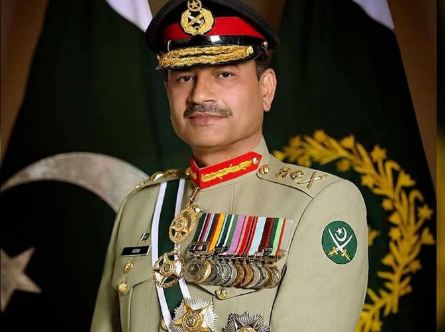
ISLAMABAD, MAY 26 /DNA/ – General Syed Asim Munir, NI (M), COAS Pakistan Army had a telephonic call with Major General Mohammad Bagheri, Chief of General Staff of Iranian Armed Forces and extended deep condolences over the sad and unfortunate incident of helicopter crash on 19 May 2024 which led to demise of President Ebrahim Raisi, Foreign Minster Amir Abdollahain and other important officials.

COAS expressed that Late President Ebrahim Raisi and Late Foreign Minister Amir Abdollahian were exceptional leaders and true friends of Pakistan.

COAS highlighted that loss of both the leaders and others was truly tragic and irreparable. COAS on behalf of all ranks of Pakistan Army extended prayers for the departed souls and well wishes for the bereaved families.

COAS said that Pakistan has historic, cultural and brotherly ties with Iran and the Armed Forces of Pakistan and Iran have always stood together. General Bagheri thanked COAS for sharing grief and vowed to continue the cooperation between the two militaries.

80-member business, trade delegation from Pakistan arrives in Addis Ababa, Ethiopia 

80-member business, trade delegation from Pakistan arrives in Addis Ababa, Ethiopia 

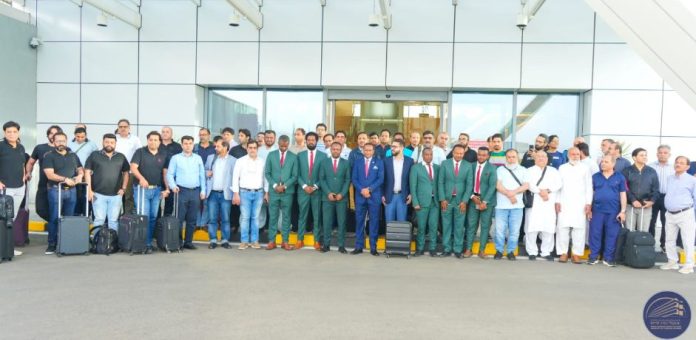
ADDIS ABABA, MAY 26 /DNA/ – A 80-Member Business and Trade Delegation from the Islamic Republic of Pakistan has arrived in Addis Ababa early on Sunday to explore business, trade and investment opportunities in the Federal Democratic Republic of Ethiopia (FDRE) for the five days.

Upon arrival, Special Envoy and Ambassador Extraordinary and Plenipotentiary of the FDR Ethiopia to Pakistan Jemal Beker Abdula along with Industrial Park Development Corporation and senior officials from the Ministry of Foreign Affairs received the trade delegation and accorded warm welcome in a splendid way at the Bole International Airport.

This is the second Business and Trade Delegation organized, coordinated and facilitated by the Ethiopian Embassy Islamabad within one and half year of its establishment in the Islamic Republic of Pakistan.

A large number of giant businesspeople including industrialists and investors are the part of this Business and Trade Delegation and will stay in Addis Ababa from May 26th to May 31st, 2024 for business engagements including participation in the 6th International Manufacturing Trade Fair, Ethio-Pakistan Business Forum, B2B and B2G meetings, industrial parks visits, and cultural nights.

The composition of the 2nd Business and Trade Delegation to Ethiopia is from across-sector that included agriculture and agro-processing, manufacturing, mining, tourism, ICT, fertilizer, chemicals, construction, pharmaceutical, surgical and other.

The objectives of this delegations are to introduce extraordinary business, trade and investment opportunities and incentives in diverse economic sectors of Ethiopia to the delegation and establish a solid connection between the business community of the two countries for further solidifying the Ethio-Pakistan relations. 

The delegation is arranged, coordinated and facilitated by the Ethiopian Embassy Islamabad after launching a comprehensive and massive mobilization campaign across Pakistan for mobilizing the business community from major economic sectors of Pakistan.

H.E. Jemal Beker Abdula, Special Envoy and Ambassador Extraordinary and Plenipotentiary of the FDR Ethiopia in Pakistan, led the mobilization campaign and personally visited the Business Chambers and Trade Associations in all the major cities of the Islamic Republic of Pakistan including Islamabad, Rawalpindi, Karachi, Lahore, Faisalabad, Gujranwala, Sialkot, Sheikhupura and others.

Strategic Choices for Belarus in the Region

Strategic Choices for Belarus in the Region

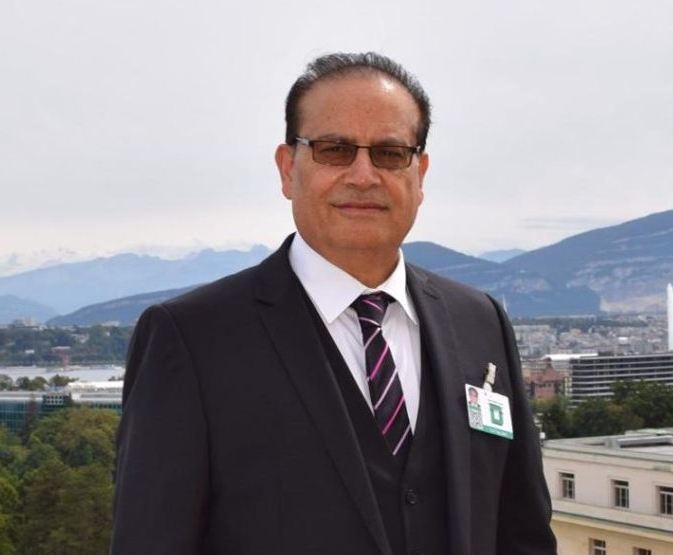
Dr. Muhammad Akram Zaheer

Belarus has been very close to Russia and have strong ties in trade and military cooperation. But recent events, like the conflict in Ukraine and sanctions against Russia, have made things more risky for Belarus.To deal with this risk, Belarus could try to make friends with other countries, like the European Union or China, to rely less on Russia. It could also work on building up its own industries to protect itself from problems outside the country.Inside Belarus, the government led by President Alexander Lukashenko faces challenges.

Some people are unhappy and want political changes. Lukashenko has to figure out how to keep things stable while also listening to these demands. Therefore, Belarus has to balance its old friendships with Russia, explore new partnerships, and handle its own problems at home. Recently, Belarus updated its military plans to deal with these challenges, which Russia supported because it brings Belarus closer to Moscow.Belarus and Russia have a long history together, dating back to their time in empires like the Soviet Union. They share a lot culturally and linguistically, and their presidents, Lukashenko and Putin, have a strong relationship.

In 1999, Belarus and Russia signed a treaty to get even closer, aiming for more political, economic, and military teamwork. While this “Union State” hasn’t become as powerful as the European Union, it shows they want to work together more.Russia has helped Belarus a lot during tough times, like after the 2020 election when there were protests. They trade a lot, especially in things like energy, machinery, and food. Belarus relies on cheap oil and gas from Russia, and Russia has given them loans and helped with their debts, which is really important for Belarus’s economy.

Belarus and Russia often do military exercises together, like the Zapad exercises. This shows how they work together in the military and can work together well. Both countries are part of a group called the Collective Security Treaty Organization (CSTO), which helps them with security. Belarus lets Russia use some of its military places, like radars and places for communication. Russia has promised to help Belarus with its military if there’s danger from outside, which makes their military bond stronger. Because both countries have been punished by the West, they’ve become closer in how they work together economically and politically to deal with these punishments. Belarus has supported Russia’s actions in the Ukraine conflict, even letting Russian forces use its land for moving things around and doing operations.

 This support has made Belarus more separate from the West but also more reliant on Russia. People in Belarus and Russia still do a lot together, like share media, education, and have family connections that cross borders. The relationship between Belarus and Russia is strong in many ways, like politics, money, military, and culture. Even though Belarus needs Russia more, both countries have built this partnership over many years.Belarus is very close to Russia in politics, the military, and the economy.

They have agreements like the Union State and military deals that tie them strongly to Russia. This close relationship with Russia often causes problems for Belarus with the EU, especially in Eastern Europe. Belarus is also part of the EU’s Eastern Partnership plan, which tries to create a common area with shared values and economic connections between the EU and six Eastern European countries. But Belarus doesn’t participate much in this because of its internal politics and its closeness to Russia.The presidential election in 2020 in Belarus caused a lot of disagreement and protests. This made the relationship between the EU and Belarus worse. The EU increased sanctions and supported groups in Belarus who oppose the government.

In 2021, Belarus was accused of causing a crisis with migrants at its borders with Poland, Lithuania, and Latvia as a way to get back at the EU for the sanctions. This made tensions even higher and led to more security measures and sanctions against Belarus from the EU.If Belarus makes big changes in its politics or leadership, it could improve its relationship with the EU. But Russia’s influence over Belarus is a big factor. If Russia changes its foreign policies or internal situation, it could affect Belarus’ relationship with the EU.The way the EU deals with Eastern Europe, especially how it balances democratic values and security concerns, will also affect how it deals with Belarus in the future.

Belarus is part of some regional groups. The CIS is one of them. It was made after the Soviet Union broke up and aims to help cooperation in politics, the economy, the environment, and other areas among the former Soviet countries. Belarus benefits from trade deals in the CIS, which help its economy. The CIS also helps Belarus with security and military cooperation. The EAEU is another group Belarus is in. It’s an economic union of countries in northern Eurasia. Being in this union helps Belarus trade more easily with other member countries like Russia, Kazakhstan, Armenia, and Kyrgyzstan. It also lets people move for work easily, which is good for Belarusian workers. The CSTO is a military group of some post-Soviet countries. It helps them work together for defense and security. Being in this group helps Belarus with its defense and makes the region safer.

The Union State between Russia and Belarus is another important partnership. It helps Belarus with energy and money from Russia, which is really important for its economy. This partnership also means Belarus follows Russia’s lead in politics, both inside and outside the country.The Eastern Partnership is the EU’s plan for its relationship with some post-Soviet countries including Belarus. Even though things are complicated with the EU, this partnership gives Belarus a way to talk and maybe work together with the EU on trade and human rights issues. Belarus can get help for its development projects through this partnership.

Belarus mainly looks to Russia and other post-Soviet groups for its partnerships, because it gets benefits like money and security from them. But it also tries to balance this with its relationship with the EU, looking for more ways to grow its economy and society.

Stay Connected

64FansLike
60FollowersFollow

Latest Reviews

Exchange Rates

USD - United States Dollar
EUR
1.17
GBP
1.35
AUD
0.72
CAD
0.73