Home Blog Page 905

OIC demands immediate halt to Israeli attacks on Palestinian civilians

OIC demands immediate halt to Israeli attacks on Palestinian civilians

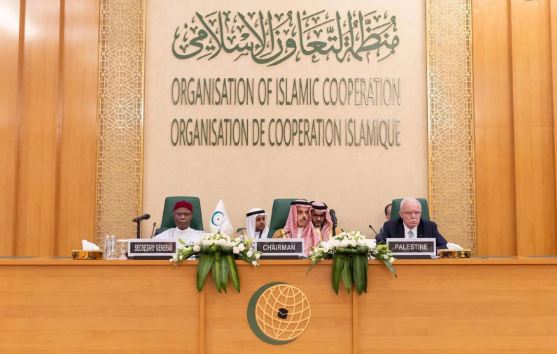
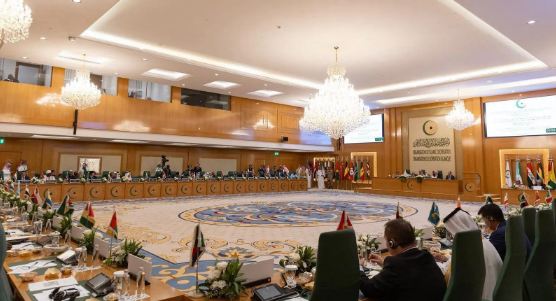
JEDDAH, OCT 18 /DNA/ – The Executive Committee of the Organization of Islamic Cooperation, in its extraordinary open-ended meeting held at the level of foreign ministers on Wednesday, 3 Rabi’ al-Thani 1445, corresponding to 18 October 2023, upon the joint invitation of the  Kingdom of Saudi Arabia, Chair of the current session of the Islamic Summit and Chair of the Executive Committee, and the Islamic Republic of Pakistan, to discuss the ongoing Israeli military aggression against the Palestinian people,

Recalling the principles and objectives contained in the Charter of the Organization of Islamic Cooperation,

Emphasizing all resolutions issued by the Organization of Islamic Cooperation regarding the issue of Palestine and the City of Al-Quds Al-Sharif,

Reaffirming its emphasis on the centrality of the Palestinian issue for the entire Islamic Ummah; Supporting the inalienable rights of the Palestinian people, most notably their right to self-determination and the return of Palestinian refugees, their right to independence, and the embodiment of the independent and sovereign State of Palestine on the borders of June 4th , 1967, with its capital, Al-Quds Al-Sharif, As well as his legitimate right to self-defense to confront the Israeli aggression that targets their lives, their sanctities, and their properties.

In light of the blatant and unprecedented Israeli aggression in the occupied Palestinian territory and the heinous massacres perpetrated against civilians in Gaza Strip by the Israeli occupation forces, which led to hundreds of innocent civilian casualties, thousands of injuries, and the displacement of hundreds of thousands through the demolition of their homes,
1.    Calls for the immediate cessation of the barbaric aggression of the Israeli occupation forces against the Palestinian people and the immediate lifting of the siege imposed to the Gaza Strip; Reaffirms its strong condemnation of the unprecedented aggression against civilians in the besieged Gaza Strip and the entire occupied Palestinian territory by killing, bombing, deliberately destroying infrastructure, threatening to commit atrocities and to exterminate them, as well as the absolute rejection of targeting civilians under any pretext or displacing them from their homes, or starving and depriving them of safe access to humanitarian aid in contravention of all international norms and laws, and of the most basic humanitarian principles and values;

2.     Calls upon all countries to quickly provide humanitarian, medical and relief aid, water and electricity, and to open humanitarian corridors immediately in order to safely deliver urgent aid to the Gaza Strip, including through the United Nations institutions particularly the United Nations Relief and Work Agency  for Palestine Refugees in the Near East (UNRWA) and support its efforts in this regard ; Warns of the danger of continuing the policy of deliberate targeting of civilians and collective punishment accompanied by policies of starvation, water deprivation, and the stopping of the only power generation station in Gaza Strip suspended due to the prevention of fuel access, portending a real disaster for all health and humanitarian services, in contravention of international humanitarian law and amounting to the commission of international crimes, including the crime against humanity.

3.    Strongly condemns the blatant targeting by Israel’s brutal occupation forces of Al-Ahli Baptist Hospital in Gaza Strip, which killed and injured hundreds of innocent sick, injured and displaced innocent civilians, which represents a war crime, extermination and a flagrant violation of international humanitarian law, ethics and international and humanitarian instruments, Calls upon the international community to act swiftly and to hold the Israeli occupation accountable for these heinous war crimes against the Palestinian people and humanity as at large, and calls for immediate intervention to halt this massacre;

4.    Israel, the occupying power, bears full responsibility for the fate of civilians in the Gaza Strip and the real tragedy they are subjected to under bombardment, siege, and starvation, without electricity, food, or clean water, while being forced to abandon their homes, and for the policy of indiscriminate collective punishment that it applies in a flagrant violation of international law and international humanitarian law,  as well as its legal responsibilities as the occupying power in accordance with the Geneva Conventions;

5.    Stresses the importance of preserving the lives of all civilians, and not targeting them in any way being inconsistent with international law and international humanitarian law, as well as divine laws.

6.    Rejects categorically calls to displace the population of Gaza Strip and affirms its support for the steadfastness of the Palestinian people on their land; Stresses the importance for the international community to play its role in preventing any attempt of forced displacement of the Palestinian population from their land, transferring the crisis to the neighboring countries and exacerbating issue of Palestinian refugees whom right to compensation and return must be met with in the framework of a comprehensive solution to the conflict that addresses the final status issues in conformity with the pertinent UN resolutions and the Arab Peace Initiative; stopping the military escalation, lifting the siege on the Gaza Strip, and contributing urgently to the entry of relief and humanitarian aid for civilians;

7.    Expresses its strong regret and condemnation of the failure of the United Nations Security Council and its inability to discharge its responsibilities by taking a decisive decision to halt the war crimes carried out by the Israeli occupying forces against the Palestinian people in Gaza Strip and all Palestinian territory, which negatively affect the Security Council’s role in maintaining international peace and security and protecting unarmed civilians;

8.    Calls upon the United Nations and the UN Security Council to assume its responsibilities, to take all urgent measures to ensure an end to the brutal and barbaric aggression against the Palestinian people, particularly in the Gaza Strip and the entire Palestinian territory, to allow the entry of humanitarian aid, to provide protection for defenseless Palestinian civilians, and to stop the escalating humanitarian catastrophe carried out by the forces of the illegal Israeli occupation;

9.    Warns of the escalation of attacks by the Israeli occupation army and settler terrorism weaponed and protected by the occupation forces in Al-Quds Al-Sharif and the West Bank in their continuing aggression against the civilian population and their properties, including killing, destroying, displacing, building and expanding settlements, within the framework of its brutal colonial campaign aimed at annexing the occupied Palestinian territory and affirms the importance of preserving sanctity of holy sites in Al-Quds, and the full protection of Al-Aqsa Mosque as well as the prevention of the violation of the status and sanctity of sacred places in Al-Quds;

10.    Stresses the support of the Government of the State of Palestine at all levels, including the political, economic and financial levels, as well as its international and legal endeavors, to halt the heinous crimes, including the crime of genocide against the Palestinian people; National Authority those perpetrated by the Israeli occupation authorities;

11.    Deplores the international positions that back the brutal aggression against the Palestinian people, and grant Israel impunity, taking advantage of the double standards that provide cover for the occupying power and fuel the conflict, which will only lead to increased violence and destruction, and seek to punish the Palestinian people, including cutting off humanitarian aid to them;

12.    Reaffirms that peace, security and stability in the region will not be achieved without putting an end to the Israeli colonial occupation and its oppressive practices against the Palestinian people and by empowering the Palestinian people with their inalienable rights, particularly their right to self-determination, independence and return, on the basis of the international law and the resolutions of international legitimacy;

13.    Calls upon international actors to engage in sponsoring a serious political path to achieve peace based on ending the illegal Israeli occupation that had begun in 1967 and implementing the two-state solution, within a clear time frame, as stipulated in the rules of international law and United Nations resolutions, and referring to the Peace process and the Arab Peace Initiative;

14.    Calls upon the missions of the member States of the Organization of Islamic Cooperation in the capitals and international organizations to take immediate action to convey the OIC’s position to the capitals of the countries and organizations to which they are accredited and to work with the necessary speed up their endeavours towards condemning and stopping the aggression, and ensuring the provision of the necessary humanitarian supplies to the Palestinian people;

15.    Calls on Member states to apply all feasible and effective diplomatic, legal and deterrent measures, to stop the occupying power Israel’s crimes against humanity.

16.    Calls for an Extraordinary CFM meeting at the GS Headquarters to discuss the ongoing crimes of Israel against the Palestinian people.

17.    Request the Secretary-General to identify the possible set of effective and concrete measures as soon as possible and present it to the next Extraordinary CFM meeting.

18.    Stresses the need to provide international protection for the Palestinian people, in conformity with international humanitarian law standards as has been repeatedly advocated by the United Nations General Assembly, including in resolution ES-10/20 of 13 June 2018 and in line with the Final Communique of the 7th Extraordinary Islamic Summit, by dispatching an international protection force to protect innocent lives from ongoing attacks by the occupation forces and the extremist colonialist settlers ;

19.    Assigns the Secretary-General of the Organization to communicate with the five permanent members of the Security Council / the Secretary-General of the United Nations / the High Commissioner for Human Rights / the President of the European Union, and to continue coordination with regional and international organizations, including the League of Arab States, the Gulf Cooperation Council, the African Union and the Non-Aligned Movement in order to take the necessary steps aiming to compel Israel to stop all its violations, attacks and crimes and to work to provide international protection for the Palestinian people;

20.    Mandates the Secretary-General to follow up on the implementation of the present final communiqué and to report thereon to the next meeting of the Council of Foreign Ministers.
ISSI holds annual dialogue with Iranian think-tank IPIS

ISSI holds annual dialogue with Iranian think-tank IPIS

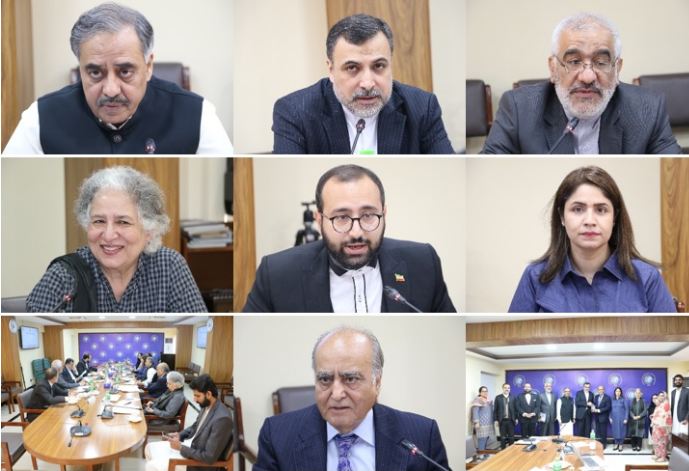
ISLAMABAD, OCT 18 /DNA/ – The Institute of Strategic Studies Islamabad (ISSI) and Iran’s Institute for Political and International Studies (IPIS) held Annual Dialogue on bilateral and regional issues today. The Centre for Afghanistan, Middle East & Africa (CAMEA) facilitated this dialogue.

The distinguished speakers included Dr. Muhammad Hassan Shaykh al-Islami, Deputy Foreign Minister of Iran and President IPIS; Ambassador Sohail Mahmood, Director General ISSI; Dr. Omid Babelian, Research Fellow IPIS; Amina Khan, Director CAMEA, Ambassador Hamid Reza Arshadi, Senior Research Fellow, IPIS, Ambassador Riffat Masood, Former Ambassador of Pakistan to Iran; and Ambassador Khalid Mahmood, Chairman ISSI.

The dialogue was divided into three working sessions. The first session was titled “Pakistan-Iran Bilateral Relations”, moderated by Ms. Amina Khan, Director CAMEA. The second session was titled “Changing Dynamics in the Middle East: Prospects for Regional Integration and Connectivity ” and was moderated by Arhama Siddiqa, RF CAMEA. The third session was titled “The Evolving Situation in Afghanistan” and was moderated by Sarah Akram, RF CAMEA.

In the Inaugural Session, Director General ISSI Ambassador Sohail Mahmood and Deputy Foreign Minister/President IPIS Dr. Muhammad Hassan Shaykh al-Islami, made opening statements –noting the unprecedented flux, fragility and polarization in the global environment and the profound changes taking place at the international and regional levels. They underscored the importance of close Pakistan-Iran consultations in this milieu and expressed satisfaction at the positive trajectory of the bilateral relationship. The two principals also exchanged perspectives on the situation in Afghanistan and the tragedy unfolding in Palestine. They underscored the need for the world community’s urgent intervention to stop unabated oppression against Palestinian civilian population and provide immediate relief assistance. The proactive role of the UN and OIC in ensuring urgent action to address the current unacceptable situation was emphasised.

Ambassador Sohail Mahmood and Dr. Shaykh al-Islami also underscored the value attached to the institutional relationship between ISSI and IPIS and reaffirmed their commitment to intensify mutual exchanges and expand the scope of mutual collaboration between the two think-tanks.

During the first working session, speakers highlighted recent progress in the Pakistan-Iran bilateral relationship, including bilateral trade surpassing $2 billion, despite the challenge of sanctions. Collaboration on opening border crossings, opening of border market and importance of Iran-Pakistan Pipeline (IPI) gas were further highlighted. Pakistan-Iran mutual cooperation collaboration in ECO, SCO, OIC, UN and other multilateral fora was also positively evaluated.

During the second working session, speakers underlined the imperative for dynamic regional leadership, alongside the recognition of the pivotal importance of addressing the prevailing energy disparities within the region. A wide array of potential areas for regional collaboration was deliberated upon and the presenters called for concrete actions, self-sufficiency, and the political resolve to harness the region’s considerable potential for substantial collaboration through relevant regional multilateral platforms.

During the third working session, the speakers pointed out that Afghanistan plays a pivotal role as a junction connecting Pakistan, Iran, and the Central Asian Republics, rendering it a potential foundation for mutually-beneficial regional cooperation. It was also underscored that despite ongoing bilateral engagements, the absence of a coherent regional framework for addressing Afghanistan related issues highlights the necessity for comprehensive a regional initiative. The imperative of sustained engagement was emphasized, as the continued reliance on bilateral engagement may become the prevailing norm without a transition towards a regional mechanism.

Ambassador Khalid Mahmood, Chairman BoG ISSI, made concluding remarks highlighting the fruitful exchanges during the working sessions and the important contribution that the ISSI-IPIS Dialogue makes to overall bilateral cooperation.

Commander Turkish Air Force visits air headquarters

Commander Turkish Air Force visits air headquarters

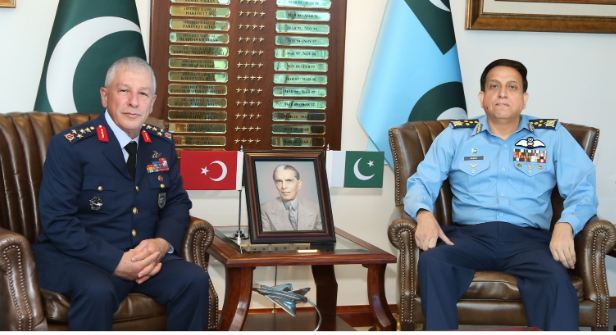
ISLAMABAD, OCT 18 /DNA/ – A delegation led by General Ziya Cemal Kadioğlu, Commander Turkish Air Force, called on Air Chief Marshal Zaheer Ahmed Baber Sidhu, Chief of the Air Staff, Pakistan Air Force in his office today. The meeting covered a wide array of matters related to geo-strategic situation, progress of current joint ventures and exploration of further avenues of collaboration in the aviation industry. The discussion also involved an exchange of insight from both dignitaries on the operational training of their respective air forces in the backdrop of PAF’s on-going mega aerial exercise, Indus Shield 2023 which is being witnessed by dignitaries from around the globe. Both the commanders also agreed to explore further avenues of bilateral cooperation including collaboration for joint production of military hardware with special focus on unmanned aerial platforms.

On his arrival, a smartly turned out contingent of Pakistan Air Force presented guard of honour to General Ziya Cemal Kadioğlu. Later, the visiting dignitary was introduced to the Principal Staff Officers.

During the meeting, Air Chief Marshal Zaheer Ahmed Baber Sidhu, Chief of the Air Staff, Pakistan Air Force, shared the framework of PAF’s comprehensive modernization strategy involving procurements of technological  equipment from allied countries, bolstering critical infrastructure and a comprehensive restructuring of its training set-up, in order to address contemporary air warfare challenges. The Air Chief highlighted that both the brotherly countries enjoy long-standing religious and historic ties which are manifested through unprecedented strategic partnership. Appreciating the participation of Turkish Air Force in Exercise Indus Shield, the Air Chief reiterated his resolve to further enhance the existing bilateral relations in military-to-military cooperation, strategic alliance and the training domain. The Air Chief further remarked that PAF pilots are playing an active role in providing basic and tactical level training to Turkish aircrew. He reiterated Pakistan Air Force’s commitment to provide training and capacity-building assistance to the Turkish Air Force.

General Ziya Cemal Kadioğlu, Commander Turkish Air Force, who is on his maiden visit to Pakistan, commended the professionalism of Pakistan Air Force and acknowledged its rising indigenous capacity in the aviation industry. He also expressed keen interest in the National Aerospace Science and Technology Park and appreciated the unwavering commitment of the Air Chief in making this project a huge success. The visiting dignitary further affirmed that the on-going exercise Indus Shield hosted by PAF, would be a way forward to further consolidate the existing bond of brotherhood and military ties between the two countries in addition to enhancing the operational readiness of the participating air forces.

During his visit, the Turkish Air Force Commander also visited various installations and technological infrastructure established at Air Headquarters, Islamabad including PAF’s National ISR and Integrated Air Operations Centre and PAF’s Cyber Command. General Ziya Cemal Kadioğlu also visited National Aerospace Science and Technology Park, which is a major landmark in Pakistan’s journey towards progress and is all set to play a pivotal role in shaping the country’s aerospace industry, fostering strategic partnerships and contributing to the economic growth of Pakistan.

The visit of Turkish Air Force Commander to Pakistan signifies a resolute commitment from both nations to reinforce their strategic partnership through fostering collaboration and promoting robust relations between their respective Air Forces.

Hope and courage echo at Palestine solidarity conference

Hope and courage echo at Palestine solidarity conference

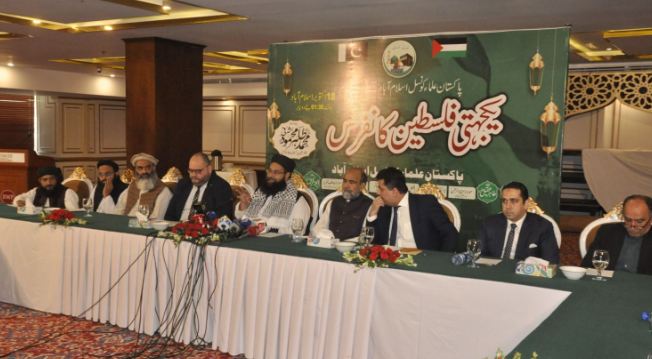
LAHORE, OCT 18 /DNA/ – The representatives of all the political and religious parties of the country have urged the Organization of Islamic Cooperation(OIC) to take practical measures on the situation in Palestine and announced to support the oppressed Palestinians at all levels, stating that the countries, which support the Israeli terrorists are also responsible for genocide of the Palestinians.

A joint declaration issued at Palestine Solidarity Conference held here on Wednesday in the aegis of Pakistan Ulema Council, stated that the Muslim countries, which established relations with Israel should immediately sever relations with Israel and announced that the entire Muslim Ummah would observe Friday, October 20 as Palestine Martyrs’ Day. In this regard peaceful protests will be demonstrated and boycott will be made of the products of Israel and its supporting countries.

So far, more than 3500 Palestinians have been martyred including children in Israeli bombardment and more than 13000 Palestinians have been injured.

The conference was chaired by the Chairman of the Pakistan Ulema Council Hafiz Muhammad Tahir Mahmood Ashrafi and leading representatives of religious and political organizations including Maulana Abubakar Hameed Sabri, Maulana Abdul Haq Mujahid, Maulana Asadullah Farooq, Allama Zubair Abid, Allama Tahir Al Hasan, Maulana Tahir Aqeel Awan, Maulana Aziz Akbar Qasmi, Maulana Muhammad Ashfaq Patafi, Maulana Muhammad Aslam Siddiqui and others also addressed the conference.

Leaders of various religious and political parties, foreign ambassadors of the Muslim countries also addressed the conference.

The Charge’ d Affairs of Palestine Embassy in Pakistan, Nader Khamis Al-Turk, while addressing the conference said that more than 15000 Palestinians have been injurer so far and 3500 Palestinians have been martyred.

“We only ask the Muslim Ummah to stand with our rightful position, we don’t want weapons from Muslim Ummah but simply wants from the Islamic world to take courageous stance for the cause of Palestine”, said Nader Khamis.

He said that more than 1000 Palestinians were martyred in a missile attack on Tuesday night in a brutal attacks on a Hospital in Gaza.

October 7 has buried Israel’s terror, arrogance, and pharaohism, said Nader Khmis Al-Turk,Charge d’ Affair of the Embassy of Palestine to Pakistan adding that We are grateful for the constant stand of the government, security forces and people of Pakistan on Palestine issue.

Pakistan has never changed its position on the issue of Palestine and Pakistan’s stance is the same as that of Quaid-e-Azam Muhammad Ali Jinnah. In the last ten days as many as 3500 martyrs including 1000 children have been martyred in Gaza and 12000 injured.

Speaking at the conference, Chairman of the Islamic Ideological Council Qibla Ayaz said that the American attitude is regrettable on the issue of Israel and approach adopted by the American foreign minister is undiplomatic.

Palestinians cannot be kept as slaves, Pakistan is with the people of Palestine, said joint declaration of Palestine Solidarity Conference.

The position of the President of Egypt and the Crown Prince of Saudi Arabia on the Palestine issue is bold, but the Muslim Ummah wants more practical steps on the prevailing situation in Gaza.

Through a resolution adopted in the conference, while appreciating the position of the Kingdom of Saudi Arabia, Egypt, Qatar, Turkey and Pakistan, the head of the Kingdom of Saudi Arabia, the Custodian of the Two Holy Mosques, King Salman bin Abdulaziz and his Crown Prince Mohammed bin Salman, were demanded to immediately call a meeting of the heads of Russia, China and the OIC and decide on practical measures against Israeli terrorism as per their stance on Palestine issue.

The center of the Muslim Ummah is the Harmain Al- Sharifain, and the entire Muslim Ummah responds to every voice that comes from the Haramain Al-Sharifain.

In the current situation, as the kingdom of Saudi Arabia has taken a clear position, it is necessary to move towards practical measures with the same stance.

In another resolution, while appreciating the position of Muslim World League and Islamic scholar, Sheikh Al-Azhar, it was said that the leadership of Pakistan Ulema Council is in contact with the Ulemas-Mashaykh of Muslim world and unanimously agreed steps will be taken on the Palestine issue, God willing.

Addressing the conference, Chairman Pakistan Ulema Council and President International Interfaith Harmony Council Hafiz Muhammad Tahir Mahmood Ashrafi said that the position of Pakistan is clear and we consider the position of Saudi Arabia, Egypt, Jordan, Turkey, Iran and Qatar as the representation of the entire Muslim Ummah.

Israel and its followers want to create a situation in which anarchy spreads within the Muslim countries and misunderstandings arise between Muslim governments and Muslim people, and extremist and terrorist organizations re-emerge in power, said Hafiz Muhammad Tahir Mahmood Ashrafi.

He pointed out that why is Lebanon and Syria being bombarded? Tahir Ashrafi stated that, under a systematic planning, Israel and its guardians want to wage a long war, but this war will not benefit anyone.

While appreciating the joint declaration of the corps commander meeting yesterday, Hafiz Muhammad Tahir Mahmood Ashrafi said that what the Commander-in-Chief of Pakistan said yesterday is the interpretation of the state and the people of Pakistan.

No one can change the position of Pakistan and no one will be able to do so, said Hafiz Muhammad Tahir Mahmood Ashrafi and also appealed that the entire Islamic world should observe Palestine Martyrs’ Day on October 20 and express solidarity with the Palestinian people.

He said that the stance taken by the Crown Prince of Saudi Arabia and the Saudi Foreign Minister, President of Egypt in front of the US Department of State has strengthened the Muslims and encourage the hearts of the Muslims.

We hope and expect courage from the entire Muslim Ummah.

Addressing the conference, the ambassador of Syria condemned the attacks on Palestine and Syria and declared full support for the Palestinian people.

Leadership of all the religions, religious sects and ambassadors of the different Muslim countries in Islamabad participated in the conference.

President for enhancing trade and economic cooperation with Morocco

President for enhancing trade and economic cooperation with Morocco

DNA

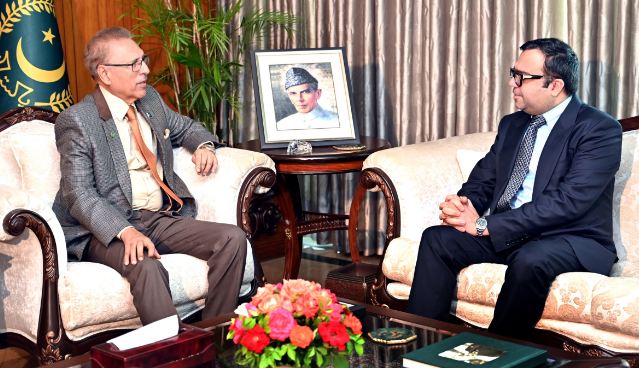
ISLAMABAD, OCT 18 – President Arif Alvi has called for increasing cooperation with Morocco in the fields of trade, investment and economy. He asked Pakistan’s newly-appointed Ambassador to work for enhancing Pakistani exports to Morocco.

The President expressed these views while talking to Pakistan’s Ambassador-designate to Morocco, Muhammad Sami-ur-Rehman, who called on him, at Aiwan-e-Sadr, today.

Talking to the Ambassador, the President said that relations between Pakistan and Morocco were marked by common history and shared interests, and the two sides needed to increase the exchange of high-level visits to further strengthen bilateral cooperation. He further said that the Special Investment Facilitation Council (SIFC) had been constituted to provide a single platform to facilitate and attract investment and Morocco could benefit of Pakistan’s business friendly environment.

Earlier, Pakistan’s Ambassador/Permanent Representative-designate to the United Nations in Geneva, Dr Bilal Ahmad, also called on President Dr Arif Alvi.

Talking to the Ambassador, the President urged him to continue Pakistan’s positive engagement with the UN system to advance Pakistan’s national interest and priorities. He underlined that Pakistan needed to increase its engagement with the World Health Organization and International Labour Organization to build capacity of its public health system and uphold labour standards. He urged the Permanent Representative-designate to use the OIC platform in Geneva to project the perspective and voice of the Muslim Ummah on issues such as Islamophobia and the plight of the Kashmiri and the Palestinian people. He asked the Ambassador to expose the real face of India and highlight the human rights violations and atrocities being committed by India in the Indian Illegally Occupied Jammu and Kashmir.

The President expressed his best wishes for the Ambassador-designates for their future responsibilities at their respective stations.

Japan grants $5.3M for flood-hit schools in Sindh

Japan grants $5.3M for flood-hit schools in Sindh

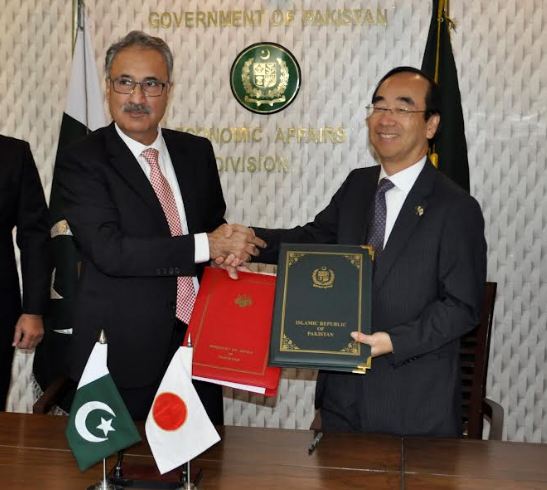
ISLAMABAD, OCT 18 /DNA/ – The Government of Japan has agreed to provide new grant assistance worth 794 million Japanese Yen (equivalent to around 5.3 million USD/ around 1,530 million PKR) for reconstructing educational facilities in flood-affected areas in Sindh.

On October 18, 2023, a signing ceremony for the assistance was held at the Ministry of Economic Affairs in Islamabad. WADA Mitsuhiro, Ambassador of Japan, KINOSHITA Yasumitsu, Chief Representative of Japan International Cooperation Agency (JICA), Dr. Kazim Niaz, Secretary, Ministry of Economic Affairs, and other officials from both countries attended this ceremony.

Since June 2022, heavy monsoon rains have intermittently caused flooding that has submerged one-third of the country, resulting in more than 1,700 deaths and 33 million people affected. Damage in Sindh province has been severe, accounting for 66% of the total damage in the education sector. As medium- and long-term measures, the rapid reconstruction of damaged educational facilities are important to ensure that children have safe learning opportunities.

This is the fourth grant aid through which the Government of Japan supports the improvement of educational facilities in Sindh province. It has been reported that the school buildings assisted by Japan in the past projects suffered less damage and destruction from the rainfall and flooding in 2022 because they were designed and constructed based on analysis of the 2010 floods. The new project will also incorporate the concept of “Build Back Better” to reduce vulnerability of the target schools to future disasters and build resilience of communities where the schools are located.

This project aims to establish safe and disaster-resilient learning environment through reconstruction of elementary schools which were heavily affected by the flood and heavy rain in 2022. The assistance contributes to improving the school enrollment rate and gender equality in the target areas, contributing to the SDGs Goal 4 (Quality education) and 5 (Gender equality).

In the signing ceremony, H.E. Mr. WADA Mitsuhiro stated, ” I hope that the project this time will further contribute to creating an environment where children can continue to receive education even after the floods in the future”.

Mr. KINOSHITA, while speaking at the event said “we believe that the new grant aid project will build not only school buildings, but also it will build brighter and more resilient future for the next generation of Pakistan”.

ICCI calls for focusing on export of manpower to improve economy

ICCI calls for focusing on export of manpower to improve economy

ISLAMABAD, OCT 18 /DNA/ – Faad Waheed, Acting President, Islamabad Chamber of Commerce & Industry (ICCI) said that remittances of Overseas Pakistanis are the backbone of the national economy as they account for more than total exports of goods and services annually and contribute significantly to improving the country’s foreign reserves. He stressed that to further increase the volume of foreign exchange reserves, the government should make strong efforts to explore new markets for increasing the export of manpower across the globe that would help improve the foreign exchange and the overall economy. He said this while talking to Muhammad Jawad Sohrab Malik, Special Assistant to Prime Minister on Overseas Pakistanis and Human Resource Development during a meeting with him along with Asad Hafeez Kiyani Chairman, Shakeel Ahmed Abbasi Vice Chairman and Faheem Iqbal Chaudhry former Senior Vice Chairman, Pakistan Overseas Employment Promoters Association (POEPA).

Faad Waheed said that Pakistan is the 5th largest country of the world in terms of population with a large pool of human resource and stressed that the government should equip its manpower with the latest skills and knowledge to improve their prospects of their export to potential markets. He said that Bangladesh has exported over 1100,000 workers during the year ending June 2023, but Pakistan’s export of manpower during the 11 months of the outgoing fiscal year remained just around 372000, which is not an impressive figure. He said that many countries in the Middle East, Europe, South East Asia are in high demand of skilled labor and the government should provide the demand-driven skills to its workforce that would increase their export and strengthen the economy.

Muhammad Jawad Sohrab Malik, Special Assistant to Prime Minister on Overseas Pakistanis and Human Resource Development said that the government is determined to harness the the potential of a substantial Pakistani workforce to realize the goal of fast economic revival. He said that during a recent meeting with the Saudi Ambassador, he proposed the Kingdom of Saudi Arabia to employ a substantial number of Pakistani workers to contribute to the Saudi Vision 2030. He said that Pakistan has the ability to export one million workers every year to various potential markets and all possible efforts are being made to realize this goal to strengthen the economy.

Asad Hafeez Kiyani Chairman, Shakeel Ahmed Abbasi Vice Chairman and Faheem Iqbal Chaudhry former Senior Vice Chairman, Pakistan Overseas Employment Promoters Association also spoke on the occasion and shared useful ideas to explore the possibilities for creating new employment opportunities for Pakistanis around the world. They assured of their full cooperation to the government in achieving this goal. 

The Unending Cycles of History

The Unending Cycles of History

Dr. Muhammad Akram Zaheer

The world is currently undergoing a profound transformation, a phenomenon that occurs only once in a few generations. This transformation is not orchestrated by those in power, and it cannot be easily thwarted. It commences with economic and political pressures within countries, which can escalate into military conflicts as internal systems strive to regain stability.

Some nations manage these changes as challenging yet normal occurrences, while others teeter on the brink of instability or find themselves under attack. This metamorphosis is frequently referred to as progress, but it is far from an effortless victory; rather, it’s a painful struggle with the intricacies of reality. Often, the hardships and trials of development prompt people to lay blame on other groups or nations for the disruptions and alterations, rather than examining their own actions.

The origins of this current era can be traced back to the early 1990s in Europe when the Soviet Union disintegrated, and the Maastricht Treaty was signed to unite the continent. In 2001, the United States experienced the September 11 attacks, and in 2013, Xi Jinping assumed the presidency of China. In the grand tapestry of history, a decade or two represents a relatively brief span of time. The initial objective of the Soviet Union’s dissolution was to foster a more efficient region. The unification of Europe under the European Union was intended to diminish the prospects of conflict and promote prosperity.

The U.S. response to the 9/11 attacks aimed to mitigate the threat of terrorism. Xi’s ascension in China was envisioned to propel the nation toward substantial prosperity. None of these aspirations can be deemed outright failures. The disintegration of the Soviet Union brought prosperity to many former Soviet states. European unification enjoyed a period of relative productivity. The U.S. response effectively prevented another large-scale attack akin to 9/11. Meanwhile, China continued its economic expansion. As with previous cycles, these leaders’ objectives were not utter failures, at least until the next cycle took hold.

A generation has passed since the commencement of the last major transformation, and the deficiencies of the preceding phase are now manifesting. Russia has been diligently working to reestablish its influence since the Ukrainian conflict. The European Union is grappling with deep-seated divisions, to the extent that Germany and France have proposed formalizing this schism. Recently, Islamic fundamentalism has resurfaced in the wake of attacks by Hamas on Israel. The United States, having successfully evaded another major terrorist attack, has entered the foreseeable final phase of its cycle, with social unrest manifesting along political, racial, religious, sexual, and other fault lines. These trends are likely to dominate the years ahead, and China’s economic growth has generated economic vulnerabilities and political friction.

Two fundamental points emerge from this scenario. First, nations are composed of millions of individuals, each with their own perspectives and judgments. When things go awry, there is a natural inclination to seek scapegoats, often resulting in leaders bearing the brunt of blame. Secondly, and perhaps more significantly, the predicaments of the new era often stem from the solutions implemented in the previous era. Thus, we find ourselves in a new era that originated from the last, with the recurrence of wars, economic challenges, and mutual resentments. These are universal realities that can occasionally usher in joy but are more frequently tragic in nature. The Greeks, with their deep sense of history and cyclical thinking, may well have perceived the world in a similar light.

The question arises: can humanity break free from these cycles? It would be comforting to think so, but as history has shown, such attempts have met with limited success. The cycle of change and turmoil appears to be deeply ingrained in the human experience. However, understanding the cyclical nature of history can provide valuable insights into our current challenges. To break free from these cycles, it is imperative that nations and leaders take a more proactive approach to addressing the root causes of these recurring issues. Instead of resorting to blame and finger-pointing, a more constructive and collaborative approach is needed. This entails a greater focus on diplomacy, conflict resolution, and global cooperation.

It requires a concerted effort to address the underlying economic, political, and social factors that contribute to instability and conflict. Moreover, it is essential to learn from past mistakes and successes. History is a rich source of knowledge and experience that can guide us in making more informed decisions. By studying the patterns and trends of previous eras, we can better anticipate and navigate the challenges of the present and future. Breaking free from these cycles also requires a shift in mindset.

It demands recognition that the world is interconnected and interdependent. The challenges we face, whether they be economic, political, or social, are not isolated to individual nations. They have global repercussions. Therefore, a more holistic and cooperative approach is necessary to address these challenges effectively.

The world is indeed undergoing a significant transformation, one that is deeply rooted in the cyclical nature of history. The challenges we face today are not isolated incidents but are part of a larger pattern of change and upheaval. While it may be difficult to completely break free from these cycles, it is not impossible. By taking a more proactive, collaborative, and informed approach, nations and leaders can work towards a more stable and peaceful world. Understanding the past can illuminate a path to a more harmonious future, where progress is achieved with less pain and struggle.

Cipher a hanging sword

Cipher a hanging sword

Qamar Bashir

As the Press Minister at the Embassy of Pakistan in France, I was acutely aware of the sensitivity and significance of handling confidential ciphers. Almost every day, the Ambassador and trusted staff sent ciphers to the Ministry of Foreign Affairs, addressing matters of utmost confidentiality.

On numerous occasions, ciphers related to the Press Section were shared with me in person, and I ensured they were safely returned to maintain their confidential status.

At that time, I had no inkling that these routine embassy ciphers would become so perilous, putting the lives of the former Prime Minister and former Foreign Minister at grave risk, particularly following the amendment of the Official Secrets Act in 2023, which now imposes the death penalty for violations of the official secrets.

In general,  government correspondence is often classified into different levels of sensitivity, such as “Top Secret,” “Secret,” “Confidential,” or other designations. The highest levels of classification, such as “Top Secret,” are reserved for the most sensitive information. Access to classified information is typically granted on a “need-to-know” basis. This means that only individuals who require access to specific classified information for their official duties are granted that access.

 In the context of diplomatic communication, the term “cipher” is commonly used to refer to a coded or encrypted message. Diplomatic cyphers are employed to protect sensitive or confidential information from unauthorized access or interception during transmission. These codes are usually complex and may involve various cryptographic techniques to ensure security. Diplomatic ciphers are essential for maintaining the confidentiality of diplomatic correspondence. They are employed when discussing matters of national security, sensitive negotiations, confidential information, or any communication that needs to be shielded from prying eyes.

Though, typically the heads of the state or government are authorized to declassify the cipher information but they can do so after following an elaborate procedure which may involve, seeking formal recommendations and views from the concerned ministries, the agencies, departments or institutions of national security and safety and other relevant departments before declaring any cipher subject matter as declassified. Even when the head of state and government take such decision he is required remove any sensitive parts of the cipher which can jeopardize national security or could potential harm the relationship with another friendly or important country,

If the head of state or government discloses classified or cipher information in a public meeting without following the established protocol and proper declassification procedures, it can have serious legal, political, and national security implications. It can potentially harm national security by revealing sensitive intelligence, military operations, or diplomatic negotiations. It  can lead to political backlash, undermining the leader’s credibility and reputation. Opposition parties, lawmakers, and the public may demand accountability and investigations.

In some cases, a head of state or government who engages in such behavior may face calls for resignation or impeachment, the severity of the response depends on the nature of the disclosed information and the political climate, erode trust within the government and among intelligence and security agencies, career professionals may lose confidence in the leader’s ability to protect sensitive information, can strain diplomatic relations with other countries, potentially leading to diplomatic crises.

The consequences of such actions can be significant; however, the specific outcome may depend on the legal and political systems in place in a given country and the extent of the breach. Legal processes, investigations, and, if necessary, legal action can follow such incidents to ensure accountability.

According to one legal opinion, the Prime Minister or Finance Minister of Pakistan were not authorized to disclose the cipher to the public as  the Official Secrets Act 2023 clearly states that any classified information, including diplomatic correspondence, cannot be disclosed to the public without the prior approval of the appropriate authorities. It is a serious crime, and the consequences can be punished with imprisonment for up to 14 years, or with the death sentence in certain cases.

The next important Question is,  who is the proper authority for seeking permission to disclose the cipher matter to the public?. In the case of the Prime Minister or Foreign Minister, the proper authority for seeking permission to disclose classified information, including cipher matter, to the public is the National Security Council (NSC), a high-level body that is responsible for advising the Prime Minister on matters of national security.

The NSC meets regularly to discuss matters of national security and to make recommendations to the Prime Minister. If the Prime Minister or Foreign Minister wishes to disclose classified information to the public, they must first seek the approval of the NSC. The NSC when making the decision will consider the factors such as the sensitivity of the information, the potential impact on national security and the public interest.

If the NSC approves the disclosure of the information, the Prime Minister or Foreign Minister will then need to obtain the approval of the Cabinet. The Cabinet is the highest decision-making body in the government, and it is responsible for approving all major decisions.

Once the Cabinet has approved the disclosure of the information, the Prime Minister or Foreign Minister can then make the information public. If official procedure is not followed, the provision of the amended Official Secret Act 2023 can be evoked.

The original section of the Act, Section 9, states that anyone who discloses classified information without authorization can be punished with imprisonment for up to 14 years. The amended section adds a new subsection, Subsection (3), which states that anyone who discloses classified information with the intent to injure the interests of Pakistan or to benefit a foreign power can be punished with death.

The amended section also expands the definition of classified information to include “any secret official code or password.” This means that anyone who discloses a secret official code or password without authorization can now be punished with death. This is a significant increase in the severity of the punishment for this offense.

The amended section of the Official Secrets Act has not yet been tested in court. It is possible that the courts will interpret the amended section in a way that limits its scope.

However, it is also possible that the courts will uphold the amended section in its entirety, which would mean that anyone who is found guilty of disclosing classified information with intent to injure the interests of Pakistan or to benefit a foreign power could be sentenced to death.

In many countries, the heads of the state or government are immune from prosecution during their time in office. Therefore it is exceedingly rare for heads of state or government to be punished for disclosing the content of diplomatic ciphers to the general public. 

Disclosure of diplomatic ciphers would typically be an action taken while in office and is often a matter of national security and foreign relations, subject to legal and political processes that differ from those applied to ordinary citizens therefore,  the legal actions related to disclosures of classified information are generally directed at lower-ranking officials or employees.

For example, Daniel Ellsberg, a former military analyst, leaked the “Pentagon Papers” to The New York Times in 1971. The Pentagon Papers were a classified Department of Defense study of U.S. political-military involvement in Vietnam from 1945 to 1967. Ellsberg faced charges under the Espionage Act but was not ultimately convicted. Chelsea Manning, a former U.S. Army intelligence analyst, leaked classified documents to WikiLeaks in 2010, including diplomatic cables and military information. Manning was convicted of multiple charges under the Espionage Act in 2013. Edward Snowden, a former National Security Agency (NSA) contractor, leaked classified information in 2013, revealing extensive surveillance programs. Snowden faced charges under the Espionage Act but was granted asylum in Russia.

It is relatively uncommon for former heads of state or government to be sued and punished for disclosing diplomatic ciphers after leaving office. Diplomatic secrets are typically subject to the authority and discretion of the sitting government or head of state. Once out of office, former leaders often enjoy certain legal protections or immunity from prosecution for actions taken during their time in power. However, the extent of legal protection varies by country, and the political circumstances surrounding the disclosure play a significant role. Laws and legal systems differ, so it is possible, albeit rare, for legal action to be taken against former leaders.

The former Prime Minister of Pakistan does not have immunity from charges related to the disclosure of cipher content under the Official Secrets Act 2023. This law does not provide any special protection for former government officials, including former Prime Ministers. Parliamentary privilege, which shields members of Parliament from prosecution for statements made within Parliament, does not extend to disclosures made outside of parliamentary proceedings, such as the release of cipher information.

Consequently, the former Prime Minister is subject to the same legal provisions as any other Pakistani citizen and could face prosecution for revealing classified information, carrying penalties of up to 14 years in prison or even the death penalty.

While the former Prime Minister argues that his actions were justified in the public interest and that his previous immunity protects him, these arguments await judicial determination. It’s essential to emphasize that the former Prime Minister is considered innocent until proven guilty and retains the right to a fair trial and the opportunity to mount a legal defense against the charges.

Qamar Bashir

Former Press Secretary to the President

Former Press Minister to the Embassy of Pakistan to France

Former MD, SRBC

KPK govt schools in Swabi district open early childhood education centers

KPK govt schools in Swabi district open early childhood education centers

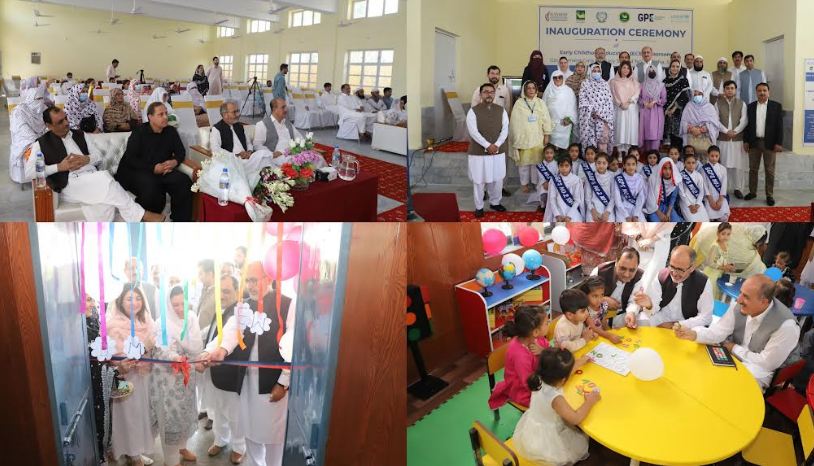
ISLAMABAD, OCT 18 /DNA/ – UNICEF and Hashoo Foundation, in collaboration with the Khyber Pakhtunkhwa Elementary and Secondary Education Department (E&SED), are proud to announce the inauguration of 500 Early Childhood Education (ECE) classrooms across twenty-three districts in Khyber Pakhtunkhwa (KP). This transformative initiative is made possible through funding from the Global Partnership for Education (GPE) and Education Cannot Wait (ECW).

Aligned with the Khyber Pakhtunkhwa Education Sector Plan 2020-2025, the E&SED underscores the critical role of ECE in a child’s development and learning, making it a top priority for the region. To actualize this commitment, the existing 13,000 Katchi classrooms in primary schools will be converted into modern ECE classrooms.

In pursuit of the goal to refurbish 13,000 classrooms into quality ECE centers, UNICEF has partnered with Hashoo Foundation in a groundbreaking project titled “Transformation of ECE Classrooms in 23 Districts of Khyber Pakhtunkhwa.” The ECE Centers being inaugurated recently are among the 500 centers to be established by Hashoo Foundation, in collaboration with the E&SED and the Implementation Support Unit of the E&SE Directorate, spanning 23 districts in KP.

The funding for these projects is provided by the Global Partnership for Education (GPE) and Education Cannot Wait (ECW), supporting 1,600 centers and 100 centers, respectively. This initiative is set to benefit over 96,000 children in Khyber Pakhtunkhwa.

UNICEF has a long-standing partnership with the E&SED, offering technical and financial assistance to enhance educational opportunities, particularly for girls, and to improve education service delivery through evidence-based planning. Their collaboration focuses on multiple areas, including access, equity, inclusion, quality, governance, and management of education.

The primary objective of this endeavor is to create a nurturing environment for early childhood education and expand educational opportunities, especially in underserved communities, with a strong emphasis on advancing female education.

Hashoo Foundation, with a rich history of promoting education, has reached 550,278 children since launching the Hashoo Schools initiative in 2002. Notably, the Child Education Support Program (CESP), benefitting 25,500 girls and 24,500 boys, and the 2022 Quality Education Program (EQuIP) exemplify the foundation’s dedication to enhancing the educational landscape.

The inauguration ceremony united key stakeholders, including representatives from UNICEF, the Elementary and Secondary Education Department (E&SED), Hashoo Foundation, the KP government, and the local community. Their significant support and contributions were greatly appreciated.

Abdul Waheed, Acting Country Director of Hashoo Foundation, expressed his heartfelt satisfaction at witnessing the inception of the ECE project, a promise of a brighter future for Khyber Pakhtunkhwa’s children. The UNICEF Education Specialist reiterated their unwavering commitment to supporting partners like Hashoo Foundation, highlighting the profound impact of establishing 500 ECE schools on children’s lives across KP.

The Secretary of the Elementary and Secondary Education Department lauded the tireless efforts of GPE, UNICEF, and Hashoo Foundation, reaffirming a strong commitment to provide full support. Recognizing that the project’s success will empower children with education while strengthening communities and contributing to the overall development of the region, he emphasized the department’s dedication to this transformative journey.

Stay Connected

64FansLike
60FollowersFollow

Latest Reviews

Exchange Rates

USD - United States Dollar
EUR
1.17
GBP
1.35
AUD
0.67
CAD
0.73