Home Blog Page 905

The emerging political scenario and choices we have

Is there any light at the end of the tunnel?

Given the prevailing blame on the PTI for the political impasse, it could be strategic for its leaders to initiate dialogue with all stakeholders, focusing on a singular agenda: “Join us in signing a charter against corruption.” Such a proactive move has the potential to shift dynamics in favor of the PTI.

Comment

Ansar M Bhatti

The emerging political situation in Pakistan poses significant risks to its struggling economy and already fragmented social fabric. The potential for clashes among various state institutions further exacerbates the challenges faced by the people, who are desperately seeking a leader capable of guiding them out of the current crisis. Chronic issues of governance and misplaced priorities have long afflicted the nation. The most distressing aspect of this scenario is the lack of a clear roadmap toward peace and progress.

The February 8 elections, despite being flawed and manipulated, were expected to bring political and economic stability. There was hope that the coalition government, comprised of PML-N, PPP, MQM, and other smaller parties, would steer the country out of crisis. However, events did not unfold as anticipated. The ruling elite’s primary hope for reviving the economy still hinges on an IMF deal. The Special Investment Facilitation Council (SIFC) has yet to make significant progress, as the friendly countries it has approached have not taken practical steps. Although their promises are encouraging, it remains unclear when these commitments will materialize into tangible outcomes.

Countries such as Saudi Arabia and the UAE, which genuinely seek to help Pakistan through significant investments, are wary of the country’s deteriorating political situation. During high-level interactions with Pakistani officials, the Saudis made it clear that political stability, including the involvement of all political stakeholders including PTI, is essential for successful investment ventures. They emphasized that economic stability cannot be achieved without political stability, a point that makes perfect sense.

So, the question now is how to achieve political stability. Undoubtedly, the PTI holds the key to this stability, which is why there is a demand, even from abroad, for the PTI to be engaged in the process. The government claims it is ready and has made efforts to engage the PTI in talks. However, there is no evidence to support these claims.

As we know, Imran Khan essentially embodies the PTI, so it raises the question: who from the government side has met with him in prison with the aim of initiating a political rapprochement? The available information indicates that no such effort has been made thus far.

There is yet another intriguing question: will Imran Khan respond positively if approached for talks? The track record of PTI leaders suggests he may not accept this offer, as he views both the PML-N and the PPP as two sides of the same coin. Khan believes there is no point in talking to these two parties because they are the primary defenders of the status quo, whose sole purpose in coming to power is to “loot and plunder the national exchequer.”

However, after the events that transpired with PTI and Imran Khan, even his political adversaries believe he may have learned from his past experiences. Whether he likes it or not, he must live and work with the key stakeholders at the helm of affairs. Consequently, he must reconcile with the ground realities if he and his party genuinely aim to rid the country of its ills. There is no doubt that PTI received a resounding mandate in the February 8 elections and deserved a chance to govern at the federal level. Unfortunately, this is how our system operates. In 2018, PML-N and especially Nawaz Sharif suffered a similar defeat, with the aim at that time being to bring PTI into power.

If there are flaws in the system, only politicians have the power to correct them. Non-political forces are likely to support the status quo because it maintains their influence in politics and other matters. However, the critical question is whether politicians are strong and ethical enough to address these issues. Unfortunately, at this point in time, they are not. Thus, the core problem lies with the politicians, whose dubious credentials invite interventions from non-political entities.

Unfortunately, the current situation doesn’t offer much hope for immediate improvement. The political landscape is deeply divided, with stakeholders unwilling to engage in meaningful dialogue and compromise. This lack of unity, coupled with the influence of those who benefit from the status quo, creates a significant obstacle to progress.

Moreover, the current situation is likely to deter potential foreign direct investments, forcing Pakistan to rely once again on the IMF—a move that could prove disastrous.

Endnote: Given the prevailing blame on the PTI for the political impasse, it could be strategic for its leaders to initiate dialogue with all stakeholders, focusing on a singular agenda: “Join us in signing a charter against corruption.” Such a proactive move has the potential to shift dynamics in favor of the PTI.
Italian national day celebrated

Italian national day celebrated

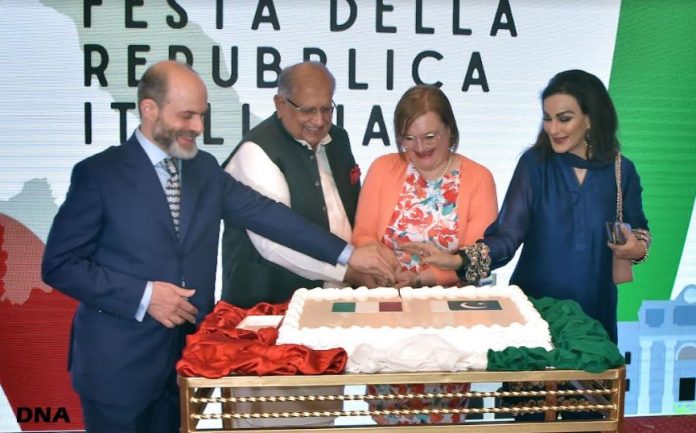
ISLAMABAD, JUN 2 /DNA/ – Federal Minister for Housing Riaz Hussain Pirzada, Senator Sherry Rehman, Ambassador of Italy Ms. Marilina Armellin, and Mr. Domenico Polloni jointly cut a cake to celebrate the National Day of the Republic of Italy.

The event, held in Islamabad, was attended by a large number of guests from various walks of life, highlighting the strong diplomatic ties between Italy and Pakistan.

Ipsos denies involvement in ‘Pakistan Cigarette Market Assessment 2024’ report

Ipsos denies involvement in 'Pakistan Cigarette Market Assessment 2024' report

ISLAMABAD, JUN 2 /DNA/ – Ipsos, a globally recognized market research and consulting firm based in France has unequivocally declared that it has no connection with the report in question, did not author it, and did not conduct any research related to the “Pakistan Cigarette Market Assessment 2024.” Furthermore, Ipsos confirmed that it has no involvement with the allegations against Khyber Tobacco Company Limited.

 KTC, a leading cigarette manufacturing company in Pakistan, issues the follow-up statement in response to the recent defamatory allegations disseminated in the report titled “Pakistan Cigarette Market Assessment 2024” purportedly authored by Ipsos Pakistan.

KTC has received an official response to its legal notice from Ipsos, a globally recognized market research and consulting firm based in France. Ipsos has unequivocally declared that it has no connection with the report in question, did not author it, and did not conduct any research related to the “Pakistan Cigarette Market Assessment 2024.” Furthermore, Ipsos confirmed that it has no involvement with the allegations against KTC. In addition, ASB Associates, a firm purportedly linked to the issuance of the report, has formally distanced itself from Ipsos Pakistan and any related activities.

These responses unequivocally indicate that the defamatory report was part of a malicious smear campaign aimed at tarnishing KTC’s reputation and undermining its business interests. The report, filled with baseless allegations and unsubstantiated claims, was designed to mislead the public and stakeholders about KTC’s business practices and compliance with regulatory standards.

Both Ipsos’s clarifications and ASB Associates’ subsequent distancing from Ipsos make it clear that the report was not only false but also entirely unsubstantiated and lacked any credible foundation. The disavowal from Ipsos invalidates any association of the report with credible market research standards. Similarly, the formal disassociation by ASB Associates from Ipsos Pakistan further exposes the fraudulent nature of the report and the entities behind it.

In addition, the malicious intent behind the report is further highlighted by the timing and manner of its dissemination. The efforts were clearly intended to damage KTC’s reputation and disrupt its business operations.

KTC’s longstanding commitment to transparency, regulatory compliance, and ethical business practices stands in stark contrast to the falsehoods propagated in the report. As a publicly listed company with financial statements and audited accounts available for public scrutiny, KTC has consistently demonstrated its dedication to maintaining the highest standards of integrity. Our proactive cooperation with regulatory authorities, including the Federal Board of Revenue (FBR), and our role as Pakistan’s foremost tobacco exporter underscore our contributions to the national exchequer and the economy at large.

In light of these developments, KTC reaffirms its position that the defamatory report was part of a deliberate attempt to harm our company. The corroborative disavowals from Ipsos and ASB Associates vindicate our stance and highlight the deceitful nature of the smear campaign against us.

We urge the public and stakeholders to dismiss the unsubstantiated allegations and to continue their support and trust in KTC as we remain steadfast in our commitment to excellence and compliance in all facets of our operations.

Ishaq Dar, Iranian FM Ali Bagheri discuss Gaza crisis over phone

Ishaq Dar

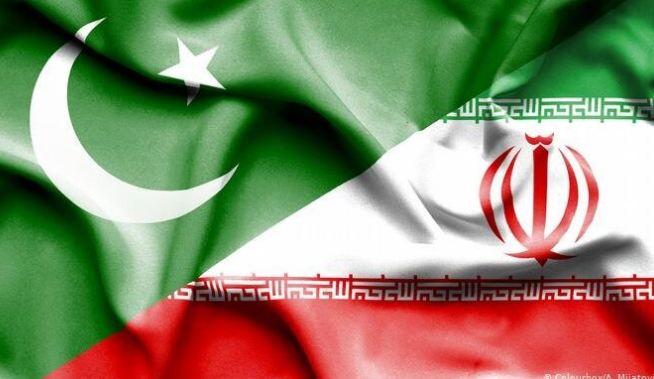
ISLAMABAD, JUN 2 /DNA/ – Deputy Prime Minister and Foreign Minister Mohammad Ishaq Dar @MIshaqDar50 today received a telephone call from Acting Foreign Minister of Iran Ali Bagheri.

They discussed the situation in Gaza and unabated Israeli atrocities there. The Deputy Prime Minister reiterated Pakistan’s full support for all initiatives aimed at ending the genocide in Gaza and for humanitarian relief to the Palestinian people.

Wapda wins All Pakistan M Majid and Abdul Nasir Memorial Basketball Tournament

Wapda wins All Pakistan M Majid and Abdul Nasir Memorial Basketball Tournament

By our correspondent

ISLAMABAD: Pakistan Wapda emerged victorious in a nail-biting showdown against Pakistan Air Force, clinching the All Pakistan Muhammad Majid and Abdul Nasir Memorial Basketball Tournament on Sunday here at Siddique Memon Sports Complex Karachi organized under the umbrella of Pakistan Basketball Federation (PBBF).

In a fiercely contested match, both teams displayed exceptional skills and tenacity, battling until the final moments. Wapda, however, seized control in the last quarter, securing a thrilling 68-67 points victory. Zainul Hassan of Wapda emerged as the hero of the day, contributing a stellar performance with 34 points, while teammate Muhammad Israr added 10 points, respectively.

Despite a valiant effort from PAF, Wapda’s dominance in the closing stages proved decisive. Umair Jan led the scoring for PAF with 26points, followed by Umair Siddiqui with 12 points.

Managing Director of United Medical and Dental College Dr. Bilal Faiz was the chief guest of concluding ceremony who presenting the winning trophy to the captain of the Pakistan Wapda team while Pakistan Basketball Federation (PBBF) Secretary General Khalid Bashir, Karachi Basketball Association (KBBA) President Muhammad yaqoob, Tournament chief organiser Dr. Umer Daraz Khan, PBBF Associate Secretary Yaqoob Qadry and others dignitaries were also present during the concluding ceremony.

Earlier In the third position match, Punjab Rangers secured a convincing 72-61 points victory against Islamabad, claiming the third position.

Late Muhammad Majid and late Abdul Nasir represented Pakistan as well as in national events for a long time and the purpose was to organise the memorial tournament for the recognition of their great love and services to the game of basketball.

“Unpacking Alvi’s 7-Points

Qamar Bashir

By: Qamar Bashir

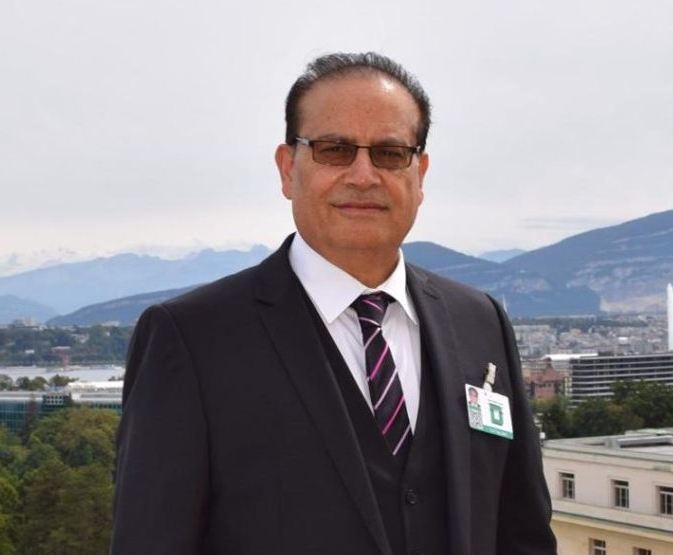
After his retirement as President and Supreme Commander of the Armed Forces, Dr. Arif Alvi, following a brief period of hibernation, has proposed a 7-point plan as a starting point for all stakeholders currently at an impasse, unsure of their next moves. However, at this point, the plan is vague and may only gather weight and effectiveness as time passes.

Currently, it raises many questions. For example, while the plan suggests that all stakeholders should come to the table, it fails to specify who these stakeholders are. The biggest stakeholder is the supra-executive, which, although holds de facto power, lacks any legal or constitutional role in purely political matters.

The dilemma is that, de jure, this body is the most ardent, effective, influential, and powerful entity, exercising full control over election results and having the final say in domestic and foreign affairs, as well as business, finance, economy, and investment. Therefore, any political deal without its willing consent and agreement will be a farce, having no real consequence or impact.

The other stakeholders include PML(N), PPP, and MQM. However, the official stance of PTI is that since these parties are beneficiaries of Form 47, PTI will not engage in any dialogue with them. PTI’s second condition for considering them as stakeholders is even more stringent: the return of their “stolen” mandate. Agreeing to this condition would be akin to a death knell for these parties.

The catch is that if the supra-executive body agrees and joins hands with PTI, the governments in the Centre and the provinces of Punjab and Balochistan would collapse like houses of cards—an extremely unlikely scenario. Therefore, if Dr. Alvi is able to persuade his own party to accept his 7-point plan, PTI would need to roll back its narrative of refusing dialogue with PML(N), PPP, and MQM.

His second point is more dramatic, literary and innovative. It says Zoom out, go to the balcony, have a bird’s eye view of the problem, understand the gravity of the situation. It emphasizes the need for a broader perspective on the current political crisis. By advocating for this approach, Dr. Alvi wants stakeholders to gain perspective and move beyond immediate conflicts and narrow viewpoints. For instance, rather than focusing solely on recent disputes, they should consider the historical context and how past political maneuvers have led to the present situation. This broader understanding can help in identifying underlying issues that need addressing, rather than just treating the symptoms of the crisis.

Additionally, Dr. Alvi encourages stakeholders to assess the gravity of the situation and understand the potential long-term consequences if the current trajectory continues. This involves recognizing the broader impact on political stability, governance, and national unity. For example, a failure to resolve the political deadlock could lead to economic instability and diminished public trust in government institutions. By appreciating the full scope of the crisis, stakeholders can better appreciate the urgency and importance of finding a sustainable resolution.

In his second point,  Dr. Alvi calls for strategic thinking and inclusive solutions. He suggests that stakeholders metaphorically “go to the balcony” to step back from the fray, allowing for a more neutral and objective assessment of the situation. This can lead to more effective and impartial solutions. This collaborative approach is essential for addressing complex issues and finding a path forward that benefits the nation as a whole.

Dr. Alvi’s third point emphasizes the necessity of reducing emotions, anger, and egos among the stakeholders involved in the political crisis. He advocates for a more composed and rational approach to problem-solving, where decisions are not driven by personal grievances or heated emotions. For instance, political leaders must set aside their personal animosities and focus on the greater good, engaging in constructive dialogue rather than confrontational rhetoric.

Dr. Alvi’s fourth point is about looking for and building a bridge to the other side underscores the importance of fostering reconciliation and collaboration among political stakeholders. He encourages all parties to view each other not as enemies but as partners in the pursuit of national stability and progress. By promoting a spirit of forgiveness and moving forward with mutual guarantees, stakeholders can overcome past grievances and work together constructively. This involves setting aside past conflicts and focusing on common goals, such as economic development, social welfare, and political stability.

Dr. Alvi’s fifth suggestion is to talk about each other’s fears and handle them and highlight the importance of empathetic communication in resolving political conflicts. He advocates for an open dialogue where stakeholders can express their concerns and anxieties candidly, creating an atmosphere of mutual understanding. For instance, political parties might fear loss of power, public backlash, or economic instability. By openly discussing these fears, parties can better understand each other’s perspectives and motivations, which can help in identifying common ground and developing strategies that address these concerns. This process not only builds trust but also allows for the creation of solutions that are sensitive to the fears and needs of all parties involved, paving the way for a more cooperative and less adversarial political environment.

The sixth point is even more important. The  worst alternative to a negotiated settlement entails prolonged political deadlock, escalating tensions, and potential unrest. Without a willingness to engage in constructive dialogue and compromise, parties may resort to extreme measures such as political sabotage, mass protests, or even violence, leading to further polarization and instability. This scenario not only undermines democratic principles but also poses significant risks to the nation’s social cohesion, economic prosperity, and international reputation. Moreover, failure to reach a settlement prolongs uncertainty, exacerbating investor concerns and hindering much-needed reforms.

The last point concludes once the other six points are complied with. To effectively address the current political crisis, stakeholders must zoom in and focus on solving the underlying issues through proactive and collaborative efforts. This involves engaging in meaningful dialogue, identifying common goals, and exploring pragmatic solutions that address the root causes of the conflict. By prioritizing constructive engagement over partisan interests and ego-driven agendas, stakeholders can foster trust, build consensus, and pave the way for a sustainable resolution. Moreover, zooming in allows for a more nuanced understanding of the specific challenges at hand, enabling stakeholders to tailor solutions that are responsive to the needs and concerns of all parties involved.

The plan is both pragmatic and practical, offering a promising starting point to end the tumultuous period marked by unnecessary egoism and personal agendas. It encourages a shift towards prioritizing the greater national interest—a concept often mentioned but frequently overlooked.

By: Qamar Bashir

Former Press Secretary to the President

Former Press Minister to the Embassy of Pakistan to France

Former MD, SRBC

CPNE Elects New Leadership: Irshad Arif President, Aijaz Ul Haq Secretary General

CPNE Elects New Leadership: Irshad Arif President, Aijaz Ul Haq Secretary General

ISLAMABAD, JUN 2 /DNA/ – Council of Pakistan Newspaper Editors (CPNE) held its annual elections in Karachi on 31st May 2023. The elections witnessed active participation from the member editors of the council, highlighting the commitment to upholding journalistic standards and integrity in Pakistan.

In a significant development, Irshad Arif Editor in Chief of 92 News was elected as the President of CPNE & Aijaz Ul Haq Managing Editor of Express Group was elected as the Secretary General. Election in the highest and esteemed body of editors of Pakistan is expected to strengthen the operational aspects of the CPNE, ensuring that the council remains a robust advocate for the rights and responsibilities of newspaper editors across the country.

Tahir Farooq Editor in Chief of Daily ITTEHAD Media Group & Pakistan Economic Net was elected unopposed as the Vice President of Council of Pakistan Newspaper Editors of Khyber Pakhtunkhwa chapter. A veteran journalist, Tahir Farooq has always stood up for the rights of media and journalists, earning respect and admiration from his peers for his unwavering dedication to the cause. Tahir Farooq was appreciated for his outstanding work in the year 2023/2024.

Farooq held the chairmanship of the Foreign Relations Committee, his efforts in connecting with international organizations were widely lauded. His work has significantly contributed to strengthening the ties between the journalistic community and international representatives, promoting better understanding and cooperation.

Farooq has contributed in different committees of the Council of Pakistan Newspaper Editors.  In the capacity of Vice President of CPNE he filed petition in the honorable Peshawar High Court for the recovery of long outstanding dues of newspapers of Pakistan.

The newly elected officials have expressed their dedication to fostering a free and responsible press in Pakistan. They aim to address the challenges faced by the media industry and work towards enhancing the role of newspapers in promoting informed and balanced public discourse.

CPNE has vowed to fight for the rights of journalists and media in Pakistan and spearhead the struggle for freedom of speech in the country.

Real estate – Paying price of an economic gimmickry

Real estate – Paying price of an economic gimmickry

ISLAMABAD, JUN 02 (DNA) — Billions of rupees black money was thrown to the real estate basket when former Premier Imran Khan announced incentives for tax evaders, paving way for whitening their black money and resultantly creating an artificial boom in this sector. Seeing the market dynamics hundreds of thousands common people with moderate income also stepped in having a desire to buy some property for their kids and future needs.

But, they were mistaken as the bulk investors sold out their properties to individual buyers and made their way leaving them in turmoil.If some invested their retirement dues, the others invested their savings or the provident fund money – they were accumulating penny after penny over the decades with an innocent desire of getting their children married after earning some profit by selling their plots.

But, swayed by desire to have an abode, they fall prey to real estate tycoons least knowing about their exploitive tendencies and plans to suck their hard earned money. Some developers and builders described the PTI era boom in real estate as a bubble that when burst, washed away the belonging of hundreds of thousands small investors leaving them in dire desperation.

“This policy of the previous government was a severe blow to real estate sector as the tax evaders escaped by whitening their money and faulty policies supplemented by economic recession struck billions of rupees of common people,” said a builder Falak Khan. “The previous government ruined real estate sector. The artificial bubble has burst leaving hundreds of thousands investors in lurch.”

He opined that a gradual development in this sector could have ensured sustainability. “But, abruptly forging ahead has trapped local investors as well as overseas Pakistanis. Therefore, the government should seriously look into this crisis and bail out small investors.” Seeing the series of events, one can easily understand how the poor people are deprived of their money. Firstly, there is a bobby trap of small down or advance payment; then an affordable installments payment plan and promises of early delivery of plots.

But, when there is good response in buying files, the society owners oversell files meaning that more files than the actual land acquired for a society. Once the bulk stock of files is sold out, they themselves float rumors that society does not have required land that result in panic selling of files by the investors.

Here step in the cronies of developers who artificially down the prices and buy back these files on lesser rates for the same developer, inflicting loss on average investors. For example if somebody has paid Rs 600,000 for a file, its market value is dropped to 20 to 40 percent and files are bought back by the same societies through their front men, eating up this 20 to 40 percent hard earned money of small investors and discard oversold files.

Then, the actual buyers in accordance with acquired land remain in field and start paying installments.Then comes the second phase wherein buyers are charged in the name of revised land rate, development charges and plots allocation in different sectors. Faulty balloting mechanism by many societies on a pick and choose basis also affect common investors.  “This is an engineered propensity. All this is done by a few property giants willfully to eat up poor people money,” said a real estate agent Aamer Chaudhry. “These societies keep changing their policies, perplexing the buyers as well as agents.”

“This is a vibrant sector and can contribute well to national economy if the major players in real estate and the corrupt government officials are reigned in properly,” he remarked. “After agriculture and industrial sectors, this sector was an equal hope for common people and low income groups. But, its recession has left them in a miserable condition.” The most painful segment of the story is that some developers who launch a housing society, does not have land compatible to sold out files as many among them purchase small patch of land, construct an attractive entrance and some development to attract investors.

Then after selling files they purchase the remaining land with the investor’s down payment money and   except the initial investment on small patch of land, they extract rest of money for land purchasing from small investors. This vicious circle keeps benefitting the rich and inflicting losses on common investor as in many cases they are totally deprived of their money when the developers vanish from the scene.

“Certain modalities must be specified for real estate sector ensuring that no small investors are trapped again by property tycoons,” said an investor Asif Mahmood. “If after every few years, people will keep suffering massive losses in this sector, it will shake their confidence. Where should we go after investing money in these societies and then keep waiting for years for plots.”

“Every society must bound to legally acquire land, restricted from files over selling, introduce affordable payment plans without hidden charges, judicious balloting and on time development and possession,” he added.

This gloomy picture calls upon the federal and provincial governments to lay down a strict mechanism for developers, societies’ owners and real estate agents by completely overhauling the rules and laws for this sector to save the hard earned money of small investors. — DNA

Interior Minister Mohsin Naqvi cracks down on passport delays at London Centers

Interior Minister Mohsin Naqvi cracks down on passport delays at London Centers

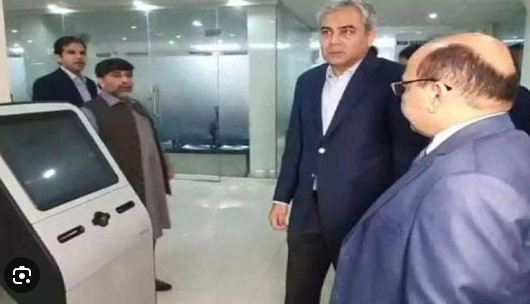
LONDON, JUN 2 /DNA/ – Federal Interior Minister Mohsin Naqvi on Wednesday visited the passport and NADRA centers in London and took notice of the delays in issuance of passports to the overseas Pakistanis. The Interior Minister ordered that urgent passports should be issued within 7 days and normal passports within 30 days, directing that this policy should be implemented at all Pakistani missions worldwide.

Previously, overseas Pakistanis had to wait for 4 months for a normal passport and one and a half month for an urgent passport. The Interior Minister emphasized that any delay in issuing passports would not be tolerated and action would be taken against officials responsible for it.

To ensure timely delivery of passports, the Interior Minister established a monitoring cell, which would be headed by his PSO, ASP Sher Bano Naqvi. Overseas Pakistanis who do not receive their passports within the specified time can file a complaint at the following email address:

[email protected]

The Interior Minister also took notice of the staff shortage at passport and NADRA centers and directed effective staff management to address the issue. During his visit,  Mohsin Naqvi met with the staff of the passport and NADRA centers and directed them to issue passports to overseas Pakistanis within the specified time. He appreciated the performance of NADRA staff and encouraged them to continue providing efficient services to overseas Pakistanis.

Interior Minister also met with overseas Pakistanis present at the centers and inquired about their issues. Pakistan’s High Commissioner to the UK, Dr. Mohammad Faisal, was also present on the occasion.

Netanyahu Aide: Biden’s Gaza plan ‘not a good deal’ but Israel accepts it

Netanyahu Aide: Biden's Gaza plan 'not a good deal' but Israel accepts it

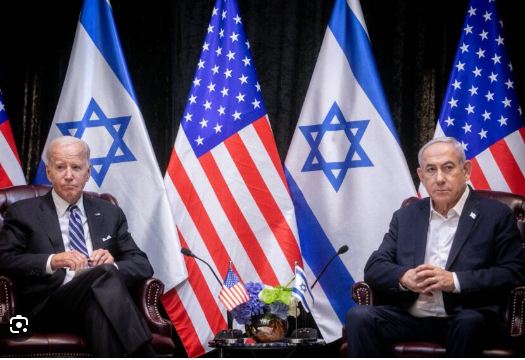
JERUSALEM, JUN 2 /DNA/ – An aide to Prime Minister Benjamin Netanyahu confirmed on Sunday that Israel had accepted a framework deal for winding down the Gaza war now being advanced by US President Joe Biden, though he described it as flawed and in need of much more work.

In an interview with Britain’s Sunday Times, Ophir Falk, chief foreign policy advisor to Netanyahu, said Biden’s proposal was “a deal we agreed to — it’s not a good deal but we dearly want the hostages released, all of them”.

“There are a lot of details to be worked out,” he said, adding that Israeli conditions, including “the release of the hostages and the destruction of Hamas as a genocidal terrorist organisation” have not changed.

Stay Connected

64FansLike
60FollowersFollow

Latest Reviews

Exchange Rates

USD - United States Dollar
EUR
1.17
GBP
1.35
AUD
0.72
CAD
0.73