Home Blog Page 903

SIF hosts World Environment Day event focused on land restoration and sustainable practices

SIF hosts World Environment Day event focused on land restoration and sustainable practices

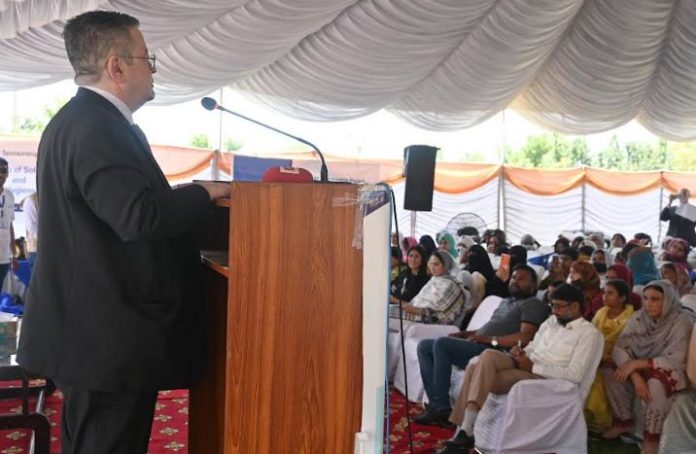
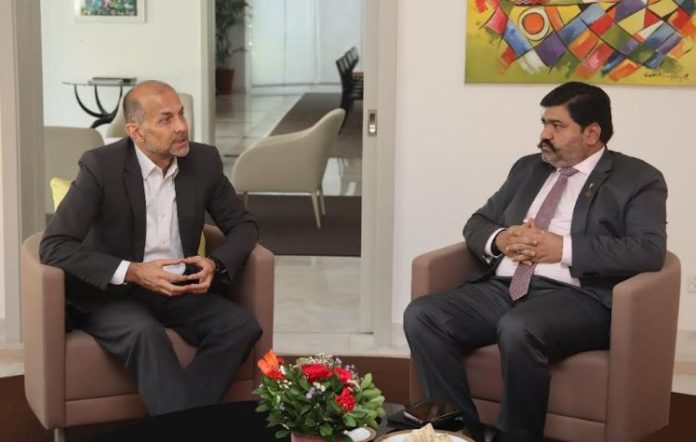
ISLAMABAD, JUN 4 /DNA/ – Secours Islamique France Pakistan Mission (SIF) Celebrated World Environment Day with French Ambassador along with SIF orphan children and their families.

French Ambassador said, ‘as an individual we all have to protect the environment and we have to make the wise choices to conserve our planet and we have only one planet, there is no planet B’

Islamabad, 4 June 2024 – Secours Islamique France Pakistan Mission (SIF) hosted a vibrant World Environment Day celebration, themed as “land restoration, desertification, and drought resilience,” on 4 June 2024. The event brought together community members, dignitaries, and stakeholders to advocate for sustainable practices and environmental awareness.

H.E. French Ambassador Nicolas Galey and his wife participated in the event alongside SIF orphan children and their families. They distributed solar lamps and health and hygiene kits, enjoyed children’s performances, and interacted with the community. Other notable attendees included Dr. Sadia Kamal, Vice President of the Press Club, Roomi Hayat, CEO of IRM, and officials from the Social Welfare Department, Child Protection Bureau, and others.

The celebration emphasized individual and collective actions in safeguarding the planet for future generations. Educational sessions and activities focused on land restoration, desertification, and drought resilience. Participants received Health & Hygiene Kits and solar lamps to promote sustainable living practices.

The event featured captivating performances, including a thought-provoking skit and a moving poem, “Yeh sab ka geet hai” (It’s everyone’s song), centered around the theme of World Environment Day 2024. Guests also explored locally crafted handicrafts and delicious food products, showcasing the community’s rich diversity.

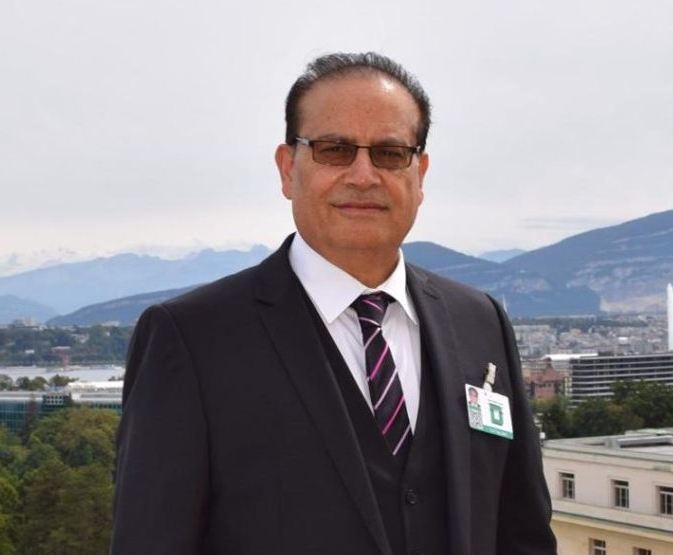
H.E. French Ambassador Nicolas Galey emphasized the international significance of environmental conservation and global collaboration in tackling environmental challenges. Dr. Altaf Abro, Head of Mission, Secours Islamique France, expressed his delight at the successful celebration and reiterated SIF’s commitment to environmental stewardship and sustainable development.

Secours Islamique France Pakistan Mission continues to work towards a greener and healthier planet, promoting sustainable development and empowering individuals. For media inquiries, please contact Nasir Malik, Communication and Advocacy Officer, at 03310161101.

About Secours Islamique France (SIF) Pakistan Mission:

Secours Islamique France (SIF) is an International Non-Governmental Organization operating in Pakistan through its Mission. SIF provides humanitarian aid and development assistance to vulnerable communities, focusing on sustainable development, poverty alleviation, food security, education, and social cohesion.

Judges versus Judges: The SIC Reserve Seats Controversy

Qamar Bashir

By: Qamar Bashir

The entire proceeding of the Supreme Court on the Sunni Ittehad Council’s petition seeking the allocation of reserved seats for women and minorities in the National and Provincial Assemblies seemed like a clash between the Chief Justice and the rest of the bench. The Chief Justice used the strength and power of his argument to assert that PTI’s failure to conduct intra-party elections was the root cause of their predicament. Consequently, all actions taken by the Election Commission and the subsequent Supreme Court decision to deprive PTI of the BAT election symbol were seen as the party’s own fault. The Chief Justice argued that PTI should accept the repercussions of their mistakes.

During the hearing, a stage was reached where the Chief Justice seemed completely cornered by his fellow judges. The brother judges negated the Chief Justice’s interpretation of his own judgment. The Chief Justice maintained that even when PTI was deprived of the BAT symbol, individual candidates could have demanded it as their election symbol.

The majority of the judges argued that if BAT were allocated to any party or independent candidate, it would have resulted in a contempt of court case. Justice Munib was particularly incisive, categorically stating that, according to the Supreme Court judgment and contrary to what the Chief Justice was now arguing, the BAT symbol was off the list for this general election.

An interesting scenario was painted by a brother judge: the Election Commission, knowing that the SIC did not contest the elections and recognizing that all independents who joined the SIC belonged to PTI, implicitly recognized the existence of PTI. Therefore, the EC should have allocated the reserved seats to PTI, effectively removing the SIC from the picture.

A recurring question was whether the SIC contested the elections, to which the answer was a resounding no. This led to heated arguments about how a party that did not contest the elections could claim reserved seats. Without giving the lawyers a chance to address this question, one of the brother judges provided a prompt answer saying that according to a notification from the Election Commission, the SIC was accepted as a registered political and parliamentary party on February 22, 2024, having won 82 seats. Therefore, as per the constitution and the Election Act, the independents who had joined the SIC within three days under Article 51 of the constitution were entitled to claim reserved seats for women and minorities in the National and provincial assemblies.

The lady lordship raised another pertinent question: if independent candidates, other than those of the SIC, have joined parties other than PTI, then why have the independents of PTI who joined the SIC not been accepted so far? Another brother judge raised an equally important question, noting that the ECP first declared the SIC a parliamentary party and asked PTI’s independents to join, which they did within three days, the ECP turned around and stated that since the SIC does not qualify as a political party, it cannot be granted the reserved seats.

The question of proportional representation was raised repeatedly. One argument was that, under the constitution, the allocation of reserved seats must be based on the seats won and secured in the national and provincial assemblies. Thus, they can only be allocated based on seats won, and independent candidates must join a political party within three days of the election to claim reserved seats. However, this argument was deeply contested by the Chief Justice, who believed that, as per the constitution, the National Assembly would only be considered complete when all reserved seats are allocated to political parties. According to him, independent candidates, regardless of their number, cannot claim reserved seats. The Chief Justice argued that candidates contest elections based on their party’s manifesto, and if they join another party with a different manifesto, it disrespects the people’s mandate. However, the brother judges refuted this, arguing that it would be a greater crime to disrespect the people’s mandate by failing to distribute reserved seats proportionally based on seats won or secured.

Justice Athar Minullah interjected with a broader philosophical view, stating that the biggest stakeholders in this case are the public and the voters, who cannot be disenfranchised. He emphasized that it was the duty of the Election Commission to ensure this right under Article 70 and that the EC should have rectified its mistake by itself, instead of depriving the people of their rights.

He further argued that instead of protecting their rights to vote, these very voters were intimidated and harassed, and one political party was singled out. The state’s brute power was employed to crush the party and its leadership, depriving it of a free hand and level playing field to contest the elections. It was argued that since voters have the fundamental right to cast their vote according to their conscience, and political parties have the right to contest elections in a fear-free environment, both of these rights were violated. Therefore, the Supreme Court, as the guardian of fundamental rights, should play its role in rectifying the wrong done to both the voters and the political party. However, this line of argument was brushed aside by the Chief Justice, who interjected that the bench had to confine itself within constitutional limits and should not indulge in endless discussion.

One stark reality that emerged from the two days of highly contested hearings was the Supreme Court’s misconstrued judgment, authored by the Chief Justice, which deprived PTI of its election symbol. This forced PTI candidates to contest elections as independents, causing the party to lose significant political capital. It made it difficult for candidates to launch effective election campaigns and created confusion among voters trying to identify PTI candidates. Furthermore, the process of allocation of reserved seats was seen by almost all the brother judges to be full of errors, omissions, and faulty conclusions. One of the judges even stated that the Supreme Court should not rubber-stamp the cascade of errors and omissions made by the Election Commission. However, the Chief Justice countered by asserting that everything could have fallen into place if PTI had conducted intra-party elections.

After diligently and carefully observing both sides, one can predict the upcoming judgment. The court may decide to allocate the share of the reserved seats in both the National and Provincial Assemblies to the SIC after taking them back from other political parties. Another likely scenario is a split verdict from the full bench, which may restore PTI as a party in the National and Provincial Assemblies and allocate the reserved seats to it. A third, extremely unlikely scenario would be to uphold the decision of the Election Commission and maintain the status quo.

By: Qamar Bashir

Former Press Secretary to the President

Former Press Minister to the Embassy of Pakistan to France

Former MD, SRBC

Unraveling the Layers: Understanding the Russia-Ukraine Conflict

Unraveling the Layers: Understanding the Russia-Ukraine Conflict

By: Bisma Farukh

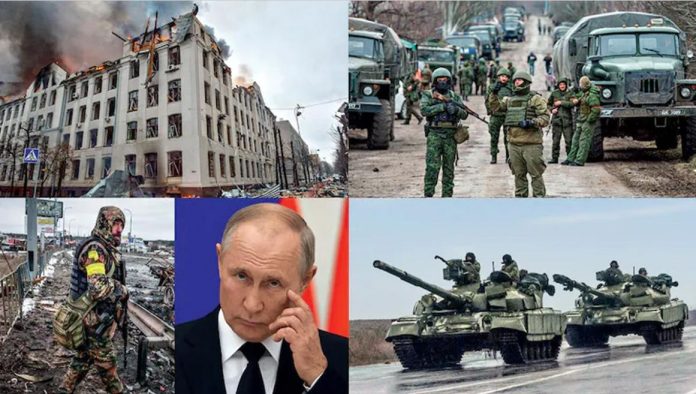
Russia and Ukraine’s conflict is a complex tale with roots in geopolitics, history, and the struggle for national sovereignty. A complex web of past grievances, ethnic tensions, and geopolitical ambitions lies beneath the surface of military exercises and diplomatic negotiations. It is necessary to examine the political, cultural, and historical aspects of the Russia-Ukraine war in order to fully understand it.

Historical Context: Russia and Ukraine have had centuries-long relations characterized by alliances, wars, and dominance. Because of its valuable trade routes, access to the Black Sea, and lush land, Ukraine has long been a strategically important region sought after by other regional powers. The relationship is further complicated by the legacy of Soviet rule, as Ukraine gained independence after the Soviet Union collapsed in 1991 but retained close political and economic ties to Russia.

Crimean Annexation and Eastern Ukraine Conflict: The conflict’s contemporary phase began in 2014 when Russia annexed Crimea. Following the Euromaidan protests in Ukraine, which resulted in the removal of pro-Russian President Viktor Yanukovych, this action was taken.

International criticism of the annexation was voiced, but Russia defended its actions by citing the need to protect ethnic Russians and its strategic interests in Crimea, which is home to an important naval base.

In the Donetsk and Luhansk regions of eastern Ukraine, pro-Russian separatists simultaneously proclaimed their independence, setting off a bloody conflict with Ukrainian government forces.

Tensions increased after accusations that Russia was providing military assistance to the separatists. This resulted in a long-lasting conflict that cost a great deal in terms of both lives lost and money.

Geopolitical Chessboard: Rivals between the West and Russia for influence in Eastern Europe are reflected in the conflict as well as larger geopolitical rivalries. As perceived by Moscow as an intrusion on its sphere of influence, Ukraine’s ambition for stronger connections with the European Union and NATO has been a source of conflict. Russia was viewed as demonstrating its strength when it annexed Crimea and was cautioning the West not to expand too much.

As a test of the West’s dedication to democratic and territorial integrity ideals, backing Ukraine has taken on a life of its own. The international community has condemned aggression and the violation of sovereignty, and this is demonstrated by the sanctions placed on Russia in response to its actions in Ukraine.

Ethnic and Cultural Dynamics: Disparities in ethnicity within Ukraine, specifically between speakers of Russian and Ukrainian, have also exacerbated tensions. In terms of language and culture, some areas are more closely aligned with Russia, while others strongly identify as Ukrainian. Exacerbating societal fractures and impeding efforts at reconciliation, this divide has been used by both internal and external actors to further their agendas.

Humanitarian Toll: It is critical to remember the suffering caused by the conflict despite the geopolitical gamesmanship and diplomatic bluster. Communities have been uprooted, families have been shattered, and thousands of people have died. A peaceful solution is desperately needed, as evidenced by the infrastructure damage and economic hardship that have exacerbated the humanitarian crisis in eastern Ukraine.

Pathways to Peace: There are still ways to resolve the conflict between Russia and Ukraine, despite its complexity and difficulties. De-escalation and negotiation frameworks are provided by diplomatic initiatives like the Minsk agreements. But for them to be implemented successfully, there needs to be sincere political will and dedication on the part of all parties.

Communities that are divided can also benefit from grassroots dialogue and reconciliation efforts that promote mutual understanding and healing. People-to-people interactions, cultural exchanges, and civil society initiatives can unite disparate groups and encourage tolerance and cohabitation.

In the end, a peaceful coexistence commitment, respect for international law, and acknowledgement of each other’s legitimate interests are necessary for resolving the RussiaUkraine conflict. A more stable and prosperous future for both Russia and Ukraine can only be realized via communication, compromise, and concerted efforts to heal the wounds of the past.

Conclusion: The conflict between Russia and Ukraine is a multifaceted and intricate phenomenon that has historical roots, geopolitical implications, and humanitarian ramifications.

Issues of sovereignty, territorial integrity, and geopolitical rivalry have gained prominence as a result of the annexation of Crimea and the ongoing conflict in eastern Ukraine. Nevertheless, despite the chaos, there are hints of hope for a calm conclusion.

Cooperation between grassroots and diplomatic efforts is necessary to achieve peace. A sincere commitment and cooperation from all parties involved are necessary for diplomatic initiatives like the Minsk agreements to provide frameworks for negotiation and de-escalation. A more peaceful future can be established by encouraging communication and harmony amongst divided communities, which can aid in bridging racial and cultural gaps.

The Russia-Ukraine conflict is ultimately a human tragedy with far-reaching consequences rather than just a geopolitical chess match. The welfare and goals of those caught in the crossfire must be given top priority in the pursuit of peace, giving them the opportunity to start over and rebuild their communities and lives. The only way to mend the scars of the past and ensure a better future for Russia and Ukraine is via communication, cooperation, and joint efforts.

By: Bisma Farukh

Department: International Relations

Muslim Youth University, Islamabad.

Prime Minister Shehbaz Sharif arrives in Shenzhen for official visit

Prime Minister Shehbaz Sharif arrives in Shenzhen for official visit

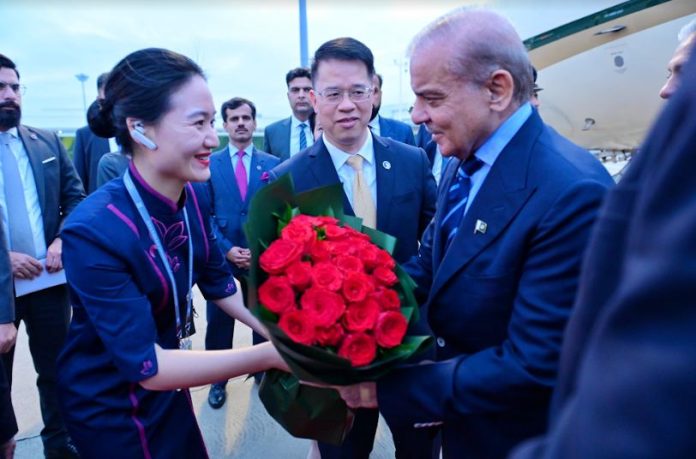
ISLAMABAD, JUN 4 /DNA/ – Prime Minister Muhammad Shehbaz Sharif has arrived in Shenzhen, China on an official visit. Upon arrival, he was welcomed by Vice Mayor of Shenzhen city of China, Luo Huanghao.

Deputy Prime Minister and Foreign Minister Mohammad Ishaq Dar and other senior Ministers of the Cabinet accompany the Prime Minister in his first official visit to China since assuming office.

Shenzhen is the first stop during the Prime Minister’s official visit to China. During his two-day stay in Shenzhen, the Prime Minister and his delegation will meet the leadership of the Guangdong Province and Shenzhen Municipal Government as well as leading Chinese companies in innovation and high-tech sectors. Prime Minister will also inaugurate the Pakistan-China Business Conference in line with his vision to support, promote and lead collaboration between the businessmen of the two countries. A business delegation of leading Pakistani businesspersons will attend the Conference for  collaboration with the influential Chinese counterparts.

Shenzhen is the hub of China’s innovation, technology and research led companies and enterprises. The visit to Shenzhen aims to bolster economic cooperation in export-oriented innovation led, advanced technologies, high-tech development and ICT.

Environmental degradation: Planet on the brink

Environmental degradation: Planet on the brink

Gul Hameed

Largely occurring due to harmful human activities, deterioration of our environment is one of the most pressing concerns of our times. Mounting pollution, overconsumption of earth’s resources and mass indifference to the impending doom have pushed us to the verge of a dangerous precipice. If this continued, it is only a matter of time that our planet will no longer be able to sustain many of life forms including humans. Urgent transformative actions are more than ever necessary to restore our relationship with the planet to balance and sustainability. Environment friendly policies and individual efforts can still pull us back from the brink.

Following the Industrial Revolution, the invention of technologies from mechanized looms and steam-powered engines to the modern-day mind-bending advancements in all facets of human existence, have led to improved living standards and economic conditions. However, this progress has had a downside to it in the form of damage to the earth’s environment. Industrial waste, carbon emitting vehicles, chemical fertilizers and pesticides have caused air, water and soil pollution. Overpopulation and subsequent rapid urbanization have led to massive cutting of trees. Studies have shown that half of the world’s forests have been depleted, and with that, half of world’s forest wildlife has also been lost. Harmful emissions combined with deforestation has led to depletion of Ozone layer which has led to disturbed temperature balance on earth along with other problems. Advancement in technology, enabling us to extract more natural resources, has led to unchecked consumerism resulting in overexploitation of land and oceanic resources. Improved defense against disease has increased lifespan, and this coupled with high birthrate has led to ever-expanding human population now living beyond earth’s accommodating capacity.

There are grim statistics on environmental degradation occurring due to harmful human activities. According to UN’s Food and Agriculture Organization, 420 million hectares of forest have been lost during last one hundred years. Presently, forest cover is being lost at the rate of 375 square km per day. A research from World Health Organization (WHO) shows that 92% of the world population lives in the places where air pollution exceeds safe limits. In the year 2012 alone, there were approximately 7 million deaths worldwide from diseases related to air pollution. Land degradation driven by mining, ranching, urbanization and farming has reached unprecedented levels resulting in 1692 acres of productive land becoming desert every hour.

Oceans sustain life on earth by providing sustenance and employment. However, plastic pollution, industrial waste and overexploitation of living and non-living resources have affected the health of oceans negatively. There are 46,000 pieces of plastic in every square mile of our oceans and about 8 million pieces of plastic end up into the oceans every day. These colossal amounts of plastic pollution cause immense damage to ocean health and marine biodiversity. Moreover, release of industrial waste into oceans, unsustainable fishing and tourism practices, oil spillage and pollution from maritime transport have rendered seas more acidic which has had a negative impact on marine biodiversity. Many may find it surprising to know that about 90% of predatory and 80% of commercial fish in our oceans has died and if this continues unchecked, we will have barren oceans void of fish. Nearly half of coral reefs and many of the fish species in our oceans have already gone. Some of the fish species which have recently gone extinct include black fin cisco, galapagos damsel, silver trout, and yellow fin trout.

All this has come down very heavily on our environment, disturbing the balance between human consumption and earth’s ability to heal itself and replenish its resources. The problem is that the pervasive human progress and the earth’s environment mutually contradict. Presently, we are borrowing from our future to cater for our present needs. Estimates show that without adopting sustainable practices, in the coming decades, human consumption will be twice the accommodating capacity of the planet and there will be the same amount of plastic in the oceans as fish. Scientists have warned that by 2050, air pollution will be the top cause of death and water scarcity can affect 5 billion people worldwide.

This definitely calls for immediate remedial actions. Certainly it is not an overnight fix; however, environment friendly policies and individual choices can make a difference. Shifting of industries to far flung areas, using natural fertilizers, promoting public transport, disposing off industrial wastes effectively, controlling the use of plastic, adopting sustainable practices to manage natural resources along with regulatory framework and legislation can help thwart the imminent catastrophe. Educating the masses to play their role for reducing carbon print on earth ensuring responsible individual action is also vital.

There are many international protocols and conventions in place for the conservation of environment; however, throughout previous decades, the environmental degradation and mass oblivion have run ahead of our will to reverse the damage. UN Climate Change Conference (COP26) noted that the state of political will in the world and cuts in global carbon emissions are far from enough to confront the challenge. Similarly, COP28 also noted that progress on reducing harmful emissions and strengthening resilience against climate change had been slow. COP26 produced new framework to improve implementation of the Paris Agreement through collective action which can guarantee low-carbon, sustainable future course. Under COP28, decisions were made to engage governments to accelerate progress on transition to renewable sources of energy to augment climate commitments. It is to be remembered that no piece of legislation or proposition is self-executing; these must be supported by the will to implement.  Currently, human consumption is already in overshoot as compared to the earth’s carrying capacity. We, however, have a choice; a choice between sustainability and mindless consumerism. Responsible actions at government and individual levels can enable us to stop borrowing from our future and hand over the planet to the next generation with grace and dignity.

Chairman PRCS meets Swiss Ambassador

Chairman PRCS meets Swiss Ambassador

ISLAMABAD, JUN 4 /DNA/ – Swiss Ambassador to Pakistan, George Steiner, commended the Pakistan Red Crescent Society (PRCS) for its outstanding service during natural disasters and crises.

He emphasized that while all countries have been affected by climate change, Pakistan has suffered particularly severe impacts.

By aiding flood-affected families, PRCS has honored its mandate and fulfilled its duty to humanity. Ambassador Steiner expressed these sentiments during a meeting with PRCS Chairman Sardar Shahid Ahmad Laghari who visited the Swiss Embassy on Tuesday.

The meeting addressed various subjects such as Pak-Swiss relations, mutual cooperation, and the urgent humanitarian challenges brought about by climate change.

Ambassador Steiner noted that Pakistan ranks seventh on the climate risk index, which is extremely concerning, and emphasized the need for active participation and stringent measures to combat global warming.

He commended Chairman Laghari for his efforts to modernize the PRCS and enhance diplomatic relations. Additionally, he acknowledged the significant actions taken by PRCS under Laghari’s leadership, highlighting the ongoing and future initiatives dedicated to serving humanity.

Furthermore, Ambassador Steiner assured new avenues of support for PRCS. The meeting concluded with both parties exchanging commemorative souvenirs, marking the occasion as a step forward in fostering deeper collaboration between Pakistan and Switzerland.

PTI leaders challenge FIA summons in X post controversy

PTI leaders challenge FIA summons in X post controversy

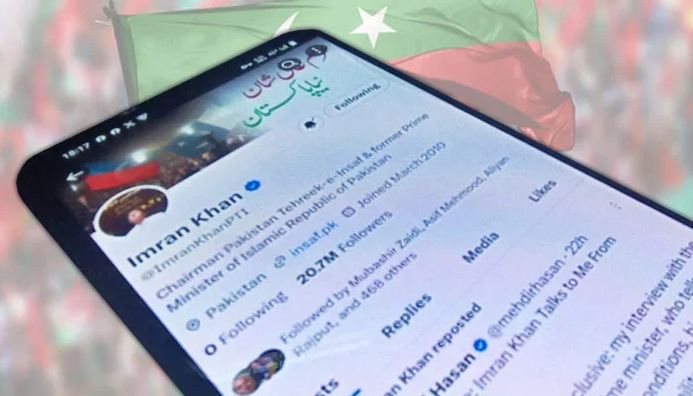
ISLAMABAD: The Pakistan Tehreek-e-Insaf (PTI) has moved the Islamabad High Court (IHC) against the Federal Investigation Agency’s (FIA) summons issued to party leaders as the body probes Imran Khan’s X post on the 1971 war.

In the petition, PTI Chairman Barrister Gohar Khan, Information Secretary Raoof Hasan, and Secretary-General Omar Ayub Khan alleged that the government and its allies were targeting the party through a “pre-planned attack”.

A post on X, formerly Twitter, was attributed to the former prime minister, which read: “Every Pakistani should study the Hamood ur Rahman Commission Report and get to know who was the true traitor, General Yahya Khan or Sheikh Mujibur Rahman.”

The post drew flak from government members and other politicians, with Prime Minister Shehbaz Sharif saying that Khan’s true face was finally in front of the nation, implying that he wanted to divide the country.

In response, the party said the PTI founder had nothing to do with the post since he was in jail. Later, a leader said everything was posted with Khan’s approval, opening a new Pandora’s box.

However, the party later owned the post and said it was uploaded to inform the public about past mistakes as it was crucial to learn from them so they aren’t repeated. The FIA then issued notices to the party leaders.

In the petition filed today, the PTI leader said: “…in the garb of the alleged tweet, the FIA is hell-bent on making another case against Imran Khan, workers of PTI and its leadership.”

The notices issued to the leaders, the plea said, are void, illegal, without jurisdiction, and malafide, having been issued without lawful authority, and are liable to be set aside.

The plea said that the contents of the notices — issued on May 30 — are vague and the purpose of the notice, the information sought, and its connection with the complaint has not been explained.

They mentioned that “it is well established” that the right to a fair trial includes the right to a fair investigation. In this case, however, it said, it is clear from the complaint and surrounding circumstances and the notice that the petitioners would not be treated in accordance with the law and would also be denied a fair investigation.

They added that in the case, it appears that the complainant, namely Anees Ur Rehman, technical assistant FIA, CCRC, made the alleged complaint without “approval of the federal government and under a dictation”.

The plea said that Rehman is neither personally aggrieved nor is there any reference to any previous approval with regard to the alleged commission of offence granted by any authority or institution.

The plea said that the FIA’s decision to initiate an inquiry regarding the misuse of the X account is tainted with “malice” in a bid to “victimi[s]e, oppress, and target the workers and leadership of PTI” with a view to causing irreparable damage to the party.

“The petitioners have already explained their and party’s position on TV shows and they have nothing to do with the said tweet and it is worth mentioning. The impugned notice is ex-facie illegal and malafide.”

FIFA World Cup Qualifier: Pakistan announces squad against KSA, Tajikistan

FIFA World Cup Qualifier

ISLAMABAD, JUN 4: The Pakistan Football Federation (PFF) announced the final national men’s squad for the upcoming FIFA World Cup 2026 Qualifier Round 2 matches against Saudi Arabia and Tajikistan.

Pakistan will face Saudi Arabia at the Jinnah Stadium in Islamabad on June 6 followed by an away fixture against Tajikistan on June 11 in Dushanbe, Tajikistan with Diaspora (D) players already joined the team.

Squad:

Goalkeepers: Yousuf Butt (D), Saqib Hanif and Hassan Ali

Defenders: Abdullah Iqbal (D), Mohammad Fazal (D), Haseeb Khan, Rao Omer Hayat, Mamoon Moosa, Mohammad Saddam, Waqar Ihtisham, Moin Ahmed and Abdul Rehman

Midfielders: Rahis Nabi (D), Otis Khan (D), Ali Uzair, Umair Ali, Toqeer ul Hassan,  Alamgir Ghazi and Ali Zafar

Forwards: Imran Kayani (D), McKeal Abdulah, Fareedulah, Adeel Younas and Shayak Dost

Pakistan are placed in Group G with Saudi Arabia, Jordan and Tajikistan.

Role of media significant for deeper Pak-China cooperation – Chinese Consul General

Role of media significant for deeper Pak-China cooperation - Chinese Consul General

APNS building bridges between media outlets of both countries

KARACHI, JUN 3 /DNA/ – Not many Pakistanis have visited China to this day, but we are working and remain hopeful to create more opportunities so our friends from Pakistan can visit China said Yang Yundong Consul General of the People’s Republic of China. He was hosting office bearers of the All Pakistan Newspapers Society at the Consulate.

”Today we are happy to host you all friends at the Consulate for an authentic Chinese dinner, and my heartiest greetings to Mr. Sarmad Ali on becoming Senator. We would like Pakistanis to visit China but unfortunately not many Pakistanis have visited China, he stated. We acknowledge Pakistan’s support to China in all forums. It is because of the significance of our friendship. China is developing very fast, and the change is many a times a pleasant surprise for even Chinese working abroad when they travel back home” said CG Yang He further added that our focus must be on more exchanges between the media outlets of both countries and APNS can play a role in bringing them together.

The Second Phase of CPEC is more important and will focus on agriculture, industrial cooperation and trade for increasing exports from Pakistan and benefiting the lives of people at grassroot level.

The delegation of APNS was led by its Secretary General, Senator Sarmad Ali. While expressing his views, Mr Sarmad said that Pakistan is expecting to see investment in agriculture, mining, hospitality & tourism as well as other sectors from China.

”Gwadar needs to be developed as a model urban town and the new airport will provide more opportunities in increasing connectivity. Proper real estate development along with hotels is also needed in Gwadar. Chinese media outlets have their offices in Islamabad including ‘People’s Daily’, ‘Xinhua News Agency’, Guangming Daily.

Mr. Sarmad Ali said, China has been a true friend in need for Pakistan. ”Chinese people have a special place for Pakistan in their heart and they call us Iron Brother ‘Batie’. “During my visits to China I have seen even the common people refer to Pakistanis as their Iron brothers. As China is now the biggest manufacturer of EV vehicles, it is progressing rapidly in cutting edge technology. We hope that China’s advancement in EV technology will benefit Pakistan as well. The second phase of CPEC will play a pivotal role in furthering Pakistan’s exports and trade.

The dinner was also attended by Deputy Consul General Mr. Zhang Hao, APNS Finance Secretary Mr. Shahab Zuberi, Kazi Asad Abid, Mr. Javed Mehr Shamsi, Mr.Younus Mehar, Mr. Athar Kazi, Kazi Sajjad Abassi, and Mr. Bilal Farooqui. Also Zahid H. Karani, Mustafa Karani, Yousuf Karani, and officials from the Consulate were present.

The APNS delegation thanked Mr. Yang Yundong and his colleagues for their hospitality and a love filled authentic Chinese cuisine.

Punjab: Banking on IT & Education Sector Reforms for Development

Punjab: Banking on IT & Education Sector Reforms for Development

Abdul Rashid Shakir

[email protected]

The 4th Industrial Revolution (4IR) of the 21st century, characterized by rapid advances in the cutting edge technologies like Artificial Intelligence, Machine Learning, Robotics, Augmented and Virtual Realities has resulted in a paradigm shift in the ways we produce, consume, think and even interact with others. The very fascinating memories of the Digital Revolution of the 1990s have lost steam. Things like ChatGPT, Self-driving cars, Face and Speech Recognition softwares, Virtual Personal Assistants and Internet of Things (IoT) were unheard-of not a very long time ago. Freelancing, remote work, flexi office hours and the ‘fatal’ intrusion of social media in our lives are corollaries of these changing tech trends that have shook our work ethics and social interaction values to the core.

Working knowledge of high-tech devices like smartphones, tablets, PCs, smart watches and digital cameras have become central to digital literacy in modern times. World Economic Forum’s ‘Future of Jobs Report 2023’ explores how tech trends will shape our workplace in future. It finds that analytical and creative thinking, AI and big data will be the top in-demand skills by 2027. 06 in 10 workers will require training before 2027, signifying the importance of life-long learning by the modern workforce in order to keep them relevant in the ever-changing job market.

In a right desire to keep pace with these changing job market trends, Punjab Government under the progressive leadership of its Chief Minister Maryam Nawaz Sharif is all set to exploit wonders of the modern technology by laying focus on market-driven technical skills and education sector reforms.

The start of Pakistan’s first IT City: Nawaz Sharif IT City is a right step in the right direction. Nawaz Sharif IT City features in IT & Tech District, an Education City and a Film City. The Government of Punjab has declared the project tax-free for 10 years in order to lure in huge investments both local and foreign. Major tech giants of the world including 16 Chinese tech companies have not only given their consent to work with Pakistan’s first IT City, but 08 of them are immediately ready to establish their business offices here. Well-reputed international educational institutions are being convinced to set up their campuses in Nawaz Sharif IT City, so that our youth could get rewarding international degrees in their own beloved homeland, Pakistan.

To fulfill the need of quality human resource, ably-trained in the modern highly-tech skills and vocational trades, the Government has also started restructuring of Technical Education and Vocational Training Authority (TEVTA) in order to enable it run market-driven advanced training courses in the fields like artificial intelligence, robotics, machine learning, augmented and virtual realities etc instead of the old conventional trades like plumbing, refrigeration and motor winding. It has also started imparting advanced training to 4000 young boys and girls under Chief Minister’s Skill Development Programme.

In order to promote a culture of research and higher education in youth, Government of Punjab has announced multiple programs including foreign undergrad scholarship program for the talented but deserving students across Punjab, besides augmenting the existing undergrad scholarship Programs in the local universities under Punjab Education Endowment Fund (PEEF). It has also announced the grant of iPads and laptops to the talented students, besides providing them 20,000 bikes (E-bikes and petrol bikes) on interest free easy monthly installments.

The Government of Chief Minister Maryam Nawaz Sharif fully understands the need of a quality school education system to better reap the fruits of higher education outcomes, because ‘GIGO (Garbage in Garbage Out)’ is a proven maxim. Therefore, it has started a comprehensive program of school education reforms. It includes outsourcing of some 13000 non-performing or under-performing schools out of the total 49000 public sector schools in Punjab. The Government is focused on complete overhaul of the education system in the province, for which it is not only categorizing schools on the basis of their performance but is also devising workable model to engage private sector in the quality uplift of overall teaching-learning exercise in public sector schools of the Province. Moreover, it has also launched teachers’ training program in the province. Another sore point of the school education sector in Punjab is reflected in a recent report of Pakistan Institute of Education, prepared in collaboration with UNESCO, that Punjab has 10.11 million Out-of-School children (OSC). In order to fix this issue, Punjab has started a school enrolment Programme.

Another major speed trap in the development of kids’ cognitive abilities is the prevalence of stunting and malnutrition in a greater number of kids across the province. Therefore, the Government has planned to start giving nutritious milk packs to the students of primary classes in public sector schools. This valuable intervention of Punjab Government would not only spur creative thinking and analytical abilities of the students but would also equip them with the courage and stamina needed to undertake challenging assignments in life.

To wrap up the discourse, we can rightly claim that these quality interventions in the education sector, besides shifting focus of skill training from conventional to high-end technical trades, would no doubt go a long way in raising a productive human resource that would be instrumental in the socio-economic development of the province, acting as its real asset instead of being a precarious liability.

Stay Connected

64FansLike
60FollowersFollow

Latest Reviews

Exchange Rates

USD - United States Dollar
EUR
1.17
GBP
1.35
AUD
0.72
CAD
0.73