Home Blog Page 900

Palestinian ministry warns against undermining Palestinian cause amid Gaza destruction

Palestinian ministry warns against undermining Palestinian cause amid Gaza destruction

RAMALLAH, OCT 21: /DNA/ – The Palestinians’ Foreign Ministry and expatriates warns against any political projects to liquidate the Palestinian cause under the dust of the destruction of the Gaza Strip*

The Palestine Liberation Organization, the protector of the rights of our people and its compass, is the closest road to freedom and independence

The Ministry of Foreign Affairs and Expatriates condemns in the strongest terms the crimes of genocide that the occupation warplanes continue to commit in the Gaza Strip and with internationally prohibited weapons, which lead day after day to deepening the humanitarian catastrophe that has befallen all aspects of life in the Gaza Strip, especially Palestinian civilians, as the number of martyrs continues to rise increasingly among those  Including children, as well as the number of citizens under the rubble and continuous destruction, as well as the expansion of the crime of ethnic cleansing and the displacement of more citizens from their homes under the weight of bombing and destruction, which includes all buildings of all kinds, and the destruction of entire areas and leveling them to the ground in the northern Gaza Strip, as if an earthquake had struck it and caused a new catastrophe in  The lives of Palestinian citizens, to the point where numbers and media are no longer able to count and explain the devastation that occurred in the Gaza Strip.

 The Ministry also strongly condemns the violations and crimes of the occupation forces and armed settler militias in the occupied West Bank, including East Jerusalem, and considers them to be an attempt to persecute and attack the Palestinian presence in Jerusalem and all areas classified as (C), and to impose more collective punishments on citizens and torture them in an effort to exploit the current circumstances.  To perpetuate the occupation, the process of annexation, expansion, ethnic cleansing, and apartheid, and to try to control the minds of the Palestinians.

 As the Ministry follows up around the clock with all international bodies on all manifestations of genocide in the Gaza Strip and the occupation’s attacks in the West Bank, it once again warns of the dangers of any political projects being prepared to liquidate the Palestinian cause and the rights of our people under the pretext of self-defense that Israel exploits.  The Ministry emphasizes the continuation of Palestinian diplomacy and its activities not only to expose the dimensions of this devastating Israeli earthquake and its repercussions on the lives of Palestinian civilians as a grave violation of international law, but also to mobilize the broadest international front of pressure to condemn the aggression and stop the war immediately, and to emphasize to the international community that addressing the roots of the conflict and resolving it through…  Ending the Israeli occupation of the land of the State of Palestine is the key to achieving security and stability for the entire region.

 In this context, the Ministry affirms, in its daily follow-ups with decision-making centers in the world, that the Palestine Liberation Organization is the sole legitimate representative of the Palestinian people, the protector of the rights of the Palestinian people, and the one that determines the compass for the freedom and independence of our people.  The Ministry calls for an immediate halt to the aggression, the immediate provision of international protection for the Palestinian people, and a genuine international effort to be made to revive the peace process and negotiations leading to the embodiment of the Palestinian state on the ground with East Jerusalem as its capital.

Pakistan needs to balance itself between a welfare state and a security state: experts

Pakistan needs to balance itself between a welfare state and a security state: experts

DNA

ISLAMABAD, OCT 21: A civil-military dialogue is the only solution to the dilemma persisting between the need for a professional army and military influence in politics. The best forum for this purpose is the National Security Committee (NSC), which needs to effectively function as a platform for regular dialogue and consultation. In addition, both military and civil stakeholders must commit to the Constitution, as well as people’s welfare beyond the power dynamics.

The dilemma is that Pakistan still needs to define itself as a welfare state or security state. Striking a balance between the two is critical to ensuring a strong democratic framework in which the military’s role is subordinate to civilian rule.

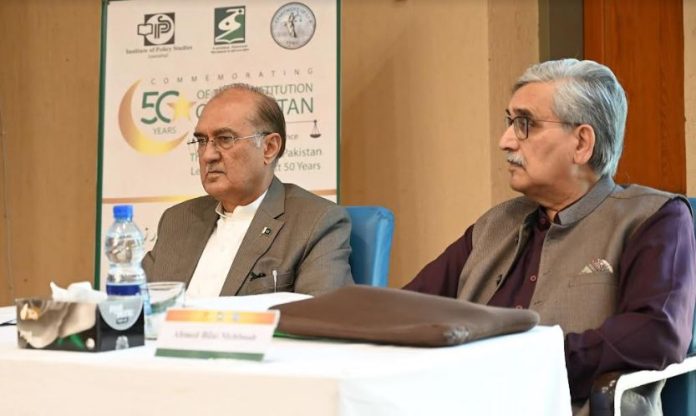
This was observed during a session titled ‘Civil-Military Relations in a Democratic Pakistan,’ held as part of the two-day conference titled ‘The Constitution of Pakistan: Lessons for Next 50 Years’ co-organized by the Institute of Policy Studies (IPS), Islamabad, and the Department of Law, Fatima Jinnah Women University (FJWU), Rawalpindi. The conference was addressed by veteran statesmen, jurists, and constitutional experts.

The session, chaired by Lt Gen (r) Naeem Khalid Lodhi, former federal minister for national security, was addressed as keynote speaker by Ahmed Bilal Mehboob, president of Pakistan Institute of Legislative Development and Transparency (PILDAT), while researchers from various national and international universities presented their papers related to this theme.

“Civil-military relations are the most crucial aspect of the future democratic framework of Pakistan,” remarked Mehboob.

He underscored that “traditional civil-military relations are not sustainable” as “the current mess in economy, polity, and society cannot be separated from the so-called hybrid model of governance.” It is critical to adapt to the current challenges and develop a new, more dynamic approach to civil-military relations, he added.

He stressed the only way forward is through healthy and constructive civil-military dialogue, for which an active “National Security Committee provides an excellent forum” as it can facilitate open communication, develop mutual understanding, and help define a course for Pakistan’s civil-military relations in the future.

The debate around civil-military relations centers heavily on the role of the military and power dynamics between military and civilians. “The problems in civil-to-civil relations, as part of civil-military relations, are often overlooked,” said Lt Gen (r) Lodhi.

He underscored the need to broaden the scope of the civil-military relations dialogue to encompass civil-civil relations, which he remarked, were not functioning well, too, given the executive-judiciary, and federation-provinces-local bodies power dynamics.

Furthermore, he referred to civilian politicians seeking favors with the military to acquire power. He emphasized the significance of assessing the performance of civilian institutions and actors, as the level of collaboration and professionalism across civilian institutions is equally critical to democratic growth.

Regarding the perception that the military defines the country’s national interest, Lodhi said it is a consensus among states that national interest is the welfare and well-being of the people. So it does not matter who defines it as long as it fulfills the purpose, he maintained.

In his analogy, the military is ‘the muscle’ of the state, and civilians ‘the brain.’ Therefore, both must work together to drive national growth. In this regard, “people’s welfare and well-being must be the common goal of both” the military and civilians, he stated. However, he added that politicians should show their capability instead of just seeking popularity.

AFT to showcase cultural diplomacy, UN unity on Nov 2

AFT to showcase cultural diplomacy, UN unity on Nov 2

DNA

ISLAMABAD, OCT 21– Devcom-Pakistan in collaboration with the Ministry of National Heritage and Culture, and Pakistan National Council of the Arts (PNCA) will put up a second edition of ‘All Flags Together’ (AFT 2023) on Thursday November 2 at the PNCA premises. Different educational institutions and organizations will be collaborating to inculcate cultural understanding for peace and showcasing the strength of cultural diplomacy, said the Executive Director Devcom-Pakistan Munir Ahmed in a statement on Saturday. 

Participation of over ten thousand is expected in the daylong activities of cultural engagement of youth and citizens, said Munir Ahmed adding, the cultural showcasing helps understanding each other and closing the gaps while working in collaboration leads to unity for peace and development. We shall aim to understand each other’s national heritage and the valuable work for peace and development. The AFT 2023 has provided different national and international stakeholders to come together and share their thoughts, culture and work.

Giving the details of the event, Munir Ahmed said: “The event will provide youth to interact with diplomats and the UN officials during the youth conference and interactive panel discussion with the experts on ‘Building Global Peace on Human Development and Cultural Understanding’. The daylong event will also include international food stalls, art and craft exhibition, showcase of organizations work, music and cultural performance. It will be a free-entry event for the public but on invitation cards that will be available on different outlets in the twin-cities of Islamabad and Rawalpindi.”  

Munir Ahmed said: Reviving the AFT is meant to stand by the UN organizations and its member states that are struggling for human rights, ensuring protection of cultural heritage, promoting peace through interfaith harmony, democracy and development. Unity and understanding is imperative to mark the UN day annually on 24 October to celebrate the anniversary of the entry into force in 1945 of the UN Charter. The UN is the only global organization with the legitimacy that we need to back strongly to support its mandate. No other global organization gives hope to so many people for a better world and can deliver the future we want. Today, the urgency for all countries to come together, to fulfil the promise of the nations united, is much greater than ever before.

The UN System is a symbol of hope for global unity, development, peace and prosperity. Cultural collaboration is the best model for global unity. All Flags Together is a concept of a daylong event to bring diplomats, expats, development and UN organizations and natives together for a cohesive and collaborative effort to close the gap of bilateral and multilateral and cultural understanding, the Devcom-Pakistan Executive Director said.

China’s Economic Expansion is Shaping US-China Rivalry

China's Economic Expansion is Shaping US-China Rivalry

Dr. Muhammad Akram Zaheer

China’s rapid economic growth over the past two decades has enabled it to extend its economic influence in Latin America, largely due to the absence of a counterstrategy from the United States. Initially, Washington perceived Beijing’s expanding presence as mere economic diversification and thus not a threat to hemispheric or U.S.-Latin American security and military relations.

However, more recently, the United States has started to perceive China’s commercial activities in the region as potentially detrimental, especially concerning U.S. access to rare earth elements, allied port security, and 5G technology. Simultaneously, China’s economy has entered a period of secular decline, and the U.S. is actively pursuing strategies to shift its supply chain away from China.

Consequently, Mexico is becoming an attractive destination for multinational corporations seeking cost-effective manufacturing near the U.S. market. Moreover, Colombia, which has benefited from Chinese trade and investment for years, has drawn closer to Beijing since the inauguration of President Gustavo Petro in 2022. However, it is now questioning the sustainability of this investment and foreign trade relationship, leading it to consider alternatives such as the United States. Nevertheless, Washington’s aim is not to become an alternative sponsor but to reassert its influence by countering China.

To achieve this, the U.S. faces challenges, with one of the major concerns being the rampant use of fentanyl. In the United States alone, overdose deaths linked to fentanyl are projected to reach nearly 110,000 in 2022 over the past eight years. The Joint Economic Committee of the United States Congress estimates that the opioid epidemic cost the U.S. economy $1.5 trillion in 2020 and left more than 6 million people outside the labor market, according to the Council on Foreign Relations. Although fentanyl consumption in Mexico and Colombia is less alarming, it is beginning to gain attention.

However, the most immediate concern in these countries revolves around fentanyl production, insecurity, and corruption associated with drug trafficking. Due to its low production cost and synthetic nature, fentanyl production can quickly scale up. Two Mexican cartels, Sinaloa and Jalisco Nueva Generación, dominate the fentanyl trade between the United States and Mexico.

The Sinaloa cartel is even contemplating expanding operations to Colombia, including establishing fentanyl “kitchens,” sourcing supplies, and potentially infiltrating the healthcare sector for legitimate purposes. Notably, Chinese companies supply nearly all the precursors for fentanyl manufacturing in the Western Hemisphere. Moreover, at least four Chinese companies provide information on improving fentanyl production, including sourcing ingredients, alternative ingredient recommendations, mixing instructions, and access to chemists. Some Chinese companies also use fake labels on shipments or ship chemicals without maintaining customer records.

A counterfeit fentanyl pill, costing as little as 10 cents to produce, can fetch $10 on the street. Chinese criminal groups and Mexican cartels, Sinaloa and Jalisco, have combined their extensive experience in money laundering to facilitate foreign currency exchange, alongside the purchase of advanced chemicals. In response, the U.S. government and its allies are taking action. In February, the Biden administration pledged cooperation with Mexico, Colombia, and Ecuador to combat the growing availability and lethality of illegal drugs containing fentanyl. In March, Mexico’s president reached out to Chinese President Xi Jinping to seek assistance in curbing fentanyl flows to North America, although Beijing denies any wrongdoing.

In April, the United States indicted four high-ranking members of the Sinaloa cartel associated with the fentanyl trade. Additionally, Mexico’s president reported that the country’s navy had intercepted a container from Qingdao, China, containing 75-pound packages with traces of fentanyl and methamphetamine in May. The U.S. also imposed sanctions on seven Chinese companies and six individuals accused of exporting tablet presses to Mexico. Furthermore, the U.S. Department of Justice recently filed criminal charges against four Chinese chemical manufacturers and eight individuals for illegal trafficking of a precursor chemical used in fentanyl production.

Despite these developments, the head of the U.S. Drug Enforcement Administration (DEA) expressed the desire for greater cooperation from Mexico. In Colombia, cocaine has become a secondary concern compared to fentanyl due to its lower lethality and profitability. Notably, the U.S. Embassy in Bogotá announced the indefinite suspension of coca crop monitoring in Colombia and the non-presentation of its annual report on Colombia and cocaine earlier this month. The embassy cited redundancy with UN reports and the need for observation satellites for other purposes.

​Nonetheless, Colombia’s Justice Minister does not anticipate this decision jeopardizing U.S. funding for counter narcotics and other programs. Moreover, U.S. agencies reportedly accused Colombian officials of cooperating in the arrest of Sinaloa cartel members attempting to establish the fentanyl industry in Colombia. Both the Colombian and Mexican governments agree on the necessity to revise their anti-drug strategies. In Bogotá, the Petro administration seeks to depart from punitive, prohibitionist, and military policies and instead target speculation, money laundering, major traffickers, and criminal organizations.

Describing the war on drugs as a failure, Petro emphasizes the importance of not repeating the same mistakes with fentanyl. Similarly, the Mexican government aims to prioritize economic development and reduce youth involvement in criminal organizations. The two presidents plan to meet in early September to discuss new anti-drug strategies, focusing on youth prevention, socioeconomic development, synthetic drugs, and adapting measures to changing societal needs.

Many of these efforts will necessitate collaboration and cooperation with the United States, which has, until recently, been hesitant to link drug trafficking with economic development. The central question is whether Mexico City and Bogotá will align with Washington’s anti-China approach. The answer may hinge on whether the United States is willing to align its counter narcotics efforts with the evolving strategies taking shape in Mexico and Colombia.

The ML-1 Railway: A fulcrum for global trade 

The ML-1 Railway: A fulcrum for global trade 

Qamar Bashir

The visit of the caretaker Prime Minister to China for the Belt and Road Initiative (BRI) forum meeting has been highly successful. One of the major achievements is the signing of the Mainline-1 (ML-1) railway project, a crucial component of the China-Pakistan Economic Corridor (CPEC). The ML-1 project aims to connect Peshawar to Karachi through a 2,600-kilometer track with an estimated cost of $7 billion. Planned to be complete in 16 years, it will increase the line capacity from 34 to 134 trains each way per day, moving up to 165 kilometers per hour — twice as fast as they currently run, benefitting various industries in Pakistan, drive the next phase of CPEC projects and enhance economic cooperation between China and Pakistan.

ML-1 will make Gwadar a more appealing and efficient trade gateway for Pakistan and its neighboring countries, poised to stimulate economic growth and generate employment opportunities, facilitate the transportation of energy resources from the Middle East and other nations to Pakistan, addressing critical energy shortages and facilitating the movement of Thar coal within the country.

For China, this will open up a more direct and efficient trade route to the Arabian Sea, reducing both time and shipping costs for goods to and from western China, create opportunities for Chinese companies and enhance and provide China with an alternative and shorter route for importing energy resources from the Middle East.

Afghanistan, after prolonged advocacy, has finally agreed to become a partner in the CPEC. This participation holds the potential to significantly bolster Afghanistan’s economy by establishing it as a regional transit hub and promoting economic diversification. The railway project can serve as a vital transit route for Afghan goods to access international markets via Gwadar, potentially revitalizing Afghanistan’s economy.

For Central Asia, this railway offers new trade routes, granting access to the Arabian Sea and diversifying trade options. The increased trade has the potential to boost economic development and diversification in the region. While India is not directly connected to the project, it could potentially access Central Asian markets through Gwadar if tensions ease and trade relations improve between the nations.  The railway could provide Iran with better access to markets in China and Central Asia, enhancing trade opportunities and trade links can contribute to economic growth and regional stability.

There is a strong possibility of extending this railway link from China to Europe throughTurkey, which could yield numerous benefits for the countries along the route. This extension would enhance both regional and global trade by providing a more efficient and cost-effective trade route, fostering increased trade between Asia, Europe, and Central Asia. The result would be reduced transportation times and costs, making this route more competitive compared to other trade corridors, creating job opportunities, boosting local industries, and encouraging infrastructure investment. Additionally, Turkish and European markets would benefit from improved access to Central Asian and Chinese markets.

The railway’s potential to serve as a transit for cultural exchange and tourism between regions with diverse cultures and histories stimulating local economies and encouraging people-to-people connections.

Notably, rail transport is generally more environmentally friendly than other transportation modes, such as road or air transport, contributing to reduced carbon emissions. Moreover, the construction and maintenance of the railway would necessitate investments in transportation infrastructure, benefiting local communities. Successful implementation of such a project could strengthen diplomatic ties among countries involved and promote regional cooperation.

The construction of a railway line will bring about profound impacts on the Pakistani cities along its route in terms of economic, social, and infrastructural transformations that can reshape urban and rural landscapes.

Cities situated along the route are likely to experience notable economic growth, driven by increased trade and commerce, attracting businesses, investors, and logistics companies, creating new economic opportunities, driving job creation, raising income levels, and alleviating poverty in these areas.

Moreover, the railway project would facilitate the establishment of industrial zones and logistics hubs along the route, drawing manufacturing and distribution companies. This would lead to a surge in industrial activities in nearby cities, bringing an influx of workers and encouraging urbanization in the surrounding areas.

Ml-1 is likely to bring a significant investment in transportation infrastructure, including the development and upgrade of rail stations, logistics centers, roads, and utilities leading to an improvement in the quality of life for residents, providing enhanced transportation options and increased access to essential services.

The railway project will also prove highly beneficial for farmers and agricultural communities along the route. It will make it significantly easier for them to transport their produce to markets, both domestically and internationally, leading to increased agricultural production and higher incomes. Furthermore, improved access to urban centers will translate into greater access to education and healthcare services for rural populations. In addition, the railway project is poised to have a positive impact on the promotion of tourism in the country.

The perspectives of countries and regions on the BRI can vary widely, depending on their specific interests and concerns. The perspective of the Middle East in relation to this railway link is notably positive. Many Middle Eastern countries view BRI as a source of significant economic opportunities. Given their strategic location as potential hubs for trade and investment, they see the initiative as a means to boost economic growth, infrastructure development, and job creation.

The region, known for its substantial energy resources, often sees BRI projects focusing on energy infrastructure like pipelines and ports, which can help expand energy markets and diversify export routes. Additionally, the BRI is viewed as an opportunity to strengthen political and strategic ties with China, leveraging Chinese investments and cooperation for regional stability and development.

For many European countries, the BRI represents a means to enhance economic integration and trade relations with China. The development of transport and logistics infrastructure can greatly improve access to Chinese markets, making it an attractive prospect. European nations are keen on seeking investment opportunities in BRI projects, particularly in sectors such as transportation, energy, and telecommunications. Collaboration with China in research and innovation is also a priority for Europe.

In the context of African countries, the BRI offers valuable investments in infrastructure. Many of these nations often lack the necessary resources for comprehensive development, and BRI projects, including the construction of roads, railways, ports, and energy facilities, are pivotal in driving progress. The improved transportation infrastructure and enhanced connectivity through BRI projects can significantly enhance Africa’s trade capabilities and its access to global markets.

The United States is notably the country expressing concerns regarding the potential geopolitical implications of the Belt and Road Initiative (BRI) and its capacity to expand China’s influence in various regions. The U.S. views the initiative as a challenge to its leadership and interests and has placed emphasis on the importance of transparency, fair competition, and adherence to international standards in BRI projects. It advocates for high environmental and social standards. In response to the BRI, the U.S. has sought to promote alternative investment initiatives, such as the “Free and Open Indo-Pacific” strategy, in an effort to counterbalance the influence exerted by the BRI.

The CPEC, a flagship project under the BRI, is delivering substantial results in Pakistan. With over $65 billion in Chinese investments, the initiative has seen the completion of more than 50 projects worth $25 billion, including the operationalization of the deep seaport of Gwadar. Moreover, significant strides have been made in the energy sector, with at least 8,000 megawatts of electricity injected into Pakistan’s national grid and plans for an additional 10,000 megawatts of clean energy projects within the next five years. CPEC is also creating industrial zones to attract both local and Chinese investors, particularly in mineral-rich Balochistan. These endeavors have already generated 200,000 jobs, built over 1,400 kilometers of highways and roads, and facilitated the handling of 600,000 tons of cargo at the port of Gwadar in the last 18 months, demonstrating the transformative impact of this vital economic corridor.

The Chinese government’s unwavering commitment to BRI, with CPEC as a shining example, is poised to make a resounding impact. The ML-1, bolstered by integrated world-class infrastructure in roads, highways, energy, and cyber projects, has the potential to extend its reach far beyond the boundaries of the BRI.

By seamlessly connecting with regional and international transport systems, this initiative can serve as a catalyst for bringing much-needed financial and economic prosperity to Pakistan, effectively pulling the nation out of its current financial and economic challenges, and propelling it towards a brighter and more prosperous future.

Qamar Bashir

Former Press Secretary to the President

Former Press Minister to the Embassy of Pakistan to France

Former MD, SRBC

Nawaz Sharif returns to Pakistan after 4 years

Nawaz Sharif returns to Pakistan after 4 years

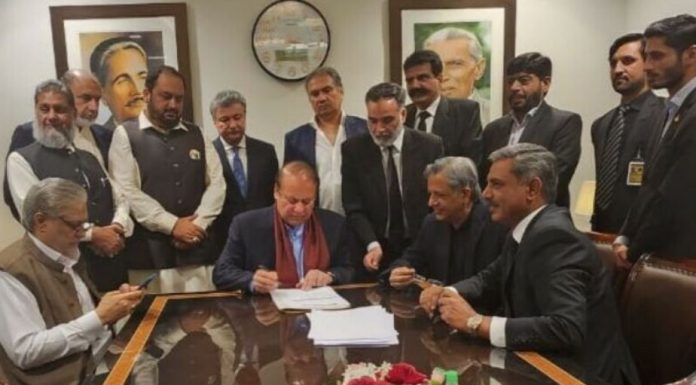
ISLAMABAD, OCT 20: Deposed prime minister and proclaimed offender Nawaz Sharif returned to Pakistan on Saturday afternoon after spending four years in London.

The PML-N supremo’s legal team including former law minister Senator Azam Tarar and party leaders are present at the airport to receive him.

Tarar said Nawaz will be consulted on political and legal issues upon his arrival, adding that the ex-premier will head to the VIP lounge after landing.

He confirmed that the court staff also reached the airport and now “the legal process of security guarantee will be completed”.

Ex-deputy mayor Zeeshan Naqvi was also present at the airport along with the oath commissioner for signing legal documents. The legal team of Nawaz will go inside the plane to take his biometrics and signatures.

Before boarding his flight, Nawaz said he was “happy to return”. He is likely to face a host of legal challenges before embarking on his election campaign to rev up his party’s prospects in the lead-up to elections due in Jan next year.

Party leader Ishaq Dar said Nawaz would arrive at Minar-i-Pakistan at 5pm today on schedule to address the gathering.

“On a media channel, there is news that Mian Nawaz Sharif will first go to Jati Umra and will later go to Minar-i-Pakistan at 7pm. This news is not true,” he said in a post on X (formerly Twitter).

Nawaz’s party is rallying its base, urging supporters to converge on Minar-i-Pakistan in Lahore from around the country to greet their leader and showcase the undiminished popularity of the party, which has been declared ‘irrelevant’ by its rivals.

Observers say the reason Nawaz is arriving in Islamabad instead of Lahore is that his touchdown in the capital was necessary to make bail, earlier granted by the Islamabad High Court on Oct 19.

“I’m going back to Pakistan after four years today,” Nawaz said today while speaking to the media at Dubai Airport. “When I was leaving Pakistan and going abroad I had no feeling of happiness but today I am happy.”

The ousted premier added that it would have been very good if the situation of the country was better today as compared to 2017.

“I get very worried and disappointed seeing the situation in the country. The country that had to move forward is going backward now economically and unity-wise.”

Terming the situation as “worrisome”, Nawaz said there was still hope and “we should not let it slip from our hands as we are capable of fixing it because we spoilt it ourselves”.

He said the country had to get back on its feet as nobody would lift us up.

“When I remember Pakistan back then, I get hurt, we had said goodbye to the International Monetary Fund, electricity was cheap, the rupee was stable, there was employment, roti cost Rs4, a poor family’s child went to school and medicines were also cheap.”

Throws weight behind ECP
Nawaz said only the Election Commission of Pakistan (ECP) can decide when polls will be held, adding that it was the only competent authority and a fair election commission.

“Whatever date the ECP announces, everyone will [abide by it]. My priority is whatever the ECP says. Pakistan has a fair ECP today and I feel it will make the best decision with regards to the election.

“The process takes time. Some work is left. A census has been done. Delimitations have to be carried out. ECP has an eye on all these things.”

Lamenting the treatment meted out to him in the past, Nawaz said he was the person who had gone through 150 court hearings. “Not just me but also my daughter. She even got a clean chit. She had to get it. She didn’t have a position during my government, not even an office.”

He said fake cases were not just filed against his family including former prime minister and his brother Shehbaz Sharif but also ex-interior minister Rana Sanaullah Khan and PML-N leader Hanif Abbasi.

“I even said before leaving that I leave everything to Allah and I still continue doing that.”

Nawaz smirked and said “We are the May 28 ones” when asked about the May 9 violence allegedly carried out by the PTI.

Pakistan conducted nuclear tests on May 28, 1998, under the leadership of the then prime minister Nawaz.

PM Kakar calls for a just & lasting Palestinian solution

PM Kakar calls for a just & lasting Palestinian solution

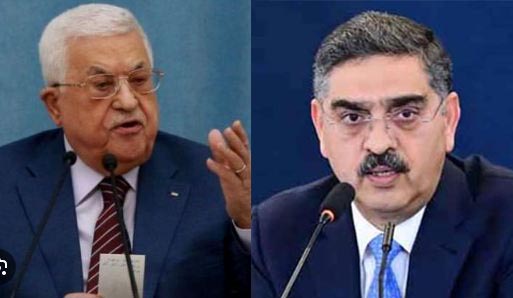
ISLAMABAD, OCT 20 /DNA/ – Prime Minister Anwaar-ul-Haq Kakar called Palestinian President Mahmoud Abbas today to discuss the latest situation resulting from the ongoing brutalities of Israeli occupation forces against innocent Palestinians in Gaza and the West Bank.

The Prime Minister expressed Pakistan’s strong condemnation of the incessant and lethal bombardment by Israeli occupation forces, particularly the bombing of Al-Ahli hospital. He termed these as deplorable and willful acts of Israeli aggression against innocent Palestinians that caused loss of more than 3000 precious lives and left over 12000 injured.

Both leaders emphasized the need for the international community to urge Israel to immediately halt the bloodshed. They also agreed on the necessity of lifting the blockade on Gaza to facilitate delivery of vital humanitarian aid and medical assistance to the affected people. Pakistan has also dispatched its first batch of humanitarian assistance for Palestinian people that landed in Egypt yesterday.

The Prime Minister stressed that the international community, particularly the United Nations, needed to take resolute measures to resolve this crisis and uphold established principles of justice, humanity and international law.

The Prime Minister also reaffirmed Pakistan’s unwavering commitment to a just and lasting resolution of the Palestinian conflict, based on the “two-state” solution, leading to the establishment of a sovereign and viable Palestinian state with East Jerusalem as its capital, and the borders that existed prior to 1967.

President Mahmoud Abbas thanked Pakistan for longstanding and sustained support to the Palestinian people in their struggle for freedom from Israeli occupation.

ICC World Cup 2023: All-round Australia down Pakistan by 62 runs

ICC World Cup 2023: All-round Australia down Pakistan by 62 runs

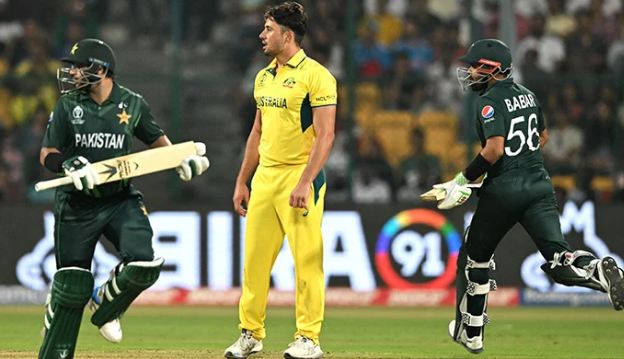
Bengaluru, OCT 20: An impressive Australia Friday defeated Pakistan by 62 runs to clinch their second successive victory in the ongoing World Cup at the M Chinnaswamy Stadium, Bengaluru, India.

The Aussies managed to restrict the Green Shirts to 305 runs after posting a colossal 368-run target courtesy of a 259-run stand from David Warner and Mitchell Marsh.

Pakistan were off to a great start as their opening duo of Imam-ul-Haq and Abdullah Shafique had a 134-run partnership — the first time a Pakistani opening pair had a century stand against Australia in a World Cup match.

However, Abdullah was removed after scoring 64 runs as he got a top edge on Marcus Stoinis’ delivery. Soon after the right-handed batter lost his wicket, Imam, too, followed him to the pavilion for 70 runs.

Pakistan were 154-2 in 23.4 overs and were in dire need of a big partnership to get back in the team but their skipper Babar Azam was removed by Adam Zampa just after scoring 18 runs courtesy of an excellent catch by Pat Cummins.

The Green Shirts kept on losing wickets at regular intervals but after the arrival of Iftikhar Ahmed, it looked like Pakistan would get in the game once again as the 33-year-old started hitting boundaries.

Adam Zampa provided the Aussies the much-needed breakthrough and removed Iftikhar and Mohammad Rizwan in back-to-back overs.

The Green Shirts were all out for 305 runs in 45.3 overs.

Batting first, Australia posted 367 runs on the scoreboard, recording the biggest total against Pakistan in the World Cup.

Warner and Marsh formed a 259-run stand and created history as that was Australia’s highest-ever opening stand in World Cup cricket. It was also the first time Pakistan conceded more than a 200-run partnership in World Cup cricket.

The opening stand was also Australia’s second-highest for any wicket ever and the second-highest by any team ever.

Marsh scored 121 runs before Afridi dismissed him while Warner posted 163 on the scoreboard — the highest individual score against Pakistan in World Cup cricket, beating Andrew Symonds’ 143 in 2003.

Shaheen Afridi was the pick of the bowlers for Pakistan as the 23-year-old bagged five wickets, his second World Cup fifer.

Playing XI
Pakistan: Abdullah Shafique, Imam-ul-Haq, Babar Azam (c), Mohammad Rizwan (wk), Saud Shakeel, Iftikhar Ahmed, Mohammad Nawaz, Usama Mir, Hasan Ali, Shaheen Afridi, Haris Rauf.

Australia: David Warner, Mitchell Marsh, Steven Smith, Marnus Labuschagne, Josh Inglis (wk), Glenn Maxwell, Marcus Stoinis, Mitchell Starc, Pat Cummins (capt), Adam Zampa, Josh Hazlewood.

Embassy of Pakistan in Minsk hosts students from School No.4

Embassy of Pakistan in Minsk hosts students from School No.4

DNA

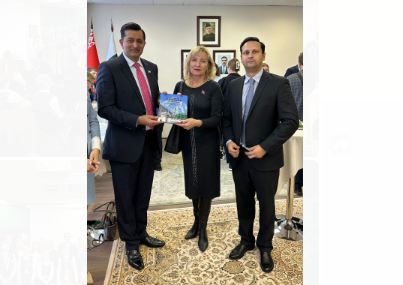
MINSK, OCT 20: The Embassy of Pakistan in Minsk hosted an exciting and informative event for students from School No.4, Minsk City on 19 October, 2023. Ambassador Sajjad Haider Khan gave a detailed briefing on Pakistan, covering topics such as its geography, arts, culture, and education system, among others.

Ambassador Khan also took the opportunity to brief the students on Pakistan’s Foreign Policy and major challenges challenges with specific focus on the Kashmir dispute, its legal status, and the ongoing situation. The students showed great interest in learning about Pakistan and engaged in an interactive Q&A session with the Ambassador.

The visit provided the students from the School with an opportunity to showcase their own talents and their school’s achievements, as they presented their school and its activities, highlighting educational achievements, innovative programs, and community engagement initiatives. In addition, the talented trio of music teachers presented a mesmerizing musical performance on violin, flute and guitar, while Belarusian singer Tatiana Kremis performed a Pakistani song in Urdu on this occasion.

In addition, the school also held a drawing competition on Pakistan, in which 13 students participated. The competition had provided an opportunity for the students to showcase their creativity and artistic skills, while also gaining a deeper understanding of Pakistani culture through their artwork. The Ambassador presented prizes to the winners, commending their efforts and encouraging them to continue exploring their creative talents.

The students were also treated to a taste of Pakistani cuisine, which they greatly enjoyed. The event was a great success, with the students leaving with a deeper understanding of Pakistan and its people.

The Embassy of Pakistan in Minsk continues to be committed to fostering cultural ties, promoting understanding, and strengthening people-to-people interactions between Pakistan and Belarus.

SC fixes hearing on polls, military trials for Oct 23

SC fixes hearing on polls, military trials for Oct 23

SCBA, others seek directives for ECP to hold polls within 90 days; last hearing on military courts held in Aug

Special Correspondent

ISLAMABAD: The Supreme Court (SC) has fixed the hearing of petitions seeking general elections within 90 days and challenging military trials of civilians on October 23 (Monday).

A three-member bench, headed by Chief Justice of Pakistan (CJP) Qazi Faez Isa and comprising Justice Aminuddin Khan and Justice Athar Minallah, will take up petitions filed by the Supreme Court Bar Association and others seeking directives to hold general elections within 90 days as stipulated by the Constitution.

Meanwhile, a five-member special bench led by Justice Ijazul Ahsan, and comprising Justice Munib Akhtar, Justice Yahya Afridi, Justice Sayyed Mazahar Ali Akbar Naqvi and Justice Ayesha Malik will hear petitions challenging the trial of civilians in military courts.

Last August, the SCBA moved the top court to direct the Election Commission of Pakistan (ECP) to announce the date for polls within the constitutionally mandated period of 90 days following the dissolution of the lower house – National Assembly – on August 9.

The lawyers association also challenged the approval of digital census 2023 by the Council of Common Interests (CCI) on August 5.

The petition, a copy of which is available with The Express Tribune, was filed by SCBA members belonging to the Professional Lawyers body (Hamid Khan Group).

The election supervisor is bound to hold polls within 90 days if the assembly is dissolved early.

As the lower house was dissolved on August 9, three days before the end of its term, elections were supposed to be held by November 9. Yet, the last potential time for elections floated by the ECP is January 2024.

Meanwhile, after the approval of census 2023 by the CCI, a delay in the holding of polls seems to be in offing, as according to officials, the process of new delimitations may take four months or longer.

The SCBA, in its petition, urged the apex court to declare the participation of the caretaker chief ministers of Punjab and Khyber-Pakhtunkhwa in the CCI meeting as illegal and in violation of the Constitution.

Both the Punjab and Khyber-Pakhtunkhwa assemblies where the Pakistan Tehreek-e-Insaf (PTI) government was in power were dissolved in January 2022.

The caretaker governments in both the provinces were bound to hold elections within 90 days but failed to do so.

The petition maintained that the purpose of convening the CCI meeting a week before the dissolution of the National Assembly to approve the results of new census was to delay the elections and requested the apex court to suspend the notification in this regard.

The petition further noted that holding of elections within a period of 90 days of dissolution of assemblies is a salient feature of the Constitution and any delay in the conduct of general elections beyond the mandatory period of 90 days as mandated by Article 224(2) of the Constitution, 1973 will be in blatant violation of Articles 4, 5, 6, 9, 17, 51, 106 and 224 of the Constitution.

A number of petitions were filed before the SC challenging former Pakistan Democratic Movement’s coalition government and the military’s decision to hold military trials of civilians suspected of involvement in the protests that broke out on May 9, following ousted premier Imran Khan’s arrest from the premises of the Islamabad High Court by troops of the paramilitary forces.

Several military installations were targetted during the protest including Corps Commander Lahore’s residence – Jinnah House – and the General Headquarters (GHQ) in Rawalpindi.

The matter was taken up by former CJP Umar Ata Bandial and Justices Ijazul Ahsan, Munib Akhtar, Yahya Afridi, Sayyed Mazahar Ali Akbar and Ayesha Malik. On August 3, the apex court had adjourned the hearing indefinitely much to the dismay of petitioners who had sought expeditious disposal of their petitions.

During the proceedings thus far, the court has been informed that at least 102 suspects remain under army custody.

The petitioners contend that subjecting civilians to trials under the Army Act read with Official Secrets Act stands in violation of the Constitution and encroaches on fundamental rights of citizens. The lack of transparency in past trials conducted by military courts has also been highlighted.

At the last hearing, former CJP Bandial had remarked that the apex court would not allow the army to carry out any unconstitutional act, stressing that the military was meant to serve the country.

He had observed that the incidents of May 9 were of serious nature and that it pained him to hear remarks made by the attorney general of Pakistan (AGP) about the Pakistan Army being equipped to open fire on protestors on May 9.

The former CJP noted that the army was meant to serve the country.

Meanwhile AGP Mansoor Awan had assured the court that the 102 civilian suspects, still in military custody, would be treated fairly during the trial.

Awan said that his assurance came from the top military leadership, adding that concessions were being made for May 9 suspects on the court’s insistence. At one point, the AGP reminded the court that “the military is armed”.

 “No efforts are being made to overturn the Constitution … What happened on May 9 is before everyone,” Awan told the court. “Remember one thing – they are the armed forces. If they are attacked, they have weapons to defend themselves.”

AGP Awan further said that the army was equipped to fire bullets. “It is not possible that if they are attacked [and] they first approach an SHO [police station house officer] to lodge a formal complaint,” he said.

“They [the military] could have opened fire on May 9,” the AGP added. However, this prompted Barrister Aitzaz Ahsan, one of the petitioners, to ask the AGP why the military did not open fire.

“We do not want that such a situation … when the army resorts to opening fire. This is why we are conducting [military] trials,” Awan said. Ahsan, then said that the government’s term ends on August 12, so “how can it give assurances then”.

At one point, Justice Akhtar had observed that the state could not deprive its citizens of their fundamental rights even if it wished to. He added that the trial of civilians in military courts was equivalent to running a parallel judicial system.

Stay Connected

64FansLike
60FollowersFollow

Latest Reviews

Exchange Rates

USD - United States Dollar
EUR
1.18
GBP
1.35
AUD
0.67
CAD
0.73