Home Blog Page 898

“What is Wrong with Imran’s Video on X?”

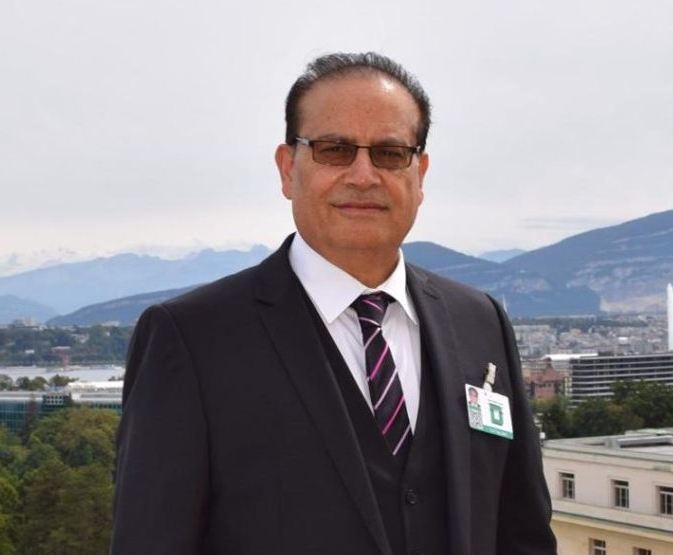
Qamar Bashir

By: Qamar Bashir

For the last few days, there has been a lot of fervor, talks, fears, and intimidations, with law enforcement agencies resorting to grilling Rauf Hassan, Omer Ayub Khan, and later incarcerated Imran Khan, on account of a video uploaded on his personal account.

The documentary is knitted against the background of the Hamoodur Rehman Commission Report on the debacle of East Pakistan and the dashed aspirations of millions of people as they watched Pakistan shatter before their very eyes, followed by the laying down of arms by the Pakistan army and the imprisonment of around a hundred thousand Pakistani brave soldiers by India. The nation went through a period of great despair, sorrow, and agony but gradually recovered from its wounds.

Examining the scenario where a leader of Pakistan’s most popular party, PTI, terms the military dictator who ordered the surrender in 1971 and General A.K. Niazi, who signed the surrender document, as traitors, and drawing a parallel between the events of 1971—triggered by the denial of power to the Awami League, which had won the election—and the 2024 election scenario where PTI claims to have won elections but was denied power, raises several points of analysis requiring a deep dive into historical context and contemporary political dynamics.

I read the Hamoodur Rehman Commission’s report in Dawn, which was made public after carefully curtailing the most sensitive parts around the late 80s. The report was very incisive and critical and had a lot of emotions woven into it. One part of the report which pained me immensely was the mention that nowhere in Muslim history had so many Muslim soldiers been made prisoners. In another part, which again hurt me a lot, the report said it would have been much more honorable for the Pakistan army to embrace shahadat rather than surrendering to the enemy, and that too in such a large number.

The report vividly painted the scenario of December 16, 1971, when Lieutenant General A.A.K. Niazi of Pakistan signed the Instrument of Surrender, leading to the creation of Bangladesh. The surrender was viewed by many in Pakistan as a significant national humiliation. General Niazi and others were accused of incompetence and cowardice. The Hamoodur Rahman Commission, set up to investigate the defeat, recommended action against those responsible, but they were not formally charged with either betrayal or treachery.

However, the question of whether a surrender through a proper channel by an army or the signing of a surrender document by a General constitutes an act of treachery or treason or mere incompetence of both political and military leadership is complex and situational, demanding a look at historical examples and perspectives to reach some kind of conclusion.

On May 7, 1945, General Alfred Jodl signed the unconditional surrender of all German forces to the Allies, which deeply disappointed Germans who felt betrayed, though it was seen as a necessary step to end the conflict. General Jodl was later executed at Nuremberg, but not for the act of surrender. Similarly, on April 9, 1865, General Robert E. Lee surrendered the Army of Northern Virginia to Union General Ulysses S. Grant at Appomattox Court House, ending the American Civil War. Lee’s surrender was viewed as honorable and aimed at avoiding further bloodshed, and he was respected for his decision. In contrast, on February 15, 1942, British Lieutenant General Arthur Percival’s surrender of Singapore to Japanese forces was one of the largest British-led surrenders and was seen by some as necessary to avoid massacre, though others criticized it as a failure of leadership. Percival faced criticism but was not tried for treachery.

These examples let us reach a simplistic understanding that a surrender to save lives is viewed as pragmatic  and surrender without exhausting all options may be termed as incompetence.

 The surrender without exhausting all options can be seen as betrayal with the caveat that those in the field who face the enemy directly are less culpable than those who ordered the surrender. Similarly, the treatment of officers who surrender can vary significantly: some are prosecuted, others reintegrated into society, and some celebrated for their pragmatism.

As per multiple military and strategic commentators, the decision to surrender in 1971 was influenced by military and political circumstances, including overwhelming opposition forces and an untenable situation for Pakistani troops, and secondly to the political events that led to the rebellion in East Pakistan were masterminded by Mujeeb ur Rehman and his Awami League, which had won the 1970 general elections but were denied power, leading to widespread unrest and eventually the war of independence. Therefore, unlike the troops on the border, the failure to transfer power to the elected representatives of East Pakistan is often cited as a significant factor leading to the 1971 conflict and the eventual secession of Bangladesh.

In 1971, the distinction between treachery or treason and mere incompetence lies in the intent and actions of military and political leaders. Treachery or treason would involve deliberate collaboration with the enemy, acts of sabotage, or betrayal of oaths for personal gain. Conversely, incompetence would encompass poor strategic decisions, underestimating the enemy, logistical failures, and inadequate political leadership.

The Hamoodur Rahman Commission Report criticized the military and political leadership for incompetence and mismanagement but did not label their actions as treasonous, recognizing the complexity of the wartime situation. General A.A.K. Niazi, for example, faced accusations of incompetence rather than treason for his leadership failures. The political decision to deny power to the Awami League after the 1970 elections was seen as a miscalculation rather than treachery. Thus, while treachery involves intentional harm, incompetence is marked by poor decision-making and leadership under pressure.

While PTI’s demand for respecting electoral outcomes to ensure democratic stability carries significant weight, each situation must be evaluated on its unique circumstances and merits.

Comparing the 2024 election scenario to the events of 1971 may serve a political narrative but does not fully account for the distinct contexts of military conflict and electoral politics. Therefore, while it may be politically expedient for the PTI to draw such comparisons, it is essential to approach these claims with a nuanced understanding of historical and contemporary realities.

By: Qamar Bashir

Former Press Secretary to the President

Former Press Minister to the Embassy of Pakistan to France

Former MD, SRBC
IPS extends patronage to 2nd int’l conference to be held jointly in Poland and Pakistan

IPS extends patronage to 2nd int'l conference to be held jointly in Poland and Pakistan

ISLAMABAD, JUN 10 /DNA/ – The world is witnessing a tectonic shift in the balance of power and centres of influence in international relations. The transformation of the international order, catalyzed by the changing dynamics among major global entities, has raised questions about the direction of development of the “new” international order, the role of state and non-state actors, and the responsibility of recognized powers for the stability of international security.

This discourse is to be deliberated at length at the two-day international conference to which the Institute of Policy Studies (IPS) has extended its patronage. The 2nd International Scientific Conference titled “New World Order: in Statu Nascendi”, is jointly organized by the Institute of Political Science, University of Warmia and Mazury in Olsztyn, Poland, and the Department of International Relations, Federal Urdu University of Arts, Science and Technology (FUUAST), Pakistan.

Scheduled to be held on June 11-12, 2024 at the Faculty of Social Science, University of Warmia and Mazury in Olsztyn, Poland, this two-day conference will convene distinguished scholars, policymakers, and experts from across the globe to deliberate on the transformative dynamics shaping the new world order. As part of its engagement, IPS will host a dedicated panel discussion on ‘The New International Order as a Chance for the Development of the Global South Countries’ in Islamabad.

Under the proposed theme, this panel will discuss the prospects and challenges for the global south countries to use the new international order as a chance for an all-encompassing development. The panel will also explore whether a new world order can benefit human civilizational development with a more inclusive approach.

It will focus on the prospects for the Global South working as the engine of international economic growth and leading the world toward equitable financial governance. The role of multilateral mechanisms and alliances to ensure inclusive development, irrespective of the North-South divide, will be another area of inquiry. Lastly, the panel will explore the outlook of an alternative security framework to contribute to global peace and prosperity.

Internet addiction may trigger more addictive behaviours in teens: study

Internet addiction may trigger more addictive behaviours in teens: study

A new research suggests that young people with internet addiction experience changes in brain chemistry leading to more addictive behaviours.

According to The Guardian, the study published in PLOS Mental Health used functional magnetic resonance imaging (fMRI) to examine brain.

The findings revealed increased activity in certain brain regions during rest and decreased connectivity in areas associated with active thinking, affecting memory and decision-making.

This means internet addiction impacts neural networks in the brains of young people, leading to addictive behaviours and behavioural changes linked to mental health, development, intellectual ability and physical coordination.

The researchers reviewed 12 previous studies involving 237 young people (from 10- to 19-year-olds) with a formal diagnosis of internet addiction between 2013 and 2023.

Almost half of British teenagers have said they feel addicted to social media, according to a survey this year.

The study’s lead author and an MSc student at the UCL Great Ormond Street Institute of Child Health (GOS ICH) Max Chang revealed that during adolescence, “the brain is particularly vulnerable to internet addiction-related urges”.

These include “compulsive internet usage, cravings towards usage of the mouse or keyboard and consuming media” because significant changes occur in people’s biology, cognition and personalities in adolescence.

He said that “they may struggle to maintain relationships and social activities, lie about online activity and experience irregular eating and disrupted sleep”.

Chang added that he hoped the findings would allow early signs of internet addiction to be treated effectively through therapy.

He highlighted the importance of parental education on internet addiction as “another possible avenue of prevention from a public health standpoint”.

He said: “Parents who are aware of the early signs and onset of internet addiction will more effectively handle screen time, impulsivity, and minimise the risk factors surrounding internet addiction.”

Recognizing Palestine Marks New Era in Diplomacy

Recognizing Palestine Marks New Era in Diplomacy

Dr. Muhammad Akram Zaheer

Ireland, Spain and Norway recently decided to recognize Palestinian statehood. This move could potentially help revive the idea of a two-state solution which is a long-supported international goal that Israeli Prime Minister Benjamin Netanyahu strongly opposes. Spain’s Prime Minister Pedro Sanchez clarified that this decision should not be seen as an action against Israel. Despite Netanyahu labeling it a “reward for terrorism” Sanchez views it as a step towards peace. Other European countries might follow suit adding to the over 140 nations that already recognize Palestinian statehood.

However, the situation remains complex and tense. Rafah, a city in the Gaza Strip is under the heavy attack despite international calls for restraint. This includes appeals from the International Court of Justice, the United States and the European Union. This makes it challenging to see these diplomatic recognitions as anything more than symbolic gestures, highlighting internal divisions within Europe and its struggle to apply coordinated pressure on Israel. The actions by Ireland, Spain and Norway might reflect growing frustration in Europe over stalled peace efforts and the Israeli government’s perceived stubbornness. Yet, without a unified European approach, these individual recognitions may not significantly change the situation. The ongoing violence in Rafah emphasizes the gap between diplomatic actions and on the ground realities. Even though more countries recognizing Palestinian statehood could be a symbolic win for Palestinians,it is uncertain if this will lead to real progress towards peace especially with strong opposition from key players like Israel and the United States.

For these recognitions to be effective, Europe needs to present a unified and strong front which is difficult given current geopolitical dynamics.The decision by Ireland, Spain and Norway was expected due to their national debates and growing public support for action supporting Palestine. Politically, this is notable because other European countries, such as Malta, Slovenia and Belgium have hesitated to take similar steps. Belgium has been vocal about Palestinian rights during its presidency of the Council of the European Unionhowever national elections and other factors have made it cautious. National election cycles and the upcoming election of a new European Parliament have influenced how European governments handle the sensitive Middle East issue, depending on their domestic politics and the views of their ruling parties.

The decisions by Ireland, Spain and Norway’s involvement (though not an EU member) are significant for breaking the EU’s diplomatic unity rather than for their legal impact. Most of the few EU members that recognized Palestinian statehood did so in 1988 before joining the EU and were mainly former Warsaw Pact countries. Before the recent declarations only Sweden had departed from the EU’s general stance on Palestine, doing so in 2014. The current Swedish government’s different stance compared to the previous one shows how volatile this issue can be. There is still no consistent, unified approach among all 27 EU member states that goes beyond national political cycles and short-term agendas. Even though there has been some agreement within the EU since the conflict started, reaching a comprehensive EU-wide consensus is still far off.

It would be too cynical to dismiss the entire EU diplomatic effort after the October 7, 2023, Hamas terrorist attack as futile. The EU High Representative JosepBorrell has worked hard to coordinate a common European position during critical moments of the conflict, sometimes with success. The Spanish and Belgian EU presidencies have tried to convince Israel that resuming peace talks is a key to defeating Hamas politically not just militarily. Despite Israel’s ongoing military campaign which has killed tens of thousands, EU leaders like Germany and France have become more critical of Israeli policy. French President Emmanuel Macron even said in February that recognizing Palestinian statehood is no longer a taboo for Paris.

However, the EU has not yet united around measures that would apply real pressure especially in trade and economic relations. The EU is the largest provider of aid to Palestinians and Israel’s biggest trade partner. Recently, sanctions were seriously discussed for the first time at an EU foreign ministers’ meeting but no agreement was reached. It’s important for the EU to stay involved in resolving the conflict by engaging with Arab countries, but its effectiveness is limited by internal differences and political cycles. With pro-Israel Hungary taking over the EU Council presidency in July, achieving a common and meaningful EU position will remain a challenge.

Macron gambles on snap elections to halt far-right march

snap elections

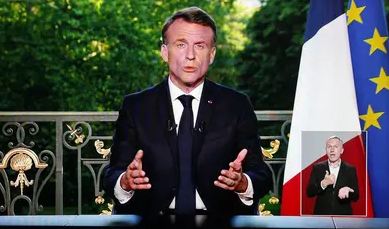
Paris, JUN 10 (AFP/APP): French President Emmanuel Macron has taken the biggest gamble of his political career by calling early legislative elections to combat the surge of the far right, with the outcome decisive for his political legacy.

France will go to the polls to vote for a new National Assembly on June 30, with a second round on July 7, Macron said in an address to the nation.

His stunning announcement came after EU election projections showed the far-right National Rally (RN) had scored more than double the votes of his centrist alliance in the French vote.

  “The extreme gamble,” wrote daily Liberation in the front-page headline of its Monday edition.

In his address to the nation, Macron noted that in total far-right parties in France had won almost 40 percent of the vote.

“It is a situation to which I cannot resign myself… I cannot act as if nothing had happened,” Macron added.

The presidential camp now just has three weeks to make up ground on the RN in a short but intense burst of campaigning before France hosts the Paris Olympics in July and August.

With turnout in the European elections projected in France at just over 52 percent, Macron’s allies will be hoping to attract voters who stayed at home to block the far right.

In a best-case scenario for Macron, his centrist alliance would recover the absolute majority it lost in 2022 legislative elections and give new impetus to the remaining three years of his presidential mandate.

The nightmare outcome for him would be the RN winning a majority. That would likely see its leader Jordan Bardella, a protege of three-time presidential candidate Marine Le Pen, become prime minister in an uncomfortable “cohabitation”.

A middle scenario, analysts say, would be an anti-extremism coalition between Macron’s centrists and the traditional right-wing Republicans or even left-wing Socialists.

Celine Bracq, director general of the Odoxa polling agency, described Macron’s announcement as a “poker move” at a time when there is a “strong desire on the part of the French to punish the president”.

“It’s something extremely risky,” she told AFP. “In all likelihood, the National Rally, in the wake of the European elections, could have a majority in the National Assembly and why not an absolute majority.”

Luc Rouban, political scientist at Sciences Po in Paris, said Macron wanted to “trap” the RN with his sudden election announcement, arguing the party would find trouble mustering quality candidates to challenge for the 577 seats in the National Assembly.

“I think Macron’s idea is to play on something with the right,” he added.

Speaking to AFP, ruling Renaissance party chief and Foreign Minister Stephane Sejourne gave an indication of how the campaign could play out.

He said the party would not challenge outgoing MPs from the traditional left and right for their seats if they were prepared to “invest in a clear project” around the presidential majority.

Leaders of left-wing parties called on their camp to unite to face the RN challenge.

While the balance of power “has evolved”, Socialist party leader Olivier Faure called for “a gathering which allows us to have a project, which allows us to be heard by the French”, and Communist Party leader Fabien Roussel said the left should “work together on a pact for France”.

Across the political spectrum, Eric Zemmour, of the far-right Reconquete, called for “the broadest union of the right”.

Marion Marechal, who headed the party’s list in the EU elections, said she was “ready to meet in the coming days” with Le Pen, who is her aunt, Bardella and Republicans leader Eric Ciotti. Mujtaba Rahman, managing director for Europe at Eurasia Group, said Macron had taken “a major gamble”.

“This is really him trying to seize the initiative,” he told AFP.

“There is a serious risk of cohabitation”, he added, referring to a situation in which a president and prime minister from opposing political parties have to find a way to run the country together.

“The most likely outcome is more fragmentation, more deadlock and chaos. A complete paralysis.”

US, Pakistan shape the future of higher education

US, Pakistan shape the future of higher education

ISLAMABAD, JUN 10 /DNA/ – U.S. Chargé d’Affaires Andrew J. Schofer today inaugurated the three-day International Summit on Higher Education alongside the Chairman of the Higher Education Commission, Dr. Mukhtar Ahmed, and professors from the University of Utah. 

The USAID-funded summit brings together over 180 Pakistani and American university leaders and faculty to collaborate, exchange knowledge, and build partnerships to improve the quality of higher education and student employability. The summit is part of USAID’s $19 million Higher Education System Strengthening Activity that supports 16 Pakistani public universities to improve higher education management, market-relevant instruction, and student support services.

In his opening remarks, Chargé d’affaires Schofer emphasized the crucial role of higher education institutions in driving Pakistan’s economic development. “Higher education institutions have an essential role to play in Pakistan’s development. When universities deliver equitable education, provide youth with employment-ready skills, and lead in applied research and innovation, both individuals and society prosper,” he stated.

Dr. Mukhtar Ahmed, Chairman of the Higher Education Commission of Pakistan, appreciated this robust partnership between the University of Utah and Pakistani universities to exchange ideas and share innovations across borders.

T20 Cup: India steal match from Pakistan

T20 Cup: India steal match from Pakistan

Another disappointment

After containing India to a small total Pakistani batsmen failed to chase even a small total

Afzal Javed/DNA

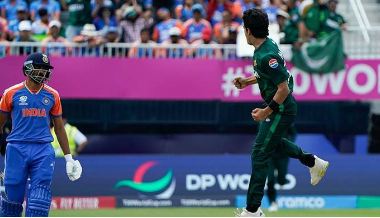
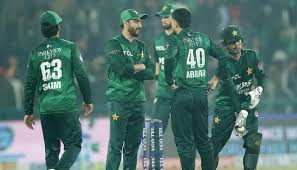
NEW YORK: India literally stole the match from Pakistan by registering a thrilling victory. India won the match by 6 runs.

Pakistani batsmen failed to live up to the expectations and miserably failed to even chase the small total. Indians played like a team and fought till the end.

Earlier, Pakistan lost three wickets to archrivals India as their stride for the 120-run target to win the crucial match continued at the Nassau County International Cricket Stadium on Sunday.

The Pakistani pacers shined at the biggest cricket match of T20 World Cup 2024, as they restricted India to a meagre 119 runs.

The Men in Green need 120 runs to win as it is make-or-break showdown for the national squad after the shocking loss against United States in their first match of the mega tournament.

As Pakistan began the run-chase, India took first wicket, sending skipper Babar Azam to the dugout for just 13 runs of 10 balls.

Beyond expectations, Rohit Sharma and Co failed to score big as they were bowled out in quick dismissals in just the 18th over of the first innings.

The Men in Green made early progress against archrivals, routing out the opening pair Virat Kohli and skipper Sharma, after the match resumed following a brief delay caused by rain.

Soon after Naseem Shah struck again as he bowled out Axar Patel for 18 out of 20 balls.

India were 89-4 when Mohammad Amir took one for his mate Haris Rauf, sending Suryakumar Yadav to the dugout for 8 off seven balls.

Shivam Dube walked in only to return back to pavillion with just three runs in his bag.

Amir looked for a hat-trick with the fall of seventh wicket of Ravindra Jadeja 0-1, quickly after dismissal of Rishabh Pant for 42 off 31.

The tail enders were also sent packing as Pakistan built pressure with quick wickets towards the end of nerve-wracking innings.

India were put to bat first as Pakistan won the toss and chose to field against the archrivals in the most-anticipated match at the T20 World Cup 2024.

The match between the two countries is one of the most watched events globally as both teams reignite their rivalry.

PAK vs IND: Pakistan restrict India to 119 in New York

PAK vs IND: Pakistan restrict India to 119 in New York

New York, JUN 9: India set a 120-run target for Pakistan in their second match of the T20 World Cup 2024 which is being played at Nassau County International Cricket Stadium in New York on Sunday.

The Pakistani bowlers dominated the Indian batters completely and didn’t give them much room to shine in one of the most anticipated matches of the tournament.

PM Shehbaz Sharif advocates for higher tobacco taxes on World Tobacco Day

PM Shehbaz Sharif advocates for higher tobacco taxes on World Tobacco Day

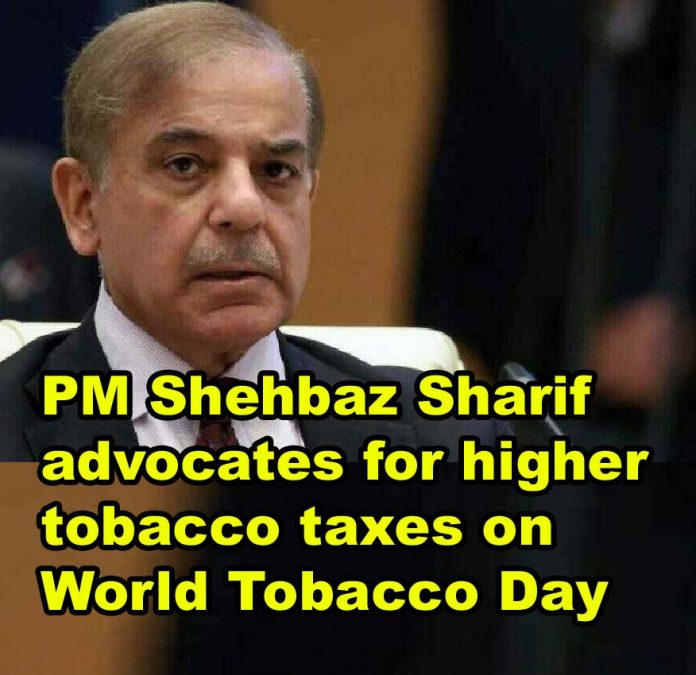
ISLAMABAD, JUN 9 /DNA/ – Anti-tobacco and health activists across the country have welcomed Prime Minister Shehbaz Sharif’s statement issued on World Tobacco Day, which strongly discouraged tobacco consumption and advocated for increased taxation on the tobacco industry.

The statement has been hailed as a step forward for the anti-tobacco movement in the country, which has long been demanding for stricter regulations and higher taxes on tobacco products.

“We are positive to see the Prime Minister taking a bold stance against the tobacco industry,” said Maryam Gul Tahir director at The Centre for Research and Dialogue (CRD).

She said this is a crucial step towards protecting the health and wellbeing of our citizens, especially our youth.

According to the World Health Organization (WHO), tobacco consumption is responsible for over 160,000 deaths in Pakistan every year.

Anti-tobacco activists have long been pushing for increased taxation on tobacco products, citing the proven effectiveness of this strategy in reducing consumption.

PM Shehbaz Sharif’s statement has also drawn attention to the need for stricter regulations on the tobacco industry, including a ban on tobacco advertising and promotion.

“The tobacco industry has long been exploiting our youth with its deceptive marketing tactics,” said Gul.

She said “We welcome the Prime Minister’s commitment to protecting our youth from the harmful effects of tobacco.”

The Prime Minister’s statement has set a positive tone for the country’s efforts to combat tobacco consumption.

Anti-tobacco activists are now calling on the government to take concrete steps to implement the Prime Minister’s vision, including increasing taxes on tobacco products and enforcing stricter regulations on the tobacco industry.

Malik Imran Ahmad country head Campaign for Tobacco-Free Kids (CTFK) said that, higher taxes on tobacco products can lead to increased revenue for the government.

“Pakistan currently holds the highest proportion of young people, as 64% of the total population of Pakistan is below the age of 30,” he said.

Tobacco activists believe that with the Prime Minister’s support, Pakistan’s anti-tobacco movement is poised to make significant progress in the coming years.

PAK vs IND: Pakistan bowl first against India

PAK vs IND: Match stopped due to rain

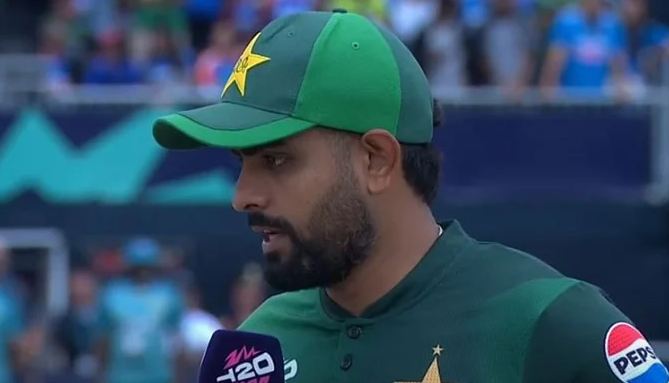
New York, JUN 9: Pakistan won the toss and opted to bowl first in their second match of the T20 World Cup 2024 against India which is being played at the Nassau County International Cricket Stadium in New York on Sunday.

Pakistan’s skipper Babar Azam said that the team will forget about the defeat against the United States (USA) and have their focus on this match

“The past is the past, and we’re looking forward to this match,” said Babar at the toss.

On the other hand, Rohit Sharma stated that they have already played at the venue and have assessed the conditions.

“We’ve played a few games here, we’ve tried to assess the conditions as much as possible,” Rohit said. “Every game is important. Anything can happen, this is a very funny tournament.”

Playing XIs
Pakistan: Mohammad Rizwan (wk), Babar Azam (c) Usman Khan, Fakhar Zaman, Iftikhar Ahmed, Shadab Khan, Imad Wasim, Shaheen Afridi, Mohammad Amir, Naseem Shah, Abrar Ahmed.

India: Rohit Sharma (c), Virat Kohli, Rishabh Pant (wk), Suryakumar Yadav, Shivam Dube, Hardik Pandya, Ravindra Jadeja, Axar Patel, Jasprit Bumrah, Mohammed Siraj, Arshdeep Singh.

Pakistan are coming off a defeat in their first match of the T20 World Cup against the USA after a thrilling Super Over as they struggled greatly with the bat.

Mohammad Amir took the ball in the Super Over and the USA concluded their innings 18-1 in reply, the Men in Green could only score 13-1 and ended up losing the match by five runs.

The loss has put Pakistan at crossroads and the game against India is of significant importance as a loss in New York today wo

On the other hand, India defeated Ireland comfortably in New York in their first match of the tournament.

Stay Connected

64FansLike
60FollowersFollow

Latest Reviews

Exchange Rates

USD - United States Dollar
EUR
1.17
GBP
1.35
AUD
0.72
CAD
0.73