Home Blog Page 891

The Price of Litigation: PIDE study exposes costs of legal battles in universities

The Price of Litigation: PIDE study exposes costs of legal battles in universities

The average cost of litigation varies from PKR 50,000 to 200,000 per person for lower scales (BPS 1 to 16) and from PKR 150,000 to 500,000 per person for higher ranks (BPS 17 and above).

The study recommends the implementation of a proper penalty system against the losing party to discourage the unnecessary escalation of matters to court.

Conflict detrimentally impacts the working environment, particularly among faculty members, ultimately affecting the institution’s overall performance.

Islamabad, OCT 23 /DNA/ – The Pakistan Institute of Development Economics (PIDE) conducted a research study titled “Judiciary and Human Resource Management in Universities” to investigate the average number of court cases and their nature, registered by faculty members and other staff against university administrations, as well as the average cost of litigation to resolve these cases.

According to the press release issued by PIDE, the study revealed that, on average, 105 court cases were filed by faculty members against the administration. Of these cases, 50 were from relatively younger universities, while 160 cases belonged to the older universities. The universities were classified into two broad categories in the research: older universities (established before 2005) and younger universities (established after 2005).

In examining the cases filed by faculty, the study found that 58 percent were initiated by academic faculty members, while 42 percent were filed by non-academic staff. Additionally, the majority of these cases related to promotion (65%) and permanent positions (22%), respectively.

The cost of litigation involves both direct and indirect expenses. The direct cost is determined by lawyer fees, which vary based on the nature of the case and the scales and groups of applicants. For lower scales (BPS 1 to 16), the average cost of litigation ranges from PKR 50,000 to 200,000 per person, while for higher ranks (BPS 17 and above), it varies from PKR 150,000 to 500,000 per person. The indirect cost pertains to time, with each case taking, on average, six months in service tribunals. This duration can be extended if the losing party escalates the matter to higher courts, including high courts or supreme courts. This conflict detrimentally impacts the working environment, particularly among faculty members, ultimately affecting the institution’s overall performance.

The study recommends the implementation of a proper penalty system against the losing party to discourage the unnecessary escalation of matters to court. Additionally, it suggests the establishment of an effective and inclusive internal conflict resolution mechanism within institutions. Furthermore, the study identifies one of the main reasons people frequently resort to the courts as the absence of significant penalties in the event of losing a legal case. To address this issue, the study proposes two potential solutions: the development of a structured penalty system, particularly in cases of frivolous or defamatory litigation, and the adoption of more effective and inclusive conflict management mechanisms based on successful models and best practices. These recommendations are designed to promote fair and responsible legal actions while alleviating the burden on the legal system.
ICCI eyes great potential for promoting trade with Indonesia

ICCI eyes great potential for promoting trade and exports with Indonesia

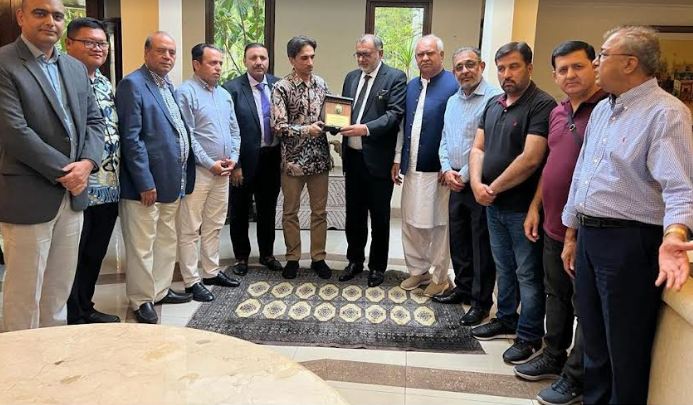
Islamabad, OCT 23 /DNA/ – A delegation of Islamabad Chamber of Commerce and Industry (ICCI) led by its Vice President Engr. Azhar ul Islam Zafar visited the Pakistan Embassy in Jakarta, Indonesia and exchanged views with Faisal Fiaz, Acting Ambassador of Pakistan to Indonesia to further improve bilateral trade ties between the two countries. Muhammad Shabbir, Ch. Muhammad Ali, Hamayun Kabir, Ch. Javed Iqbal, Sheikh Muhammad Ejaz, Akhtar Hussain and others were in the ICCI delegation.

Addressing the delegation, Faisal Fiaz, Acting Ambassador of Pakistan to Indonesia said that the economy of Indonesia is on a sustainable growth trajectory, therefore Pakistan has promising scope to develop close cooperation with it and get easy access to Indonesian and ASEAN markets.  He said that Pakistan-Indonesia bilateral trade in 2022 was around US$ 4.2 billion, which can be further improved by promoting business linkages between the private sectors of both countries. He said that in 2013, Pakistan had signed a preferential trade agreement with Indonesia and stressed that the business community should take full advantage of it to promote trade and exports with Indonesia. He lauded the ICCI delegation for participating in the 38th Trade Expo Indonesia Hybrid Edition 2023 and said that regular exchange of trade delegations is the best way to improve bilateral trade ties between the two countries. He assured that the Pakistan Embassy in Indonesia would fully cooperate with the business community of Pakistan in exploring new avenues of trade promotion with Indonesia.

Speaking on the occasion, Engr. Azhar ul Islam Zafar, Vice President ICCI said that Pakistan and Indonesia are two important countries of the Muslim world and a lot of opportunities are available for private sectors of both countries to enhance cooperation in multiple fields. He said that the purpose of ICCI delegation to visit Indonesia is to explore untapped opportunities of bilateral cooperation between the two countries. He said that Pakistan can export many products to Indonesia including pharmaceuticals, surgical & medical equipment, footballs, leather products. He said that Pakistan and Indonesia can also cooperate in many fields including tourism, IT, pharmaceutical, textile, cooking oil, mines & minerals, leather, e-commerce and others. He said that the Pakistan Embassy in Indonesia should identify the demand of Pakistani products in Indonesia and share this information with chambers of commerce of Pakistan so that the business community could take advantage of them.

ICCI delegation members also spoke on the occasion and shared useful ideas for further improving bilateral trade and economic relations between Pakistan and Indonesia.

CEPA Academy: Your pathway to success in CSS exams unveiled

CEPA Academy: Your pathway to success in CSS exams unveiled

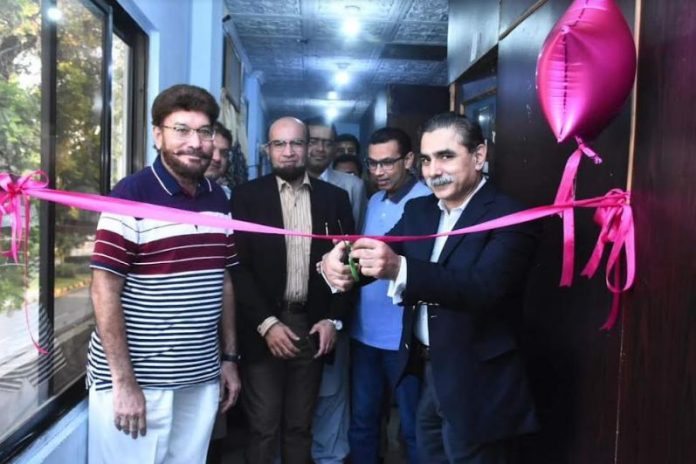
ISLAMABAD, OCT 23 /DNA/ – A formal inauguration ceremony of CEPA (CSS Exam Preparation Academy) took place in Islamabad on October 22, 2023.

CEPA academy is dedicated to providing exceptional mentorship, comprehensive training, and extensive practice for the CSS Exams.

Our team of experienced instructors and experts are committed to helping aspiring candidates excel in their CSS exams and achieve their career goals.

At CEPA, we understand the importance of thorough preparation and guidance, which is why we have designed a curriculum that covers all aspects of the CSS exams, including current affairs, essay writing, English composition, and more.

If you are passionate about pursuing a career in the civil services and want to maximize your chances of success, join CEPA and let us help you unlock your potential!

Pakistan wishes stronger ties with ASEAN countries: FM

Pakistan wishes stronger ties with ASEAN countries: FM

Ansar M Bhatti/DNA

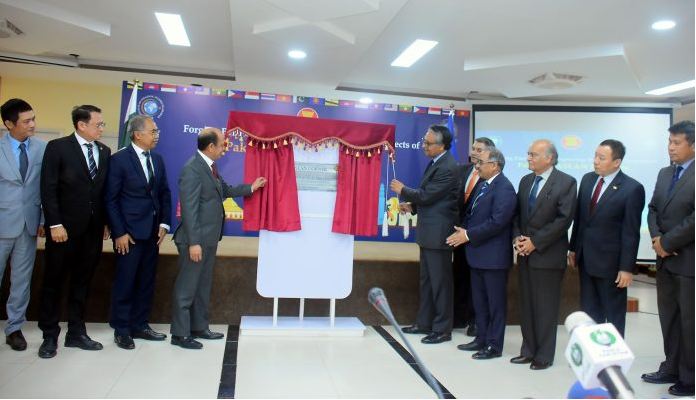
ISLAMABAD, Foreign Minister Jalil Abbas Jilani on Monday terming a peaceful and stable Asia Pacific a priority said Pakistan stands ready to work with the member states of ASEAN (Association of Southeast Asian Nations) for attaining the goals of confidence-building and conflict prevention. Speaking at the inauguration of the ASEAN Corner at the Institute of Strategic Studies Islamabad (ISSI), the foreign minister highlighted Pakistan’s efforts in forging the future prospects of its relations with ASEAN.

Jilani reaffirmed Pakistan’s support for an international order based on peaceful co-existence, amicable settlements of disputes, win-win cooperation, and shared prosperity. He mentioned that Pakistan was fully supportive of the principles of ASEAN and was collaborating in a number of areas including conducting courses on finance and banking. He regretted that the South Asian Association for Regional Cooperation (SAARC) which was established on the same lines of ASEAN despite its potential had fallen victim to India’s policies. The foreign minister said Pakistan was currently facing economic, demographic, and economic and climate change challenges besides the creation of jobs for the young population. He said Pakistan looked forward to meaningful cooperation amongst countries across the globe and termed it incumbent upon to work towards putting Pakistan on the path of sustainable economic growth. For socio-economic development, he said peace and security were a fundamental requisite, hence Pakistan’s priorities in foreign policy towards the neighbourhood, as well as region, was to make it conflict-free and development-driven. He stressed the need to avoid bloc politics and geo-political constructs that did not align with the geographical historical and cultural realities of the distinct regions spanned by the Indian and Pacific Oceans. As a proponent of multilateralism, he said, Pakistan believed that recommitment to the fundamental principles of the United Nations charter was the need of the hour. He emphasized Pakistan’s consistent aspirations for a full dialogue partnership underscoring its continued commitment to ASEAN. Pakistan would remain a strong partner in all endeavours of peace, stability, and development of the region, he said. High Commissioner of Malaysia Mohammad Azhar Mazlan highlighted the importance laid by his country in strengthening the motives of ASEAN. He also stressed joint efforts by the member states to gain the mutual benefits of cooperation.

Ambassador of Indonesia in his speech offered a three-pronged strategy to further cement Pakistan-ASEAN relations. He said both stakeholders have huge potential, which should be explored sooner rather later.

Ambassador of Thailand also spoke on the occasion and said he would like to point out the most important fact about ASEAN which is they way we become ASEAN. He suggested three areas in order to further strengthen relations including political aspect; trade and investment and people to people contacts.

Director General ISSI Ambassador Sohail Mahmood spoke about the significance of the ASEAN in areas of regional cooperation. Earlier, the foreign minister along with other dignitaries unveiled the plaque of the inauguration of ASEAN Corner established at ISSI.

COAS Gen. Asim Munir awards medals to NUST distinction holders

COAS Gen. Asim Munir awards medals to NUST distinction holders

RAWALPINDI, OCT 23 /DNA/ – The annual convocation week of the National University of Sciences & Technology (NUST) commenced at the University’s main campus in Islamabad today.

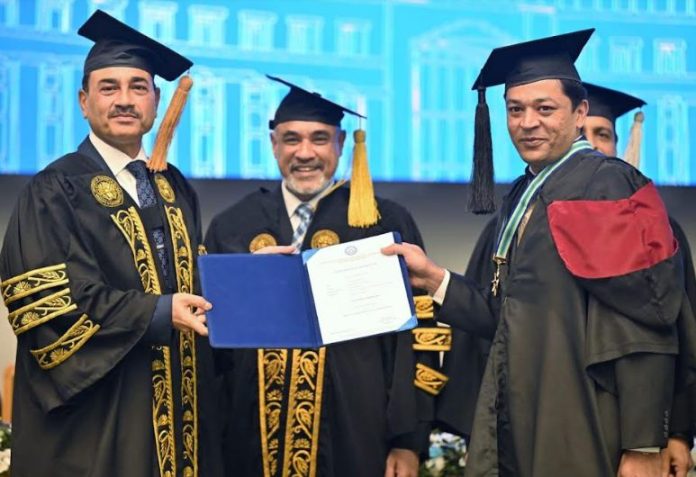
Chairman NUST Board of Governors, General Syed Asim Munir, NI (M), Chief of Army Staff (COAS) graced the occasion as Chief Guest at the inaugural “Master Convocation Ceremony” and conferred medals upon distinction holders.

Bachelor’s, Master’s and PhD students received degrees during the course of convocation week. Degrees are being awarded to over 3500 graduates from all NUST Schools at the main campus in the 7 core disciplines.

India beat New Zealand by four wickets

India beat New Zealand by four wickets

Match 21: India beat New Zealand by four wickets
Set a target of 274 to win, India’s openers Rohit Sharma and Shubman Gill got off to a flier with another excellent opening partnership, sparked by the in-form skipper.

Rohit continued his remarkable form against New Zealand’s in-form opening bowlers, hitting a string of boundaries and scoring at a high rate.

A fascinating tussle between the two teams at the top of the table was settled by the chase-master Kohli, who steered his team to their target of 274 to win in a match that had earlier been halted by descending fog in Dharamsala.Content to play second fiddle at the other end, Gill became the fastest batter to reach 2000 runs in Men’s ODIs during the opening powerplay, as India reached 63/0 after ten overs.

Having been put in to bat, the New Zealand top order looked set for a big total, with Daryl Mitchell starring with an excellent century.

But India struck back in the final Powerplay, conceding merely 54 runs in that spell, with the returning Mohammad Shami ending with a five-wicket haul.

Dharamsala, India, Oct 22 (AFP/APP):Cricket World Cup standings after Sunday’s match (played, won, lost, tied, no result, points, net run rate):

          India           5 5 0 0 0 10   1.353
          New Zealand     5 4 1 0 0  8   1.481 
          South Africa    4 3 1 0 0  6   2.212
          Australia       4 2 2 0 0  4  -0.193
          ------------------------------------
          Pakistan        4 2 2 0 0  4  -0.456
          Bangladesh      4 1 3 0 0  2  -0.784
          Netherlands     4 1 3 0 0  2  -0.790
          Sri Lanka       4 1 3 0 0  2  -1.048
          England         4 1 3 0 0  2  -1.248
          Afghanistan     4 1 3 0 0  2  -1.250

Why has China achieved remarkable successes in promoting cooperation under Belt and Road Initiative?

Why has China achieved remarkable successes in promoting cooperation under Belt and Road Initiative?

By Guo Jiping, People’s Daily

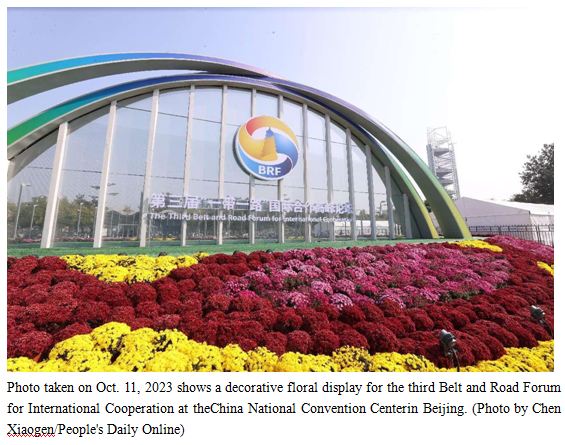
China will host the third Belt and Road Forum for International Cooperation (BRF) in Beijing from Oct. 17 to 18. It is reported that representatives from over 140 countries and more than 30  international organizations have confirmed their attendance at the event.

Despite the turbulent international situation, China has rolled out the red carpet to welcome guests from all over the world, which demonstrates the country’s unswerving commitment to promoting world peace and development.

Over the past decade since Chinese President Xi Jinping proposed the Belt and Road Initiative (BRI), stories of win-win cooperation have continued to unfold along this public road of shared opportunities and common development.

So far, over 150 countries and more than 30 international organizations have signed more than 200 BRI cooperation agreements with China;the Asian Infrastructure Investment Bank has grown from 57 founding members to 109 members,which account for 81 percent of the world’s population and 65 percent of global GDP; andmore than 80 routeshave been launched for the China-Europe freight trains,reaching 217 cities in 25 European countries.

Experience over the past 10 years has fully proven that the BRI is an open and inclusive platform and a global public good jointly built by all partners.

International analysts have eagerly sought to understand what allowed China to conceive the grand initiative and accomplish significant achievements in furthering its development.

The BRI is the result of China’s reflections on the future and destiny of humanity. In March 2013, in the face of the profound questions of “What is wrong with the world?” and “What should we do about it?”, which concern the world, history and the times, Xicreatively proposed the concept of building a global community with a shared future for mankind.

By launching the BRI, China aims to put this concept into practice and build a practical platform and open up paths for creating an open, inclusive, clean and beautiful world that enjoys lasting peace, universal security and common prosperity.

The BRI stemmed from China’sunshakeable pursuit of world peace and development. China unswervingly follows the path of peaceful development. It safeguards world peace to ensure its own growth, and contributes to world peace through its own development.

Taking the path of peaceful development is China’s response to international concerns about its development direction, and also a reflection of the confidence and consciousness of the Chinese people in achieving their development goals.

By proposing the BRI, China strives not only to pursue its own development and enhance its capacity to safeguard world peace, but also to benefit the world by strengthening the forces for upholding world peace and development.

In pursuing Belt and Road cooperation, China will not resort tothe outdated geopolitical maneuvering, but will create a new model of win-win cooperation. It will not form “a small groupdetrimental to stability”, but will try to create “a big family of harmonious coexistence“.

The success of the BRIrepresents the success of China’s development path and experience. China has achieved the two miracles of rapid economic growth and long-term social stability,resolved its problem of absolute poverty once for all, and realized its first centenary goal of building a moderately prosperous society in all respects. The fundamental reason for these achievements is that China has found a successful development path that is suited to its national conditions and people’s aspirations and supported by its people.

With nine percent of the world’s arable land and six percent of the freshwater resources, China feeds nearly one-fifth of the world’s population. In 2022, China’s GDP expanded to 121 trillion yuan ($16.56 trillion), while its share of the global economy rose to 18 percent, demonstrating remarkable development achievements.

The success of China’s development path has strengthened other developing countries’ determination to pursue paths based on their own national realities, and China’s great achievements in development have boosted other developing countries’ confidence in realizing national prosperity, national rejuvenation and improving people’s wellbeing. The BRI has provided valuable opportunities for other developing countries to draw on China’s development experience.

The success of the BRI is the success of China’s commitment to open development. Only when a country is strong enough can it have the confidence to open its doors to the world, and opening up in turn enhances itsprosperity. The BRI is a major initiative China has launched to expand opening up. It is not a solo endeavor by China, but a collaborative effort involving all stakeholders.

In the face ofa rising tide of de-globalization, China remains firmly committed to high-level opening up, creatingan even brighter future for cooperation under the BRI.

The BRI has continuously broken deadlocks, removed bottlenecks and spurred innovations, showing the world that only by building an open world economy can countries improve the wellbeing of their peoples.

As former Spanish Prime Minister Jose Luis Rodriguez Zapatero pointed out, the BRI upholds an open and inclusivevision for development that transcends borders and zero-sum game mindset, which is precisely the development philosophy the world urgently needs today.

CIIE’s spillover effect highly anticipated

CIIE's spillover effect highly anticipated

By Liao Ruiling

The sixth China International Import Expo (CIIE) is scheduled to be held in Shanghai from Nov. 5 to 10 this year, signifying the first complete return to in-person exhibitions for the event since COVID-19.

Attending trade fairs and showcasing products is one of the channels for many companies to explore new markets and boost their sales. As a major international exhibition platform for China’s opening up, the CIIE is widely recognized by businesses as a crucial channel for expanding their market presence.

Many enterprises said they were looking forward to the event, emphasizing their hope to leverage this opportunity to deepen their foothold in the Chinese market.

Hou Mingjuan, vice-president of Qualcomm, said that Qualcomm was among the first group of American companies to participate in the inaugural CIIE back in 2018. Over the following years, Qualcomm has become a regular participant in the expo, and this year it has already begun preparations for the event, she added.

“Honeywell will focus on showcasing our innovative technologies and solutions at this year’s CIIE, and we will also unveil our flagship product. Through this global platform, we hope to leverage our company’s strengths in aviation, energy transformation, digitalization, and automation to explore more mutually beneficial opportunities with Chinese enterprises,” said Yu Feng, President of Honeywell China.

Why do companies regard the CIIE as a “major event” of the year? Many attribute it to the significant spillover effects of the exhibition.

“The CIIE is an important platform for companies to showcase new technologies and products, as well as a vital channel for staying updated on the latest industry trends and information. Through major exhibitions, we have the opportunity to connect with potential customers and partners. In fact, we met the Ambassador of Mongolia to China at the CIIE, which led to the application of our electrochemical air management products in Mongolia’s National Center for Maternal and Child Health,” said Chen Zhihua, chairman and general manager of Chinese high-tech enterprise Qingyue Technology.

“It can be said that the CIIE injects more momentum into the development of small- and medium-sized enterprises like us,” he added.

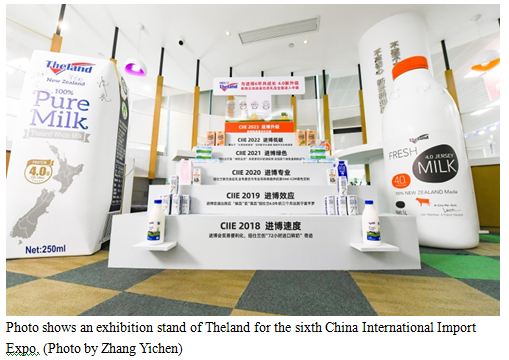
“The CIIE has become a significant platform for China to promote high-level opening-up and a crucial bridge connecting foreign enterprises with the Chinese market,” remarked Yan Zhijun, marketing director of Theland, a dairy farm group from New Zealand.

As a staunch supporter of the CIIE, Theland has been showcasing its latest products at the expo for five consecutive years, Yan noted.

He said that the growing demand of Chinese consumers for high-quality products has provided new business opportunities for global companies.

With the support of the CIIE, Theland has experienced rapid development in the Chinese market. According Yan, one of every three cans of milk powder exported from New Zealand to China is manufactured by Theland.

At the same time, China’s trade facilitation has been continuously improving. Yan said that when Theland first entered the Chinese market, China’s tariff on milk from New Zealand was 15 percent. Thanks to China’s efforts in recent years to implement preferential policies, the tariff on liquid milk from New Zealand, for example, has now been fully exempted, Yan added.

In line with the trend of China’s high-quality economic development, exhibits to the CIIE from around the world are becoming more and more tech-savvy in recent years, with a stronger emphasis on their green and low-carbon performance.

“Driven by the goal of high-quality development, China is vigorously promoting the deep integration of digital technology and the real economy, while continuously pushing for a green transformation of its development model,” Yu said.

According to him, Honeywell, pursuing sustainable development, designs around 60 percent of its new products with an aim of improving customers’ environmental performance and social benefits.

The company’s core business aligns with the demands and development trends of the Chinese market, he said, adding that the trend of high-quality development of the Chinese economy also creates development opportunities for Honeywell and other companies.

As many multinational companies continue to expand their presence in the Chinese market, they are also increasing their investment in China.

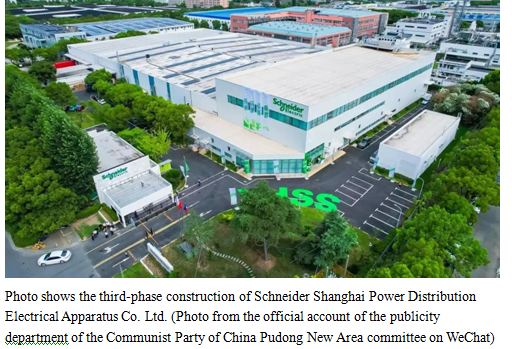
Recently, Schneider Shanghai Power Distribution Electrical Apparatus Co. Ltd. had its third-phase construction completed, erecting a brand-new digital and automated “zero-carbon factory.”

With an operational area of 6,500 square meters, the factory is expected to increase its overall production capacity by 30 percent. In the future, more low-voltage circuit breakers for energy management will be produced in this factory, contributing to the safe and stable operation of China’s power system and accelerating the green and low-carbon transformation of the energy system.

According to statistics, the number of newly established foreign-invested enterprises in China reached 24,000 in the first half of this year, representing a year-on-year increase of 35.7 percent. The quality of foreign investment continued to improve. Foreign investment in high-tech industries grew 7.9 percent year-over-year, accounting for 39.4 percent of total foreign investment, up 3.9 percentage points. Of this, foreign investment in high-tech manufacturing increased 28.8 percent.

Ten years on, Shanghai free trade zone becomes pacesetters of opening-up

Ten years on, Shanghai free trade zone becomes pacesetters of opening-up

By Liu Shi’an, Xie Weiqun, Fang Min, People’s Daily

Building pilot free trade zones (FTAs) is an important strategic measure of China to comprehensively deepen reform and expand opening up in the new era.

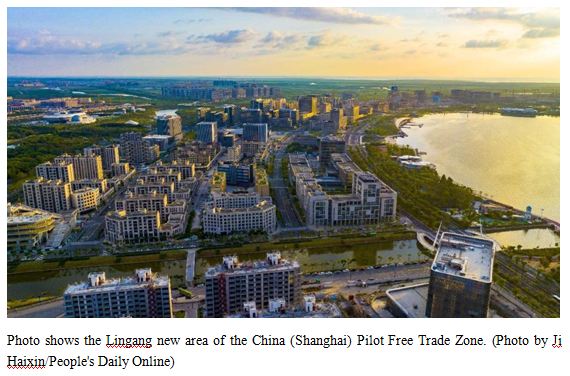
This year marks the 10th anniversary of the establishment of China’s first pilot FTZ in Shanghai. Over the past decade, the China (Shanghai) Pilot Free Trade Zone, or Shanghai FTZ, has achieved a series of important outcomes in liberalizing and facilitating trade and investment, promoting financial openness and innovation, and enhancing governance capability of the government.

Aligned with international economic and trade practices, the Shanghai FTZ introduced a negative list for foreign investment upon its establishment. Market access for foreign investment has transitioned from a review-based system to a filing-based one. Today, there number of items on the list has been shortened to 27 from 190 , with no restrictions imposed on the manufacturing sector.

This July, leading circular materials technology company Umicore headquartered in Belgium set up a technology development company in the Waigaoqiao Bonded area of the Shanghai FTZ, with an investment of 15 million euros ($15.92 million).

“Less items on the negative list mean less restrictions. The market access for foreign investment is getting wider and wider, which better facilitates the investment of enterprises,” said Zhang Kefang, an executive of Umicore.

As the negative list shortened, the Shanghai FTZ has implemented a number of first-in-China projects in 60 areas of opening up including automobile manufacturing, financial services, medical services, and value-added telecommunications. It promoted the formulation of the systems of pre-establishment national treatment and negative list for foreign investment, as well as their incorporation in the foreign investment law, and introduced the negative list for foreign investment to cross-border service trade and market access sectors.

The establishment of a “single window” platform for international trade marked a significant innovation of the Shanghai FTZ in promoting trade facilitation.

As the head of the planning department of Shanghai-based E&P international, a company specialized in the development of information technology in aspects of international trade and port logistics, Pan Xiaodong was involved in the development of the “single window” platform ten years ago.

“Similar to ‘one-stop online service’ in the field of international trade, this platform seamlessly integrates customs, quarantine, maritime, and border inspection information, greatly facilitating customs clearance and trade,” Pan said.

So far, the “single window” platform has served over 600,000 trade enterprises, facilitating the data processing of more than a quarter of China’s total trade in goods.

The Shanghai FTZ takes institutional innovation as its core task, with a focus on generating replicable and scalable institutional outcomes. Of the 302 institutional innovation outcomes for FTZs promoted nationwide, nearly half were pioneered or synchronously piloted in Shanghai.

Finance is a crucial area for the experimentation of free trade. Speaking of the opening up of the financial sector, Lu Fang, CEO of J.P. Morgan Securities (China) Co., Ltd. noted that foreign investment in the financial sector used to be subject to equity ownership restrictions. “The Shanghai FTZ has been at the forefront of financial liberalization,” Lu added.

The free trade account introduced by the Shanghai FTZ is a “pioneer” in innovative cross-border RMB business, with integrated financial services for cross-border settlement and financing in both RMB and foreign currencies.

As of now, Shanghai has cumulatively opened 144,000 free trade accounts, handling the equivalent of 142 trillion yuan ($19.5 trillion) in cross-border settlement transactions, with an average annual growth of 61 percent. The total financing that enterprises have obtained through free trade accounts in RMB and foreign currencies totaled 2.8 trillion yuan.

International asset management institutions are increasingly flocking to the Shanghai FTZ. Since 2020, nine of the world’s top ten asset management companies have chosen to establish offices in Shanghai’s Pudong New Area.

“We firmly believe in the potential of the Chinese market and will continue to bring our diverse range of resources to Shanghai, exploring new models for the development of asset management companies in China,” said general manager of Schroder Investment Management (Shanghai) Co., Ltd. Zhang Lan.

By combining the expansion of opening up with institutional reforms, Shanghai has been actively promoting the transformation of government functions, innovative management models, optimized operational mechanisms, and a shift in service approaches.

It continuously works to optimize the market-oriented, law-based, and internationalized business environment. It is reported that Shanghai has delegated over 100 municipal-level administrative approval matters to the government of Pudong New Area.

“Recently, a new Lawson convenience store opened in Pudong, and the procedures went smoothly,” said Jin Ye, deputy director of the business risk control department of Shanghai Lawson, Inc.

“In the past, it would take nearly two months to complete the procedures for opening a store, but now it only takes two to three days,” Jin noted.

After a decade of hard work, the Shanghai FTZ has achieved remarkable success. By the end of 2022, over 84,000 enterprises had been newly registered in FTZ, along with more than 14,000 new foreign-funded projects. The total amount of foreign investment reached $58.6 billion.

In 2022, Pudong New Area’s GDP hit 1.6 trillion yuan, 2.5 times higher than that of 2013. Since its establishment, the Lingang new area of the Shanghai FTZ has experienced an average annual GDP growth of 21.2 percent.

Intelligent technology at Hangzhou Asian Games

Intelligent technology at Hangzhou Asian Games

By Wang Hailin, People’s Daily

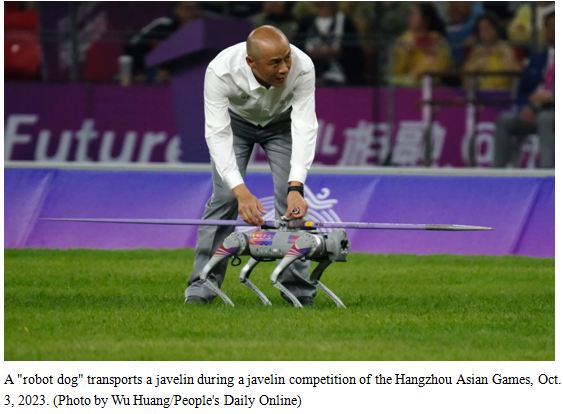
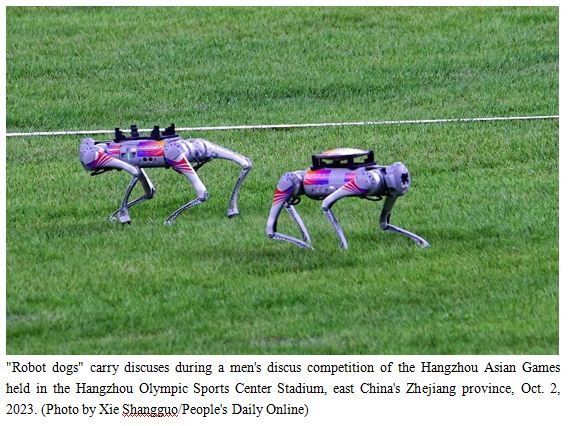
At the track and field events of the Hangzhou Asian Games, people’s attention was drawn to several “robot dogs” handling discus and javelin back and forth. After completing their assigned tasks of transporting equipment, these four-legged machines would wait obediently at the sidelines for their next commands.

These “robot dogs” are also known as quadruped robots. Shen Hongbin, a Chinese technology officer of the competition department of the Hangzhou Asian Games Organizing Committee, said using “robot dogs” to transport sports equipment like discuses and javelins could greatly save manpower and ensure safety.

Intelligence was one of the key concepts of the Hangzhou Asian Games, and the “robot dogs” used in track and field events exactly embodied the vision of a smart Asian Games.

At the Hangzhou Asian Games Village, passengers lined up early at an augmented reality (AR) bus demonstration area. Buses there employed visual perception, laser radar perception, and other technologies to operate, without the intervention of a safety personnel. Those buses could predict pedestrian and vehicle movements, automatically planning and executing avoidance programs.

With the on-board AR function, passengers could not only see real-time scenes outside the bus when observing through the window, but also view virtual scenarios such as the mascots and sports events. This created a magical fusion of virtual reality with real-life scenes.

From debuting a digital torchbearer to introducing electronic ID registration, and to exploring 5.5G technology, the use of digital technologies and technical innovations at the Hangzhou Asian Games has helped break through the limitations of time and space, allowing more people to participate in the sports events virtually and fully enjoy the excitement of sports.

Stay Connected

64FansLike
60FollowersFollow

Latest Reviews

Exchange Rates

USD - United States Dollar
EUR
1.17
GBP
1.34
AUD
0.67
CAD
0.73