Home Blog Page 889

Nawaz Sharif is back; will it make a difference?

Nawaz Sharif is back; will it make a difference?

Analysis

Ansar M Bhatti

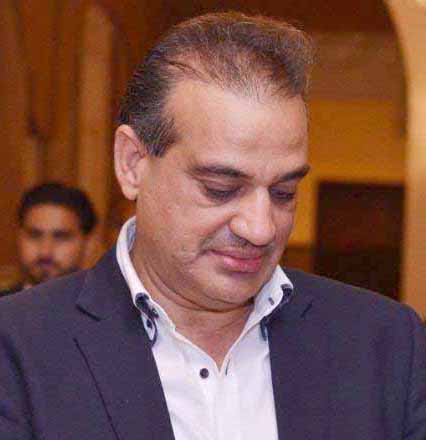
The return of Nawaz Sharif, the PML-N’s leader and former Prime Minister, after nearly four years of self-imposed exile, stirred a wave of poignant moments. As he graced the stage with his presence, the audience witnessed heartfelt scenes, such as his warm embrace with his daughter, Maryam Nawaz, and his younger brother, Shehbaz Sharif.

The sheer scale of the attendance at this homecoming event was undeniably massive, and this is hardly surprising, given the substantial support the PML-N received from the state machinery. It evoked memories of PTI public gatherings, where the turnout was nothing short of phenomenal. However, it’s worth noting that during that era, PTI held a special status with the Establishment, which contributed to the massive crowds they attracted. Nawaz Sharif’s return marks a significant moment in Pakistan’s political landscape, underscoring his enduring influence in the country’s politics.

His return on one hand promises to breathe new life into the PML-N, which has faced significant challenges, particularly following the 16-month tenure in government after the PTI was voted out. On the other hand, it also raises the possibility that the upcoming elections could proceed according to the Election Commission’s previously announced schedule or be delayed by a few weeks. Given the Senate elections scheduled for March 2024, there is a shared interest among the ECP and the participating political parties in ensuring that the electoral process concludes before that crucial deadline.

Nawaz Sharif, during his speech, provided insights into his previous terms in office when, in his view, accessibility was widespread, even for those less fortunate. While avoiding specific reference to the PDM period, he attributed the entirety of the nation’s troubles to the PTI government. Without explicitly mentioning Imran Khan, the former prime minister questioned the authenticity of his religious gestures. According to Sharif, the PTI chairman publicly counting beads attempted to project himself as a devout figure, which, in Sharif’s opinion, did not align with his actions.

Nawaz Sharif exhibited a remarkable degree of discretion when discussing his removal from power. Though he refrained from directly naming the Establishment, his insinuations left little doubt about who he believed was responsible for his ouster. With a touch of literary finesse, he chose to invoke the words of Mirza Ghalib, hinting at the immense reservoir of untold secrets. In a poetic flourish, he implied that if he were to reveal the full extent of what transpired in the past, his tears alone could inundate the entire world. This combination of careful words and poetic allusions conveyed the depth of his experience while maintaining a sense of dignity and intrigue. However, the real question remains: can he maintain this level of self-control in the days ahead?

Nawaz Sharif has a long history of strained relations with the establishment in Pakistan. Each time he clashed with the powerful stakeholders in our political system, it ultimately led to his removal from office. In his three previous tenures as prime minister, he was unable to complete a full five-year term due to these confrontations. Considering his track record and his approach to dealing with establishment involvement in political matters, it’s reasonable to predict that even if, by some stroke of luck, he manages to come into power for the fourth time, the outcome may not be different from what we’ve seen in the past.” Winning back the trust of the Establishment may indeed pose a formidable challenge for him. His closest allies have repeatedly counseled him that unless he reconciles with the Establishment, his political prospects could remain in the shadows.

He presented a comprehensive 9-point agenda aimed at steering the country out of its current crises. However, it’s worth noting that two vital aspects appear to be absent from this agenda. Firstly, there is a conspicuous absence of any clarification regarding the role of the Establishment in politics. Secondly, there is a noticeable lack of details about his vision for combating corruption in Pakistan.

The absence of a clear stance on the role of the Establishment in politics may be due to the significant challenges it poses to his survival despite the fact that he earnestly believes addressing this issue is crucial for the country’s democratic stability and transparency.

Furthermore, the urgent need to tackle corruption cannot be overstated. Corruption has been a persistent roadblock to Pakistan’s progress, despite its abundance of resources. It is high time to address this issue head-on, as it is a major factor contributing to the country’s ongoing struggles. In summary, while the 9-point agenda is a promising step, it should be supplemented with a clear strategy for dealing with the Establishment’s role in politics and a robust plan for eradicating corruption in Pakistan to truly lead the nation out of its current crises.

All said and done, there seems a long way ahead for him to be able to present himself as the future prime minister of Pakistan. Since the PML-N seems to have been ‘chosen’ as the next ruling party, there is a strong possibility that Nawaz Sharif will receive some legal relief from the courts. However, the complete exoneration of his sentence will require him to remain cautiously optimistic until he obtains an unequivocal clean chit, which is a prerequisite for his eligibility to participate in coming elections.

To break new ground of public communication, culture work in new era

To break new ground of public communication, culture work in new era

By Ren Ping, People’s Daily

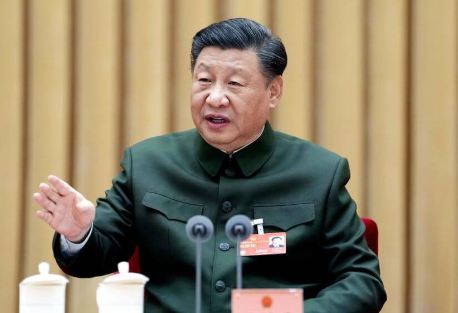
A national meeting on the work of public communication and culture was recently held in Beijing. The most important outcome of the meeting was that Xi Jinping Thought on Culture was formally put forward, which is of milestone significance in the history of the Communist Party of China (CPC) in developing public communication and culture.

Xi Jinping, general secretary of the CPC Central Committee, Chinese president and chairman of the Central Military Commission, has maintained an accurate perspective on the trends of collisions taking place worldwide between different ideas and cultures, as well as of the profound changes in Chinese people’s ways of thinking, putting forward a series of new thoughts, new viewpoints, and new assessments on cultural advancement.

On multiple important international occasions, he has expounded on China’s positions and plans on the culture of the world, the development of civilizations and exchanges and mutual learning among civilizations.

Xi Jinping Thought on Culture is summaries of the practical experience of the cultural advancement under the Party’s leadership in the new era. It has enriched and developed Marxist cultural theories. It demonstrates that the CPC has reached a higher level in its understanding of the right way for the development of socialist culture with Chinese characteristics.

The 20th National Congress of the CPC drew an ambitious blueprint for building a modern socialist country in all respects and advancing the great rejuvenation of the Chinese nation on all fronts through a Chinese path to modernization. According to it, China will build itself into a strong country in culture by 2035 with its cultural soft power growing much stronger.

Culture is a country and nation’s soul. Without full confidence in its culture, without a rich and prosperous culture, the Chinese nation will not be able to rejuvenate itself.

Chinese modernization is the modernization of material and cultural-ethical advancement. Cultural development is the fundamental way to satisfy people’s cultural and intellectualneeds and to safeguard people’s cultural rights and interests.

Promoting Chinese modernization is a pioneering undertaking unprecedented in history. It requires inspiring the confidence and fortitude of all Chinese people, and encouraging them to work together.

A country will thrive only if its culture thrives, and a nation will be strong only if its culture is strong. The CPC’s innovative theories for the new era have taken deep roots in the hearts of the people. Socialist core values have spread far and wide. The creative transformation and innovative development of fine traditional Chinese culture continues to advance. Cultural undertaking and industries are booming. The online environment keeps improving. Cultural confidence among all Party members, ethnic groups and people across the country has increased markedly. The national spirit is more determined and upbeat. Full of confidence, the Chinese people are writing an impressive new chapter in China’s development in the new era.

Innovation propels Tibetan carpet industry into new prospects

Innovation propels Tibetan carpet industry into new prospects

By Sun Yi

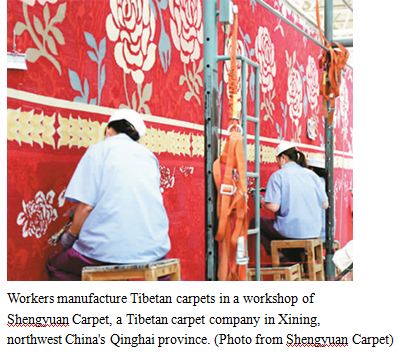
When a Tibetan carpet unfolds before one’s eyes, it’s hard to tell whether it is a functional household item or a work of art because of its distinct ethnic patterns and colors, soft and delicate texture and exquisite craftsmanship.

As one of the world’s three famous carpets alongside Persian and Turkish carpets, Tibetan carpets are renowned far and wide for their vibrant colors, strong ethnic styles, and distinct regional characteristics.

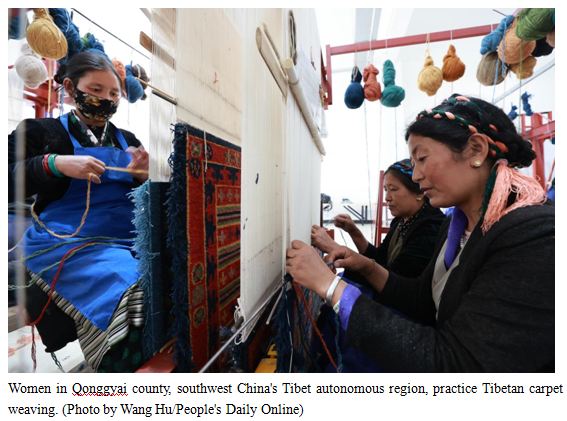
The Tibetan carpet weaving skills have been passed down for thousands of years. In the Neolithic Age, ancient residents of the Qinghai-Tibet Plateau already formed a unique weaving culture.

According to historical records, 3,500 years ago, nomadic tribes there were adept at weaving woolen fabrics into clothes and quilts to fend off the cold. These weaving techniques were handed down generation after generation, forming the Tibetan carpet weaving skills still in use today.

Carrying profound Tibetan culture, the Tibetan carpet evolved from a simple household item into a work of art. Tibetan carpet weaving also grew into a featured industry, with the products being sold worldwide.

The development of the Tibetan carpet industry has not always been smooth sailing. Traditional Tibetan carpets were mostly handmade in small workshops, with high labor and time costs. Facing competition from lower-cost machine-made carpets produced in bulk, many Tibetan carpet companies saw shrinking orders and losses.

In recent years, affected by factors like the COVID-19 pandemic, hotel occupancy was on a decline, which decreased the demand for carpet replacement, hence a depressed Tibetan carpet market.

The ever-changing market demands have pressed Tibetan carpet companies to take the initiative through innovation. A number of leading Tibetan carpet companies have blazed a trail of innovation for the industry.

To better incorporate ancient skills into modern life, some Tibetan carpet companies have combined modern carpet weaving techniques with traditional hand-knotting skills.

They use special materials and techniques on Tibetan carpets, turning their products from hand-woven carpets to machine-woven, hand-knotted, and fluorescent ones.

They are gradually moving away from mass production and traditional marketing models in the past days, and start embracing digital production methods.

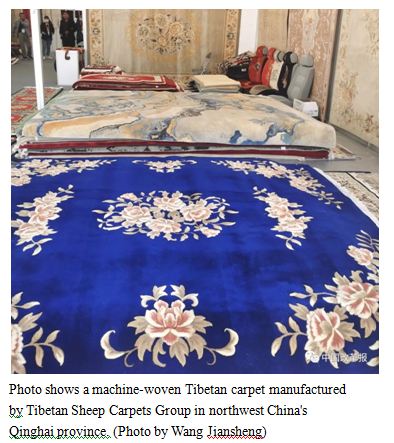
By adopting advanced weaving techniques and innovating pattern designs, a batch of machine-woven Tibetan carpets with cost advantages, fine workmanship, and exquisite patterns are winning the favor of the market.

Nowadays, Tibetan carpet enterprises design patterns and use materials based on customers’ preferences and home decor styles, and customize the sizes of carpets according to the need of customers.

Some Tibetan companies have shifted production from large-scale manufacturing to personalized customization, in order to meet diverse individualized customer demands. They have even developed antibacterial and flame-retardant Tibetan carpets using new technologies to meet modern requirements for eco-friendly home furnishing.

Tibetan carpets from China are seen in many parts of the world, from the Jumeirah Emirates Towers in Dubai to Marriott hotels, and from Las Vegas to Carnival Cruise ships. With continuous innovation in recent years in functions, designs, craftsmanship and standards, Tibetan carpets are increasingly gaining an “international style,” becoming the first choice for many foreign customers.

Tibetan carpets are a treasure of Chinese ethnic traditional crafts. In the interplay between tradition and modernity, in its interaction with the world, the Tibetan carpet industry has undergone an innovative transformation. This not only injects new vitality into the traditional skills passed down over thousands of years, but also provides valuable experience for the industrialization and modernization of other ethnic traditional crafts.

Innovation propels Tibetan carpet industry into new prospects

Hangzhou Asian Games presents openness, inclusiveness to world

Hangzhou Asian Games presents openness, inclusiveness to world

By Zheng Yi, People’s Daily

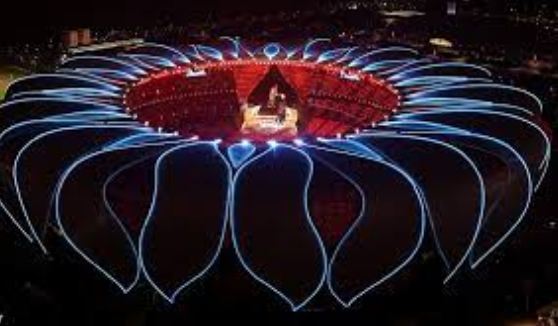
Since the opening of the Hangzhou Asian Games, many touching moments and brilliant stories have unfolded both on and off the fields.

All-out competitions as well as heartwarming behaviors have emerged. These inspiring stories have shown the splendor of sport and brought people together in friendship.

In the women’s 1500m freestyle final, as all other swimmers reached the finish line, one athlete from Vietnam remained alone in the pool, striving tirelessly to the end. The crowd cheered for her with shouts again and again, paying tribute to her indomitable spirit.

Even finishing last, she forged ahead with all her strength. The competitive arena glorifies not just victory but the sporting ethos of exceeding one’s limits.

In the tennis women’s singles match, Ushna Suhail of Pakistan still wore a radiant smile after her loss. Departing the court, she enthusiastically exchanged badges with Chinese player Zhu Lin.

Though having varied performances, athletes from across Asia united in Hangzhou with a common wish to foster exchange and friendship.

In the men’s 3×3 basketball, players from the Maldives were at a significant height disadvantage compared to their opponents, which made it extremely difficult for them to score inside. Yet the team persevered, tirelessly running outside to seek opportunities to shoot.

One of them said after the game that the opponents were far more competitive, but he and his team still battled on and made progress. Striving bit by bit, they wrote their own story of perseverance at the Asian Games.

In the men’s volleyball final, against the formidable Iranian team, China’s young squad battled with every ounce of effort. Though the long-sought victory eluded them, earning an Asian Games silver after 17 years marked the team’s growth.

“We will depart tomorrow for the Paris Olympic qualifying tournament,” said head coach Wu Sheng of the Chinese team. Continuously learning from its experiences and charting a path for advancement, this young team is setting out afresh with hope, he added.

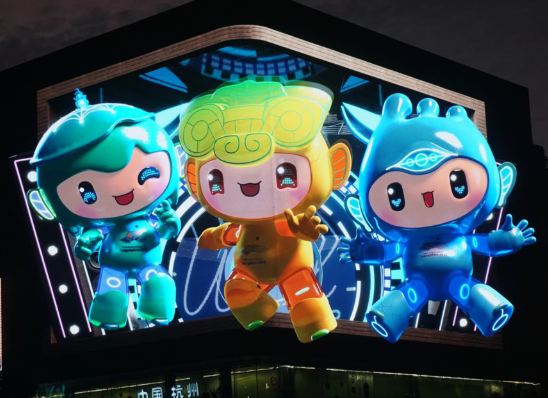
The stories of perseverance at the Hangzhou Asian Games inspire people with their transcendent spirit and hopeful visions. The interactions fostering bonds of friendship between athletes, and between athletes and spectators, have sown the seeds of “Heart to Heart, @Future.” The Hangzhou Asian Games has presented the ethos of openness and inclusiveness to the world.

Work together to broaden Belt and Road as ‘path of happiness’ benefiting whole world

Work together to broaden Belt and Road as 'path of happiness' benefiting whole world

By He Yin, People’s Daily

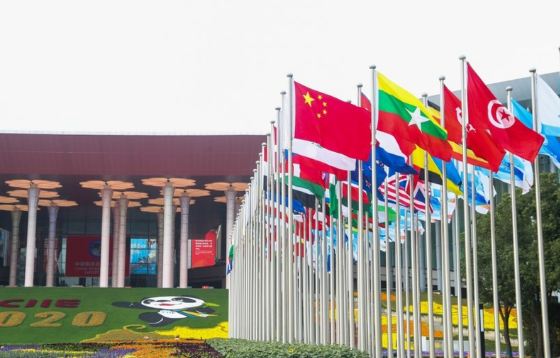
The high-profile third Belt and Road Forum for International Cooperation is expected to be held in Beijing. It will be not only the grandest event to commemorate the 10th anniversary of the Belt and Road Initiative (BRI), but also an important platform for relevant parties to advance high-quality Belt and Road cooperation.

Together, participants in the forum will learn from past experiences, draw a blue print for future cooperation, and lead Belt and Road cooperation toward better development. They will scale new heights, enhance their partnership, and demonstrate their strength in coping with challenges of the times and building a global community of shared future.

Chinese President Xi Jinping extended sincere invitation to relevant parties at the 23rd Meeting of the Council of Heads of State of the Shanghai Cooperation Organization. He said, “Ten years ago, I proposed the BRI, and on its tenth anniversary, China will hold the third Belt and Road Forum for International Cooperation. I welcome your participation. We should work together to broaden the Belt and Road as a ‘path of happiness’ benefiting the whole world.”

His invitation received warm response. Russia said the BRI conforms to the development of Eurasia, and the Russian side is looking forward to the third Belt and Road Forum for International Cooperation. Vietnam said it firmly supports the major initiatives proposed by Xi and supports China in holding the third Belt and Road Forum for International Cooperation. Hungary said it would actively join the forum.

As of the end of September, representatives from over 130 countries and multiple international organizations had confirmed participation in the forum. It fully indicates the international community’s confidence in and expectation for high-quality Belt and Road cooperation.

Over the past decade, the BRI has transformed from an abstract overall outline into a meticulously detailed blueprint, becoming the most welcomed global public good as well as the largest platform for international cooperation.

By July this year, more than three quarters of all countries in the world and over 30 international organizations have signed Belt and Road cooperation documents with China. The BRI has so far established more than 3,000 cooperation projects and galvanized nearly $1 trillion of investment.

Over the past decade, participating countries have sowed the seed of cooperation and jointly reaped the fruits of cooperation, achieving shared prosperity through mutually beneficial cooperation.

The Asian Infrastructure Investment Bank and the Silk Road Fund have provided financing support for hundreds of projects. The China-Laos Railway has converted Laos from a landlocked country to a land-linked one. The Jakarta-Bandung High-speed Railway is the first one in Southeast Asian countries to run at a speed of 350 km/h. The Mombasa–Nairobi Standard Gauge Railway has boosted local economic growth by over two percent.

The fruitful outcomes of the BRI fully proves that the “belt of development” and “road to happiness” for all humanity will deliver more prosperity to more people and constantly enhance the sense of fulfillment and happiness for people of participating countries, as long as it follows the principle of wide consultation, joint contribution and shared benefits, pursues open, green and clean cooperation, aims at high-standard, sustainable and people-centered growth and continues seeking high-quality development.

The third Belt and Road Forum for International Cooperation will further build consensus and pull efforts from relevant parties, so as to deepen Belt and Road cooperation.

Today, the world has entered a new period of turbulence and transformation. It is undergoing major shifts, division and regrouping, leading to more uncertain, unstable and unpredictable developments. The journey of global economic recovery remains long and tortuous. Unilateralism and protectionism are mounting. Particularly, certain countries are pursuing decoupling and severing of supply chains in the name of “de-risking,” posing threats against the security and stability of international industrial and supply chains.

Facing common challenges, relevant parties need to strengthen political mutual trust, connectivity, trade facilitation, financial integration, and people-to-people exchanges, actively launch cooperation in health, green development, digital industry and innovation, foster new areas of growth, and demonstrate their will and capability to share opportunities, tackle challenges and jointly build a better future.

The third Belt and Road Forum for International Cooperation will include an opening ceremony, three high-level forums on connectivity, green development and digital economy, and six thematic forums on trade connectivity, people-to-people communication, think tank exchanges, clean Silk Road, subnational cooperation and maritime cooperation. A CEO conference will also be held during the event.

Like-minded partners will come together to discuss cooperation plans and outline a development blueprint. Together, they will practice true multilateralism and set new milestones of Belt and Road cooperation. This will inject confidence into addressing the challenges of the times and achieving global sustainable development.

“Buteither in good times or bad, either on a smooth road or a thorny path, we will uphold the spirit of partnership, keep in mind what brought us together, and march forward without hesitation,” said Xi at the welcoming banquet of the second Belt and Road Forum for International Cooperation. Looking forward to the third Belt and Road Forum for International Cooperation, each participant should have the belief that people of all countries deserve a better future, and Belt and Road cooperation will definitely bring about a better world.

China’s action on and contribution to building global community of shared future

China's action on and contribution to building global community of shared future

By He Yin, People’s Daily

China is not only advocating but also acting on the vision of building a global community of shared future. Over the past decade, from promoting high-quality development of the Belt and Road Initiative (BRI), to proposing and implementing the Global Development Initiative (GDI), Global Security Initiative (GSI), and Global Civilization Initiative(GCI), China, with firm beliefs and solid actions, has worked with all relevant parties to consolidate greater efforts for lasting peace, create a favorable environment for common security, inject stronger confidence into common development, provide important impetus for cultural exchanges, and take more actions for ecological protection. China has continuously contributed to the building of a global community of shared future.

The BRI is a vivid example of building a global community of shared future, a public good and a cooperation platform provided by China and welcomed by the international community.

By July 2023, more than three-quarters of countries in the world and over 30 international organizations had signed agreements on Belt and Road cooperation with China.

Over the past decade, China has laid the groundwork and set up the frameworks of BRI cooperation, delivering tangible results and achieving sustainable progress. Together, participants in the initiative have jointly advanced “hard connectivity” of infrastructure,”soft connectivity” of rules and standards and “people-to-people connectivity” among partner countries. This has effectively promoted the development of participating countries, constantly giving local people of BRI countries a stronger sense of fulfillment and happiness.

Flagship projects of the BRI, such as the China-Pakistan Economic Corridor, the China-Laos Railway, the Jakarta-Bandung High-speed Railway and the Mombasa-Nairobi Railway, have lent strong impetus to local economic and social development. The China-Europe freight trains have made 77,000 trips in the past ten years, carrying 7.31 million twenty-foot equivalent units and becoming an important bridge for international economic and trade cooperation. Luban workshops have helped young people in more than 20 Belt and Road countries acquire vocational skills. The BRI aims to help China and the rest of the world share opportunities and seek common development.

Development serves as the material foundation for security and civilization. Through the GDI, China has made its contribution to resolving challenges to development and advancing global development.

The fundamental aim of the initiative is to accelerate the implementation of the UN’s 2030 Agenda for Sustainable Development. Its core requirement is a people-centered approach, its foremost philosophy is united, equal, balanced, and inclusive global development partnerships, and its pivotal measure entails results-oriented actions to bolster stronger, greener, and healthier global development and jointly build a global community of development.

China has hosted the High-level Dialogue on Global Development and presented 32 important measures to implement the initiative. So far, half of these measures have been implemented or achieved early fruits. The library of the GDI projects is expanding, with over 200 projects achieving good results.

UN Deputy Secretary-General Amina J. Mohammed noted that strengthening cooperation within the framework of the GDI is key to achieving the common objectives for people and the planet.

Security acts as the fundamental prerequisite for development and civilization. Through the GSI, China has boosted confidence for maintaining and realizing common security and universal security.

The initiative calls for adapting to profound changes in the international landscape through solidarity, addressing traditional and non-traditional security risks and challenges with a win-win mindset, and creating a new path to security that features dialogue over confrontation, partnership over alliance and win-win over zero-sum.

Over the past three decades and more, China has sent more than 50,000 personnel to UN peacekeeping operations in over 20 countries and region. China has been calling for the resolution of conflicts and working tirelessly to promote peace. It has facilitated the restoration of diplomatic relations between Saudi Arabia and Iran and has been actively involved in resolving international and regional hotspot issues. China is actively committed to international cooperation in various fields, including counter-terrorism, public health, digital governance, bio-security, and climate change.

China’s actions fully demonstrate its role as a responsible major country in safeguarding world peace and stability. International personages pointed out that the GSI fills the void of a viable global security architecture, and China’s successful implementation of this initiative fully proves that China is a defender of global peace and security.

Civilization provides the cultural-ethical support for development and security. Through the GCI, China has injected impetus into promoting mutual learning and building an open and inclusive world.

The initiative calls for jointly advocating respect for the diversity of civilizations, jointly advocating the common values of humanity, jointly advocating the importance of inheritance and innovation of civilizations, and jointly advocating robust international people-to-people exchanges and cooperation. It makes a sincere call for the world to enhance inter-civilization exchanges and dialogue, and promote human progress with inclusiveness and mutual learning.

China has hosted gatherings including the Communist Party of China (CPC) in Dialogue with World Political Parties High-level Meeting, the CPC and World Political Parties Summit, and the Conference on Dialogue of Asian Civilizations. It has promoted diverse forms of civil diplomacy, city diplomacy, and public diplomacy. It has also celebrated splendid cultural and tourist “years” and festivals.

China actively promotes the establishment of a global network for dialogue and cooperation on civilizations, strengthens international cultural exchanges and cooperation, and promotes mutual understanding and friendship among peoples of all countries, offering cultural-ethical support for the building of a global community of shared future.

The future of humanity is bright, but it will not come without effort. To build a global community of shared future, confidence and determination are of foremost importance; a broad mind and a global vision are central; a sense of responsibility and a will to act hold the key.

China will continue to work with all parties, hold high the banner of building a global community of shared future, and build an open, inclusive, clean and beautiful world that enjoys lasting peace, universal security, and common prosperity.

30,000 plus Xinjiang-related stories expose how certain Western media fabricate, hype up ‘forced labor’ smear

30,000 plus Xinjiang-related stories expose how certain Western media fabricate, hype up ‘forced labor’ smear

By Tuersun Aibai

In recent years, anti-China forces in the West have hyped up the so-called forced labor narrative, an accusation to systematically vilify China, as an attempt to tarnish the country’s image on the international stage, weaken its international reputation, and alienate the nation by jeopardizing its friendly and cooperative relations with other countries.

In order to understand the political and economic motives behind their “forced labor” fallacy, as well as the exploration of the narrative’s manipulation strategies, transmission paths, and methods of the fallacy, I conducted a statistical analysis of over 30,000 Xinjiang-related stories from 22 media outlets in 15 countries and regions.

From these, I selected 189 pieces published by 13 media outlets that spread the “forced labor” slander for further analysis and found out that the claim of “forced labor” concocted by anti-China forces in the West is a new discourse pattern and narrative framework, which has gradually evolved from the framework of early public opinion manipulation, into a comprehensive economic blockade and repression of Northwest China’s Xinjiang Uygur Autonomous Region.

How ‘forced labor’ smear grows

Based on the analysis of 189 stories published by 13 overseas media outlets, I found that the evolution process of the “forced labor” smear campaign can be divided into three phases.

The first phase is a “topic brewing period” that spanned from December 2018 to March 2020.

In December 2018, the Associated Press (AP) first claimed that a company in Xinjiang’s Hotan city had cooperated with local education and training program institutions to sell clothes made by the program’s trainees to the US. The story was later quoted by many overseas media outlets and caught the attention of the US government, which in turn required that certain clothing and outdoor recreation product brands such as Adidas inspect their industrial chains, and enforced a prohibition of the importation of so-called forced labor products.

On December 18 that year, Voice of America (VOA) published a story titled US Sportswear Traced to Factory in China’s Internment Camps, in which it alleged that Chinese government was “forcing some detainees to work in manufacturing and food industries.” Two days later, VOA published a second article titled US Reviews Report of Imports from Forced Labor in China Camp, quoting several infamous Xinjiang separatists as stating that there was “forced labor” at Xinjiang’s vocational education and training centers. Other mainstream US media sources such as The New York Times (NYT) also published similar stories with incendiary claims that month.

During that period, claims of “forced labor” were introduced by US media outlets as fodder for a new anti-China topic of focus, and its transmission scope was mainly within the US and its media sources. The claim only served to attack the trainees working at the clothing industry in the region after receiving vocational education.

The second phase of the West’s “forced labor” smear campaign, a “topic fomentation period,” spanned from March 2020 to December 2021.

On March 1, 2020, the Australian Strategic Policy Institute (ASPI), a think tank reliant on US defense funds and is keen to concoct and amplify various anti-China topics, released a “research report” titled Uygurs for sale ‘Re-education’, forced labor, and surveillance beyond Xinjiang. The ridiculous report attacked China’s efforts in accelerating Xinjiang’s development, and slandered the employment placements of trainees from Xinjiang’s vocational education and training program. Western media outlets later widely referenced and quoted the report.

By further fueling the “forced labor” narrative, some so-called “human rights groups” and media outlets called on governments in Western countries such as the US and the UK to investigate the industrial chains and asked local enterprises to cut ties with their Chinese counterparts that use Uygur labor.

In March 2020, Switzerland’s Better Cotton Initiative (BCI) proposed that some major clothing brands ban the use of Xinjiang-sourced cotton using the groundless “forced labor” accusations as a pretext, claiming that the production cotton in Xinjiang “violated labor rights,” and “violated human rights.” Following this call to action, certain US congressmen introduced the so-called “Uyghur Forced Labor Prevention Act (UFLPA),” which required companies to obtain certification from the US government that any product imported from Xinjiang into the US was not produced with the use of “forced labor.” The bill also required the US president to “identify and designate” visa or financial sanctions against any foreign person who “knowingly engages” in the “forced labor” in the Xinjiang region.

The “forced labor” fallacy continued to grow in the European Union (EU). In December 2020, the European Parliament passed a resolution on Xinjiang, falsely alleging the use of “forced labor” in the region. It required EU member countries to impose sanctions on Xinjiang officials and boycott so-called “forced labor” products from Xinjiang.

During this period, the scope of the “forced labor” smear campaign had further expanded, and some Western governments introduced related bills to “legally” base their “forced labor” accusations. The smear campaign targeted not only the employment of surplus rural labor in Xinjiang, but also extended to more industries in this region such as tomato cultivation in the agricultural sector and the photovoltaic and solar energy product manufacturing industries.

Legislatures, judiciaries, border defense, and the commerce departments of some Western countries banded together to form a community of mutual interests in this smear campaign. Western media sources, NGOs, think tanks, and enterprises also followed suit, cooperating closely with governments from the public opinion and “academic” standpoints.

The third phase, which started from January 2022 and is currently ongoing, is the “instrumentalization and politicization period.”

Sample analysis based on media coverage suggested that the focus of media outlets in most countries has shifted to the “force labor” fallacy, while the US and the UK conversely remain focused on actively hyping up the fallacy. Data showed that eight US- and UK-based media outlets published a total of 24 stories attacking Xinjiang between January and April in 2022.

In this phase, the “forced labor” smear campaign entered a new “practice stage,” serving the West’s goals of escalating the economic suppression of China by indiscriminately attacking all the products made in Xinjiang and all the enterprises in the region.

Worse still, with the Xinjiang-related “bills” coming into effect, anti-China forces in the West have completed the transition from public opinion attacks, to the introduction of legislative economic sanctions. Now the public opinion campaign has turned into an economic war waged against China. The “forced labor” fallacy has become an integral part of the Western anti-China forces’ strategic containment of China.

The graphic shows a four-step scheme of US’ malicious slander against China. From govt, think thanks to the media, US’ disinformation machines fabricate lies and pave the way for legislation that aims to contain China. Graphic: Feng Qingyin/GT

The graphic shows a four-step scheme of US’ malicious slander against China. From govt, think thanks to the media, US’ disinformation machines fabricate lies and pave the way for legislation that aims to contain China. Graphic: Feng Qingyin/GT

Tactics of public opinion manipulation

The “forced labor” fallacy did not emerge accidentally. Thanks to a long-term planned process and a clear manipulation strategy of public opinion by Western anti-China forces, who, prey on different countries’ perceptions of the human rights concept to create and hype up lies under the guise of “protecting human rights,” the fallacy gained momentum.

The concept of human rights is regarded as a value deeply influenced by the historical and cultural traditions of different countries. There are both commonalities and differences in the understanding of human rights among countries. Therefore, the UN’s Universal Declaration of Human Rights, as well as the European Declaration of Human Rights, do not specifically give a universal definition of the standards of human rights.

Since the founding of the People’s Republic of China, the Chinese government has regarded the rights to subsistence and development as fundamental human rights, fully protected the political, economic, social, and cultural rights of the people of all ethnic groups, and continuously promoted and elevated the development of human rights work in practice. China has written human rights protection into the country’s Constitution and the Constitution of the ruling Communist Party of China (CPC), and further promoted the systematization and legalization of human rights protection. China has also held human rights forums and issued a white paper to comprehensively elaborate its concept of human rights.

However, the anti-China forces in the West, who ignore the differences in human rights concepts between China and the West and China’s achievements in the protection and promotion of human rights, politicize, weaponize, and instrumentalize the concept of human rights by employing the “forced labor” fabrications and hype.

Some biased western media sources, by citing misleading quotes, wantonly attack the human rights situation in China, so as to promote the spread of the “forced labor” accusation by employing several tactics.

Tactic one: “Criminalize” Chinese government

The “forced labor” accusation falsely alleges that the purpose of the transfer of the employment policy in Xinjiang region is to “strip” Uygurs of their cultural identity and “assimilate” them. Western anti-China forces have further fabricated lies claiming that China committed so-called “crimes against humanity” and “crimes of genocide” in the region.

For instance, on March 2, 2020, an Australian Broadcasting Corporation (ABC) article quoted an ASPI researcher as saying that the goal of the labor transfers was “political,” with an aim toward the “stripping of their unique culture and identity.” On November 25, The Global and Mail cited some infamous anti-China “human rights groups” that “Uygurs and other Turkic minorities have been subject to forced labor as part of China’s plan to control the Uygur population in the region.” On August 23, 2021, the Washington Post quoted an anti-China group’s statement as saying that “no American corporation should be doing business in a region that is the focal point of a campaign of genocide targeting a religious and ethnic minority.”

The reality is that, the Uygur population has increased from 3.61 million in 1953 to 11.62 million in 2020, an increase of over three-fold, while the Chinese national population growth rate over the same period only grew two-fold. The growth rate of the Uygur population has been higher than the national average.

Tactic two: Demonizing China’s poverty alleviation policies

For instance, on June 24, the Washington Post groundlessly claimed that a Chinese company “recruits and employs Uygurs and other minorities via state labor programs that aim to place them in factories.” On March 7, CNN quoted a British scholar as saying that the job programs in Xinjiang “are often non-consensual, and people who refuse can be punished with internment.”

Contrary to the lies and rumors they fabricated, the fact is that workers of all ethnic groups in Xinjiang region, including those who were transferred for employment and those who had completed their studies in learning institutions and training centers, have the agency to choose their preferred jobs and regions of placement. They sign labor contracts and receive remuneration in accordance with the law, and enjoy various social insurance benefits.

The total number of rural migrant workers in China reached 30.7 million in 2021, of which 3.2 million were from Xinjiang. With an increase in the number of stable employment, the economic income of the people of all ethnic groups in Xinjiang has continued to increase, and the regional per capita gross domestic product (GDP) had increased from 45,476 yuan ($6,225.9) in 2017 to 53,593 yuan in 2020.

Tactic three: Stigmatizing assistance measures for transfer employment

The “forced labor” smear campaign claims that the Chinese government assigns staff to “monitor” Uygur employees, and even defames the existence of administrators of ethnic and religious affairs for Uygur employees at local companies, terming it as “monitoring.”

On April 27, 2021, The Guardian quoted a member of an Australian anti-China group as saying that Uygurs were “held in secure compounds, working extremely long hours and under constant surveillance, and with political indoctrination as part of their daily routine.” On March 9, 2020, a Washington Post article even ridiculously described the psychological counseling rooms as having been set for the purpose of thought policing Uygur employees.

Such psychological rooms, far from solely being found in Xinjiang, are part and parcel of many Chinese and foreign enterprises to help relieve psychological pressure experienced by employees. This is a common international practice. In November 2019, Chinese authorities issued the Specification of Healthy Enterprise Construction (trial), which requires employers to attach importance to their employees’ physical and mental health, and encourages enterprises to set up mental health counseling rooms.

Tactic four: Distorting service work for labor transfer employment

On March 2, 2020, ABC quoted an ASPI researcher and separatist as saying that Uygur workers “are often transported across China in special segregated trains,” and “authorities and factory bosses continue to closely monitor them.” On April 27, 2021, The Guardian claimed that Uygurs employees “have limited or no communications with their families; mothers have been separated from their babies and families have been torn apart,” citing the words of an anti-China separatist.

China fully protects the legitimate rights and interests of workers of all ethnic groups in law, policy, and practices, which advocate equal pay for equal work without discrimination against any ethnic groups. Chinese laws expressly stipulate that Uygur people enjoy the same rights as other ethnic groups, and Chinese enterprises have no right to and nor should they restrict their freedom.

Chinese citizens enjoy freedom of religious belief, and the state guarantees normal religious activities. Uygur employees participate in religious activities on the premise that they abide by China’s laws and regulations, the enterprise’s rules, and normal work routines.

Tactic five: Attacking China by citing misleading, tendentious claims

Based on my analysis of 189 stories from 13 media outlets, I found that when hyping up the “forced labor” smear, overseas anti-China media sources mainly cited “research report” published by the ASPI and anti-China scholar Laura Murphy, and the remarks of the separatist organization “World Uyghur Congress” along with its affiliated bodies.

A considerable number of their Xinjiang-related stories cited anti-China politicians and scholars to support their narratives, lack field research and first-hand information. The stories did not provide any reliable information, let alone contain actual interviews conducted with Uygur employees.

For example, in the article Canadian watchdog asked to probe allegations that imports made with forced labor in China published on April 11, 2022, The Globe and Mail quoted an “executive director” of a so-called “Uygur rights advocacy project” based in Ottawa as saying that he hopes a probe will drive Canada to take greater action against imports made using “forced labor.”

Obviously, some Western media outlets achieve their goals of misleading their audiences and spreading fallacies by unilaterally quoting false statements made by some anonymous and anti-China sources, and using sensational and biased headlines. Their stories and quotes, without investigating the actual situation on the ground in Xinjiang region, lack verifiability. The information they convey in their stories is full of malicious speculation and lies.

Western anti-China forces concocted the “forced labor” fallacy as a means to serve their goal of suppressing China’s economic development. To clarify the lies and show the world a real Xinjiang, China should make more efforts in several aspects, such as focusing on the international communication with the Arab world and developing countries, strengthen the public dissemination of accurate information, while also paying close attention to the slanderous tactics employed by anti-China forces to defame China.

(The auther is an expert from the School of Journalism and Communication at Xinjiang University)

Foreign minister and ASEAN envoys to unveil ‘ASEAN Corner’ at ISSI

Foreign minister and ASEAN envoys to unveil 'ASEAN Corner' at ISSI

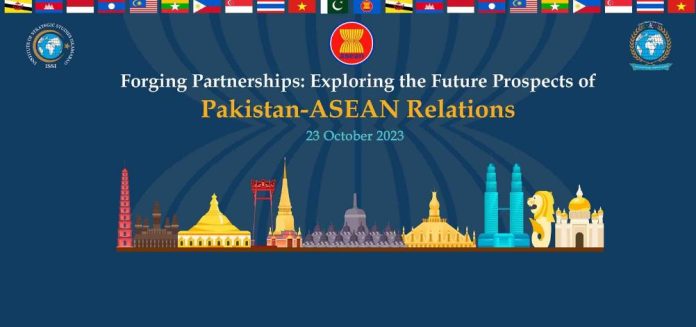
ISLAMABAD, OCT 22 /DNA/ – The Institute of Strategic Studies Islamabad (ISSI) has established an ‘ASEAN Corner’ which will be inaugurated in a formal ceremony by the Foreign Minister and ASEAN Envoys on 23 October 2023.

The inauguration would be followed by a Roundtable Discussion, titled: “Forging Partnerships: Exploring the Future Prospects of Pakistan-ASEAN Relations. The event is being organized by ISSI’s China Pakistan Study Centre (CPSC).

The establishment of ‘ASEAN Corner’ at ISSI is based on the conviction that a deeper understanding of ASEAN and its role, place and relevance in the region and the world is of crucial importance.

The initiative, agreed between ISSI and ASEAN Committee in Islamabad (ACI) during their structured interaction in January 2023, is part of the efforts to forge a closer partnership between Pakistan and ASEAN.

ASEAN and Pakistan share a long-standing and growing relationship, built on the pillars of economic cooperation and regional stability. Pakistan’s strategic location as a bridge between South Asia and the Middle East complements ASEAN’s focus on trade and connectivity across diverse regions. Moreover, mutual collaboration extends to various sectors — including industry, investment, agriculture, education, science and technology, tourism, and counterterrorism efforts, reinforcing their commitment to economic development and regional security. As the world faces evolving geopolitical dynamics, the partnership between ASEAN and Pakistan remains vital for fostering peace and prosperity in the Asian region.

Despite geographical distance, ASEAN and Pakistan have nurtured a strong and mutually beneficial relationship over the years. Pakistan’s ‘Vision East Asia’ policy reflects its resolve to deepen cooperation with ASEAN across myriad fields. ASEAN, on the other hand, values Pakistan as a significant partner in its external relations. The two sides continue to strengthen mutual bonds through enhanced diplomatic engagement, joint ventures, and people-to-people exchanges. In the face of global challenges, the ASEAN-Pakistan relationship serves as a testament to the regional cooperation and shared aspirations for a stable and prosperous Asia.

Within this backdrop, the inauguration of the ‘ASEAN Corner’ at ISSI is an important step. It is envisaged that the print and electronic resources accumulated at the ‘ASEAN Corner’ would enable researchers, academics, scholars and practitioners to deepen their understanding of Southeast Asia’s political, economic, and security dynamics and propose ideas for broader and more substantive engagement. 

Furthermore, the Roundtable Discussion following the inauguration ceremony involves high-level diplomats from ASEAN, senior officials from Pakistan, and business representatives. The event aims to bringing together academics and practitioners to analyze Pakistan’s evolving ties with ASEAN and offering insights into regional challenges and opportunities. Their expertise will help put forth policy recommendations on upgrading Pakistan’s partnership with ASEAN.

The inaugural ceremony will include the unveiling of the plaque of the ‘ASEAN Corner’ by the Foreign Minister of Pakistan, Ambassador Jalil Abbas Jilani, accompanied by the Heads of ASEAN Missions in Islamabad.

Hangzhou Asian Games opening new, inspiring chapter for China’s sports undertaking

Hangzhou Asian Games opening new, inspiring chapter for China's sports undertaking

By Ji Fang, People’s Daily

Since the start of the Hangzhou Asian Games, athletes from various countries have been competing fiercely and striving for excellence, showcasing the power of sports and the charm of athletics. Watching the exciting Asian Games has become a new option for the Chinese people to spend their Mid-Autumn Festival and National Day holiday.

The Chinese delegation debuted on the stage of the Asian Games in Tehran, Iran in 1974. Since then, Chinese athletes have constantly achieved outstanding results and broken records at the event.

From the Beijing Asian Games in 1990 to the Guangzhou Asian Games in 2010, and now the Hangzhou Asian Games, the event has partnered with China three times, witnessing the development of China’s economy and society.

Hosting the Asian Games has not only accelerated the growth of China’s sports industry and facilitated urban transformation, but also prompted reflection on the deeper meaning behind organizing major sporting events.

China has continuously shown its competitiveness and strength during major international sporting events such as the Asian Games and the Olympic Games. Over the past half-century, the journey of the Chinese delegation in the Asian Games reflected the country’s relentless efforts in the realm of sports.

In terms of promoting nationwide fitness activities, hosting high-level sporting events has ignited a sports frenzy and further fueled people’s enthusiasm for participating in sports activities. During this year’s Mid-Autumn Festival and National Day holiday, many people have plans to watch the Asian Games and engage in physical exercise. The enthusiasm generated by the Asian Games has injected new vitality into the development of nationwide fitness and the sports industry.

From the initial preparation stage, the Hangzhou Asian Games has been aiming to benefit the people. Through measures such as opening Asian Games venues to the public, utilizing idle urban spaces, and organizing mass sports events, the public has been better motivated to participate in sports activities.

The sports ecosystem is becoming increasingly robust, allowing more people to transition from being spectators to active participants, thus strengthening the connection between the Asian Games and the general public.

Sports bring vibrancy to people’s lives, and China’s third time hosting the Asian Games is opening a new and inspiring chapter for the country’s sports undertaking.

China’s vision of a global community of shared futuredraws a new blueprint for a better world

China's vision of a global community of shared futuredraws a new blueprint for a better world

He Yin, People’s Daily

“The vision of a global community of shared future stands on the right side of history and on the side of human progress. It introduces a new approach for international relations, provides new ideas for global governance, opens up new prospects for international exchanges, and draws a new blueprint for a better world.”

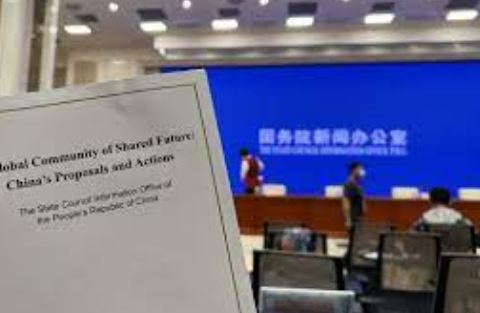
The white paper titled “A Global Community of Shared Future: China’s Proposals and Actions” recently issued by China’s State Council Information Office provides a profound explanation of the historical background, rich connotations, implementation paths, and vivid practices of building a global community of shared future.

It helps people from all sectors of society and the international community have a more comprehensive understanding of the far-reaching significance of building a global community of shared future. It also provides a clearer understanding of the great goals of major-country diplomacy with Chinese characteristics. Furthermore, it consolidates the broad consensus and strong momentum for jointly building a global community of shared future.

The world is undergoing changes on a scale unseen in a century. Various problems old and new and complex issues are converging with and compounding each other. The peace deficit is growing, the development deficit ballooning, and the security deficit glaring.

In March 2013, Chinese President Xi Jinping propounded the idea of building a global community of shared future, answering a question raised by the world, by history, and by the times: “What is wrong with this world, what we should do about it.” His proposal lights the path forward as the world fumbles for solutions, and represents China’s contribution to global efforts to protect the shared home and create a better future of prosperity for all.

The vision of building a global community of shared future complies with the prevailing trend of interdependence throughout history, responds to the needs of the times to tackle global challenges, and echoes the popular calls for peace, justice and progress.

Under the personal guidance and promotion of Xi, the building of a global community of shared future has evolved from a vision to action, and grown stronger. It has steadfastly adhered to the viable path amidst changing winds and storms, and has made remarkable achievements in the face of crises and challenges, demonstrating its leadership in shaping the era.

Over the past decade, the vision of building a global community of shared future has become increasingly refined. From state visits to multilateral summits, Xi has systematically expounded on this significant concept on various international occasions, continuously deepening the international community’s understanding of it.

Xi proposed to forge partnerships in which countries treat each other as equals, engage in mutual consultation and show mutual understanding, create a security environment featuring fairness, justice, joint efforts, and shared interests, promote open, innovative and inclusive development that benefits all, increase inter-civilization exchanges to promote harmony, inclusiveness, and respect for differences, and build an ecosystem that puts Mother Nature and green development first. He also emphasized the importance to build an open, inclusive, clean, and beautiful world of lasting peace, universal security and shared prosperity.

With its connotations and paths constantly deepened and expanded, the vision of building a global community of shared future has gradually formulated a science-based theoretical system pursuing the five goals for the world and the common values of humanity, with building a new type of international relations as the fundamental path, the Belt and Road Initiative as an important platform, and the Global Development Initiative, the Global Security Initiative and the Global Civilization Initiative as a crucial cornerstone.

The vision of building a global community of shared future conforms to the trend of the times and charts the course for improving global governance. It envisions a world characterized by openness and inclusiveness, equity and justice, harmonious coexistence, diversity and mutual learning, and unity and cooperation. It calls for peaceful development rather than conflict and confrontation, common security rather than absolute security, mutual benefit rather than zero-sum games, and exchange and mutual learning rather than a clash of cultures, as well as for green development to protect our planet.

Such a vision rises above the exclusive rules of bloc politics, the notion of might makes right, and the “universal values” defined by a handful of Western countries. It sets a new example for the theory of international relations and serves as a great banner that leads the trend of the times and the direction of human progress.

International dignitaries pointed out that the vision of building a global community of shared future outlines the path to achieve the grand vision of all humanity and charts the course for human development and progress, bringing hope for building a free, just, and beautiful world.

The vision of building a global community of shared future adheres to peace and cooperation, providing an important guideline for achieving mutual benefit and win-win outcomes.

It mirrors the common values shared by all humanity, and reflects the broadest common aspiration of the peoples of all countries in pursuit of peace, development, and stability, and the broadest consensus among countries with different cultural backgrounds and at different stages of development. It has won broad understanding and support from the international community.

The vision has been included in United Nations General Assembly resolutions for six consecutive years and has been repeatedly incorporated into resolutions or declarations of multilateral mechanisms such as the Shanghai Cooperation Organization and the BRICS. From bilateral to multilateral occasions, and from regional to global levels, China has been forging communities with a shared future in different forms with dozens of countries and regions.

In the face of global challenges, all countries in the world are in the same big boat. Whatever they may encounter on their journey ahead, the only right choice is to work together for the benefit of all. Only when all countries work together, only when they align individual interests with the interests of all, and only when they truly build a global community of shared future, can humanity sail towards a better future.

Stay Connected

64FansLike
60FollowersFollow

Latest Reviews

Exchange Rates

USD - United States Dollar
EUR
1.17
GBP
1.34
AUD
0.67
CAD
0.73