Home Blog Page 889

US, China hold first informal nuclear talks in 5 years, eyeing Taiwan

US, China hold first informal nuclear talks in 5 years, eyeing Taiwan

WASHINGTON, JUN 21: The United States and China resumed semi-official nuclear arms talks in March for the first time in five years, with Beijing’s representatives telling US counterparts that they would not resort to atomic threats over Taiwan, according to two American delegates who attended.

The Chinese representatives offered reassurances after their US interlocutors raised concerns that China might use, or threaten to use, nuclear weapons if it faced defeat in a conflict over Taiwan.

“They told the US side that they were absolutely convinced that they are able to prevail in a conventional fight over Taiwan without using nuclear weapons,” said scholar David Santoro, the US organiser of the Track Two talks, the details of which are being reported by Reuters for the first time.

Participants in Track Two talks are generally former officials and academics who can speak with authority on their government’s position, even if they are not directly involved with setting it. Government-to-government negotiations are known as Track One.

Washington was represented by about half a dozen delegates, including former officials and scholars at the two-day discussions, which took place in a Shanghai hotel conference room.

Beijing sent a delegation of scholars and analysts, which included several former People’s Liberation Army officers.

A State Department spokesperson said in response to Reuters’ questions that Track Two talks could be “beneficial”.

The department did not participate in the March meeting though it was aware of it, the spokesperson said.

Such discussions cannot replace formal negotiations “that require participants to speak authoritatively on issues that are often highly compartmentalised within [Chinese] government circles”, the spokesperson said.

Members of the Chinese delegation and Beijing’s defence ministry did not respond to requests for comment.

The informal discussions between the nuclear-armed powers took place with the US and China at odds over major economic and geopolitical issues, with leaders in Washington and Beijing accusing each other of dealing in bad faith.

The two countries briefly resumed Track One talks over nuclear arms in November but those negotiations have since stalled, with a top US official publicly expressing frustration at China’s responsiveness.

The Pentagon, which estimates that Beijing’s nuclear arsenal increased by more than 20 per cent between 2021 and 2023, said in October that China “would also consider nuclear use to restore deterrence if a conventional military defeat in Taiwan” threatened Chinese Communist Party rule.

The Track Two talks are part of a two-decade nuclear weapons and posture dialogue that stalled after the Trump administration pulled funding in 2019.

After the Covid-19 pandemic, semi-official discussions resumed on broader security and energy issues, but only the Shanghai meeting dealt in detail with nuclear weapons and posture.

Nuclear policy analyst William Alberque of the Henry Stimson Centre think-tank, who was not involved in the March discussions, said the Track Two negotiations were useful at a time of glacial US-Chinese relations.

“It’s important to continue talking with China with absolutely no expectations,” he said when nuclear arms are at issue.

No first use?
The US Department of Defence estimated last year that Beijing has 500 operational nuclear warheads and will probably field more than 1,000 by 2030.

That compares to 1,770 and 1,710 operational warheads deployed by the US and Russia respectively.

The Pentagon said that by 2030, much of Beijing’s weapons will likely be held at higher readiness levels.

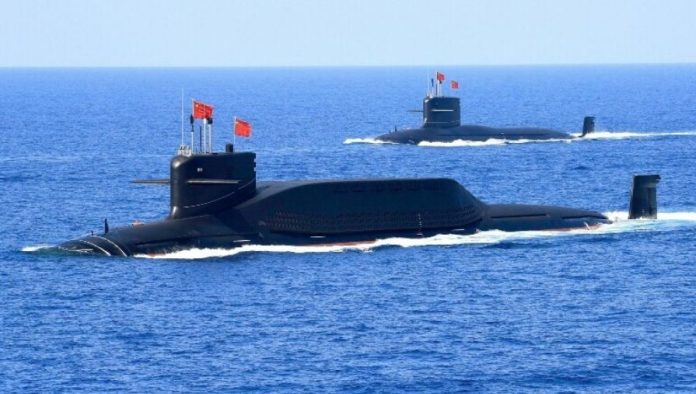
Since 2020, China has also modernised its arsenal, starting production of its next-generation ballistic missile submarine, testing hypersonic glide vehicle warheads and conducting regular nuclear-armed sea patrols.

Weapons on land, in the air and at sea give China the “nuclear triad” — a hallmark of a major nuclear power.

A key point the US side wanted to discuss, according to Santoro, was whether China still stood by its no-first-use and minimal deterrence policies, which date from the creation of its first nuclear bomb in the early 1960s.

Minimal deterrence refers to having just enough atomic weapons to dissuade adversaries.

China is also one of two nuclear powers — the other being India — to have pledged not to initiate a nuclear exchange.

Chinese military analysts have speculated that the no-first-use policy is conditional — and that nuclear arms could be used against Taiwan’s allies — but it remains Beijing’s stated stance.

Santoro said the Chinese delegates told US representatives that Beijing maintained these policies and that “‘we are not interested in reaching nuclear parity with you, let alone superiority.’”

“‘Nothing has changed, business as usual, you guys are exaggerating’,” Santoro said in summarising Beijing’s position.

His description of the discussions was corroborated by fellow US delegate Lyle Morris, a security scholar at the Asia Society Policy Institute.

A report on the discussions is being prepared for the US government but would not be made public, Santoro said.

‘Risk and opacity’
Top US arms control official Bonnie Jenkins told Congress in May that China had not responded to risk reduction proposals for nuclear weapons that Washington raised during last year’s formal talks.

China has yet to agree to further government-to-government meetings.

Bejing’s “refusal to substantively engage” in discussions over its nuclear build-up raises questions around its “already ambiguous stated “no-first-use” policy and its nuclear doctrine more broadly,” the State Department spokesperson told Reuters.

China’s Track Two delegation did not discuss specifics about Beijing’s modernisation effort, Santoro and Morris said.

Alberque of the Henry Stimson Centre said that China relied heavily on “risk and opacity” to mitigate US nuclear superiority and there was “no imperative” for Beijing to have constructive discussions.

China’s expanded arsenal — which includes anti-ship cruise missiles, bombers, intercontinental ballistic missiles and submarines — exceeded the needs of a state with a minimal deterrence and no-first-use policy, Alberque said.

Chinese talking points revolved around the “survivability” of Beijing’s nuclear weapons if it suffered a first strike, said Morris.

The US delegates said the Chinese described their efforts as a deterrence-based modernisation programme to cope with developments such as improved US missile defences, better surveillance capabilities, and strengthened alliances.

The US, Britain and Australia last year signed a deal to share nuclear submarine technology and develop a new class of boats, while Washington is now working with Seoul to coordinate responses to a potential atomic attack.

Washington’s policy on nuclear weapons includes the possibility of using them if deterrence fails, though the Pentagon says it would only consider that in extreme circumstances. It did not provide specifics.

One Chinese delegate “pointed to studies that said Chinese nuclear weapons were still vulnerable to US strikes — their second-strike capability was not enough”, said Morris.

Islamabad hosts 3rd round of joint consultative mechanism on CPEC

Islamabad hosts 3rd round of joint consultative mechanism on CPEC

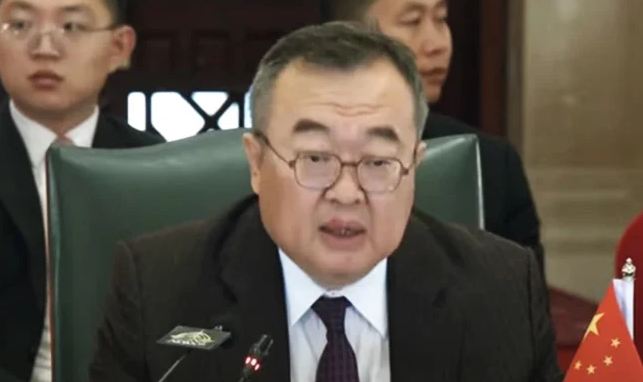
ISLAMABAD, JUN 21 /DNA/ – The 3rd round of Joint Consultative Mechanism (JCM) of Political Parties on CPEC and Pakistan-China Political Parties Forum was held in Islamabad today. The event was co-chaired by Deputy Prime Minister and Foreign Minister Senator Mohammad Ishaq Dar @MIshaqDar50 and Minister of IDCPC, Mr. Liu Jianchao and attended by the representatives of all major political parties of Pakistan.

Both sides reaffirmed the salience of CPEC for Pakistan and China, pledged to make joint efforts for its up-gradation and for further strengthening Pakistan-China All-weather Strategic Cooperative Partnership.

The speakers at the event included Chairman Senate of Pakistan, Syed Yousaf Raza Gilani followed by Speaker National Assembly Sardar Ayaz Sadiq.

Representatives from Political parties who spoke at the event included Minister for Planning, Development & Special Initiatives Ahsan Iqbal Chaudhary from the PML(N) ; MNA and former Foreign Minister Hina Rabbani Khar from PPPP; Maulana Fazal Ur Rehman from JUI(F) ; Minister of Federal Education & Professional Training Dr. Khalid Maqbool Siddiqui from MQM; Senator Jan Muhammad Buledi from National Party; MNA Khalid Hussain Magsi from BAP; Munaza Hassan from IPP; Senator Syed Ali Zafar from PTI; Engineer Ihsanullah from ANP; Senator Mushahid Hussain Syed from PML(N); Afrasiab Khan Khattak from NDM and Asif Luqman Qazi from JI.

‘Internal stability essential for development’, Chinese minister tells Pakistan political parties

Chinese official

ISLAMABAD, JUN 21: A senior Chinese official on Friday advised Pakistani political leadership to shun differences as “internal stability is imperative for any nation to develop”.

“In a turbulent world of rising uncertainties, stability within the country is essential for development. Faced with complex internal and external challenges, Pakistan is navigating carefully through turbulent rivers,” Minister of the International Department of the Communist Party of China (IDCPC) Liu Jianchao said.

Jianchao made the remarks as he co-chaired — along with Foreign Minister Ishaq Dar — the third meeting of the Pakistan-China Joint Consultative Mechanism (JCM) of the Political Parties on the CPEC.

Leaders belonging to all major political parties, including the Pakistan Tehreek-e-Insaf (PTI), Pakistan Muslim League-Nawaz (PML-N), Pakistan Peoples Party (PPP), were present during the event.

PTI’s Barrister Ali Zafar and Raoof Hasan, PML-N’s Ahsan Iqbal, Jamiat Ulema-e-Islam’s Emir Fazlur Rehman, Muttahida Qaumi Movement-Pakistan’s Khalid Maqbool Siddiqui, and other top leaders were in attendance.

Pakistan and China enjoy close relations with Bejing also investing billions of dollars in the China-Pakistan Economic Corridor (CPEC) and working in various sectors to boost Islamabad’s capabilities.

However, the works on the flagship project have been hindered in recent years due to the security situation with China informing the Pakistani side of its reservations.

The Chinese official said that there can be sustainable development only when all political parties in a country join hands to ensure political and social stability.

“And for all these years, China has always been striving hard to maintain a good balance of reform, development, and stability — each of the three fundamentals is indispensable.”

‘Business environment cannot improve without security’
The minister noted that over the years, CPEC has boosted Pakistan’s economic and social development. However, he said that more efforts need to be made, especially when it comes to security.

“We are ready to build the upgraded version of CPEC […] we need to improve security and business environment. Security threats are the main hazards disturbing CPEC cooperation,” he highlighted.

In the case of Pakistan, he said, the primary factor shaking the confidence of Chinese investors is the security situation. “Without security, the business environment cannot really improve, which can undermine development in the long run.”

At the same time, he also appreciated the Pakistani security forces for their services in this regard.

Moving on, the senior official said that due to the wholehearted support of the people of both nations, Pakistan and China have become “iron friends”. “Public support is the bedrock of the China-Pakistan relationship.”

However, voicing fears, he said that the mutual affinity between the people of the countries is still not commensurate with the iron-clad friendship of the countries.

“In particular, there’s a rising risk of Western social media which has a huge impact on the younger generation, eroding the foundation of the China-Pakistan friendship,” Jianchao said.

He said the Chinese government was ready to promote exchanges between the youth, media, think tanks, academics, and local governments, and help the public understand the friendship better.

Dar vows to enhance people-to-people linkages
In his remarks, Deputy Prime Minister and Foreign Minister Dar reaffirmed Pakistan’s commitment to enhance people-to-people linkages with China to deepen the sentiments of mutual respect, trust and understanding between the two countries.

Dar said Pakistan-China friendship is a relationship of the past, the present, and the future. He said the strategic trust between the nations is unshakeable and nothing can undo it.

The deputy prime minister said this meeting is a manifestation of a shared commitment to preserve and protect this relationship from the vagaries of national, regional, and international politics.

Dar said there is complete unanimity amongst all political parties in Pakistan on CPEC’s importance for Pakistan’s economic growth and sustainable development.

The deputy prime minister said the CPEC is not merely a symbol of Pakistan-China friendship. It is a shining emblem of a new vision for international cooperation.

He said the people of Pakistan will never forget China’s support in crucial times.

Referring to Prime Minister Shehbaz Sharif’s recent visit to China, Dar said there was renewed consensus on upgradation of the corridor project. He said we are prioritising industry, modern agriculture, Information Technology and mining and minerals.

Saudi Arabia starts issuing Umrah visas

Saudi Arabia starts issuing Umrah visas

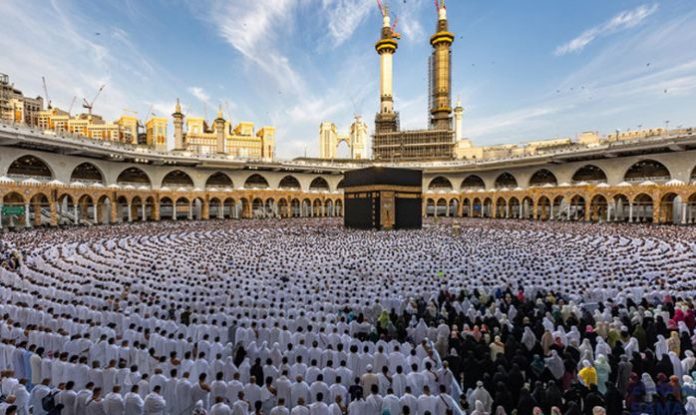
RIYADH, JUN 21: The Saudi Ministry of Hajj and Umrah has begun issuing Umrah visas for the post-Hajj season, according to the Saudi Press Agency.

The issuance of Umrah visas follows the completion of the annual pilgrimage to Hajj on Wednesday.

The ministry announced that it is diligently executing the directives of the leadership to accommodate an increased number of Hajj and Umrah pilgrims and provide services that meet their requirements and aspirations.

The ministry ceased issuing Umrah permits through the Nusuk application for a duration of one month commencing on May 23. This was aimed at enabling Hajj pilgrims, who began flocking to Makkah from all over the world, to perform their rituals in ease and comfort.

The ministry announced that the Nusuk App would resume issuing Umrah visas from Zilhajj 15, corresponding to June 21.

In its recent statement, the ministry stated that the resumption of the issuance of Umrah visas would facilitate the seamless arrival of Umrah pilgrims into the Kingdom. This annual initiative follows immediately following the Hajj season.

The ministry stated in a statement that it leverages its expertise and establishes technical and field programs to serve Hajj and Umrah pilgrims and facilitate their rituals.

HEC Alerts Students: Two-Year BA/BSc and MA/MSc degrees no longer recognized

HEC Alerts Students: Two-Year BA/BSc and MA/MSc degrees no longer recognized

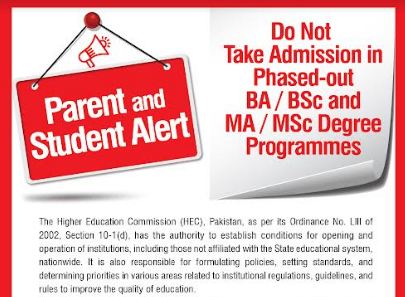
ISLAMABAD, JUN 21 /DNA/ – The Higher Education Commission (HEC), Pakistan has once again alerted students and parents to avoid taking admission in the two-year BA, BSc and MA, MSc degree programmes.  

HEC had phased out two-year BA/BSc and MA/MSc programmes with extended deadlines of the academic years 2019 and June 30, 2022, respectively.

Despite gradual phasing out of these two-year degree programmes, some higher education institutions admitted students in these programmes after the specified deadlines.

Consequently, HEC has clearly cautioned students, parents as well as higher education institutions that degrees obtained from such programmes will not be recognized and attested by HEC.

It is pertinent to mention that as per its Ordinance, HEC has the authority to establish conditions for opening and operation of higher education institutions, including those that are not affiliated with the State educational system, nationwide. HEC is also responsible for formulating policies, setting standards, and determining priorities in various areas related to institutional regulations, guidelines, and rules to improve the quality of education.

Female ambassadors meet Pakistan’s first female Lt. General

Female ambassadors meet Pakistan's first female Lt. General

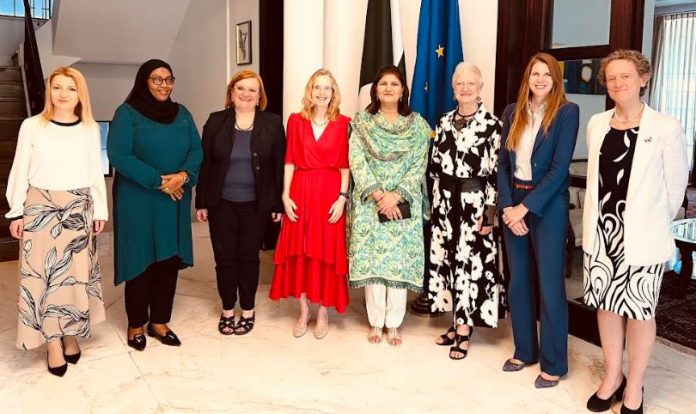
ISLAMABAD, JUN 21 /DNA/ – A delegation of female ambassadors and heads of mission, including representatives from Bulgaria, Italy, the Netherlands, the European Union, the UK, and Canada, met with Lt. General Nigar Johar, Pakistan Army’s first female lieutenant general. The meeting fostered a rich exchange of views on a variety of issues.

UK PM Sunak ‘angry’ after party figures ensnared in election betting scandal

UK PM Sunak 'angry' after party figures ensnared in election betting scandal

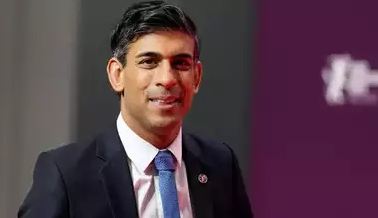
LONDON, June 21 (AFP/APP): Prime Minister Rishi Sunak said Thursday he was “incredibly angry” after more Conservative Party figures were put under investigation over alleged bets placed on the UK general election date.

Facing questions on the growing scandal from an audience of voters on live television, the beleaguered leader said any election candidates or officials found to have broken rules would be kicked out of the party.

His comments came hours after the Conservatives’ campaign director stepped aside following reports that he and his wife, a Tory candidate in the July 4 election, were under investigation by betting regulators.

Last week, another would-be MP, Craig Williams, who was a Sunak ministerial aide, was also being probed for staking £100 ($127) on the date before it was called.

London police said Wednesday that one of the prime minister’s police security detail had been arrested for allegedly placing a bet on the date.

“I was incredibly angry… to learn of these allegations,” Sunak said of the cases involving his party officials.

“If anyone is found to have broken the rules, not only should they face the full consequences of the law, I will make sure that they are booted out of the Conservative Party,” he added.

– ‘Astonishing’ – 

The Conservatives confirmed earlier that campaign director Tony Lee had started “a leave of absence” and that the Gambling Commission was looking into “a number of individuals”.

The regulator did not name individuals but the BBC reported that Lee and his election candidate wife Laura Saunders were under investigation.

Her lawyers said she would “be co-operating with the Gambling Commission” and claimed the report infringed her privacy rights.

The commission had already said it was looking at the claims regarding Williams.

Political bets are allowed in the UK, including on the date of elections, but using insider knowledge to do so is against the law.

The inquiries heap further misery on Sunak, whose party has trailed Labour by about 20 points in the polls for nearly two years, making it odds on to be dumped out of office after 14 years.

Labour’s campaign co-ordinator Pat McFadden wrote to Sunak arguing the claims showed “a pattern of behaviour” by the Tories focused on making “a quick profit”.

Opposition Labour leader Keir Starmer, tipped to become prime minister, has urged Sunak to withdraw support for those allegedly involved.

“It’s astonishing that we’re in this place… Rishi Sunak just needs to take action. He needs to account for exactly who knew what,” he said.

But at Thursday’s debate, Sunak insisted it was “right” that the probes were conducted “thoroughly” and “confidentially” before anyone is sanctioned.

“The integrity of that process should be respected,” he said.

– Wipe-out? –

Sunak announced the date of the election on May 22, in a rain-soaked statement outside Downing Street, taking his own party by surprise as he still had six months to call a vote.

Critics lambasted him for not using an umbrella and the campaign has hardly shifted the dial in his favour since, even with indications the British economy has turned a corner.

This week, he was ignored by a flock of sheep as he tried to feed them in southwest England while his personal ratings suffered after he left early from a D-Day 80th anniversary commemoration event.

Two polls published on Wednesday predicted a record win for Labour, eclipsing even the landslide victory for Labour’s Tony Blair in 1997.

Pollsters YouGov said the Conservatives could slump to their “lowest seat tally in the party’s almost 200-year history”.

Sunak could even become the first sitting prime minister to lose his own seat, according to a Savanta survey.

London police said a member of the Royalty and Specialist Protection Command, was held on Monday on suspicion of misconduct in a public office, then released on bail.

The allegations against Williams came to light last week. He is alleged to have placed a bet on a July date for the election three days before Sunak called the vote.

South Korea fires warning shots after new border incursion

South Korea fires warning shots after new border incursion

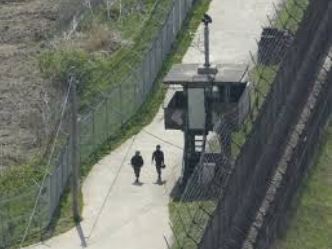
Seoul, June 21 (AFP/APP): Seoul’s military said Friday it had fired warning shots after North Korean soldiers briefly crossed the heavily fortified border in the third such incursion this month.

The nuclear-armed North has been reinforcing the border in recent months, adding tactical roads and laying more landmines, which has led to “casualties” among its troops due to accidental explosions, South Korea has said.

On Thursday morning, “several North Korean soldiers who were working inside the DMZ on the central front line crossed the Military Demarcation Line,” Seoul’s Joint Chiefs of Staff said.

“After our military’s warning broadcasts and warning shots, the North Korean soldiers retreated back northward,” they added.

Similar incidents took place on June 9 and Tuesday this week, with Seoul’s military saying both incursions appeared to be accidental.

Relations between the two Koreas are at one of their lowest points in years, with Kim Jong Un hosting Russian leader Vladimir Putin this week, and signing a mutual defence agreement that has raised hackles in Seoul.

In response, the South — a major weapons exporter — has said it will “reconsider” a longstanding policy that has prevented it from supplying arms directly to Ukraine.

“While attention is focused on Putin’s pariah partnerships, the Kim regime is recklessly endangering soldiers with rushed construction work at the inter-Korean border,” said Leif-Eric Easley, a professor at Ewha University in Seoul.

The work is likely aimed “as much at keeping their countrymen in as it is at keeping the South Koreans out,” he said, but warned that “a lack of inter-Korean communication channels and confidence-building mechanisms increases the danger of escalation in border areas.”

 – Balloon war –

The two Koreas have also been locked in a tit-for-tat “balloon war”, with an activist in the South confirming Friday that he had floated more balloons carrying propaganda north.

The move is likely to trigger a response from Pyongyang, which has already sent more than a thousand of its own balloons carrying trash southward.

Kim’s powerful sister Kim Yo Jong, a top regime spokesperson, said Friday that “dirty tissues and items” had been detected near the border after the launches and warned the North was likely to respond.

“It’s obvious that something will happen now that they did something we clearly told them not to do,” she said in a statement carried by the official Korean Central News Agency.

Legally, Seoul cannot prevent activists from sending balloons across the border due to a 2023 court ruling that bans represent an unjustifiable infringement on free speech.

Activist Park Sang-hak, who defected from North Korea and has been sending anti-regime leaflets north for years, said he floated 20 balloons laden with propaganda as well as flash drives with K-pop and television dramas across the border on Thursday.

The North is extremely sensitive about its people accessing South Korean pop culture, with a United Nations report saying possession of large amounts of such content has been known to result in the death penalty.

Activist Park said there was a “bit of friction” with city officials in Paju — the area where the balloons were launched — but he vowed not to call off his campaign unless Kim Jong Un “apologises” for sending trash.

Tensions over the duelling propaganda have previously boiled over in dramatic fashion.

In 2020, blaming the anti-North leaflets, Pyongyang unilaterally cut off all official military and political communication links with Seoul and blew up a disused inter-Korean liaison office on its side of the border.

US supports ‘direct’ talks between India, Pakistan: State Dept

US supports 'direct' talks between India, Pakistan: State Dept

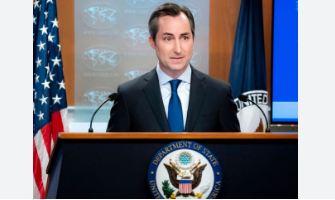
WASHINGTON, Jun 21 (DNA): The United States support “direct discussions” between India and Pakistan, saying the two neighbouring countries should work out the mode for the talks themselves, State Department Spokesperson Matthew Miller has said.

“We value our important relationships with both India and Pakistan,”  he said in response to a question from a Pakistani TV channel reporter at his daily news briefing on Thursday.

“As we have said, we support direct discussions between India and Pakistan, but the pace, scope and character should be determined by those two countries, not by us,”  Miller  added.

Relations between India and Pakistan have deteriorated since August 5, 2019, when New Delhi unilaterally annexed the disputed Himalayan region of Jammu and Kashmir, leading to heightened tensions between them. Official talks between the two countries have remained suspended since then.

Answering another question, he stated, “US and Pakistan both have a common goal of addressing regional security threats.”

“We partner with Pakistan on security through our high-level counter-terrorism dialogue, including several counter-terrorism capacity building programmes, and we support a series of US-Pakistan military-to-military engagements,” Miller said.

“We are in regular communication with Pakistani leaders as a part of our partnership on CT issues, and we will continue to discuss regional security in detail, including through our annual counter-terrorism dialogue and other bilateral consultations,” he added.

India to probe railway collision that killed 9, injured dozens

India to probe railway collision that killed 9

KOLKATA, JUN 18: India will launch an investigation on Tuesday into a train collision that killed nine people in the state of West Bengal and injured more than 50, a day after a top railway official blamed the incident on driver error.

The death toll was revised down to nine from 15 after Monday’s accident, in which a freight train rammed into a passenger train heading for the state capital of Kolkata from the northeastern state of Tripura.

The investigation by India’s top railway safety official will start on Tuesday, Chetan Kumar Shrivastava, general manager of the Northeast Frontier railway, where the accident happened, told Reuters.

“The inquiry will involve eye-witness accounts, scrutiny of official documents and statements from railway officials, regarding signalling and other mandatory safety issues,” he added.

On Monday, India’s top railway official said the driver of the freight train, who was among the dead, disregarded a signal, leading to the crash with the Kanchanjunga Express, which had halted near a railway station in the district of Darjeeling.

There were 1,400 people aboard, a railway spokesperson said.

But media said an automatic signalling system had not been working from Monday morning, prompting authorities to advise train drivers to proceed slower than usual, in a process known as “paper signals”.

India’s opposition leaders criticised the railway safety record of Prime Minister Narendra Modi’s government, attributing it to negligence.

The incident came a little over a year after about 288 people were killed in one of India’s worst rail crashes in the neighbouring state of Odisha, caused by a signalling error.

State-run Indian Railways, notorious for overcrowding, is the world’s fourth largest train network, carrying 13 million people a day, along with nearly 1.5 billion tonnes of freight in 2022.

In remarks to media on Monday, top railway official Jaya Varma Sinha, who chairs India’s railway board, called for human error to be redued, adding that an anti-collision system was being set up nationwide.

Partial services resumed on the affected tracks on Tuesday, with some trains diverted and others running slower than usual, railway officials said.

Stay Connected

64FansLike
60FollowersFollow

Latest Reviews

Exchange Rates

USD - United States Dollar
EUR
1.17
GBP
1.35
AUD
0.72
CAD
0.73