Home Blog Page 888

Elon Musk ‘secretly welcomed third child’ with Neuralink executive

Elon Musk

Tesla CEO Elon Musk welcomed a third child with Shivon Zilis, an executive at his brain-chip implant company, Neuralink, earlier this year, according to a report by Bloomberg.

The birth came after Musk, 52, revealed in 2022 that he and Zilis, 38, had welcomed a pair of twins — a boy and and a girl — named Strider and Azure, in November 2021, reportedly through in vitro fertilisation (IVF).

However, the gender and name of his third child with Zilis is still unknown, the New York Post reported.

Musk, who is one of the world’s richest people, has fathered at least 12 children, six of whom he welcomed in the past five years.

The six children that he welcomed recently include his three children whom he shares with his former partner, Canadian popstar Grimes.

Elon Musk and Grimes arrive at the Metropolitan Museum of Art Costume Institute Gala (Met Gala) in the Manhattan borough of New York, US, on May 7, 2018. — Reuters
She gave birth to their son X Æ A-Xii in May 2020 before welcoming a daughter, Exa Dark Sideræl, via surrogate in December 2021.

Their third child, Techno Mechanicus, was kept private until Musk’s autobiography author Walter Isaacson referred to Grimes as “the mother of three of Musk’s children” in his book.

Musk has previously joked that he’s doing his “best to help the underpopulation crisis,” which he views as “the biggest danger civilization faces.”

Last week, Musk posted a chart claiming that Europe is suffering from a “fertility crisis,” saying “civilization may end with a bang or with a whimper (in adult diapers).”

Meanwhile, the United Nations predicts the world population will continue to rise to 10 billion by the end of the century, despite global growth rates declining, according to the outlet.

Goodbye to Freedom of Speech and Expression

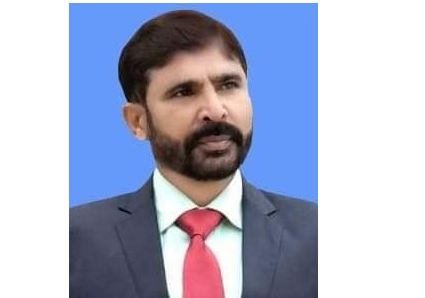
Qamar Bashir

By: Qamar Bashir

Yesterday (22.06.2024), the Prime Minister read a statement during a high-level apex meeting held to seek his approval for the new and updated National Action Plan. He read the written statement placed before him verbatim, whereas he usually prefers to speak extempore using lofty words that often recycle. Part of his statement, loaded with expressions that have future consequences on freedom of expression, speech, and press, conveyed the message of upcoming laws, rules, and regulations intended to further curb the already limited freedom of expression, speech, and press in the country, despite being unrelated to curbing terrorism.

Unlike his usual self, he ensured that he read each and every word placed before him. He stated, “For a long time, Pakistan’s social space has been bloodied by enemies of the country to create conflict among our people, spread confusion, and distort and stigmatize the national narrative, bringing, God forbid, disrepute to the country. Under the constitution, everyone has freedom of speech and freedom of expression, but it’s wrongful use, flouting and tearing apart the constitution, and spewing venom against Pakistan’s progress, development, security, and stability could not be a bigger crime against the nation and the country.”

He continued, saying, “We will make new laws and rules to ensure that the government’s voice is made stronger…to ensure that the true story of the country is heard by everyone, making sure that misinformation and lies cannot hide the truth.” Referring to his visit to China, he said that enemies from outside the country and friends like enemies within the country use filth and dirty campaigns to undermine the successful outcome of the visit.

He added, “Therefore, we will bring such laws and rules that can stop this irregularity and hateful speech, putting an end to efforts aimed at creating division within the nation…..let us decide with full determination and resolve to implement those plans…and lay the foundation of prosperity and development.

The key word used here is “enemy.” The enemy could be foreign countries, our immediate neighboring countries, foreign intelligence agencies, or it could be those Pakistanis who allegedly were blamed for attacking the armed forces’ installations on May 9th. In plain terms, this includes PTI leadership considered as masterminds, the workers, supporters, and activists who abetted, facilitated, and executed the attacks, and all those political activists who are criticizing the government and armed forces of Pakistan on social media from within the country and outside the country.

If this is the scenario, then all the foreign governments and foreign agencies and Pakistani expatriates operating outside the country, who allegedly are poisoning the social space, will be outside the jurisdiction of the purported new laws, rules, and regulations. Therefore, for all practical purposes, these laws will be made only for those Pakistanis who are still residing within the country.

Common logic dictates that the people of a country, no matter how gravely and contemptuously the sitting government and its institutions perceive them, should not and cannot be termed as enemies. Therefore, the Prime Minister should have used proper and appropriate vocabulary while distinguishing foreign elements hostile to the country and domestic critics.

He could have rephrased it as follows: “While foreign adversaries seek to undermine our nation’s stability, we must also consider the impact of domestic actions that can weaken our collective resolve. Criticism is a fundamental right enshrined in our constitution, but when it crosses the line into spreading misinformation and inciting division, it becomes detrimental to our progress and security. Therefore we will introduce measures to target the malicious use of media by those seeking to harm Pakistan’s interests, both externally and internally.

Another question which arises is that given the existence of over 52 laws that directly and indirectly govern the media, and which have already granted extraordinary powers to both Federal and Provincial governments to control traditional and social media, often using brute state power to target journalists and media persons without following official procedures, and considering that Pakistan is already ranked 150th out of 180 countries on the Freedom of Press Index, what additional powers and actions does the government thinking to acquire by enacting new laws?

Hypothetically, presuming that the government might be thinking of introducing the National Media Regulation and Accountability Act aimed at enhancing licensing and registration requirements for all media organizations, including digital platforms. The licensing process could involve stringent vetting criteria to ensure compliance with national security standards, granting the government greater control over which entities are allowed to operate.

One component of the act could be to require all media outlets, including social media platforms, to implement government-approved content moderation tools to filter and remove content deemed harmful or seditious in real-time.

Additionally, media organizations could be required to submit periodic reports on their content moderation activities to a central regulatory body enabling the government to maintain oversight of media content and ensure that potentially harmful information is swiftly addressed.

The act may also include national security and public order clauses that criminalize the dissemination of any content which criticizes the armed forces and government. Violations would result in severe penalties, including heavy fines, suspension of licenses, and imprisonment for responsible individuals to serve as a deterrent against the publication of content that the government deems harmful.

The government may establish a National Media Oversight Committee comprising government officials, security agency representatives, and select civil society members aligned with the government’s interests to enforce regulations, issue fines, and recommend the suspension of licenses.

Additionally, the government would fast-track the establishment of special media courts to handle cases of non-compliance swiftly and to ensure that actions against media entities are executed efficiently, minimizing delays in enforcement.

Government in partnership with technology firms is and will invest in advanced surveillance and content analysis technologies to monitor media activities comprehensively to  further strengthen the government’s oversight mechanism and  maintain robust control over media content ensuring that national security and public order are maintained.

While these measures would enable the government to control and filter content that it perceives as contemptuous and against its vested interests, they would simultaneously gravely wound one of the most important pillars of the state: the media, an indispensable pillar of a vibrant and functional democracy.

By: Qamar Bashir

Former Press Secretary to the President

Former Press Minister to the Embassy of Pakistan to France

Former MD, SRBC

Euro 2024: Marco Rossi criticises unfairness by referee in Hun-Ger clash

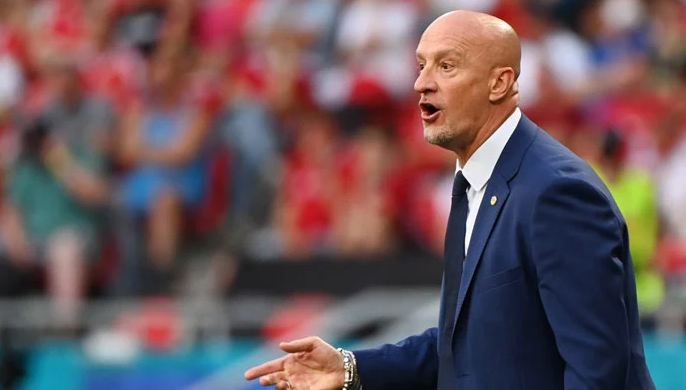
Hungary coach Marco Rossi

Berlin, JUN 23: Hungary coach Marco Rossi criticised the referee’s performance in the Germany-Hungary clash on Wednesday at the Stuttgart Arena in Germany.

The host of the European Championship (Euro 2024), won this match with 2-0. Rossi wasn’t happy with the referee for counting Germany’s first goal, scored by Jamal Musiala.

The coach believed that Hungary’s defender, Willi Orban was pushed unfairly before the goal.

“I’ve never complained in my career as a player or coach, I’ve never looked for excuses, but what the referee did tonight… the referee used a double standard.”

“The referee allowed a goal on a push on Orban. Second half in a similar situation on (Germany midfielder Robert) Andrich, the referee whistled a foul,” said Rossi.

The former footballer was unhappy that the video assistant referees (VAR) did not notice this injustice in Hungary.

“In my perspective, Germany would have won anyways, but the referee was the worst on the pitch,” he said.

Marco mentioned that Germany would have won this match anyway; however, the referee made it difficult for Hungary to win the match. He also wondered what was going to happen if the referee did the same in the match between Germany and France.

“I told my players they have nothing to regret. Germany for me is the big favourite to win the Euros but they didn’t need help from the referee to win, especially against a team like Hungary.

“Let’s see when Germany plays a team like France if a foul is given or not.”

Meanwhile, Germany’s Ilkay Gundogan who assisted the first goal and scored the second, was surprised by his opponent’s reaction. He said he didn’t foul Orban.

“I was quite surprised that he or his Hungary team-mates were a bit angry about it.”

“I don’t know what it looked like on TV. I played in the Premier League for seven years, if you gave that foul in the Premier League then I think everyone would be laughing on the floor,” Gundogan said.

Hungary will be facing Scotland on Sunday at the Stuttgart Arena in Germany and it is essential for the Magical Magyars to win this match to stay in the Euro 2024.

“We have a foot out of the Euros, we’re not out of it mathematically.”

“In the final game we’ll try everything to win, we don’t want to exit without getting a single point. I don’t think we deserve to be on zero points at this stage of the competition,” he concluded.

Ruckus mars NA session as treasury, opposition benches divided over anti-militancy operation

National Assembly session

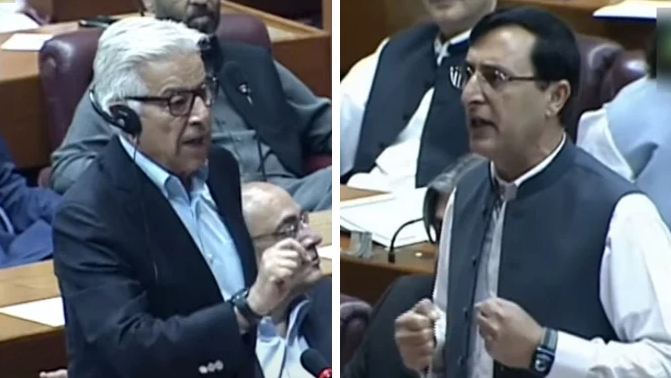
ISLAMABAD: A turbulent National Assembly session took place on Sunday as the government and opposition remained divided over a new military operation, Azm-e-Istehkam, to root out militancy.

The lawmakers from the opposition Pakistan Tehreek-e-Insaf (PTI) said that they weren’t taken into confidence over the operation, while the government assured them that their concerns would be addressed.

The lower house session, which is currently discussing the budget but went off track to exchange views over the operation, saw a ruckus ensued from the opposition benches.

The PTI staged a walkout from the session for an hour and returned later, following which their leaders addressed the National Assembly, while they also chanted slogans, including “end the operation”, and “we want peace”.

The Shehbaz Sharif-led government had Saturday announced the fresh counter-terrorism operation, pledging to utilise the full strength of the country’s resources, including military, diplomatic, and legislative, to turn the heat up on militants.

The Central Apex Committee on National Action Plan (NAP) gave the approval for the operation, in which top officials of all provinces were present, including PTI-backed Khyber Pakhtunkhwa Chief Minister Ali Amin Gandapur.

The move comes as the country has witnessed a significant surge in terrorist attacks in recent months resulting in scores of both civilian and security forces’ casualties.

The Pakistani government, which has maitained that neighbouring nations are responsible for a rise in terrorism, has time and again called on Afghanistan’s Taliban-led administration to prevent its soil from being used by various terrorist organisations against Pakistan — an allegation Kabul has denied.

PTI lawmakers protest during the National Assembly, on June 23, 2024. — Reporter
‘PTI standing with terrorists’
Defence Minister Khawaja Asif said Sunday that the opposition was “standing with the terrorists”, not the country as the PTI vehemently opposed operation Azm-e-Istehkam.

Talking on the floor of the National Assembly,” Asif said: “In yesterday’s meeting, their Khyber Pakhtunkhwa chief minister was present. All these decisions were taken in front of him.”

Asif, coming down hard on the PTI lawmakers, said that their protest in the parliament was tantamount to them supporting and standing with the terrorists.

“They are against the Pakistani Army and the martyrs. They still stand with their May 9 stance,” Asif said, referring to the violent event that took place when PTI founder Imran Khan was arrested, which saw state installations being attacked.

The defence minister said he was speaking about the country’s security, but the PTI’s only goal was to protest and not to hear him out. “They are neither with the country nor with the Constitution.”

‘We do not support any operation’
While they staged the walkout, PTI Chairman Barrister Gohar Khan, speaking outside the Parliament House, said that the legislature must be taken into confidence before any operation is launched.

PTI’s top leader Asad Qasier told reporters that any decision or agreement reached must be brought before the parliament. “We do not support any operation.”

While speaking on the floor of the house, Gohar said no matter where the operation is about to take place, the parliament should decide its parameters.

PTI’s top leader Asad Qasier speaks to reporters outside the National Assembly in Islamabad, on June 23, 2024. — Screengrab/GeoNews
“The federal government should discuss this issue in the parliament before approving it. Even before, the military leadership has briefed the lawmakers. No Apex Committee is above this house.”

The PTI chief said his party has objections to the operation in KP, stressing that the federal government did not take his party’s lawmakers into confidence.

“The military leadership should take this house into confidence over operation ‘Azm-e-Istehkam’. This house should approve any action that’s about to be taken.”

Gohar, a close confidant of PTI founder Imran Khan, said his party was ready to discuss all things related to Pakistan. “We are not Pakistan’s enemies.”

‘PTI leadership compromised’
Continuing to come down hard on the PTI, Defence Minister Asif said that the party’s entire leadership is compromised.

“These are not my words, these are Shehryar Afridi’s words. Now they will not accept this,” Asif said during his fiery speech. “He took Asad Qaiser, Omar Ayub, Gohar sb, and everyone’s names.”

To cool things down, Law Minister Azam Nazeer Tarar told the opposition members that his government would take them into confidence, unlike when Imran was the prime minister.

Law Minister Azam Nazeer Tarar speaks on the floor of the National Assembly, on June 23, 2024. — Screengrab/GeoNews
“Your leader (Imran) did not participate in the session in which [such topics were discussed when he was in power]. But we will not do this, my prime minister and my cabinet will be present here.”

He also censured the opposition that while they were decrying not being taken into confidence, they resorted to ruckus when the defence minister, who is the relevant person when it comes to the operation, was speaking.

“You did not hear one word he said. Also, let me tell you that your chief minister was present at that meeting and he did not object to a single thing as it is for Pakistan’s betterment.” He added that an in-camera National Security Council meeting would be convened, without specifying the date.

PTI MNA Shehryar Afridi speaks on the floor of the National Assembly, on June 23, 2024. — Screengrab/GeoNews
In response to Asif’s comments, PTI MNA Afridi said may the curse of God fall on those who lie. His statement gathered praise from the opposition benches.

He said Asif was more than 70 years old, but still resorting to such statements. “This is my chairman and my opposition leader,” the former federal minister said while pointing towards Gohar and Ayub.

Afridi said the government was “no match” for the PTI and their allegations would not affect the unity within the party’s ranks.


Rana Sanaullah, AJK PM discuss budget

Mini-Budget on horizon as FBR misses back-to-back revenue targets

ISLAMABAD, JUN 23 (DNA) —  Adviser to the Prime Minister on Political and Public Affairs Rana Sanaullah and Prime Minister of Azad Jammu and Kashmir Chaudhry Anwarul-Haq on Saturday discussed the upcoming budget and development projects in the region.

Anwar-ul-Haq expressed his gratitude to the government of Pakistan for its unwavering support, emphasising the administration’s commitment to ensuring good governance and the welfare of the people.

However, he highlighted the need for an increase in the budget grant, which has remained stagnant for the past five years. The prime minister stressed that a boost in funding is essential to meet the targets of annual development projects, particularly in light of the current political and security landscape.

Sanaullah, who holds the portfolio of Inter Provincial Coordination (IPC), assured that the proposal to increase the budget grant would be given due consideration. He reaffirmed the government’s dedication to utilising available resources to drive economic development and social prosperity in Azad Jammu and Kashmir.

He also pledged to provide necessary support to alleviate the difficulties faced by the people of Azad Jammu and Kashmir, underscoring the federal government’s unwavering commitment to the region’s well-being. — DNA

The Complex Reality of American Exceptionalism

American exceptionalism

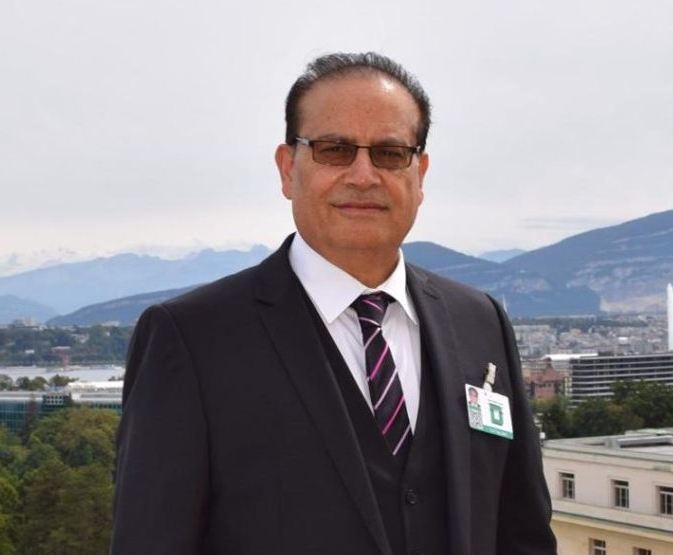
Dr. Muhammad AkramZaheer

          American exceptionalism is a deeply rooted belief that has significantly influenced the way the United States engages with the world. This belief, held by many Americans, posits that the United States has a unique and special role in history and occupies a distinctive position in the global order. This sense of exceptionalism has historically guided U.S. policymakers in their approach to international affairs. American exceptionalism is based on the idea that the United States is fundamentally different from other countries. This ideology suggests that the U.S. has a mission to spread its values, such as democracy and human rights, around the world. However, this belief often leads to complex ethical and moral dilemmas for U.S. policymakers when they are dealing with global issues.One of the main consequences of American exceptionalism is that it sometimes results in actions that prioritize U.S. interests, even when these actions are presented as efforts to promote democracy and human rights. For example, when the United States intervenes in other countries, it often justifies its actions by claiming to support democratic principles. Yet, in reality, these interventions frequently aim to maintain or enhance America’s own status and power on the global stage.This contradiction between the stated ideals and the actual actions of the United States can lead to negative perceptions. While the U.S. portrays itself as a global force for good, striving to uphold and spread democratic values, other countries and international observers often see American actions as self-serving. They perceive the U.S. as more interested in preserving its own influence and status quo rather than genuinely promoting democracy and human rights.This dual nature of American exceptionalism has profound implications for U.S. foreign policy. On one hand, it drives the United States to take active roles in international conflicts and global governance, advocating for democratic values and human rights. On the other hand, it leads to criticism and skepticism about the true motives behind U.S. actions. For instance, when the U.S. engages in military interventions or imposes economic sanctions, it often claims to be acting in the interest of global stability and justice. However, critics argue that such actions are more about securing American geopolitical and economic interests than about altruistic concerns.The idea of American exceptionalism involves a continuous balancing act between how the nation views itself, moral issues, and ethical dilemmas. This concept means that the United States often sees itself as unique or special compared to other countries. However, this self-view brings a lot of responsibilities and challenges, especially for lawmakers.

One major challenge is balancing respect for other countries’ independence while also promoting democratic values. This is a tough moral issue because it involves deciding when or if it is right to get involved in other nations’ affairs. Lawmakers often struggle with whether it’s justified to interfere in other countries and how far they should go in using military power. They must figure out how to reconcile America’s global influence and interests with the sovereignty of other nations.When America tries to promote its values worldwide, it can sometimes lead to conflicts. Other countries might see these efforts as a threat to their own political systems and sovereignty. As international relations change and become more complex, new ethical concerns arise. Lawmakers need to constantly rethink their strategies and policies to adapt to these changes.Adapting to the evolving nature of global politics is a continuous challenge for lawmakers. They need to uphold democratic norms while also considering and respecting the diverse perspectives of other countries. Maintaining a balance between exerting American influence and recognizing the independence of other nations is a difficult task in a world that is always changing.

American exceptionalism is about how the U.S. views itself and its role in the world. It involves many moral and ethical challenges, especially for those who make the laws. They must carefully navigate the delicate balance between promoting American values and respecting other nations’ sovereignty. This task is made even harder by the constantly changing nature of international relations.

Can AI Break Gender Bias for an Inclusive Future?

Can AI Break Gender Bias for an Inclusive Future?

Amina AG

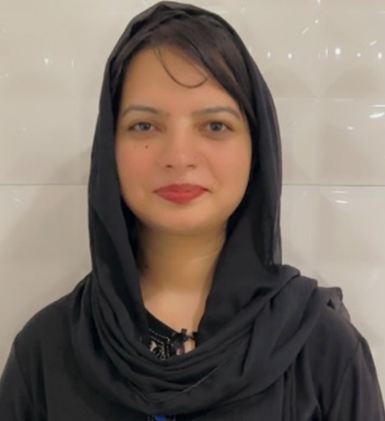
In an era marked by globalization and rapid technological advancements, the relationship between gender dynamics and technology continues to exhibit signs of deep-rooted patriarchy. This issue is particularly significant in the context of the adoption and integration of Generative Artificial Intelligence (GAI) across diverse cultural landscapes. Factors such as technology access, educational pathways, cultural norms, gender equity initiatives, and techno-activism all play crucial roles in the adoption and utilization of AI. However, generative AI currently tends to predominantly represent males, leading to a skewed perception of professional roles. For instance, when searching for images of professionals in fields like law, medicine, engineering, or scientific research, AI-generated results overwhelmingly depict men. This bias in representation highlights the nuanced intersections between gender identity and the adoption of advanced technologies like GAI, which have profound implications for both present and future generations. Addressing these issues is essential to ensure a more equitable and inclusive technological future.

Significant research findings indicate substantial gender bias in GAI, particularly in professions traditionally dominated by men. For example, studies have shown that men are represented in 76% of AI-generated images of professionals, while women appear in only 8% (A. M. Gorska and D. Jemielniak, 2023). This disparity not only highlights but also potentially exacerbates existing gender inequalities in society. The underrepresentation of women in AI-generated content suggests a reinforcement of gender stereotypes that can influence societal perceptions and career aspirations. It is crucial that women are included and acknowledged for their presence and contributions to the advancement, design, and implementation of AI technologies. The gendered nature of technology, especially generative AI, becomes apparent when examining recent studies, which show that 99% of AI-generated images of professionals depict men. This alarming underrepresentation of women suggests that generative AI could perpetuate gender biases and male dominance in professional fields.Moreover, certain systems affect the physical and mental well-being of women and non-binary individuals. Gender-biased systems used in healthcare, welfare, and the automotive industry, in particular, pose significant risks. Approximately 18.8% of gender-biased systems compromise physical safety, while 3.42% create health hazards. These statistics underscore the urgent need to address gender biases within AI to protect the well-being of all users.The adoption of GAI wills likely impact gender perceptions in future generations, who will rely on AI for educational and other purposes. This reliance on AI-generated content may reinforce male dominance and potentially hinder women’s empowerment. Consequently, this issue necessitates a strategic and multifaceted approach to address and mitigate these biases. Technologists, policymakers, educators, and all stakeholders must collaborate to build a platform for women’s empowerment and ensure that AI technologies reflect diverse and balanced representations. In the realm of socio-economic development, especially within the context of Pakistan, there exists a pressing demand for inclusive growth, with a particular emphasis on the empowerment of women. Gendered AI could exacerbate gender inequality, making inclusive progress in technology essential for the equitable development of society.Highlighting the need for a more intersectional and inclusive approach in AI advancement, especially in AI-generated images, is imperative. This approach must consider how gender intersects with other dimensions of power and oppression, such as race, class, and ability. Ensuring that the experiences of marginalized groups, including women of color, transgender individuals, and people with disabilities, are adequately addressed within feminist techno science studies is vital. An inclusive approach will help achieve the goals of women’s empowerment, societal justice, economic growth, and creating space for everyone. Empowering and encouraging more women and all genders to take visible roles in all realms of life will be instrumental in driving forward societal and technological progress. This comprehensive strategy involves revising the algorithms and datasets used in AI training and fostering a culture that values and promotes gender diversity in the tech industry.To address these disparities, we must take a holistic approach that includes enhancing technology access for all genders, promoting inclusive educational pathways, challenging cultural norms that reinforce gender biases, and strengthening gender equity initiatives. It is also essential to support techno-activism efforts that advocate for fair representation in AI. Generative AI has the potential to shape societal perceptions significantly. Therefore, its development and implementation must prioritize inclusivity. Policymakers, technologists, educators, and activists must collaborate to create frameworks that ensure AI technologies reflect diverse and balanced representations. This involves not only revising the algorithms and datasets used in AI training but also fostering a culture that values and promotes gender diversity in the tech industry.Moreover, addressing the gender biases inherent in GAI is critical for achieving broader goals of gender equality and empowerment. If left unchecked then these biases can perpetuate and even exacerbate existing inequalities, hindering progress toward a more just and equitable society. Therefore, it is imperative to incorporate intersectional approaches that consider how gender intersects with other dimensions of power and oppression. By actively working to eliminate gender bias in GAI and other technologies, we can pave the way for a future where technology serves as a tool for empowerment rather than a mechanism of exclusion. This will not only benefit women but also enrich the technological landscape by bringing diverse perspectives and ideas to the forefront.Ultimately, achieving gender parity in technology, especially in emerging fields like GAI, requires concerted efforts from all sectors of society. By fostering an environment that encourages and supports the participation of all genders, we can ensure that the advancements in AI and other technologies are truly reflective of our diverse world and contribute to a more inclusive and equitable future for everyone. This inclusive vision of technological development holds the promise of a future where all individuals, regardless of gender, have the opportunity to contribute to and benefit from the digital transformation that is shaping our world. By addressing these issues comprehensively, we can create a more equitable and just society, where everyone has the opportunity to thrive and succeed in the technological age. Prioritizing gender equity and justice as primary goals for AI systems can create a downstream impact on design and management decisions, fostering a technological landscape that benefits all.

Amina AG

Sr. Engineer Projects & Operations

[email protected]

Lahore, Pakistan.

Uzbekistan: a focus on promoting reading

Global Misperceptions

Ramzidin Nuridinov

Libraries play a key role in education, culture, and community development, providing an invaluable resource for accessing knowledge, preserving cultural heritage, and promoting intellectual growth. In the modern information society, they remain an important institution that promotes the education and self-development of people of all ages.

President Shavkat Mirziyoyev emphasised during the opening ceremony of the People’s Library under the President of the Republic of Turkey in Ankara: “Intellectual potential, high morale is what makes a nation strong. The source of this invincible power is books and libraries – the great invention of mankind”.

At the present stage, education has become one of the most important areas of state policy. The government of the Republic of Uzbekistan pays special attention to the development of this sphere, recognizing its key role in the prosperity of the country. In recent years, the republic has achieved significant success in the educational domain. These achievements are aimed at modernizing the system, improving the quality of education and training, and expanding access to education for all citizens of the country.

At the same time, special attention is paid to the promotion of reading and the fostering of the reading culture of the population. And in the Presidential Decree adopted on September 13, 2017, “On the program of comprehensive measures to develop the system of publishing and distributing book products, improving the culture of reading”, clear goals are outlined for the creation of an effective system of information and library services to the population, which served to move this area to a new stage of development and contributed to raising the level of social and information culture and the role of libraries, made it possible to develop and implement modern innovative and educational technologies that increase the competitiveness of Uzbekistan in the world market.

In addition, the Presidential Decree “On further improvement of information and library services for the population of the Republic of Uzbekistan” was adopted on June 7, 2019. The main goals of the decree are:

improving the regulatory framework in order to ensure high-quality social guarantees to the population for information and library services;
development of information and library institutions taking into account modern requirements;
promoting the sustainable development of information and library services the for population in the regions;
strengthening the material and technical base of information and library institutions;
development of public-private partnerships in the library sector, a network of private and electronic libraries;
expanding cooperation with Internet resources that specialize in distributing electronic books to improve the efficiency of libraries and the efficiency of servicing (including paid) users;
ensuring the safety of information and library institutions and the safety of information and library collections as part of the national and world cultural heritage;
formation and enhancement of the information culture of society, sustainable interest in national history and culture, enhancement and promotion of a reading culture;
staffing information and library institutions with qualified specialists.
The adoption of this decree expands the range of services in the country, including access to electronic resources and holding cultural and educational events, as well as improving staff qualifications and introducing modern methods of user service. In addition, these changes not only contribute to the development of the information society and economic growth by attracting investment in education and culture, but also promote the formation of a literate and informed society, which is an important step in the development of the country.

The Resolution of the Cabinet of Ministers dated December 14, 2020 approved the National Program for the Development and Support of a Reading Culture for 2020-2025, which includes the publication of quality books that meet the spiritual, educational, artistic and aesthetic needs of the population; supporting the activities of publishers and artists, publishing children’s literature; translation of the best examples of national and world literature; simplification of the organization of book sales; improving the delivery system for newly published books and distribution of information sources; expansion of international cooperation in the field of online ordering of foreign work, their delivery and distribution.

In turn, it should be noted that within the framework of the “Uzbekistan – 2030” Strategy, special attention is paid to the popularization of masterpieces of Uzbek and world literature. The country’s leadership strives to instil in citizens a love of reading and ensure access to libraries and information services for everyone.

The Strategy “Uzbekistan – 2030” puts forward such main goals as increasing the number of young book lovers to five million, the annual creation of 100 works of art and 50 books for children and adolescents, the publication of the multi-volume book “Uzbek adabiyoti khazinasidan” (“From the Treasury of Uzbek Literature”), the 100-volume book “Jakhon Bolalar Adabiyoti Durdonalari” (“Pearls of World Children’s Literature”) in Uzbek, as well as the digitalization of a book fund of almost 40 million books.

On November 28, 2023, there was signed the Presidential Decree “On measures to implement the project “A Thousand Books for Youth”, aimed at creating a system for translating books popular in the world into Uzbek, that contribute to increasing the intellectual and scientific potential of the younger generation.

At the same time, within the framework of the “Olympiad of Five Initiatives”, the following 5 projects in the field of reading and intellectual games are annually implemented: “Young Reading Family”, “Poetry Competition”, “Young Reader”, the intellectual game “Zakovat” and the project “Example of Foreign Languages”. These projects increase the interest of young people in reading books and help expand logical thinking and knowledge through intellectual games.

The “Young Reader” and “Young Reading Family” competitions are important events held to promote reading, the spiritual enrichment of youth, and increase their intellectual potential. This competition serves to increase interest in books among young people and expand their knowledge and horizons.

Also, within the framework of the project “A Thousand Books for Youth”, the Agency for Youth Affairs will have to work on acquiring rights to use works from authors, translating them into Uzbek, and preparing for printing and publishing books on the basis of a state order and at the expense of the State budget (with the exception of books, published for state higher educational institutions).

Two stages have been established for translation into Uzbek and the publication of popular books in the world. First: a preliminary list of books is formed annually by the Expert Council. Second: the preliminary list is posted in the information systems of the Agency for Youth Affairs for selection by the population by voting, and thus the final list is formed.

The list of books published annually must include at least 20 percent of popular science works. The rights to the works prepared for publication will belong to the Agency for Youth Affairs, which will provide them free of charge to publishing houses.

It is also planned to create and ensure the continuous operation of a special mobile application that accumulates literature in the Uzbek language and provides the population with free access to a wide range of information. On the recommendation of the Expert Council, the works will be distributed to information and library institutions (including libraries of public and administration authorities), and electronic versions will be donated free of charge to the Alisher Navoi National Library of Uzbekistan and the relevant institutions of the Academy of Sciences of the Republic of Uzbekistan for wide use by readers.

The necessary spiritual, legal, material, and technical basis has been created in the Republic to develop children’s literature and improve the quality of textbooks and teaching aids. The country’s publishing houses have increased the publication of works by authors of world and Uzbek children’s literature. In accordance with a number of documents adopted to promote book reading, systematic measures are being taken in all regions to popularise literature among children and adolescents. Over the past four years, a number of presidential decrees and government resolutions have been adopted to guide the country’s publishing, printing, and bibliographical information institutions.

Thus, bibliographical information services play a critical role in ensuring public well-being by providing citizens with easy access to information, knowledge, and culture. In addition, the development of digital services, collaboration with communities, and the use of new technologies strengthen the role of libraries as centres of learning, information, and communication. This helps to enhance the capabilities of people and stimulates their desire for education. The development of the potential of information and library services contributes to lifelong learning, self-improvement, cultural and spiritual enrichment of the population. This is of crucial importance for modern society.

Ramzidin Nuridinov

Expert of the Development Strategy Center.

Hard to imagine strong economy in state torn by terrorism: PM Shehbaz

Shehbaz Sharif

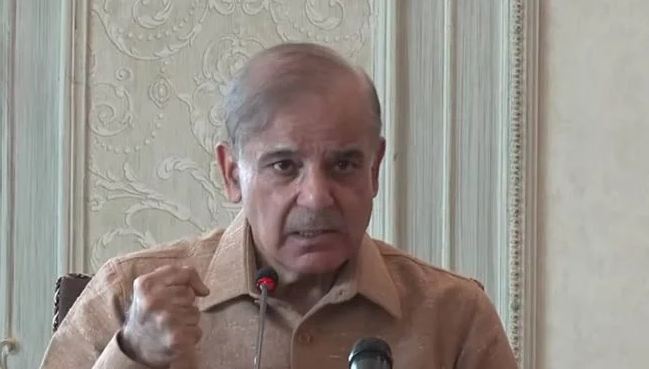
ISLAMABAD: Prime Minister Shehbaz Sharif has said that the prevalence of terrorism in the country is a complicated matter and everyone has to play a role in ending this menace.

“A strong economy can not be imagined in an unstable state involved in terrorism,” he said while addressing a meeting of the National Action Plan (NAP) Apex Committee on Saturday.

The premier chaired the meeting held for crucial decisions, including those concerning the security of Chinese workers in Pakistan.

The forum was attended by several high-ranking officials, including the Chief of Army Staff General Asim Munir, federal ministers, chief ministers of the four provinces, and all inspector generals of police.

As the country reels from recurring incidents of terrorism, including attacks on Chinese nationals on Pakistani soil, the prime minister said that every institution, ministry, provincial government or agency needed to play an active role in dealing with this challenge.

The prevalence of terrorism was a complicated matter, PM Shehbaz said while calling for the implementation of state governance in order to deal with the challenge.

He said that “stability and the rule of law are necessary” for the sustainable development of the country. “The war against terrorism is the prime obligation of all state institutions. It is our joint responsibility to implement the state’s governance with full force.”

The prime minister said that he expected the provinces would fully play their part in this regard and end the menace of terrorism in the country.

He went on to say that our political and religious leadership must be completely clear in order to fight against terrorism.

He said that “it is Pakistan’s own war” and the country should take this responsibility.

“Provincial governments cannot be absolved from their duties by putting the onus on armed forces to end terrorism. Laying responsibility on a single institution would be a blatant mistake.”

He further stated that a “soft state cannot gain the trust of investors” whether internal or external.

PM Shehbaz stressed the need for active diplomacy with regional countries, which would tighten the noose around terrorist elements.

He also called for strengthening the law enforcement agencies by legislation. “We need harmony among all the elements of power.”

The premier also pledged all the required assistance or funds to the armed forces in the war against terrorism. “The Centre bears the expenses of the military’s war against terrorism. We will not leave any stone unturned in fulfilling the army’s requirements.”

Moreover, he lamented the social media disinformation in the country, vowing to make laws to address the issue.

“Enemies of Pakistan have poisoned the social space,” PM Shehbaz said while pledging to ensure that the disinformation and falsehood don’t conceal the truth.

He said such laws would be made that end the narratives of hatred and division.

Pakistan assures security of Chinese citizens
The government in Islamabad, on June 16, assured Beijing of providing foolproof security to Chinese citizens working on different projects in Pakistan, reiterating that no one can create rifts between the two countries.

The assurance came during Interior Minister Mohsin Naqvi’s meeting with Chinese Ambassador Jiang Zedong at the Chinese Embassy in Islamabad.

Both sides discussed the measures taken for the security of Chinese citizens in Pakistan.

The interior minister informed the Chinese envoy about the measures to protect Chinese citizens across the country including Islamabad.

He also briefed him on the security plan of Chinese engineers and staff working on CPEC and other projects.

Naqvi said that comprehensive and effective SOPs have been made for the security of Chinese citizens and a separate force “SPU” is being created in Islamabad for foreign nationals.

The two sides also reiterated their commitment to combating terrorism in all its forms and manifestations with a “zero tolerance” attitude and agreed to further strengthen cooperation in counter-terrorism and security through a comprehensive approach.

The NAP Apex Committee meeting comes as the country grapples with the challenge of extremism in the country.

According to the Centre for Research and Security Studies (CRSS) Q1 2024 Security Report, at least 92% of all fatalities and 86% of attacks, including those related to terrorism and security forces operations, were recorded in the Khyber Pakhtunkhwa and Balochistan provinces in the first quarter of 2024.

The report further detailed that the country witnessed at least 432 violence-linked fatalities and 370 injuries among civilians, security personnel and outlaws resulting from as many as 245 incidents of terror attacks and counter-terror operations.

Among the 432 fatalities, 281 included that of civilians and security forces personnel.

ISSI hosts roundtable on “Astana Summit 2024: Solidifying SCO’s Partnerships”

ISSI hosts roundtable on “Astana Summit 2024: Solidifying SCO’s Partnerships”

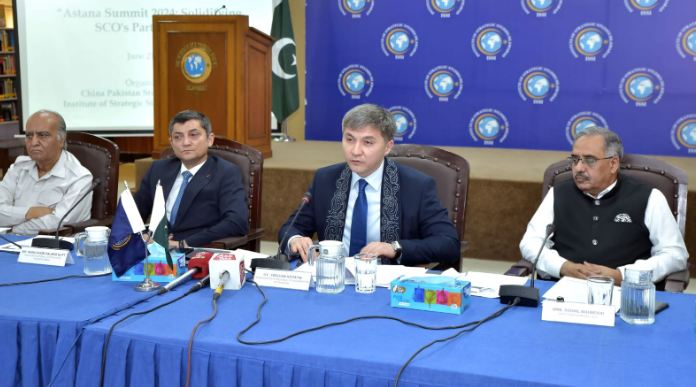
ISLAMABAD, JUN 21 /DNA/ – China Pakistan Study Centre (CPSC) at Institute of Strategic Studies Islamabad (ISSI) hosted a roundtable discussion titled, “Astana Summit2024: Solidifying SCO’s Partnerships”. The event was moderated by Dr Talat Shabbir, Director CPSC. The speakers at the roundtable included Ambassador Sohail Mahmood, Director General ISSI; Ambassador Khalid Mahmood, Chairman BoG, ISSI; HE Yerzhan Kistafin, Ambassador of Republic of Kazakhstan to Pakistan; Ambassador Babar Amin, Pakistan’s first National Coordinator of Shanghai Cooperation Organization (SCO); Dr. Syed Hussain Shaheed Soherwordi, Professor, University of Peshawar; and Mr. Marghoob Saleem Butt, Pakistan’s National Coordinator for SCO, MOFA.

DG ISSI Ambassador Sohail Mahmood stressed the significance of the upcoming Astana Summit within the SCO framework, underscoring SCO’s role as a pivotal trans-regional platform committed to stability, economic development, and cooperative multilateralism. Emphasizing SCO’s expansive reach covering 60% of Eurasia, encompassing 40% of the global population, and a significant portion of the world’s GDP, he underscored its evolution into a vital platform for stability and multilateral cooperation. Ambassador Sohail Mahmood highlighted SCO’s commitment to non-alignment, non-confrontation and inclusivity, offering an alternative perspective in international relations and a different cooperation model in a polarized world. He also acknowledged the internal and external challenges facing SCO, urging coordinated efforts amidst complex regional and global realities. Pakistan’s active engagement with SCO, he noted, aligned closely with its national development goals and aspirations for regional peace and prosperity, reflecting its proactive role in advancing SCO’s objectives.

Earlier, Dr. Talat Shabbir highlighted the pivotal role of the SCO in fostering regional stability and prosperity through robust security mechanisms, enhanced economic collaboration, and cultural exchanges. Emphasizing the significance of the Astana Summit 2024, he highlighted the SCO’s commitment to promoting peace and cooperation on a global scale.

Ambassador Yerzhan Kistafin highlighted Kazakhstan’s role in the SCO’s development, emphasizing its contributions to regional stability through robust counterterrorism mechanisms and economic cooperation. He underscored Kazakhstan’s commitment to fostering deep ties with SCO countries, promoting global peace, and enhancing regional connectivity. Additionally, he discussed bilateral efforts with Pakistan in geopolitical dimensions, digital development, economic collaboration and connectivity, affirming a shared vision for peace, prosperity, and environmental security in the region.

Ambassador Babar Amin emphasized the significant role of cooperation within SCO member states, stressing also the importance of people-to-people connections and media engagement. He highlighted SCO’s evolving visibility and potential for enhancing development dynamics, suggesting it could surpass BRICS in certain aspects. Addressing challenges such as terrorism and security, he stressed the imperative of collaborative efforts to foster connectivity and mitigate obstacles, including the involvement of groups like TTP.

Professor Dr. Syed Hussain Shaheed Soherwordi underscored the interconnectedness of security and economics in global affairs, emphasizing the recent Gaza and Ukraine conflicts as examples. Prof. Dr. Soherwordi proposed key measures including diversifying regional ties, establishing mutual non-aggression agreements among powers, and jointly combating terrorism to ensure regional stability and resilience against foreign intervention. His remarks emphasized the urgent need for collective action to safeguard the region’s economic and security interests.

In his address, Dr. Marghoob Saleem Butt, Pakistan’s National Coordinator for SCO, underscored the significant contributions of the SCO in various domains, including food security, climate change, and counter-terrorism. He emphasized the expanding scope of cooperation within the SCO, highlighting initiatives such as joint border operations and enhanced cyber cooperation. Dr. Butt also outlined Pakistan’s priorities during its chairmanship, focusing on connectivity, poverty alleviation, and youth empowerment through digital initiatives. He also noted that Pakistan would be hosting the meeting of SCO Ministers of Trade/Commerce in September 2024 and the Council of Heads of Government (CHG) in October 2024. Looking forward to Astana Summit, he expressed Pakistan’s commitment to adopt the documents which would reflect shared values of good neighbourliness, trust, and partnership, alongside commitments to initiatives such as safe drinking water, sanitation, and strategies for development, anti-drug efforts, and energy cooperation.

Ambassador Khalid Mahmood, in his concluding remarks, said that the Shanghai Cooperation Organization (SCO) stands committed to its core mission of fostering security and economic cooperation among member states. He added that SCO is an organization focused on addressing diverse security challenges including terrorism, extremism, separatism, and non-traditional threats such as climate change and food security. Highlighting the upcoming Astana summit and the expansion of SCO membership to 10 states with the inclusion of Belarus, he underscored the organization’s evolving role and effectiveness in regional stability and development efforts.

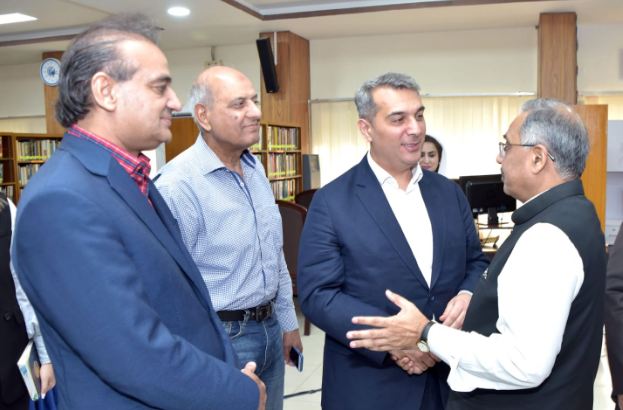
The roundtable discussion concluded with a comprehensive question and answer session. The event was attended by a large number of diplomats, practitioners, academics, think-tank experts, students, representatives of the business community and the media.

Stay Connected

64FansLike
60FollowersFollow

Latest Reviews

Exchange Rates

USD - United States Dollar
EUR
1.17
GBP
1.35
AUD
0.72
CAD
0.73