Home Blog Page 887

First time ever Pak Contingent Takes part in games in Russia under Intl Military Sports Council

First time ever Pak Contingent Takes part in games in Russia under Intl Military Sports Council

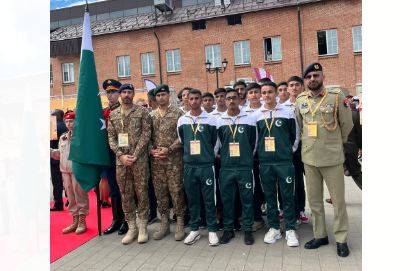
TOOLA, JUN 24: /DNA/ – For the first time ever a Pakistani sports contingent comprising cadets from 3 Military Colleges are participating in multiple sports events organised in Russian City, Tula under the auspices of Intl Military Sports Council.

The opening ceremony was held today at Tula, Russia, witnessed by Russian Dy Def minister, Mr Evkurov Yunys- Bek as guest of honour. Brig Muhammad Asif Khan, Pakistan’s Defence Attaché to Russian Federation attended the ceremony.

Delegation comprises 3 officers and 15 Cadets from Military college Jhelum, Military College Murree and Military College Sui.

Sports events will include many track events, volley ball, basket ball and Boxing competitions. The sports Events will be conducted from 24 Jun to 30 Jun 2024.

Serena Hotels, PSF share details of upcoming Junior Squash Championship

Pakistan Squash Federation

DNA

ISLAMABAD, JUN 24: Officials of the Pakistan Squash Federation along with Serena Hotels team addressing a press conference to share details of the 31st Asian Junior Individual Squash championship. Serena Hotels supports the event as part of its Sports Diplomacy initiative. DNA

A Paradigm Shift

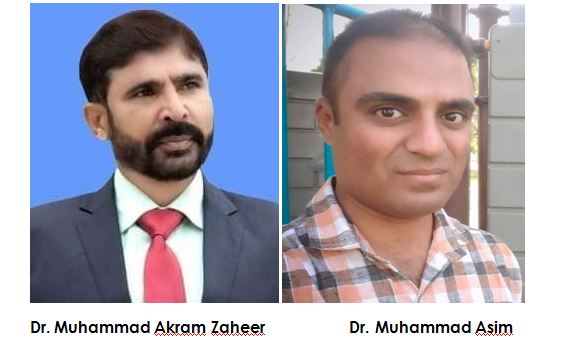
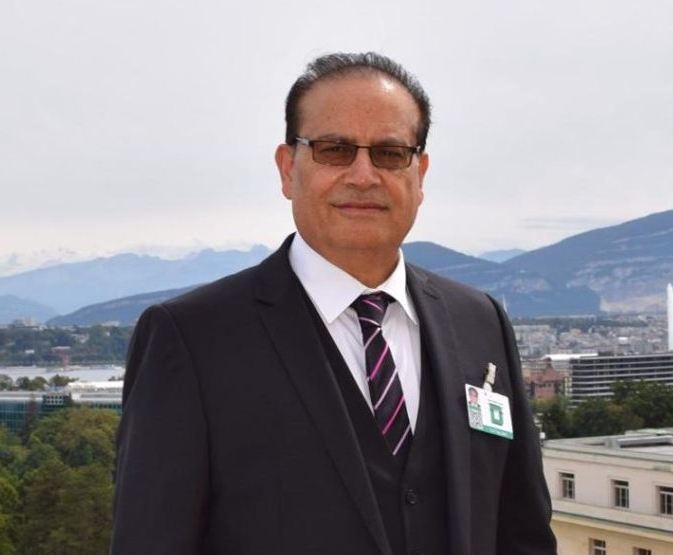
Dr. Muhammad Akram Zaheer

Building a Progressive Pakistan through Objectives Resolution 1949 and Resistive Economics

Dr. Muhammad Akram Zaheer

Dr. Muhammad Akram Zaheer’s insightful addressed at the special session organized by the Pak-Iran Intellectual Forum in Islamabad was nothing short of extraordinary.  The special session organized for the Book “A Paradigm Shift.  Building a Progressive Pakistan through Objectives Resolution 1949 and Resistive Economics that demonstrated not only Dr. Muhammad Asim’s deep understanding about the historical and economic contexts but also his visionary perspective on Pakistan’s future Dr. Muhammad Asim’s eloquence and intellectual rigor captivated the audience, offering fresh and thought-provoking interpretations that underscored the significance of the Objectives Resolution of 1949 as a cornerstone for progressive development. His contributions are invaluable in fostering a deeper understanding of resistive economics and their potential to transform Pakistan into a more resilient and prosperous nation. His passion and commitment to these ideals truly inspire and resonate with the aspirations of many.

Dr. Asim should be recognized as “an academic equivalent to Ibrahim Raisi” for Pakistan, being the first to pioneer work on the concept of a resistive economy within the country. In his previous book “Romanticizing Afghanistan, Iran and Pakistan: A Region through the Lens of Resistive Economy”, he not only presented a detailed feasibility report for establishing a joint administrative market at the tri-borderland between Afghanistan, Iran and Pakistan but also meticulously assesses.  Such an initiative could challenge the dominance of US unipolarity and West-inclined international financial institutions, ultimately undermining Western socio-cultural and economic hegemony. Additionally, Dr. Asim astutely highlights Afghanistan’s rational approach to seeking sustainable development since August 15, 2021, and Iran’s similar path since 1979, attributing this progress to the implementation of resistive economic mechanisms. He draws attention to the pivotal role of current Iranian President Ibrahim Raisi, who designed such mechanisms during the Iranian Cultural Revolution, leading Iran to its current sustainable stage.

Conversely, Dr. Asim underscores the detrimental impact of irrationality within Pakistan’s power nexus, particularly within the military and bureaucratic spheres, which poses a significant hurdle to the country’s socio-political and economic development. By adhering to colonial legacies and prioritizing personal interests over national and regional concerns, these sectors have perpetuated policies that align with Western interests, neglecting the broader welfare of Pakistan or US. Despite the exposure of these flawed policies, particularly evident after the ousting of Imran Khan from government, Dr. Asim asserts that entrenched practices persist. Drawing on the insights of Craig Murray, former British ambassador to Pakistan, Dr. Asim illustrates how the CIA launched a regime change operation in Pakistan with the assistance of COAS Qamar Javed Bajwa. This operation was prompted by Pakistan’s refusal to provide stations or bases to US troops post-Afghanistan withdrawal, adoption of de-dollarized barter trade through cabinet ratification on February 24, 2022, neutrality in the Russia-Ukraine conflict, adherence to Quaid-e-Azam Muhammad Ali Jinnah’s policy on Palestine, and rejection of COAS-backed US-sponsored initiatives regarding Israel and Indian-held Jammu and Kashmir.

Dr. Asim’s book precisely examines how Pakistan’s current administrative, constitutional and political system acts as a significant impediment to its political development. He highlights that while the Objectives Resolution of 1949 remains a preamble to the constitution, its principles often disregarded in the drafting process. Through a detailed analysis of this resolution, Dr. Asim reveals its alignment with the themes of the Charter of Madina and the prerequisites for implication of resistive economic mechanism(s) in any third world country like Pakistan. He advocates for the adoption of a new social contract or constitution based on these principles, presenting 12 articles derived from the 12 clauses of the Objectives Resolution. These articles, further elaborated through specific clauses, founded on the Charter of Madina, resistive economic mechanisms and 20 essential points essential for national building and socio-economic growth. In my personal judgement, Dr. Asim’s proposed constitutional draft extends beyond Pakistan’s borders, offering a transformative framework applicable to other third-world countries grappling with corruption and authoritarianism.

Italy to launch initiative to educate out-of-school children in Pakistan

Italy

Agencies

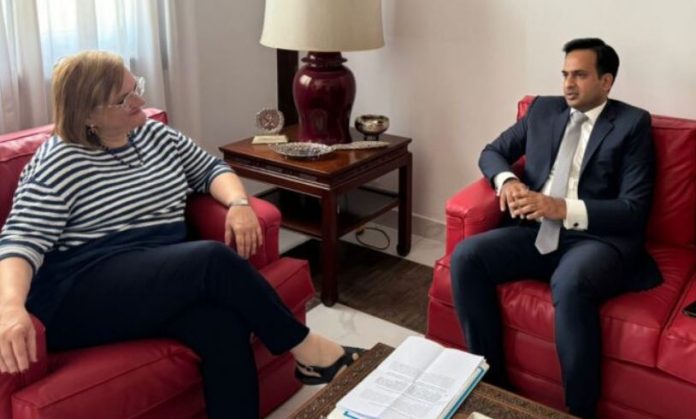
ISLAMABAD, JUN 24: The Italian Ambassador to Pakistan Marilina Armellin has taken initiative to educate out-of-school children in Pakistan through Interactive Radio Instruction (IRI).

Education remains a distant dream for many children in rural areas of Pakistan. Therefore, she took up the initiative to highlight the benefits of enrollment and education through radio broadcast.

The initiative will also help in sharing practical information on sustainable development practices for schools.

The ambassador disclosed that a groundbreaking IRI initiative was set to unfold next month, poised to redefine access to learning for millions of out-of-school children.

Italy, in collaboration with local partners and supported by UNESCO, will launch a pioneering “Radio Education” programme to bridge educational gaps and empower underprivileged communities across Pakistan.

Pakistan faces stark challenges with a 62% literacy rate and significant disparities in educational access. Prime Minister Shehbaz Sharif’s recent “Education Emergency” pledges a comprehensive effort to integrate millions of out-of-school children into the educational fold. This initiative underscores a pivotal moment in Pakistan’s quest for inclusive education and economic progress.

Marilina responding to a question, underscored the pivotal roles of government, teachers, and parents in fostering a robust educational ecosystem.

Italy, with its rich educational heritage, she said, supported Pakistan through UNESCO-backed projects like radio education in remote areas.

The project not only to promote learning but also empower communities to embrace sustainable practices, enhancing resilience against environmental challenges, she added.

Beyond education, Italy and Pakistan explore economic synergies. With burgeoning trade ties and shared interests in agriculture, energy, and tourism, both nations seek to capitalize on their respective strengths.

The potential for direct flights between Milan and Lahore, would cater the need of vibrant Pakistani diaspora in Italy, signals a promising future for bilateral connectivity and cultural exchange.

As Pakistan navigates its educational landscape and economic aspirations, collaboration with Italy stands as a beacon of hope and opportunity. Through concerted efforts and shared visions, both nations strive towards a future where education serves as a cornerstone of societal prosperity and inclusive growth.

Ambassador Marilina said that in Pakistan, Italy’s support was making a significant difference through diverse projects aimed at education and environmental sustainability.

She also highlighted her country’s efforts, including the Pakistan-Italy Debt Swap Agreement (PIDSA) funding 48 projects nationwide, adding “In Gilgit-Baltistan, they’re aiding environmental strategies and promoting eco-tourism.”

Their collaboration with UNESCO includes projects like “Support to Girls’ Right of Education,” enrolling 6,570 girls and training 457 teachers in innovative methods.

The upcoming “Radio Education” project will use Interactive Radio Instruction to enhance after-school education and community resilience.

Marilina emphasized literacy’s role in empowering individuals and improving socio-economic outcomes.

Bajwa, Faiz Hamid dealt with TTP, only gave us brief overview: Khawaja Asif

Defence Minister Khawaja Asif

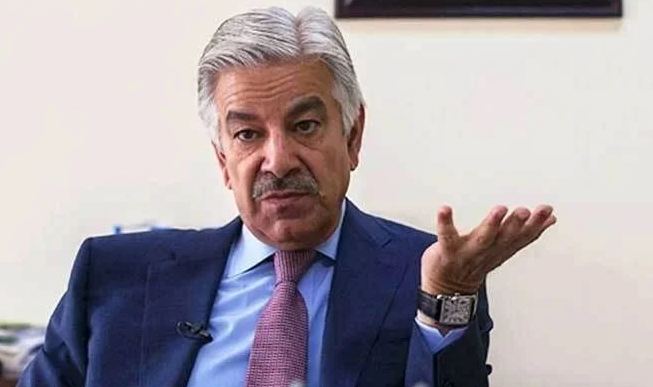
ISLAMABAD, JUN 24: Defence Minister Khawaja Asif Monday revealed that former army chief General Qamar Javed Bajwa and ex-Inter Services Intelligence director general Faiz Hamid dealt with Tehreek-e-Taliban Pakistan (TTP) and only gave a brief overview to them on the matter.

“They [former generals] painted a picture as if all was good in Swat,” Asif said while speaking to Geo News.

The defence minister said that the politicians, most notably Ali Wazir and Mohsin Dawar, had raised questions in the relevant briefing but were not allowed to speak much.


The minister’s remarks come after Prime Minister Shehbaz Sharif-led federal government, in light of increased terror incidents in recent months, announced launching a fresh anti-terror operation across the country titled “Azm-e-Istehkam”.

The decision was made during a meeting of the Central Apex Committee on National Action Plan (NAP) which was attended by chief ministers of all provinces and GB, services chiefs, and chief secretaries of the provinces along with other senior civilian, military, and law enforcement agencies officers.

The operation will provision streamlining of multiple lines of effort to combat the menaces of extremism and terrorism in a comprehensive and decisive manner, read the statement issued by the Prime Minister’s Office (PMO).

However, the Centre’s move hasn’t bode well with the Pakistan Tehreek-e-Insaf (PTI), which constitutes the majority of the opposition benches in the National Assembly and has opposed the military operation, calling for the issue to be discussed before the parliament.

“The federal government should discuss this issue in the parliament before approving it. No Apex Committee is above this house,” PTI Chairman Barrister Gohar said while speaking in the lower house on Sunday.

Reflecting on PTI’s government, Asif claimed that around 5,000-6,000 TTP fighters were brought back and were given shelter and amnesty during the former ruling party’s tenure.

“The army conducts an operation against terrorists, but the civilian government of this area does not fulfil its responsibility,” the minister said.

Commenting on his meetings with Afghan ministers and leaders, the defence minister said that he didn’t feel any animosity or hostility against Pakistan during his interaction with the officials from the neighbouring country.

His remarks come as Islamabad has time again called on Kabul’s Taliban-led administration to prevent its soil from being used by various terrorist organisations against Pakistan — an allegation Kabul has denied.

Lamenting the country’s history of being engaged in wars, Asif said: “General Zia ul Haq and General Pervez Musharraf fought wars to extend their rule. Gen Zia destroyed religion, social structure and society, took the money and became a part of the Afghan war [against Russia].”

“We should take account of ourselves as to why we became a part of two wars. Will our soldiers continue to pay the price of our wrong policies?” the minister noted.

Addressing the issue of mob lynching, he noted that people used blasphemy even in their personal enmity and stressed the need to stand up for the rights of minorities in the country.

“We tabled a resolution in the assembly against the incidents of minorities which was opposed by PTI,” he said while referring to a resolution passed by the NA which called on the Centre and the provinces to ensure the complete safety of members of minor communities.

The resolution was tabled after a man was lynched to death in Swat over allegations of desecration of the Holy Quran.

Last month, a Christian man in his seventies was attacked by a mob on charges of desecrating the Holy Quran and later died of his injuries in Sargodha, Punjab.

Meanwhile, over 90 Christian homes and 21 churches were vandalised when hundreds of people rioted through a Christian neighbourhood in Faisalabad’s Jaranwala tehsil last year.

China’s Hardline Stance Intensifies Taiwan Conflict

Qamar Bashir

By: Qamar Bashir

In a stunning and perhaps desperate move, China has issued judicial guidelines on imposing criminal punishment on diehard “Taiwan independence” separatists for organizing, plotting, or carrying out schemes of “de jure independence,” or seeking independence from China in collusion with any foreign government, overseas institution, organization, or individual, and has set severe punishments. The issuance of judicial guidelines signifies a hardening stance on Taiwan’s independence movement which included allowing for trials in absentia underscoring China’s determination to deter any steps towards Taiwanese independence by defining legal repercussions more clearly and harshly.

For Taiwan and its separatists, these guidelines represent an escalation in the legal and political pressure from Beijing. They signal that China is prepared to take more aggressive legal action against those advocating for Taiwan’s independence, potentially increasing risks for Taiwanese leaders and activists. The threat of harsher penalties and trials in absentia could also create a chilling effect on pro-independence activities and rhetoric within Taiwan.

For the United States and Western countries, this development is likely to be seen as a challenge to their support for Taiwan’s autonomy. It could complicate diplomatic relations and necessitate stronger statements or actions in defense of Taiwan. The guidelines might also impact U.S. and Western citizens or organizations interacting with Taiwan, as they could be perceived as colluding with separatists under China’s broadened definitions.

Countries supporting the “One China” policy, like Pakistan, might find themselves in a more delicate position. While they recognize Beijing’s sovereignty over Taiwan, these nations must balance their diplomatic relations with both China and other countries supporting Taiwan. The guidelines could pressure these countries to publicly reiterate their commitment to the “One China” policy and distance themselves from any perceived support for Taiwanese independence to avoid political or economic repercussions from China.

This move is an obvious reaction to the unjust consistent and outright support of the United State of America and the West to the Taiwan separatists diplomatically and equipping them for violent struggle. The United States and its Western allies support Taiwan separatists through diplomatic, economic, defense, and advocacy measures. Diplomatically, the U.S. and Western countries maintain unofficial relations with Taiwan through trade offices and cultural exchanges, with high-level visits such as U.S. House Speaker Nancy Pelosi’s visit in 2022. They advocate for Taiwan’s participation in international organizations like the World Health Assembly. Economically, the U.S. and Taiwan have agreements like the Trade and Investment Framework Agreement (TIFA) and collaborate in critical industries such as semiconductors, where Taiwan’s TSMC plays a key role. Financial support includes investments in tech startups and infrastructure projects.

Defense and security measures include significant arms sales, such as the $2.2 billion sale in 2019, which included Abrams tanks and Stinger missiles, and military training and advisory support. The Taiwan Relations Act commits the U.S. to provide Taiwan with the means to defend itself, exemplified by regular naval patrols in the Taiwan Strait. Advocacy efforts focus on promoting Taiwan’s democracy and human rights, with public statements and support for Taiwanese civil society organizations. Educational and cultural exchanges, such as the Fulbright Scholarship, enhance ties and mutual understanding. These comprehensive measures help Taiwan resist Chinese pressure and maintain its de facto independence.

They are helping Taiwan separatists to employ diverse strategies domestically and internationally. Domestically, they influence public opinion and policy through democratic elections and legislative actions, while also promoting a distinct Taiwanese culture and identity.

Internationally, they engage in informal diplomacy, seek participation in global organizations, and strengthen security ties, particularly with the United States, to bolster their defense capabilities. Additionally, Taiwan focuses on economic measures like trade diversification and technological advancements to reduce reliance on China and increase its global standing.

Despite their efforts, Taiwan separatists face significant challenges from China’s diplomatic, economic, and military pressure aimed at isolating Taiwan and discouraging its independence.

Internal divisions within Taiwan also complicate the independence movement, as opinions vary on the issue. Moreover, the international community’s adherence to the “One China” policy limits Taiwan’s formal recognition as a sovereign state. Nonetheless, the movement persists in its pursuit of greater international support and recognition, striving to maintain Taiwan’s democratic values and autonomy.

 China’s new judicial guidelines targeting Taiwan separatists will likely provoke strong defiance from Taiwanese independence advocates, who may increase their activism despite the risk of harsher penalties and trials in absentia. The United States and Western allies are expected to condemn the move, reaffirm support for Taiwan, and potentially enhance diplomatic, economic, and military ties with the island. This escalation could strain U.S.-China and China-West relations, leading to reduced trade, economic sanctions, and heightened military presence in the Asia-Pacific region. Consequently, regional tensions may rise, polarizing alliances and destabilizing global economic and security dynamics.

China’s new judicial guidelines against Taiwan separatists will directly pressure countries supporting the One China policy to reaffirm their commitment, potentially leading to diplomatic rewards or repercussions from China. These countries may have to align their international positions more closely with Beijing, limiting their engagement with Taiwan. Indirectly, heightened regional tensions could destabilize the Asia-Pacific, impacting global supply chains and creating economic uncertainty. These nations might also face challenges balancing their ties with China and Western countries supporting Taiwan, while domestic public opinion could shift, pressuring governments to address human rights concerns more transparently.

China aims to reinforce its sovereignty claims over Taiwan and deter moves toward independence by imposing harsh penalties on separatists, thereby intimidating pro-independence activities and discouraging foreign support.

To control the fallout, China will engage in diplomatic efforts to reassure and strengthen bilateral ties with countries supporting the One China policy through trade deals, investment agreements, and strategic partnerships. Additionally, China will offer economic incentives, such as increased trade and participation in the Belt and Road Initiative, conduct military exercises to demonstrate its readiness, and use public diplomacy to justify its policies. Internally, China will enhance security measures to monitor dissent and implement laws to further criminalize support for Taiwanese independence, aiming to maintain regional stability and international support while solidifying its territorial claims.

By: Qamar Bashir

Former Press Secretary to the President

Former Press Minister to the Embassy of Pakistan to France

Former MD, SRBC

Iran to designate Canadian army as a terrorist entity

Iran to designate Canadian army as a terrorist entity

The Iranian legislature further noted that the Canadian government is a staunch supporter of the criminal and child-killing Tel Aviv regime

Foreign Desk

TEHRAN: Iranian lawmakers have roundly denounced the Canadian government’s decision to blacklist the Islamic Revolution Guards Corps (IRGC), demanding a countermeasure against the North American country’s armed forces.

On Sunday, a group of 250 Iranian legislators introduced a motion that requires the administration to designate the Canadian Army and federal police forces as terrorist organizations.

They expressed their strong support for the IRGC and hailed its defense of Iran’s national security and territorial integrity in the years following the 1979 Islamic Revolution.

The lawmakers also praised the IRGC for its support of oppressed nations in the West Asia region, particularly Palestinians, and its leading role in confronting the criminal Zionist regime.

They described the IRGC as a thorn in the side of the Muslim world’s enemies, especially Israel and its sponsors.

The Iranian legislature further noted that the Canadian government is a staunch supporter of the criminal and child-killing Tel Aviv regime, emphasizing that its blacklisting of the IRGC is in violation of all international law and regulations, and exposes Ottawa’s backing for the Zionist entity.

The parliamentarians finally called on the Iranian Foreign Ministry to utilize all political and international means to denounce Canada’s measure.

In a hostile move against Iran, Canada’s Public Safety Minister Dominic LeBlanc Ottawa on Wednesday listed the IRGC as a “terrorist entity” under the Criminal Code and called on Canadians in Iran to leave.

Last month, the Canadian House of Commons adopted a non-binding resolution calling on Prime Minister Justin Trudeau’s government to blacklist the IRGC and expel an estimated 700 Iranians.

The move makes Canada the second country in North America after the United States to blacklist the IRGC.

Canada broke off diplomatic ties with Iran and closed its Tehran embassy in a surprise move in 2012, citing various reasons, including Iran’s support for Syria, its nuclear work, and alleged threats to the Israeli regime.

In the same year, however, Ottawa took off the anti-Iran terrorist Mujahedin Khalq Organization (MKO) from its list of terrorist organizations.

Gaza: EU foreign policy chief dismayed over UN reports

EU foreign policy chief Josep Borrell

DNA

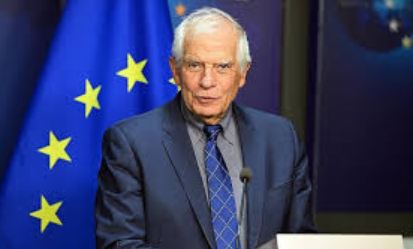
BRUSSELS: EU foreign policy chief Josep Borrell has said that he is dismayed by the reports of the United Nations World Food Programme and the World Health Organisation Gaza, adding that there was “no improvement on humanitarian access and delivery”.

In a post on X, Borrell said that the UN Human Rights documented “disproportionate and indiscriminate attacks”.

“The Red Cross premises have been damaged by shelling. We urge all parties once again to stop this cycle of suffering and destruction,” he said.

He also said that an economic collapse in the West Bank was “looming”.

England qualify for semi-final with 10-wicket win over USA in Super 8 clash

England

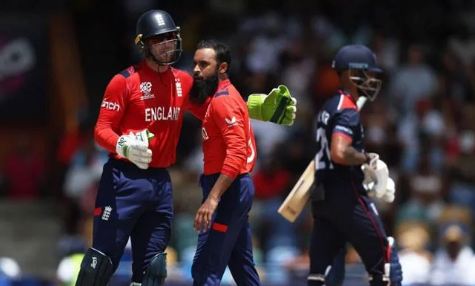
OVAL, JUN 23: England became the first team to qualify for the T20 World Cup 2024 semi-final after a 10-wicket win against the United States in their last Super 8 clash which was played at the Kensington Oval, Barbados on Sunday.

Jos Buttler and Phil Salt chased down the 116-run target without losing a single as all the USA bowlers were taken to the cleaners by the English duo.

Chinese concerns about CPEC: some musings

Chinese concerns about CPEC: some musings

“Chinese investments in Pakistan’s media, both in cash and kind, seem to have proven counterproductive. Mainstream media houses that are not beneficiaries of these investments often express their frustration through reports that may not always be unfounded but are invariably negative from the Chinese perspective”

Comment
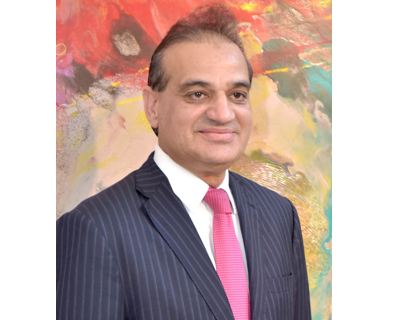
Ansar M Bhatti

Minister of the International Department of the Central Committee of the Communist Party of China (IDCPC), Liu Jianchao, last week acknowledged the support provided by Pakistan’s armed forces in ensuring the security of Chinese nationals and development projects in Pakistan. However, he expressed serious concerns about the ongoing attacks on Chinese nationals, stating that the security situation in Pakistan remains a major issue for Chinese investors. The minister also emphasized the critical need for political stability in Pakistan and underscored the importance of achieving political consensus to help the country navigate its current crises.

The minister said, “In a turbulent world of rising uncertainties, stability within the country is essential for development. Faced with complex internal and external challenges, Pakistan is navigating carefully through turbulent rivers,”.

The security of Chinese nationals working on various projects in Pakistan has been a consistent concern for both Chinese authorities and the Pakistani security establishment. Since the launch of the China-Pakistan Economic Corridor (CPEC) in 2013, numerous Chinese nationals have been killed, particularly in Balochistan province, which is the focal point of CPEC activities. Minister Liu’s statements about the security situation, made in front of representatives from all major political parties, are highly significant. Such statements are typically not made publicly, suggesting that if a high-level Chinese dignitary chose this prestigious gathering to voice concerns, it indicates that all back-channel options have likely been exhausted. It is now widely known that during the recent visit of Pakistan’s Prime Minister and Army Chief to China, similar concerns were expressed emphatically.

To improve political stability in Pakistan, it’s important to understand that genuine political stability is crucial for addressing security concerns effectively. Political divides provide opportunities for miscreants to carry out subversive acts. China is likely aware of this, which is why their minister has called for political stability. The question, then, is how to achieve this stability.

The most viable way to achieve political stability is through free and fair elections, allowing the legitimate winners to govern. Unfortunately, in Pakistan, free and fair elections have often been elusive. Winning parties are frequently prevented from taking charge, damaging the democratic order in the country.

The Chinese minister rightly pointed out that China wants to work with all political parties in Pakistan, a rational approach. However, China’s apparent preference for the PML N over the PPP or PTI has been a source of concern for other political parties. Right or wrong, this inclination gives the impression that China feels more comfortable with PML N governments, which complicates the political landscape in Pakistan.

In 2018, when the Nawaz Sharif-led PML-N government was dislodged to bring in the PTI, spearheaded by Imran Khan, China did not welcome the change, fearing it might impact the well-being of the China-Pakistan Economic Corridor (CPEC) projects. In this context, it took almost a month or more for the Chinese ambassador in Pakistan to call on the then Prime Minister Imran Khan and congratulate him on his election.

The delayed Chinese response was not well received within the ranks of the PTI, which had always viewed the CPEC projects with skepticism. During the PTI government, work on all CPEC projects was halted mainly because the government ordered a thorough audit of the projects, suspecting large-scale corruption. Although China did not have a role in the removal of the PTI government, the incoming PDM government was seen as a positive development in terms of reviving the CPEC projects.

Minister Liu also mentioned the ‘negative’ role of certain media outlets, accusing them of spreading ‘false’ information about the CPEC. While the minister may have grounds for his claim, it is crucial for the Chinese leadership to review and reassess their media policy. Problems arise when a one-sided media approach is adopted in dealing with the Pakistani media. Often, media officers in the embassy are unavailable, or their ranks are too junior to effectively interact with senior Pakistani journalists. This lack of coordination seems to be the primary source of the dissemination of misinformation whatsoever.

Most importantly, Chinese investments in Pakistan’s media, both in cash and kind, seem to have proven counterproductive. Mainstream media houses that are not beneficiaries of these investments often express their frustration through reports that may not always be unfounded but are invariably negative from the Chinese perspective. The Chinese government should reconsider its policy of financially assisting media houses directly or indirectly. This approach either needs to be eliminated or rationalized to ensure balanced and unbiased coverage.

Apart from media problems, another phenomenon that has adversely affected China’s image happens to be the “think-tank syndrome.” Since the launch of the CPEC project, there has been a mushroom growth of one-man or one-woman think tanks. Hefty sums are allocated to these think tanks, mostly run by pseudo-intellectuals. China needs to engage with genuine and reputable think tanks, which are abundant in Pakistan. This will certainly help augment efforts to strengthen the CPEC projects.

CPEC undoubtedly holds immense benefits and opportunities for both Pakistan and China. It has ushered in an era of significant infrastructural development in Pakistan. The project, therefore, must be protected, supported, and strengthened. A partnership with China can bring about a revolution in Pakistan. Islamabad must address the genuine security concerns expressed by the Chinese minister. Similarly, the Chinese side should reconsider its policies, particularly in the aeras mentioned above, to make this collaboration durable, trusted, and mutually beneficial.

The writer is the newspaper Editor

Stay Connected

64FansLike
60FollowersFollow

Latest Reviews

Exchange Rates

USD - United States Dollar
EUR
1.17
GBP
1.35
AUD
0.72
CAD
0.73